Telephonic Etiquette
What are Etiquette?
• Etiquette refers to good manners.
• An individual must behave well in public to gain respect and
appreciation from others.
• It is essential to behave in a socially acceptable way.
Telephone Etiquette
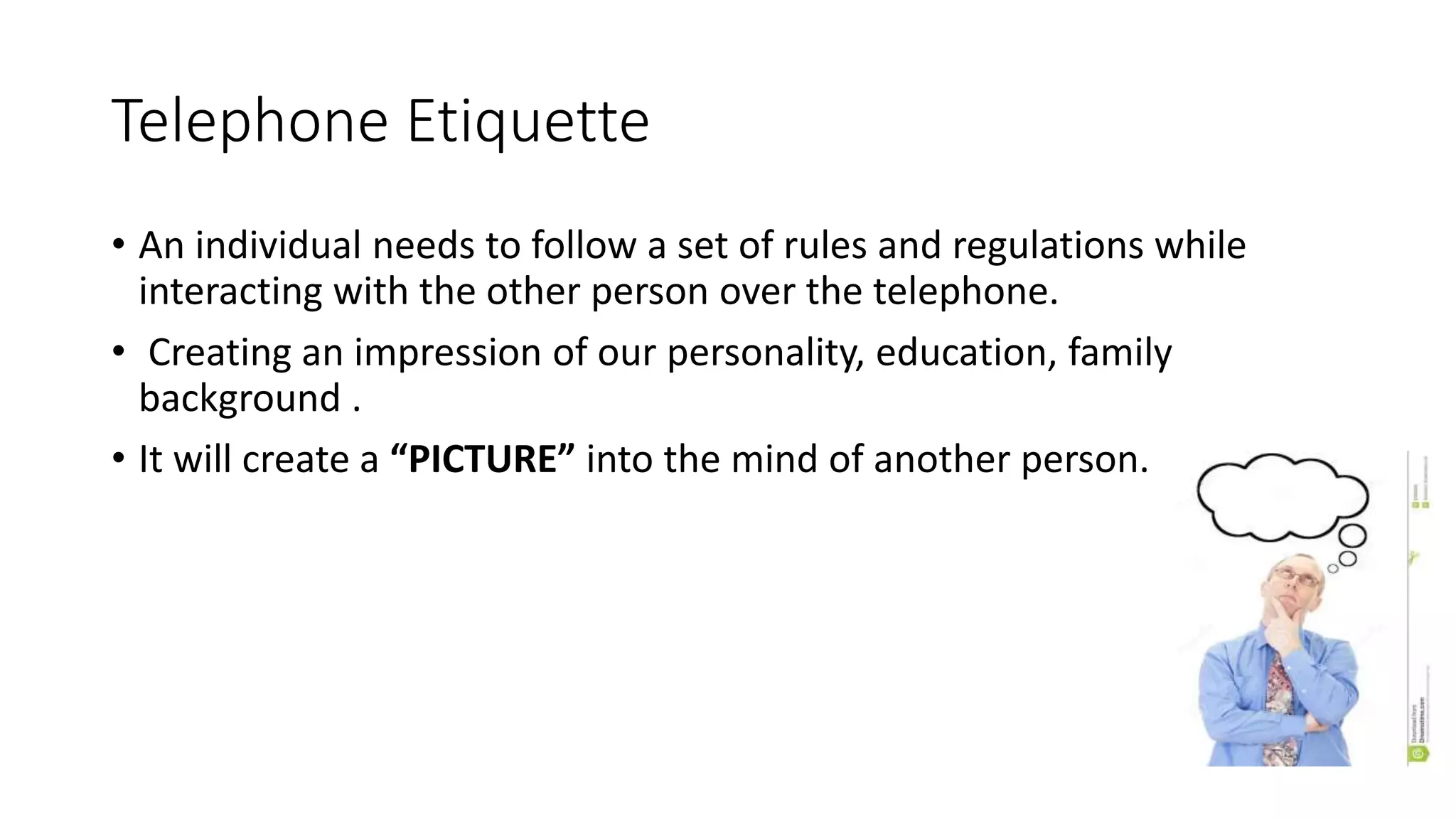
• An individual needs to follow a set of rules and regulations while
interacting with the other person over the telephone.
• Creating an impression of our personality, education, family
background .
• It will create a “PICTURE” into the mind of another person.
Importance:
• First Impression:it can only takes seconds to decide if they like you or
not.
• It can potentially make or break a business relationship.
• What you say (verbal communication) and how you say it (nonverbal
communication) are critical because the caller cannot see your facial
expression or body language- which carry a lot of information about
your confidence, competence, and sincerity.
• Why it is important , we hire receptionist , secretary or administrative
assistant that has to know how to present well over the phone?
Tips to keep in mind:
• Greeting: begin the call with appropriate greeting like good morning /
afternoon depending on time.
• Be polite : A polite word or two always helps in bringing warmth into
the conversation .
• Clarity : Always use a clear , crisp and simple language , including the
old 7C's of communication .
• Purpose : Before making a phone call , be sure of the purpose of the
call.
• Find some quiet place : Communicating over the telephone is much
more effective when both parties can hear each other clearly without
background noise.
• Be enthusistic : enthusiastic about the chance to speak with the
caller. Adults pay more attention to the tone of your voice than they
do to the words you use.
• Summarise : There are various benefits of summarising and
paraphrasing, it helps you to reaffirm what was discussed during the
phone call.
Dont's
• Do not eat or drink while you are on telephone duty.
• Do not use filler : um or ah
• Never snap back or act rude to the caller .
• Never leave the person o hold for more than a few secounds (not
more than 30 sec) or they may become upset and hang up.
Usage of language
• Speak in a normal way but in an effictive manner.
• Words delivered should be clear and understood to the caller .
• Offer assistance : “How May I Help You?”
• Identify Yourself: ” Aman speaking “ , “pooja speaking”.
• Take time to speak clearly and slowly and in a cheerful manner .
• If you have tendency to speak loud or shout , avoid doing so on the
telephone.
• Taking care of customers over the telephone and making them fell
well informed and appreciated is essential.
• The ability to listen is a problem in general but it is very important to
listen to what the caller has to say .
The tone plays a very important role as the guest cannot see you .Your voice sets up the
perception in the Guest's mind.
Ussage of tone
Challanges
1. Handling rude or impatient callers :
-Stay calm and try to remain polite.
-Try to think like the caller and focus to resolve their problems .
2. If you are in a non supervisory position :
If the caller needs to speak to another person or department ,transfer
the caller directly to the desired person's extension rather than the
operator.
3.Wrong number :
When you reach a wrong number, don't argue with the person who
answered the call or keep them on the line. Say: "I'm sorry, I must have
the wrong number. Please excuse the interruption." And then hang up.
4. Important Messages :
Be prepared with pen and message slip when you answer the phone.
Telephonic  etiquette

Telephonic etiquette

  • 1.
  • 2.
    What are Etiquette? •Etiquette refers to good manners. • An individual must behave well in public to gain respect and appreciation from others. • It is essential to behave in a socially acceptable way.
  • 3.
    Telephone Etiquette • Anindividual needs to follow a set of rules and regulations while interacting with the other person over the telephone. • Creating an impression of our personality, education, family background . • It will create a “PICTURE” into the mind of another person.
  • 5.
    Importance: • First Impression:itcan only takes seconds to decide if they like you or not. • It can potentially make or break a business relationship. • What you say (verbal communication) and how you say it (nonverbal communication) are critical because the caller cannot see your facial expression or body language- which carry a lot of information about your confidence, competence, and sincerity.
  • 6.
    • Why itis important , we hire receptionist , secretary or administrative assistant that has to know how to present well over the phone?
  • 11.
    Tips to keepin mind: • Greeting: begin the call with appropriate greeting like good morning / afternoon depending on time. • Be polite : A polite word or two always helps in bringing warmth into the conversation . • Clarity : Always use a clear , crisp and simple language , including the old 7C's of communication . • Purpose : Before making a phone call , be sure of the purpose of the call.
  • 12.
    • Find somequiet place : Communicating over the telephone is much more effective when both parties can hear each other clearly without background noise. • Be enthusistic : enthusiastic about the chance to speak with the caller. Adults pay more attention to the tone of your voice than they do to the words you use. • Summarise : There are various benefits of summarising and paraphrasing, it helps you to reaffirm what was discussed during the phone call.
  • 13.
    Dont's • Do noteat or drink while you are on telephone duty. • Do not use filler : um or ah • Never snap back or act rude to the caller . • Never leave the person o hold for more than a few secounds (not more than 30 sec) or they may become upset and hang up.
  • 14.
    Usage of language •Speak in a normal way but in an effictive manner. • Words delivered should be clear and understood to the caller . • Offer assistance : “How May I Help You?” • Identify Yourself: ” Aman speaking “ , “pooja speaking”.
  • 15.
    • Take timeto speak clearly and slowly and in a cheerful manner . • If you have tendency to speak loud or shout , avoid doing so on the telephone. • Taking care of customers over the telephone and making them fell well informed and appreciated is essential. • The ability to listen is a problem in general but it is very important to listen to what the caller has to say .
  • 16.
    The tone playsa very important role as the guest cannot see you .Your voice sets up the perception in the Guest's mind. Ussage of tone
  • 17.
    Challanges 1. Handling rudeor impatient callers : -Stay calm and try to remain polite. -Try to think like the caller and focus to resolve their problems . 2. If you are in a non supervisory position : If the caller needs to speak to another person or department ,transfer the caller directly to the desired person's extension rather than the operator.
  • 18.
    3.Wrong number : Whenyou reach a wrong number, don't argue with the person who answered the call or keep them on the line. Say: "I'm sorry, I must have the wrong number. Please excuse the interruption." And then hang up. 4. Important Messages : Be prepared with pen and message slip when you answer the phone.