Just imagine a life without a telephone/Smart
Phone
 Are you Glad/Pleased about it?
 Do you have any Regrets?
 We hardly give it a little thought!!!
Presenting a Professional
Image
Speaking Style
Usage of Tone
Usage of Language
Do’s & Don'ts
Have we ever displayed bad manners on phone? Of course!
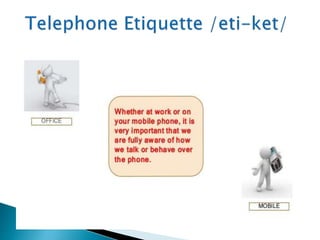
Telephone/Mobile Phone Etiquette means:
 To follow rules of Politeness while calling someone
For Example:
 Be polite and friendly when making & receiving
calls
 Your voice and mannerism will have a lasting
impression
 A caller on the other end of the phone can
only hear you except in a video call
 •
He/she cannot see your face or body
language
 •
Therefore take time to speak clearly,
cheerfully and in a professional manner
 Remember, Telephone Etiquette is very important
in the Office skills profession
 Speaking to customers politely over the
telephone and making them feel well informed is
essential
 Listening attentively is a common problem
among callers
 It is always a good habit to repeat the
information back to the client when you are
taking a message
 Never use a falsely cheerful tone or a jokey
tone. Your tone should be normal and soft
when answering a call
 •
If you have a tendency to speak loud or
shout, avoid doing so on the
telephone/mobile
 Speak in a normal way but in a effective
manner
 •
Never use swear words( shit, pissed off etc.)
 •
Your language should be precise and concise
Do’s
 Be patient, cheerful and helpful
 Respond clearly with “yes” or “no” when speaking
 If you calling on behalf of your company, please
mention to the caller & try if you can assist them
on the query.
E.g. I am calling on behalf of VDC. How may I/can
I help you?/VDC, How may I/can I help you?
 While answering a call on behalf of your
company/team member:
 •
Address the caller properly by his or her title.
Eg : ( Good morning Mr. Ramesh, Good
afternoon Ms. Sandhya)
 •
Listen to the caller and what he/she has to
say.
 •
Always ask if you can put the caller on hold
 Do not eat or drink while you are on telephone
duty
 •
Do not use slang words or Poor Language
 •
Never address an unfamiliar caller by his or her
first name
 •
Never snap back or act rude to the caller
 •
Never leave the person on hold for more than a
few seconds or they may become upset and hang
up
 Bail — Intransitive verb for leaving abruptly.
 Feeling blue; have the blues — A feeling of
depression or sadness.
 A buck — Slang term for a the American dollar.
 By the skin of (my/your/his/her) teeth — just barely.
 Creep (n.) — An unpleasantly weird/strange person.
 Couch Potato — A lazy person who spends the bulk
of their time engaged in things that can be done
while sitting on a couch.
 Cram — To study feverishly before an exam typically
done after neglecting to study consistently.
 Crash — To abruptly fall asleep, or to show up
without invitation.
 Down to earth — And adjective for practicality and
lack of pretense.
 Drive up the wall — To irritate.
 Always answer with a greeting ( G.Morning or
G. Evening)
 Always identify your company (example: Thank
you for calling the “Vijaya Diagnostic Center”)
 Identify yourself (example: This is the Sales
Manager speaking or Manoj speaking)

 Question the caller’s need (example: How can
I/may I help you sir / madam?)
 Keep a courteous and audible tone.
 Listen to the guest carefully and note down
the points, if needed
 Don’t interrupt the guest or break his
conversation
 The way you answer calls will make or break
the conversation
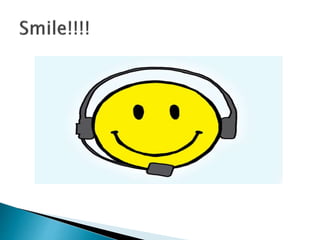
It shows, even through the phone lines
Questions?????
Thank You!!!!

Telephone Etiquette new.pptx

  • 2.
    Just imagine alife without a telephone/Smart Phone  Are you Glad/Pleased about it?  Do you have any Regrets?  We hardly give it a little thought!!!
  • 3.
    Presenting a Professional Image SpeakingStyle Usage of Tone Usage of Language Do’s & Don'ts
  • 5.
    Have we everdisplayed bad manners on phone? Of course! Telephone/Mobile Phone Etiquette means:  To follow rules of Politeness while calling someone For Example:  Be polite and friendly when making & receiving calls  Your voice and mannerism will have a lasting impression
  • 6.
     A calleron the other end of the phone can only hear you except in a video call  • He/she cannot see your face or body language  • Therefore take time to speak clearly, cheerfully and in a professional manner
  • 7.
     Remember, TelephoneEtiquette is very important in the Office skills profession  Speaking to customers politely over the telephone and making them feel well informed is essential  Listening attentively is a common problem among callers  It is always a good habit to repeat the information back to the client when you are taking a message
  • 8.
     Never usea falsely cheerful tone or a jokey tone. Your tone should be normal and soft when answering a call  • If you have a tendency to speak loud or shout, avoid doing so on the telephone/mobile
  • 9.
     Speak ina normal way but in a effective manner  • Never use swear words( shit, pissed off etc.)  • Your language should be precise and concise
  • 10.
    Do’s  Be patient,cheerful and helpful  Respond clearly with “yes” or “no” when speaking  If you calling on behalf of your company, please mention to the caller & try if you can assist them on the query. E.g. I am calling on behalf of VDC. How may I/can I help you?/VDC, How may I/can I help you?
  • 11.
     While answeringa call on behalf of your company/team member:  • Address the caller properly by his or her title. Eg : ( Good morning Mr. Ramesh, Good afternoon Ms. Sandhya)  • Listen to the caller and what he/she has to say.  • Always ask if you can put the caller on hold
  • 12.
     Do noteat or drink while you are on telephone duty  • Do not use slang words or Poor Language  • Never address an unfamiliar caller by his or her first name  • Never snap back or act rude to the caller  • Never leave the person on hold for more than a few seconds or they may become upset and hang up
  • 13.
     Bail —Intransitive verb for leaving abruptly.  Feeling blue; have the blues — A feeling of depression or sadness.  A buck — Slang term for a the American dollar.  By the skin of (my/your/his/her) teeth — just barely.  Creep (n.) — An unpleasantly weird/strange person.  Couch Potato — A lazy person who spends the bulk of their time engaged in things that can be done while sitting on a couch.  Cram — To study feverishly before an exam typically done after neglecting to study consistently.  Crash — To abruptly fall asleep, or to show up without invitation.  Down to earth — And adjective for practicality and lack of pretense.  Drive up the wall — To irritate.
  • 14.
     Always answerwith a greeting ( G.Morning or G. Evening)  Always identify your company (example: Thank you for calling the “Vijaya Diagnostic Center”)  Identify yourself (example: This is the Sales Manager speaking or Manoj speaking)   Question the caller’s need (example: How can I/may I help you sir / madam?)  Keep a courteous and audible tone.
  • 15.
     Listen tothe guest carefully and note down the points, if needed  Don’t interrupt the guest or break his conversation  The way you answer calls will make or break the conversation
  • 16.
    It shows, eventhrough the phone lines
  • 17.
  • 18.