Don’t Fail to Communicate: 
Identify Patient Perceptions of 
Communication Gaps with 
Physicians 
Brian Loew, Inspire 
Sept. 10, 2014
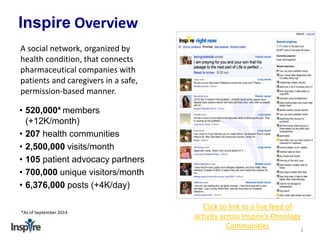
A social network, organized by 
health condition, that connects 
pharmaceutical companies with 
patients and caregivers in a safe, 
permission-based manner. 
2 
Inspire Overview 
Click to link to a live feed of 
activity across Inspire’s Oncology 
Communities 
• 520,000* members 
(+12K/month) 
• 207 health communities 
• 2,500,000 visits/month 
• 105 patient advocacy partners 
• 700,000 unique visitors/month 
• 6,376,000 posts (+4K/day) 
*As of September 2014
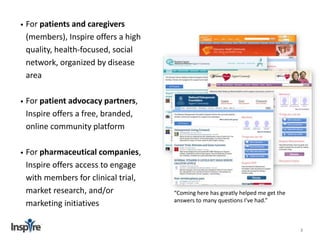
• For patients and caregivers 
(members), Inspire offers a high 
quality, health-focused, social 
network, organized by disease 
area 
• For patient advocacy partners, 
Inspire offers a free, branded, 
online community platform 
• For pharmaceutical companies, 
Inspire offers access to engage 
with members for clinical trial, 
market research, and/or 
marketing initiatives 
3 
“Coming here has greatly helped me get the 
answers to many questions I’ve had.”
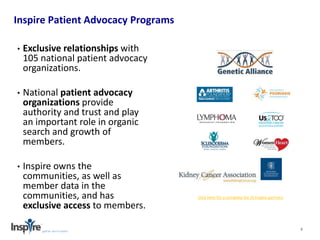
• Exclusive relationships with 
105 national patient advocacy 
organizations. 
• National patient advocacy 
organizations provide 
authority and trust and play 
an important role in organic 
search and growth of 
members. 
• Inspire owns the 
communities, as well as 
member data in the 
communities, and has 
exclusive access to members. 
Click here for a complete list of Inspire partners 
4 
Inspire Patient Advocacy Programs
5 
Goals 
- Examine how patients in online communities 
discuss the topic of side effects and other drug 
risks 
- Identify what patients really value and crave 
in their patient-doctor interactions 
- Define the role of industry-sponsored patient 
education
Psoriasis patients: actively researching treatments 
6 
Patients from our online community frequently research the 
medications they are given, most often looking for other 
patients’ experiences with them 
“I look at the official drug's website for any side 
effects. I also learn as much as possible about the 
drug. I also Google and see what I can find on 
somewhat reputable sites. I always talk to my doctor 
about what I find.” 
- Female, 18-30 years old
7 
More insights from psoriasis patients 
“Usually the various psoriasis boards where I can get 
feedback from actual patients. Always seems like a better 
source of information than from journals or physicians 
since it is so much different being the person living daily 
with psoriasis than just studying it.” 
Male – 31-40 years old 
Always after getting the script to double 
check side effects and interactions… 
Epocrates, it's up to date and an app on 
my phone, easy, accurate.” 
Female – 51-60 years old
8 
A goal: Shared decision making 
Most patients surveyed want to be 
actively involved in the decision-making 
process around their care, and 
it is important for oncologists to 
explore this with them.
9 
Inspire cancer survey: 
The meaning of personalized healthcare – a 
whitepaper, sponsored by AstraZeneca, in 
partnership with pharmaphorum media
10 
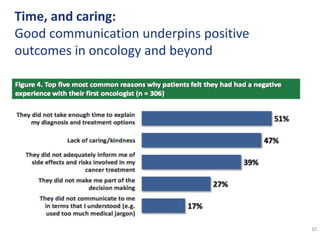
Time, and caring: 
Good communication underpins positive 
outcomes in oncology and beyond 
10
11 
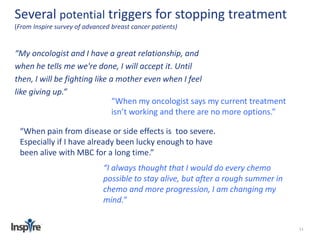
Several potential triggers for stopping treatment 
(From Inspire survey of advanced breast cancer patients) 
“My oncologist and I have a great relationship, and 
when he tells me we're done, I will accept it. Until 
then, I will be fighting like a mother even when I feel 
like giving up.” 
“When my oncologist says my current treatment 
isn’t working and there are no more options.” 
“When pain from disease or side effects is too severe. 
Especially if I have already been lucky enough to have 
been alive with MBC for a long time.” 
“I always thought that I would do every chemo 
possible to stay alive, but after a rough summer in 
chemo and more progression, I am changing my 
mind.”
12 
And when the disease isn’t visible: 
From Inspire’s survey of ‘invisible illnesses’ patients, 
we found that 85% of those who took the survey 
(n=231) felt that they at least "sometimes" 
had difficulty in getting medical professionals to 
believe their self-reported symptom/pain levels. 
These patients need some validation of their self-assessments 
and want to be seen as having a key 
stake in the management of these various 
conditions we assessed (such as lupus, fibromyalgia, 
migraine).
13 
What can pharma supply patients? 
From our “invisible illnesses” survey, apx. 75% of 
patients indicated that some type of symptom tracker 
(either electronic or printed) would be helpful. 
The same amount of patients also felt that having 
"Tips/tactics around better ways to communicate with 
your physician(s)" would be beneficial.
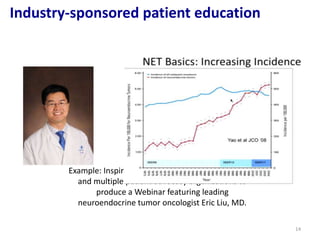
Industry-sponsored patient education 
Example: Inspire partnered with a pharma company 
and multiple patient advocacy organizations to 
produce a Webinar featuring leading 
neuroendocrine tumor oncologist Eric Liu, MD. 
14
15 
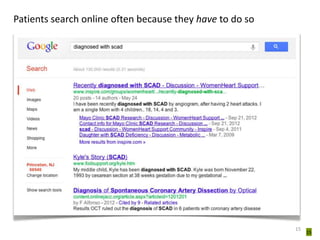
Patients search online often because they have to do so 
15
16 
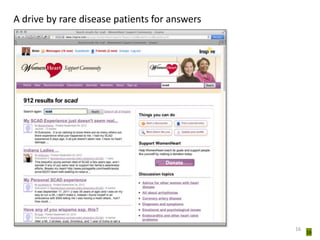
A drive by rare disease patients for answers 
16
17 
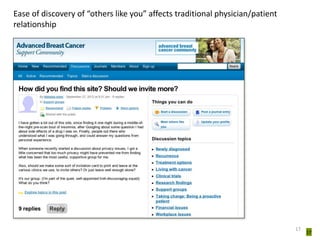
Ease of discovery of “others like you” affects traditional physician/patient 
relationship 
17
18 
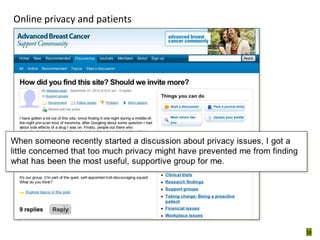
Online privacy and patients
19 
Takeaways 
- Educational materials that facilitate better 
patient/physician communication can help 
improve patient/physician relations. 
- More patients affected by diseases are 
using social networks to gather health 
information. 
- More patients want physicians to treat 
patients like partners.
20 
Takeaways, continued 
Many patients want to contribute to 
research, but patients need better 
pathways to access researchers. 
Technology that aids patients and 
physicians research diseases matters a 
great deal.
21 
Thank you 
Brian Loew 
CEO 
Inspire 
Twitter: @brianloew 
brian@inspire.com

Don’t Fail to Communicate – Identify Patient Perceptions of Communication Gaps with Physicians

  • 1.
    Don’t Fail toCommunicate: Identify Patient Perceptions of Communication Gaps with Physicians Brian Loew, Inspire Sept. 10, 2014
  • 2.
    A social network,organized by health condition, that connects pharmaceutical companies with patients and caregivers in a safe, permission-based manner. 2 Inspire Overview Click to link to a live feed of activity across Inspire’s Oncology Communities • 520,000* members (+12K/month) • 207 health communities • 2,500,000 visits/month • 105 patient advocacy partners • 700,000 unique visitors/month • 6,376,000 posts (+4K/day) *As of September 2014
  • 3.
    • For patientsand caregivers (members), Inspire offers a high quality, health-focused, social network, organized by disease area • For patient advocacy partners, Inspire offers a free, branded, online community platform • For pharmaceutical companies, Inspire offers access to engage with members for clinical trial, market research, and/or marketing initiatives 3 “Coming here has greatly helped me get the answers to many questions I’ve had.”
  • 4.
    • Exclusive relationshipswith 105 national patient advocacy organizations. • National patient advocacy organizations provide authority and trust and play an important role in organic search and growth of members. • Inspire owns the communities, as well as member data in the communities, and has exclusive access to members. Click here for a complete list of Inspire partners 4 Inspire Patient Advocacy Programs
  • 5.
    5 Goals -Examine how patients in online communities discuss the topic of side effects and other drug risks - Identify what patients really value and crave in their patient-doctor interactions - Define the role of industry-sponsored patient education
  • 6.
    Psoriasis patients: activelyresearching treatments 6 Patients from our online community frequently research the medications they are given, most often looking for other patients’ experiences with them “I look at the official drug's website for any side effects. I also learn as much as possible about the drug. I also Google and see what I can find on somewhat reputable sites. I always talk to my doctor about what I find.” - Female, 18-30 years old
  • 7.
    7 More insightsfrom psoriasis patients “Usually the various psoriasis boards where I can get feedback from actual patients. Always seems like a better source of information than from journals or physicians since it is so much different being the person living daily with psoriasis than just studying it.” Male – 31-40 years old Always after getting the script to double check side effects and interactions… Epocrates, it's up to date and an app on my phone, easy, accurate.” Female – 51-60 years old
  • 8.
    8 A goal:Shared decision making Most patients surveyed want to be actively involved in the decision-making process around their care, and it is important for oncologists to explore this with them.
  • 9.
    9 Inspire cancersurvey: The meaning of personalized healthcare – a whitepaper, sponsored by AstraZeneca, in partnership with pharmaphorum media
  • 10.
    10 Time, andcaring: Good communication underpins positive outcomes in oncology and beyond 10
  • 11.
    11 Several potentialtriggers for stopping treatment (From Inspire survey of advanced breast cancer patients) “My oncologist and I have a great relationship, and when he tells me we're done, I will accept it. Until then, I will be fighting like a mother even when I feel like giving up.” “When my oncologist says my current treatment isn’t working and there are no more options.” “When pain from disease or side effects is too severe. Especially if I have already been lucky enough to have been alive with MBC for a long time.” “I always thought that I would do every chemo possible to stay alive, but after a rough summer in chemo and more progression, I am changing my mind.”
  • 12.
    12 And whenthe disease isn’t visible: From Inspire’s survey of ‘invisible illnesses’ patients, we found that 85% of those who took the survey (n=231) felt that they at least "sometimes" had difficulty in getting medical professionals to believe their self-reported symptom/pain levels. These patients need some validation of their self-assessments and want to be seen as having a key stake in the management of these various conditions we assessed (such as lupus, fibromyalgia, migraine).
  • 13.
    13 What canpharma supply patients? From our “invisible illnesses” survey, apx. 75% of patients indicated that some type of symptom tracker (either electronic or printed) would be helpful. The same amount of patients also felt that having "Tips/tactics around better ways to communicate with your physician(s)" would be beneficial.
  • 14.
    Industry-sponsored patient education Example: Inspire partnered with a pharma company and multiple patient advocacy organizations to produce a Webinar featuring leading neuroendocrine tumor oncologist Eric Liu, MD. 14
  • 15.
    15 Patients searchonline often because they have to do so 15
  • 16.
    16 A driveby rare disease patients for answers 16
  • 17.
    17 Ease ofdiscovery of “others like you” affects traditional physician/patient relationship 17
  • 18.
    18 Online privacyand patients
  • 19.
    19 Takeaways -Educational materials that facilitate better patient/physician communication can help improve patient/physician relations. - More patients affected by diseases are using social networks to gather health information. - More patients want physicians to treat patients like partners.
  • 20.
    20 Takeaways, continued Many patients want to contribute to research, but patients need better pathways to access researchers. Technology that aids patients and physicians research diseases matters a great deal.
  • 21.
    21 Thank you Brian Loew CEO Inspire Twitter: @brianloew brian@inspire.com