NEUPOGEN
Rani Joseph
MSNE 5356
Lamar University
Dr. Long
Neupogen
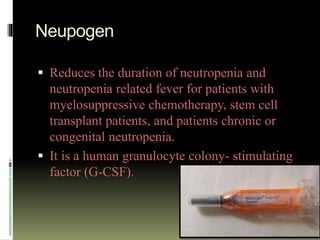
 Reduces the duration of neutropenia and
neutropenia related fever for patients with
myelosuppressive chemotherapy, stem cell
transplant patients, and patients chronic or
congenital neutropenia.
 It is a human granulocyte colony- stimulating
factor (G-CSF).
Pathophysiology
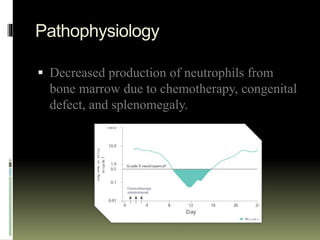
 Decreased production of neutrophils from
bone marrow due to chemotherapy, congenital
defect, and splenomegaly.
Neupogen to Neutropenia
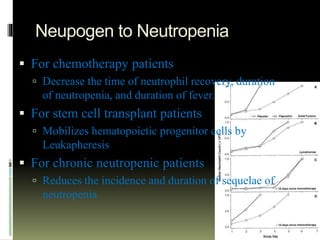
 For chemotherapy patients
 Decrease the time of neutrophil recovery, duration
of neutropenia, and duration of fever.
 For stem cell transplant patients
 Mobilizes hematopoietic progenitor cells by
Leukapheresis
 For chronic neutropenic patients
 Reduces the incidence and duration of sequelae of
neutropenia
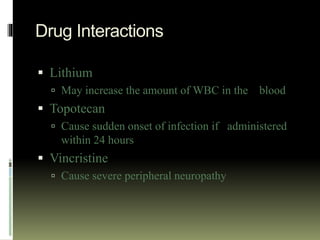
Drug Interactions
 Lithium
 May increase the amount of WBC in the blood
 Topotecan
 Cause sudden onset of infection if administered
within 24 hours
 Vincristine
 Cause severe peripheral neuropathy
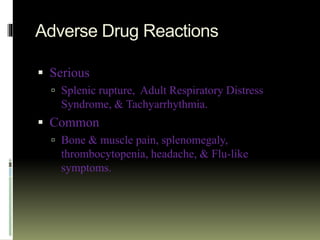
Adverse Drug Reactions
 Serious
 Splenic rupture, Adult Respiratory Distress
Syndrome, & Tachyarrhythmia.
 Common
 Bone & muscle pain, splenomegaly,
thrombocytopenia, headache, & Flu-like
symptoms.
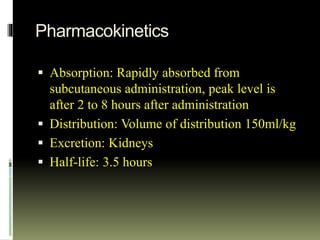
Pharmacokinetics
 Absorption: Rapidly absorbed from
subcutaneous administration, peak level is
after 2 to 8 hours after administration
 Distribution: Volume of distribution 150ml/kg
 Excretion: Kidneys
 Half-life: 3.5 hours
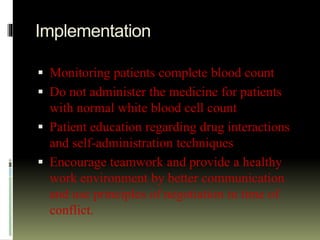
Implementation
 Monitoring patients complete blood count
 Do not administer the medicine for patients
with normal white blood cell count
 Patient education regarding drug interactions
and self-administration techniques
 Encourage teamwork and provide a healthy
work environment by better communication
and use principles of negotiation in time of
conflict.
References
 American Association of College of Nursing (AACN), (2011).The Essentials Of
Master’S Education In Nursing. Washington, D.C. Retrieved from
http://www.aacn.nche.edu/education-resources/MastersEssentials11.pdf
 Ansari, A. (2010). Radiation threats and your safety: A guide to preparation and
response for professionals and community. New York, NY: CRC Press
 Berliner, N. (2015). Approach to the Adult with Unexplained Neutropenia.
UpToDate. Retrieved from
http//:www3.mdanderson.org/library/database/database.html#
 Ho, R.J.Y. (2013). Biotechnology and biopharmaceuticals: Transforming proteins
and genes into drug (2nded.) Hoboken, NJ: John Wiley & Sons,Inc.
 Medsafe, 20151 Filgrastim. Auckland: Roche, 2015. Web. 15 Nov. 2015.Retrieved
from http://www.medsafe.govt.nz/profs/datasheet/n/Neupogeninj.pdf
 Renwick, W., Pettingel, R. & Green, M (2009). Use of filgrastim and pegfilgrastim
to support delivery of chemotherapy: Twenty years of clinical experience. Up
To Date. Retrieved from
http//:www3.mdanderson.org/library/database/database.html#

Pharmacology -Neupogen

  • 1.
  • 2.
    Neupogen  Reduces theduration of neutropenia and neutropenia related fever for patients with myelosuppressive chemotherapy, stem cell transplant patients, and patients chronic or congenital neutropenia.  It is a human granulocyte colony- stimulating factor (G-CSF).
  • 3.
    Pathophysiology  Decreased productionof neutrophils from bone marrow due to chemotherapy, congenital defect, and splenomegaly.
  • 4.
    Neupogen to Neutropenia For chemotherapy patients  Decrease the time of neutrophil recovery, duration of neutropenia, and duration of fever.  For stem cell transplant patients  Mobilizes hematopoietic progenitor cells by Leukapheresis  For chronic neutropenic patients  Reduces the incidence and duration of sequelae of neutropenia
  • 5.
    Drug Interactions  Lithium May increase the amount of WBC in the blood  Topotecan  Cause sudden onset of infection if administered within 24 hours  Vincristine  Cause severe peripheral neuropathy
  • 6.
    Adverse Drug Reactions Serious  Splenic rupture, Adult Respiratory Distress Syndrome, & Tachyarrhythmia.  Common  Bone & muscle pain, splenomegaly, thrombocytopenia, headache, & Flu-like symptoms.
  • 7.
    Pharmacokinetics  Absorption: Rapidlyabsorbed from subcutaneous administration, peak level is after 2 to 8 hours after administration  Distribution: Volume of distribution 150ml/kg  Excretion: Kidneys  Half-life: 3.5 hours
  • 8.
    Implementation  Monitoring patientscomplete blood count  Do not administer the medicine for patients with normal white blood cell count  Patient education regarding drug interactions and self-administration techniques  Encourage teamwork and provide a healthy work environment by better communication and use principles of negotiation in time of conflict.
  • 9.
    References  American Associationof College of Nursing (AACN), (2011).The Essentials Of Master’S Education In Nursing. Washington, D.C. Retrieved from http://www.aacn.nche.edu/education-resources/MastersEssentials11.pdf  Ansari, A. (2010). Radiation threats and your safety: A guide to preparation and response for professionals and community. New York, NY: CRC Press  Berliner, N. (2015). Approach to the Adult with Unexplained Neutropenia. UpToDate. Retrieved from http//:www3.mdanderson.org/library/database/database.html#  Ho, R.J.Y. (2013). Biotechnology and biopharmaceuticals: Transforming proteins and genes into drug (2nded.) Hoboken, NJ: John Wiley & Sons,Inc.  Medsafe, 20151 Filgrastim. Auckland: Roche, 2015. Web. 15 Nov. 2015.Retrieved from http://www.medsafe.govt.nz/profs/datasheet/n/Neupogeninj.pdf  Renwick, W., Pettingel, R. & Green, M (2009). Use of filgrastim and pegfilgrastim to support delivery of chemotherapy: Twenty years of clinical experience. Up To Date. Retrieved from http//:www3.mdanderson.org/library/database/database.html#