Post Chemotherapy Care
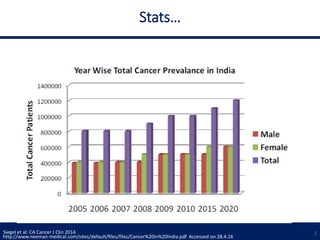
Stats…
2Siegel et al: CA Cancer J Clin 2014
http://www.neeman-medical.com/sites/default/files/files/Cancer%20in%20India.pdf Accessed on 28.4.16
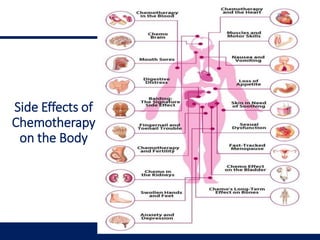
Side Effects of
Chemotherapy
on the Body
Extravasation
Introduction
• Refers to the process by which one substance (e.g., fluid,
drug) leaks into the surrounding tissue
• In terms of cancer therapy, extravasation is defined as the
accidental leakage from its intended compartment (the
vein) into the surrounding tissue
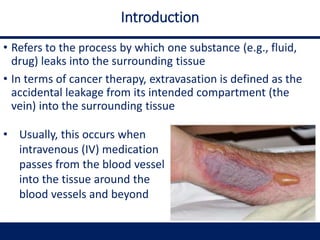
• Usually, this occurs when
intravenous (IV) medication
passes from the blood vessel
into the tissue around the
blood vessels and beyond
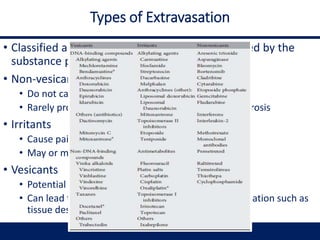
Types of Extravasation
• Classified according to the reaction that is caused by the
substance passing into the surrounding tissue
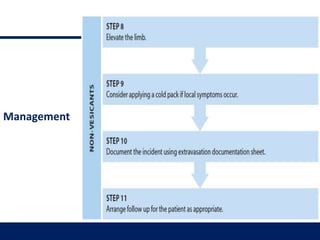
• Non-vesicants
• Do not cause ulceration
• Rarely produce an acute reaction or progress to necrosis
• Irritants
• Cause pain at, and around the injection site
• May or may not also cause inflammation
• Vesicants
• Potential to cause blistering and ulceration
• Can lead to the more serious side effects of extravasation such as
tissue destruction and necrosis
How Is Extravasation Recognized
• Patient reporting
• Visual assessment
• Checking the infusion line
• Distinguishing extravasation vs. other conditions
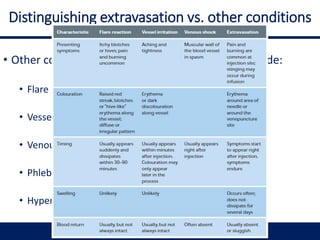
Distinguishing extravasation vs. other conditions
• Other conditions that resemble extravasation include:
• Flare reaction
• Vessel irritation
• Venous shock
• Phlebitis
• Hypersensitivity
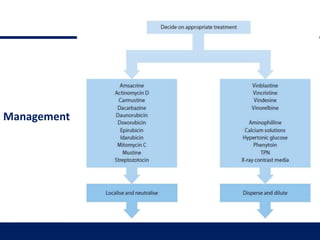
Management
Management
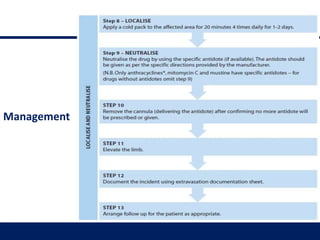
Management
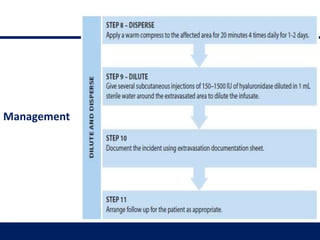
Management
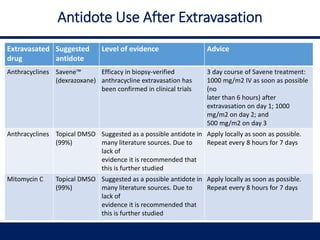
Antidote Use After Extravasation
Extravasated
drug
Suggested
antidote
Level of evidence Advice
Anthracyclines Savene™
(dexrazoxane)
Efficacy in biopsy-verified
anthracycline extravasation has
been confirmed in clinical trials
3 day course of Savene treatment:
1000 mg/m2 IV as soon as possible
(no
later than 6 hours) after
extravasation on day 1; 1000
mg/m2 on day 2; and
500 mg/m2 on day 3
Anthracyclines Topical DMSO
(99%)
Suggested as a possible antidote in
many literature sources. Due to
lack of
evidence it is recommended that
this is further studied
Apply locally as soon as possible.
Repeat every 8 hours for 7 days
Mitomycin C Topical DMSO
(99%)
Suggested as a possible antidote in
many literature sources. Due to
lack of
evidence it is recommended that
this is further studied
Apply locally as soon as possible.
Repeat every 8 hours for 7 days
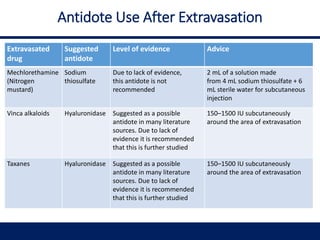
Antidote Use After Extravasation
Extravasated
drug
Suggested
antidote
Level of evidence Advice
Mechlorethamine
(Nitrogen
mustard)
Sodium
thiosulfate
Due to lack of evidence,
this antidote is not
recommended
2 mL of a solution made
from 4 mL sodium thiosulfate + 6
mL sterile water for subcutaneous
injection
Vinca alkaloids Hyaluronidase Suggested as a possible
antidote in many literature
sources. Due to lack of
evidence it is recommended
that this is further studied
150–1500 IU subcutaneously
around the area of extravasation
Taxanes Hyaluronidase Suggested as a possible
antidote in many literature
sources. Due to lack of
evidence it is recommended
that this is further studied
150–1500 IU subcutaneously
around the area of extravasation
CINV
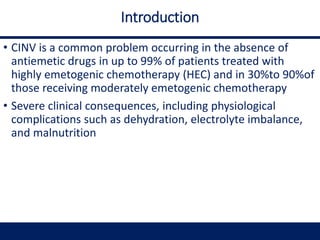
Introduction
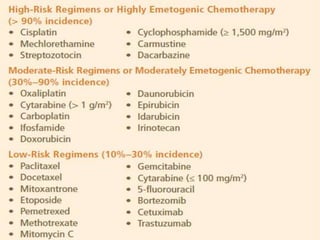
• CINV is a common problem occurring in the absence of
antiemetic drugs in up to 99% of patients treated with
highly emetogenic chemotherapy (HEC) and in 30%to 90%of
those receiving moderately emetogenic chemotherapy
• Severe clinical consequences, including physiological
complications such as dehydration, electrolyte imbalance,
and malnutrition
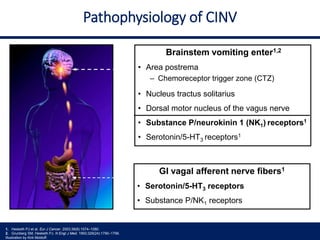
Pathophysiology of CINV
1. Hesketh PJ et al. Eur J Cancer. 2003;39(8):1074–1080.
2. Grunberg SM, Hesketh PJ. N Engl J Med. 1993;329(24):1790–1796.
Illustration by Kirk Moldoff.
Brainstem vomiting enter1,2
• Area postrema
– Chemoreceptor trigger zone (CTZ)
• Nucleus tractus solitarius
• Dorsal motor nucleus of the vagus nerve
• Substance P/neurokinin 1 (NK1) receptors1
• Serotonin/5-HT3 receptors1
GI vagal afferent nerve fibers1
• Serotonin/5-HT3 receptors
• Substance P/NK1 receptors
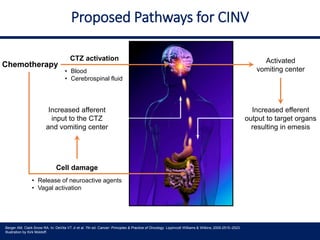
Proposed Pathways for CINV
Cell damage
• Release of neuroactive agents
• Vagal activation
Increased afferent
input to the CTZ
and vomiting center
CTZ activation
• Blood
• Cerebrospinal fluid
Activated
vomiting center
Increased efferent
output to target organs
resulting in emesis
Berger AM, Clark-Snow RA. In: DeVita VT Jr et al. 7th ed. Cancer: Principles & Practice of Oncology. Lippincott Williams & Wilkins; 2005:2515–2523.
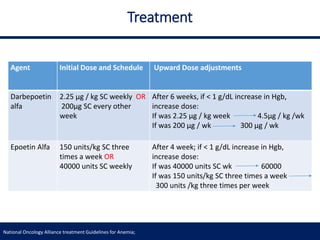
Illustration by Kirk Moldoff.
Chemotherapy
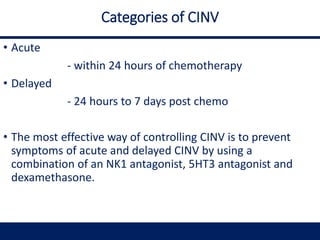
Categories of CINV
• Acute
- within 24 hours of chemotherapy
• Delayed
- 24 hours to 7 days post chemo
• The most effective way of controlling CINV is to prevent
symptoms of acute and delayed CINV by using a
combination of an NK1 antagonist, 5HT3 antagonist and
dexamethasone.
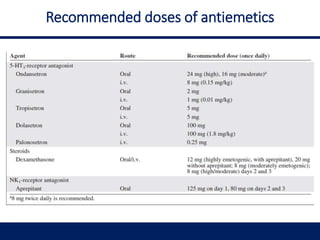
Recommended doses of antiemetics
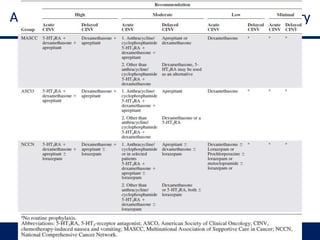
Antiemetic Prevention Based on Emesis Risk Category
Febrile neutropenia
Introduction
• Myelosuppression, including chemotherapy-induced
neutropenia and febrile neutropenia, is the major dose-
limiting toxicity of cancer chemotherapy
• Chemotherapy-induced neutropenia (CIN), defined as an
absolute neutrophil count below 500/mm3
• It can lead to febrile neutropenia (FN), which may result in life-
threatening infection
• Occurs 3-7 days following administration of chemotherapy
and continues for several days before neutrophil levels
return to normal
• The type and dose of chemotherapy affects how low the
neutrophil count drops and how long it will take to recover
Febrile Neutropenia
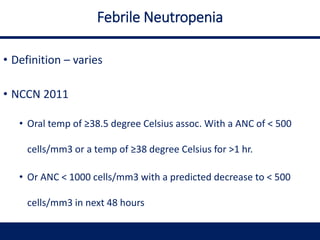
• Definition – varies
• NCCN 2011
• Oral temp of ≥38.5 degree Celsius assoc. With a ANC of < 500
cells/mm3 or a temp of ≥38 degree Celsius for >1 hr.
• Or ANC < 1000 cells/mm3 with a predicted decrease to < 500
cells/mm3 in next 48 hours
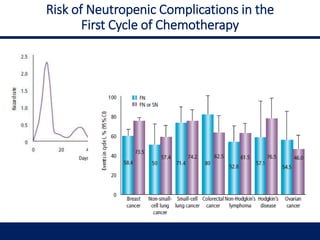
Risk of Neutropenic Complications in the
First Cycle of Chemotherapy
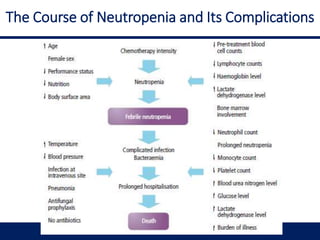
The Course of Neutropenia and Its Complications
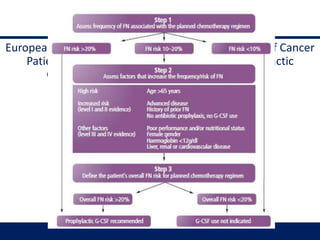
Mangement
European Organisation for Research and Treatment of Cancer
Patient Assessment Algorithm to Decide Prophylactic
Granulocyte Colony-stimulating Factor Usage
Mangement
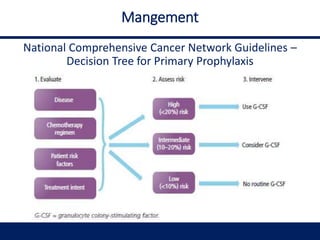
National Comprehensive Cancer Network Guidelines –
Decision Tree for Primary Prophylaxis
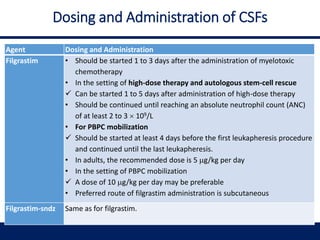
Dosing and Administration of CSFs
Agent Dosing and Administration
Filgrastim • Should be started 1 to 3 days after the administration of myelotoxic
chemotherapy
• In the setting of high-dose therapy and autologous stem-cell rescue
 Can be started 1 to 5 days after administration of high-dose therapy
• Should be continued until reaching an absolute neutrophil count (ANC)
of at least 2 to 3  109/L
• For PBPC mobilization
 Should be started at least 4 days before the first leukapheresis procedure
and continued until the last leukapheresis.
• In adults, the recommended dose is 5 g/kg per day
• In the setting of PBPC mobilization
 A dose of 10 g/kg per day may be preferable
• Preferred route of filgrastim administration is subcutaneous
Filgrastim-sndz Same as for filgrastim.
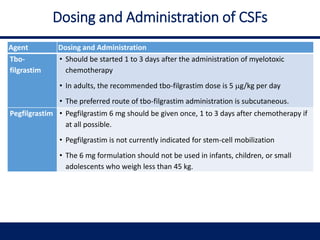
Dosing and Administration of CSFs
Agent Dosing and Administration
Tbo-
filgrastim
• Should be started 1 to 3 days after the administration of myelotoxic
chemotherapy
• In adults, the recommended tbo-filgrastim dose is 5 g/kg per day
• The preferred route of tbo-filgrastim administration is subcutaneous.
Pegfilgrastim • Pegfilgrastim 6 mg should be given once, 1 to 3 days after chemotherapy if
at all possible.
• Pegfilgrastim is not currently indicated for stem-cell mobilization
• The 6 mg formulation should not be used in infants, children, or small
adolescents who weigh less than 45 kg.
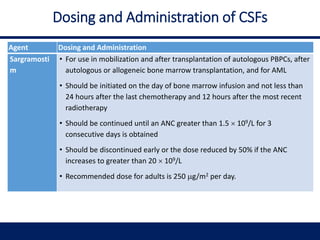
Dosing and Administration of CSFs
Agent Dosing and Administration
Sargramosti
m
• For use in mobilization and after transplantation of autologous PBPCs, after
autologous or allogeneic bone marrow transplantation, and for AML
• Should be initiated on the day of bone marrow infusion and not less than
24 hours after the last chemotherapy and 12 hours after the most recent
radiotherapy
• Should be continued until an ANC greater than 1.5  109/L for 3
consecutive days is obtained
• Should be discontinued early or the dose reduced by 50% if the ANC
increases to greater than 20  109/L
• Recommended dose for adults is 250 g/m2 per day.
Precautions
• Administration with combined chemotherapy and radiotherapy
has not been studied, and the use of CSF with daily radiation
therapy may worsen neutropenia or damage the bone marrow
• Interaction with lithium!!!!!
• Lithium results in rapid release of neutrophils as they develop;
thus, close monitoring is warranted in patients receiving
concomitant lithium and CSF therapy.
• Lower CSF doses and/or a shorter duration of therapy may be
required
• Sargramostim is contraindicated in patients sensitive to yeast-
derived products,
• Filgrastim is contraindicated in patients sensitive to E.Coli-
derived products.
Anaemia
Causes
• Most common etiology is chemotherapy or radiotherapy
• Patients at highest risk for therapy induced anemia are
those that:
• Were anemic before therapy
• Undergo treatment with combined modalities
(chemotherapy or radiotherapy)
• Must rule out
• Immune hemolytic anemias
• Microangiopathic hemolysis
• Nutritional deficiences
Treatment Goals
• Maintain hemoglobin at a target range of 11 to 13g/dL
during chemotherapy and/or radiation therapy
• Decrease the sequelae of anemia such as fatigue, shortness
of breath , and requirements for blood transfusions.
• Improve the patient’s quality of life.
Treatment
Upward Dose adjustmentsInitial Dose and ScheduleAgent
After 6 weeks, if < 1 g/dL increase in Hgb,
increase dose:
If was 2.25 µg / kg week 4.5µg / kg /wk
If was 200 µg / wk 300 µg / wk
2.25 µg / kg SC weekly OR
200µg SC every other
week
Darbepoetin
alfa
After 4 week; if < 1 g/dL increase in Hgb,
increase dose:
If was 40000 units SC wk 60000
If was 150 units/kg SC three times a week
300 units /kg three times per week
150 units/kg SC three
times a week OR
40000 units SC weekly
Epoetin Alfa
National Oncology Alliance treatment Guidelines for Anemia;
Mucositis
What is Mucositis?
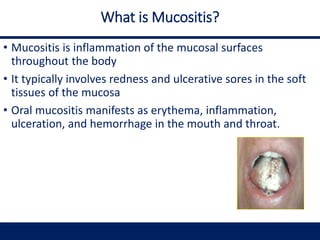
• Mucositis is inflammation of the mucosal surfaces
throughout the body
• It typically involves redness and ulcerative sores in the soft
tissues of the mucosa
• Oral mucositis manifests as erythema, inflammation,
ulceration, and hemorrhage in the mouth and throat.
Mechanisms
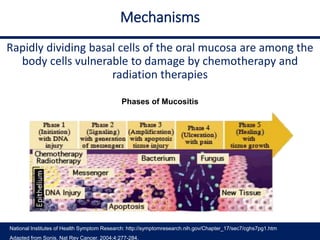
Rapidly dividing basal cells of the oral mucosa are among the
body cells vulnerable to damage by chemotherapy and
radiation therapies
Phases of Mucositis
National Institutes of Health Symptom Research: http://symptomresearch.nih.gov/Chapter_17/sec7/cghs7pg1.htm
Adapted from Sonis. Nat Rev Cancer. 2004;4:277-284.
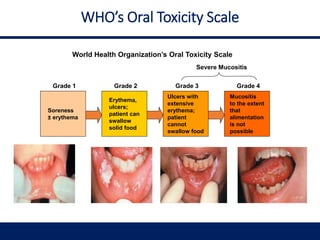
WHO’s Oral Toxicity Scale
Soreness
± erythema
Erythema,
ulcers;
patient can
swallow
solid food
Mucositis
to the extent
that
alimentation
is not
possible
Ulcers with
extensive
erythema;
patient
cannot
swallow food
Grade 2 Grade 3
Severe Mucositis
Grade 1 Grade 4
World Health Organization’s Oral Toxicity Scale
Management of oral mucositis
S. No. Ailment Treatment
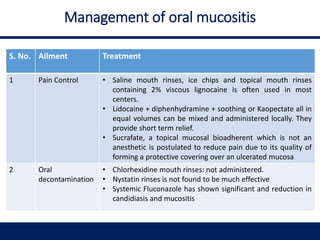
1 Pain Control • Saline mouth rinses, ice chips and topical mouth rinses
containing 2% viscous lignocaine is often used in most
centers.
• Lidocaine + diphenhydramine + soothing or Kaopectate all in
equal volumes can be mixed and administered locally. They
provide short term relief.
• Sucrafate, a topical mucosal bioadherent which is not an
anesthetic is postulated to reduce pain due to its quality of
forming a protective covering over an ulcerated mucosa
2 Oral
decontamination
• Chlorhexidine mouth rinses: not administered.
• Nystatin rinses is not found to be much effective
• Systemic Fluconazole has shown significant and reduction in
candidiasis and mucositis
Management of oral mucositis
S. No. Ailment Treatment
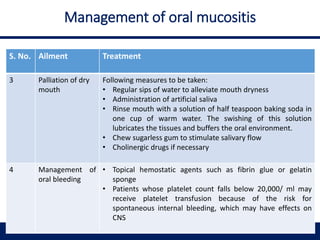
3 Palliation of dry
mouth
Following measures to be taken:
• Regular sips of water to alleviate mouth dryness
• Administration of artificial saliva
• Rinse mouth with a solution of half teaspoon baking soda in
one cup of warm water. The swishing of this solution
lubricates the tissues and buffers the oral environment.
• Chew sugarless gum to stimulate salivary flow
• Cholinergic drugs if necessary
4 Management of
oral bleeding
• Topical hemostatic agents such as fibrin glue or gelatin
sponge
• Patients whose platelet count falls below 20,000/ ml may
receive platelet transfusion because of the risk for
spontaneous internal bleeding, which may have effects on
CNS
Management of oral mucositis
S. No. Ailment Treatment
5 Therapeutic
intervention for
oral mucositis
Cryotherapy
• Ice-chips are placed in the oral cavity, five minutes prior to
chemotherapy and replenished as needed for up to 30
minutes
• Cryotherapy is useful for short bolus chemotherapy
Growth factors
• Human keratinocyte growth factor -1 [paliferamin],
significantly reduces incidence of WHO grade 3 and 4 oral
mucositis
Anti-inflammatory agents
• Oral suspension of L-glutamine reduced the incidence of
clinically significant chemotherapy-induced oral mucositis
• Antioxidants
Antioxidants
• N-Acetylcysteine in a proprietary matrix for topical
application in the oral cavity
Diarrhoea
Introduction
• Chemotherapy-induced diarrhoea (CID) is a common
problem in patients with advanced cancer and has to be
carefully differentiated from other causes of diarrhoea
• Possible etiologies could be radiotherapy, chemotherapeutic
agents, decreased physical performance, graft versus host
disease and infections
• CID can occur in 50% to 80% of patients depending on the
chemotherapy regimen
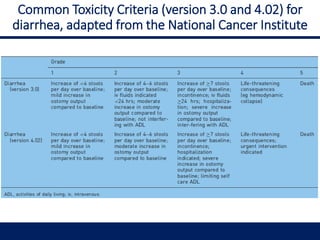
Common Toxicity Criteria (version 3.0 and 4.02) for
diarrhea, adapted from the National Cancer Institute
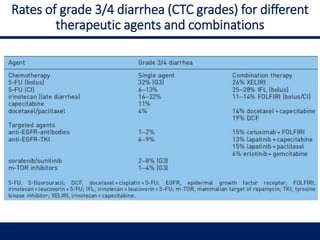
Rates of grade 3/4 diarrhea (CTC grades) for different
therapeutic agents and combinations
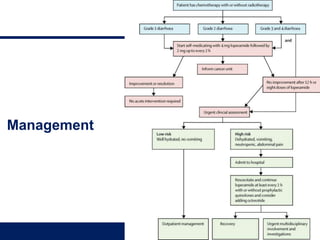
Management
Thank You

Post chemotherapy care ver 1.0

  • 1.
  • 2.
    Stats… 2Siegel et al:CA Cancer J Clin 2014 http://www.neeman-medical.com/sites/default/files/files/Cancer%20in%20India.pdf Accessed on 28.4.16
  • 3.
  • 4.
  • 5.
    Introduction • Refers tothe process by which one substance (e.g., fluid, drug) leaks into the surrounding tissue • In terms of cancer therapy, extravasation is defined as the accidental leakage from its intended compartment (the vein) into the surrounding tissue • Usually, this occurs when intravenous (IV) medication passes from the blood vessel into the tissue around the blood vessels and beyond
  • 6.
    Types of Extravasation •Classified according to the reaction that is caused by the substance passing into the surrounding tissue • Non-vesicants • Do not cause ulceration • Rarely produce an acute reaction or progress to necrosis • Irritants • Cause pain at, and around the injection site • May or may not also cause inflammation • Vesicants • Potential to cause blistering and ulceration • Can lead to the more serious side effects of extravasation such as tissue destruction and necrosis
  • 7.
    How Is ExtravasationRecognized • Patient reporting • Visual assessment • Checking the infusion line • Distinguishing extravasation vs. other conditions
  • 8.
    Distinguishing extravasation vs.other conditions • Other conditions that resemble extravasation include: • Flare reaction • Vessel irritation • Venous shock • Phlebitis • Hypersensitivity
  • 9.
  • 10.
  • 11.
  • 12.
  • 13.
    Antidote Use AfterExtravasation Extravasated drug Suggested antidote Level of evidence Advice Anthracyclines Savene™ (dexrazoxane) Efficacy in biopsy-verified anthracycline extravasation has been confirmed in clinical trials 3 day course of Savene treatment: 1000 mg/m2 IV as soon as possible (no later than 6 hours) after extravasation on day 1; 1000 mg/m2 on day 2; and 500 mg/m2 on day 3 Anthracyclines Topical DMSO (99%) Suggested as a possible antidote in many literature sources. Due to lack of evidence it is recommended that this is further studied Apply locally as soon as possible. Repeat every 8 hours for 7 days Mitomycin C Topical DMSO (99%) Suggested as a possible antidote in many literature sources. Due to lack of evidence it is recommended that this is further studied Apply locally as soon as possible. Repeat every 8 hours for 7 days
  • 14.
    Antidote Use AfterExtravasation Extravasated drug Suggested antidote Level of evidence Advice Mechlorethamine (Nitrogen mustard) Sodium thiosulfate Due to lack of evidence, this antidote is not recommended 2 mL of a solution made from 4 mL sodium thiosulfate + 6 mL sterile water for subcutaneous injection Vinca alkaloids Hyaluronidase Suggested as a possible antidote in many literature sources. Due to lack of evidence it is recommended that this is further studied 150–1500 IU subcutaneously around the area of extravasation Taxanes Hyaluronidase Suggested as a possible antidote in many literature sources. Due to lack of evidence it is recommended that this is further studied 150–1500 IU subcutaneously around the area of extravasation
  • 15.
  • 16.
    Introduction • CINV isa common problem occurring in the absence of antiemetic drugs in up to 99% of patients treated with highly emetogenic chemotherapy (HEC) and in 30%to 90%of those receiving moderately emetogenic chemotherapy • Severe clinical consequences, including physiological complications such as dehydration, electrolyte imbalance, and malnutrition
  • 17.
    Pathophysiology of CINV 1.Hesketh PJ et al. Eur J Cancer. 2003;39(8):1074–1080. 2. Grunberg SM, Hesketh PJ. N Engl J Med. 1993;329(24):1790–1796. Illustration by Kirk Moldoff. Brainstem vomiting enter1,2 • Area postrema – Chemoreceptor trigger zone (CTZ) • Nucleus tractus solitarius • Dorsal motor nucleus of the vagus nerve • Substance P/neurokinin 1 (NK1) receptors1 • Serotonin/5-HT3 receptors1 GI vagal afferent nerve fibers1 • Serotonin/5-HT3 receptors • Substance P/NK1 receptors
  • 18.
    Proposed Pathways forCINV Cell damage • Release of neuroactive agents • Vagal activation Increased afferent input to the CTZ and vomiting center CTZ activation • Blood • Cerebrospinal fluid Activated vomiting center Increased efferent output to target organs resulting in emesis Berger AM, Clark-Snow RA. In: DeVita VT Jr et al. 7th ed. Cancer: Principles & Practice of Oncology. Lippincott Williams & Wilkins; 2005:2515–2523. Illustration by Kirk Moldoff. Chemotherapy
  • 19.
    Categories of CINV •Acute - within 24 hours of chemotherapy • Delayed - 24 hours to 7 days post chemo • The most effective way of controlling CINV is to prevent symptoms of acute and delayed CINV by using a combination of an NK1 antagonist, 5HT3 antagonist and dexamethasone.
  • 21.
  • 22.
    Antiemetic Prevention Basedon Emesis Risk Category
  • 23.
  • 24.
    Introduction • Myelosuppression, includingchemotherapy-induced neutropenia and febrile neutropenia, is the major dose- limiting toxicity of cancer chemotherapy • Chemotherapy-induced neutropenia (CIN), defined as an absolute neutrophil count below 500/mm3 • It can lead to febrile neutropenia (FN), which may result in life- threatening infection • Occurs 3-7 days following administration of chemotherapy and continues for several days before neutrophil levels return to normal • The type and dose of chemotherapy affects how low the neutrophil count drops and how long it will take to recover
  • 25.
    Febrile Neutropenia • Definition– varies • NCCN 2011 • Oral temp of ≥38.5 degree Celsius assoc. With a ANC of < 500 cells/mm3 or a temp of ≥38 degree Celsius for >1 hr. • Or ANC < 1000 cells/mm3 with a predicted decrease to < 500 cells/mm3 in next 48 hours
  • 26.
    Risk of NeutropenicComplications in the First Cycle of Chemotherapy
  • 27.
    The Course ofNeutropenia and Its Complications
  • 28.
    Mangement European Organisation forResearch and Treatment of Cancer Patient Assessment Algorithm to Decide Prophylactic Granulocyte Colony-stimulating Factor Usage
  • 29.
    Mangement National Comprehensive CancerNetwork Guidelines – Decision Tree for Primary Prophylaxis
  • 30.
    Dosing and Administrationof CSFs Agent Dosing and Administration Filgrastim • Should be started 1 to 3 days after the administration of myelotoxic chemotherapy • In the setting of high-dose therapy and autologous stem-cell rescue  Can be started 1 to 5 days after administration of high-dose therapy • Should be continued until reaching an absolute neutrophil count (ANC) of at least 2 to 3  109/L • For PBPC mobilization  Should be started at least 4 days before the first leukapheresis procedure and continued until the last leukapheresis. • In adults, the recommended dose is 5 g/kg per day • In the setting of PBPC mobilization  A dose of 10 g/kg per day may be preferable • Preferred route of filgrastim administration is subcutaneous Filgrastim-sndz Same as for filgrastim.
  • 31.
    Dosing and Administrationof CSFs Agent Dosing and Administration Tbo- filgrastim • Should be started 1 to 3 days after the administration of myelotoxic chemotherapy • In adults, the recommended tbo-filgrastim dose is 5 g/kg per day • The preferred route of tbo-filgrastim administration is subcutaneous. Pegfilgrastim • Pegfilgrastim 6 mg should be given once, 1 to 3 days after chemotherapy if at all possible. • Pegfilgrastim is not currently indicated for stem-cell mobilization • The 6 mg formulation should not be used in infants, children, or small adolescents who weigh less than 45 kg.
  • 32.
    Dosing and Administrationof CSFs Agent Dosing and Administration Sargramosti m • For use in mobilization and after transplantation of autologous PBPCs, after autologous or allogeneic bone marrow transplantation, and for AML • Should be initiated on the day of bone marrow infusion and not less than 24 hours after the last chemotherapy and 12 hours after the most recent radiotherapy • Should be continued until an ANC greater than 1.5  109/L for 3 consecutive days is obtained • Should be discontinued early or the dose reduced by 50% if the ANC increases to greater than 20  109/L • Recommended dose for adults is 250 g/m2 per day.
  • 33.
    Precautions • Administration withcombined chemotherapy and radiotherapy has not been studied, and the use of CSF with daily radiation therapy may worsen neutropenia or damage the bone marrow • Interaction with lithium!!!!! • Lithium results in rapid release of neutrophils as they develop; thus, close monitoring is warranted in patients receiving concomitant lithium and CSF therapy. • Lower CSF doses and/or a shorter duration of therapy may be required • Sargramostim is contraindicated in patients sensitive to yeast- derived products, • Filgrastim is contraindicated in patients sensitive to E.Coli- derived products.
  • 34.
  • 35.
    Causes • Most commonetiology is chemotherapy or radiotherapy • Patients at highest risk for therapy induced anemia are those that: • Were anemic before therapy • Undergo treatment with combined modalities (chemotherapy or radiotherapy) • Must rule out • Immune hemolytic anemias • Microangiopathic hemolysis • Nutritional deficiences
  • 36.
    Treatment Goals • Maintainhemoglobin at a target range of 11 to 13g/dL during chemotherapy and/or radiation therapy • Decrease the sequelae of anemia such as fatigue, shortness of breath , and requirements for blood transfusions. • Improve the patient’s quality of life.
  • 37.
    Treatment Upward Dose adjustmentsInitialDose and ScheduleAgent After 6 weeks, if < 1 g/dL increase in Hgb, increase dose: If was 2.25 µg / kg week 4.5µg / kg /wk If was 200 µg / wk 300 µg / wk 2.25 µg / kg SC weekly OR 200µg SC every other week Darbepoetin alfa After 4 week; if < 1 g/dL increase in Hgb, increase dose: If was 40000 units SC wk 60000 If was 150 units/kg SC three times a week 300 units /kg three times per week 150 units/kg SC three times a week OR 40000 units SC weekly Epoetin Alfa National Oncology Alliance treatment Guidelines for Anemia;
  • 38.
  • 39.
    What is Mucositis? •Mucositis is inflammation of the mucosal surfaces throughout the body • It typically involves redness and ulcerative sores in the soft tissues of the mucosa • Oral mucositis manifests as erythema, inflammation, ulceration, and hemorrhage in the mouth and throat.
  • 40.
    Mechanisms Rapidly dividing basalcells of the oral mucosa are among the body cells vulnerable to damage by chemotherapy and radiation therapies Phases of Mucositis National Institutes of Health Symptom Research: http://symptomresearch.nih.gov/Chapter_17/sec7/cghs7pg1.htm Adapted from Sonis. Nat Rev Cancer. 2004;4:277-284.
  • 41.
    WHO’s Oral ToxicityScale Soreness ± erythema Erythema, ulcers; patient can swallow solid food Mucositis to the extent that alimentation is not possible Ulcers with extensive erythema; patient cannot swallow food Grade 2 Grade 3 Severe Mucositis Grade 1 Grade 4 World Health Organization’s Oral Toxicity Scale
  • 42.
    Management of oralmucositis S. No. Ailment Treatment 1 Pain Control • Saline mouth rinses, ice chips and topical mouth rinses containing 2% viscous lignocaine is often used in most centers. • Lidocaine + diphenhydramine + soothing or Kaopectate all in equal volumes can be mixed and administered locally. They provide short term relief. • Sucrafate, a topical mucosal bioadherent which is not an anesthetic is postulated to reduce pain due to its quality of forming a protective covering over an ulcerated mucosa 2 Oral decontamination • Chlorhexidine mouth rinses: not administered. • Nystatin rinses is not found to be much effective • Systemic Fluconazole has shown significant and reduction in candidiasis and mucositis
  • 43.
    Management of oralmucositis S. No. Ailment Treatment 3 Palliation of dry mouth Following measures to be taken: • Regular sips of water to alleviate mouth dryness • Administration of artificial saliva • Rinse mouth with a solution of half teaspoon baking soda in one cup of warm water. The swishing of this solution lubricates the tissues and buffers the oral environment. • Chew sugarless gum to stimulate salivary flow • Cholinergic drugs if necessary 4 Management of oral bleeding • Topical hemostatic agents such as fibrin glue or gelatin sponge • Patients whose platelet count falls below 20,000/ ml may receive platelet transfusion because of the risk for spontaneous internal bleeding, which may have effects on CNS
  • 44.
    Management of oralmucositis S. No. Ailment Treatment 5 Therapeutic intervention for oral mucositis Cryotherapy • Ice-chips are placed in the oral cavity, five minutes prior to chemotherapy and replenished as needed for up to 30 minutes • Cryotherapy is useful for short bolus chemotherapy Growth factors • Human keratinocyte growth factor -1 [paliferamin], significantly reduces incidence of WHO grade 3 and 4 oral mucositis Anti-inflammatory agents • Oral suspension of L-glutamine reduced the incidence of clinically significant chemotherapy-induced oral mucositis • Antioxidants Antioxidants • N-Acetylcysteine in a proprietary matrix for topical application in the oral cavity
  • 45.
  • 46.
    Introduction • Chemotherapy-induced diarrhoea(CID) is a common problem in patients with advanced cancer and has to be carefully differentiated from other causes of diarrhoea • Possible etiologies could be radiotherapy, chemotherapeutic agents, decreased physical performance, graft versus host disease and infections • CID can occur in 50% to 80% of patients depending on the chemotherapy regimen
  • 47.
    Common Toxicity Criteria(version 3.0 and 4.02) for diarrhea, adapted from the National Cancer Institute
  • 48.
    Rates of grade3/4 diarrhea (CTC grades) for different therapeutic agents and combinations
  • 49.
  • 50.