PHARMACOKINETIC DRUG
INTERACTIONS
PRESENTED BY:
SIDDIQUA PARVEEN
PHARM D
SULTAN UL ULOOM COLLEGE OF PHARMACY,
HYDERABAD
GUIDED BY:
Dr. S.P SRINIVAS NAYAK,ASSISTANT PROFESSOR
SUCP,HYD
DEFINITION:
•Drug interaction is defined as the
pharmacological activity of one drug is altered
by the concomitant use of another drug or by
the presence of some other substance.
•The drug whose activity is effected by such an
interaction is called as “Object Drug”.
•The agent which precipitates such an
interaction is referred to as “Precipitant”.
TYPES OF DRUG INTERACTIONS:
1.Drug-Drug interaction
Ex-Aspirin+Warfarin
2.Drug-Food interaction
Ex-Tetracycline+Calcium
3.Drug-Chemical interaction
Ex-Acetaminophen+Alcohol
4.Drug-Laboratory Drug interaction
Ex-Alteration of diagnostic test results by the presence of
drug
5.Drug-Disease interaction
Ex-Thiazides+Gout(Worsening of gout)
The Net effect of a Drug interaction is:
1.Generally quantitative i.e. increased or
decreased effect
2.Seldom qualitative i.e. rapid or slower effect
3.Precipitation of newer or increased adverse
effect
Drug interaction are thus:
1.Mostly undesirable
2.Rarely desirable(beneficial)
Eg:Enhancement of activity of penicillins when
administered with probenecid
Factors contributing to Drug interactions:
1.Multiple drug therapy
2.Multiple prescribers
3.Multiple pharmacological
effects of drug
4.Multiple diseases/
predisposing illness
5.Poor patient compliance
6.Advancing age of patient
7.Drug related factors
PHARMACOKINETIC DRUG INTERACTIONS:
•Pharmacokinetics is ‘what the body does to the drug'.
These interactions occur when one drug alters the
concentration of another drug (object) with clinical
consequences.
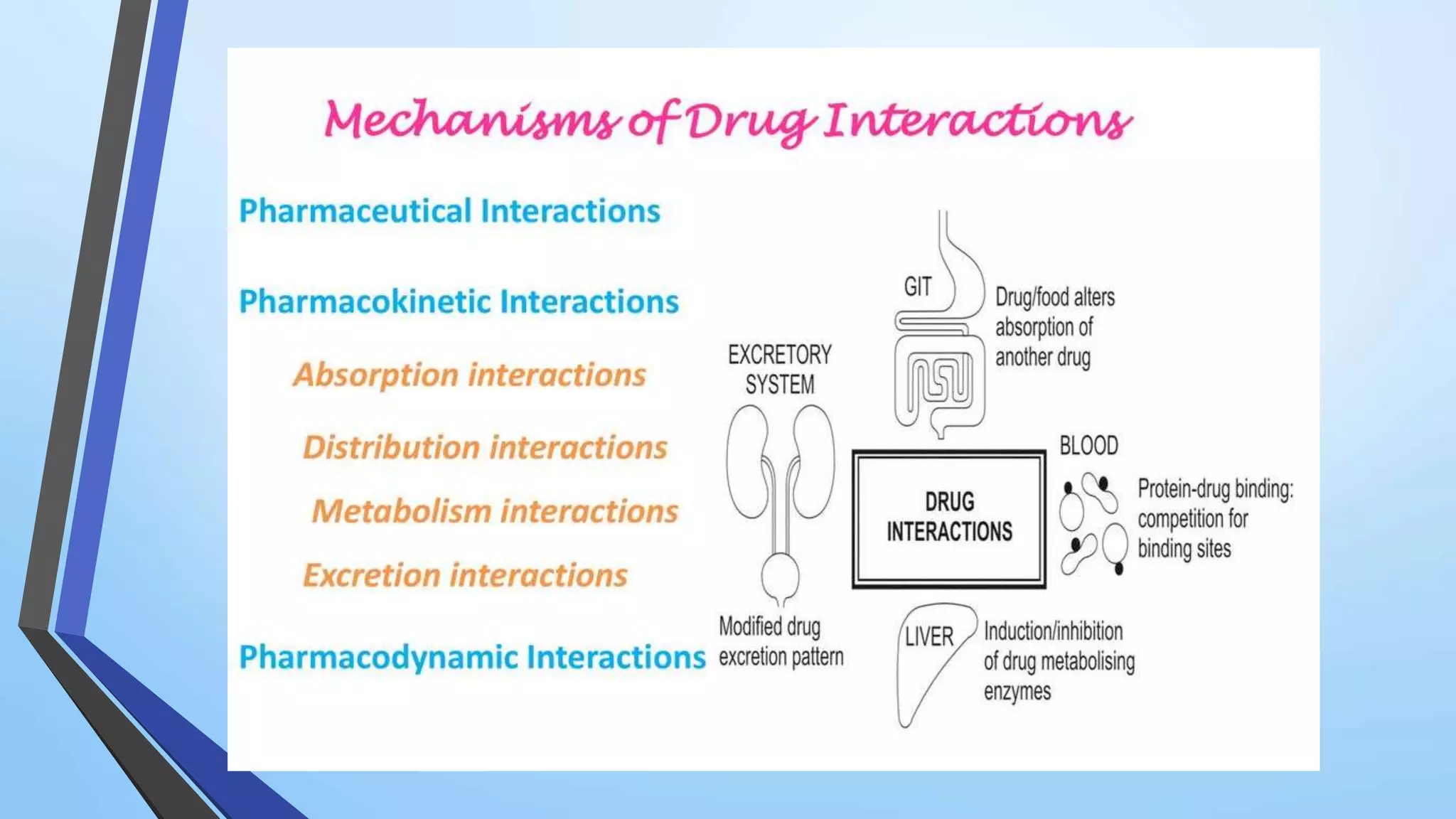
•Pharmacokinetic interaction occur when the
absorption, distribution, metabolism or elimination
process of the object drug is altered by the precipitant
drug and hence search interactions are also called as
ADME interactions.
•The resultant effect is altered plasma concentration of
the object drug.
DRUG ABSORPTION INTERACTIONS:
•Absorption interactions are those where the absorption of the
object drug is altered
•Since the oral route is the one, most frequent
used to administer drugs, interactions
influencing absorption are most likely
to occur within the gastrointestinal
tract
•The net effect of such an interaction
is:
Faster or slower drug absorption
More or less drug absorption
DRUG DISTRIBUTION INTERACTIONS:
•Drug distribution interactions are those where the distribution
pattern of the object drug is altered
•The major mechanism for distribution interaction
is alteration in protein drug binding
•Many drugs interact by displacement of each
others binding to plasma proteins
•Usually, drugs are transported through binding of
plasma and tissue proteins.Of the many
plasma proteins interacting with drugs, the
most important are albumin, α1–acid glycoprotein
and lipoproteins
•Acidic drugs are usually bound more extensively to
albumin, while basic drugs are usually bound more
extensively to α1-acid glycoproteins, lipoproteins or both
E.g.: Concomitant administration ofWarfarin with
Phenylbutazone or other highly protein bound drugs
leads to increased levels of warfarin
•The drugs most likely to lead to clinically
significant interactions are those that are:
1.90% or more protein bound
2.Having small volume of distribution
3.Having a low therapeutic index
4.Low hepatic extraction ratios or those administered I.V
METABOLISM INTERACTIONS:
STIMULATION OF METABOLISM:
•Certain drugs stimulate the activity of hepatic microsomal
enzymes.This effect is referred to as enzyme induction
•The increased activity is due to enhanced enzyme synthesis
results in increased amounts of drug metabolizing enzyme
•Enzyme induction will result in
increased metabolism and excretion
and reduced effect of agent which is
metabolized by the hepatic enzymes
E.g.:Warfarin and Phenobarbital
Phenobarbital increases the rate of metabolism ofWarfarin
resulting in decreased anticoagulant activity
INHIBITION OF METABOLISM:
•If one drug inhibits the metabolism of another drug it results in
prolonged action or intensified activity
•Alcohol-Disulfiram inhibit the activity of alcohol dehydrogenase,
thus inhibiting oxidation of acetaldehyde, an oxidation product of
alcohol .This results in accumulation of acetaldehyde and
development of the characteristic unpleasant effect of disulfiram
DRUG ELIMINATION INTERACTIONS:
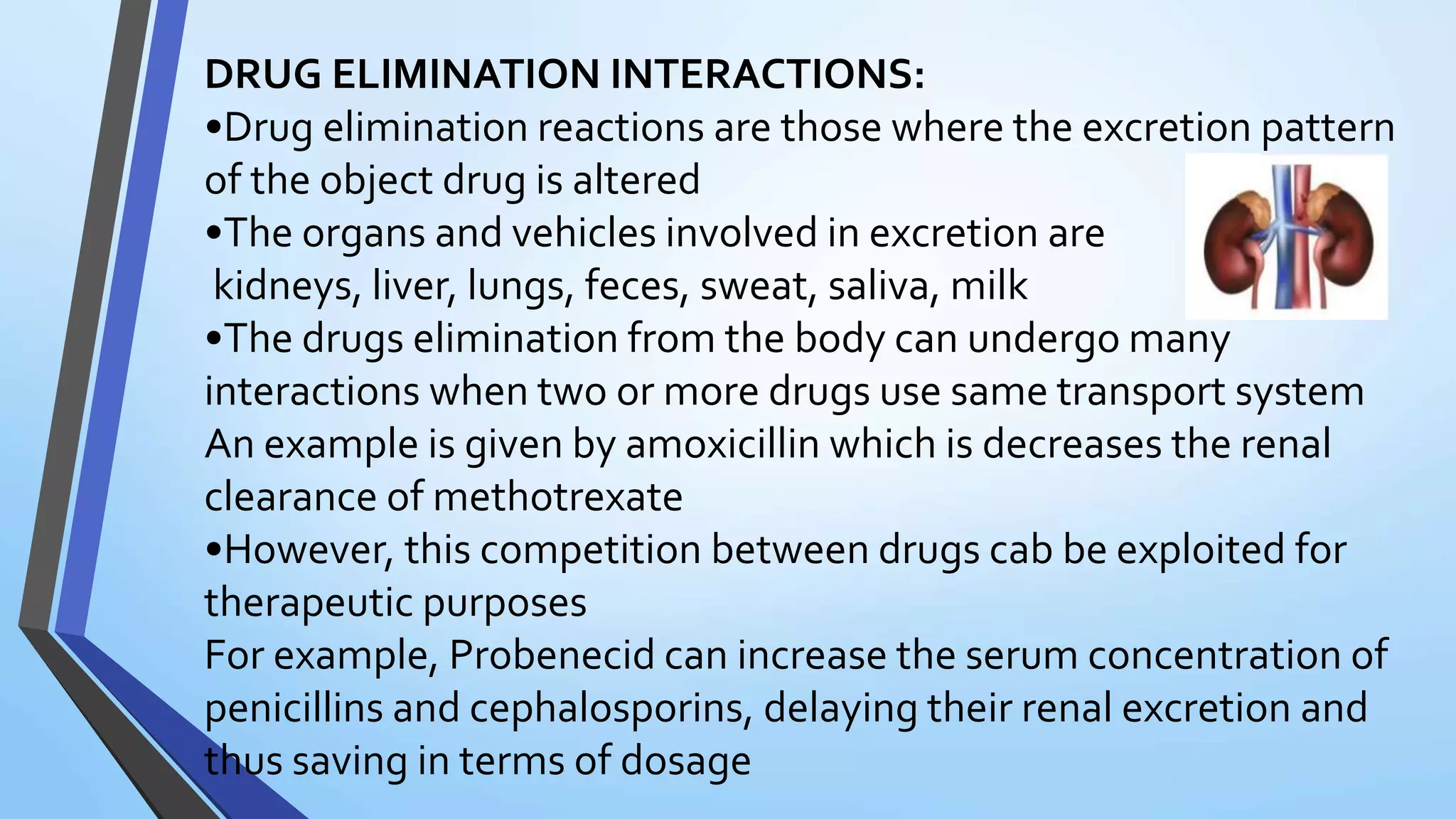
•Drug elimination reactions are those where the excretion pattern
of the object drug is altered
•The organs and vehicles involved in excretion are
kidneys, liver, lungs, feces, sweat, saliva, milk
•The drugs elimination from the body can undergo many
interactions when two or more drugs use same transport system
An example is given by amoxicillin which is decreases the renal
clearance of methotrexate
•However, this competition between drugs cab be exploited for
therapeutic purposes
For example, Probenecid can increase the serum concentration of
penicillins and cephalosporins, delaying their renal excretion and
thus saving in terms of dosage
•Drugs that are chiefly excreted
by the kidneys can get involved
in drug interactions by different
mechanisms such as
1.Competition at active transport
sites
2.Alteration sin glomerular filtration
3.Passive renal tubular reabsorption
or active secretion
4.Urinary pH
THANKYOU

Pharmacokinetic Drug Interactions

  • 1.
    PHARMACOKINETIC DRUG INTERACTIONS PRESENTED BY: SIDDIQUAPARVEEN PHARM D SULTAN UL ULOOM COLLEGE OF PHARMACY, HYDERABAD GUIDED BY: Dr. S.P SRINIVAS NAYAK,ASSISTANT PROFESSOR SUCP,HYD
  • 2.
    DEFINITION: •Drug interaction isdefined as the pharmacological activity of one drug is altered by the concomitant use of another drug or by the presence of some other substance. •The drug whose activity is effected by such an interaction is called as “Object Drug”. •The agent which precipitates such an interaction is referred to as “Precipitant”.
  • 3.
    TYPES OF DRUGINTERACTIONS: 1.Drug-Drug interaction Ex-Aspirin+Warfarin 2.Drug-Food interaction Ex-Tetracycline+Calcium 3.Drug-Chemical interaction Ex-Acetaminophen+Alcohol 4.Drug-Laboratory Drug interaction Ex-Alteration of diagnostic test results by the presence of drug 5.Drug-Disease interaction Ex-Thiazides+Gout(Worsening of gout)
  • 4.
    The Net effectof a Drug interaction is: 1.Generally quantitative i.e. increased or decreased effect 2.Seldom qualitative i.e. rapid or slower effect 3.Precipitation of newer or increased adverse effect Drug interaction are thus: 1.Mostly undesirable 2.Rarely desirable(beneficial) Eg:Enhancement of activity of penicillins when administered with probenecid
  • 5.
    Factors contributing toDrug interactions: 1.Multiple drug therapy 2.Multiple prescribers 3.Multiple pharmacological effects of drug 4.Multiple diseases/ predisposing illness 5.Poor patient compliance 6.Advancing age of patient 7.Drug related factors
  • 8.
    PHARMACOKINETIC DRUG INTERACTIONS: •Pharmacokineticsis ‘what the body does to the drug'. These interactions occur when one drug alters the concentration of another drug (object) with clinical consequences. •Pharmacokinetic interaction occur when the absorption, distribution, metabolism or elimination process of the object drug is altered by the precipitant drug and hence search interactions are also called as ADME interactions. •The resultant effect is altered plasma concentration of the object drug.
  • 10.
    DRUG ABSORPTION INTERACTIONS: •Absorptioninteractions are those where the absorption of the object drug is altered •Since the oral route is the one, most frequent used to administer drugs, interactions influencing absorption are most likely to occur within the gastrointestinal tract •The net effect of such an interaction is: Faster or slower drug absorption More or less drug absorption
  • 19.
    DRUG DISTRIBUTION INTERACTIONS: •Drugdistribution interactions are those where the distribution pattern of the object drug is altered •The major mechanism for distribution interaction is alteration in protein drug binding •Many drugs interact by displacement of each others binding to plasma proteins •Usually, drugs are transported through binding of plasma and tissue proteins.Of the many plasma proteins interacting with drugs, the most important are albumin, α1–acid glycoprotein and lipoproteins
  • 20.
    •Acidic drugs areusually bound more extensively to albumin, while basic drugs are usually bound more extensively to α1-acid glycoproteins, lipoproteins or both E.g.: Concomitant administration ofWarfarin with Phenylbutazone or other highly protein bound drugs leads to increased levels of warfarin •The drugs most likely to lead to clinically significant interactions are those that are: 1.90% or more protein bound 2.Having small volume of distribution 3.Having a low therapeutic index 4.Low hepatic extraction ratios or those administered I.V
  • 23.
    METABOLISM INTERACTIONS: STIMULATION OFMETABOLISM: •Certain drugs stimulate the activity of hepatic microsomal enzymes.This effect is referred to as enzyme induction •The increased activity is due to enhanced enzyme synthesis results in increased amounts of drug metabolizing enzyme •Enzyme induction will result in increased metabolism and excretion and reduced effect of agent which is metabolized by the hepatic enzymes E.g.:Warfarin and Phenobarbital Phenobarbital increases the rate of metabolism ofWarfarin resulting in decreased anticoagulant activity
  • 24.
    INHIBITION OF METABOLISM: •Ifone drug inhibits the metabolism of another drug it results in prolonged action or intensified activity •Alcohol-Disulfiram inhibit the activity of alcohol dehydrogenase, thus inhibiting oxidation of acetaldehyde, an oxidation product of alcohol .This results in accumulation of acetaldehyde and development of the characteristic unpleasant effect of disulfiram
  • 31.
    DRUG ELIMINATION INTERACTIONS: •Drugelimination reactions are those where the excretion pattern of the object drug is altered •The organs and vehicles involved in excretion are kidneys, liver, lungs, feces, sweat, saliva, milk •The drugs elimination from the body can undergo many interactions when two or more drugs use same transport system An example is given by amoxicillin which is decreases the renal clearance of methotrexate •However, this competition between drugs cab be exploited for therapeutic purposes For example, Probenecid can increase the serum concentration of penicillins and cephalosporins, delaying their renal excretion and thus saving in terms of dosage
  • 32.
    •Drugs that arechiefly excreted by the kidneys can get involved in drug interactions by different mechanisms such as 1.Competition at active transport sites 2.Alteration sin glomerular filtration 3.Passive renal tubular reabsorption or active secretion 4.Urinary pH
  • 40.