PHARMACIST SCOPE OF
PRACTICE
Profession of Pharmacy
 Mission:
 Improve public health
 Safe and effective use of medications
 Scope of Practice for Pharmacists
 Regulated at state level.
 Model State Pharmacy Act and Model Rules of the National Association of Boards
of Pharmacy.
 Practice of Pharmacy:
 Includes but not limited to ;
 Interpretation, evaluation, dispensing and implementation of medical orders.
 Pharmacist Care services:
 Patient care activities with or without the dispensing of drugs/devices intended to
achieve outcomes that will improve QOL.
 Patient Counseling”
 Oral communication by the pharmacist of information to the patient or caregiver to
ensure proper use of drugs and devices
Pharmacist’s Scope of Practice in All 50 States
 Obtain medication histories.
 Review the patient’s medications to identify medication-related problems.
 Intervene with the physician to resolve identified problems.
 Educate the patient about the proper use of medications.
 Encourage adherence to prescribed medications.
 Document and communicate information to the physician.
AMBULATORY CARE PHARMACY PRACTICE
MODELS
 Pharmaceutical Care
 1.Background:
 Was best defined in 1990 by Hepler and Strand.
 Expanding the pharmacist’s role from dispensing to managing drug-related effectiveness,
interactions, adverse drug events.
 Definition:
 Patient-centered, outcomes-oriented pharmacy practice that requires the pharmacist to work
together with the patient and other health care providers to promote health, prevent disease, and
assess, monitor, initiate, and modify medication use to ensure that drug therapy regimens are safe
and effective
Pharmaceutical Care
3. Goals:
 a. Optimize the patient’s health-related quality of life.
 b. Achieve positive clinical outcomes.
 i. Cure of a disease
 ii. Eliminate or reduce a patient’s symptomatology.
 iii. Stop or slow disease progression.
 iv. Disease prevention or symptomatology
Pharmaceutical Care
4. Principles:
 Can be accomplished by a pharmacist in any practice setting
 Maintain a professional relationship with the patient.
 Patient-specific medical information is
 collected, organized and maintained.
 Subjective and objective information: Health status, medical history, medication history, social history,
diet and exercise, history of present illness, and economic situation.
 The information source can include, but is not limited to, medical records, pharmacist assessment,
patient’s family or caregivers, insurer, and other health care professionals.
Pharmaceutical Care
(Principles)
Information is evaluated and a collaborative drug therapy plan is developed
focus should be placed on medication-related problems.
 Untreated indications
 Improper drug selection
 Subtherapeutic dosage
 Failure to receive medications
 Overdosage
Pharmaceutical Care
(Principles)
 Adverse drug reactions.
 Drug interactions.
 Medication use without indication.
 The plan and desired outcomes should be documented in the patient’s medical
and/or pharmacy record
Pharmaceutical Care
(Principles)
 Ensure the patient has all the necessary supplies, information, and knowledge to carry out the plan.
 i. The pharmacist assumes ultimate responsibility for the patient’s ability to obtain and use any drug,
products, or equipment in the drug therapy plan.
 ii. The pharmacist should verify that the patient and/or caregivers understand the disease and the
corresponding medications prescribed in the plan.
 iii. After appropriate education has been provided, the patient is responsible for engaging in behavior that
will contribute to the achievement of the positive outcomes outlined in the plan.
 iv. Steps taken to implement the plan should be documented in the patient’s medical and/or pharmacy
record, and follow-up.
 Review, monitor, and modify the therapeutic plan, when appropriate, in collaboration with the patient
and the health care team.
Pharmaceutical Care
Structural elements for quality pharmaceutical care
 Knowledge, skill:
 Patient assessment, clinical information, communication.
 A system for data collection, documentation, and transfer of information
 References, resources, and equipment
 Tools to support patient care.
 Patient educational materials
 Computer software support.
 Disease management protocols
 Commitment to quality improvement
Medication therapy management (MTM)
 Medication therapy management (MTM) is a distinct service or group of services provided by health
care providers, including pharmacists, to ensure the best therapeutic outcomes for patients.
 MTM includes five core elements:
 medication therapy review
 Personal medication record,
 Medication-related action plan
 Intervention or referral
 Documentation and follow-up.
Medication therapy management (MTM)
 MTM is especially effective for patients with
 Multiple chronic conditions,
 Complex medication therapies
 High prescription costs, and multiple prescribers.
 MTM can be performed by pharmacists with or without a collaborative practice
agreement (CPA)
Medication therapy management (MTM)
 1. Background:
 Medicare Modernization Act of 2003 required Medicare Part D to provide an MTM program as part of its
drug benefit program offered to Medicare beneficiaries.
 2. Consensus definition:
 A distinct service or group of services that optimizes therapeutic outcomes for individual patients.
 3. Goals of MTM:
 Centers for Medicare & Medicaid Services (CMS)
 The Centers for Medicare and Medicaid Services (CMS) is the U.S. federal agency that works with state governments to
manage the Medicare program
Medication therapy management
Goals:
 Optimize therapeutic outcomes through improved medication use.
 Reduce the risk of adverse events and drug interactions.
 Improve medication adherence.
4. CMS requirements of MTM programs 2018 Plan Year:
a Enrollment:
1) Opt-out method: Plans must auto-enroll targeted beneficiaries who meet the eligibility criteria,
2) Plans must target beneficiaries for enrollment at least quarterly during each plan year
Medication therapy management
 CMS Requirements:
 Most plans require two or three chronic disease states for eligibility.
 Plans that specify which chronic diseases apply must select at least five of the nine
distinct core chronic diseases: Alzheimer disease, chronic heart failure, diabetes,
dyslipidemia, end-stage renal disease, hypertension, respiratory disease, bone disease-
arthritis, mental health disease.
 Multiple covered Part D medications: most plans require two to eight
medications for eligibility
Medication therapy management
 Required MTM services :
 Interventions for both patient and prescriber on optimal medication use.
 MTM services can be performed by a pharmacist, pharmacy intern under direct supervision of a
pharmacist, pharmacy technician, or other qualified health care provider (e.g., physician or registered
nurse).
 Annual CMR with written summaries in CMS’s standardized format.
 Must be interactive, person-to-person, or telehealth consultation.
 If the beneficiary cannot accept participation, the CMR may be performed with the
beneficiary’s prescriber, caregiver, or other authorized individual
 CMR is an interactive medication review or consultation between a patient and a pharmacist or other health care
provid- er. In most cases it will take less than thirty minutes with the patient and may be completed over the
phone, if permitted by the plan.
Medication therapy management
 Annual CMR with written summaries in CMS’s standardized format
 Can be provided by a pharmacist, pharmacy intern under direct supervision of a
pharmacist.
 If the beneficiary cannot accept participation, the CMR may be performed with the
beneficiary’s prescriber, caregiver, or other authorized individual.
 CMR to be offered in 60 days of patients enrollment.
 Adapted from the National MTM Advisory Board definition; builds on the American
Pharmacists Association (APhA) medication therapy review (MTR) core element.
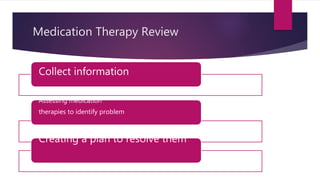
Medication Therapy Review
Collect information
Assessing medication
therapies to identify problem
Creating a plan to resolve them
Medication Therapy Review
 Definition:
Systematic process of collecting patient-specific information, assessing medication therapies to
identify medication-related problems, developing a prioritized list of medication related problems,
and creating a plan to resolve them.
 Comprehensive (all medications/therapy problems) or targeted (specific therapy problem).
 Preferably face-to-face ,however, person-to-person (by phone) is acceptable.
 Interview patient to gather data on demographics, medication history, and general health;
should ideally assess the following
 Patient’s overall health, including previous and current health conditions
 Patient’s values, preferences, goals, and quality of life
 Cultural issues, education level, literacy level, and language barriers
 Laboratory values and vital signs
Medication Therapy Review
 Medication-related problems
 Adverse events
 Appropriateness of each medication
 Adherence to therapy
 Untreated conditions
 Costs and access to medications and health care
 Duplication of therapy
 Develop a plan for each problem identified, and provide patient education
Medication Therapy Review
 B. Personal medication record (PMR)
 Definition: Comprehensive record of the patient’s medications, including, but not limited to, herbal
products, over-the-counter medications, and other dietary supplements.
 Collaborative effort among patients, pharmacists, and other health care professionals.
 Preferably electronic; however, can be handwritten.
 An updated PMR should be created with any medication change.
 May include the following:
(a) Patient name, date of birth, and telephone number
(b) Name and telephone number of physicians and pharmacy or pharmacies
(c) Allergies
(d) Date last updated
(e) Medication information: Medication name, dose, indication, instructions for use, start and
stop date, ordering prescriber, and special instructions
Medication Therapy Review
 C) Medication-related action plan Patient-centric document containing a list of(MAP)
 actions for the patient to use in tracking progress for self-management.
 Critical component of MTM documentation
 Collaborative effort between the patient and the pharmacist
 Includes only information the patient can act on and is within the pharmacist’s scope of practice or
agreed on by relevant health care team members
 Does not include outstanding action items that still require physician approval, such as changes
in medication regimen that are pending approval
 The MAP, in conjugation with education, encourages the patient’s active participation in the health
care plan.
Medication Therapy Review
(MAP)
 May include the following:
(a) Patient name
(b) Name and telephone number of physician and pharmacy
(c) Date of MAP creation
(d) Action steps for the patient
(e) Notes for the patient
(f) Follow-up information
Medication Therapy Review
 D) Intervention and/or referral
 The pharmacist provides consultative services and intervenes to address medication related problems; when
necessary, the pharmacist refers the patient to a physician.
 Pharmacist interventions are important in improving patient outcomes; documentation of the interventions and
outcomes supports the impact of pharmacists on patient outcomes.
 Any medication-related problems identified should be documented and communicated to the
patient’s physician.
 Suggestions to address medication problems and recommendations on follow-up are also
integral to the intervention.
 The intent of this core element is to optimize medication use, enhance continuity of care, and
encourage patients to use health care services to prevent future adverse events.
Medication therapy management
 E) Documentation and follow-up
 MTM services are documented (Electronic or on paper) in a consistent manner, follow-up MTM visits are scheduled depending on
the patient’s medication-related needs.
 Documentation may include, but is not limited to, the following:
 Patient demographics.
Subjective and objective observations, assessment, and plan.
 Education
 Collaboration
 PMR and MAP
 Follow-up Schedule
 Billing
 Time spent on patient care
 Level of complexity determined by the interventions documented.
Medication therapy management
 The purpose of proper documentation
 Facilitate communication between the pharmacist and other health care professionals.
 For evaluating patient progress and sufficient for billing purposes.
 Improve patient care and outcomes.
 Enhance continuity of patient care.
 Protect against professional liability.
 Justification of reimbursement.
 Demonstrate the value of MTM services.
Medication therapy management
 Barriers to and challenges of MTM
 Reimbursement and billing
 Adequate staffing and devoted time in daily workflow
 Lack of access to complete patient information
 Patients’ lack of perceived benefit and interest in MTM services
 State variations in pharmacist’s scope of practice
Medication therapy management
 Benefits of MTM
 Improved health outcomes, including, but not limited to, a reduction in hemoglobin A1C (A1C),blood pressure, and
lipid values
 Reduction in overall health care expenditure
 Improved medication adherence
 Decreased hospitalizations and emergency department (ED) visits
 Accurate and appropriate medication use
 Patient achievement of health-related goals
Comprehensive Medication Management
 Developed by Patient-Centered Primary Care Collaborative (PCPCC) Medication
Management Task Force to describe the contribution of clinical pharmacists in
patient-centered, team-based care
Comprehensive Medication Management
2. Principles:
 A) Assess the patient:
 Review the patient’s medical record using subjective and objective information.
 Obtain and document the patient’s medication history.
 Prioritize the patient’s problems and medication-related needs
 B) Evaluate the patient’s medication-related needs and identify medication-related
problems.
 All medications from all sources are assessed to determined ;
 Suitability for patient.
 How and why he takes these medications.
Comprehensive Medication Management
 Each medication is evaluated for appropriate indication. Right or wrong use.
 Assess any untreated indication.
 The dose, duration, and route of administration are verified.
 Safety of medication is assessed
 ADR’s
 Risk for toxicity.
 Adherence to medication is assessed.
 Changes, discrepancies, and concerns are documented in the patient’s medical record.
 The patient is interviewed to determine beliefs, concerns, understanding, and expectations from the
medications.
Comprehensive Medication Management
C) Develop a care plan with interventions and individualized goals of therapy
Created in collaboration with the patient and primary health care providers
 Care plan includes the following:
 (a) Resolution of identified medication-related problems
 Initiation or Changing medications or medication doses
 Discontinuing medications
 Patient education
 (b) Goals of therapy for each medical condition dictated by the following:
 (1) National guidelines
 (2) Comorbidities
 (3) Patient preferences
 (4) Physician intentions
Comprehensive Medication Management
 Outcomes of Care plan:
 Established outcomes should be measureable and easy to assess.
 Therapeutic outcomes: INR value, Vitamin D value.
 Economic outcomes: Reduced ED visits, hospitalisation prevented.
 Follow up:
 Should be properly times and synchronised with other health care professionals.
 Monitor, modify, document, and manage the care plan.
Comprehensive Medication Management
3) Logistics of providing CMM:
 Qualifying patients:
 Have medical conditions associated with high-cost and multiple medications;
 Difficulty reaching goals of therapy.
 Experiencing adverse effects from medications
 Difficulty understanding and following a medication regimen
 Require monitoring for a high-risk medication,
 Referrals
 Given to a qualified clinical pharmacists
 Clinical pharmacist
 Licensed, board certified, have expert in pharmacotherapy knowledge.
Comprehensive Medication Management
 Patients continue to be provided CMM until the goals of therapy are achieved or until the referring
practitioner determines that the care is not necessary
 Visits:
 Communication during visits must be bidirectional.
 Telemedicine or virtual clinic.
 Practitioner must have experience with these media.
 Documentation:
 Electronic medical record preferred
 Patient’s medication experience
 (b) Medication allergies
Comprehensive Medication Management
 Medication history, including immunizations
 Facilitates communication between pharmacists and other health care providers
 Enhances continuity of patient care
 Captures services provided for justification of billing and reimbursement
 Benefits of CMM :
 Solves medication-related problems
 Helps patients achieve their health-related goals
 Prevents ED visits, hospital admissions, and hospital readmissions; effective transitions of care, and medication
reconciliation
Differences between CMM and MTM
 CMM includes an assessment of the patient’s clinic status or therapeutic
response to treatment.
 b. CMM incorporates an evaluation to assess the patient’s progress toward
treatment goals.
 c. CMM requires collaborations with the health care team.
 d. CMM has more requirements to be considered a qualified pharmacist.
COLLABORATIVE DRUG THERAPY
MANAGEMENT
Description:
 A team approach to healthcare delivery whereby a pharmacist and prescriber establish written
guidelines or protocols authorizing the pharmacist to initiate, modify or continue drug therapy for a
specific patient.”
 The partnership with the prescriber permits the pharmacist to function outside the traditional pharmacy
practice laws.
 Can be provided in the retail, inpatient, and outpatient settings
 Forty-eight states have legislative provisions for CDTM.
 State laws outline different requirements for pharmacists engaging in CDTM
 Pharmacists to have special training or certification
 ii. Protocols to be approved by the board of pharmacy
 iii. Pharmacists to carry liability insurance
COLLABORATIVE DRUG THERAPY
MANAGEMENT
2) Agreements :
 Agreements can also be called protocols, standing orders, collaborative practice agreements, etc.
 State Pharmacy Act and Model Rules outline the process and required elements for agreements. The elements
include:
 Identification of the providers and pharmacists who are parties to the agreement
 Types of decisions the pharmacist is allowed to make; may include a detailed description of:
 (a) The types of diseases, drugs, or drug categories involved, and the activities allowed in each case
 (b) The methods, procedures, decision criteria, and plan the pharmacist is to follow when conducting allowed activities
 (c) The activities the pharmacist is to follow, including documentation of decisions made and a plan or appropriate
mechanism for communication, feedback, and reporting to the provider concerning specific decisions made. In addition to
the agreement, documentation shall occur on the prescription record, patient profile, a separate logbook, or in some other
appropriate system.

Pharmacist care services.pptx

  • 1.
  • 2.
    Profession of Pharmacy Mission:  Improve public health  Safe and effective use of medications  Scope of Practice for Pharmacists  Regulated at state level.  Model State Pharmacy Act and Model Rules of the National Association of Boards of Pharmacy.
  • 3.
     Practice ofPharmacy:  Includes but not limited to ;  Interpretation, evaluation, dispensing and implementation of medical orders.  Pharmacist Care services:  Patient care activities with or without the dispensing of drugs/devices intended to achieve outcomes that will improve QOL.  Patient Counseling”  Oral communication by the pharmacist of information to the patient or caregiver to ensure proper use of drugs and devices
  • 4.
    Pharmacist’s Scope ofPractice in All 50 States  Obtain medication histories.  Review the patient’s medications to identify medication-related problems.  Intervene with the physician to resolve identified problems.  Educate the patient about the proper use of medications.  Encourage adherence to prescribed medications.  Document and communicate information to the physician.
  • 5.
    AMBULATORY CARE PHARMACYPRACTICE MODELS  Pharmaceutical Care  1.Background:  Was best defined in 1990 by Hepler and Strand.  Expanding the pharmacist’s role from dispensing to managing drug-related effectiveness, interactions, adverse drug events.  Definition:  Patient-centered, outcomes-oriented pharmacy practice that requires the pharmacist to work together with the patient and other health care providers to promote health, prevent disease, and assess, monitor, initiate, and modify medication use to ensure that drug therapy regimens are safe and effective
  • 6.
    Pharmaceutical Care 3. Goals: a. Optimize the patient’s health-related quality of life.  b. Achieve positive clinical outcomes.  i. Cure of a disease  ii. Eliminate or reduce a patient’s symptomatology.  iii. Stop or slow disease progression.  iv. Disease prevention or symptomatology
  • 7.
    Pharmaceutical Care 4. Principles: Can be accomplished by a pharmacist in any practice setting  Maintain a professional relationship with the patient.  Patient-specific medical information is  collected, organized and maintained.  Subjective and objective information: Health status, medical history, medication history, social history, diet and exercise, history of present illness, and economic situation.  The information source can include, but is not limited to, medical records, pharmacist assessment, patient’s family or caregivers, insurer, and other health care professionals.
  • 8.
    Pharmaceutical Care (Principles) Information isevaluated and a collaborative drug therapy plan is developed focus should be placed on medication-related problems.  Untreated indications  Improper drug selection  Subtherapeutic dosage  Failure to receive medications  Overdosage
  • 9.
    Pharmaceutical Care (Principles)  Adversedrug reactions.  Drug interactions.  Medication use without indication.  The plan and desired outcomes should be documented in the patient’s medical and/or pharmacy record
  • 10.
    Pharmaceutical Care (Principles)  Ensurethe patient has all the necessary supplies, information, and knowledge to carry out the plan.  i. The pharmacist assumes ultimate responsibility for the patient’s ability to obtain and use any drug, products, or equipment in the drug therapy plan.  ii. The pharmacist should verify that the patient and/or caregivers understand the disease and the corresponding medications prescribed in the plan.  iii. After appropriate education has been provided, the patient is responsible for engaging in behavior that will contribute to the achievement of the positive outcomes outlined in the plan.  iv. Steps taken to implement the plan should be documented in the patient’s medical and/or pharmacy record, and follow-up.  Review, monitor, and modify the therapeutic plan, when appropriate, in collaboration with the patient and the health care team.
  • 11.
    Pharmaceutical Care Structural elementsfor quality pharmaceutical care  Knowledge, skill:  Patient assessment, clinical information, communication.  A system for data collection, documentation, and transfer of information  References, resources, and equipment  Tools to support patient care.  Patient educational materials  Computer software support.  Disease management protocols  Commitment to quality improvement
  • 12.
    Medication therapy management(MTM)  Medication therapy management (MTM) is a distinct service or group of services provided by health care providers, including pharmacists, to ensure the best therapeutic outcomes for patients.  MTM includes five core elements:  medication therapy review  Personal medication record,  Medication-related action plan  Intervention or referral  Documentation and follow-up.
  • 13.
    Medication therapy management(MTM)  MTM is especially effective for patients with  Multiple chronic conditions,  Complex medication therapies  High prescription costs, and multiple prescribers.  MTM can be performed by pharmacists with or without a collaborative practice agreement (CPA)
  • 14.
    Medication therapy management(MTM)  1. Background:  Medicare Modernization Act of 2003 required Medicare Part D to provide an MTM program as part of its drug benefit program offered to Medicare beneficiaries.  2. Consensus definition:  A distinct service or group of services that optimizes therapeutic outcomes for individual patients.  3. Goals of MTM:  Centers for Medicare & Medicaid Services (CMS)  The Centers for Medicare and Medicaid Services (CMS) is the U.S. federal agency that works with state governments to manage the Medicare program
  • 15.
    Medication therapy management Goals: Optimize therapeutic outcomes through improved medication use.  Reduce the risk of adverse events and drug interactions.  Improve medication adherence. 4. CMS requirements of MTM programs 2018 Plan Year: a Enrollment: 1) Opt-out method: Plans must auto-enroll targeted beneficiaries who meet the eligibility criteria, 2) Plans must target beneficiaries for enrollment at least quarterly during each plan year
  • 16.
    Medication therapy management CMS Requirements:  Most plans require two or three chronic disease states for eligibility.  Plans that specify which chronic diseases apply must select at least five of the nine distinct core chronic diseases: Alzheimer disease, chronic heart failure, diabetes, dyslipidemia, end-stage renal disease, hypertension, respiratory disease, bone disease- arthritis, mental health disease.  Multiple covered Part D medications: most plans require two to eight medications for eligibility
  • 17.
    Medication therapy management Required MTM services :  Interventions for both patient and prescriber on optimal medication use.  MTM services can be performed by a pharmacist, pharmacy intern under direct supervision of a pharmacist, pharmacy technician, or other qualified health care provider (e.g., physician or registered nurse).  Annual CMR with written summaries in CMS’s standardized format.  Must be interactive, person-to-person, or telehealth consultation.  If the beneficiary cannot accept participation, the CMR may be performed with the beneficiary’s prescriber, caregiver, or other authorized individual  CMR is an interactive medication review or consultation between a patient and a pharmacist or other health care provid- er. In most cases it will take less than thirty minutes with the patient and may be completed over the phone, if permitted by the plan.
  • 18.
    Medication therapy management Annual CMR with written summaries in CMS’s standardized format  Can be provided by a pharmacist, pharmacy intern under direct supervision of a pharmacist.  If the beneficiary cannot accept participation, the CMR may be performed with the beneficiary’s prescriber, caregiver, or other authorized individual.  CMR to be offered in 60 days of patients enrollment.  Adapted from the National MTM Advisory Board definition; builds on the American Pharmacists Association (APhA) medication therapy review (MTR) core element.
  • 19.
    Medication Therapy Review Collectinformation Assessing medication therapies to identify problem Creating a plan to resolve them
  • 20.
    Medication Therapy Review Definition: Systematic process of collecting patient-specific information, assessing medication therapies to identify medication-related problems, developing a prioritized list of medication related problems, and creating a plan to resolve them.  Comprehensive (all medications/therapy problems) or targeted (specific therapy problem).  Preferably face-to-face ,however, person-to-person (by phone) is acceptable.  Interview patient to gather data on demographics, medication history, and general health; should ideally assess the following  Patient’s overall health, including previous and current health conditions  Patient’s values, preferences, goals, and quality of life  Cultural issues, education level, literacy level, and language barriers  Laboratory values and vital signs
  • 21.
    Medication Therapy Review Medication-related problems  Adverse events  Appropriateness of each medication  Adherence to therapy  Untreated conditions  Costs and access to medications and health care  Duplication of therapy  Develop a plan for each problem identified, and provide patient education
  • 22.
    Medication Therapy Review B. Personal medication record (PMR)  Definition: Comprehensive record of the patient’s medications, including, but not limited to, herbal products, over-the-counter medications, and other dietary supplements.  Collaborative effort among patients, pharmacists, and other health care professionals.  Preferably electronic; however, can be handwritten.  An updated PMR should be created with any medication change.  May include the following: (a) Patient name, date of birth, and telephone number (b) Name and telephone number of physicians and pharmacy or pharmacies (c) Allergies (d) Date last updated (e) Medication information: Medication name, dose, indication, instructions for use, start and stop date, ordering prescriber, and special instructions
  • 23.
    Medication Therapy Review C) Medication-related action plan Patient-centric document containing a list of(MAP)  actions for the patient to use in tracking progress for self-management.  Critical component of MTM documentation  Collaborative effort between the patient and the pharmacist  Includes only information the patient can act on and is within the pharmacist’s scope of practice or agreed on by relevant health care team members  Does not include outstanding action items that still require physician approval, such as changes in medication regimen that are pending approval  The MAP, in conjugation with education, encourages the patient’s active participation in the health care plan.
  • 24.
    Medication Therapy Review (MAP) May include the following: (a) Patient name (b) Name and telephone number of physician and pharmacy (c) Date of MAP creation (d) Action steps for the patient (e) Notes for the patient (f) Follow-up information
  • 25.
    Medication Therapy Review D) Intervention and/or referral  The pharmacist provides consultative services and intervenes to address medication related problems; when necessary, the pharmacist refers the patient to a physician.  Pharmacist interventions are important in improving patient outcomes; documentation of the interventions and outcomes supports the impact of pharmacists on patient outcomes.  Any medication-related problems identified should be documented and communicated to the patient’s physician.  Suggestions to address medication problems and recommendations on follow-up are also integral to the intervention.  The intent of this core element is to optimize medication use, enhance continuity of care, and encourage patients to use health care services to prevent future adverse events.
  • 26.
    Medication therapy management E) Documentation and follow-up  MTM services are documented (Electronic or on paper) in a consistent manner, follow-up MTM visits are scheduled depending on the patient’s medication-related needs.  Documentation may include, but is not limited to, the following:  Patient demographics. Subjective and objective observations, assessment, and plan.  Education  Collaboration  PMR and MAP  Follow-up Schedule  Billing  Time spent on patient care  Level of complexity determined by the interventions documented.
  • 27.
    Medication therapy management The purpose of proper documentation  Facilitate communication between the pharmacist and other health care professionals.  For evaluating patient progress and sufficient for billing purposes.  Improve patient care and outcomes.  Enhance continuity of patient care.  Protect against professional liability.  Justification of reimbursement.  Demonstrate the value of MTM services.
  • 28.
    Medication therapy management Barriers to and challenges of MTM  Reimbursement and billing  Adequate staffing and devoted time in daily workflow  Lack of access to complete patient information  Patients’ lack of perceived benefit and interest in MTM services  State variations in pharmacist’s scope of practice
  • 29.
    Medication therapy management Benefits of MTM  Improved health outcomes, including, but not limited to, a reduction in hemoglobin A1C (A1C),blood pressure, and lipid values  Reduction in overall health care expenditure  Improved medication adherence  Decreased hospitalizations and emergency department (ED) visits  Accurate and appropriate medication use  Patient achievement of health-related goals
  • 30.
    Comprehensive Medication Management Developed by Patient-Centered Primary Care Collaborative (PCPCC) Medication Management Task Force to describe the contribution of clinical pharmacists in patient-centered, team-based care
  • 31.
    Comprehensive Medication Management 2.Principles:  A) Assess the patient:  Review the patient’s medical record using subjective and objective information.  Obtain and document the patient’s medication history.  Prioritize the patient’s problems and medication-related needs  B) Evaluate the patient’s medication-related needs and identify medication-related problems.  All medications from all sources are assessed to determined ;  Suitability for patient.  How and why he takes these medications.
  • 32.
    Comprehensive Medication Management Each medication is evaluated for appropriate indication. Right or wrong use.  Assess any untreated indication.  The dose, duration, and route of administration are verified.  Safety of medication is assessed  ADR’s  Risk for toxicity.  Adherence to medication is assessed.  Changes, discrepancies, and concerns are documented in the patient’s medical record.  The patient is interviewed to determine beliefs, concerns, understanding, and expectations from the medications.
  • 33.
    Comprehensive Medication Management C)Develop a care plan with interventions and individualized goals of therapy Created in collaboration with the patient and primary health care providers  Care plan includes the following:  (a) Resolution of identified medication-related problems  Initiation or Changing medications or medication doses  Discontinuing medications  Patient education  (b) Goals of therapy for each medical condition dictated by the following:  (1) National guidelines  (2) Comorbidities  (3) Patient preferences  (4) Physician intentions
  • 34.
    Comprehensive Medication Management Outcomes of Care plan:  Established outcomes should be measureable and easy to assess.  Therapeutic outcomes: INR value, Vitamin D value.  Economic outcomes: Reduced ED visits, hospitalisation prevented.  Follow up:  Should be properly times and synchronised with other health care professionals.  Monitor, modify, document, and manage the care plan.
  • 35.
    Comprehensive Medication Management 3)Logistics of providing CMM:  Qualifying patients:  Have medical conditions associated with high-cost and multiple medications;  Difficulty reaching goals of therapy.  Experiencing adverse effects from medications  Difficulty understanding and following a medication regimen  Require monitoring for a high-risk medication,  Referrals  Given to a qualified clinical pharmacists  Clinical pharmacist  Licensed, board certified, have expert in pharmacotherapy knowledge.
  • 36.
    Comprehensive Medication Management Patients continue to be provided CMM until the goals of therapy are achieved or until the referring practitioner determines that the care is not necessary  Visits:  Communication during visits must be bidirectional.  Telemedicine or virtual clinic.  Practitioner must have experience with these media.  Documentation:  Electronic medical record preferred  Patient’s medication experience  (b) Medication allergies
  • 37.
    Comprehensive Medication Management Medication history, including immunizations  Facilitates communication between pharmacists and other health care providers  Enhances continuity of patient care  Captures services provided for justification of billing and reimbursement  Benefits of CMM :  Solves medication-related problems  Helps patients achieve their health-related goals  Prevents ED visits, hospital admissions, and hospital readmissions; effective transitions of care, and medication reconciliation
  • 38.
    Differences between CMMand MTM  CMM includes an assessment of the patient’s clinic status or therapeutic response to treatment.  b. CMM incorporates an evaluation to assess the patient’s progress toward treatment goals.  c. CMM requires collaborations with the health care team.  d. CMM has more requirements to be considered a qualified pharmacist.
  • 39.
    COLLABORATIVE DRUG THERAPY MANAGEMENT Description: A team approach to healthcare delivery whereby a pharmacist and prescriber establish written guidelines or protocols authorizing the pharmacist to initiate, modify or continue drug therapy for a specific patient.”  The partnership with the prescriber permits the pharmacist to function outside the traditional pharmacy practice laws.  Can be provided in the retail, inpatient, and outpatient settings  Forty-eight states have legislative provisions for CDTM.  State laws outline different requirements for pharmacists engaging in CDTM  Pharmacists to have special training or certification  ii. Protocols to be approved by the board of pharmacy  iii. Pharmacists to carry liability insurance
  • 40.
    COLLABORATIVE DRUG THERAPY MANAGEMENT 2)Agreements :  Agreements can also be called protocols, standing orders, collaborative practice agreements, etc.  State Pharmacy Act and Model Rules outline the process and required elements for agreements. The elements include:  Identification of the providers and pharmacists who are parties to the agreement  Types of decisions the pharmacist is allowed to make; may include a detailed description of:  (a) The types of diseases, drugs, or drug categories involved, and the activities allowed in each case  (b) The methods, procedures, decision criteria, and plan the pharmacist is to follow when conducting allowed activities  (c) The activities the pharmacist is to follow, including documentation of decisions made and a plan or appropriate mechanism for communication, feedback, and reporting to the provider concerning specific decisions made. In addition to the agreement, documentation shall occur on the prescription record, patient profile, a separate logbook, or in some other appropriate system.