Pharmaceutical Marketing: an investigation into current practices through case studies and interviews MSc in Pharmaceutical Quality Assurance and Biotechnology Paul Sherlock C99026309
Aims and Objectives Investigate marketing practices of pharmaceutical companies Comparison of guidelines and regulations in 4 markets Examine the methods of how companies sell their products
Research Methodology Literature search (regulations and guidelines from industry organisations) Marketing case studies – Claritin (Clarityn) and Lipitor (in progress) Interviews of pharmacists, doctors and pharmaceutical representatives
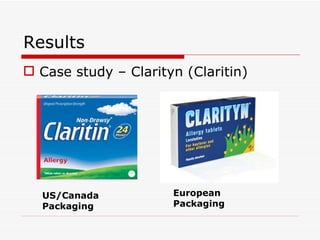
Results  Case study – Clarityn (Claritin) US/Canada Packaging European Packaging
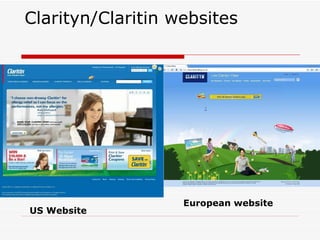
Clarityn/Claritin websites US Website   European website
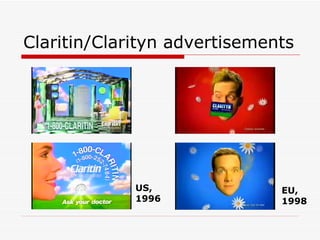
Claritin/Clarityn advertisements US, 1996 EU, 1998
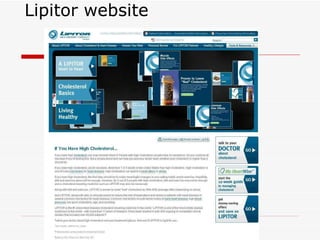
Lipitor website
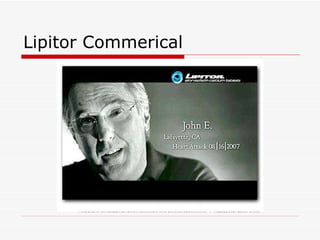
Lipitor Commerical
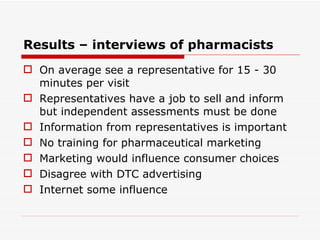
Results – interviews of pharmacists On average see a representative for 15 - 30 minutes per visit Representatives have a job to sell and inform but independent assessments must be done Information from representatives is important No training for pharmaceutical marketing Marketing would influence consumer choices Disagree with DTC advertising Internet some influence
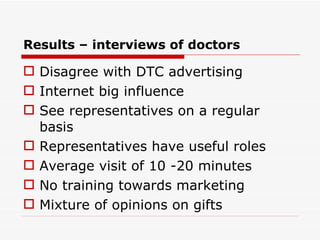
Disagree with DTC advertising Internet big influence See representatives on a regular basis Representatives have useful roles Average visit of 10 -20 minutes No training towards marketing Mixture of opinions on gifts Results – interviews of doctors
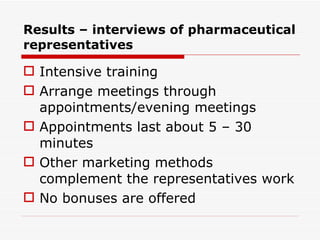
Intensive training Arrange meetings through appointments/evening meetings Appointments last about 5 – 30 minutes Other marketing methods complement the representatives work No bonuses are offered Results – interviews of pharmaceutical representatives
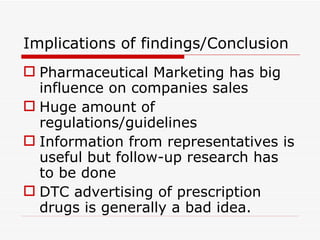
Implications of findings/Conclusion Pharmaceutical Marketing has big influence on companies sales Huge amount of regulations/guidelines Information from representatives is useful but follow-up research has to be done DTC advertising of prescription drugs is generally a bad idea.
Future Work E-media More global comparisons Larger survey of doctors/pharmacists/representatives

Pharmaceutical Marketing Presentation

  • 1.
    Pharmaceutical Marketing: aninvestigation into current practices through case studies and interviews MSc in Pharmaceutical Quality Assurance and Biotechnology Paul Sherlock C99026309
  • 2.
    Aims and ObjectivesInvestigate marketing practices of pharmaceutical companies Comparison of guidelines and regulations in 4 markets Examine the methods of how companies sell their products
  • 3.
    Research Methodology Literaturesearch (regulations and guidelines from industry organisations) Marketing case studies – Claritin (Clarityn) and Lipitor (in progress) Interviews of pharmacists, doctors and pharmaceutical representatives
  • 4.
    Results Casestudy – Clarityn (Claritin) US/Canada Packaging European Packaging
  • 5.
    Clarityn/Claritin websites USWebsite European website
  • 6.
  • 7.
  • 8.
  • 9.
    Results – interviewsof pharmacists On average see a representative for 15 - 30 minutes per visit Representatives have a job to sell and inform but independent assessments must be done Information from representatives is important No training for pharmaceutical marketing Marketing would influence consumer choices Disagree with DTC advertising Internet some influence
  • 10.
    Disagree with DTCadvertising Internet big influence See representatives on a regular basis Representatives have useful roles Average visit of 10 -20 minutes No training towards marketing Mixture of opinions on gifts Results – interviews of doctors
  • 11.
    Intensive training Arrangemeetings through appointments/evening meetings Appointments last about 5 – 30 minutes Other marketing methods complement the representatives work No bonuses are offered Results – interviews of pharmaceutical representatives
  • 12.
    Implications of findings/ConclusionPharmaceutical Marketing has big influence on companies sales Huge amount of regulations/guidelines Information from representatives is useful but follow-up research has to be done DTC advertising of prescription drugs is generally a bad idea.
  • 13.
    Future Work E-mediaMore global comparisons Larger survey of doctors/pharmacists/representatives

Editor's Notes

  • #4 Regulations US, EU, Japan and Ireland Ethics – how companies skirt around the regulations and the consequences Marketing Case study – Claritin comparison of websites and advertisements Interviews with doctors/pharmacists – 10 questions that dealt with their background, how often they would see a rep, the balance of the information, how important information is, guidance, dealing with marketing material, DTC advertising influence of the internet
  • #8 Straight into trying to get you to go to the doctor
  • #9 Starts off serious, leads into him enjoying time with his family while voice over explains all about Lipitor and goes serious again with him suggesting that the viewer goes to the doctor That his doctor said that he wasn’t doing anything to avoid a heart attack
  • #10 The objective of the interviews was to find out opinions of pharmacists and doctors that pharmaceutical companies sell their products to. I also interviewed reps that sell the products for the companies.
  • #11 DTC - power of decision out of the doctors hands, add to cost, patients need more guidance than advertisements All had patients come to them asking for drugs they had seen on the internet Useful role in providing information about new drugs and treatments Gifts – two thought that gifts don’t influence prescribing habits while one thought they would
  • #12 Medical representatives institute of Ireland
  • #14 E-media – investigation into the effect of social websites, how the company is interacting, giving advice with patients and customers, what possible regulations and guidelines could be implemented – how companies are using the digital social media like Facebook and others, regulation over social media More global comparisons – possible for someone working in industry with access to global data Larger survey of doctors etc. - more international perspective, compare different country's doctors/pharmacists