Enterprise grade deployment
and security with PostgreSQL
PGConf US 2015
March 25 - 27, 2015
Himanchali
himamahi09@gmail.com
#Who Am I
himanchali@inmobi.com
Technical Lead – Production & Infrastructure Engineering
www.inmobi.com
 Independent mobile ad network
 Customer engagement platform through a suit of product ranging from app
distribution & monetization to brand advertisement
 Serves billion of ads
 Hosting the first official PGDay India event in April 
http://www.meetup.com/India-PUG/events/220553997/
What kind of application do we have..
 OLTP
 OLAP
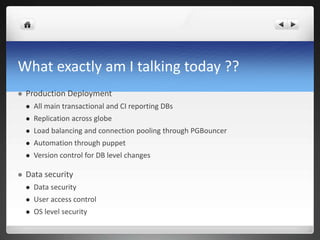
What exactly am I talking today ??
 Production Deployment
 All main transactional and CI reporting DBs
 Replication across globe
 Load balancing and connection pooling through PGBouncer
 Automation through puppet
 Version control for DB level changes
 Data security
 Data security
 User access control
 OS level security
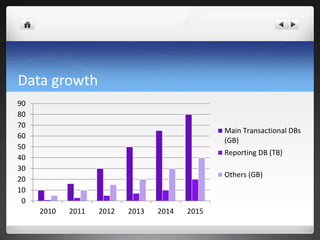
Data growth
0
10
20
30
40
50
60
70
80
90
2010 2011 2012 2013 2014 2015
Main Transactional DBs
(GB)
Reporting DB (TB)
Others (GB)
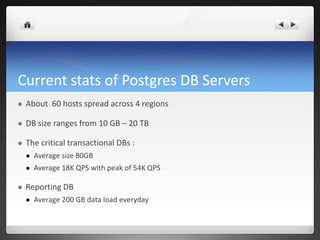
Current stats of Postgres DB Servers
 About 60 hosts spread across 4 regions
 DB size ranges from 10 GB – 20 TB
 The critical transactional DBs :
 Average size 80GB
 Average 18K QPS with peak of 54K QPS
 Reporting DB
 Average 200 GB data load everyday
Simple expectation of management
 99.99% Uptime for DB servers
 No data loss
 Good performance
Achieving 99.99% Uptime
 A proper DB Architecture
 Multiple disaster recovery Plan
 A time to time disaster drill
 Proper data backup
 PITR setup
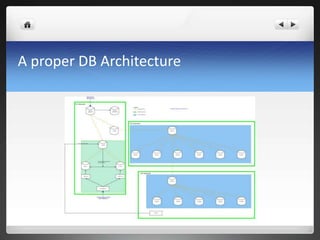
A proper DB Architecture
The architecture..
 Proper data modeling
 Use of constraints carefully
 Minimize the dependency between DBs
 Use of proper data types
 Proper retention policies
Disaster Recovery plan
 Question is when to touch the trigger ??
 What if standby doesn’t come up ?? (rare condition)
 Are my backups up to date ??
 Do I have an option to revert some drop of a table?
Data availability in different regions
 Cascaded SR setup
 A boon for cross region replication
 One node as entry point to the region
 Cascade slaves within LAN from above node
 A little precaution needed with this setup
 When the master is down and its standby is being triggered as master
 Proper monitoring that no slave is out of sync
Read distribution across multiple slaves
 Load balancer
 Pgbouncer
 Connection pooling
 Connection mode control , session or transaction
 Maintenance without downtime
What about performance ??
 Proper index creation
 Query optimization
 Table partitioning
 Proper vacuum
What else …
 How can I forget those many stored procedures in my DB .
 User defined functions for complex business logic
 Saving time between application and DB
 Get rid of dependency of language used by application
Practice adopted for DB changes
 Version control of schema changes
 Version control of data changes
Minimize the deployment effort
 Using puppet and chef modules
 No direct change on the host manually
 Configuration changes pushed via puppet
 Packages installation using chef-solo
Adding spice of monitoring…
 Use of enriched statistics collector
 User stats
 DB stats
 Table stats
 Index stats
 And many more…
 pg_log monitoring
 Log everything if you want to monitor everything
Security aspects
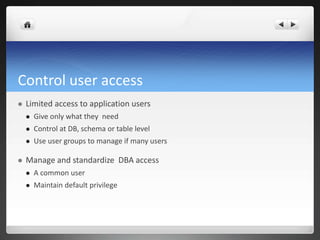
Control user access
 Limited access to application users
 Give only what they need
 Control at DB, schema or table level
 Use user groups to manage if many users
 Manage and standardize DBA access
 A common user
 Maintain default privilege
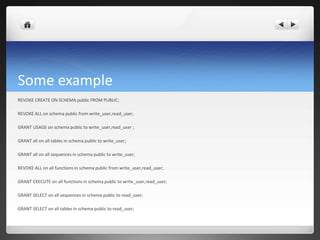
Some example
REVOKE CREATE ON SCHEMA public FROM PUBLIC;
REVOKE ALL on schema public from write_user,read_user;
GRANT USAGE on schema public to write_user,read_user ;
GRANT all on all tables in schema public to write_user;
GRANT all on all sequences in schema public to write_user;
REVOKE ALL on all functions in schema public from write_user,read_user;
GRANT EXECUTE on all functions in schema public to write_user,read_user;
GRANT SELECT on all sequences in schema public to read_user;
GRANT SELECT on all tables in schema public to read_user;
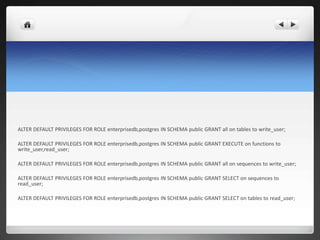
ALTER DEFAULT PRIVILEGES FOR ROLE enterprisedb,postgres IN SCHEMA public GRANT all on tables to write_user;
ALTER DEFAULT PRIVILEGES FOR ROLE enterprisedb,postgres IN SCHEMA public GRANT EXECUTE on functions to
write_user,read_user;
ALTER DEFAULT PRIVILEGES FOR ROLE enterprisedb,postgres IN SCHEMA public GRANT all on sequences to write_user;
ALTER DEFAULT PRIVILEGES FOR ROLE enterprisedb,postgres IN SCHEMA public GRANT SELECT on sequences to
read_user;
ALTER DEFAULT PRIVILEGES FOR ROLE enterprisedb,postgres IN SCHEMA public GRANT SELECT on tables to read_user;
Access restriction to DB
 Use pg_hba.conf and pg_ident.conf
 Avoid using trust
 Use MD5 authentication
 IP / Subnet access allocation for DB or user level
 Restrict the connection for any particular subnet for any user/DB
 Use pg_ident.conf if using ident authentication in pg_hba.conf
If that’s not enough…
 Use secure TCP/IP Connections with SSL
 IPTables
 Control the traffic by making some rules
 Allow or reject
 SE-Linux - control access at process level
 setenforce=1
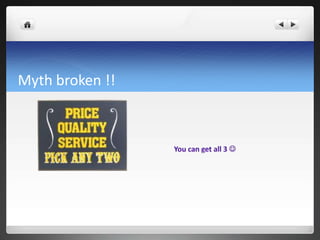
Myth broken !!
Thank You !!
QUESTIONS??

Enterprise grade deployment and security with PostgreSQL

  • 1.
    Enterprise grade deployment andsecurity with PostgreSQL PGConf US 2015 March 25 - 27, 2015 Himanchali himamahi09@gmail.com
  • 2.
    #Who Am I himanchali@inmobi.com TechnicalLead – Production & Infrastructure Engineering
  • 3.
    www.inmobi.com  Independent mobilead network  Customer engagement platform through a suit of product ranging from app distribution & monetization to brand advertisement  Serves billion of ads  Hosting the first official PGDay India event in April  http://www.meetup.com/India-PUG/events/220553997/
  • 4.
    What kind ofapplication do we have..  OLTP  OLAP
  • 5.
    What exactly amI talking today ??  Production Deployment  All main transactional and CI reporting DBs  Replication across globe  Load balancing and connection pooling through PGBouncer  Automation through puppet  Version control for DB level changes  Data security  Data security  User access control  OS level security
  • 6.
    Data growth 0 10 20 30 40 50 60 70 80 90 2010 20112012 2013 2014 2015 Main Transactional DBs (GB) Reporting DB (TB) Others (GB)
  • 7.
    Current stats ofPostgres DB Servers  About 60 hosts spread across 4 regions  DB size ranges from 10 GB – 20 TB  The critical transactional DBs :  Average size 80GB  Average 18K QPS with peak of 54K QPS  Reporting DB  Average 200 GB data load everyday
  • 8.
    Simple expectation ofmanagement  99.99% Uptime for DB servers  No data loss  Good performance
  • 9.
    Achieving 99.99% Uptime A proper DB Architecture  Multiple disaster recovery Plan  A time to time disaster drill  Proper data backup  PITR setup
  • 10.
    A proper DBArchitecture
  • 11.
    The architecture..  Properdata modeling  Use of constraints carefully  Minimize the dependency between DBs  Use of proper data types  Proper retention policies
  • 12.
    Disaster Recovery plan Question is when to touch the trigger ??  What if standby doesn’t come up ?? (rare condition)  Are my backups up to date ??  Do I have an option to revert some drop of a table?
  • 13.
    Data availability indifferent regions  Cascaded SR setup  A boon for cross region replication  One node as entry point to the region  Cascade slaves within LAN from above node  A little precaution needed with this setup  When the master is down and its standby is being triggered as master  Proper monitoring that no slave is out of sync
  • 14.
    Read distribution acrossmultiple slaves  Load balancer  Pgbouncer  Connection pooling  Connection mode control , session or transaction  Maintenance without downtime
  • 15.
    What about performance??  Proper index creation  Query optimization  Table partitioning  Proper vacuum
  • 16.
    What else … How can I forget those many stored procedures in my DB .  User defined functions for complex business logic  Saving time between application and DB  Get rid of dependency of language used by application
  • 17.
    Practice adopted forDB changes  Version control of schema changes  Version control of data changes
  • 18.
    Minimize the deploymenteffort  Using puppet and chef modules  No direct change on the host manually  Configuration changes pushed via puppet  Packages installation using chef-solo
  • 19.
    Adding spice ofmonitoring…  Use of enriched statistics collector  User stats  DB stats  Table stats  Index stats  And many more…  pg_log monitoring  Log everything if you want to monitor everything
  • 20.
  • 21.
    Control user access Limited access to application users  Give only what they need  Control at DB, schema or table level  Use user groups to manage if many users  Manage and standardize DBA access  A common user  Maintain default privilege
  • 22.
    Some example REVOKE CREATEON SCHEMA public FROM PUBLIC; REVOKE ALL on schema public from write_user,read_user; GRANT USAGE on schema public to write_user,read_user ; GRANT all on all tables in schema public to write_user; GRANT all on all sequences in schema public to write_user; REVOKE ALL on all functions in schema public from write_user,read_user; GRANT EXECUTE on all functions in schema public to write_user,read_user; GRANT SELECT on all sequences in schema public to read_user; GRANT SELECT on all tables in schema public to read_user;
  • 23.
    ALTER DEFAULT PRIVILEGESFOR ROLE enterprisedb,postgres IN SCHEMA public GRANT all on tables to write_user; ALTER DEFAULT PRIVILEGES FOR ROLE enterprisedb,postgres IN SCHEMA public GRANT EXECUTE on functions to write_user,read_user; ALTER DEFAULT PRIVILEGES FOR ROLE enterprisedb,postgres IN SCHEMA public GRANT all on sequences to write_user; ALTER DEFAULT PRIVILEGES FOR ROLE enterprisedb,postgres IN SCHEMA public GRANT SELECT on sequences to read_user; ALTER DEFAULT PRIVILEGES FOR ROLE enterprisedb,postgres IN SCHEMA public GRANT SELECT on tables to read_user;
  • 24.
    Access restriction toDB  Use pg_hba.conf and pg_ident.conf  Avoid using trust  Use MD5 authentication  IP / Subnet access allocation for DB or user level  Restrict the connection for any particular subnet for any user/DB  Use pg_ident.conf if using ident authentication in pg_hba.conf
  • 25.
    If that’s notenough…  Use secure TCP/IP Connections with SSL  IPTables  Control the traffic by making some rules  Allow or reject  SE-Linux - control access at process level  setenforce=1
  • 26.
  • 27.