Petabytes and Nanoseconds 
Distributed Data Storage andthe CAP Theorem 
FIN talk 
Robert Greiner 
Nathan Murray 
August 21,2014
CHAPTER 
The Problems 
Your phone can add two numbers in the same time it takes light to travel one foot 
All high frequency trading servers are connected to the NASDAQ network with the same length of cable, so that no party has a speed advantage
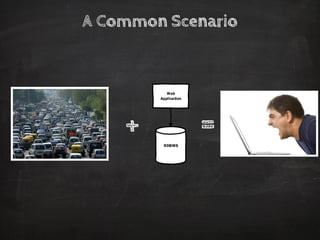
A Common Scenario 
Web 
Application 
RDBMS 
+ =
The Solution: Scale All the Things!!1
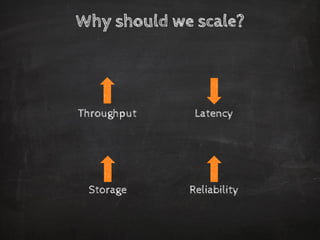
Why shouldwe scale? 
Throughput 
Latency 
Storage 
Reliability
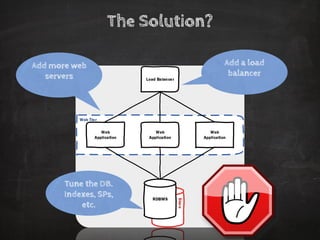
The Solution? 
Add a load balancer 
Add more web servers 
Tune the DB. Indexes,SPs, etc.
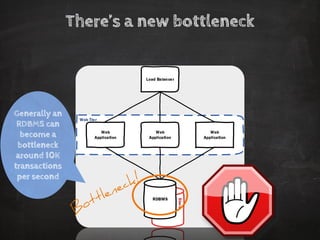
There’sa new bottleneck 
Generally an RDBMS can becomea bottleneck around 10K transactions per second
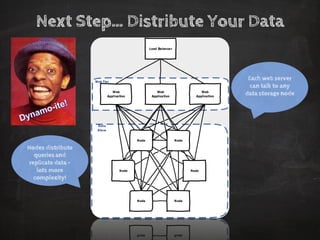
Next Step… Distribute Your Data 
Each web server can talk to any data storage node 
Nodes distribute queries and replicate data – lots more complexity!
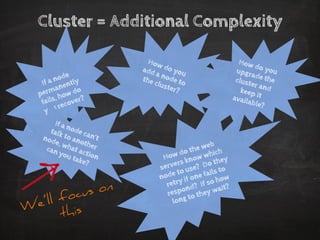
Cluster = Additional Complexity
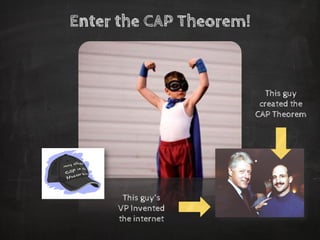
Enter the CAP Theorem! 
This guy created the CAP Theorem 
This guy’s 
VP Invented the internet
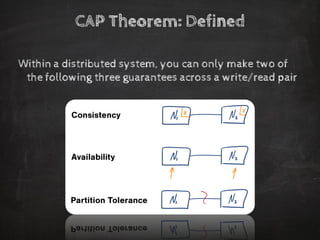
CAP Theorem: Defined 
Within a distributed system, you can only make two of the following three guarantees across a write/read pair
Guarantee 1: Consistency 
If a value is written, and then fetched, I will alwaysget back the new value 
Note: not the same as the C in ACID! 
_
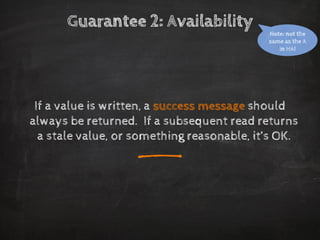
Guarantee 2: Availability 
If a value is written, a success message should always be returned. If a subsequent read returns a stale value, or something reasonable, it’s OK. 
_ 
Note: not the same as the A in HA!
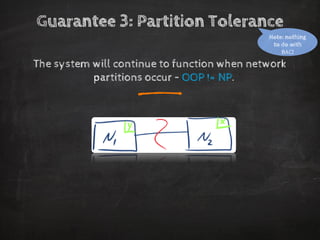
Guarantee 3: Partition Tolerance 
The system will continue to function when network partitions occur –OOP != NP. 
_ 
Note: nothing to do with BAC!
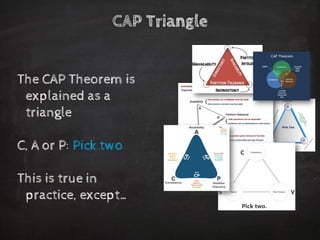
CAP Triangle 
The CAP Theorem is explained as a triangle 
C, A or P: Pick two 
This is true in practice, except…
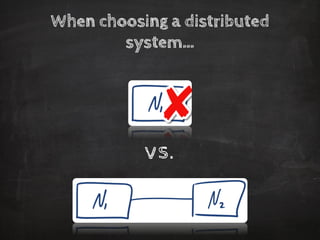
When choosing a distributed system… 
vs.
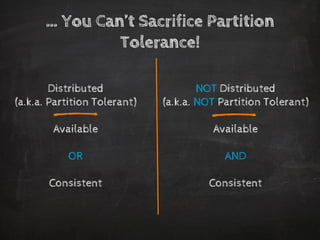
… You Can’t Sacrifice Partition Tolerance! 
NOTDistributed 
(a.k.a. NOTPartition Tolerant) 
Available 
AND 
Consistent 
Distributed 
(a.k.a. Partition Tolerant) 
Available 
OR 
Consistent 
_ 
_
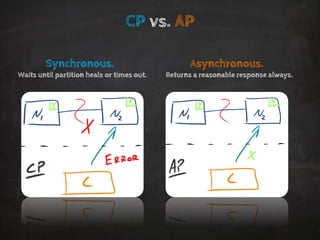
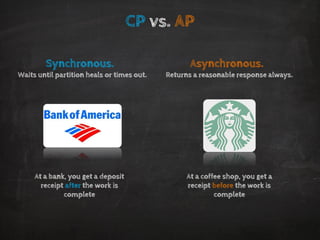
CPvs. AP 
Synchronous. 
Waits until partition heals or times out. 
Asynchronous. 
Returns a reasonable response always.
CPvs. AP 
Synchronous. 
Waits until partition heals or times out. 
Asynchronous. 
Returns a reasonable response always. 
At a bank, you get a deposit receipt afterthe work is complete 
At a coffee shop, you get a receipt beforethe work is complete
CHAPTER 
Whendo companies care?
Companies care about internetscale
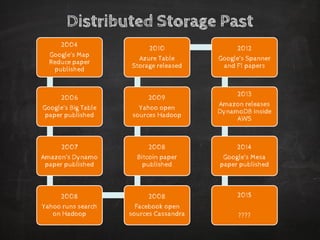
Distributed Storage Past 
2004 
Google’s Map Reduce paper published 
2006 
Google’s Big Table paper published 
2007 
Amazon’s Dynamo paper published 
2008 
Yahoo runs search on Hadoop 
2008 
Facebook open sources Cassandra 
2008 
Bitcoin paper published 
2009 
Yahoo open sources Hadoop 
2010 
Azure Table Storage released 
2012 
Google’s Spanner and F1 papers 
2013 
Amazon releases DynamoDB inside AWS 
2014 
Google’s Mesa paper published 
2015 
????
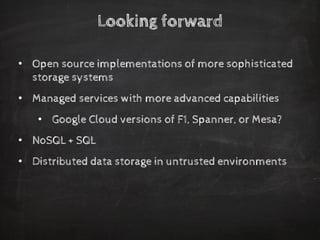
Looking forward 
•Open source implementations of more sophisticated storage systems 
•Managed services with more advanced capabilities 
•Google Cloud versions of F1, Spanner, or Mesa? 
•NoSQL + SQL 
•Distributed data storage in untrusted environments
CHAPTER 
How does this affect me
Even our most “legacy” clients are already starting to care about internet scale: 
_
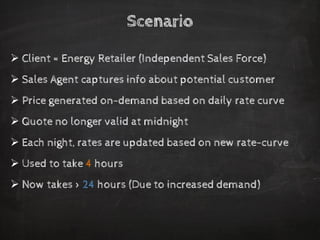
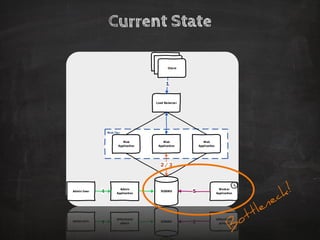
Scenario 
Client = Energy Retailer (Independent Sales Force) 
Sales Agent captures info about potential customer 
Price generated on-demand based on daily rate curve 
Quote no longer valid at midnight 
Each night, rates are updated based on new rate-curve 
Used to take 4hours 
Now takes > 24hours (Due to increased demand)
Current State
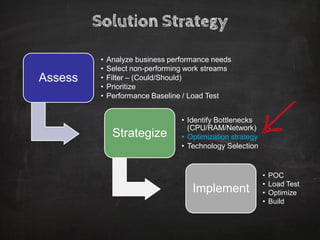
Solution Strategy 
Assess 
•Analyze business performance needs 
•Select non-performing work streams 
•Filter –(Could/Should) 
•Prioritize 
•Performance Baseline / Load Test 
Strategize 
•Identify Bottlenecks (CPU/RAM/Network) 
•Optimization strategy 
•Technology Selection 
Implement 
•POC 
•Load Test 
•Optimize 
•Build
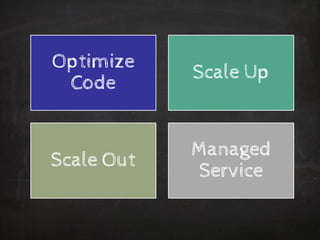
Optimize Code 
Scale Up 
Scale Out 
Managed Service
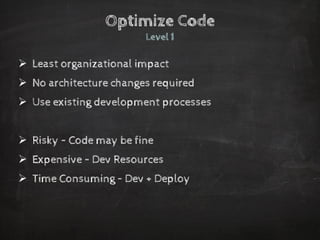
Optimize CodeLevel 1 
Least organizational impact 
No architecture changes required 
Use existing development processes 
Risky –Code may be fine 
Expensive –Dev Resources 
Time Consuming –Dev + Deploy
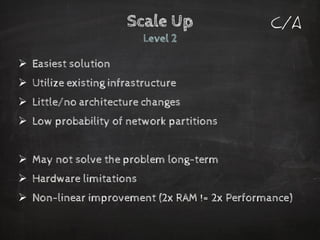
Scale UpLevel 2 
Easiest solution 
Utilize existing infrastructure 
Little/no architecture changes 
Low probability of network partitions 
May not solve the problem long-term 
Hardware limitations 
Non-linear improvement (2x RAM != 2x Performance) 
C/A
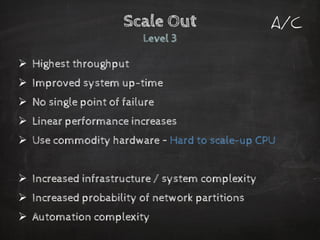
Scale OutLevel 3 
Highest throughput 
Improved system up-time 
No single point of failure 
Linear performance increases 
Use commodity hardware –Hard to scale-up CPU 
Increased infrastructure / system complexity 
Increased probability of network partitions 
Automation complexity 
A/C
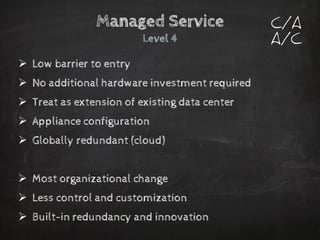
Managed ServiceLevel 4 
Low barrier to entry 
No additional hardware investment required 
Treat as extension of existing data center 
Appliance configuration 
Globally redundant (cloud) 
Most organizational change 
Less control and customization 
Built-in redundancy and innovation 
C/A 
A/C
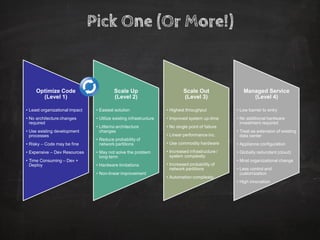
Optimize Code(Level 1) 
•Least organizational impact 
•No architecture changes required 
•Use existing development processes 
•Risky –Code may be fine 
•Expensive –Dev Resources 
•Time Consuming –Dev + Deploy 
Scale Up(Level 2) 
•Easiest solution 
•Utilize existing infrastructure 
•Little/no architecture changes 
•Reduce probability of network partitions 
•May not solve the problem long-term 
•Hardware limitations 
•Non-linear improvement 
Scale Out(Level 3) 
•Highest throughput 
•Improved system up-time 
•No single point of failure 
•Linear performance inc. 
•Use commodity hardware 
•Increased infrastructure / system complexity 
•Increased probability of network partitions 
•Automation complexity 
Managed Service(Level 4) 
•Low barrier to entry 
•No additional hardware investment required 
•Treat as extension of existing data center 
•Appliance configuration 
•Globally redundant (cloud) 
•Most organizational change 
•Less control and customization 
•High innovation 
Pick One (Or More!)
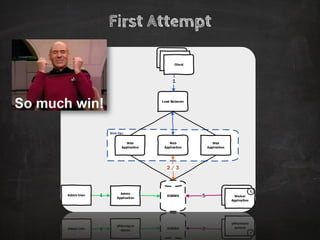
First Attempt
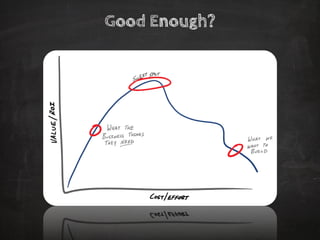
Good Enough?
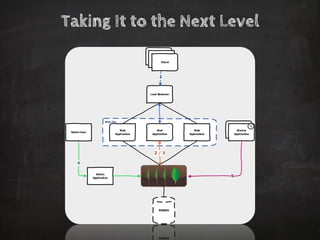
Taking It to the Next Level
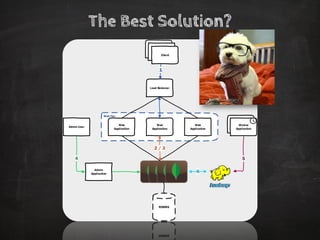
The Best Solution?
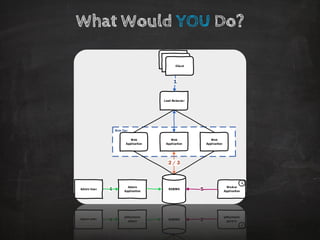
What Would YOUDo?
Fin’ 
robert.greiner@parivedasolutions.com 
nathan.murray@parivedasolutions.com

Petabytes and Nanoseconds

  • 1.
    Petabytes and Nanoseconds Distributed Data Storage andthe CAP Theorem FIN talk Robert Greiner Nathan Murray August 21,2014
  • 2.
    CHAPTER The Problems Your phone can add two numbers in the same time it takes light to travel one foot All high frequency trading servers are connected to the NASDAQ network with the same length of cable, so that no party has a speed advantage
  • 3.
    A Common Scenario Web Application RDBMS + =
  • 4.
    The Solution: ScaleAll the Things!!1
  • 5.
    Why shouldwe scale? Throughput Latency Storage Reliability
  • 6.
    The Solution? Adda load balancer Add more web servers Tune the DB. Indexes,SPs, etc.
  • 7.
    There’sa new bottleneck Generally an RDBMS can becomea bottleneck around 10K transactions per second
  • 8.
    Next Step… DistributeYour Data Each web server can talk to any data storage node Nodes distribute queries and replicate data – lots more complexity!
  • 9.
  • 10.
    Enter the CAPTheorem! This guy created the CAP Theorem This guy’s VP Invented the internet
  • 11.
    CAP Theorem: Defined Within a distributed system, you can only make two of the following three guarantees across a write/read pair
  • 12.
    Guarantee 1: Consistency If a value is written, and then fetched, I will alwaysget back the new value Note: not the same as the C in ACID! _
  • 13.
    Guarantee 2: Availability If a value is written, a success message should always be returned. If a subsequent read returns a stale value, or something reasonable, it’s OK. _ Note: not the same as the A in HA!
  • 14.
    Guarantee 3: PartitionTolerance The system will continue to function when network partitions occur –OOP != NP. _ Note: nothing to do with BAC!
  • 15.
    CAP Triangle TheCAP Theorem is explained as a triangle C, A or P: Pick two This is true in practice, except…
  • 16.
    When choosing adistributed system… vs.
  • 17.
    … You Can’tSacrifice Partition Tolerance! NOTDistributed (a.k.a. NOTPartition Tolerant) Available AND Consistent Distributed (a.k.a. Partition Tolerant) Available OR Consistent _ _
  • 18.
    CPvs. AP Synchronous. Waits until partition heals or times out. Asynchronous. Returns a reasonable response always.
  • 19.
    CPvs. AP Synchronous. Waits until partition heals or times out. Asynchronous. Returns a reasonable response always. At a bank, you get a deposit receipt afterthe work is complete At a coffee shop, you get a receipt beforethe work is complete
  • 20.
  • 21.
    Companies care aboutinternetscale
  • 22.
    Distributed Storage Past 2004 Google’s Map Reduce paper published 2006 Google’s Big Table paper published 2007 Amazon’s Dynamo paper published 2008 Yahoo runs search on Hadoop 2008 Facebook open sources Cassandra 2008 Bitcoin paper published 2009 Yahoo open sources Hadoop 2010 Azure Table Storage released 2012 Google’s Spanner and F1 papers 2013 Amazon releases DynamoDB inside AWS 2014 Google’s Mesa paper published 2015 ????
  • 23.
    Looking forward •Opensource implementations of more sophisticated storage systems •Managed services with more advanced capabilities •Google Cloud versions of F1, Spanner, or Mesa? •NoSQL + SQL •Distributed data storage in untrusted environments
  • 24.
    CHAPTER How doesthis affect me
  • 25.
    Even our most“legacy” clients are already starting to care about internet scale: _
  • 27.
    Scenario Client =Energy Retailer (Independent Sales Force) Sales Agent captures info about potential customer Price generated on-demand based on daily rate curve Quote no longer valid at midnight Each night, rates are updated based on new rate-curve Used to take 4hours Now takes > 24hours (Due to increased demand)
  • 28.
  • 29.
    Solution Strategy Assess •Analyze business performance needs •Select non-performing work streams •Filter –(Could/Should) •Prioritize •Performance Baseline / Load Test Strategize •Identify Bottlenecks (CPU/RAM/Network) •Optimization strategy •Technology Selection Implement •POC •Load Test •Optimize •Build
  • 30.
    Optimize Code ScaleUp Scale Out Managed Service
  • 31.
    Optimize CodeLevel 1 Least organizational impact No architecture changes required Use existing development processes Risky –Code may be fine Expensive –Dev Resources Time Consuming –Dev + Deploy
  • 32.
    Scale UpLevel 2 Easiest solution Utilize existing infrastructure Little/no architecture changes Low probability of network partitions May not solve the problem long-term Hardware limitations Non-linear improvement (2x RAM != 2x Performance) C/A
  • 33.
    Scale OutLevel 3 Highest throughput Improved system up-time No single point of failure Linear performance increases Use commodity hardware –Hard to scale-up CPU Increased infrastructure / system complexity Increased probability of network partitions Automation complexity A/C
  • 34.
    Managed ServiceLevel 4 Low barrier to entry No additional hardware investment required Treat as extension of existing data center Appliance configuration Globally redundant (cloud) Most organizational change Less control and customization Built-in redundancy and innovation C/A A/C
  • 35.
    Optimize Code(Level 1) •Least organizational impact •No architecture changes required •Use existing development processes •Risky –Code may be fine •Expensive –Dev Resources •Time Consuming –Dev + Deploy Scale Up(Level 2) •Easiest solution •Utilize existing infrastructure •Little/no architecture changes •Reduce probability of network partitions •May not solve the problem long-term •Hardware limitations •Non-linear improvement Scale Out(Level 3) •Highest throughput •Improved system up-time •No single point of failure •Linear performance inc. •Use commodity hardware •Increased infrastructure / system complexity •Increased probability of network partitions •Automation complexity Managed Service(Level 4) •Low barrier to entry •No additional hardware investment required •Treat as extension of existing data center •Appliance configuration •Globally redundant (cloud) •Most organizational change •Less control and customization •High innovation Pick One (Or More!)
  • 36.
  • 37.
  • 38.
    Taking It tothe Next Level
  • 39.
  • 40.
  • 41.