Personality
Development
CONCEPTS AND DIMENSIONS
INTRODUCTION
Personality development refers to the process of
shaping and enhancing individual traits, behaviors,
and attitudes over time. It encompasses various
factors including genetics, environment, experiences,
and personal choices. It's a lifelong journey of self-
discovery and growth.
—woodworth
Personality define as the quality of an individuals total
behaviour i.e.; how he acts when his activity is considered as
a whole. Personality comprises an individuals experience, his
knowledge, skill, attitude, habits, character and physical
traits.
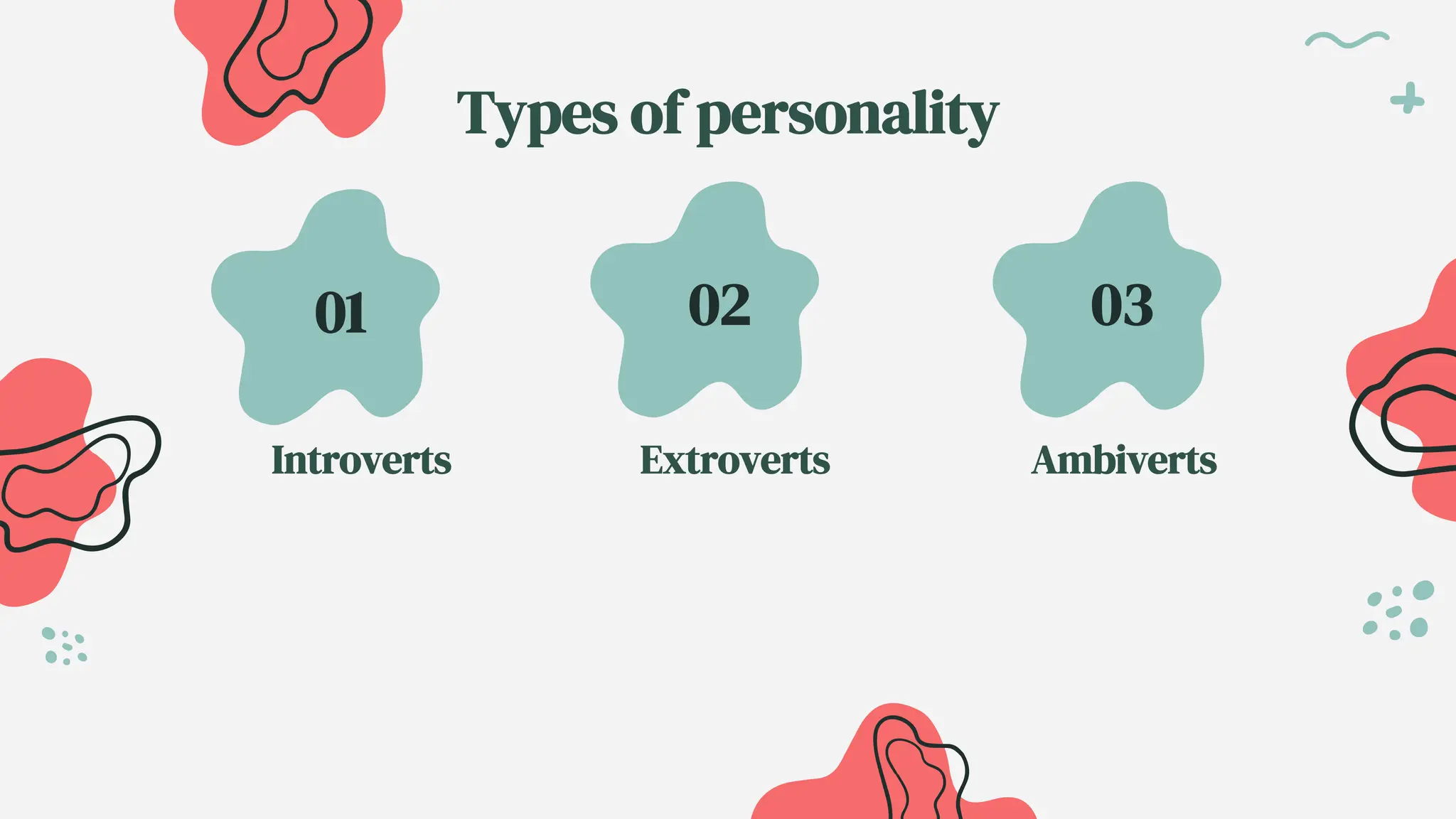
Types of personality
Introverts Ambiverts
02 03
01
Extroverts
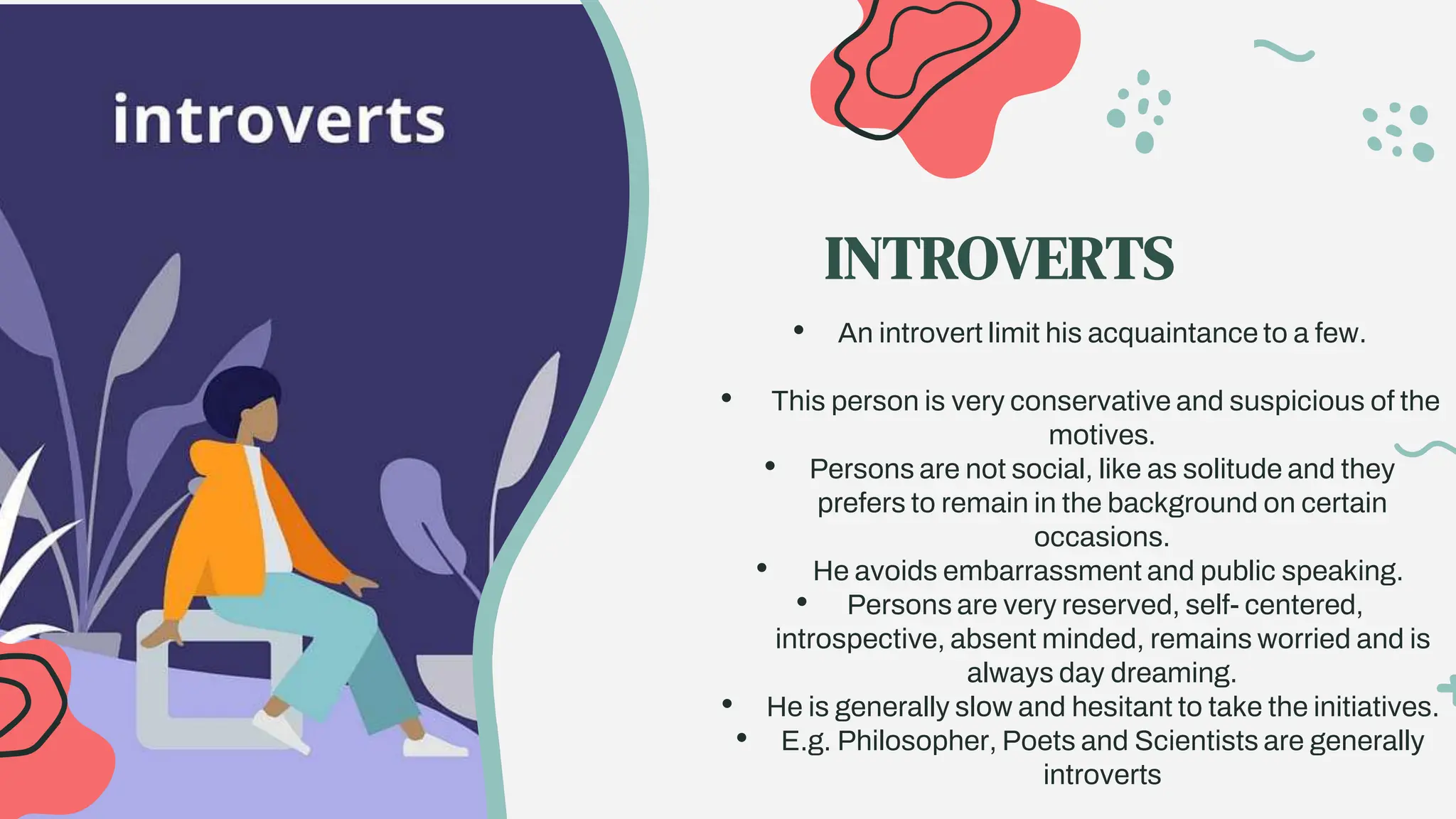
• An introvert limit his acquaintance to a few.
• This person is very conservative and suspicious of the
motives.
• Persons are not social, like as solitude and they
prefers to remain in the background on certain
occasions.
• He avoids embarrassment and public speaking.
• Persons are very reserved, self- centered,
introspective, absent minded, remains worried and is
always day dreaming.
• He is generally slow and hesitant to take the initiatives.
• E.g. Philosopher, Poets and Scientists are generally
introverts
INTROVERTS
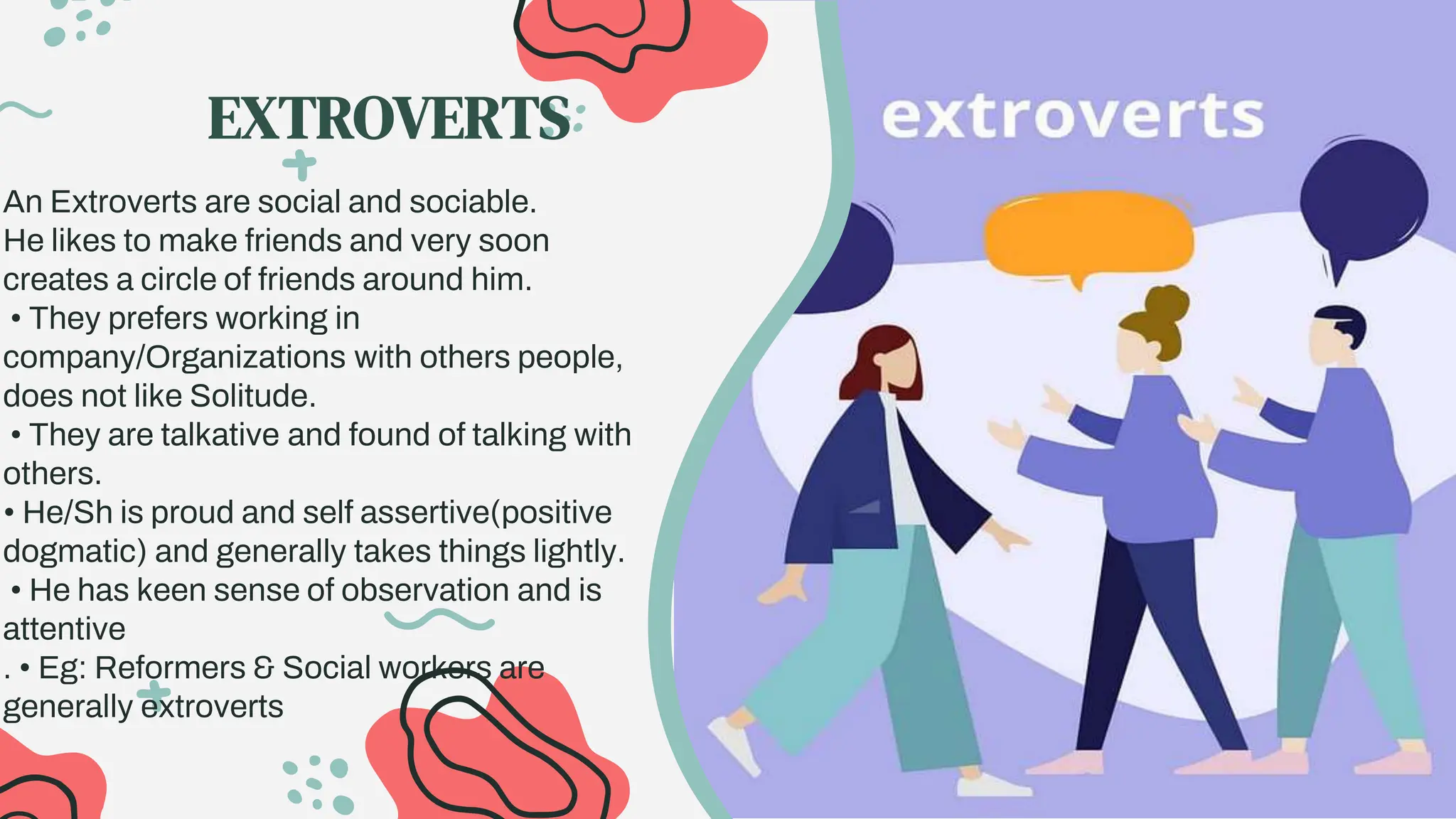
EXTROVERTS
An Extroverts are social and sociable.
He likes to make friends and very soon
creates a circle of friends around him.
• They prefers working in
company/Organizations with others people,
does not like Solitude.
• They are talkative and found of talking with
others.
• He/Sh is proud and self assertive(positive
dogmatic) and generally takes things lightly.
• He has keen sense of observation and is
attentive
. • Eg: Reformers & Social workers are
generally extroverts
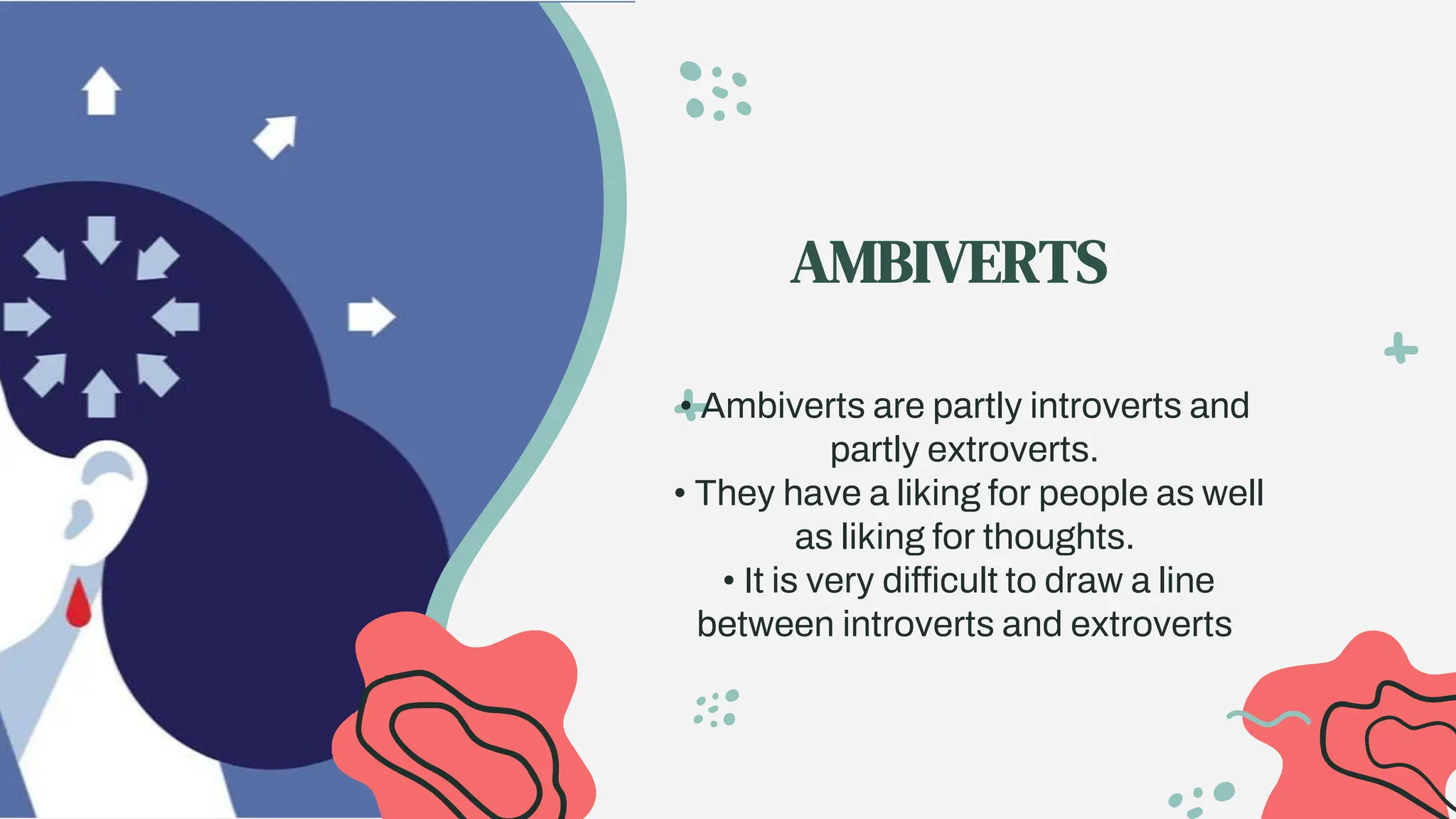
AMBIVERTS
• Ambiverts are partly introverts and
partly extroverts.
• They have a liking for people as well
as liking for thoughts.
• It is very difficult to draw a line
between introverts and extroverts
PRINCIPLES OF PERSONALITY DEVELOPMENT
1. We all share a human nature that has been shaped by evolution and
has helped humans adapt to their environment.
• 2. We differ from each other in dispositional traits, broad and
relatively stable dimensions of personality. Humans differ in their
thinking, feeling and behavior.
• 3. We also differ in characteristic adaptations, more situation-
specific and changeable ways in which people adapt to their roles and
environments, including motives, goals, plans, schemes, self-
conceptions, stage-specific concerns, and coping mechanisms.
• 4. We differ in narrative identities, unique and integrative “life
stories” that we construct about our pasts and futures to give
ourselves an identity and our lives meaning.
• 5. Cultural and situational influences help shape all of these aspects
of personality
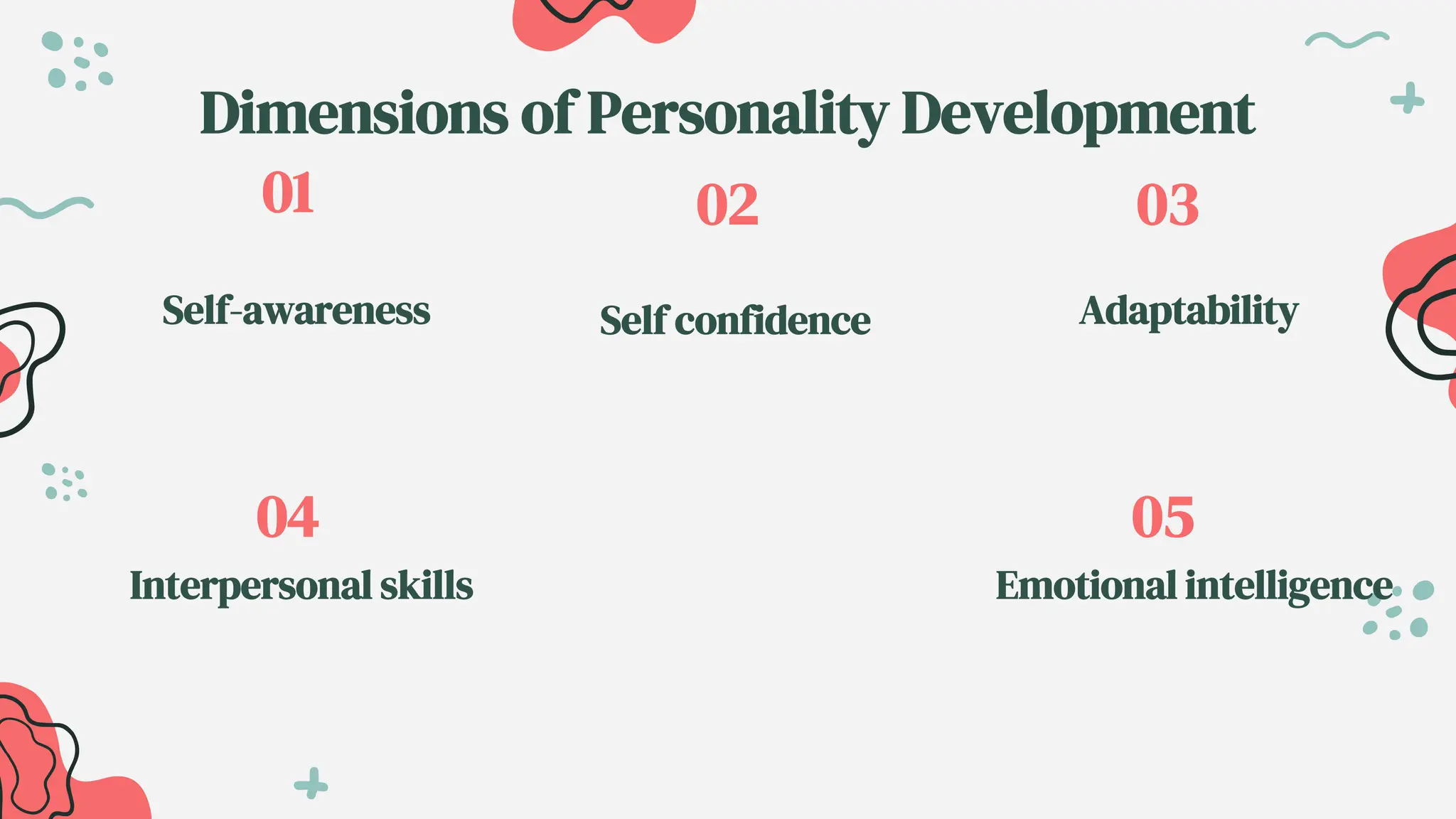
Dimensions of Personality Development
Self confidence
Self-awareness
Emotional intelligence
Interpersonal skills
Adaptability
01 02 03
04 05
DIMENSIONS
Self-awareness
This involves understanding
one's own thoughts, feelings,
strengths, weaknesses,
values, and motivations.
It is the foundation of personal
growth and development.
Self-confidence is the belief
in one's abilities,
judgments, and worth. It
enables individuals to take
risks, face challenges, and
pursue their goals with
determination.
Self-confidence
These are the abilities to
communicate, interact, and
build relationships
effectively with others.
Interpersonal skills include
active listening, empathy,
assertiveness, and conflict
resolution.
Interpersonal skills
Emotional intelligence refers to the
ability to recognize, understand, and
manage one's own emotions, as well
as the emotions of others. It involves
skills such as empathy, self-regulation,
social awareness, and relationship
management
Emotional intelligence
Adaptability is the capacity to adjust
to new situations, changes, and
challenges. It involves being flexible,
resilient, and open-minded in
response to different circumstances
and environments
Adaptability
DIMENSIONS
THANKYOU!

Personality development it's dimension and concepts

  • 1.
  • 2.
    INTRODUCTION Personality development refersto the process of shaping and enhancing individual traits, behaviors, and attitudes over time. It encompasses various factors including genetics, environment, experiences, and personal choices. It's a lifelong journey of self- discovery and growth.
  • 3.
    —woodworth Personality define asthe quality of an individuals total behaviour i.e.; how he acts when his activity is considered as a whole. Personality comprises an individuals experience, his knowledge, skill, attitude, habits, character and physical traits.
  • 4.
    Types of personality IntrovertsAmbiverts 02 03 01 Extroverts
  • 5.
    • An introvertlimit his acquaintance to a few. • This person is very conservative and suspicious of the motives. • Persons are not social, like as solitude and they prefers to remain in the background on certain occasions. • He avoids embarrassment and public speaking. • Persons are very reserved, self- centered, introspective, absent minded, remains worried and is always day dreaming. • He is generally slow and hesitant to take the initiatives. • E.g. Philosopher, Poets and Scientists are generally introverts INTROVERTS
  • 6.
    EXTROVERTS An Extroverts aresocial and sociable. He likes to make friends and very soon creates a circle of friends around him. • They prefers working in company/Organizations with others people, does not like Solitude. • They are talkative and found of talking with others. • He/Sh is proud and self assertive(positive dogmatic) and generally takes things lightly. • He has keen sense of observation and is attentive . • Eg: Reformers & Social workers are generally extroverts
  • 7.
    AMBIVERTS • Ambiverts arepartly introverts and partly extroverts. • They have a liking for people as well as liking for thoughts. • It is very difficult to draw a line between introverts and extroverts
  • 8.
    PRINCIPLES OF PERSONALITYDEVELOPMENT 1. We all share a human nature that has been shaped by evolution and has helped humans adapt to their environment. • 2. We differ from each other in dispositional traits, broad and relatively stable dimensions of personality. Humans differ in their thinking, feeling and behavior. • 3. We also differ in characteristic adaptations, more situation- specific and changeable ways in which people adapt to their roles and environments, including motives, goals, plans, schemes, self- conceptions, stage-specific concerns, and coping mechanisms. • 4. We differ in narrative identities, unique and integrative “life stories” that we construct about our pasts and futures to give ourselves an identity and our lives meaning. • 5. Cultural and situational influences help shape all of these aspects of personality
  • 9.
    Dimensions of PersonalityDevelopment Self confidence Self-awareness Emotional intelligence Interpersonal skills Adaptability 01 02 03 04 05
  • 10.
    DIMENSIONS Self-awareness This involves understanding one'sown thoughts, feelings, strengths, weaknesses, values, and motivations. It is the foundation of personal growth and development. Self-confidence is the belief in one's abilities, judgments, and worth. It enables individuals to take risks, face challenges, and pursue their goals with determination. Self-confidence These are the abilities to communicate, interact, and build relationships effectively with others. Interpersonal skills include active listening, empathy, assertiveness, and conflict resolution. Interpersonal skills
  • 11.
    Emotional intelligence refersto the ability to recognize, understand, and manage one's own emotions, as well as the emotions of others. It involves skills such as empathy, self-regulation, social awareness, and relationship management Emotional intelligence Adaptability is the capacity to adjust to new situations, changes, and challenges. It involves being flexible, resilient, and open-minded in response to different circumstances and environments Adaptability DIMENSIONS
  • 12.