A Bidirectional Relationship
*
* The oral cavity is a major entry point to the body with
mechanisms to defend against toxins or invading pathogens.
If integrity of oral tissues is breached, the oral cavity can become
a source of disease affecting other parts of the body
*Periodontitis: “An inflammatory disease of the
supporting tissues of the teeth caused by specific
microorganisms or groups of specific
microorganisms, resulting in progressive destruction
of the periodontal ligament and alveolar bone with
pocket formation, recession, or both”.
*Evidences also show the converse sides of
relationship between systemic health & oral health
i.e., the potential effect of periodontal disease on a
wide range of organ system.
*CARDIOVASCULAR
DISEASE
*CVD caused by
atherosclerosis:
•Coronary heart disease
(myocardial infarction)
•Cerebrovascular disease
(stroke)
•Peripheral vascular disease
•Hypertension (high blood
pressure)
*Other CVD:
•Congenital heart disease
•Rheumatic heart disease
•Cardiomyopathy
•Cardiac arrhythmias
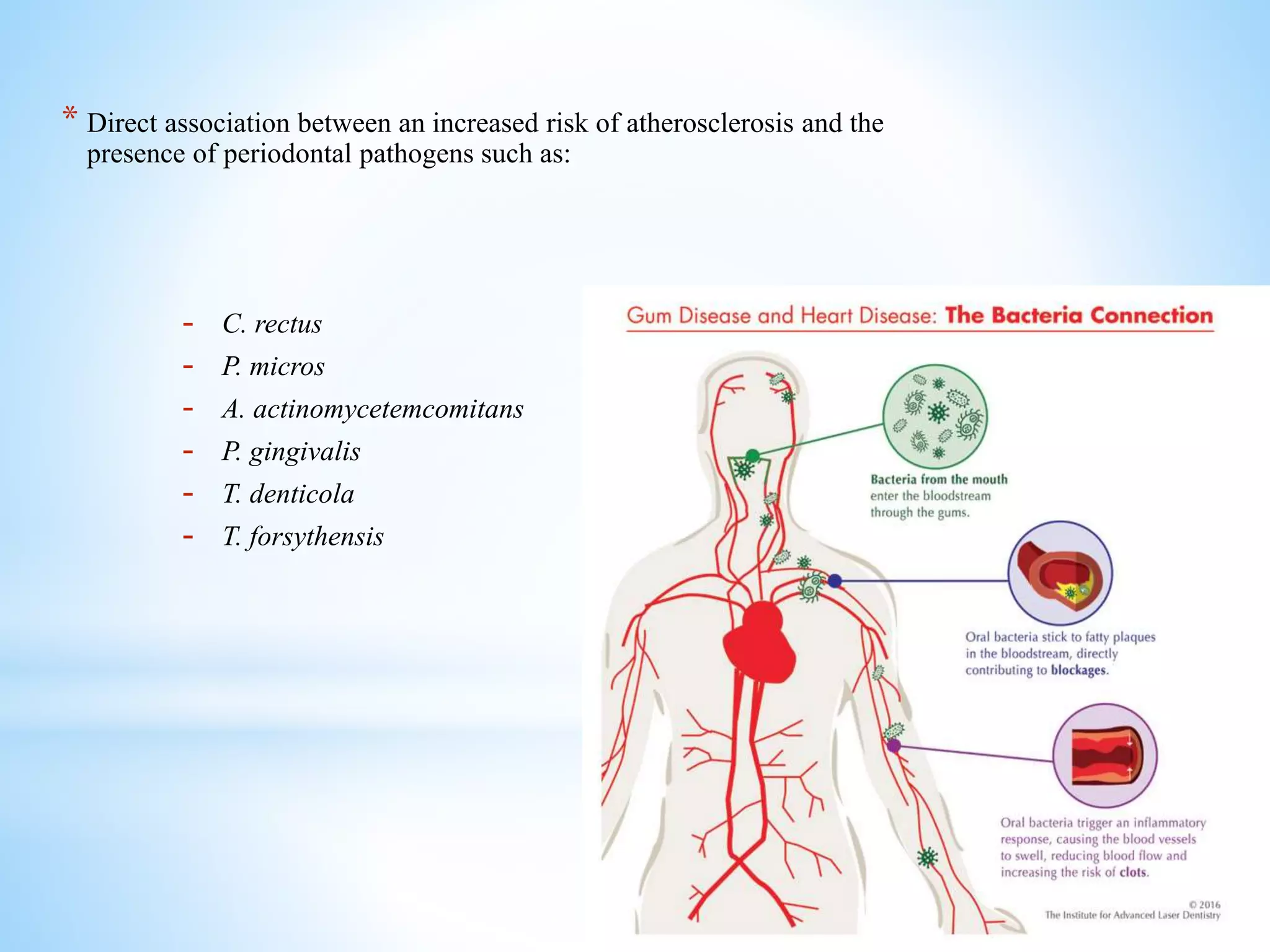
* Direct association between an increased risk of atherosclerosis and the
presence of periodontal pathogens such as:
- C. rectus
- P. micros
- A. actinomycetemcomitans
- P. gingivalis
- T. denticola
- T. forsythensis
* Periodontal bacteria increase risk for
CVD through several possible
mechanisms:
*Bacteria or viruses from the mouth directly infect
blood vessel walls and contribute to development of
plaques and atherosclerosis.
*Bacteria or viruses interact with WBC’s or platelets
and trigger release of proinflammatory cytokines,
prostaglandins, and TNF-α CV plaques
*Bacterial products in the blood may stimulate liver
production of proinflammatory or pro-coagulant
molecules such as C-reactive protein and fibrinogen.
Atheromatous plaque
Periodontal disease
Blood vessel
Blood vessel Atheromatous plaque
formation
Atheromatous plaque
maturation
Vascular subendothelium
Periodontal bacteria (P. gingivalis, F.nucleatum…)
Proinflammatory signals (Cytokines IL6, IL8, etc.)
Medium
layer
Inner
layer
Bloodvessellumen
*BENEFITS FROM
PERIODONTAL TREATMENT
* Locally:
Restores health of gums and teeth
Systemically:
Reduces systemic inflammation: by lowering
levels of C-reactive protein
Improves clinical levels of endothelial function
*Both parameters are related to an increased risk for
future cardiovascular episodes.
*
*"The two appear to go hand-in-
hand,"
*"Treating gum disease may lessen
the burden of heart disease."
*

Periodontal disease and cardio vascular disease shree

  • 1.
  • 2.
    * The oralcavity is a major entry point to the body with mechanisms to defend against toxins or invading pathogens. If integrity of oral tissues is breached, the oral cavity can become a source of disease affecting other parts of the body *Periodontitis: “An inflammatory disease of the supporting tissues of the teeth caused by specific microorganisms or groups of specific microorganisms, resulting in progressive destruction of the periodontal ligament and alveolar bone with pocket formation, recession, or both”. *Evidences also show the converse sides of relationship between systemic health & oral health i.e., the potential effect of periodontal disease on a wide range of organ system.
  • 4.
    *CARDIOVASCULAR DISEASE *CVD caused by atherosclerosis: •Coronaryheart disease (myocardial infarction) •Cerebrovascular disease (stroke) •Peripheral vascular disease •Hypertension (high blood pressure) *Other CVD: •Congenital heart disease •Rheumatic heart disease •Cardiomyopathy •Cardiac arrhythmias
  • 5.
    * Direct associationbetween an increased risk of atherosclerosis and the presence of periodontal pathogens such as: - C. rectus - P. micros - A. actinomycetemcomitans - P. gingivalis - T. denticola - T. forsythensis
  • 6.
    * Periodontal bacteriaincrease risk for CVD through several possible mechanisms: *Bacteria or viruses from the mouth directly infect blood vessel walls and contribute to development of plaques and atherosclerosis. *Bacteria or viruses interact with WBC’s or platelets and trigger release of proinflammatory cytokines, prostaglandins, and TNF-α CV plaques *Bacterial products in the blood may stimulate liver production of proinflammatory or pro-coagulant molecules such as C-reactive protein and fibrinogen.
  • 8.
    Atheromatous plaque Periodontal disease Bloodvessel Blood vessel Atheromatous plaque formation Atheromatous plaque maturation Vascular subendothelium Periodontal bacteria (P. gingivalis, F.nucleatum…) Proinflammatory signals (Cytokines IL6, IL8, etc.) Medium layer Inner layer Bloodvessellumen
  • 9.
    *BENEFITS FROM PERIODONTAL TREATMENT *Locally: Restores health of gums and teeth Systemically: Reduces systemic inflammation: by lowering levels of C-reactive protein Improves clinical levels of endothelial function *Both parameters are related to an increased risk for future cardiovascular episodes.
  • 10.
    * *"The two appearto go hand-in- hand," *"Treating gum disease may lessen the burden of heart disease."
  • 11.