A PROGRESS SEMINAR ON
BY
B.S.PRASAD.VODUGU
PERFORMANCE ENHANCEMENT OF
FIBRE REINFORCED CONCRETE FRAMES
UNDER SEISMIC LOADING
Under the Guidance of
Dr. KATTA VENKATA RAMANA
CONTENTS
CONTENTS
Introduction
Introduction
Earthquake-Resistant Buildings
Earthquake-Resistant Buildings
Scope of Present Work
Scope of Present Work
Literature Review
Literature Review
Fibre Reinforced Concrete
Fibre Reinforced Concrete
Preliminary Analysis of RC Frame
Preliminary Analysis of RC Frame
Future Work to be Done
Future Work to be Done
INTRODUCTION
INTRODUCTION
 Earth quake is a Natural phenomena and
Earth quake is a Natural phenomena and
has high potential to cause damages to
society.
society.
 Strong ground motion is the primary cause
Strong ground motion is the primary cause
of damage to buildings subjected to earth
quake.
quake.
 Its adverse effects forces the engineers to
Its adverse effects forces the engineers to
design the buildings as earth quake
resistant.
resistant.
Concrete Lends itself to a variety of innovative
designs as a result of its many desirable
properties.
Besides its advantages it has some
undesirable characteristics like
Brittle
Weak in tension
Cracking
Thermal expansion
Fiber reinforced concrete is defined as
concrete made of primarily of hydraulic
cements, aggregates and discrete
reinforcing fibers.
Fiber reinforced concrete is
improving the deficiencies of the concrete .
Incorporation of discontinuous,
discrete, uniformly dispersed fibers in the
matrix of concrete or mortar improves
tensile and flexural strength, ductility,
toughness, and impact and fatigue
resistance of the composite (FRC)
manifold, compared to the plain concrete.
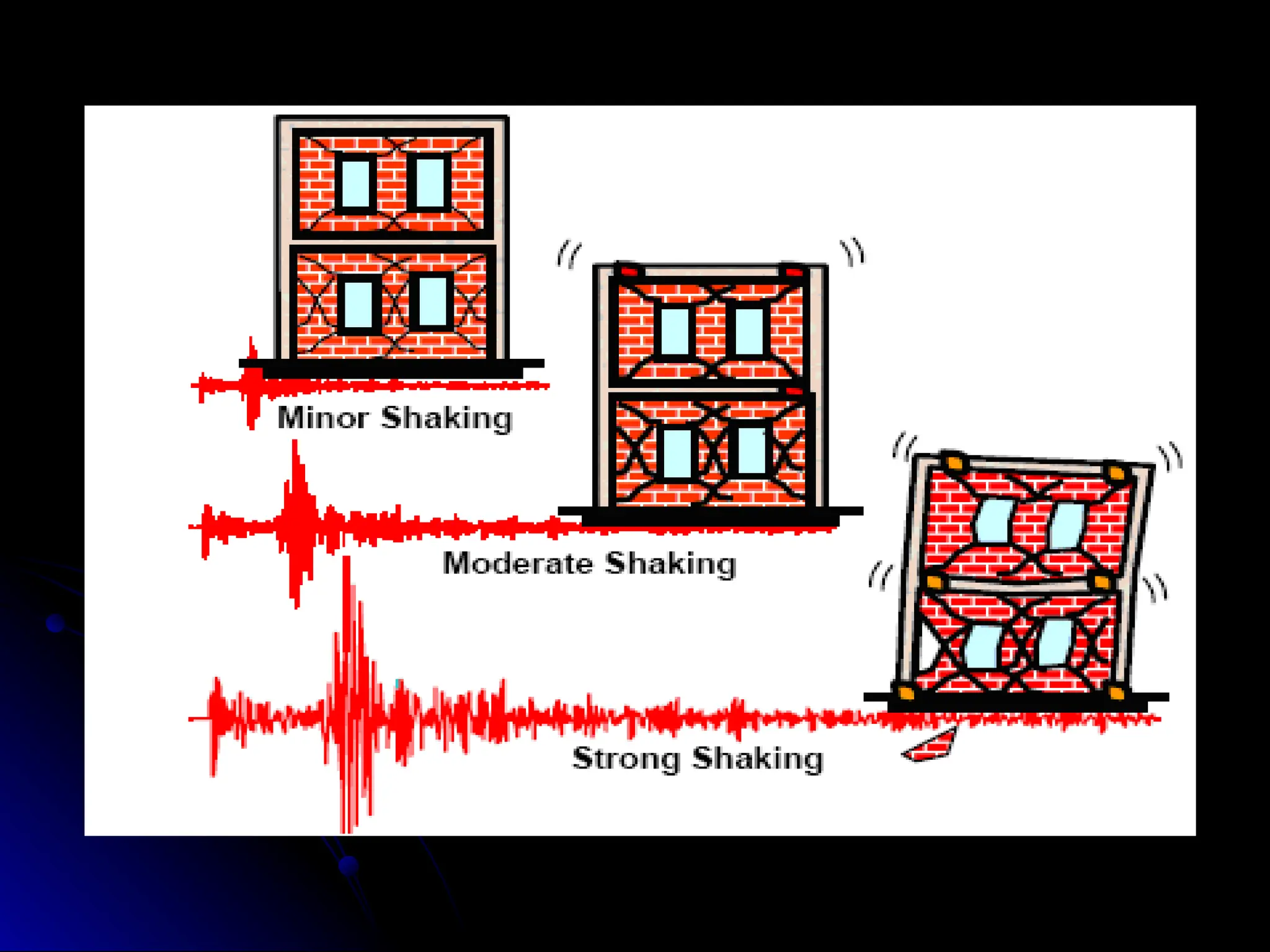
Earth quake design Philosophies
Minor Shaking
Moderate Shaking
Strong Shaking
SCOPE OF PRESENT INVESTIGATION
 Adequate and economic application of any
Adequate and economic application of any
material to field demands extensive knowledge
of its performance under different loading
conditions.
conditions.
 Hence in the present study an attempt has
Hence in the present study an attempt has
been made to know the behaviour of FRC
frame under seismic loading.
 The study is carried out by comparing
The study is carried out by comparing
performance of conventional RCC frame with
frames where in ‘Recron 3s’ fibres are used.
FIBER REINFORCED CONCRETE
From the literature it is shown that uniformly
dispersed fibers increases .
Crack arresting mechanism
Tensile strength
Tensile strength
Ductility
Ductility
Static and dynamic properties
Type of Fiber
Type of Fiber
 Steel Fibers
 Glass Fibers
 Plastic fibers
 Carbon fibers
 Mineral fibers
Basic Concepts of FRC
 All cement-based materials are essentially
All cement-based materials are essentially
anisotropic and heterogenic in nature. These
contain micro-cracks and interfacial discontinuities.
 The incorporation of the short fibers in relatively
The incorporation of the short fibers in relatively
brittle cement matrix transforms uncontrolled tensile
crack propagation into a slow controlled process.
 If the cracks are present and if breaking, strain of
If the cracks are present and if breaking, strain of
fibers is much greater than the cracking strain of
the cement, the fibers remaining in the place bridge
the cracks.
the cracks.
 As the straining is continued, the weak matrix will
As the straining is continued, the weak matrix will
break at another place and again will be held
together by the fiber bridging the cracks.
Factors Influencing Fibre
Reinforcement
Reinforcement
 Relative Fibre-Matrix Stiffness
Relative Fibre-Matrix Stiffness
-
- For efficient stress transfer to the fibre, the elastic modulus of the
For efficient stress transfer to the fibre, the elastic modulus of the
matrix must be very much lower than that of the fiber.
-
- Hence there exists a minimum modular ratio (E
Hence there exists a minimum modular ratio (Efiber
fiber/E
/Ematrix
matrix) below
) below
which improvement in strength can not be obtained.
 Fibre-Matrix Interfacial Bond
Fibre-Matrix Interfacial Bond
-
- The interfacial bond between the matrix and the fibre determines
The interfacial bond between the matrix and the fibre determines
the effectiveness of stress transfer from the matrix to the fibre.
-
- Fibre length and fibre diameter are crucial parameters which
Fibre length and fibre diameter are crucial parameters which
influence the bonding characteristics which in turn effect the static
and dynamic properties.
FRC vs. Conventional RCC
 Fibres in general cannot be used simply to replace
Fibres in general cannot be used simply to replace
the conventional steel reinforcement.
 As fibres are randomly distributed through out the
As fibres are randomly distributed through out the
matrix they are not that much efficient to resist the
tensile, shear or compressive loads by replacing
designed steel bars.
 The prime function of the fibres is to control matrix
The prime function of the fibres is to control matrix
cracking, and to enhance the bond between the
fibres and the conventional steel reinforcement, if
used together.
used together.
 Thus, fibres and steel reinforcement should be seen
Thus, fibres and steel reinforcement should be seen
as complementary materials rather than competing.
Applications of FRC
Applications of FRC
Considering the better performance in static and
dynamic strength, energy absorption
characteristics and fatigue strengths FRC is
used in following areas
 Air field pavements.
Air field pavements.
 Earth quake resistant structures.
Earth quake resistant structures.
 Sewer and water pipe lines.
Sewer and water pipe lines.
 Dam spillways and stilling basins.
Dam spillways and stilling basins.
 High way pavements.
High way pavements.
 Rocket launching pads.
Rocket launching pads.
LITERATURE
LITERATURE REVIEW
REVIEW
 Romualdi, Batson and Mandel ( In 1960’s)
Romualdi, Batson and Mandel ( In 1960’s)
 Swamy R.N and Magnat P.S (1976)
Swamy R.N and Magnat P.S (1976)
 Hughes B.D and Fattuhi N.I (1976)
Hughes B.D and Fattuhi N.I (1976)
 Hannant D.J(1978
Hannant D.J(1978)
)
 Dr. M. Lakshmipathy & Dr. A.R. Santhakumar (1987)
Dr. M. Lakshmipathy & Dr. A.R. Santhakumar (1987)
 Tang Jiuru
Tang Jiuru et. al.
et. al. (1992)
(1992)
 Bayasi and Zeng (1993)
Bayasi and Zeng (1993)
 M.R.Taylor F.D.Lydon et.al (1996
M.R.Taylor F.D.Lydon et.al (1996)
)
 Buyukozturk and et. al (2003)
Buyukozturk and et. al (2003)
 Mahesh. P (2006)
Mahesh. P (2006)
The idea that concrete can be strengthened
by inclusion of fibers was first proposed by
Porter in 1910
Porter in 1910
 Romuldi J.P and Batson G.B (1963)
Romuldi J.P and Batson G.B (1963) the
the
authors concluded on application of the
linear elastic fracture mechanics that the
low tensile strength of concrete can
avoided with suitable reinforcement
arrangements. They found theoretically
the tensile strength to be inversely
proportional to the square root of
reinforcement spacing.
 Swamy R.N and Magnat P.S (1976
Swamy R.N and Magnat P.S (1976 ) Have
) Have
reported a progressive reduction in the
interfacial bond strength, when the matrix
changed from mortar to concrete and marginal
increase 10 to 15% in compressive strength
and modulus of elasticity due to addition of
fibers
fibers
 Hughes B.D and Fattuhi N.I (1976) found
Hughes B.D and Fattuhi N.I (1976) found
that
that Dynamic strength (due to explosive
Dynamic strength (due to explosive
charges, dropped weights etc) was 5to 10
times greater for FRC. Toughness was found
to increase in the range of 2 to 12 times.
 Hannant D.J(1978)
Hannant D.J(1978) pointed out the
pointed out the
behaviour of concrete after the matrix
cracks.
cracks.
 Dr.M.Lakshmipathy and Dr.A.R.
Dr.M.Lakshmipathy and Dr.A.R.
Santhakumar
Santhakumar (
(1987)
1987) concluded that the
concluded that the
additional rotation capacity after the
formation of mechanism is more in case of
FRC beams which is more favorable in
earth quake resistant structures.
 Tang jiuru et al (1992)
Tang jiuru et al (1992) proposed that steel –
proposed that steel –
fiber reinforced concrete (SFRC), under
reversed cyclic loading .
parameter for his study are the reinforcement
ratio of beam bars, the volume ratio of the
stirrups in joint core, and development length
of beam bar in the joint.
And suggests that the use of SFRC in beam –
column joints may be applied in seismic
areas.
areas.
 Bayasi and Zeng (1993)
Bayasi and Zeng (1993) proposed that
proposed that
flexural behavior of polypropylene fiber be
characterized by the post-peak flexural
resistance (load or stress). It was found
that, for volumes equal or less than 0.3
percent, 19 mm (0.75 in.) long fibers were
more favorable for enhancing the post-
peak resistance. For 0.5 percent volume,
12.5 mm (0.5 in.) long fibers were more
effective.
effective.
 O. Buyukozturk and et. al (2003)
O. Buyukozturk and et. al (2003) has
has
studied the Performance of FRP
strengthened beams under monotonic and
cyclic loading .
cyclic loading .
Shear strength appears to be an
important parameter affecting the
performance and failure mode of the
beams strengthened
beams strengthened
Contribution of proper anchorage
of the flexural FRP reinforcement is
significant.
significant.
 Mahesh. P (2006)
Mahesh. P (2006) carried out thesis on
carried out thesis on
rhombus shaped frames with and without
RECRON- 3S fibers for their performance
enhancement.
enhancement.
He concluded that there is
increase in strength and ductility.
Increase in joint stiffness and
member stiffness is due to crack arrest
mechanism of fibres.
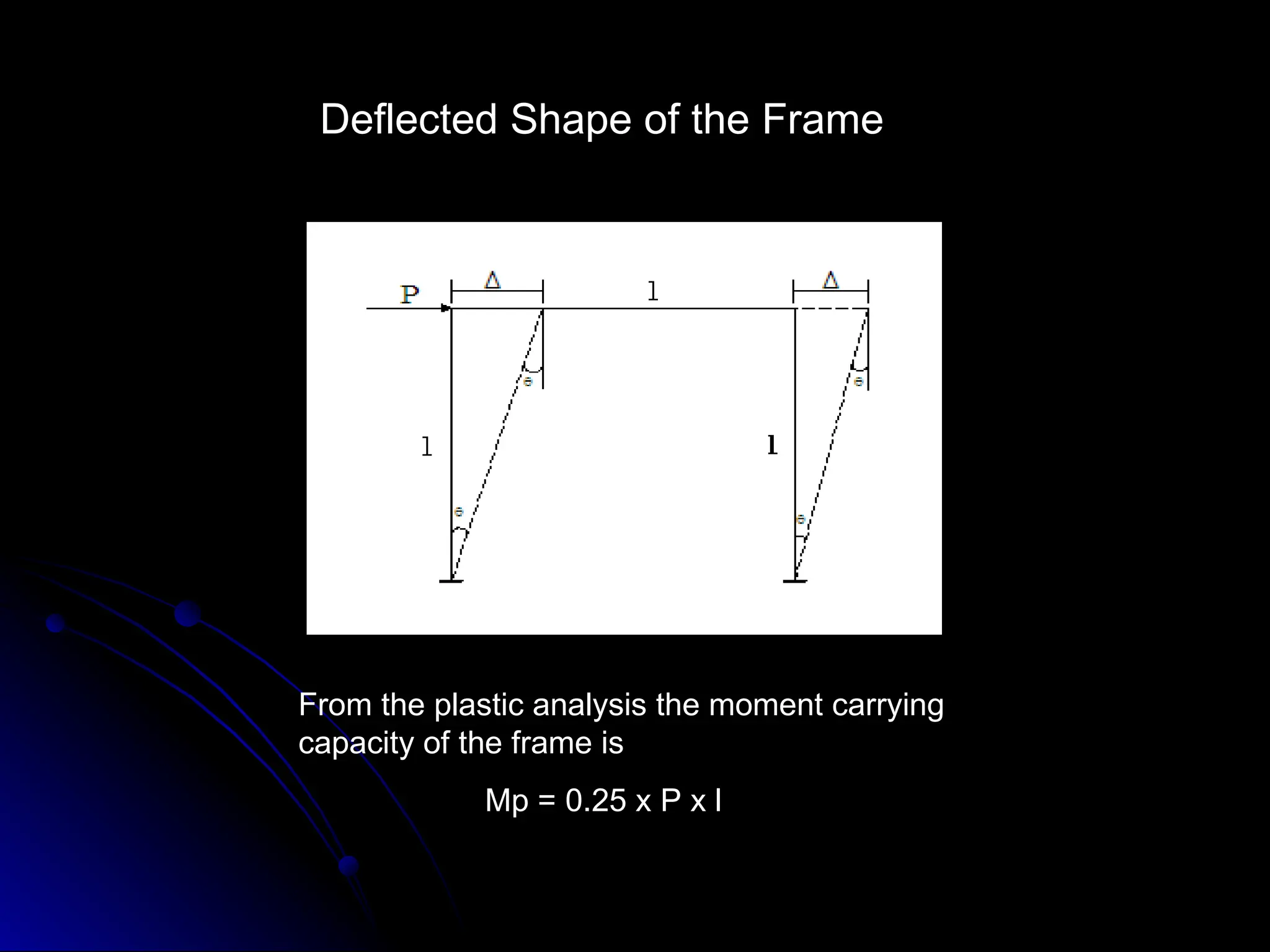
From the plastic analysis the moment carrying
capacity of the frame is
Mp = 0.25 x P x l
Deflected Shape of the Frame
Shake table at CPRI
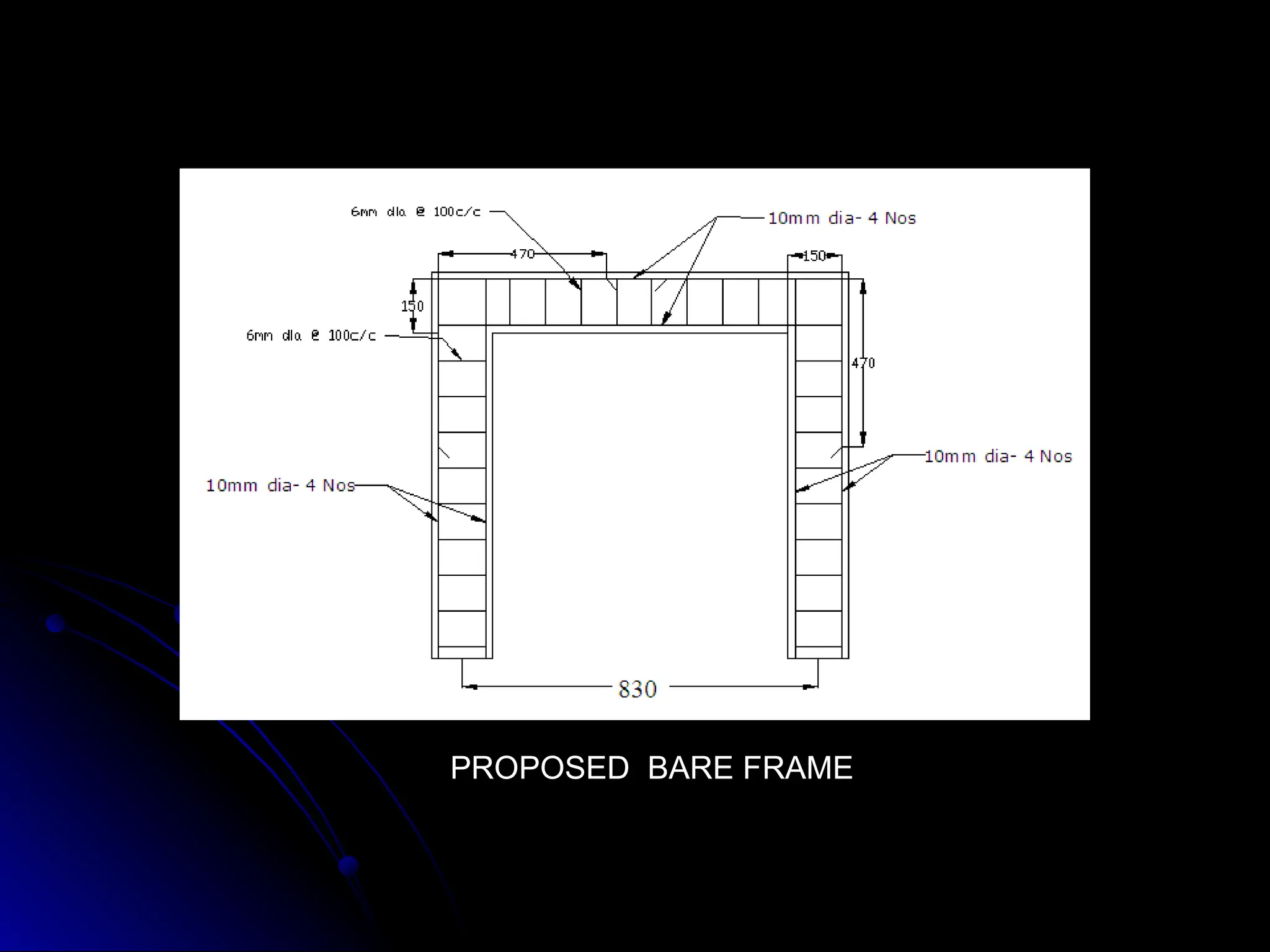
PROPOSED BARE FRAME
 Frequency calculations have to be carried
Frequency calculations have to be carried
out to give input to the shake table.
 Seismic Zone of testing has to be worked
Seismic Zone of testing has to be worked
out.
out.
 Type of test has to be finalized.
Type of test has to be finalized.
 A Fixity criterion has to be worked out.
A Fixity criterion has to be worked out.
 Frames need to be cast and tested.
Frames need to be cast and tested.
REFERENCES
REFERENCES
 Bathia.N “Micro-fiber reinforcement cement
Bathia.N “Micro-fiber reinforcement cement
composites”
composites” ICJ,
ICJ, Oct 1996, Vol: 70, No: 10, p-533.
Oct 1996, Vol: 70, No: 10, p-533.
 Bhimappa Holigar.Y “Performance Enhancement of
Bhimappa Holigar.Y “Performance Enhancement of
RCC Continuous Beams with inclusion of Synthetic
Fibers- an Experimental Investigation,” M. Tech Thesis
submitted to Mangalore University. 2002.
 Buyukozturk.O O. Gunes, E. Karaca “Debonding
Buyukozturk.O O. Gunes, E. Karaca “Debonding
Problems In Seismic Retrofitting of RC Beams Using
FRP Composites”, 2003.
 Hannant, D.J. “Fiber cements and fiber concrete” Jhon
Hannant, D.J. “Fiber cements and fiber concrete” Jhon
Wiley &Sons New York 1978.
 Hughes B.D and Fattuhi, N.I “Improving toughness of
Hughes B.D and Fattuhi, N.I “Improving toughness of
high strength cement paste with fiber reinforcement”
Composites,
Composites, Vol: 7, July 1976, p185
Vol: 7, July 1976, p185
 Laxmipathy.M, and A. R. SanthaKumar., (1987)
Laxmipathy.M, and A. R. SanthaKumar., (1987)
“Moment Redistribution Characteristics of a Reinforced
Fibrous Concrete Hinging Zone,”
Fibrous Concrete Hinging Zone,” Proceedings of the
Proceedings of the
International Symposium on Fiber Reinforced
Concrete
Concrete, Dec, Madras, India, pp 2.143-2.152.
, Dec, Madras, India, pp 2.143-2.152.
 Mahesh.P “Experimental investigation of laterally
Mahesh.P “Experimental investigation of laterally
loaded fiber reinforced concrete frames”, .
loaded fiber reinforced concrete frames”, .M.Tech
M.Tech
thesis submitted to
thesis submitted to NITK
NITK, 2006.
, 2006.
 Mullick.A “steel and polypropylene fiber reinforced
Mullick.A “steel and polypropylene fiber reinforced
concrete with vacuum dewatering system”
concrete with vacuum dewatering system” CE&CR
CE&CR
Dec 2005.
Dec 2005.
 Romuldi J.P and Baston G.B “Mechanics of crack
Romuldi J.P and Baston G.B “Mechanics of crack
arrest in concrete”
arrest in concrete” journal of Engg
journal of Engg mechanics ASCE
mechanics ASCE
Vol: 89
Vol: 89 June 1963, p147.
June 1963, p147.
 Swamy, R.N & Magnat, P.S “The interfacial bond
Swamy, R.N & Magnat, P.S “The interfacial bond
stress in steel fiber cement composites”
stress in steel fiber cement composites” cement and
cement and
concrete research
concrete research Vol: 7, Sep1976 p 641.
Vol: 7, Sep1976 p 641.
THANK
U

PERFORMANCE ENHANCEMENT OF FIBRE REINFORCED CONCRETE FRAMES UNDER SEISMIC LOADING

  • 1.
    A PROGRESS SEMINARON BY B.S.PRASAD.VODUGU PERFORMANCE ENHANCEMENT OF FIBRE REINFORCED CONCRETE FRAMES UNDER SEISMIC LOADING Under the Guidance of Under the Guidance of Dr. KATTA VENKATA RAMANA Dr. KATTA VENKATA RAMANA
  • 2.
    CONTENTS CONTENTS Introduction Introduction Earthquake-Resistant Buildings Earthquake-Resistant Buildings Scopeof Present Work Scope of Present Work Literature Review Literature Review Fibre Reinforced Concrete Fibre Reinforced Concrete Preliminary Analysis of RC Frame Preliminary Analysis of RC Frame Future Work to be Done Future Work to be Done
  • 3.
    INTRODUCTION INTRODUCTION  Earth quakeis a Natural phenomena and Earth quake is a Natural phenomena and has high potential to cause damages to has high potential to cause damages to society. society.  Strong ground motion is the primary cause Strong ground motion is the primary cause of damage to buildings subjected to earth of damage to buildings subjected to earth quake. quake.  Its adverse effects forces the engineers to Its adverse effects forces the engineers to design the buildings as earth quake design the buildings as earth quake resistant. resistant.
  • 4.
    Concrete Lends itselfto a variety of innovative designs as a result of its many desirable properties. Besides its advantages it has some undesirable characteristics like Brittle Weak in tension Cracking Thermal expansion
  • 5.
    Fiber reinforced concreteis defined as concrete made of primarily of hydraulic cements, aggregates and discrete reinforcing fibers. Fiber reinforced concrete is improving the deficiencies of the concrete . Incorporation of discontinuous, discrete, uniformly dispersed fibers in the matrix of concrete or mortar improves tensile and flexural strength, ductility, toughness, and impact and fatigue resistance of the composite (FRC) manifold, compared to the plain concrete.
  • 6.
    Earth quake designPhilosophies Minor Shaking Moderate Shaking Strong Shaking
  • 8.
    SCOPE OF PRESENTINVESTIGATION SCOPE OF PRESENT INVESTIGATION  Adequate and economic application of any Adequate and economic application of any material to field demands extensive knowledge material to field demands extensive knowledge of its performance under different loading of its performance under different loading conditions. conditions.  Hence in the present study an attempt has Hence in the present study an attempt has been made to know the behaviour of FRC been made to know the behaviour of FRC frame under seismic loading. frame under seismic loading.  The study is carried out by comparing The study is carried out by comparing performance of conventional RCC frame with performance of conventional RCC frame with frames where in ‘Recron 3s’ fibres are used. frames where in ‘Recron 3s’ fibres are used.
  • 9.
    FIBER REINFORCED CONCRETE FIBERREINFORCED CONCRETE From the literature it is shown that uniformly From the literature it is shown that uniformly dispersed fibers increases . dispersed fibers increases . Crack arresting mechanism Crack arresting mechanism Tensile strength Tensile strength Ductility Ductility Static and dynamic properties Static and dynamic properties
  • 10.
    Type of Fiber Typeof Fiber  Steel Fibers  Glass Fibers  Plastic fibers  Carbon fibers  Mineral fibers
  • 11.
    Basic Concepts ofFRC Basic Concepts of FRC  All cement-based materials are essentially All cement-based materials are essentially anisotropic and heterogenic in nature. These anisotropic and heterogenic in nature. These contain micro-cracks and interfacial discontinuities. contain micro-cracks and interfacial discontinuities.  The incorporation of the short fibers in relatively The incorporation of the short fibers in relatively brittle cement matrix transforms uncontrolled tensile brittle cement matrix transforms uncontrolled tensile crack propagation into a slow controlled process. crack propagation into a slow controlled process.  If the cracks are present and if breaking, strain of If the cracks are present and if breaking, strain of fibers is much greater than the cracking strain of fibers is much greater than the cracking strain of the cement, the fibers remaining in the place bridge the cement, the fibers remaining in the place bridge the cracks. the cracks.  As the straining is continued, the weak matrix will As the straining is continued, the weak matrix will break at another place and again will be held break at another place and again will be held together by the fiber bridging the cracks. together by the fiber bridging the cracks.
  • 12.
    Factors Influencing Fibre FactorsInfluencing Fibre Reinforcement Reinforcement  Relative Fibre-Matrix Stiffness Relative Fibre-Matrix Stiffness - - For efficient stress transfer to the fibre, the elastic modulus of the For efficient stress transfer to the fibre, the elastic modulus of the matrix must be very much lower than that of the fiber. matrix must be very much lower than that of the fiber. - - Hence there exists a minimum modular ratio (E Hence there exists a minimum modular ratio (Efiber fiber/E /Ematrix matrix) below ) below which improvement in strength can not be obtained. which improvement in strength can not be obtained.  Fibre-Matrix Interfacial Bond Fibre-Matrix Interfacial Bond - - The interfacial bond between the matrix and the fibre determines The interfacial bond between the matrix and the fibre determines the effectiveness of stress transfer from the matrix to the fibre. the effectiveness of stress transfer from the matrix to the fibre. - - Fibre length and fibre diameter are crucial parameters which Fibre length and fibre diameter are crucial parameters which influence the bonding characteristics which in turn effect the static influence the bonding characteristics which in turn effect the static and dynamic properties. and dynamic properties.
  • 13.
    FRC vs. ConventionalRCC FRC vs. Conventional RCC  Fibres in general cannot be used simply to replace Fibres in general cannot be used simply to replace the conventional steel reinforcement. the conventional steel reinforcement.  As fibres are randomly distributed through out the As fibres are randomly distributed through out the matrix they are not that much efficient to resist the matrix they are not that much efficient to resist the tensile, shear or compressive loads by replacing tensile, shear or compressive loads by replacing designed steel bars. designed steel bars.  The prime function of the fibres is to control matrix The prime function of the fibres is to control matrix cracking, and to enhance the bond between the cracking, and to enhance the bond between the fibres and the conventional steel reinforcement, if fibres and the conventional steel reinforcement, if used together. used together.  Thus, fibres and steel reinforcement should be seen Thus, fibres and steel reinforcement should be seen as complementary materials rather than competing. as complementary materials rather than competing.
  • 14.
    Applications of FRC Applicationsof FRC Considering the better performance in static and Considering the better performance in static and dynamic strength, energy absorption dynamic strength, energy absorption characteristics and fatigue strengths FRC is characteristics and fatigue strengths FRC is used in following areas used in following areas  Air field pavements. Air field pavements.  Earth quake resistant structures. Earth quake resistant structures.  Sewer and water pipe lines. Sewer and water pipe lines.  Dam spillways and stilling basins. Dam spillways and stilling basins.  High way pavements. High way pavements.  Rocket launching pads. Rocket launching pads.
  • 15.
    LITERATURE LITERATURE REVIEW REVIEW  Romualdi,Batson and Mandel ( In 1960’s) Romualdi, Batson and Mandel ( In 1960’s)  Swamy R.N and Magnat P.S (1976) Swamy R.N and Magnat P.S (1976)  Hughes B.D and Fattuhi N.I (1976) Hughes B.D and Fattuhi N.I (1976)  Hannant D.J(1978 Hannant D.J(1978) )  Dr. M. Lakshmipathy & Dr. A.R. Santhakumar (1987) Dr. M. Lakshmipathy & Dr. A.R. Santhakumar (1987)  Tang Jiuru Tang Jiuru et. al. et. al. (1992) (1992)  Bayasi and Zeng (1993) Bayasi and Zeng (1993)  M.R.Taylor F.D.Lydon et.al (1996 M.R.Taylor F.D.Lydon et.al (1996) )  Buyukozturk and et. al (2003) Buyukozturk and et. al (2003)  Mahesh. P (2006) Mahesh. P (2006)
  • 16.
    The idea thatconcrete can be strengthened The idea that concrete can be strengthened by inclusion of fibers was first proposed by by inclusion of fibers was first proposed by Porter in 1910 Porter in 1910  Romuldi J.P and Batson G.B (1963) Romuldi J.P and Batson G.B (1963) the the authors concluded on application of the authors concluded on application of the linear elastic fracture mechanics that the linear elastic fracture mechanics that the low tensile strength of concrete can low tensile strength of concrete can avoided with suitable reinforcement avoided with suitable reinforcement arrangements. They found theoretically arrangements. They found theoretically the tensile strength to be inversely the tensile strength to be inversely proportional to the square root of proportional to the square root of reinforcement spacing. reinforcement spacing.
  • 17.
     Swamy R.Nand Magnat P.S (1976 Swamy R.N and Magnat P.S (1976 ) Have ) Have reported a progressive reduction in the reported a progressive reduction in the interfacial bond strength, when the matrix interfacial bond strength, when the matrix changed from mortar to concrete and marginal changed from mortar to concrete and marginal increase 10 to 15% in compressive strength increase 10 to 15% in compressive strength and modulus of elasticity due to addition of and modulus of elasticity due to addition of fibers fibers  Hughes B.D and Fattuhi N.I (1976) found Hughes B.D and Fattuhi N.I (1976) found that that Dynamic strength (due to explosive Dynamic strength (due to explosive charges, dropped weights etc) was 5to 10 charges, dropped weights etc) was 5to 10 times greater for FRC. Toughness was found times greater for FRC. Toughness was found to increase in the range of 2 to 12 times. to increase in the range of 2 to 12 times.
  • 18.
     Hannant D.J(1978) HannantD.J(1978) pointed out the pointed out the behaviour of concrete after the matrix behaviour of concrete after the matrix cracks. cracks.  Dr.M.Lakshmipathy and Dr.A.R. Dr.M.Lakshmipathy and Dr.A.R. Santhakumar Santhakumar ( (1987) 1987) concluded that the concluded that the additional rotation capacity after the additional rotation capacity after the formation of mechanism is more in case of formation of mechanism is more in case of FRC beams which is more favorable in FRC beams which is more favorable in earth quake resistant structures. earth quake resistant structures.
  • 19.
     Tang jiuruet al (1992) Tang jiuru et al (1992) proposed that steel – proposed that steel – fiber reinforced concrete (SFRC), under fiber reinforced concrete (SFRC), under reversed cyclic loading . reversed cyclic loading . parameter for his study are the reinforcement parameter for his study are the reinforcement ratio of beam bars, the volume ratio of the ratio of beam bars, the volume ratio of the stirrups in joint core, and development length stirrups in joint core, and development length of beam bar in the joint. of beam bar in the joint. And suggests that the use of SFRC in beam – And suggests that the use of SFRC in beam – column joints may be applied in seismic column joints may be applied in seismic areas. areas.
  • 20.
     Bayasi andZeng (1993) Bayasi and Zeng (1993) proposed that proposed that flexural behavior of polypropylene fiber be flexural behavior of polypropylene fiber be characterized by the post-peak flexural characterized by the post-peak flexural resistance (load or stress). It was found resistance (load or stress). It was found that, for volumes equal or less than 0.3 that, for volumes equal or less than 0.3 percent, 19 mm (0.75 in.) long fibers were percent, 19 mm (0.75 in.) long fibers were more favorable for enhancing the post- more favorable for enhancing the post- peak resistance. For 0.5 percent volume, peak resistance. For 0.5 percent volume, 12.5 mm (0.5 in.) long fibers were more 12.5 mm (0.5 in.) long fibers were more effective. effective.
  • 21.
     O. Buyukozturkand et. al (2003) O. Buyukozturk and et. al (2003) has has studied the Performance of FRP studied the Performance of FRP strengthened beams under monotonic and strengthened beams under monotonic and cyclic loading . cyclic loading . Shear strength appears to be an Shear strength appears to be an important parameter affecting the important parameter affecting the performance and failure mode of the performance and failure mode of the beams strengthened beams strengthened Contribution of proper anchorage Contribution of proper anchorage of the flexural FRP reinforcement is of the flexural FRP reinforcement is significant. significant.
  • 22.
     Mahesh. P(2006) Mahesh. P (2006) carried out thesis on carried out thesis on rhombus shaped frames with and without rhombus shaped frames with and without RECRON- 3S fibers for their performance RECRON- 3S fibers for their performance enhancement. enhancement. He concluded that there is He concluded that there is increase in strength and ductility. increase in strength and ductility. Increase in joint stiffness and Increase in joint stiffness and member stiffness is due to crack arrest member stiffness is due to crack arrest mechanism of fibres. mechanism of fibres.
  • 23.
    From the plasticanalysis the moment carrying capacity of the frame is Mp = 0.25 x P x l Deflected Shape of the Frame
  • 24.
  • 25.
  • 26.
     Frequency calculationshave to be carried Frequency calculations have to be carried out to give input to the shake table. out to give input to the shake table.  Seismic Zone of testing has to be worked Seismic Zone of testing has to be worked out. out.  Type of test has to be finalized. Type of test has to be finalized.  A Fixity criterion has to be worked out. A Fixity criterion has to be worked out.  Frames need to be cast and tested. Frames need to be cast and tested.
  • 27.
    REFERENCES REFERENCES  Bathia.N “Micro-fiberreinforcement cement Bathia.N “Micro-fiber reinforcement cement composites” composites” ICJ, ICJ, Oct 1996, Vol: 70, No: 10, p-533. Oct 1996, Vol: 70, No: 10, p-533.  Bhimappa Holigar.Y “Performance Enhancement of Bhimappa Holigar.Y “Performance Enhancement of RCC Continuous Beams with inclusion of Synthetic RCC Continuous Beams with inclusion of Synthetic Fibers- an Experimental Investigation,” M. Tech Thesis Fibers- an Experimental Investigation,” M. Tech Thesis submitted to Mangalore University. 2002. submitted to Mangalore University. 2002.  Buyukozturk.O O. Gunes, E. Karaca “Debonding Buyukozturk.O O. Gunes, E. Karaca “Debonding Problems In Seismic Retrofitting of RC Beams Using Problems In Seismic Retrofitting of RC Beams Using FRP Composites”, 2003. FRP Composites”, 2003.  Hannant, D.J. “Fiber cements and fiber concrete” Jhon Hannant, D.J. “Fiber cements and fiber concrete” Jhon Wiley &Sons New York 1978. Wiley &Sons New York 1978.  Hughes B.D and Fattuhi, N.I “Improving toughness of Hughes B.D and Fattuhi, N.I “Improving toughness of high strength cement paste with fiber reinforcement” high strength cement paste with fiber reinforcement” Composites, Composites, Vol: 7, July 1976, p185 Vol: 7, July 1976, p185
  • 28.
     Laxmipathy.M, andA. R. SanthaKumar., (1987) Laxmipathy.M, and A. R. SanthaKumar., (1987) “Moment Redistribution Characteristics of a Reinforced “Moment Redistribution Characteristics of a Reinforced Fibrous Concrete Hinging Zone,” Fibrous Concrete Hinging Zone,” Proceedings of the Proceedings of the International Symposium on Fiber Reinforced International Symposium on Fiber Reinforced Concrete Concrete, Dec, Madras, India, pp 2.143-2.152. , Dec, Madras, India, pp 2.143-2.152.  Mahesh.P “Experimental investigation of laterally Mahesh.P “Experimental investigation of laterally loaded fiber reinforced concrete frames”, . loaded fiber reinforced concrete frames”, .M.Tech M.Tech thesis submitted to thesis submitted to NITK NITK, 2006. , 2006.  Mullick.A “steel and polypropylene fiber reinforced Mullick.A “steel and polypropylene fiber reinforced concrete with vacuum dewatering system” concrete with vacuum dewatering system” CE&CR CE&CR Dec 2005. Dec 2005.  Romuldi J.P and Baston G.B “Mechanics of crack Romuldi J.P and Baston G.B “Mechanics of crack arrest in concrete” arrest in concrete” journal of Engg journal of Engg mechanics ASCE mechanics ASCE Vol: 89 Vol: 89 June 1963, p147. June 1963, p147.  Swamy, R.N & Magnat, P.S “The interfacial bond Swamy, R.N & Magnat, P.S “The interfacial bond stress in steel fiber cement composites” stress in steel fiber cement composites” cement and cement and concrete research concrete research Vol: 7, Sep1976 p 641. Vol: 7, Sep1976 p 641.
  • 29.