RISE AND FALL
PEOPLE EXPRESS AIRLINES
(MDI Murshidabad)
PRESENTED BY
Ram Pathak
Bikash Chaudhury
Atif Wakeel
Gourav Kumar Sunda
Arko Das
PEOPLE EXPRESS – SOMETHING
DIFFERENT
• Founded by Donald C Burr to try and develop a better way for people to work
together
• Congress deregulated the airline industry in 1978
• In 1980, the airline industry was offering a homogenous and undifferentiated
product
• Burr wanted People Express to be different by attracting superior service-oriented
people
• Very low prices and very high frequency of flights are its other marketing tools
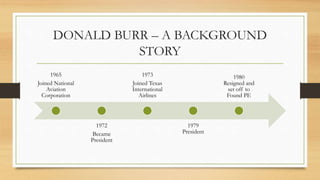
DONALD BURR – A BACKGROUND
STORY
1965
Joined National
Aviation
Corporation
1972
Became
President
1973
Joined Texas
International
Airlines
1979
President
1980
Resigned and
set off to
Found PE
PRECEPTS
Service; commitment to the growth and development of our
people
To be the best provider of air transportation
To provide the highest quality leadership
To serve as a role model for others
PRECEPTS(Continued)
Simplicity
Maximization of profits
EMPLOYEE ENGAGEMENT
• Named all their employees “Managers”
• Flight attendants were called “customer service managers” and pilots as
“flight managers”
• Burr wanted them to feel that they are a part of something greater
• He believed that the employees are always managing something – people,
environment or resources
PURPOSE AND PROCESS
• Managing by walking around to Making a better world
• Creating a big noble purpose motivates everybody
• Tried to inculcate by teaching and letting employees teach each other
• Burr was against the “beat them and they’ll do more” policy
INITIAL PROBLEM AND STRATEGY
• Not achieving critical mass would endanger PE from other players
• At first, PE stayed away from routes occupied by giants
• Growth and expansion would develop people and in turn develop the
company
PRODUCT AND POSTIONING
• Filled advertisements with company information and its policies
• Targeted business people who wanted big savings and people who otherwise
might not fly at all
• PE’s peak prices were about 35% to 55% below standard prices and off-peak
prices were 60% to 80% cheaper
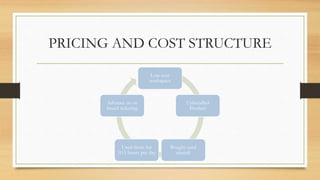
PRICING AND COST STRUCTURE
Low cost
workspace
Unbundled
Product
Bought used
aircraft
Used them for
10.5 hours per day
Advance or on
board ticketing
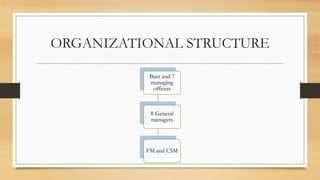
ORGANIZATIONAL STRUCTURE
Burr and 7
managing
officers
8 General
managers
FM and CSM
INITIAL EXPLOSIVE GROWTH
• Took off on 30th April, 1981
• Financed by Citicorp Venture Capital and Hambrecht Quest after initial
hiccups
• Became the fastest-growing airline ever
SELF-MANAGEMENT, CROSS-UTILIZATION,
STAFFING
• Burr expected everybody to contribute to policy level decision making
• Through management teams, advisory councils and staff committees
• Employees were continuously rotated to keep costs low and flexibility high
• Led to simple procedures
• Rigorous recruitment process to find mature, hard-working, assertive and
energetic persons
COMPENSATION
• Difference between lowest and highest base salary relatively small
• Everybody was required to buy 100 shares, at book value upon being hired
• PE paid 100% medical and dental benefits
• Offered $50,000 in life insurance
• 401K Stock purchase plan – invest upto 15% of salary in PE common or preferred
stock and company would contribute $0.25 for every $1 the person invests
• Ownership income program – received a quarterly dividend based on how many
shared purchased
CONSUMER DISSATISFACTION,
PROBLEMS AND STRATEGIES
• Overbooked planes by a significant margin
• Terminal got overcrowded
• Delayed and cancelled flights forced passengers to wait in uncomfortable situation
• High workload and too much rotation were the internal issues
• Burr tried restructuring the organization and strengthened the leadership
development training
• PE bought another terminal to solve its overcrowding issues
CHANGING INDUSTRY
• Continental and People Express, positioned as low-cost airlines started to bring in
higher number of consumers
• Major carriers started replying with frequent flyer travel programmes and computer
aided variable pricing
• Did major gate acquisitions to bottle PE’s expansion
• Deep-pocketed rivals easily competed against PE’s pricing policy to siphon
consumers
• The Ultimate Super Saver by American Airlines, aided by their variable pricing
reduced PE’s traffic for the first time
ADOPTING STRATEGIES
• Acquiring Frontier, Britt airways and Provincetown-Boston Airline
• Acquiring Frontier gave PE an expansion, without long term, low return
investments
• Burr needed Frontier’s yield management system, frequent flyer program and
management team
• But, Frontier immediately started losing money and became a burden to PE
DECLINE AND FALL
• Continuous struggle for market share
• Frontier airlines was a burden – United and Continental were added
pressures on its high operating costs
• Sale of Frontier, aimed to bring in $200 million, failed
• Frank Lorenzo bought PE for $125 million and Frontier airlines for $176
million
SWOT ANALYSIS
• Strengths
• Financial
• Lean cost structure
• Lowest cost per available seat mile - $0.05
• 84% load factor compared to industry 60%
• Low fuel costs
• Human Resources
• Employee stock ownership
• Recruit service professionals – Nurses, Social Workers, etc.
• Employee profit sharing
SWOT ANALYSIS(Continued)
• Weaknesses
• Financial
• Avoided additional revenue by refusing cargo shipments
• Human Resources
• Overworked employees
• Understaffing
• Difficult recruiting standards
• Management Hierarchy
SWOT ANALYSIS(Continued)
• No hotel or rental car
• Overbooking and lengthy delays
• Baggage delays
• Technology
• Issues with customer reservation system
SWOT ANALYSIS(Continued)
• Opportunities
• Flexibility in the workforce by cross-utilization
• Able to undercut competitors by the low cost structure
• Ability to appeal to customers who might normally drive or take
a bus
• Continuing addition of aircraft allowed service to new routes
• Deregulation in the airline industry reduced barriers to entering
the market and government regulation.
SWOT ANALYSIS(Continued)
• Threats
• Financial
• Employees gain seniority and require wage increases
• Predatory actions by competitors in price war
• Human Resources
• Donald Burr’s large ego
• Understaffing/overworking creates unhappiness
• Low employee morale
• Employees desired unionization like other airlines
SWOT ANALYSIS(Continued)
• External Conditions
• Fuel price increases
• Recession
• Accident/Crash
People Express Airlines (Case Study)

People Express Airlines (Case Study)

  • 1.
    RISE AND FALL PEOPLEEXPRESS AIRLINES (MDI Murshidabad)
  • 2.
    PRESENTED BY Ram Pathak BikashChaudhury Atif Wakeel Gourav Kumar Sunda Arko Das
  • 3.
    PEOPLE EXPRESS –SOMETHING DIFFERENT • Founded by Donald C Burr to try and develop a better way for people to work together • Congress deregulated the airline industry in 1978 • In 1980, the airline industry was offering a homogenous and undifferentiated product • Burr wanted People Express to be different by attracting superior service-oriented people • Very low prices and very high frequency of flights are its other marketing tools
  • 4.
    DONALD BURR –A BACKGROUND STORY 1965 Joined National Aviation Corporation 1972 Became President 1973 Joined Texas International Airlines 1979 President 1980 Resigned and set off to Found PE
  • 5.
    PRECEPTS Service; commitment tothe growth and development of our people To be the best provider of air transportation To provide the highest quality leadership To serve as a role model for others
  • 6.
  • 7.
    EMPLOYEE ENGAGEMENT • Namedall their employees “Managers” • Flight attendants were called “customer service managers” and pilots as “flight managers” • Burr wanted them to feel that they are a part of something greater • He believed that the employees are always managing something – people, environment or resources
  • 8.
    PURPOSE AND PROCESS •Managing by walking around to Making a better world • Creating a big noble purpose motivates everybody • Tried to inculcate by teaching and letting employees teach each other • Burr was against the “beat them and they’ll do more” policy
  • 9.
    INITIAL PROBLEM ANDSTRATEGY • Not achieving critical mass would endanger PE from other players • At first, PE stayed away from routes occupied by giants • Growth and expansion would develop people and in turn develop the company
  • 10.
    PRODUCT AND POSTIONING •Filled advertisements with company information and its policies • Targeted business people who wanted big savings and people who otherwise might not fly at all • PE’s peak prices were about 35% to 55% below standard prices and off-peak prices were 60% to 80% cheaper
  • 11.
    PRICING AND COSTSTRUCTURE Low cost workspace Unbundled Product Bought used aircraft Used them for 10.5 hours per day Advance or on board ticketing
  • 12.
    ORGANIZATIONAL STRUCTURE Burr and7 managing officers 8 General managers FM and CSM
  • 13.
    INITIAL EXPLOSIVE GROWTH •Took off on 30th April, 1981 • Financed by Citicorp Venture Capital and Hambrecht Quest after initial hiccups • Became the fastest-growing airline ever
  • 14.
    SELF-MANAGEMENT, CROSS-UTILIZATION, STAFFING • Burrexpected everybody to contribute to policy level decision making • Through management teams, advisory councils and staff committees • Employees were continuously rotated to keep costs low and flexibility high • Led to simple procedures • Rigorous recruitment process to find mature, hard-working, assertive and energetic persons
  • 15.
    COMPENSATION • Difference betweenlowest and highest base salary relatively small • Everybody was required to buy 100 shares, at book value upon being hired • PE paid 100% medical and dental benefits • Offered $50,000 in life insurance • 401K Stock purchase plan – invest upto 15% of salary in PE common or preferred stock and company would contribute $0.25 for every $1 the person invests • Ownership income program – received a quarterly dividend based on how many shared purchased
  • 16.
    CONSUMER DISSATISFACTION, PROBLEMS ANDSTRATEGIES • Overbooked planes by a significant margin • Terminal got overcrowded • Delayed and cancelled flights forced passengers to wait in uncomfortable situation • High workload and too much rotation were the internal issues • Burr tried restructuring the organization and strengthened the leadership development training • PE bought another terminal to solve its overcrowding issues
  • 17.
    CHANGING INDUSTRY • Continentaland People Express, positioned as low-cost airlines started to bring in higher number of consumers • Major carriers started replying with frequent flyer travel programmes and computer aided variable pricing • Did major gate acquisitions to bottle PE’s expansion • Deep-pocketed rivals easily competed against PE’s pricing policy to siphon consumers • The Ultimate Super Saver by American Airlines, aided by their variable pricing reduced PE’s traffic for the first time
  • 18.
    ADOPTING STRATEGIES • AcquiringFrontier, Britt airways and Provincetown-Boston Airline • Acquiring Frontier gave PE an expansion, without long term, low return investments • Burr needed Frontier’s yield management system, frequent flyer program and management team • But, Frontier immediately started losing money and became a burden to PE
  • 19.
    DECLINE AND FALL •Continuous struggle for market share • Frontier airlines was a burden – United and Continental were added pressures on its high operating costs • Sale of Frontier, aimed to bring in $200 million, failed • Frank Lorenzo bought PE for $125 million and Frontier airlines for $176 million
  • 20.
    SWOT ANALYSIS • Strengths •Financial • Lean cost structure • Lowest cost per available seat mile - $0.05 • 84% load factor compared to industry 60% • Low fuel costs • Human Resources • Employee stock ownership • Recruit service professionals – Nurses, Social Workers, etc. • Employee profit sharing
  • 21.
    SWOT ANALYSIS(Continued) • Weaknesses •Financial • Avoided additional revenue by refusing cargo shipments • Human Resources • Overworked employees • Understaffing • Difficult recruiting standards • Management Hierarchy
  • 22.
    SWOT ANALYSIS(Continued) • Nohotel or rental car • Overbooking and lengthy delays • Baggage delays • Technology • Issues with customer reservation system
  • 23.
    SWOT ANALYSIS(Continued) • Opportunities •Flexibility in the workforce by cross-utilization • Able to undercut competitors by the low cost structure • Ability to appeal to customers who might normally drive or take a bus • Continuing addition of aircraft allowed service to new routes • Deregulation in the airline industry reduced barriers to entering the market and government regulation.
  • 24.
    SWOT ANALYSIS(Continued) • Threats •Financial • Employees gain seniority and require wage increases • Predatory actions by competitors in price war • Human Resources • Donald Burr’s large ego • Understaffing/overworking creates unhappiness • Low employee morale • Employees desired unionization like other airlines
  • 25.
    SWOT ANALYSIS(Continued) • ExternalConditions • Fuel price increases • Recession • Accident/Crash

Editor's Notes

  • #7 Precepts were a check and balance against which people could test their ideas