Peer to Peer Networks and Cyberlockers and explain with the
help of examples.
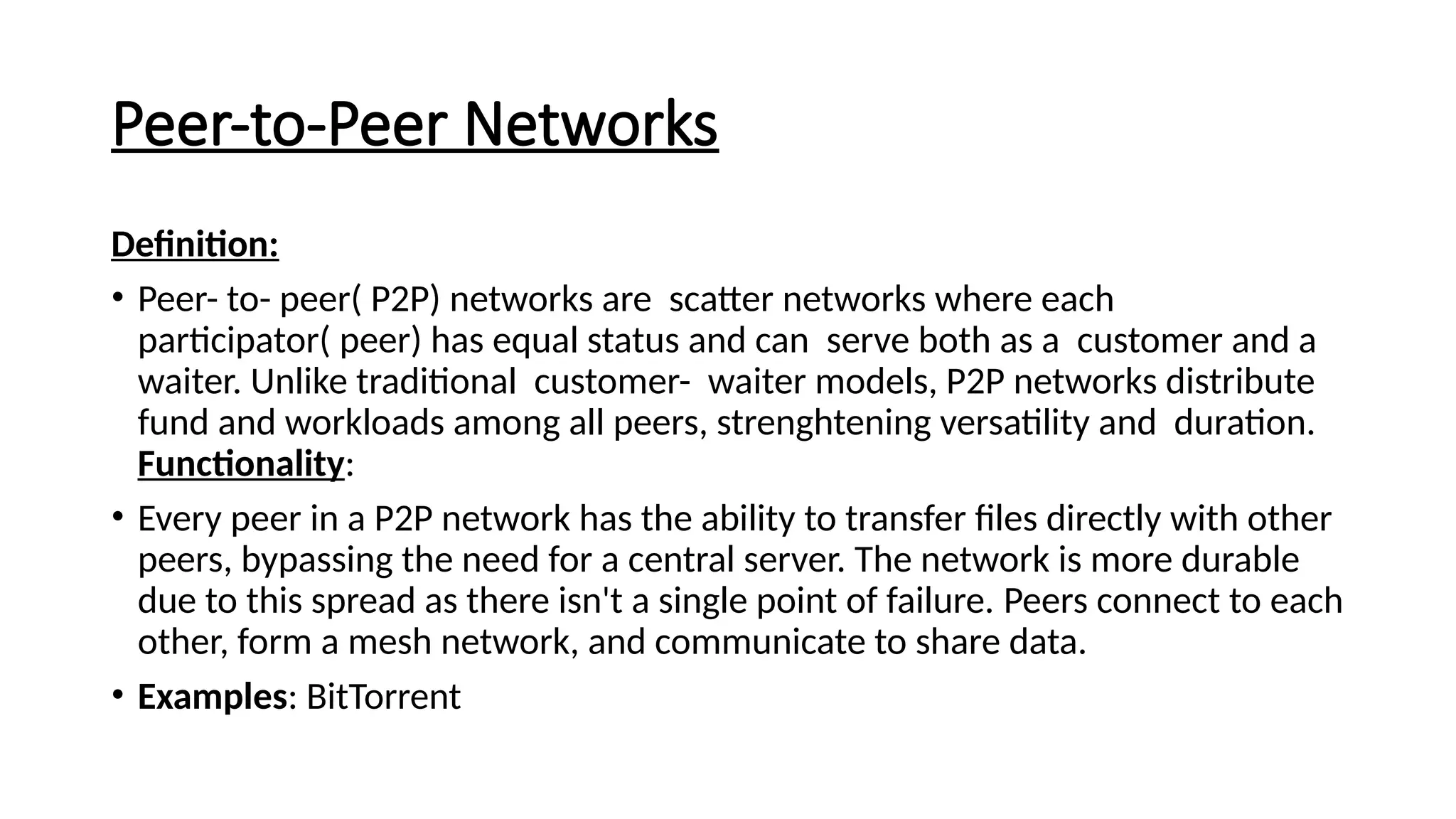
Peer-to-Peer Networks
Definition:
• Peer- to- peer( P2P) networks are scatter networks where each
participator( peer) has equal status and can serve both as a customer and a
waiter. Unlike traditional customer- waiter models, P2P networks distribute
fund and workloads among all peers, strenghtening versatility and duration.
Functionality:
• Every peer in a P2P network has the ability to transfer files directly with other
peers, bypassing the need for a central server. The network is more durable
due to this spread as there isn't a single point of failure. Peers connect to each
other, form a mesh network, and communicate to share data.
• Examples: BitTorrent
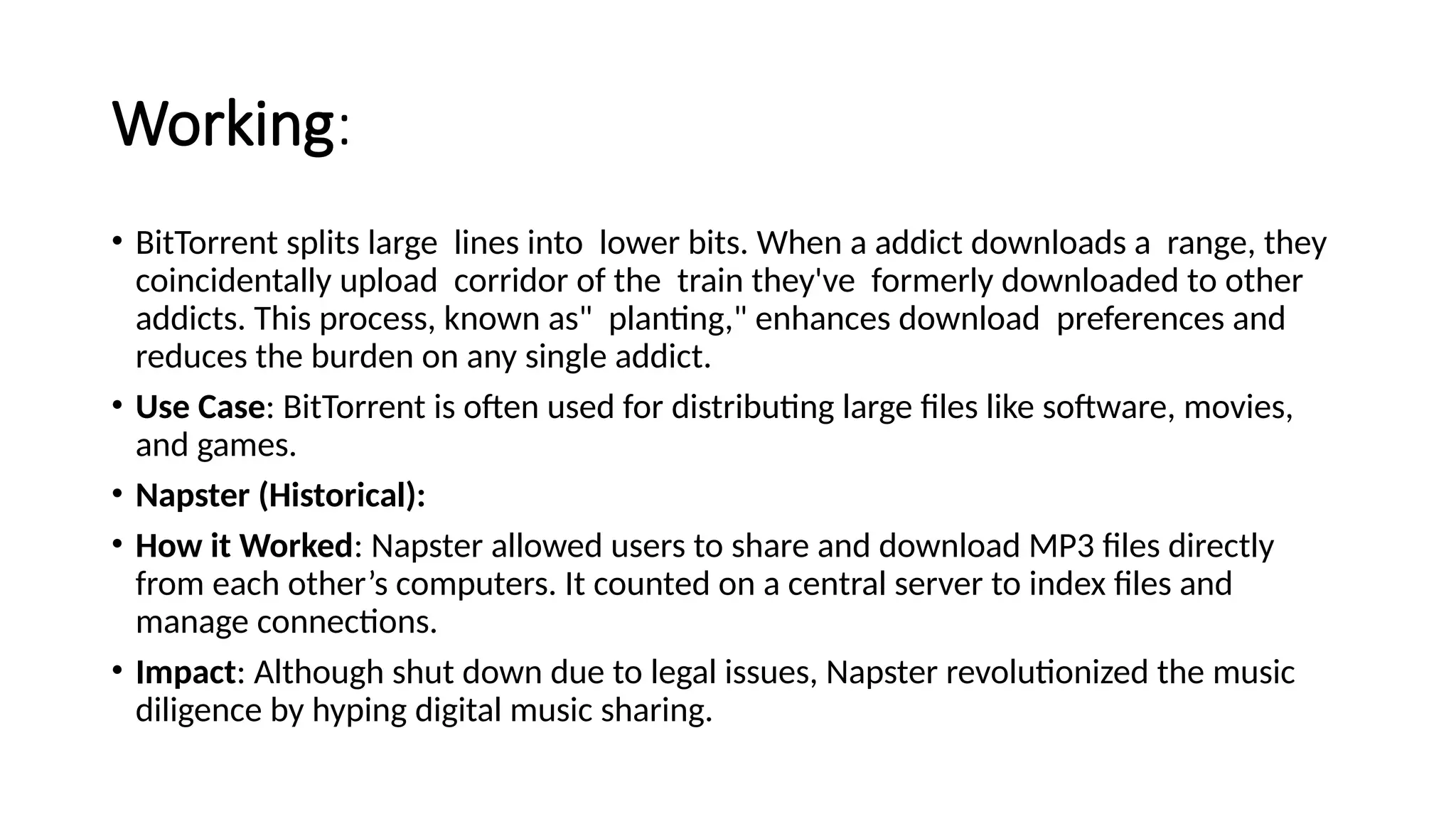
Working:
• BitTorrent splits large lines into lower bits. When a addict downloads a range, they
coincidentally upload corridor of the train they've formerly downloaded to other
addicts. This process, known as" planting," enhances download preferences and
reduces the burden on any single addict.
• Use Case: BitTorrent is often used for distributing large files like software, movies,
and games.
• Napster (Historical):
• How it Worked: Napster allowed users to share and download MP3 files directly
from each other’s computers. It counted on a central server to index files and
manage connections.
• Impact: Although shut down due to legal issues, Napster revolutionized the music
diligence by hyping digital music sharing.
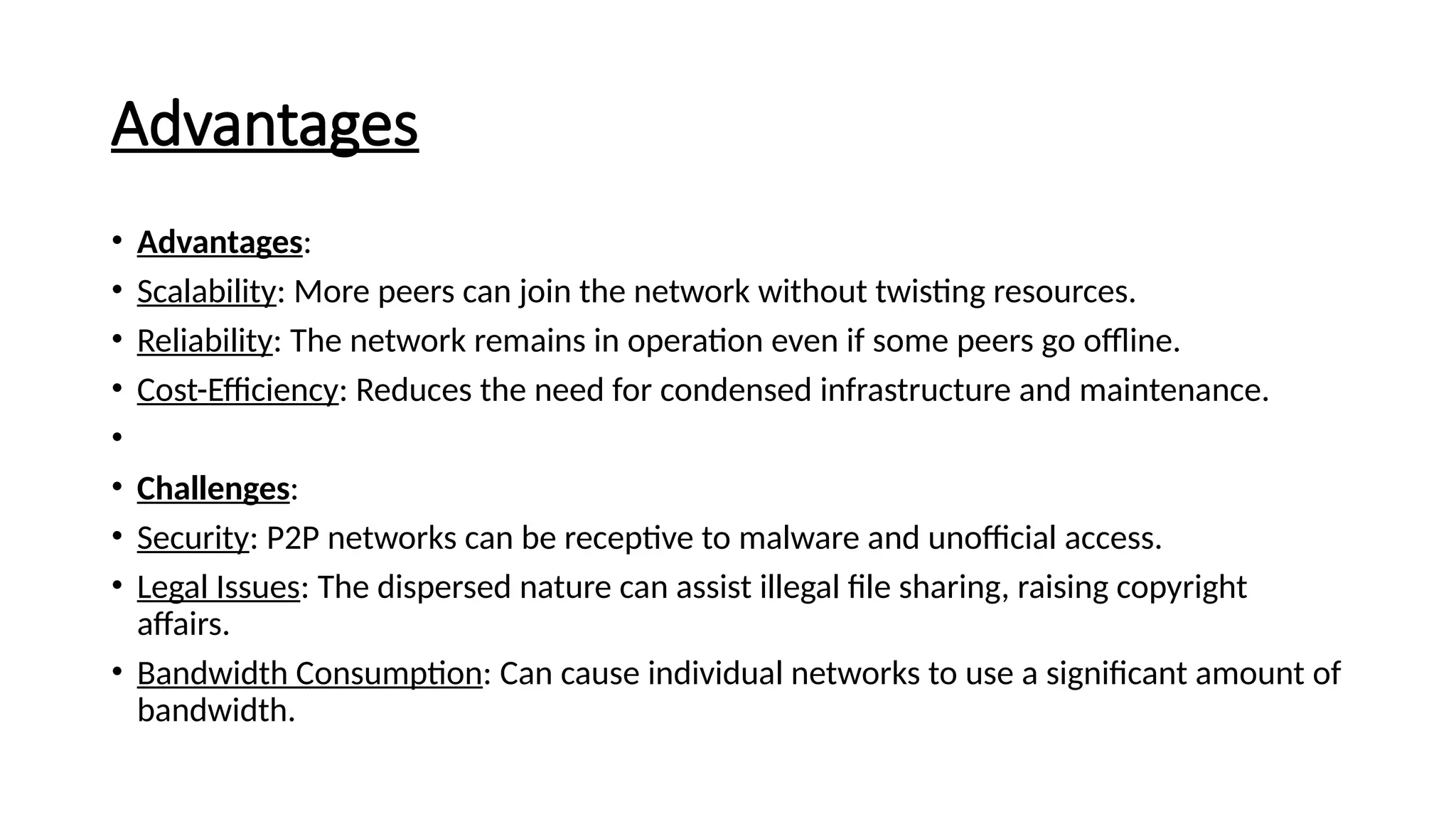
Advantages
• Advantages:
• Scalability: More peers can join the network without twisting resources.
• Reliability: The network remains in operation even if some peers go offline.
• Cost-Efficiency: Reduces the need for condensed infrastructure and maintenance.
•
• Challenges:
• Security: P2P networks can be receptive to malware and unofficial access.
• Legal Issues: The dispersed nature can assist illegal file sharing, raising copyright
affairs.
• Bandwidth Consumption: Can cause individual networks to use a significant amount of
bandwidth.
Peer to peer Networking in Computer Science.pptx

Peer to peer Networking in Computer Science.pptx

  • 1.
    Peer to PeerNetworks and Cyberlockers and explain with the help of examples.
  • 2.
    Peer-to-Peer Networks Definition: • Peer-to- peer( P2P) networks are scatter networks where each participator( peer) has equal status and can serve both as a customer and a waiter. Unlike traditional customer- waiter models, P2P networks distribute fund and workloads among all peers, strenghtening versatility and duration. Functionality: • Every peer in a P2P network has the ability to transfer files directly with other peers, bypassing the need for a central server. The network is more durable due to this spread as there isn't a single point of failure. Peers connect to each other, form a mesh network, and communicate to share data. • Examples: BitTorrent
  • 3.
    Working: • BitTorrent splitslarge lines into lower bits. When a addict downloads a range, they coincidentally upload corridor of the train they've formerly downloaded to other addicts. This process, known as" planting," enhances download preferences and reduces the burden on any single addict. • Use Case: BitTorrent is often used for distributing large files like software, movies, and games. • Napster (Historical): • How it Worked: Napster allowed users to share and download MP3 files directly from each other’s computers. It counted on a central server to index files and manage connections. • Impact: Although shut down due to legal issues, Napster revolutionized the music diligence by hyping digital music sharing.
  • 4.
    Advantages • Advantages: • Scalability:More peers can join the network without twisting resources. • Reliability: The network remains in operation even if some peers go offline. • Cost-Efficiency: Reduces the need for condensed infrastructure and maintenance. • • Challenges: • Security: P2P networks can be receptive to malware and unofficial access. • Legal Issues: The dispersed nature can assist illegal file sharing, raising copyright affairs. • Bandwidth Consumption: Can cause individual networks to use a significant amount of bandwidth.