Workshop 22
Standardisierte Medizinische Übergaben
Wie lernen, lehren und implementieren?
27.09.2013 Jahrestagung der Gesellschaft für Medizinische Ausbildung, GMA2013, Graz, Austria
,
Saša Sopka, Susanne Druener, Lina Stieger, Hendrik Drachsler, Kathleen Hartkopf,
Carola Orego, Mariona Secanell, Bridgit Maher, Pat Henn, Helen Hynes
Workshop structure
1. Short introduction of participants (20 min)
(1 sentence + expectations on card)
2. Project summary of PATIENT (20 min)
3. Group work (4-5 people) (30 min)
A) Which challenges do you see for implementation of a
handover study module at your university?
B) How would you face/resolve those challenges?
presentation of group work results
4. Discussion (20 min)
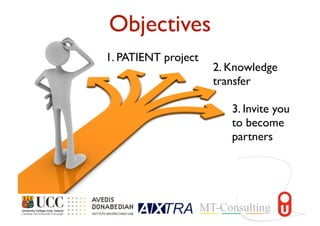
1. PATIENT project
2. Knowledge
transfer
3. Invite you
to become
partners
Objectives
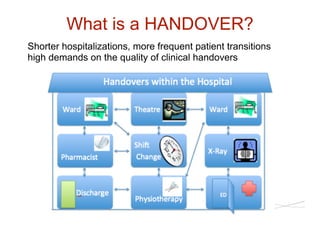
What is a HANDOVER?
Shorter hospitalizations, more frequent patient transitions
high demands on the quality of clinical handovers
WHO High 5 Patient Safety
The World Health Organization (WHO) lists
accurate handovers as one of its High 5
Patient Safety initiatives.
Training of handover skills would appear to be
a promising approach to improve the quality
of patient continue care.
WHO Patient Safety Curriculum Guide.
Published October 2011.
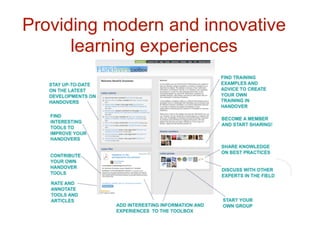
Providing modern and innovative
learning experiences
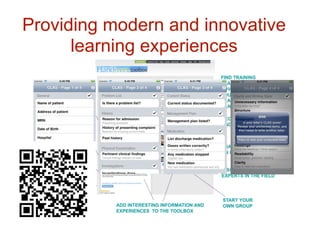
Providing modern and innovative
learning experiences
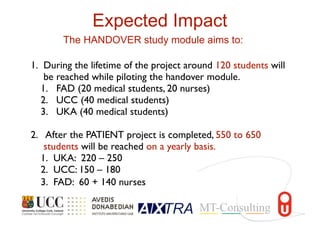
1. During the lifetime of the project around 120 students will
be reached while piloting the handover module.
1. FAD (20 medical students, 20 nurses)
2. UCC (40 medical students)
3. UKA (40 medical students)
2. After the PATIENT project is completed, 550 to 650
students will be reached on a yearly basis.
1. UKA: 220 – 250
2. UCC: 150 – 180
3. FAD: 60 + 140 nurses
Expected Impact
The HANDOVER study module aims to:
WP2 - Needs Analysis
Carola	
  Orrego,	
  Mariona	
  Scannell,
Avedis	
  Donabedian	
  University	
  Ins7tute,	
  Barcelona,	
  Spain
Objectives of WP3
Training Needs Analysis (TNA):
To assess, identify and analyse the educational
needs of under-graduate medical students
relating to the transfer of clinical information in key
situations.
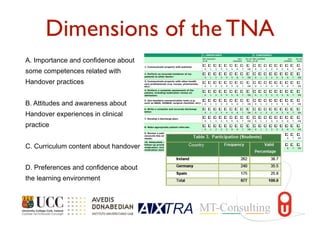
Dimensions of the TNA
A. Importance and confidence about
some competences related with
Handover practices
B. Attitudes and awareness about
Handover experiences in clinical
practice
C. Curriculum content about handover
D. Preferences and confidence about
the learning environment
Identified Student Needs
SELF ASSESSMENT
•Develop a discharge plan
•Write a complete and accurate
discharge letter
•Make appropriate patient referrals
•Use of standardized tools and
methods for handover processes
CURRICULUM CONTENT
•Stress management
•Content of handover (patients, doctors,
others)
•Reporting of adverse events
•Patients understanding
•Speaking up (incidents/problems)
ATTITUDES AND AWARENESS
•The use of standardized tools
•How to perform a proper handover
•How to deal with/respond to
medical error
•To deal with conflict resolution
LEARNING PREFERENCES
•Students prefer to learn handover in clinical
environment (simulations & online course)
•Enough technical skills for online course
•In term of access e-learning is advantageous
•Confidence about using social network
•Uncertainty about simulated ward
effectiveness
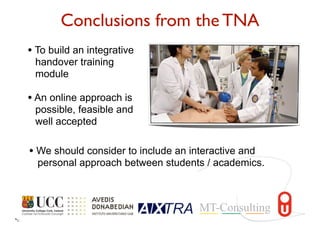
Conclusions from the TNA
• To build an integrative
handover training
module
• An online approach is
possible, feasible and
well accepted
• We should consider to include an interactive and
personal approach between students / academics.
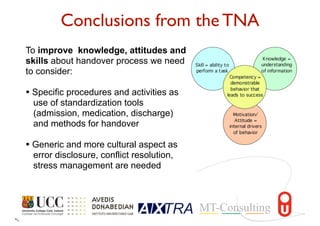
Conclusions from the TNA
To improve knowledge, attitudes and
skills about handover process we need
to consider:
• Specific procedures and activities as
use of standardization tools
(admission, medication, discharge)
and methods for handover
• Generic and more cultural aspect as
error disclosure, conflict resolution,
stress management are needed
WP3 - Learning Outcomes
Helen	
  Hynes,	
  Pat	
  Henn
University	
  College,	
  Cork,	
  Ireland
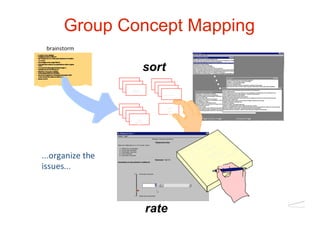
Group Concept Mapping
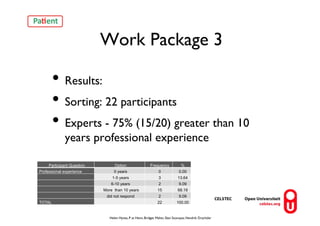
Helen Hynes, P at Henn, Bridget Maher, Slavi Stonoyav, Hendrik Drachsler!
Work Package 3!
• Results:!
• Sorting: 22 participants!
• Experts - 75% (15/20) greater than 10
years professional experience!
Participant Question Option Frequency %
Professional experience 0 years 0 0.00
1-5 years 3 13.64
6-10 years 2 9.09
More than 10 years 15 68.18
did not respond 2 9.09
TOTAL 22 100.00
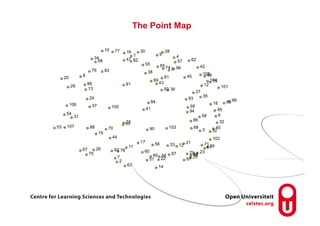
The Point Map
1
2
3
4
5
6
7
8
9
10
11
12
13
14
15
16
17
18
19
20
21
22
23
24
25
26
27
28
29
30
31
32
33
34
35
36
37
38
39
40
41
42
43
44
45 46
47
48
49
50
51
52
53
54
55
56
57
58
59
60
61
62
63
64
65
66
67
68
69
70
7172
73
74
75
76
77
78
79
80
81
82
83
84
85
86
87
88
89
90
91
92
93
94
95
96
97
98
99
100
101
102
103
104
105
106
107
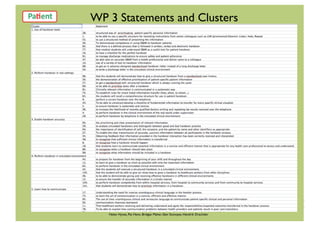
WP 3 Statements and Clusters!
Helen Hynes, Pat Henn, Bridget Maher, Slavi Stonoyav, Hendrik Drachsler!
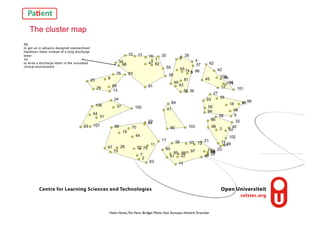
The cluster map
1
10 16 30
34
38
47
55
77
82
91
98
4
5
9
28
36
43
50
57
65
69
74
81
96
6
18
27
35
48
59
80
93
94
99
12
15
42
45 46
62
101
104
105
2
7
11
17
19
26
44
63
67
70
73
75
78
88
92
95
8
13
20
29
76 83
89
24
31
37
53
54
100
106
107
3
32
39
40
52
58
61
68
71
86
102
14
21
22
23
25
33
49
51
56
60
6466
72
79
85
87
97
41
84
90 103
!
98. 
to get an in advance designed standardized
handover-letter instead of a long discharge
letter
34. 
to write a discharge letter in the simulated
clinical environment
Helen Hynes, Pat Henn, Bridget Maher, Slavi Stonoyav, Hendrik Drachsler!
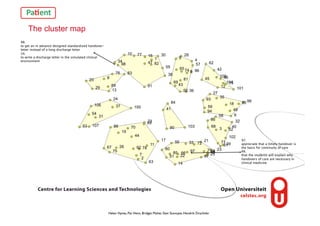
The cluster map
1
10 16 30
34
38
47
55
77
82
91
98
4
5
9
28
36
43
50
57
65
69
74
81
96
6
18
27
35
48
59
80
93
94
99
12
15
42
45 46
62
101
104
105
2
7
11
17
19
26
44
63
67
70
73
75
78
88
92
95
8
13
20
29
76 83
89
24
31
37
53
54
100
106
107
3
32
39
40
52
58
61
68
71
86
102
14
21
22
23
25
33
49
51
56
60
6466
72
79
85
87
97
41
84
90 103
!
98. 
to get an in advance designed standardized handover-
letter instead of a long discharge letter
34. 
to write a discharge letter in the simulated clinical
environment
97. 
appreciate that a timely handover is
the basis for continuity of care
66. 
that the students will explain why
handovers of care are necessary in
clinical medicine
Helen Hynes, Pat Henn, Bridget Maher, Slavi Stonoyav, Hendrik Drachsler!
The cluster map
1
10 16 30
34
38
47
55
77
82
91
98
4
5
9
28
36
43
50
57
65
69
74
81
96
6
18
27
35
48
59
80
93
94
99
12
15
42
45 46
62
101
104
105
2
7
11
17
19
26
44
63
67
70
73
75
78
88
92
95
8
13
20
29
76 83
89
24
31
37
53
54
100
106
107
3
32
39
40
52
58
61
68
71
86
102
14
21
22
23
25
33
49
51
56
60
6466
72
79
85
87
97
41
84
90 103
!
98. 
to get an in advance designed standardized handover-
letter instead of a long discharge letter
34. 
to write a discharge letter in the simulated clinical
environment
97. 
appreciate that a timely handover is
the basis for continuity of care
66. 
that the students will explain why
handovers of care are necessary in
clinical medicine
Helen Hynes, Pat Henn, Bridget Maher, Slavi Stonoyav, Hendrik Drachsler!
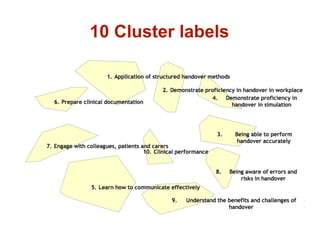
10 Cluster labels
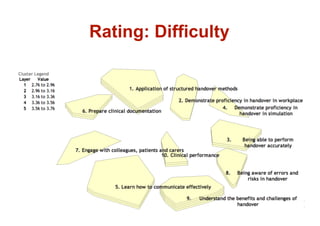
Rating: Difficulty
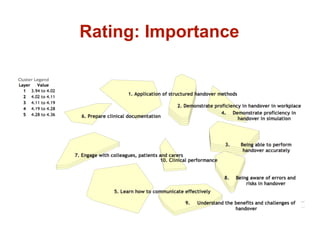
Rating: Importance
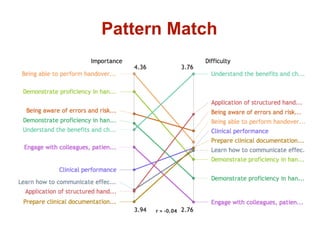
Pattern Match
WP4 - Implementation
Sasa	
  Sopka,	
  Susanne Druener, Lina Stieger,
Hana Schroeder
RWTH	
  Aachen	
  University,	
  Germany
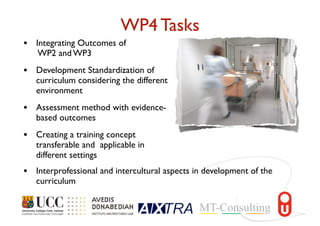
WP4 Tasks
• Integrating Outcomes of
WP2 and WP3
• Development Standardization of
curriculum considering the different
environment
• Assessment method with evidence-
based outcomes
• Creating a training concept
transferable and applicable in
different settings
• Interprofessional and intercultural aspects in development of the
curriculum
4-5 people (30 min)
A) Which challenges do you see for
implementation of a handover study module
at your university?
B) How would you face/resolve those
challenges?
Group work
This silde is available at:
http://www.slideshare.com/Drachsler
Email: hendrik.drachsler@ou.nl
Skype: celstec-hendrik.drachsler
Blogging at: http://www.drachsler.de
Twittering at: http://twitter.com/HDrachsler
Many thanks for your attention!

PATIENT Workshop at GMA2013

  • 1.
    Workshop 22 Standardisierte MedizinischeÜbergaben Wie lernen, lehren und implementieren? 27.09.2013 Jahrestagung der Gesellschaft für Medizinische Ausbildung, GMA2013, Graz, Austria , Saša Sopka, Susanne Druener, Lina Stieger, Hendrik Drachsler, Kathleen Hartkopf, Carola Orego, Mariona Secanell, Bridgit Maher, Pat Henn, Helen Hynes
  • 2.
    Workshop structure 1. Shortintroduction of participants (20 min) (1 sentence + expectations on card) 2. Project summary of PATIENT (20 min) 3. Group work (4-5 people) (30 min) A) Which challenges do you see for implementation of a handover study module at your university? B) How would you face/resolve those challenges? presentation of group work results 4. Discussion (20 min)
  • 3.
    1. PATIENT project 2.Knowledge transfer 3. Invite you to become partners Objectives
  • 4.
    What is aHANDOVER? Shorter hospitalizations, more frequent patient transitions high demands on the quality of clinical handovers
  • 5.
    WHO High 5Patient Safety The World Health Organization (WHO) lists accurate handovers as one of its High 5 Patient Safety initiatives. Training of handover skills would appear to be a promising approach to improve the quality of patient continue care. WHO Patient Safety Curriculum Guide. Published October 2011.
  • 6.
    Providing modern andinnovative learning experiences
  • 7.
    Providing modern andinnovative learning experiences
  • 8.
    1. During thelifetime of the project around 120 students will be reached while piloting the handover module. 1. FAD (20 medical students, 20 nurses) 2. UCC (40 medical students) 3. UKA (40 medical students) 2. After the PATIENT project is completed, 550 to 650 students will be reached on a yearly basis. 1. UKA: 220 – 250 2. UCC: 150 – 180 3. FAD: 60 + 140 nurses Expected Impact The HANDOVER study module aims to:
  • 9.
    WP2 - NeedsAnalysis Carola  Orrego,  Mariona  Scannell, Avedis  Donabedian  University  Ins7tute,  Barcelona,  Spain
  • 10.
    Objectives of WP3 TrainingNeeds Analysis (TNA): To assess, identify and analyse the educational needs of under-graduate medical students relating to the transfer of clinical information in key situations.
  • 11.
    Dimensions of theTNA A. Importance and confidence about some competences related with Handover practices B. Attitudes and awareness about Handover experiences in clinical practice C. Curriculum content about handover D. Preferences and confidence about the learning environment
  • 12.
    Identified Student Needs SELFASSESSMENT •Develop a discharge plan •Write a complete and accurate discharge letter •Make appropriate patient referrals •Use of standardized tools and methods for handover processes CURRICULUM CONTENT •Stress management •Content of handover (patients, doctors, others) •Reporting of adverse events •Patients understanding •Speaking up (incidents/problems) ATTITUDES AND AWARENESS •The use of standardized tools •How to perform a proper handover •How to deal with/respond to medical error •To deal with conflict resolution LEARNING PREFERENCES •Students prefer to learn handover in clinical environment (simulations & online course) •Enough technical skills for online course •In term of access e-learning is advantageous •Confidence about using social network •Uncertainty about simulated ward effectiveness
  • 13.
    Conclusions from theTNA • To build an integrative handover training module • An online approach is possible, feasible and well accepted • We should consider to include an interactive and personal approach between students / academics.
  • 14.
    Conclusions from theTNA To improve knowledge, attitudes and skills about handover process we need to consider: • Specific procedures and activities as use of standardization tools (admission, medication, discharge) and methods for handover • Generic and more cultural aspect as error disclosure, conflict resolution, stress management are needed
  • 15.
    WP3 - LearningOutcomes Helen  Hynes,  Pat  Henn University  College,  Cork,  Ireland
  • 16.
  • 17.
    Helen Hynes, Pat Henn, Bridget Maher, Slavi Stonoyav, Hendrik Drachsler! Work Package 3! • Results:! • Sorting: 22 participants! • Experts - 75% (15/20) greater than 10 years professional experience! Participant Question Option Frequency % Professional experience 0 years 0 0.00 1-5 years 3 13.64 6-10 years 2 9.09 More than 10 years 15 68.18 did not respond 2 9.09 TOTAL 22 100.00
  • 18.
    The Point Map 1 2 3 4 5 6 7 8 9 10 11 12 13 14 15 16 17 18 19 20 21 22 23 24 25 26 27 28 29 30 31 32 33 34 35 36 37 38 39 40 41 42 43 44 4546 47 48 49 50 51 52 53 54 55 56 57 58 59 60 61 62 63 64 65 66 67 68 69 70 7172 73 74 75 76 77 78 79 80 81 82 83 84 85 86 87 88 89 90 91 92 93 94 95 96 97 98 99 100 101 102 103 104 105 106 107
  • 19.
    WP 3 Statementsand Clusters! Helen Hynes, Pat Henn, Bridget Maher, Slavi Stonoyav, Hendrik Drachsler!
  • 20.
    The cluster map 1 1016 30 34 38 47 55 77 82 91 98 4 5 9 28 36 43 50 57 65 69 74 81 96 6 18 27 35 48 59 80 93 94 99 12 15 42 45 46 62 101 104 105 2 7 11 17 19 26 44 63 67 70 73 75 78 88 92 95 8 13 20 29 76 83 89 24 31 37 53 54 100 106 107 3 32 39 40 52 58 61 68 71 86 102 14 21 22 23 25 33 49 51 56 60 6466 72 79 85 87 97 41 84 90 103 ! 98. to get an in advance designed standardized handover-letter instead of a long discharge letter 34. to write a discharge letter in the simulated clinical environment Helen Hynes, Pat Henn, Bridget Maher, Slavi Stonoyav, Hendrik Drachsler! The cluster map 1 10 16 30 34 38 47 55 77 82 91 98 4 5 9 28 36 43 50 57 65 69 74 81 96 6 18 27 35 48 59 80 93 94 99 12 15 42 45 46 62 101 104 105 2 7 11 17 19 26 44 63 67 70 73 75 78 88 92 95 8 13 20 29 76 83 89 24 31 37 53 54 100 106 107 3 32 39 40 52 58 61 68 71 86 102 14 21 22 23 25 33 49 51 56 60 6466 72 79 85 87 97 41 84 90 103 ! 98. to get an in advance designed standardized handover- letter instead of a long discharge letter 34. to write a discharge letter in the simulated clinical environment 97. appreciate that a timely handover is the basis for continuity of care 66. that the students will explain why handovers of care are necessary in clinical medicine Helen Hynes, Pat Henn, Bridget Maher, Slavi Stonoyav, Hendrik Drachsler!
  • 21.
    The cluster map 1 1016 30 34 38 47 55 77 82 91 98 4 5 9 28 36 43 50 57 65 69 74 81 96 6 18 27 35 48 59 80 93 94 99 12 15 42 45 46 62 101 104 105 2 7 11 17 19 26 44 63 67 70 73 75 78 88 92 95 8 13 20 29 76 83 89 24 31 37 53 54 100 106 107 3 32 39 40 52 58 61 68 71 86 102 14 21 22 23 25 33 49 51 56 60 6466 72 79 85 87 97 41 84 90 103 ! 98. to get an in advance designed standardized handover- letter instead of a long discharge letter 34. to write a discharge letter in the simulated clinical environment 97. appreciate that a timely handover is the basis for continuity of care 66. that the students will explain why handovers of care are necessary in clinical medicine Helen Hynes, Pat Henn, Bridget Maher, Slavi Stonoyav, Hendrik Drachsler!
  • 22.
  • 23.
  • 24.
  • 25.
  • 26.
    WP4 - Implementation Sasa  Sopka,  Susanne Druener, Lina Stieger, Hana Schroeder RWTH  Aachen  University,  Germany
  • 28.
    WP4 Tasks • IntegratingOutcomes of WP2 and WP3 • Development Standardization of curriculum considering the different environment • Assessment method with evidence- based outcomes • Creating a training concept transferable and applicable in different settings • Interprofessional and intercultural aspects in development of the curriculum
  • 29.
    4-5 people (30min) A) Which challenges do you see for implementation of a handover study module at your university? B) How would you face/resolve those challenges? Group work
  • 30.
    This silde isavailable at: http://www.slideshare.com/Drachsler Email: hendrik.drachsler@ou.nl Skype: celstec-hendrik.drachsler Blogging at: http://www.drachsler.de Twittering at: http://twitter.com/HDrachsler Many thanks for your attention!