Dr Parag Yadav
Hypothyroidism
 Presentation from asymptomatic disease to myxoedema coma.
Aetiology
 Primary-
Inadequate thyroid hormone from thyroid gland
 Secondary/ central-
Pathology related to pituitary or hypothalamus
Primary hypothyroidism-Aetiology
 Iodine deficiency
 Autoimmune thyroid diseases
 Hashimoto thyroiditis
 Drugs- Amiodarone, Tyrosine Kinase Inhibitors(TKI), Riphampin ,
Ethionamide, Phenytoin, Carbamazepine etc.
 Thyroid Radioactive Iodine Therapy
 Thyroid Surgery
 Radiotherapy to head or neck area
Central hypothyroidism-Aetiology
 Neoplastic, Infiltrative, Inflammatory, Genetic, Iatrogenic disorders.
 Pituitary tumours
 Tumours compressing hypothalamus
 Sheehan syndrome
 TRH resistance
 Lymphocytic hypophysitis
 Radiation therapy to the brain
 Drugs such as dopamine, prednisone, Opioids etc.
 Post partum thyroiditis
 Radioactive iodine in treatment of graves disease
 Sub acute granulomatous thyroiditis
Epidemiology
 Prevalence among adults
 More prevalence in women with small stature at birth,
Low BMI in childhood
 Female gender and increasing age associated with higher TSH and
prevalence of Antithyroid antibodies
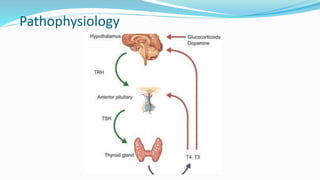
Pathophysiology
Histopathology
 Autoimmune thyroiditis–
Increase in turnover of iodine and impaired organification
 Chronic inflammation T cell lymphocytic infiltration lymphocytic
hyperplasia dense fibrosis an atrophic follicles
History
 Typical-Cold intolerance, Puffiness, Decreased sweating
 Dry skin, voice change hair loss,
constipation, fatigue muscle cramps,
cold intolerance, sleep disturbance M.C. Abnormalities,
weight gain, Galactorhoea
 Depression, anxiety, psychosis, memory loss
 Rarely- Ascites, Pericardial Effusion.
 Carpel tunnel syndrome, Sleep apnoea,
 Hyponatremia, Hypercholesterolemia,
 Congestive Heart Failure, Prolonged QT interval
 Hashimoto disease-
Fullness of throat, fatigue, painless thyroid enlargement
Evaluation
 Overt hypothyroidism
TSH elevated, free T4 low
 Subclinical hypothyroidism
TSH elevated, free T4 normal
 Central hypothyroidism-
Biologically inactive TSH.
Diagnosis on free T4
 Autoimmune Hypo thyroiditis
 Anti thyroid antibodies- TPO antibodies
 Euthyroid sickness-
 In hospitalized patients.
 Reverse T3 elevated
 Hyperlipidaemia, elevated serum CK, elevated hepatic enzymes, anaemia,
increased BUN, creatinine, uric acid
Lab investigations
Treatment
 Levothyroxine monotherapy
 1.6 mcg/kg/day
 30-45 min before breakfast or at least 3 hrs post meal
 Proton pump inhibitors negative impact on levothyroxine absorption
 IV form of drug in myxedema coma
 Gel formulations- triocent- in malabsorptionsyndrome
 Sucralfate, calcium preparation, bile acid sequestrants- interfere
absorption
 Lab- every 4-8 weeks until target achieved. 6 months after stable
 Cardiac disease-
Monitor for angina/ A.F. Over treated for extended period of time
Osteoporosis
Prognosis
Failure to treat - Severe mental retardation in children
In adult- Heart failure
Complications
 Myxoedema coma
 Myxedema crisis-
Encephalopathy, hypothermia, seizures, hyponatremia, hypoglycaemia,
Arythmia, respiratory failure.
 Treatment-
Thyroid replacement treatment with IV hydrocortisone
Hyperthyroidism
 Hypothyroidism is a Syndrome associated with
excess thyroid hormone production
 Thyrotoxicosis is a state of excess thyroid hormone
exposure to tissues
 Overt hyperthyroidism
low TSH, elevated T3, T4
 T3 toxicosis
T3 elevated, normal T4, low TSH
 Subclinical hyperthyroidism
low TSH, normal T3 And T4
Etiology
 Graves disease
 Toxic Multinodular Goiter
 Toxic adenoma
 Other-
 Iodine induced
 TSH secreting pituitary adenoma
 Coditions with high HCG levels
 Ectopic thyroid in struma ovarii
 Extensive metastasis from thyroid Ca
 Drug induced Thyroiditis
 Factitious thyroiditis (excessive use of pharmaceutical thyroid hormone)
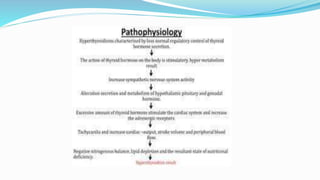
Pathophysiology
 Graves disease-
Autoimmune process.
Antibodies against TSH receptors  increase production and release of
thyroid hormone
 Toxic multi nodular goiter
Development of nodular disease  somatic mutation lead to activation of
cAMP pathway  Hyperthyroidism
 Iodine induced hyperthyroidism -
From excessive iodine intake
Excess iodide inhibit organification (iodide to thyroid conversion). This is
Wolff-chaikoff effect.
Fails in “Jod-basedow phenomenon” Excess thyroid hormone
 Amiodarone induced thyrotoxicosis
1. With pre existing thyroid diseases
2. Destructive thyroiditis due to toxic effect of amiodarone
Thyroiditis
 Inflammation and destruction of thyroid follicle cells
 1. Autoimmune cause
 2. external factors-infection, drug induced
History
 Hyperadrenergic and hypermetabolic state like symptoms
 Palpitation tremors
 Heat intolerance dyspnea on exertion
 Anxiety irritability
 Fatigue hair loss
 Oligomenorhoea/amenorhoea
 Subactue thyroiditis-
Anterior neck pain and fever
 Eye signs-Lid lag, Lid retraction
Diplopia, excessive tearing
EVALUATION
 Measurement of TSH, Free T4 & Total T3
 Overt hyperthyroidism -
low TSH, elevated T3, T4
 T3 toxicosis -
T3 elevated, normal T4, low TSH
 Subclinical hyperthyroidism -
low TSH, normal T3 And T4
 Heterothile antibodies – false elevation of TSH
 Biotin – high dose biotin- falsely low TSH
 Measurement of thyrotropin receptor antibody(TRAb) – elevated in
“Graves Disease”
 If TRAb is normal – Radio-iodine thyroid uptake
High Uptake –
1. Graves Disease – Diffuse pattern
2. TMNG – Patch pattern
3.Thyroid Adenoma- solitary area high uptake
Low uptake
1.Thyroidities
2.Iatrogenic
Lab investigations
PATHOPHYSIO OF THYROID.pdf

PATHOPHYSIO OF THYROID.pdf

  • 1.
  • 3.
    Hypothyroidism  Presentation fromasymptomatic disease to myxoedema coma.
  • 4.
    Aetiology  Primary- Inadequate thyroidhormone from thyroid gland  Secondary/ central- Pathology related to pituitary or hypothalamus
  • 5.
    Primary hypothyroidism-Aetiology  Iodinedeficiency  Autoimmune thyroid diseases  Hashimoto thyroiditis  Drugs- Amiodarone, Tyrosine Kinase Inhibitors(TKI), Riphampin , Ethionamide, Phenytoin, Carbamazepine etc.  Thyroid Radioactive Iodine Therapy  Thyroid Surgery  Radiotherapy to head or neck area
  • 6.
    Central hypothyroidism-Aetiology  Neoplastic,Infiltrative, Inflammatory, Genetic, Iatrogenic disorders.  Pituitary tumours  Tumours compressing hypothalamus  Sheehan syndrome  TRH resistance  Lymphocytic hypophysitis  Radiation therapy to the brain  Drugs such as dopamine, prednisone, Opioids etc.
  • 7.
     Post partumthyroiditis  Radioactive iodine in treatment of graves disease  Sub acute granulomatous thyroiditis
  • 8.
    Epidemiology  Prevalence amongadults  More prevalence in women with small stature at birth, Low BMI in childhood  Female gender and increasing age associated with higher TSH and prevalence of Antithyroid antibodies
  • 9.
  • 10.
    Histopathology  Autoimmune thyroiditis– Increasein turnover of iodine and impaired organification  Chronic inflammation T cell lymphocytic infiltration lymphocytic hyperplasia dense fibrosis an atrophic follicles
  • 11.
    History  Typical-Cold intolerance,Puffiness, Decreased sweating  Dry skin, voice change hair loss, constipation, fatigue muscle cramps, cold intolerance, sleep disturbance M.C. Abnormalities, weight gain, Galactorhoea  Depression, anxiety, psychosis, memory loss  Rarely- Ascites, Pericardial Effusion.
  • 12.
     Carpel tunnelsyndrome, Sleep apnoea,  Hyponatremia, Hypercholesterolemia,  Congestive Heart Failure, Prolonged QT interval  Hashimoto disease- Fullness of throat, fatigue, painless thyroid enlargement
  • 13.
    Evaluation  Overt hypothyroidism TSHelevated, free T4 low  Subclinical hypothyroidism TSH elevated, free T4 normal  Central hypothyroidism- Biologically inactive TSH. Diagnosis on free T4
  • 14.
     Autoimmune Hypothyroiditis  Anti thyroid antibodies- TPO antibodies  Euthyroid sickness-  In hospitalized patients.  Reverse T3 elevated  Hyperlipidaemia, elevated serum CK, elevated hepatic enzymes, anaemia, increased BUN, creatinine, uric acid
  • 15.
  • 16.
    Treatment  Levothyroxine monotherapy 1.6 mcg/kg/day  30-45 min before breakfast or at least 3 hrs post meal  Proton pump inhibitors negative impact on levothyroxine absorption
  • 17.
     IV formof drug in myxedema coma  Gel formulations- triocent- in malabsorptionsyndrome  Sucralfate, calcium preparation, bile acid sequestrants- interfere absorption  Lab- every 4-8 weeks until target achieved. 6 months after stable
  • 18.
     Cardiac disease- Monitorfor angina/ A.F. Over treated for extended period of time Osteoporosis
  • 19.
    Prognosis Failure to treat- Severe mental retardation in children In adult- Heart failure
  • 20.
    Complications  Myxoedema coma Myxedema crisis- Encephalopathy, hypothermia, seizures, hyponatremia, hypoglycaemia, Arythmia, respiratory failure.  Treatment- Thyroid replacement treatment with IV hydrocortisone
  • 21.
    Hyperthyroidism  Hypothyroidism isa Syndrome associated with excess thyroid hormone production  Thyrotoxicosis is a state of excess thyroid hormone exposure to tissues
  • 22.
     Overt hyperthyroidism lowTSH, elevated T3, T4  T3 toxicosis T3 elevated, normal T4, low TSH  Subclinical hyperthyroidism low TSH, normal T3 And T4
  • 23.
    Etiology  Graves disease Toxic Multinodular Goiter  Toxic adenoma  Other-  Iodine induced  TSH secreting pituitary adenoma  Coditions with high HCG levels  Ectopic thyroid in struma ovarii  Extensive metastasis from thyroid Ca  Drug induced Thyroiditis  Factitious thyroiditis (excessive use of pharmaceutical thyroid hormone)
  • 25.
    Pathophysiology  Graves disease- Autoimmuneprocess. Antibodies against TSH receptors  increase production and release of thyroid hormone  Toxic multi nodular goiter Development of nodular disease  somatic mutation lead to activation of cAMP pathway  Hyperthyroidism
  • 26.
     Iodine inducedhyperthyroidism - From excessive iodine intake Excess iodide inhibit organification (iodide to thyroid conversion). This is Wolff-chaikoff effect. Fails in “Jod-basedow phenomenon” Excess thyroid hormone  Amiodarone induced thyrotoxicosis 1. With pre existing thyroid diseases 2. Destructive thyroiditis due to toxic effect of amiodarone
  • 27.
    Thyroiditis  Inflammation anddestruction of thyroid follicle cells  1. Autoimmune cause  2. external factors-infection, drug induced
  • 28.
    History  Hyperadrenergic andhypermetabolic state like symptoms  Palpitation tremors  Heat intolerance dyspnea on exertion  Anxiety irritability  Fatigue hair loss  Oligomenorhoea/amenorhoea  Subactue thyroiditis- Anterior neck pain and fever  Eye signs-Lid lag, Lid retraction Diplopia, excessive tearing
  • 29.
    EVALUATION  Measurement ofTSH, Free T4 & Total T3  Overt hyperthyroidism - low TSH, elevated T3, T4  T3 toxicosis - T3 elevated, normal T4, low TSH  Subclinical hyperthyroidism - low TSH, normal T3 And T4  Heterothile antibodies – false elevation of TSH  Biotin – high dose biotin- falsely low TSH
  • 30.
     Measurement ofthyrotropin receptor antibody(TRAb) – elevated in “Graves Disease”  If TRAb is normal – Radio-iodine thyroid uptake High Uptake – 1. Graves Disease – Diffuse pattern 2. TMNG – Patch pattern 3.Thyroid Adenoma- solitary area high uptake Low uptake 1.Thyroidities 2.Iatrogenic
  • 31.