“Patenting Trends in 
Marine Biodiversity- 
Issues & Challenges” 
BY 
Deepak Debnath, 
Saravanan. A, 
LL.M-II(IPR), 
SLS-PUNE
Scheme of the Presentation: 
 Statistics of Marine Biodiversity (MBD): 
 Global & India 
 Patenting trends in Marine Biodiversity 
 Statistics of Marine Patents 
 Recent Developments 
 Legal framework to conserve MBD 
 Global & India 
 Recommendations
Introduction: 
 Human civilization and Biodiversity exploitation 
 70% of earth contribution-Ocean & Seas 
 Marine Biodiversity (MBD)-Sustainable Development
Global Marine Biodiversity (MBD): 
 Definition: 
 App 3,00,000-Described Marine Species 
 Two biggest repositories-Coral reef and Deep Sea 
India’s Contribution: 
 One of 17 mega Biodiverse countries 
 25-hotspots 
 Only country in Asia – long record inventories of 
coastal and marine Biodiversity
Statistics of MBD in India: 
 Coastline- 7517 km; 5423 km (Mainland) & 2094 km 
(Islands) 
Survey taken by ZSI in 2005: 
 Only 2/3 of marine habitat is covered till today 
1) Marine Algae: 
 844-Species, 217-Genera, Rhidophyta-434 species 
 Uses-Agar, Liquid Fertilizer, Commercial Farming
Cont… 
2) Sponges: 486 species 
3) Arthropoda Crustacea: 
 1,50,000 (Globally) of which 40,000 have been 
described so far 
4) Coral Reef Biodiversity: 
 Globally: Unknown (App ranges from 600,000 to 9 
million) 
 Highest-Indo Pacific, Lowest- Eastern Pacific 
 India: 218 species (60 genera and 15 families) 
 Four major Reef Areas
Patenting Trends in Marine Biodiversity 
(MBD): 
 Use of MBD to human- Ancient times (4000 yrs ago) 
 China, Japan, Taiwan and India 
 MBD Ecosystem Vs Economic Valuation 
 Repository of novel pharmaceuticals 
 55 to 214 new anti-cancer drugs extract from marine species 
 world’s oceans- major frontier for medical research 
 PharmaMAR (Spain & USA), AquaPharma Biodiversity 
Ltd. (UK) & Nereus pharmaceuticals (USA) 
 Aventis, Neurex, Novartis and Wyeth
Marine Biotechnology: 
 Emerging field- Marine biomedical to develop new 
products 
 Backbone- progress made in Genetics and Genetic 
Engineering 
 It combats in life-threatening illnesses 
 Gene of marine organisms are patented globally 
 Blooming of Marine patents and Marine Genetic 
Resources (MGRs) result in exploitation of MBD.
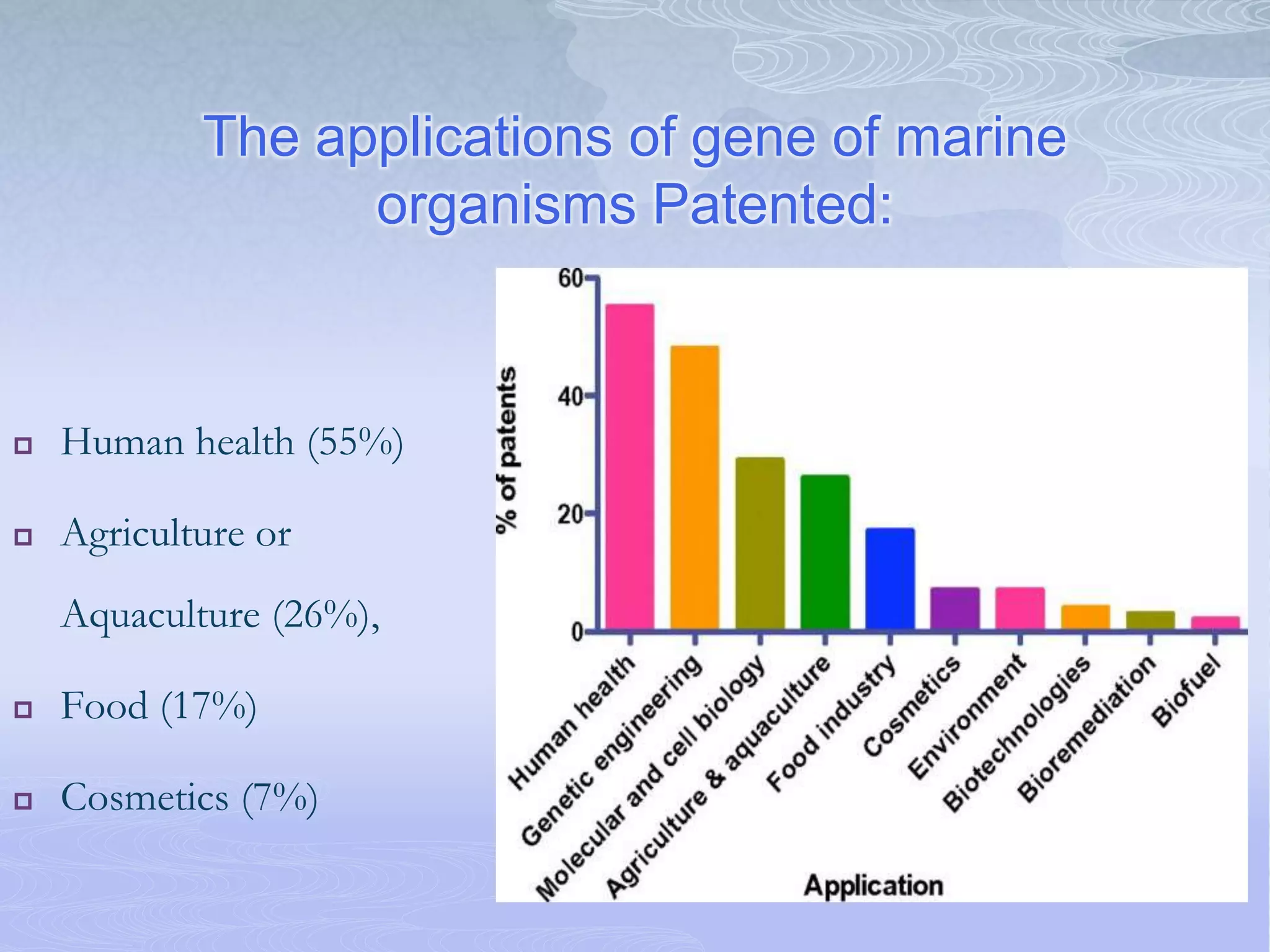
The applications of gene of marine 
organisms Patented: 
 Human health (55%) 
 Agriculture or 
Aquaculture (26%), 
 Food (17%) 
 Cosmetics (7%)
Statistics of Marine Patents: 
 Pharmaceutical, Nutritional, Cosmeceutical led to an 
incredible coverage by intellectual property in the form 
of patents being filed worldwide. 
 European Union, United States of America, Japan, 
Germany, India and others. 
 Among 677 international claims of marine gene patents 
deposited between 1991 and 2009, 8648 sequences 
from 520 species were found.
Cont… 
 MGRs related claims are 
originate from 31 out of 
194 countries in the 
world. 
 Ten countries own 90% 
of the patents deposited 
with marine genes, with 
70% belonging to the top 
three countries. 
Country - Marine Organism 
patent claims 
USA- 199 
Germany -149 
Japan- 128 
France- 34 
United Kingdom -33 
Denmark- 24 
Belgium- 17 
Netherland -13 
Switzerland -11 
Norway -9
Recent Developments: 
 Current applications- 8% of polyunsaturated fatty acids. 
 The patent division of GenBank lists more than 5 
million records of DNA sequences deposited in 
different patent offices worldwide. 
 2008 Nobel Prize in Chemistry for the discovery and 
development of GFPs, originally described from the 
jellyfish Aequorea victoria.
Conservation of Marine Genetic Resources 
(MGRs): 
 IUCN data shows that 36 of the 340 marine eukaryotic 
species reported as a source of genes included in the 
patents. 
 Thus 8 of the 36 marine species assessed so far are 
threatened and 7 of them are qualifying for threatened 
in future.
Future of MBD: Unknown or Unknowable 
 Global market for marine biotechnology estimated US 
$2.1 billion in 2002, increasing at a rapid 9.4% from the 
previous year. 
 Anthropogenic exploitation of Marine Biodiversity 
results in more extinction. 
 The future exploitation is inevitable.
Legal Frameworks to conserve MBD: 
Internationally: 
 Part VII & Part IX of the United Nation Convention on Law of Seas 
(UNCLOS) 
 Art. 15- Convention of Biological Diversity (CBD) regulating 
access to genetic resources through mutual agreements between 
countries of origin of resources and those acquiring them. 
 There is no universally accepted legal framework to conserve 
MGRs. 
 Recent Johannesburg SD summit, 2012 & CBD-COP 11, 2012 
failed.
National Framework: 
 No specific enactment 
 Chapter-II, S. 3-7 of the Biological Diversity Act, 2002- 
Mandatory provision to get approval from National 
Biodiversity Authority (NBA) to obtain Genetic 
Resources for exploitation & research.
Recommendations: 
 Urgent need to develop International Legislation to regulate 
conservation of marine resources. 
 New authority could be established in line with ISBA & 
CBD. 
 Economic Instruments’- payment for preserving ecosystems 
should also be introduced. 
 National Biodiversity Authority (NBA) along with 
Zoological Survey of India (ZSI) should frame guidelines
Conclusion: 
 Government should make effective policies. 
Nature protects if She is protected (“Prakruti 
Rakshati Rakshita”)
Patenting Trends in Marine Biodiversity

Patenting Trends in Marine Biodiversity

  • 1.
    “Patenting Trends in Marine Biodiversity- Issues & Challenges” BY Deepak Debnath, Saravanan. A, LL.M-II(IPR), SLS-PUNE
  • 2.
    Scheme of thePresentation:  Statistics of Marine Biodiversity (MBD):  Global & India  Patenting trends in Marine Biodiversity  Statistics of Marine Patents  Recent Developments  Legal framework to conserve MBD  Global & India  Recommendations
  • 3.
    Introduction:  Humancivilization and Biodiversity exploitation  70% of earth contribution-Ocean & Seas  Marine Biodiversity (MBD)-Sustainable Development
  • 4.
    Global Marine Biodiversity(MBD):  Definition:  App 3,00,000-Described Marine Species  Two biggest repositories-Coral reef and Deep Sea India’s Contribution:  One of 17 mega Biodiverse countries  25-hotspots  Only country in Asia – long record inventories of coastal and marine Biodiversity
  • 5.
    Statistics of MBDin India:  Coastline- 7517 km; 5423 km (Mainland) & 2094 km (Islands) Survey taken by ZSI in 2005:  Only 2/3 of marine habitat is covered till today 1) Marine Algae:  844-Species, 217-Genera, Rhidophyta-434 species  Uses-Agar, Liquid Fertilizer, Commercial Farming
  • 6.
    Cont… 2) Sponges:486 species 3) Arthropoda Crustacea:  1,50,000 (Globally) of which 40,000 have been described so far 4) Coral Reef Biodiversity:  Globally: Unknown (App ranges from 600,000 to 9 million)  Highest-Indo Pacific, Lowest- Eastern Pacific  India: 218 species (60 genera and 15 families)  Four major Reef Areas
  • 7.
    Patenting Trends inMarine Biodiversity (MBD):  Use of MBD to human- Ancient times (4000 yrs ago)  China, Japan, Taiwan and India  MBD Ecosystem Vs Economic Valuation  Repository of novel pharmaceuticals  55 to 214 new anti-cancer drugs extract from marine species  world’s oceans- major frontier for medical research  PharmaMAR (Spain & USA), AquaPharma Biodiversity Ltd. (UK) & Nereus pharmaceuticals (USA)  Aventis, Neurex, Novartis and Wyeth
  • 8.
    Marine Biotechnology: Emerging field- Marine biomedical to develop new products  Backbone- progress made in Genetics and Genetic Engineering  It combats in life-threatening illnesses  Gene of marine organisms are patented globally  Blooming of Marine patents and Marine Genetic Resources (MGRs) result in exploitation of MBD.
  • 9.
    The applications ofgene of marine organisms Patented:  Human health (55%)  Agriculture or Aquaculture (26%),  Food (17%)  Cosmetics (7%)
  • 10.
    Statistics of MarinePatents:  Pharmaceutical, Nutritional, Cosmeceutical led to an incredible coverage by intellectual property in the form of patents being filed worldwide.  European Union, United States of America, Japan, Germany, India and others.  Among 677 international claims of marine gene patents deposited between 1991 and 2009, 8648 sequences from 520 species were found.
  • 11.
    Cont…  MGRsrelated claims are originate from 31 out of 194 countries in the world.  Ten countries own 90% of the patents deposited with marine genes, with 70% belonging to the top three countries. Country - Marine Organism patent claims USA- 199 Germany -149 Japan- 128 France- 34 United Kingdom -33 Denmark- 24 Belgium- 17 Netherland -13 Switzerland -11 Norway -9
  • 12.
    Recent Developments: Current applications- 8% of polyunsaturated fatty acids.  The patent division of GenBank lists more than 5 million records of DNA sequences deposited in different patent offices worldwide.  2008 Nobel Prize in Chemistry for the discovery and development of GFPs, originally described from the jellyfish Aequorea victoria.
  • 13.
    Conservation of MarineGenetic Resources (MGRs):  IUCN data shows that 36 of the 340 marine eukaryotic species reported as a source of genes included in the patents.  Thus 8 of the 36 marine species assessed so far are threatened and 7 of them are qualifying for threatened in future.
  • 14.
    Future of MBD:Unknown or Unknowable  Global market for marine biotechnology estimated US $2.1 billion in 2002, increasing at a rapid 9.4% from the previous year.  Anthropogenic exploitation of Marine Biodiversity results in more extinction.  The future exploitation is inevitable.
  • 15.
    Legal Frameworks toconserve MBD: Internationally:  Part VII & Part IX of the United Nation Convention on Law of Seas (UNCLOS)  Art. 15- Convention of Biological Diversity (CBD) regulating access to genetic resources through mutual agreements between countries of origin of resources and those acquiring them.  There is no universally accepted legal framework to conserve MGRs.  Recent Johannesburg SD summit, 2012 & CBD-COP 11, 2012 failed.
  • 16.
    National Framework: No specific enactment  Chapter-II, S. 3-7 of the Biological Diversity Act, 2002- Mandatory provision to get approval from National Biodiversity Authority (NBA) to obtain Genetic Resources for exploitation & research.
  • 17.
    Recommendations:  Urgentneed to develop International Legislation to regulate conservation of marine resources.  New authority could be established in line with ISBA & CBD.  Economic Instruments’- payment for preserving ecosystems should also be introduced.  National Biodiversity Authority (NBA) along with Zoological Survey of India (ZSI) should frame guidelines
  • 18.
    Conclusion:  Governmentshould make effective policies. Nature protects if She is protected (“Prakruti Rakshati Rakshita”)