Prelude to Revolutions

  By: Toni Gonzales
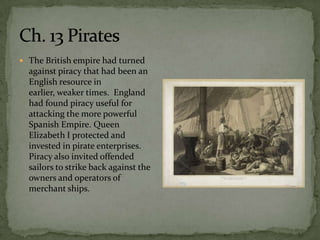
 The British empire had turned
  against piracy that had been an
  English resource in
  earlier, weaker times. England
  had found piracy useful for
  attacking the more powerful
  Spanish Empire. Queen
  Elizabeth I protected and
  invested in pirate enterprises.
  Piracy also invited offended
  sailors to strike back against the
  owners and operators of
  merchant ships.
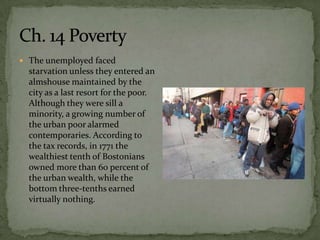
 The unemployed faced
  starvation unless they entered an
  almshouse maintained by the
  city as a last resort for the poor.
  Although they were sill a
  minority, a growing number of
  the urban poor alarmed
  contemporaries. According to
  the tax records, in 1771 the
  wealthiest tenth of Bostonians
  owned more than 60 percent of
  the urban wealth, while the
  bottom three-tenths earned
  virtually nothing.
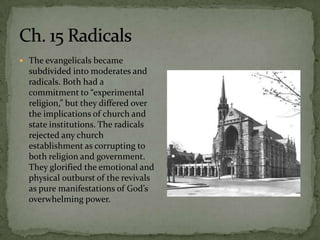
 The evangelicals became
  subdivided into moderates and
  radicals. Both had a
  commitment to “experimental
  religion,” but they differed over
  the implications of church and
  state institutions. The radicals
  rejected any church
  establishment as corrupting to
  both religion and government.
  They glorified the emotional and
  physical outburst of the revivals
  as pure manifestations of God’s
  overwhelming power.
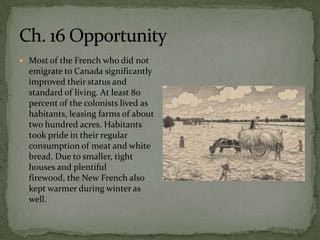
 Most of the French who did not
  emigrate to Canada significantly
  improved their status and
  standard of living. At least 80
  percent of the colonists lived as
  habitants, leasing farms of about
  two hundred acres. Habitants
  took pride in their regular
  consumption of meat and white
  bread. Due to smaller, tight
  houses and plentiful
  firewood, the New French also
  kept warmer during winter as
  well.
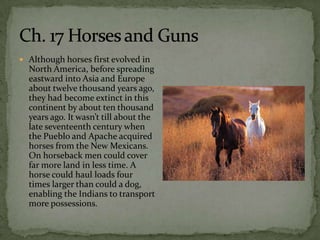
 Although horses first evolved in
  North America, before spreading
  eastward into Asia and Europe
  about twelve thousand years ago,
  they had become extinct in this
  continent by about ten thousand
  years ago. It wasn’t till about the
  late seventeenth century when
  the Pueblo and Apache acquired
  horses from the New Mexicans.
  On horseback men could cover
  far more land in less time. A
  horse could haul loads four
  times larger than could a dog,
  enabling the Indians to transport
  more possessions.
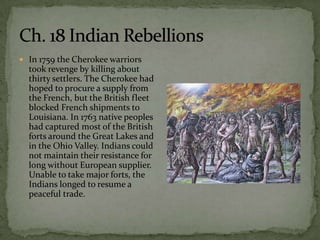
 In 1759 the Cherokee warriors
  took revenge by killing about
  thirty settlers. The Cherokee had
  hoped to procure a supply from
  the French, but the British fleet
  blocked French shipments to
  Louisiana. In 1763 native peoples
  had captured most of the British
  forts around the Great Lakes and
  in the Ohio Valley. Indians could
  not maintain their resistance for
  long without European supplier.
  Unable to take major forts, the
  Indians longed to resume a
  peaceful trade.

Part 1 american colonies

  • 1.
    Prelude to Revolutions By: Toni Gonzales
  • 2.
     The Britishempire had turned against piracy that had been an English resource in earlier, weaker times. England had found piracy useful for attacking the more powerful Spanish Empire. Queen Elizabeth I protected and invested in pirate enterprises. Piracy also invited offended sailors to strike back against the owners and operators of merchant ships.
  • 3.
     The unemployedfaced starvation unless they entered an almshouse maintained by the city as a last resort for the poor. Although they were sill a minority, a growing number of the urban poor alarmed contemporaries. According to the tax records, in 1771 the wealthiest tenth of Bostonians owned more than 60 percent of the urban wealth, while the bottom three-tenths earned virtually nothing.
  • 4.
     The evangelicalsbecame subdivided into moderates and radicals. Both had a commitment to “experimental religion,” but they differed over the implications of church and state institutions. The radicals rejected any church establishment as corrupting to both religion and government. They glorified the emotional and physical outburst of the revivals as pure manifestations of God’s overwhelming power.
  • 5.
     Most ofthe French who did not emigrate to Canada significantly improved their status and standard of living. At least 80 percent of the colonists lived as habitants, leasing farms of about two hundred acres. Habitants took pride in their regular consumption of meat and white bread. Due to smaller, tight houses and plentiful firewood, the New French also kept warmer during winter as well.
  • 6.
     Although horsesfirst evolved in North America, before spreading eastward into Asia and Europe about twelve thousand years ago, they had become extinct in this continent by about ten thousand years ago. It wasn’t till about the late seventeenth century when the Pueblo and Apache acquired horses from the New Mexicans. On horseback men could cover far more land in less time. A horse could haul loads four times larger than could a dog, enabling the Indians to transport more possessions.
  • 7.
     In 1759the Cherokee warriors took revenge by killing about thirty settlers. The Cherokee had hoped to procure a supply from the French, but the British fleet blocked French shipments to Louisiana. In 1763 native peoples had captured most of the British forts around the Great Lakes and in the Ohio Valley. Indians could not maintain their resistance for long without European supplier. Unable to take major forts, the Indians longed to resume a peaceful trade.