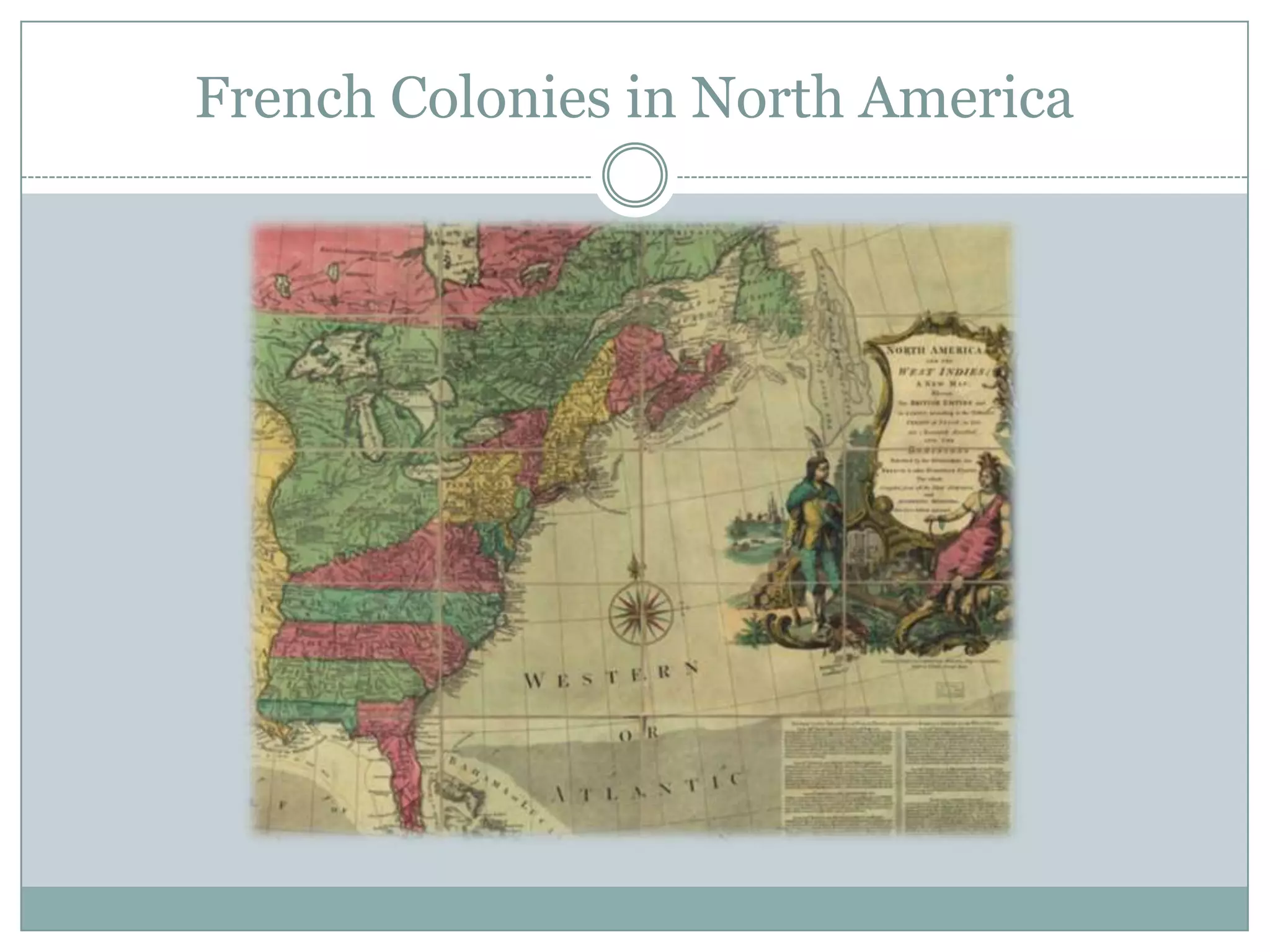
French Colonies in North America
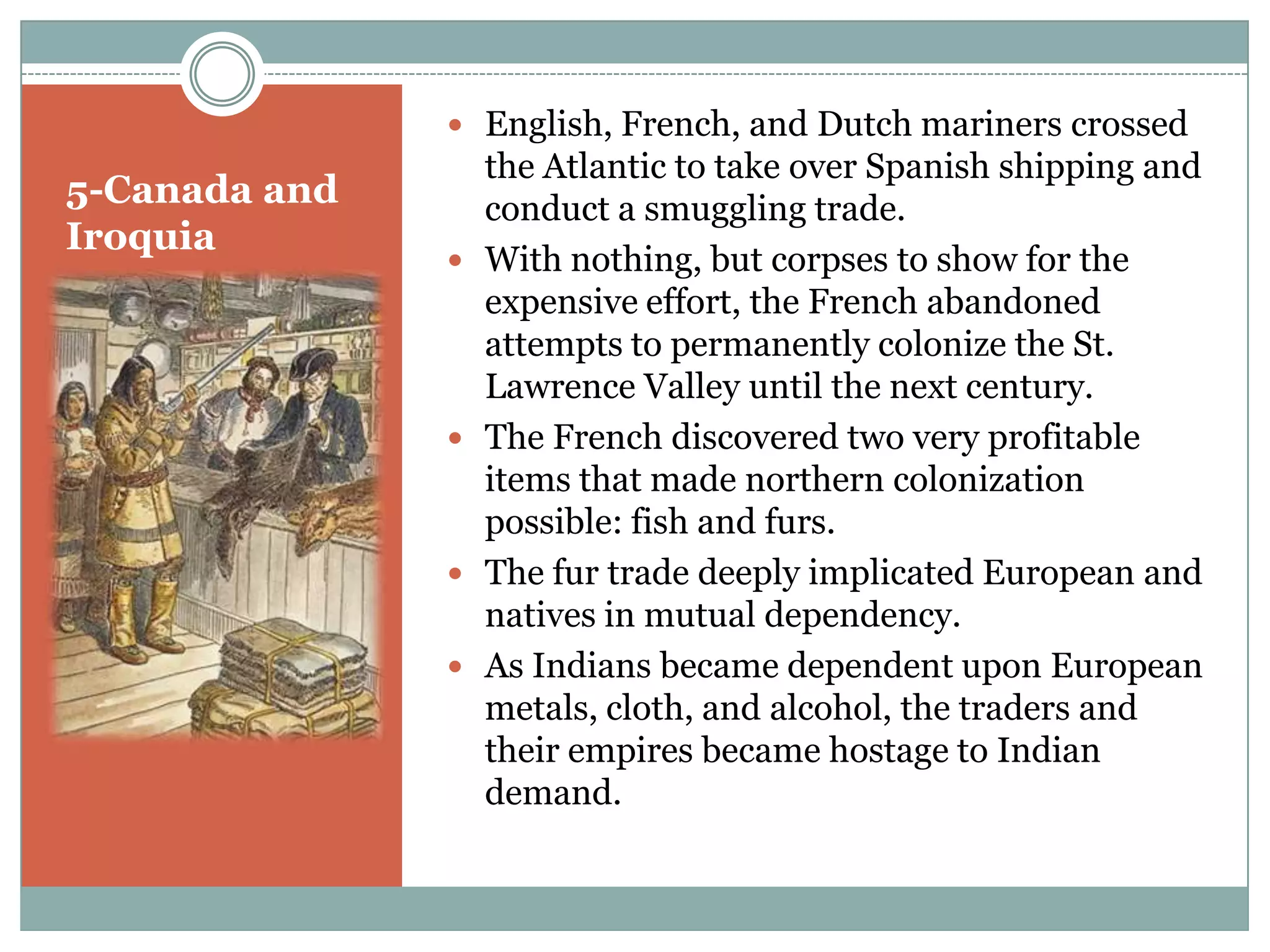
 English, French, and Dutch mariners crossed
                   the Atlantic to take over Spanish shipping and
5-Canada and       conduct a smuggling trade.
Iroquia
                  With nothing, but corpses to show for the
                   expensive effort, the French abandoned
                   attempts to permanently colonize the St.
                   Lawrence Valley until the next century.
                  The French discovered two very profitable
                   items that made northern colonization
                   possible: fish and furs.
                  The fur trade deeply implicated European and
                   natives in mutual dependency.
                  As Indians became dependent upon European
                   metals, cloth, and alcohol, the traders and
                   their empires became hostage to Indian
                   demand.
Canada and Iroquoia-5 The Fur Trade
 By 1580 Newfoundland and the
  Gulf of St. Lawrence employed at
  least four hundred vessels and
  about twelve thousand men.
 To obtain firewood, fresh
  water, and room to sun-dry their
  fish , the fishermen and whalers
  established temporary sheltered
  coves.
 Indians voluntarily performed the
  hard labor of hunting the animals
  and treating their furs, that way
  traders could immediately profit in
  America without the
  time, trouble, expense and violence
  of conquering Indians to
  reorganize their labor.
Canada and Iroquoia-5 Canada
 At the turn of the sixteenth century
  , French fur traders focused their
  efforts around Tadoussac, on the
  Gulf of St. Lawrence, and along he
  pennisula they called Acadia.
 Harsh and scurvy winters killed
  most of the colonists and
  demoralized the survivors. In 1613
  an English pirate destroyed Port
  Royal, asserting his nation’s
  counterclaim to the region.
 St. Lawrence offered the deepest
  access westward into the continent
  of any river that flowed into the
  North Atlantic. Cartier had
  demonstrated that European ships
  could ascend a thousand miles to
  meet indians.
Canada and Iroquoia-5 The Five Nations
 The women cultivated large and
  productive fields of
  maize, beans, and
  squash, producing an abundant
  surplus that freed their young men
  to pursue war. More than any
  other northeastern people, the
  Five Nation Iroquois could sustain
  long distance and large-scale raids
  against multiple enemies.
 Success in war boosted male
  prestige and influence,, creating
  powerful incentives for young men
  to prove themselves against
  outsiders.
French America-16
 The colder climate and difficult
  access complicated British
  invasions, while New France’s
  limited numbers reduced frictions
  with the Indians.
 At the end of the seventeenth
  century, the French founded a new
  colony named Louisiana , in the
  lower Mississippi Valley.
 As Spanish power faded in Florida
  after the destruction of their
  missions, the French in Louisiana
  became the chief rival for British
  Carolina.
French America-16 Emigrants
 Because Indians did the work of
  the beaver hunt, the company
  needed only a few French
  employers, primarily soldiers to
  defend the post and clerks to
  handle the furs and the
  manufactured goods that
  purchased them.
 Fearful of losing the colony, the
  French crown ordered the
  Company of New France to recruit
  more inhabitants. He company
  farmed the tasks to men of
  means, who could obtain immense
  colonial estates.
French America-16 Opportunity
 Most of the French who did
  emigrate to Canada improved their
  status and standard of
  living, escaping from poverty as
  landless laborers.
 At least 80 percent of colonies
  lived as habitants, leasing farms of
  about one hundred acres far larger
  than the peasant plots of the
  homeland.
 Habitants took pride in their
  regular consumption of meat and
  white bread which few French
  peasants could afford.
French America-16 Authority
 The democratic weakness and
  military peril of New France
  demanded a more frequent and
  total mobilization for defense.
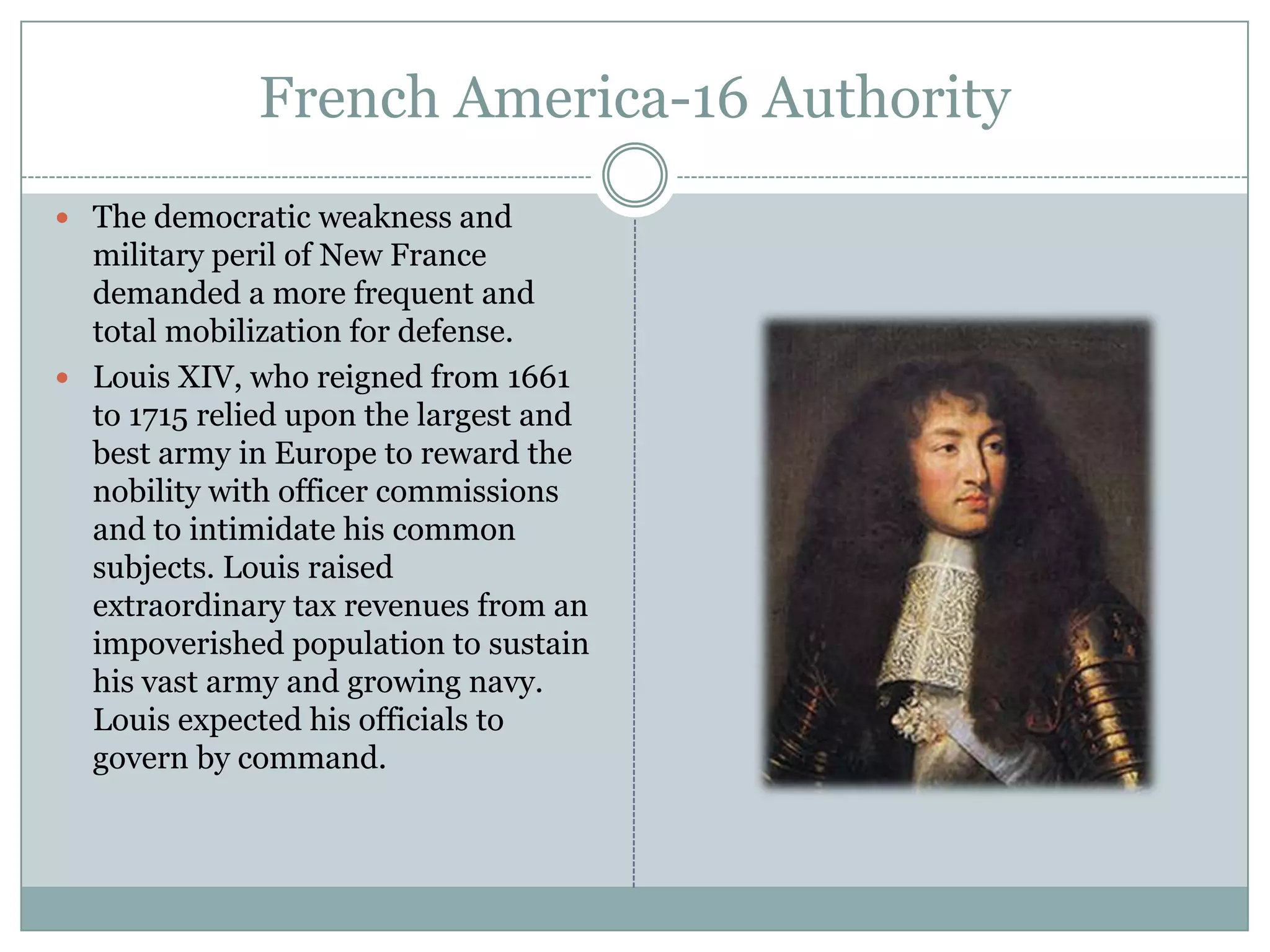
 Louis XIV, who reigned from 1661
  to 1715 relied upon the largest and
  best army in Europe to reward the
  nobility with officer commissions
  and to intimidate his common
  subjects. Louis raised
  extraordinary tax revenues from an
  impoverished population to sustain
  his vast army and growing navy.
  Louis expected his officials to
  govern by command.

French colonies in north america

  • 1.
    French Colonies inNorth America
  • 2.
     English, French,and Dutch mariners crossed the Atlantic to take over Spanish shipping and 5-Canada and conduct a smuggling trade. Iroquia  With nothing, but corpses to show for the expensive effort, the French abandoned attempts to permanently colonize the St. Lawrence Valley until the next century.  The French discovered two very profitable items that made northern colonization possible: fish and furs.  The fur trade deeply implicated European and natives in mutual dependency.  As Indians became dependent upon European metals, cloth, and alcohol, the traders and their empires became hostage to Indian demand.
  • 3.
    Canada and Iroquoia-5The Fur Trade  By 1580 Newfoundland and the Gulf of St. Lawrence employed at least four hundred vessels and about twelve thousand men.  To obtain firewood, fresh water, and room to sun-dry their fish , the fishermen and whalers established temporary sheltered coves.  Indians voluntarily performed the hard labor of hunting the animals and treating their furs, that way traders could immediately profit in America without the time, trouble, expense and violence of conquering Indians to reorganize their labor.
  • 4.
    Canada and Iroquoia-5Canada  At the turn of the sixteenth century , French fur traders focused their efforts around Tadoussac, on the Gulf of St. Lawrence, and along he pennisula they called Acadia.  Harsh and scurvy winters killed most of the colonists and demoralized the survivors. In 1613 an English pirate destroyed Port Royal, asserting his nation’s counterclaim to the region.  St. Lawrence offered the deepest access westward into the continent of any river that flowed into the North Atlantic. Cartier had demonstrated that European ships could ascend a thousand miles to meet indians.
  • 5.
    Canada and Iroquoia-5The Five Nations  The women cultivated large and productive fields of maize, beans, and squash, producing an abundant surplus that freed their young men to pursue war. More than any other northeastern people, the Five Nation Iroquois could sustain long distance and large-scale raids against multiple enemies.  Success in war boosted male prestige and influence,, creating powerful incentives for young men to prove themselves against outsiders.
  • 6.
    French America-16  Thecolder climate and difficult access complicated British invasions, while New France’s limited numbers reduced frictions with the Indians.  At the end of the seventeenth century, the French founded a new colony named Louisiana , in the lower Mississippi Valley.  As Spanish power faded in Florida after the destruction of their missions, the French in Louisiana became the chief rival for British Carolina.
  • 7.
    French America-16 Emigrants Because Indians did the work of the beaver hunt, the company needed only a few French employers, primarily soldiers to defend the post and clerks to handle the furs and the manufactured goods that purchased them.  Fearful of losing the colony, the French crown ordered the Company of New France to recruit more inhabitants. He company farmed the tasks to men of means, who could obtain immense colonial estates.
  • 8.
    French America-16 Opportunity Most of the French who did emigrate to Canada improved their status and standard of living, escaping from poverty as landless laborers.  At least 80 percent of colonies lived as habitants, leasing farms of about one hundred acres far larger than the peasant plots of the homeland.  Habitants took pride in their regular consumption of meat and white bread which few French peasants could afford.
  • 9.
    French America-16 Authority The democratic weakness and military peril of New France demanded a more frequent and total mobilization for defense.  Louis XIV, who reigned from 1661 to 1715 relied upon the largest and best army in Europe to reward the nobility with officer commissions and to intimidate his common subjects. Louis raised extraordinary tax revenues from an impoverished population to sustain his vast army and growing navy. Louis expected his officials to govern by command.