Parser
DEFINITION AND SOME KEY POINTS
Definition
 A computer program use just to evaluate scripts according
  to the respective grammar.

 In computer Science, its a text analyzing process to
  determine if it belongs to a certain language or not.


 Mostly used as a part of High-Level-Language
  translators(Interpreter or Compiler).


 But some Standalone Parsers are available for specific
  purposes.(for e.g. http://nlp.stanford.edu/software/lex-parser.shtml)
What and How it works?

 It first receives input in the form of
    sequential source program or
    Stream of characters (String).
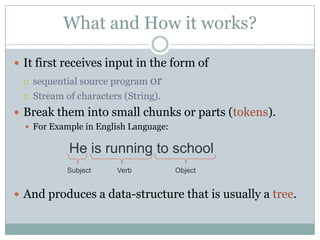
 Break them into small chunks or parts (tokens).
   For Example in English Language:


             He is running to school
             Subject    Verb           Object


 And produces a data-structure that is usually a tree.
What is not Parsing?

 Parser does not evaluate one thing into another. If
 just change its representation from one form to
 another.

 Parser is not responsible for summarizing or extract
 the original body of text.

Word Processing Programs also uses a parser to check
spelling and grammatical mistakes.
But What is Compiler ???

    Compiler is a Language Translator or a
  computer program that translates a Human
   understandable instruction set into Computer
               understandable form

  Or simply, the output of compiler is .exe file,

Object code or RTL(Register Transfer Language)
Compiler VS Parser

 From the previous discussion it can be concluded
 that:
    The output of Parser is a Data-Structure that is useless for the
     for both Liveware and hardware.
        But this will be a very useful input for some component of the
         compiler.


    Whereas, the output of the compiler is understandable and can
     be executed by Computer hardware
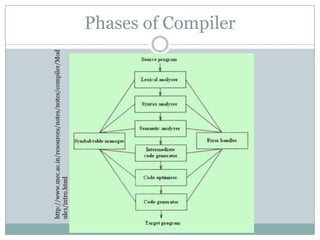
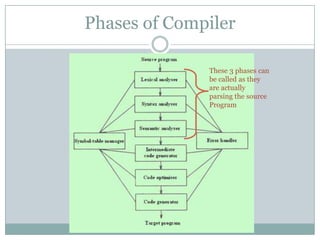
Phases of Compiler
Phases of Compiler

              These 3 phases can
              be called as they
              are actually
              parsing the source
              Program
Lexical Analysis

 As the name shows, Its done by Lexical Analyzer.


 Reads the characters from the input stream or source
  program.
 Group them in tokens.
 Each token describe some important element.


 CONFUSED….!!!
 Lets see an exmaple.
Token Example

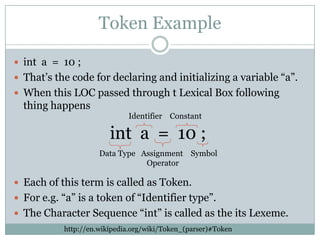
 int a = 10 ;
 That’s the code for declaring and initializing a variable “a”.
 When this LOC passed through t Lexical Box following
  thing happens
                             Identifier Constant

                        int a = 10 ;
                     Data Type Assignment Symbol
                                Operator

 Each of this term is called as Token.
 For e.g. “a” is a token of “Identifier type”.
 The Character Sequence “int” is called as the its Lexeme.
           http://en.wikipedia.org/wiki/Token_(parser)#Token
Can we proceed further OR
Syntax Analyzer

 According to many sources, this phase is actually
 responsible for Parsing.
 So, the input of this phase is the Tokens formed in
 the previous phase i.e. Lexical Analysis.
 In this phase, the recently formed token acquire a
 Hierarchical Data Structure, that’s called Tree in
 Computer Science.
Before Moving Further

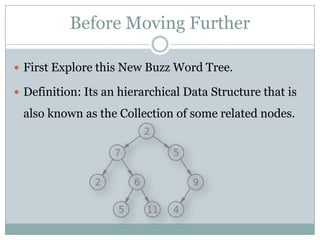
 First Explore this New Buzz Word Tree.

 Definition: Its an hierarchical Data Structure that is

 also known as the Collection of some related nodes.
Terminologies

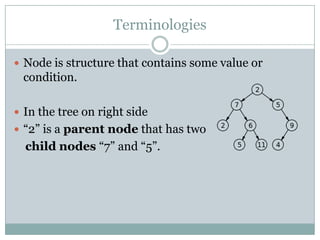
 Node is structure that contains some value or
 condition.

 In the tree on right side
 “2” is a parent node that has two
  child nodes “7” and “5”.

Parser

  • 1.
  • 2.
    Definition  A computerprogram use just to evaluate scripts according to the respective grammar.  In computer Science, its a text analyzing process to determine if it belongs to a certain language or not.  Mostly used as a part of High-Level-Language translators(Interpreter or Compiler).  But some Standalone Parsers are available for specific purposes.(for e.g. http://nlp.stanford.edu/software/lex-parser.shtml)
  • 3.
    What and Howit works?  It first receives input in the form of  sequential source program or  Stream of characters (String).  Break them into small chunks or parts (tokens).  For Example in English Language: He is running to school Subject Verb Object  And produces a data-structure that is usually a tree.
  • 4.
    What is notParsing?  Parser does not evaluate one thing into another. If just change its representation from one form to another.  Parser is not responsible for summarizing or extract the original body of text. Word Processing Programs also uses a parser to check spelling and grammatical mistakes.
  • 5.
    But What isCompiler ??? Compiler is a Language Translator or a computer program that translates a Human understandable instruction set into Computer understandable form Or simply, the output of compiler is .exe file, Object code or RTL(Register Transfer Language)
  • 6.
    Compiler VS Parser From the previous discussion it can be concluded that:  The output of Parser is a Data-Structure that is useless for the for both Liveware and hardware.  But this will be a very useful input for some component of the compiler.  Whereas, the output of the compiler is understandable and can be executed by Computer hardware
  • 7.
  • 8.
    Phases of Compiler These 3 phases can be called as they are actually parsing the source Program
  • 9.
    Lexical Analysis  Asthe name shows, Its done by Lexical Analyzer.  Reads the characters from the input stream or source program.  Group them in tokens.  Each token describe some important element.  CONFUSED….!!!  Lets see an exmaple.
  • 10.
    Token Example  inta = 10 ;  That’s the code for declaring and initializing a variable “a”.  When this LOC passed through t Lexical Box following thing happens Identifier Constant int a = 10 ; Data Type Assignment Symbol Operator  Each of this term is called as Token.  For e.g. “a” is a token of “Identifier type”.  The Character Sequence “int” is called as the its Lexeme. http://en.wikipedia.org/wiki/Token_(parser)#Token
  • 11.
    Can we proceedfurther OR
  • 12.
    Syntax Analyzer  Accordingto many sources, this phase is actually responsible for Parsing.  So, the input of this phase is the Tokens formed in the previous phase i.e. Lexical Analysis.  In this phase, the recently formed token acquire a Hierarchical Data Structure, that’s called Tree in Computer Science.
  • 13.
    Before Moving Further First Explore this New Buzz Word Tree.  Definition: Its an hierarchical Data Structure that is also known as the Collection of some related nodes.
  • 14.
    Terminologies  Node isstructure that contains some value or condition.  In the tree on right side  “2” is a parent node that has two child nodes “7” and “5”.