

Parental Involvement
and
Student Academic Achievement:
Production and Production Capability
P/PC
Presented by :Hiba Armouche
•What is parental involvement PI
•Different Styles of parenting
•Production and Production Capability P/C
•Compare and Contrast PI of different styles of
parenting in Home-based and school-based PI
•Barriers to PI
•Benefits of PI
•Invite schools to encourage PI
•Conclusion
Outline
What is Parental
Involvement ?
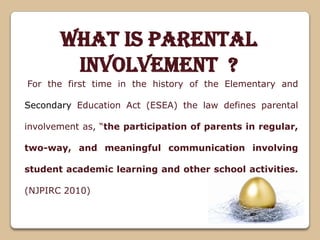
For the first time in the history of the Elementary and
Secondary Education Act (ESEA) the law defines parental
involvement as, “the participation of parents in regular,
two-way, and meaningful communication involving
student academic learning and other school activities.
(NJPIRC 2010)
Parenting Styles
Authoritarian Parents ”have
high demands, but are not
responsive to their children.
They are Obedience-and status-
oriented, and expect their
orders to be obeyed without
explanation”
1
Parenting Styles
Authoritative Parents :They are
assertive, but not intrusive and
restrictive. Their disciplinary
methods are supportive, rather
than punitive. They want their
children to be assertive as well as
socially responsible, and self-
regulated as well as cooperative.
2
Parenting Styles
Permissive Parents :”are more
responsive than they are
demanding. They are nontraditional
and lenient, do not require mature
behavior, allow considerable self-
regulation, and avoid
confrontation”.
.
3
Parenting Styles
Uninvolved Parents :
Characterized by few demands,
low responsiveness, and little
communication. While these
parents parents fulfill the child’s
basic needs, they are generally
detached from their child’s life.
(Baumrind,1991)
4
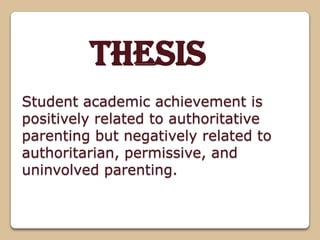
Student academic achievement is
positively related to authoritative
parenting but negatively related to
authoritarian, permissive, and
uninvolved parenting.
Thesis
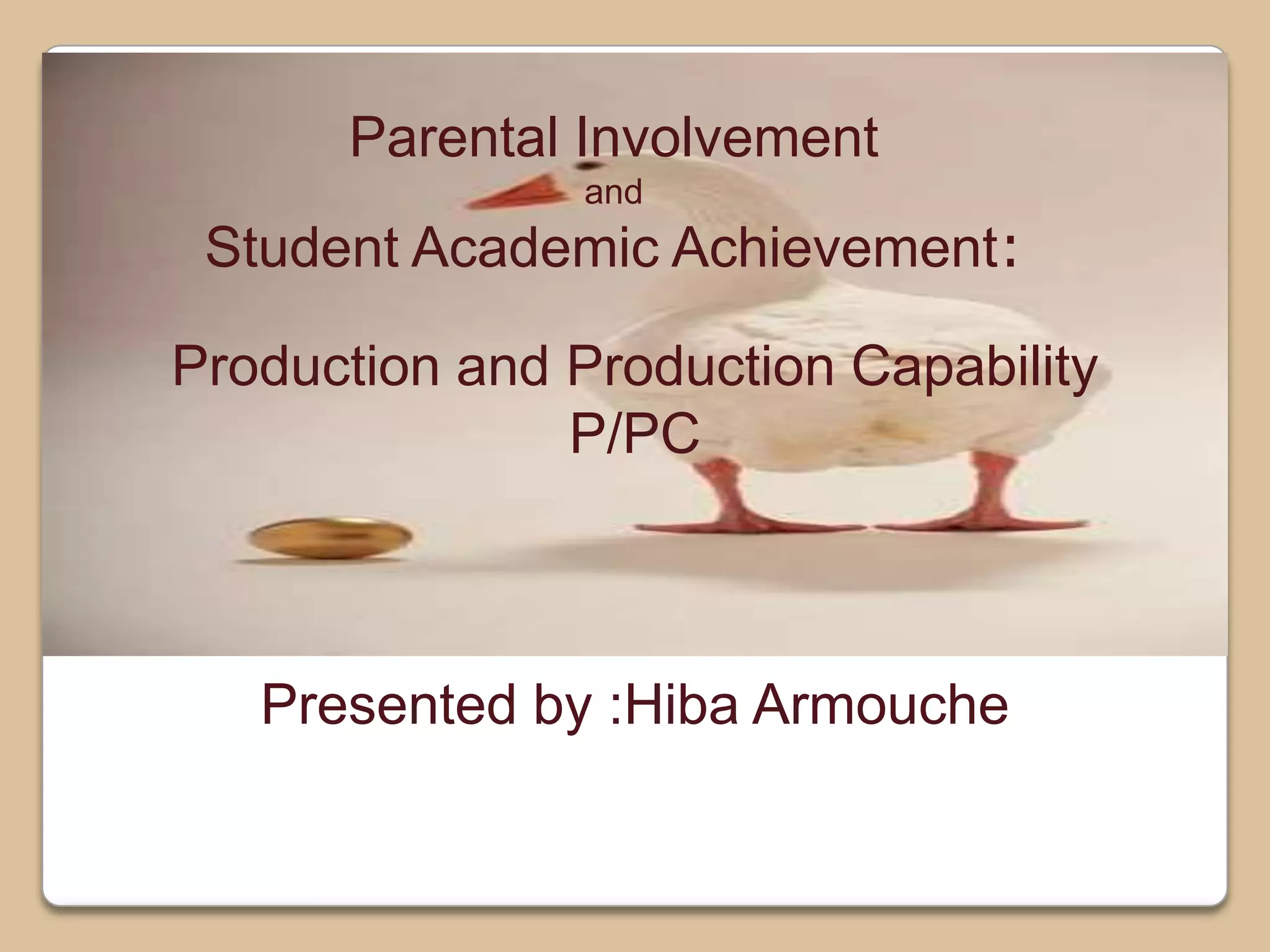
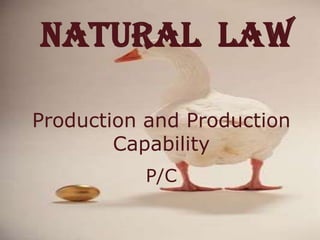
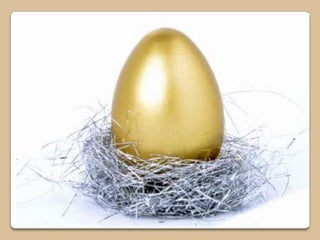
Aesop's Fables
The Goose with the Golden Eggs
• One day a countryman going to the nest of his
goose found there an egg all yellow and
glittering. When he picked it up it was very
heavy and he was going to throw it away,
because he thought a trick had been played on
him.
• But he decided to take it home and soon
discovered that it was an egg of pure gold.
• Every morning the same thing occurred, and he
grew rich by selling his eggs. As he grew rich
he grew greedy; and thinking to get all the gold
the goose could give, he killed it and opened it
only to find nothing.
Production and Production
Capability
P/C
Natural Law
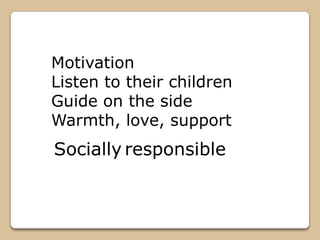
Motivation
Listen to their children
Guide on the side
Warmth, love, support
Socially responsible
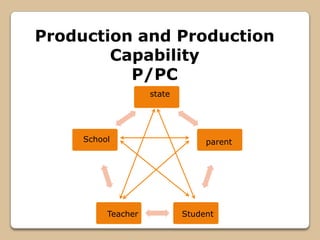
state
parent
Student
School
Teacher
Production and Production
Capability
P/PC
References
•Coleman, B.(2009) From home to school: the relationship
among parental involvement, student motivation, and academic
achievement. The International Journal of Learning, 16(7), 459-
469.
•Covey, S. (2004). The 7 habits of highly effective people. New
York, Free Press.
•Hornby, G., & Lafaele, R. (2012). Barriers to parental
involvement: an explanatory model. Educational Review, 63(1),
37-52.
• Shute, V., Hansen, E., Underwood, J., & Razzouk, R. (2011). A
review of the relationship between parental involvement and
secondary school achievement. Educational research
international, 2011 (2011), 1-10.doi:10.1155/2011/915326
Thank You
Hiba.armouche@yahoo.com
www.facebook.com/TrainerHibaArmouche

Parental Involvement and Students' Achievement - P/PC argument ppoint

  • 1.
    Parental Involvement and Student AcademicAchievement: Production and Production Capability P/PC Presented by :Hiba Armouche
  • 2.
    •What is parentalinvolvement PI •Different Styles of parenting •Production and Production Capability P/C •Compare and Contrast PI of different styles of parenting in Home-based and school-based PI •Barriers to PI •Benefits of PI •Invite schools to encourage PI •Conclusion Outline
  • 3.
    What is Parental Involvement? For the first time in the history of the Elementary and Secondary Education Act (ESEA) the law defines parental involvement as, “the participation of parents in regular, two-way, and meaningful communication involving student academic learning and other school activities. (NJPIRC 2010)
  • 4.
    Parenting Styles Authoritarian Parents”have high demands, but are not responsive to their children. They are Obedience-and status- oriented, and expect their orders to be obeyed without explanation” 1
  • 5.
    Parenting Styles Authoritative Parents:They are assertive, but not intrusive and restrictive. Their disciplinary methods are supportive, rather than punitive. They want their children to be assertive as well as socially responsible, and self- regulated as well as cooperative. 2
  • 6.
    Parenting Styles Permissive Parents:”are more responsive than they are demanding. They are nontraditional and lenient, do not require mature behavior, allow considerable self- regulation, and avoid confrontation”. . 3
  • 7.
    Parenting Styles Uninvolved Parents: Characterized by few demands, low responsiveness, and little communication. While these parents parents fulfill the child’s basic needs, they are generally detached from their child’s life. (Baumrind,1991) 4
  • 8.
    Student academic achievementis positively related to authoritative parenting but negatively related to authoritarian, permissive, and uninvolved parenting. Thesis
  • 9.
    Aesop's Fables The Goosewith the Golden Eggs • One day a countryman going to the nest of his goose found there an egg all yellow and glittering. When he picked it up it was very heavy and he was going to throw it away, because he thought a trick had been played on him. • But he decided to take it home and soon discovered that it was an egg of pure gold. • Every morning the same thing occurred, and he grew rich by selling his eggs. As he grew rich he grew greedy; and thinking to get all the gold the goose could give, he killed it and opened it only to find nothing.
  • 10.
  • 11.
    Motivation Listen to theirchildren Guide on the side Warmth, love, support Socially responsible
  • 12.
  • 15.
    References •Coleman, B.(2009) Fromhome to school: the relationship among parental involvement, student motivation, and academic achievement. The International Journal of Learning, 16(7), 459- 469. •Covey, S. (2004). The 7 habits of highly effective people. New York, Free Press. •Hornby, G., & Lafaele, R. (2012). Barriers to parental involvement: an explanatory model. Educational Review, 63(1), 37-52. • Shute, V., Hansen, E., Underwood, J., & Razzouk, R. (2011). A review of the relationship between parental involvement and secondary school achievement. Educational research international, 2011 (2011), 1-10.doi:10.1155/2011/915326
  • 16.