ParameterizingtheDayCentModelfor
CaliforniaSpecialtyCropsinCOMET-FarmTM
Soil and Water Conservation Society
Annual Conference, July 2016
Mark Easter, Amy Swan, 
Kevin Brown, Mary Carlson, 
Lucas Thompson, Steve 
Williams and Keith 
Paustian
Natural Resource Ecology Laboratory & Dept. 
Soil and Crop Sciences
Colorado State University
Fort Collins, CO
Adam Chambers
Natural Resources Conservation Service
Environmental Markets Leader
Portland, OR
Kerri Steenwerth
Agricultural Research Service
Davis, CA
Xia Zhu‐Barker
Dept of Land, Air and Water Resources
University of California ‐ Davis
Outline
• Brief Introduction to COMET‐FarmTM
• Brief Review of Existing COMET‐FarmTM Capabilities for California Crops
• Process for adding California Specialty Crops to COMET‐FarmTM
• DayCent Model Parameterization Results and Status
• Wrap‐Up
Kerri Steenwerth
Davis
Adam Chambers – Portland
California State Office Staff
Bill Hohenstein, Marci Baranski
OCE ‐ CCPO, Washington, DC
Xia Zhu‐Barker, Will 
Horwath et al., Davis
College of Ag Sci
Fort Collins
Amrith Gunasekara
Sacramento
Keith Paustian, Mark Easter, Amy Swan 
et al., Fort Collins
Specialty Crops Collaboration Partners
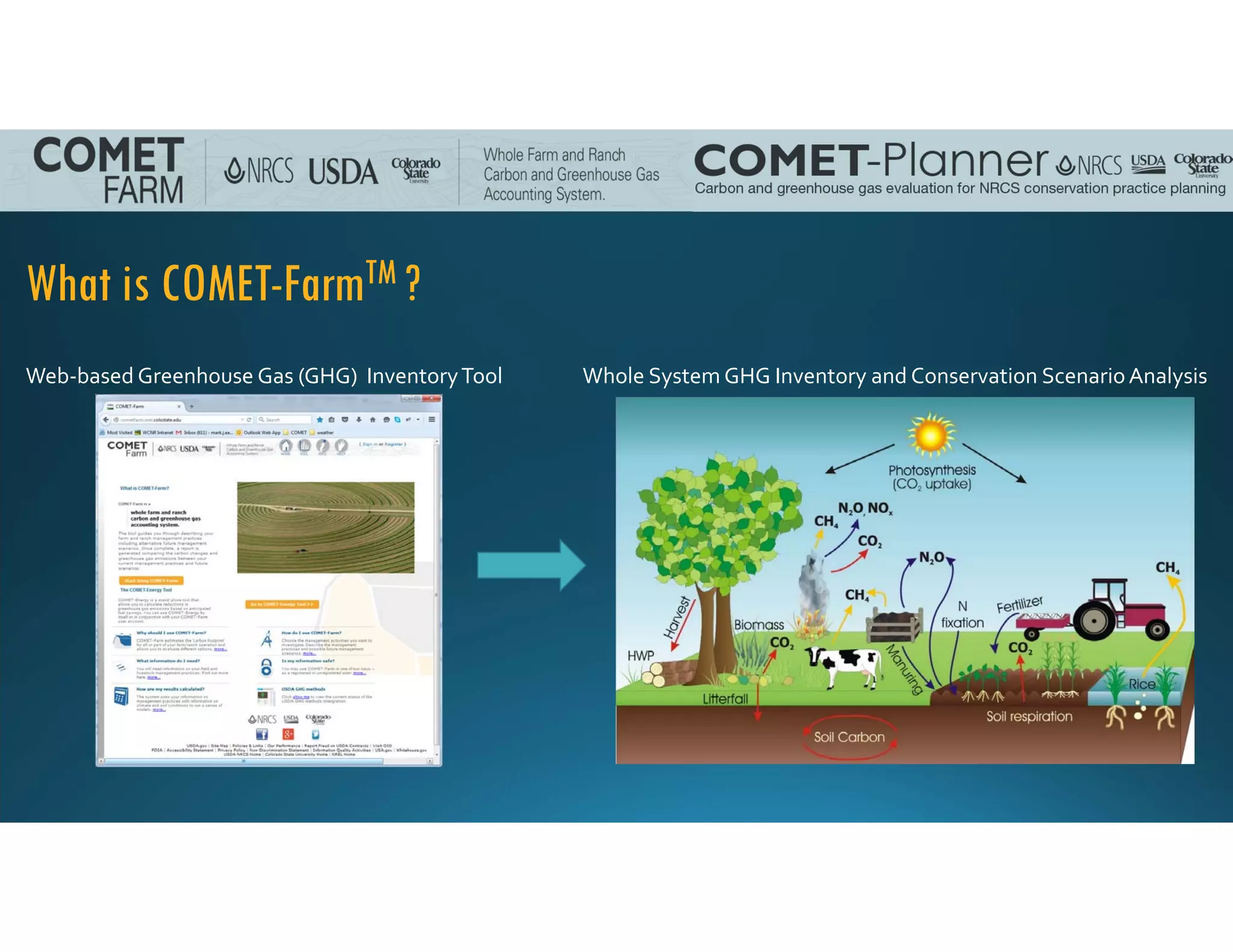
What is COMET-FarmTM ?
Web‐based Greenhouse Gas (GHG)  Inventory Tool Whole System GHG Inventory and Conservation Scenario Analysis 
Why This Effort?
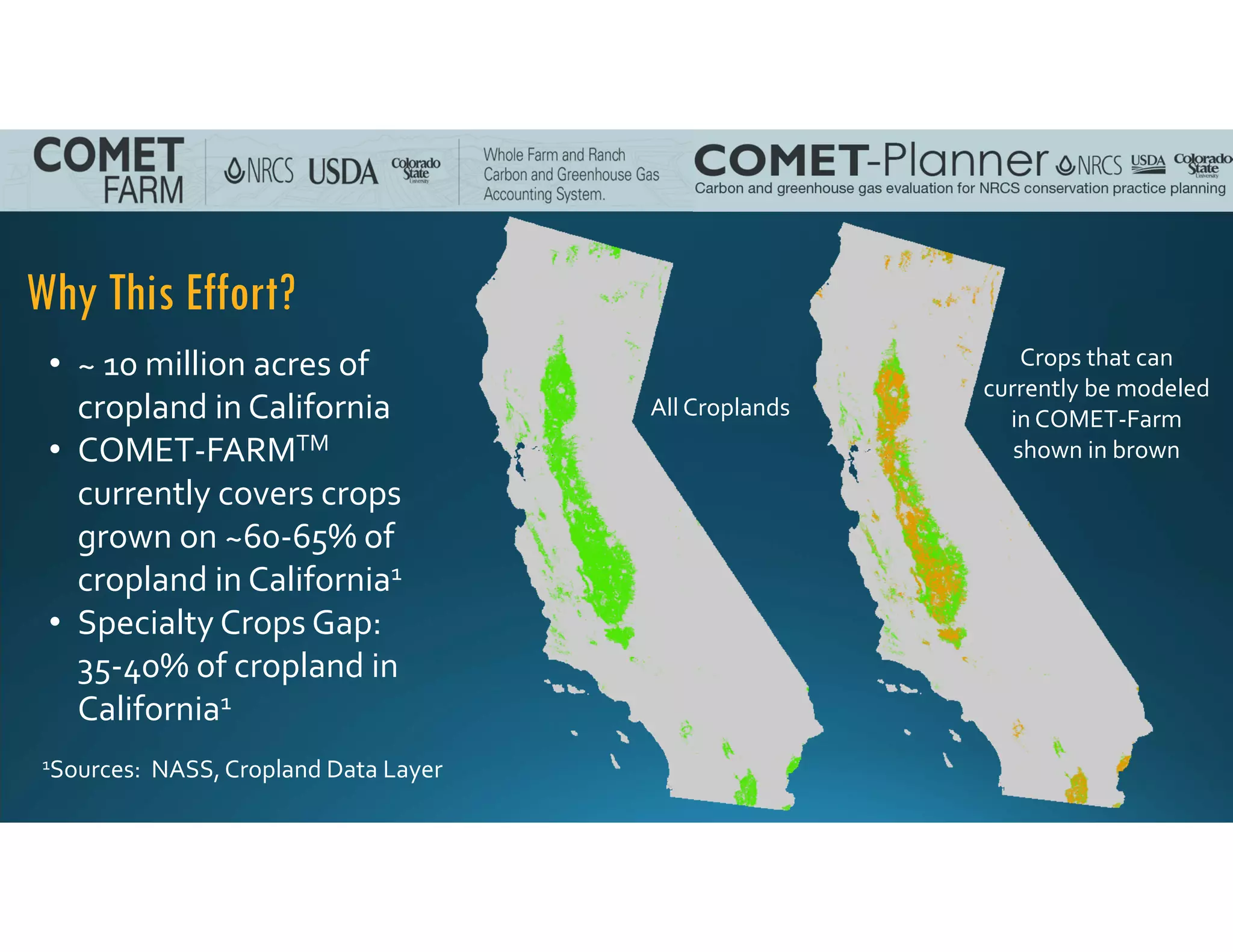
All Croplands
Crops that can 
currently be modeled
in COMET‐Farm
shown in brown
• ~ 10 million acres of 
cropland in California
• COMET‐FARMTM
currently covers crops 
grown on ~60‐65% of 
cropland in California1
• Specialty Crops Gap:  
35‐40% of cropland in 
California1
1Sources:  NASS, Cropland Data Layer
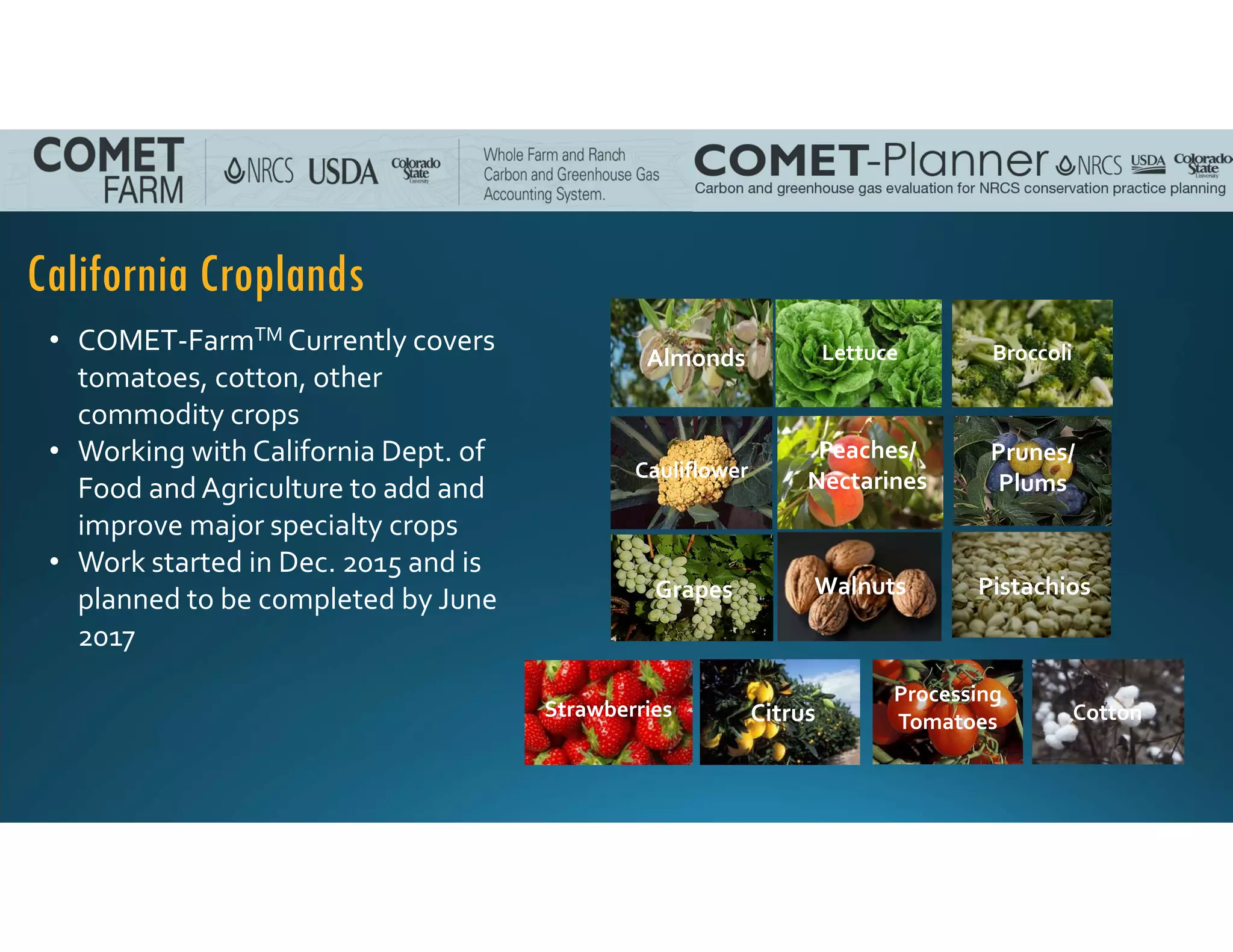
California Croplands
Strawberries
Lettuce Broccoli
Cauliflower
Almonds
Walnuts PistachiosGrapes
Citrus
Peaches/
Nectarines
Prunes/
Plums
• COMET‐FarmTM Currently covers 
tomatoes, cotton, other 
commodity crops
• Working with California Dept. of 
Food and Agriculture to add and 
improve major specialty crops
• Work started in Dec. 2015 and is 
planned to be completed by June 
2017
Processing
Tomatoes Cotton
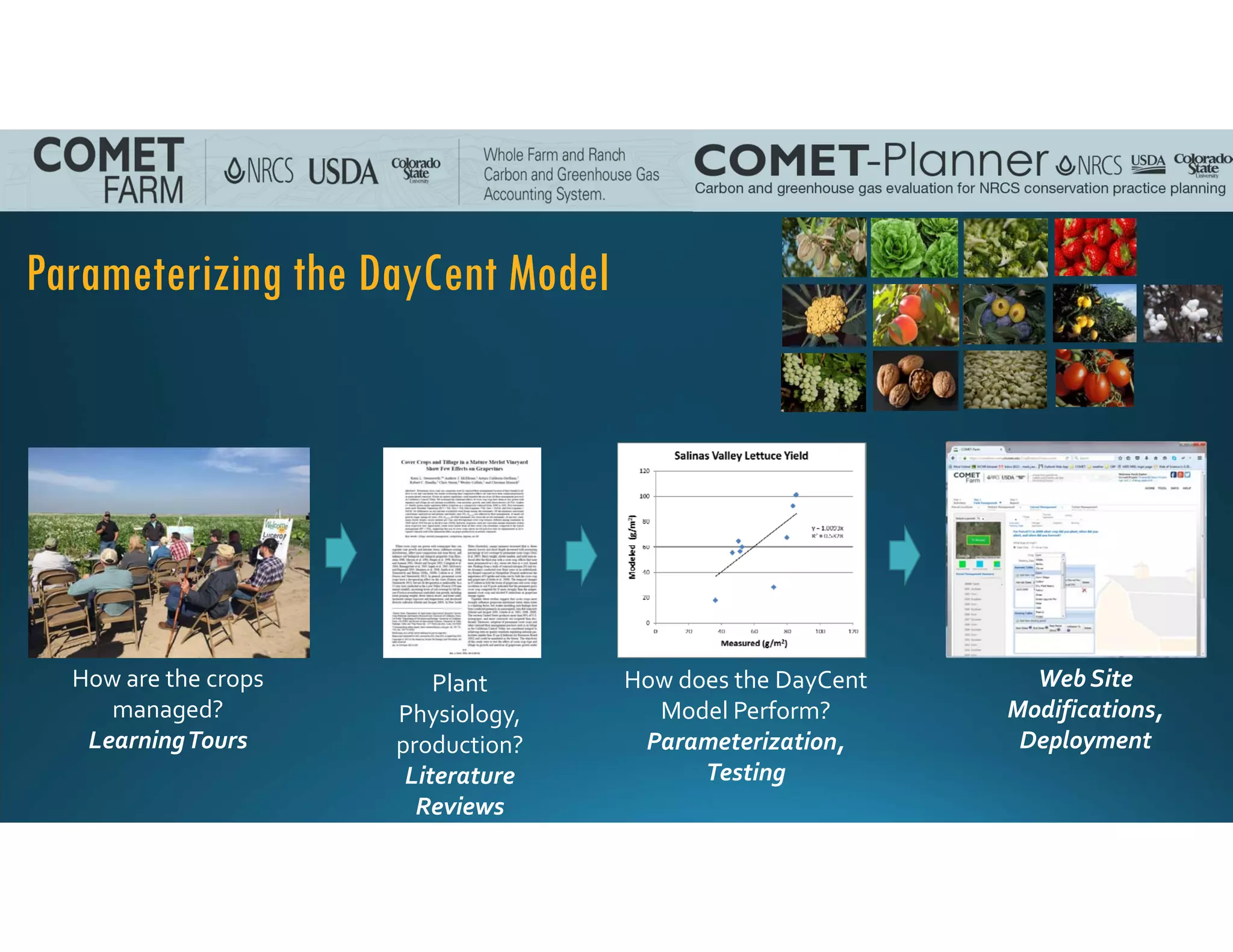
Parameterizing the DayCent Model
How are the crops 
managed?
Learning Tours
Plant 
Physiology, 
production?
Literature
Reviews
How does the DayCent 
Model Perform?
Parameterization,
Testing
Web Site
Modifications,
Deployment
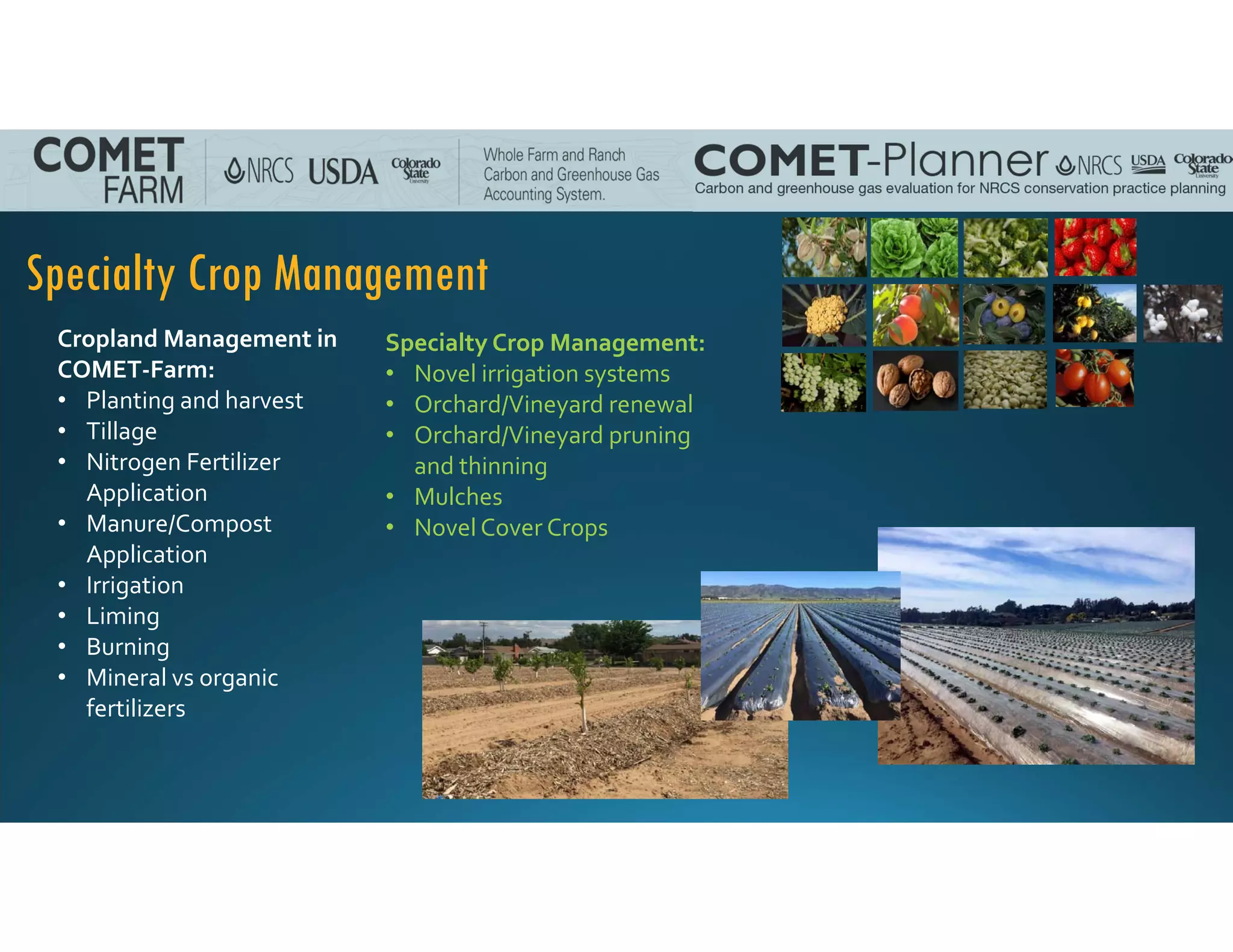
Specialty Crop Management
Cropland Management in 
COMET‐Farm:
• Planting and harvest
• Tillage
• Nitrogen Fertilizer 
Application
• Manure/Compost 
Application
• Irrigation
• Liming
• Burning
• Mineral vs organic 
fertilizers
Specialty Crop Management:
• Novel irrigation systems
• Orchard/Vineyard renewal
• Orchard/Vineyard pruning 
and thinning
• Mulches
• Novel Cover Crops
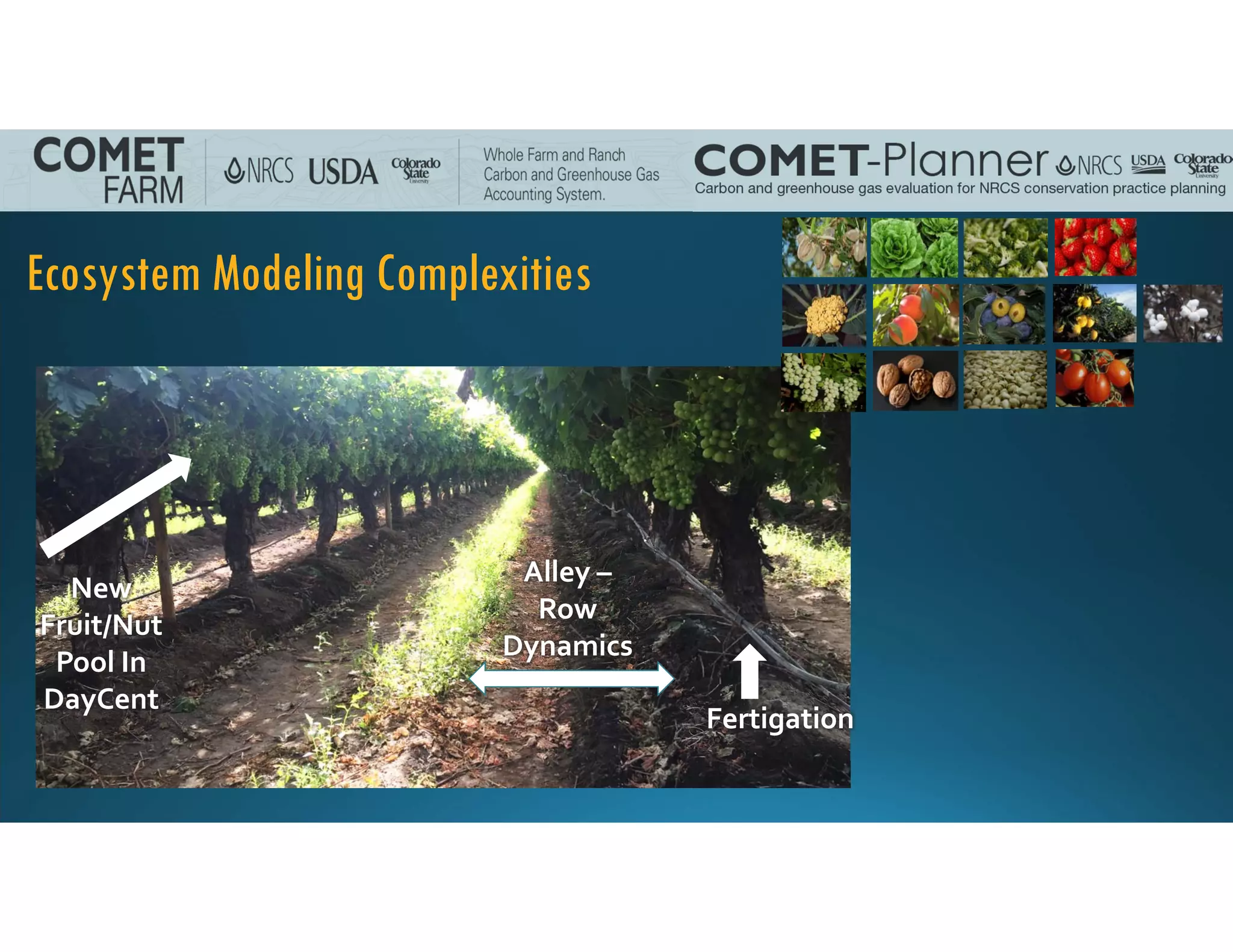
Ecosystem Modeling Complexities
Alley –
Row 
Dynamics
New
Fruit/Nut
Pool In
DayCent
Fertigation
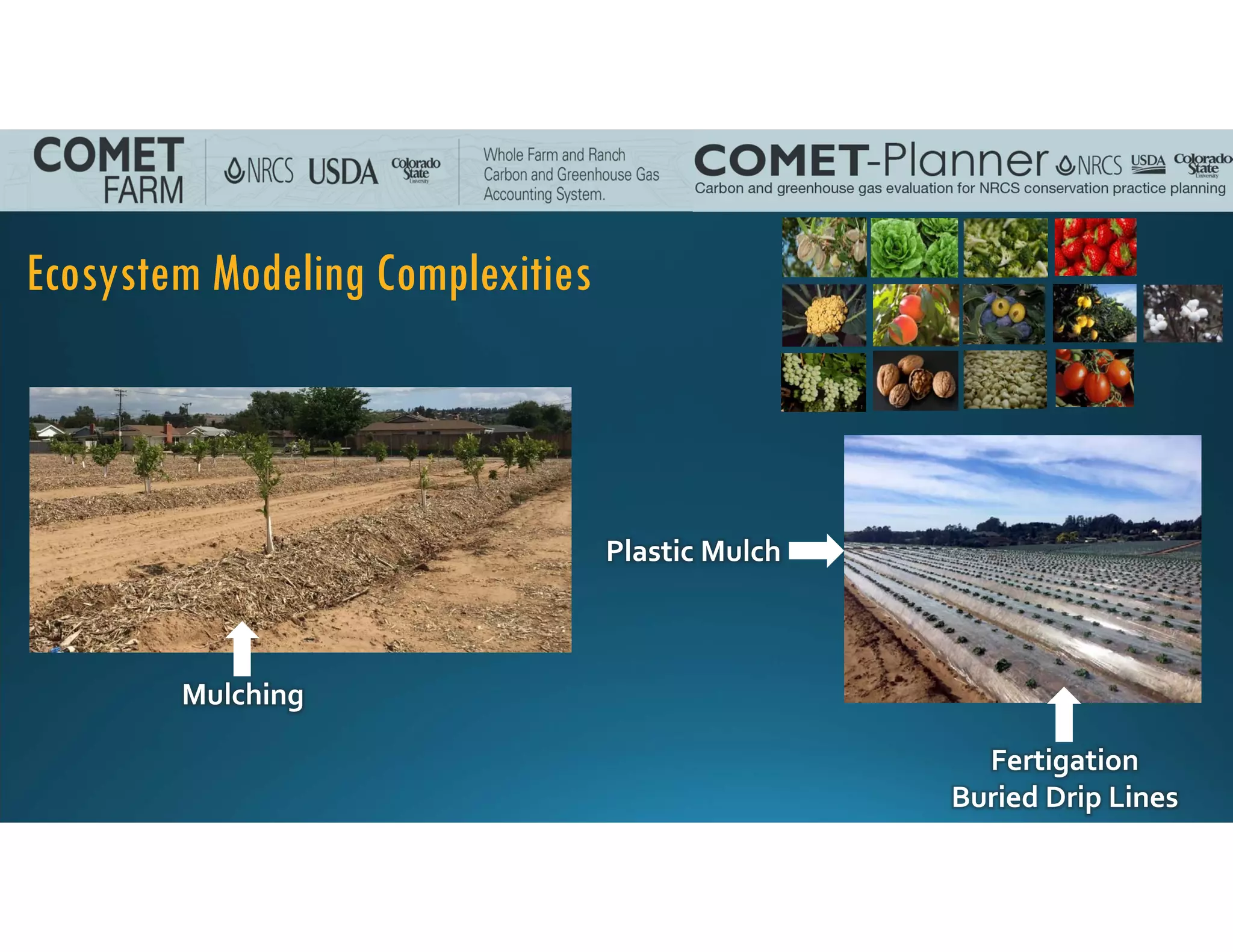
Ecosystem Modeling Complexities
Fertigation
Buried Drip Lines
Mulching
Plastic Mulch
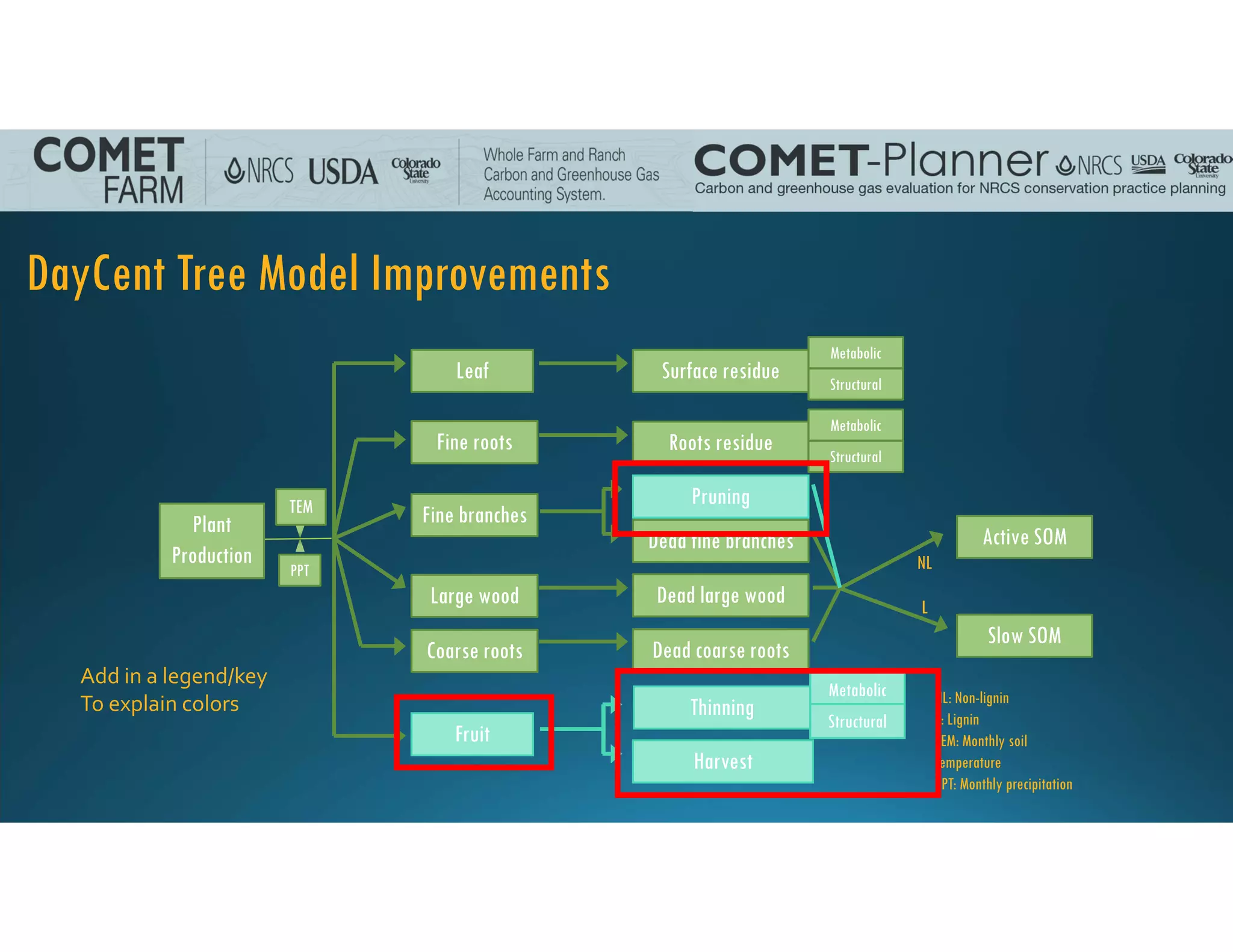
DayCent Tree Model Improvements
Leaf
Fine roots
Fine branches
Large wood
Coarse roots
Fruit
Surface residue
Roots residue
Dead fine branches
Pruning
Dead large wood
Dead coarse roots
Harvest
Thinning
Metabolic
Structural
Metabolic
Structural
Active SOM
Slow SOM
Metabolic
Structural
NL
L
NL: Non-lignin
L: Lignin
TEM: Monthly soil
temperature
PPT: Monthly precipitation
PPT
TEM
Plant
Production
Add in a legend/key
To explain colors
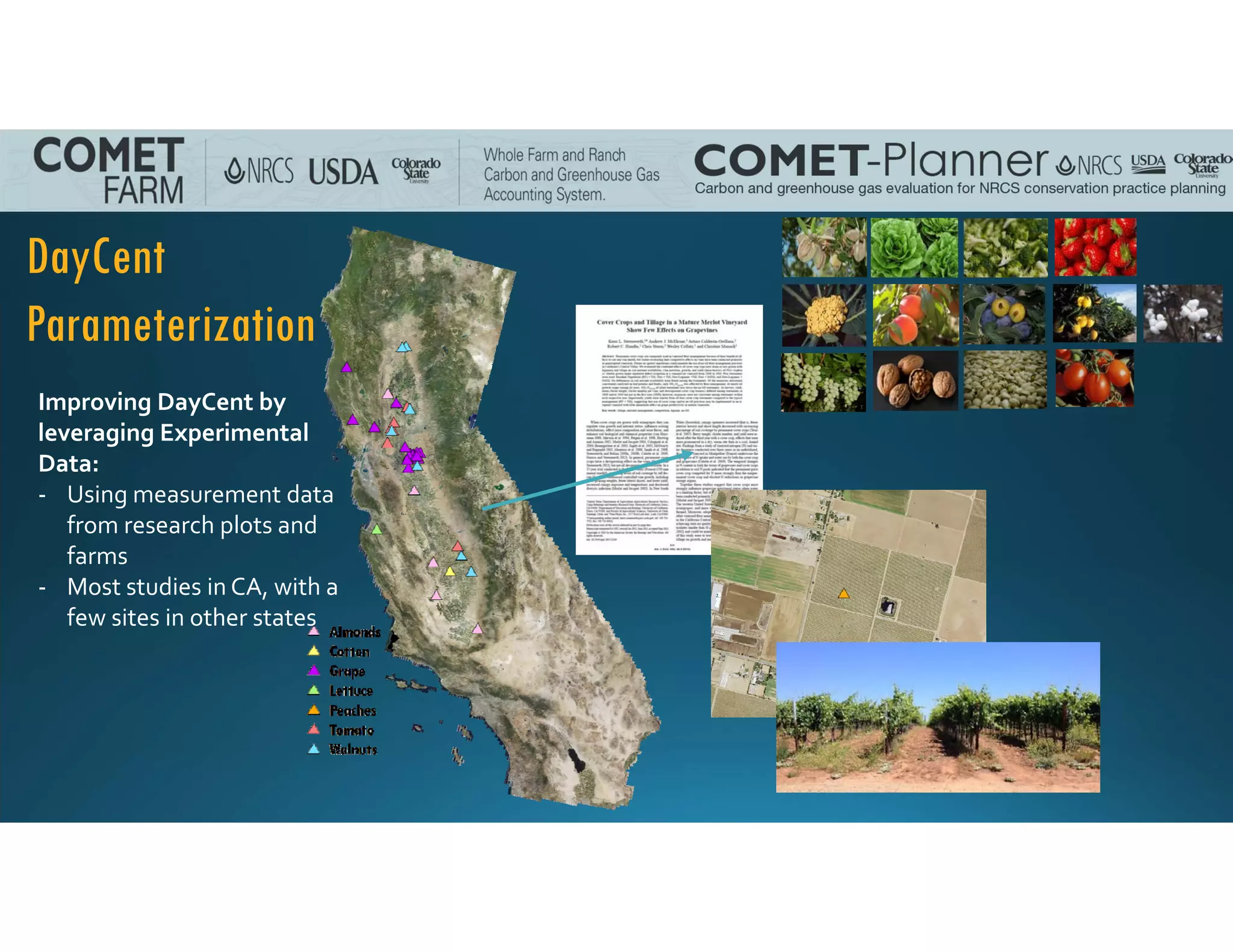
DayCent
Parameterization
Improving DayCent by 
leveraging Experimental 
Data:
‐ Using measurement data 
from research plots and 
farms
‐ Most studies in CA, with a 
few sites in other states
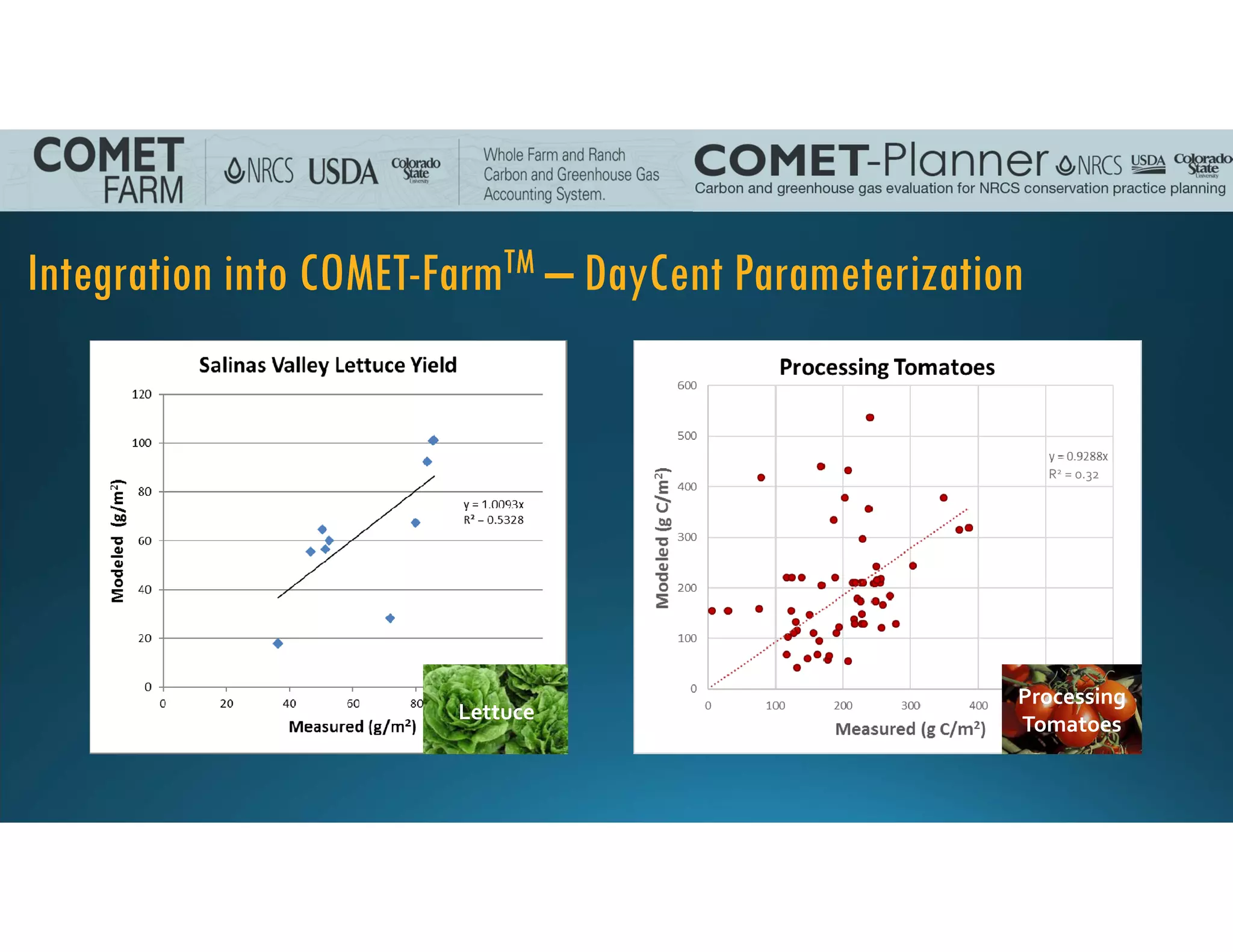
Integration into COMET-FarmTM – DayCent Parameterization
R2 = 0.32
Lettuce
Processing
Tomatoes
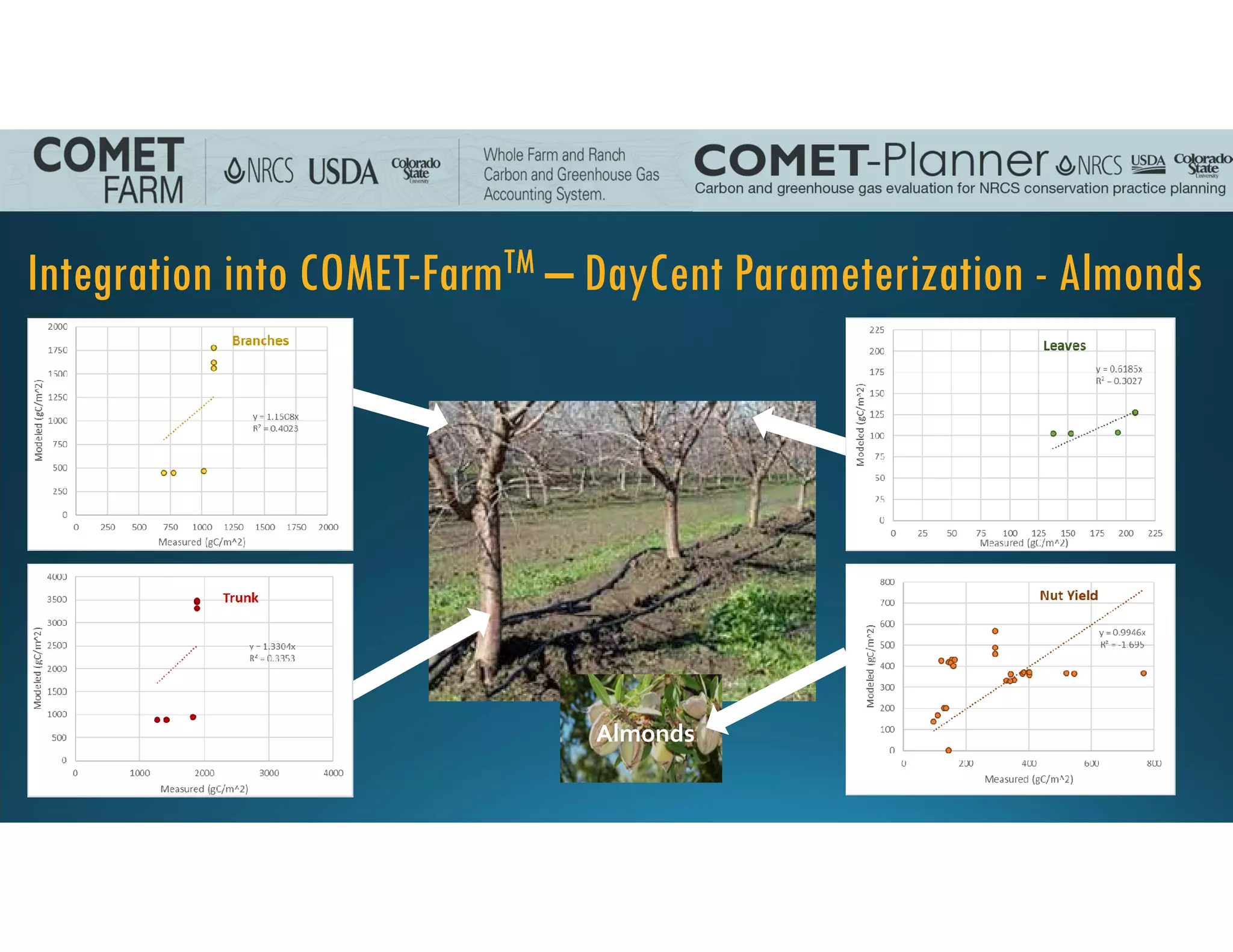
Integration into COMET-FarmTM – DayCent Parameterization - Almonds
Almonds
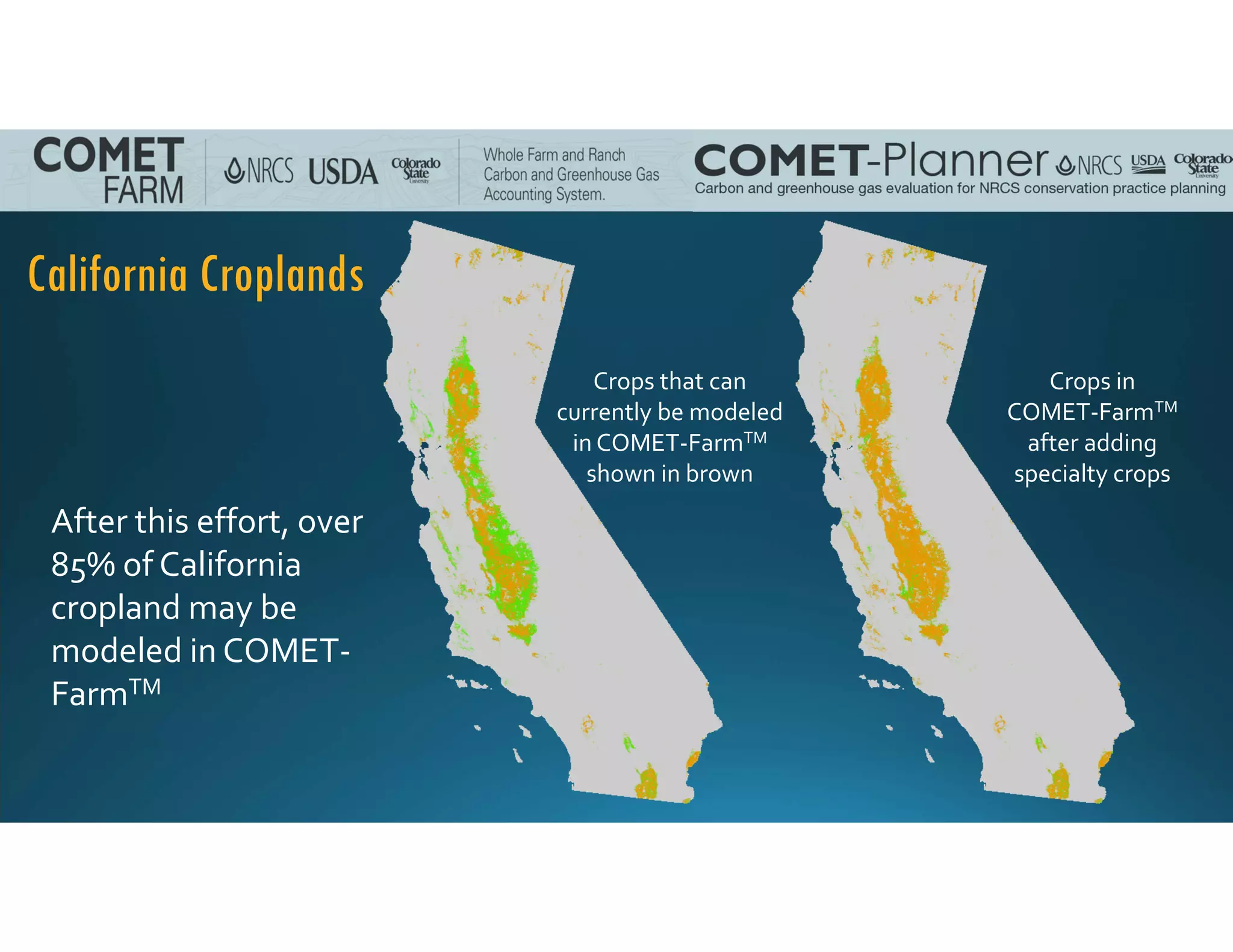
California Croplands
Crops in 
COMET‐FarmTM
after adding
specialty crops
After this effort, over 
85% of California 
cropland may be 
modeled in COMET‐
FarmTM
Crops that can 
currently be modeled
in COMET‐FarmTM
shown in brown
Thank You!
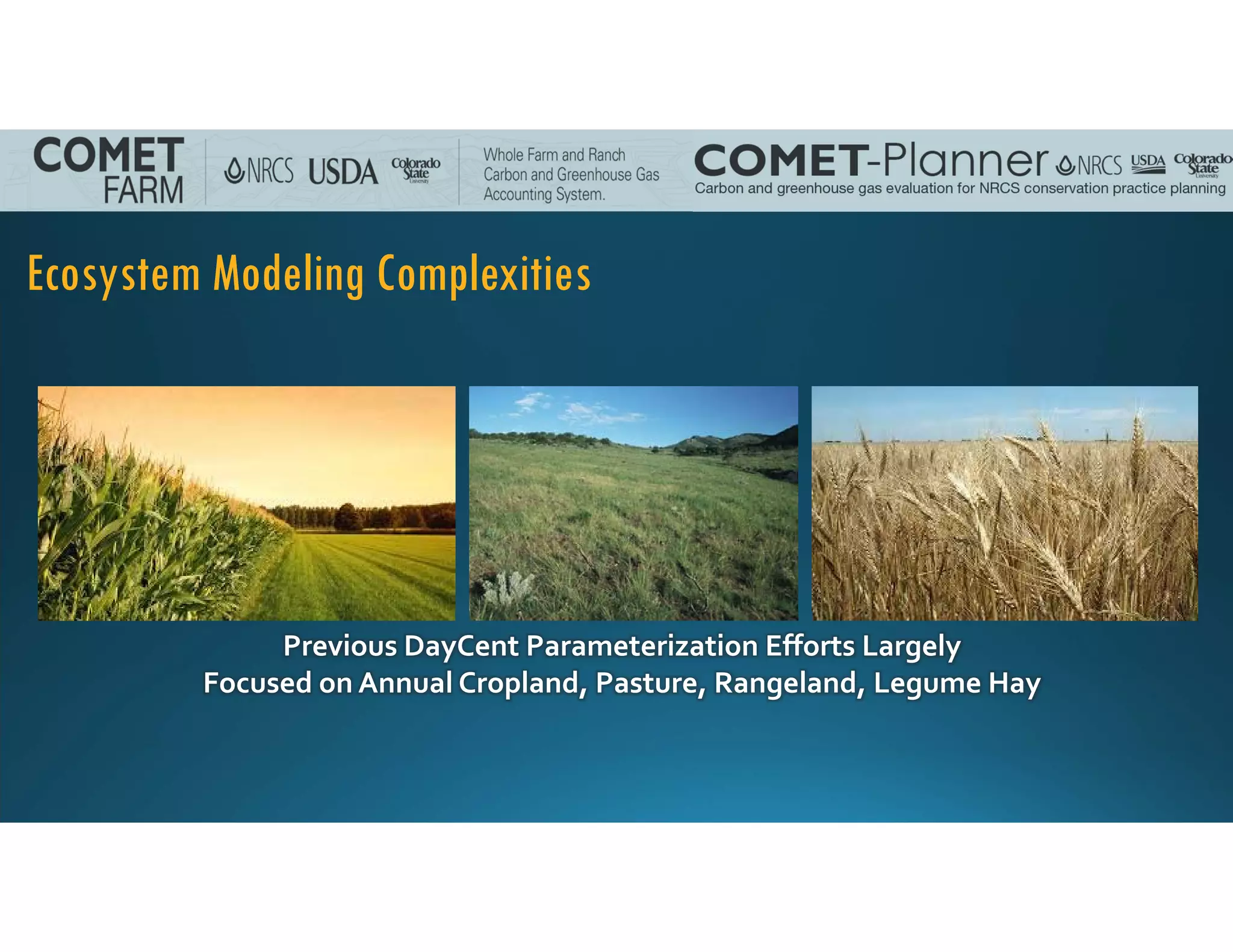
Ecosystem Modeling Complexities
Previous DayCent Parameterization Efforts Largely
Focused on Annual Cropland, Pasture, Rangeland, Legume Hay

Parameterizing the day cent model easter