PRESENTED
BY:MUHAMMAD
RAFIQUE
STUDENT OF
UVAS(JHANG)
PANDEMIC
COVID-19
A Pandemic is an
epidemic that has
spread throughout
an entire area,
such as a country,
continent , or
throughout the
world.
A widespread
epidemic is called
Pandemic.
WHAT IS
PANDEMIC?
When the regional
or local infection
affects more
people and area it
becomes
Pandemic.
Infection travel
rate grows
exponentially.
Pandemic crosses
the borders and
affects larger
population.
WHEN DOES
EPIDEMIC
BECOMES
PANDEMIC?
EPIDEMIC
Affects less area
Affects less people
It’s national level
crisis
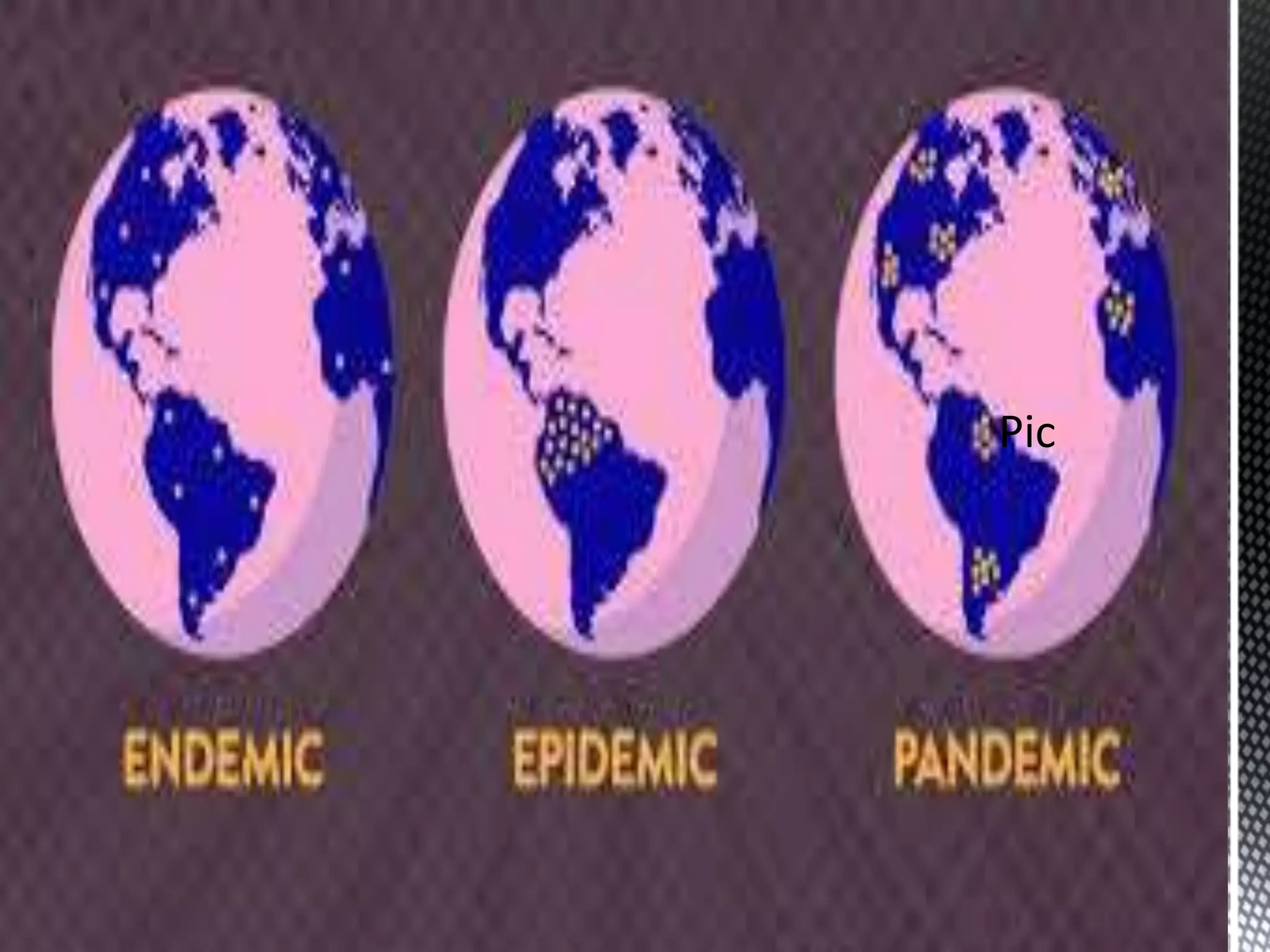
PANDEMIC
Affects more area
Affects more
people
It’s international
level crisis DIFFERENCE B/W
EPIDEMIC AND
PANDEMIC
Parasitic organism
Exists amorphously
Without cell
membrane
Cannot replicate
without host cell
WHAT IS VIRUS?
 When the body acquires a virus, a
few things may happen.
 If the immune system is stronger
than the virus, the body may be
able to kill the virus, leaving the
person who had the virus none the
wiser.
 If the immune system doesn’t kill
the virus but is able to keep it at
bay, stopping the person from
feeling the symptoms associated
with a viral infection, they may
carry and transmit the virus, while
not realizing that they have the
virus in their body.
WHAT IS VIRAL
INFECTION?
 If the immune system is not strong
enough to kill the virus, the person
may acquire a viral infection.
 The symptoms of a viral infection
depends on the virus itself
CONTINUE……
 SARS.
 West Nile.
 Measles
 Ebola.
 Polio.
 Bird Flu
WELL KNOWN
VIRUSES
 ‘rown’ like appearance
 causes respiratory problems
 related to one’s sinuses
 throat
 lungs and nose among other
respiratory areas
CORONA VIRUS
 . 80%people who become sick with
the coronavirus experience
symptoms like most people would
associate with the flu. Still, others
remain asymptomatic.
 At this time, the best of the best in
the science and medical
communities are joining forces to
discover how to prevent viruses
like COVID – 19 from reaching
dangerous proportions.
CORONA VIRUS
 It can be tough to understand
what is the coronavirus in humans,
and how it’s different from other
illnesses, such as the flu.
 One of the key pieces of answering
the question of what is coronavirus
in humans is understanding the
incubation period.
 The incubation period of
coronavirus is long – up to
fourteen days.
UNIQUENESS OF
CORONA VIRUS
 This means that coronavirus signs
and symptoms may not show up
for two weeks after a person has
been exposed.
 During incubation period, there
are no signs and symptoms
 This means that the person would
be able to pass the virus along to
others, even though they’re
showing no symptoms of
coronavirus.
CONTINUE…
 Luckily, most infants and children
either carry the virus and don’t
show coronavirus symptoms in
humans, or get a mild case of the
virus
 Immunocompromised are mostly
affected
 Corona virus may affect infants and
young children’s as well.
 Children and babies are especially
resilient to coronavirus symptoms
CONTINUE….
 Each of us has a personal
responsibility to help prevent/limit
the spread of COVID-19 (or any
other dangerous virus/bacteria) to
other members of the population,
including family and friends.
 Depending on where you may live,
advised to stay home and avoid
contact with others to survive this
pandemic – especially large
crowds.
PREVENTION
 This is a relatively new
phenomenon, recently coined –
social distancing.
 The purpose of social distancing is
to simply limit social contact as a
means of preventing viruses – from
spreading through social contact.
 Social Distancing is defined as
proactively choosing to remain a
distance of at least 6 feet between
you and another person.
 The distance is important because
that is the general reach of
droplets from a cough or sneeze.
SOCIAL
DISTANCING
 The elderly people(over 65 years of
age )
 the very young, the infirm, or
those with compromised immune
systems – remain ultra-cautious
because while it is known how to
avoid a virus, what causes
coronavirus, the incubation period
of coronavirus still remains
unknown.
INDIVIDUALS
MOST
VULNERABLE
 COVID-19 is a virus that is easily
spread as it can ‘live’ on ‘surfaces’
for extended periods of time –
although, at this moment, it is not
fully understood how long.
 Wash your hands with warm
water and soap for at least 20
seconds.
 Wash your hands with 60%
alcohol-based hand sanitizer.
 Do not touch your nose, mouth, or
your eyes.
 Try to stay 2 meter apart from
others.
PRECAUTIONS
REQUIRED TO
OVOID THIS
VIRUS
 It is critical to wash your hands
with soap and warm water for at
least 20 seconds until more is
understood about how and what is
coronavirus in humans ….
 when returning home after being
in a public place.
 After coughing or sneezing.
 When your hands are visibly dirty.
CONTINUE…
 Do not panic
 Keep yourself healthy thorough
physical activities nd boost
your immune system
 Ovoid visiting crowdy places
 Keep your health record
accesable on paper or online
 Maintain a reguler sleep
pattern
 Stay fit stay positive
WHAT TO DO IN
PANDEMIC
SITUTION?
REFERENCES
"Coronavirus confirmed as pandemic". BBC News.
11 March 2020. Retrieved 11 March2020.
• "Coronavirus live updates: WHO says Covid-19 is
pandemic. Covid19 is expected to kill 100 million
people". The Guardian. 11 March 2020.
• Dictionary of Epidemiology.
• "WHO says it no longer uses 'pandemic' category,
but virus still emergency". Reuters. 24 February 2020.
Retrieved 29 February 2020.
PANDEMIC COVID -19

PANDEMIC COVID -19

  • 1.
  • 2.
    A Pandemic isan epidemic that has spread throughout an entire area, such as a country, continent , or throughout the world. A widespread epidemic is called Pandemic. WHAT IS PANDEMIC?
  • 4.
    When the regional orlocal infection affects more people and area it becomes Pandemic. Infection travel rate grows exponentially. Pandemic crosses the borders and affects larger population. WHEN DOES EPIDEMIC BECOMES PANDEMIC?
  • 5.
    EPIDEMIC Affects less area Affectsless people It’s national level crisis PANDEMIC Affects more area Affects more people It’s international level crisis DIFFERENCE B/W EPIDEMIC AND PANDEMIC
  • 7.
    Parasitic organism Exists amorphously Withoutcell membrane Cannot replicate without host cell WHAT IS VIRUS?
  • 8.
     When thebody acquires a virus, a few things may happen.  If the immune system is stronger than the virus, the body may be able to kill the virus, leaving the person who had the virus none the wiser.  If the immune system doesn’t kill the virus but is able to keep it at bay, stopping the person from feeling the symptoms associated with a viral infection, they may carry and transmit the virus, while not realizing that they have the virus in their body. WHAT IS VIRAL INFECTION?
  • 9.
     If theimmune system is not strong enough to kill the virus, the person may acquire a viral infection.  The symptoms of a viral infection depends on the virus itself CONTINUE……
  • 10.
     SARS.  WestNile.  Measles  Ebola.  Polio.  Bird Flu WELL KNOWN VIRUSES
  • 11.
     ‘rown’ likeappearance  causes respiratory problems  related to one’s sinuses  throat  lungs and nose among other respiratory areas CORONA VIRUS
  • 13.
     . 80%peoplewho become sick with the coronavirus experience symptoms like most people would associate with the flu. Still, others remain asymptomatic.  At this time, the best of the best in the science and medical communities are joining forces to discover how to prevent viruses like COVID – 19 from reaching dangerous proportions. CORONA VIRUS
  • 14.
     It canbe tough to understand what is the coronavirus in humans, and how it’s different from other illnesses, such as the flu.  One of the key pieces of answering the question of what is coronavirus in humans is understanding the incubation period.  The incubation period of coronavirus is long – up to fourteen days. UNIQUENESS OF CORONA VIRUS
  • 15.
     This meansthat coronavirus signs and symptoms may not show up for two weeks after a person has been exposed.  During incubation period, there are no signs and symptoms  This means that the person would be able to pass the virus along to others, even though they’re showing no symptoms of coronavirus. CONTINUE…
  • 16.
     Luckily, mostinfants and children either carry the virus and don’t show coronavirus symptoms in humans, or get a mild case of the virus  Immunocompromised are mostly affected  Corona virus may affect infants and young children’s as well.  Children and babies are especially resilient to coronavirus symptoms CONTINUE….
  • 17.
     Each ofus has a personal responsibility to help prevent/limit the spread of COVID-19 (or any other dangerous virus/bacteria) to other members of the population, including family and friends.  Depending on where you may live, advised to stay home and avoid contact with others to survive this pandemic – especially large crowds. PREVENTION
  • 19.
     This isa relatively new phenomenon, recently coined – social distancing.  The purpose of social distancing is to simply limit social contact as a means of preventing viruses – from spreading through social contact.  Social Distancing is defined as proactively choosing to remain a distance of at least 6 feet between you and another person.  The distance is important because that is the general reach of droplets from a cough or sneeze. SOCIAL DISTANCING
  • 21.
     The elderlypeople(over 65 years of age )  the very young, the infirm, or those with compromised immune systems – remain ultra-cautious because while it is known how to avoid a virus, what causes coronavirus, the incubation period of coronavirus still remains unknown. INDIVIDUALS MOST VULNERABLE
  • 22.
     COVID-19 isa virus that is easily spread as it can ‘live’ on ‘surfaces’ for extended periods of time – although, at this moment, it is not fully understood how long.  Wash your hands with warm water and soap for at least 20 seconds.  Wash your hands with 60% alcohol-based hand sanitizer.  Do not touch your nose, mouth, or your eyes.  Try to stay 2 meter apart from others. PRECAUTIONS REQUIRED TO OVOID THIS VIRUS
  • 23.
     It iscritical to wash your hands with soap and warm water for at least 20 seconds until more is understood about how and what is coronavirus in humans ….  when returning home after being in a public place.  After coughing or sneezing.  When your hands are visibly dirty. CONTINUE…
  • 24.
     Do notpanic  Keep yourself healthy thorough physical activities nd boost your immune system  Ovoid visiting crowdy places  Keep your health record accesable on paper or online  Maintain a reguler sleep pattern  Stay fit stay positive WHAT TO DO IN PANDEMIC SITUTION?
  • 26.
  • 27.
    "Coronavirus confirmed aspandemic". BBC News. 11 March 2020. Retrieved 11 March2020. • "Coronavirus live updates: WHO says Covid-19 is pandemic. Covid19 is expected to kill 100 million people". The Guardian. 11 March 2020. • Dictionary of Epidemiology. • "WHO says it no longer uses 'pandemic' category, but virus still emergency". Reuters. 24 February 2020. Retrieved 29 February 2020.