Baspcan
Comprehensive medical assessments
NHSGGC
Dr Laura Somerville
15/4/15
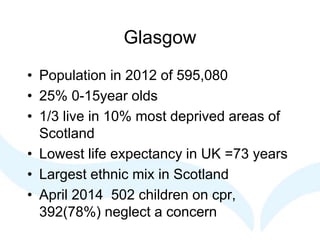
Glasgow
• Population in 2012 of 595,080
• 25% 0-15year olds
• 1/3 live in 10% most deprived areas of
Scotland
• Lowest life expectancy in UK =73 years
• Largest ethnic mix in Scotland
• April 2014 502 children on cpr,
392(78%) neglect a concern
Background
• HMIE inspection 2009
• Need for improved medical
assessments of children where neglect
is a concern
• Comprehensive medical
assessments(CMA) introduced
NHSGGC(vision of Professor Jean
Herbison/Marie Valente,CPU)
Aim
• Describe CMA process
• CMA examination
• Service developments
• Dental component(2nd presentation)
• Illustrative cases(3rd presentation)
CMA-who,why,how,what
• Who?
Children at risk or suffering from chronic
neglect
• Why?
Vulnerable children where interpretation
of range of health presentations is
required
Identify unmet health needs
How?
• Locally delivered
holistic medical
assessments by
paediatricians
• Dental assessment
The West Centre,Drumchapel
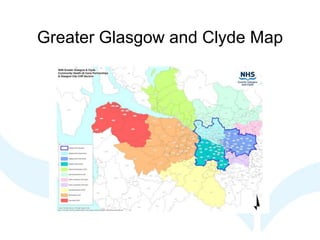
Greater Glasgow and Clyde Map
The CMA
• Aims to identify unmet health needs
• Coordinate ongoing health issues
• Comprehensive report with an opinion
regarding neglect
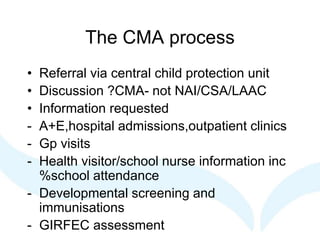
The CMA process
• Referral via central child protection unit
• Discussion ?CMA- not NAI/CSA/LAAC
• Information requested
- A+E,hospital admissions,outpatient clinics
- Gp visits
- Health visitor/school nurse information inc
%school attendance
- Developmental screening and
immunisations
- GIRFEC assessment
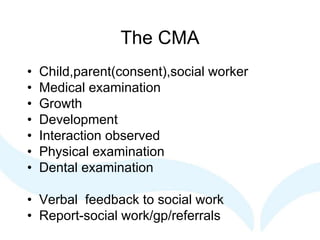
The CMA
• Child,parent(consent),social worker
• Medical examination
• Growth
• Development
• Interaction observed
• Physical examination
• Dental examination
• Verbal feedback to social work
• Report-social work/gp/referrals
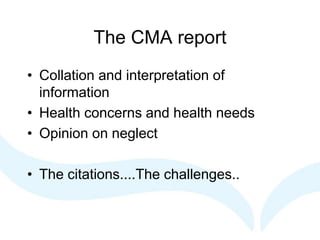
The CMA report
• Collation and interpretation of
information
• Health concerns and health needs
• Opinion on neglect
• The citations....The challenges..
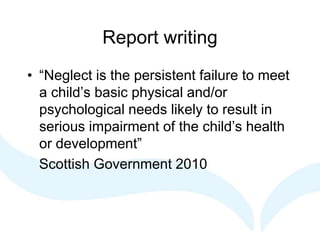
Report writing
• “Neglect is the persistent failure to meet
a child’s basic physical and/or
psychological needs likely to result in
serious impairment of the child’s health
or development”
Scottish Government 2010
Developments
• Peer review –paediatricians,nurse
advisors ,dental colleagues and reporter
• Collaborative working with dental
colleagues including joint symposium
• Personal practice document most
commonly encountered medical and
educational issues
Personal practice document
• 11 most commonly encountered issues
including
• Obesity
• Constipation
• Amblyopia
• Nocturnal enuresis
• Developmental impairment
• School attendance
• Dental caries
cont
Questions to consider:
1.Has the parent responded to or
sought appropriate care and medical
attention?
2. For treatable conditions-have they
participated in treatment?
3.Would not doing so cause significant
harm/serious impairment?
Next challenges
• Case conferences
• Opinion
• Linking with Scottish Children Reporters
System
• Audit including outcomes
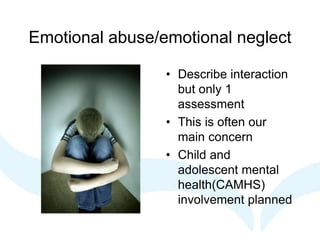
Emotional abuse/emotional neglect
• Describe interaction
but only 1
assessment
• This is often our
main concern
• Child and
adolescent mental
health(CAMHS)
involvement planned
Conclusion
• Comprehensive medical assessments
have challenged and changed the way
paediatricians assess children with
neglect in Glasgow(NHSGGC)
• Service developments have been
positive with joint working with dental
colleagues, SCRA,CAMHS colleagues
• Developments continue
Thanks
• Professor Jean Herbison
• Dr Alison Rennie
• Marie Valente
• Professor Charlotte Wright
• All CMA colleagues
• Child protection Unit ,RHSC,Yorkhill

Comprehensive Medical Assessments

  • 1.
  • 2.
    Glasgow • Population in2012 of 595,080 • 25% 0-15year olds • 1/3 live in 10% most deprived areas of Scotland • Lowest life expectancy in UK =73 years • Largest ethnic mix in Scotland • April 2014 502 children on cpr, 392(78%) neglect a concern
  • 4.
    Background • HMIE inspection2009 • Need for improved medical assessments of children where neglect is a concern • Comprehensive medical assessments(CMA) introduced NHSGGC(vision of Professor Jean Herbison/Marie Valente,CPU)
  • 5.
    Aim • Describe CMAprocess • CMA examination • Service developments • Dental component(2nd presentation) • Illustrative cases(3rd presentation)
  • 6.
    CMA-who,why,how,what • Who? Children atrisk or suffering from chronic neglect • Why? Vulnerable children where interpretation of range of health presentations is required Identify unmet health needs
  • 7.
    How? • Locally delivered holisticmedical assessments by paediatricians • Dental assessment
  • 8.
  • 9.
  • 10.
    The CMA • Aimsto identify unmet health needs • Coordinate ongoing health issues • Comprehensive report with an opinion regarding neglect
  • 11.
    The CMA process •Referral via central child protection unit • Discussion ?CMA- not NAI/CSA/LAAC • Information requested - A+E,hospital admissions,outpatient clinics - Gp visits - Health visitor/school nurse information inc %school attendance - Developmental screening and immunisations - GIRFEC assessment
  • 12.
    The CMA • Child,parent(consent),socialworker • Medical examination • Growth • Development • Interaction observed • Physical examination • Dental examination • Verbal feedback to social work • Report-social work/gp/referrals
  • 13.
    The CMA report •Collation and interpretation of information • Health concerns and health needs • Opinion on neglect • The citations....The challenges..
  • 14.
    Report writing • “Neglectis the persistent failure to meet a child’s basic physical and/or psychological needs likely to result in serious impairment of the child’s health or development” Scottish Government 2010
  • 15.
    Developments • Peer review–paediatricians,nurse advisors ,dental colleagues and reporter • Collaborative working with dental colleagues including joint symposium • Personal practice document most commonly encountered medical and educational issues
  • 16.
    Personal practice document •11 most commonly encountered issues including • Obesity • Constipation • Amblyopia • Nocturnal enuresis • Developmental impairment • School attendance • Dental caries
  • 17.
    cont Questions to consider: 1.Hasthe parent responded to or sought appropriate care and medical attention? 2. For treatable conditions-have they participated in treatment? 3.Would not doing so cause significant harm/serious impairment?
  • 18.
    Next challenges • Caseconferences • Opinion • Linking with Scottish Children Reporters System • Audit including outcomes
  • 19.
    Emotional abuse/emotional neglect •Describe interaction but only 1 assessment • This is often our main concern • Child and adolescent mental health(CAMHS) involvement planned
  • 20.
    Conclusion • Comprehensive medicalassessments have challenged and changed the way paediatricians assess children with neglect in Glasgow(NHSGGC) • Service developments have been positive with joint working with dental colleagues, SCRA,CAMHS colleagues • Developments continue
  • 21.
    Thanks • Professor JeanHerbison • Dr Alison Rennie • Marie Valente • Professor Charlotte Wright • All CMA colleagues • Child protection Unit ,RHSC,Yorkhill