
Ozymandias
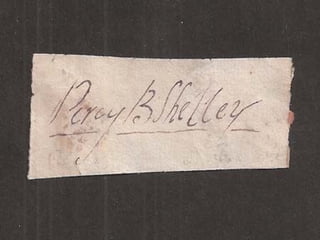
Percy Bysshe Shelley
The
Sonnet
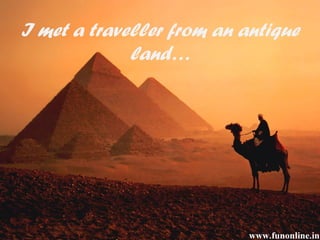
I met a traveller from an antique
land…
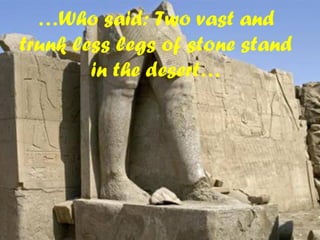
…Who said: Two vast and
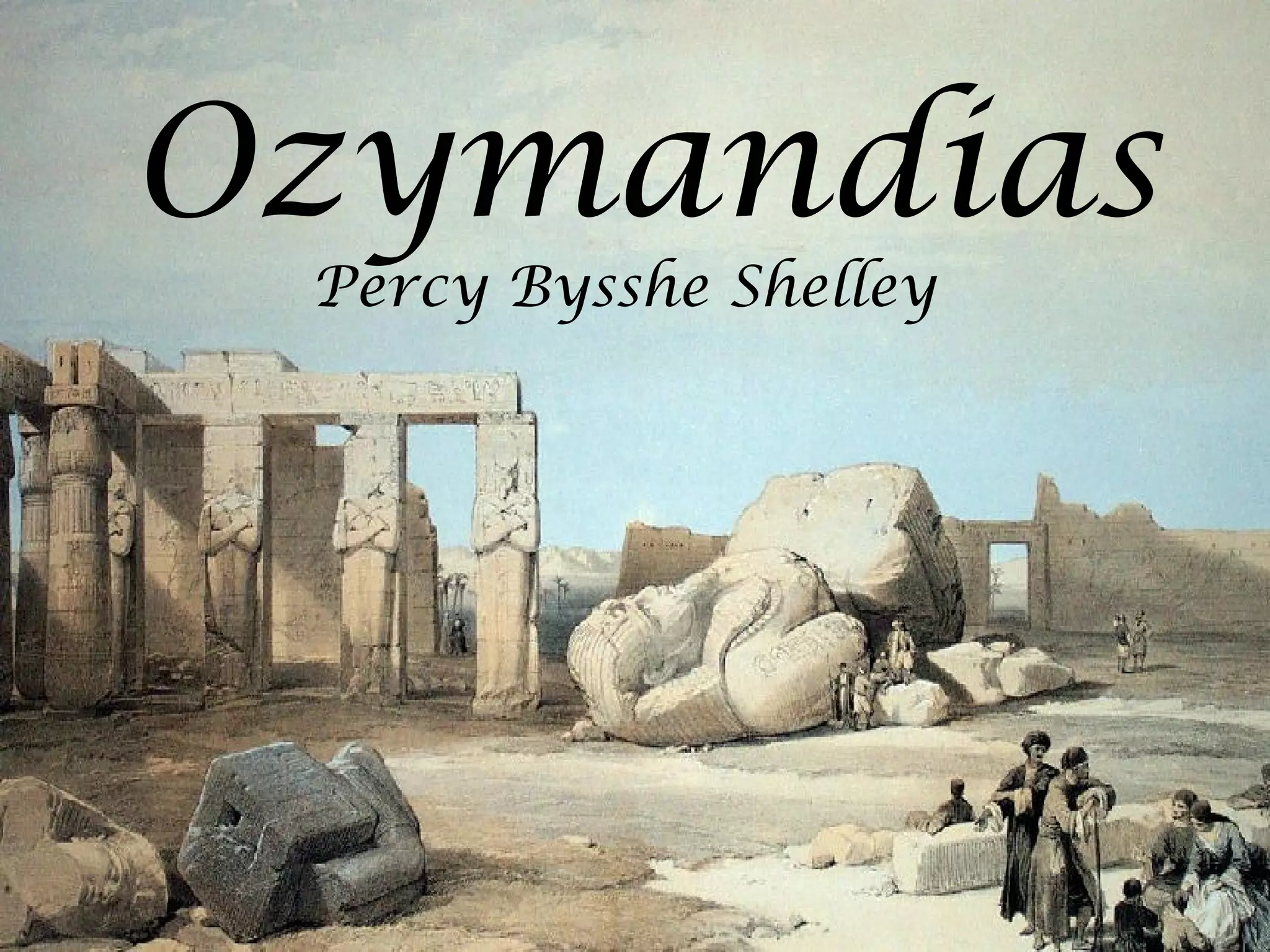
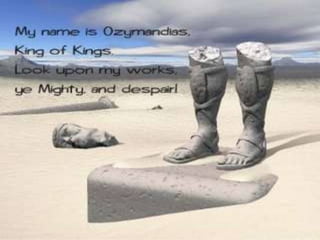
trunk less legs of stone stand
in the desert…
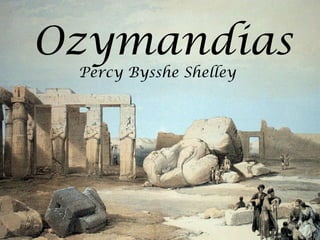
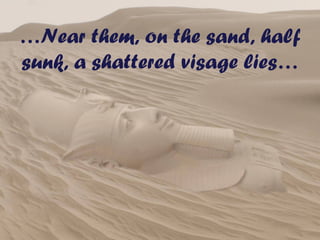
…Near them, on the sand, half
sunk, a shattered visage lies…
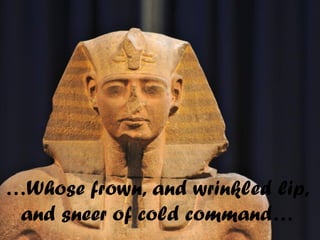
…Whose frown, and wrinkled lip,
and sneer of cold command…
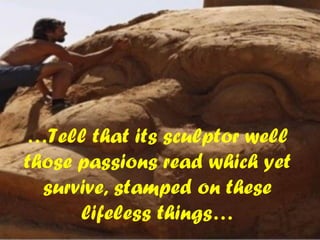
…Tell that its sculptor well
those passions read which yet
survive, stamped on these
lifeless things…
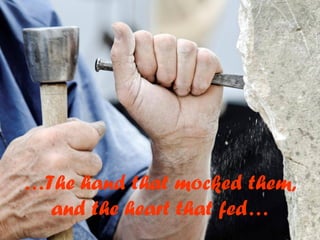
…The hand that mocked them,
and the heart that fed…
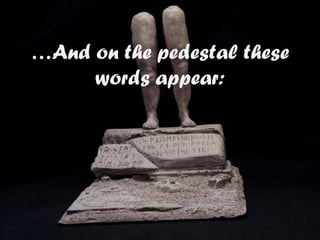
…And on the pedestal these
words appear:
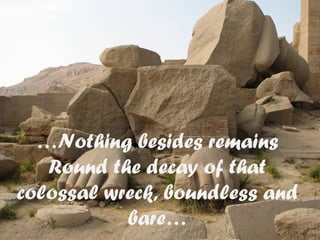
…Nothing besides remains
Round the decay of that
colossal wreck, boundless and
bare…
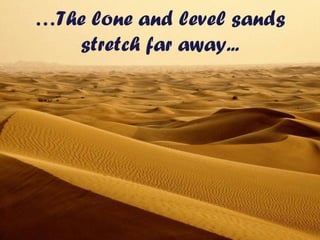
…The lone and level sands
stretch far away...
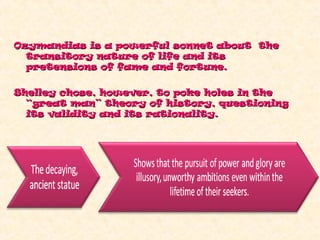
Ozymandias is a powerful sonnet about theOzymandias is a powerful sonnet about the
transitory nature of life and itstransitory nature of life and its
pretensions of fame and fortune.pretensions of fame and fortune.
Shelley chose, however, to poke holes in theShelley chose, however, to poke holes in the
“great man” theory of history, questioning“great man” theory of history, questioning
its validity and its rationality.its validity and its rationality.
Romantics criticized the glorification of
science. They cherished intuition,
mystical feelings and emotions.
This new generation of poets flouted
tradition, inventing their own
vocabularies, subject matters, and poetic
form.
“Ozymandias” exemplifies both in theme
and in execution these “rebellious”
notions.
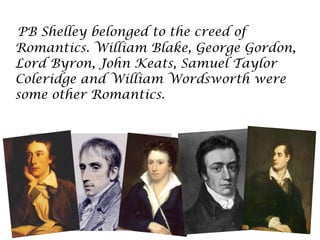
PB Shelley belonged to the creed of
Romantics. William Blake, George Gordon,
Lord Byron, John Keats, Samuel Taylor
Coleridge and William Wordsworth were
some other Romantics.
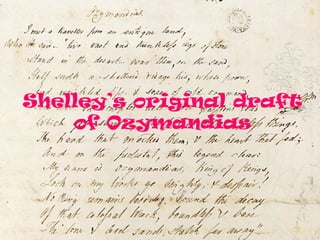
Shelley’s original draft
of Ozymandias
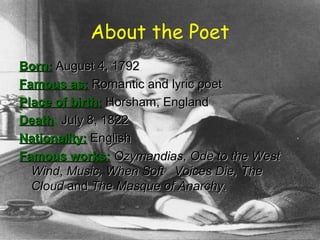
About the Poet
Born:Born: August 4, 1792August 4, 1792
Famous as:Famous as: Romantic and lyric poetRomantic and lyric poet
Place of birth:Place of birth: Horsham, EnglandHorsham, England
DeathDeath: July 8, 1822July 8, 1822
Nationality:Nationality: EnglishEnglish
Famous works:Famous works: OzymandiasOzymandias,, Ode to the WestOde to the West
WindWind,, Music, When Soft Voices Die,Music, When Soft Voices Die, TheThe
CloudCloud andand The Masque of Anarchy.The Masque of Anarchy.
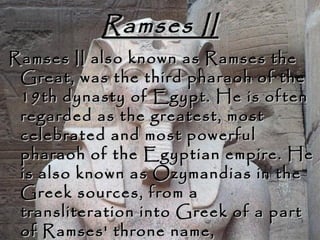
Ramses IIRamses II
Ramses II also known as Ramses theRamses II also known as Ramses the
Great, was the third pharaoh of theGreat, was the third pharaoh of the
19th dynasty of Egypt. He is often19th dynasty of Egypt. He is often
regarded as the greatest, mostregarded as the greatest, most
celebrated and most powerfulcelebrated and most powerful
pharaoh of the Egyptian empire. Hepharaoh of the Egyptian empire. He
is also known as Ozymandias in theis also known as Ozymandias in the
Greek sources, from aGreek sources, from a
transliteration into Greek of a parttransliteration into Greek of a part
of Ramses' throne name,of Ramses' throne name,
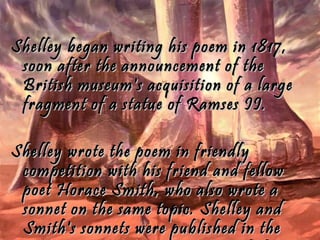
Shelley began writing his poem in 1817,Shelley began writing his poem in 1817,
soon after the announcement of thesoon after the announcement of the
British museum's acquisition of a largeBritish museum's acquisition of a large
fragment of a statue of Ramses II.fragment of a statue of Ramses II.
Shelley wrote the poem in friendlyShelley wrote the poem in friendly
competition with his friend and fellowcompetition with his friend and fellow
poet Horace Smith, who also wrote apoet Horace Smith, who also wrote a
sonnet on the same topic. Shelley andsonnet on the same topic. Shelley and
Smith's sonnets were published in theSmith's sonnets were published in the
The End

Ozymandias

  • 1.
  • 2.
  • 3.
    I met atraveller from an antique land…
  • 4.
    …Who said: Twovast and trunk less legs of stone stand in the desert…
  • 5.
    …Near them, onthe sand, half sunk, a shattered visage lies…
  • 6.
    …Whose frown, andwrinkled lip, and sneer of cold command…
  • 7.
    …Tell that itssculptor well those passions read which yet survive, stamped on these lifeless things…
  • 8.
    …The hand thatmocked them, and the heart that fed…
  • 9.
    …And on thepedestal these words appear:
  • 11.
    …Nothing besides remains Roundthe decay of that colossal wreck, boundless and bare…
  • 12.
    …The lone andlevel sands stretch far away...
  • 13.
    Ozymandias is apowerful sonnet about theOzymandias is a powerful sonnet about the transitory nature of life and itstransitory nature of life and its pretensions of fame and fortune.pretensions of fame and fortune. Shelley chose, however, to poke holes in theShelley chose, however, to poke holes in the “great man” theory of history, questioning“great man” theory of history, questioning its validity and its rationality.its validity and its rationality.
  • 14.
    Romantics criticized theglorification of science. They cherished intuition, mystical feelings and emotions. This new generation of poets flouted tradition, inventing their own vocabularies, subject matters, and poetic form. “Ozymandias” exemplifies both in theme and in execution these “rebellious” notions.
  • 15.
    PB Shelley belongedto the creed of Romantics. William Blake, George Gordon, Lord Byron, John Keats, Samuel Taylor Coleridge and William Wordsworth were some other Romantics.
  • 16.
  • 18.
    About the Poet Born:Born:August 4, 1792August 4, 1792 Famous as:Famous as: Romantic and lyric poetRomantic and lyric poet Place of birth:Place of birth: Horsham, EnglandHorsham, England DeathDeath: July 8, 1822July 8, 1822 Nationality:Nationality: EnglishEnglish Famous works:Famous works: OzymandiasOzymandias,, Ode to the WestOde to the West WindWind,, Music, When Soft Voices Die,Music, When Soft Voices Die, TheThe CloudCloud andand The Masque of Anarchy.The Masque of Anarchy.
  • 19.
    Ramses IIRamses II RamsesII also known as Ramses theRamses II also known as Ramses the Great, was the third pharaoh of theGreat, was the third pharaoh of the 19th dynasty of Egypt. He is often19th dynasty of Egypt. He is often regarded as the greatest, mostregarded as the greatest, most celebrated and most powerfulcelebrated and most powerful pharaoh of the Egyptian empire. Hepharaoh of the Egyptian empire. He is also known as Ozymandias in theis also known as Ozymandias in the Greek sources, from aGreek sources, from a transliteration into Greek of a parttransliteration into Greek of a part of Ramses' throne name,of Ramses' throne name,
  • 20.
    Shelley began writinghis poem in 1817,Shelley began writing his poem in 1817, soon after the announcement of thesoon after the announcement of the British museum's acquisition of a largeBritish museum's acquisition of a large fragment of a statue of Ramses II.fragment of a statue of Ramses II. Shelley wrote the poem in friendlyShelley wrote the poem in friendly competition with his friend and fellowcompetition with his friend and fellow poet Horace Smith, who also wrote apoet Horace Smith, who also wrote a sonnet on the same topic. Shelley andsonnet on the same topic. Shelley and Smith's sonnets were published in theSmith's sonnets were published in the
  • 21.