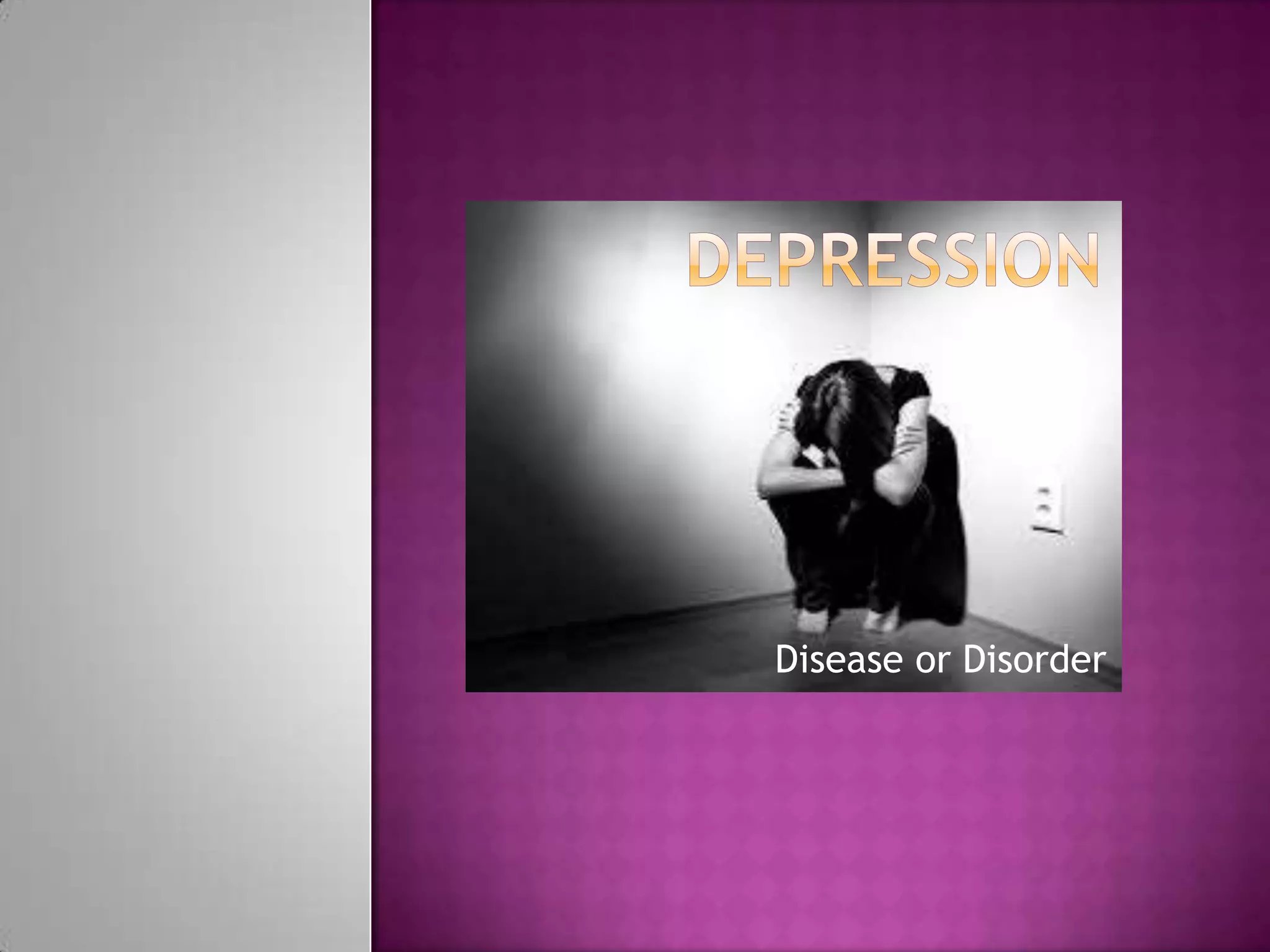
Disease or Disorder
 Loss of interest in hobbies
 Feeling worthless
 Fatigue
 Inability to sleep or excess sleep
 Isolation from family & friends
 Thoughts of suicide
 Unable to perform daily activities
 121 million people are affected by depression
 80% of depressed patients are not being treated
 Depression increases by 20% each year
 A condition of the living animal or plant
body or of one of its parts that impairs
normal functioning and is typically
manifested by distinguishing signs and
symptoms
 is a pattern of behavioral or psychological
symptoms that impact multiple life areas
and/or create distress for the person
experiencing these symptoms
 Genes are responsible for biological
processes
 If a gene is damaged then
predisposition to depression is higher
than normal
 Mood imbalances are more likely with
damaged genes
 A mixture of genes are responsible for
depression not one specific gene
 Chromosome 3p25-26 linked to over 800
families with a history of depression
 Families who have this gene had two or
more offspring that suffered from
depression
 This research proves that depression can be
hereditary
 Genetic testing in the future will be
available to see if a person is predisposed by
hereditary genes
 5-HTT aka serotonin-gene transporter
 Relays signals to the brain for mood,
appetite and sleep
 A child receives one gene from each parent
 If one gene is short then a 33% increase in
depression
 If both genes were normal then there was
only a 17% chance of depression
 Serotonin receptors are less in the
hippocampus of the brain than a normal
person
 The limbic system of
the brain contains the
amygdale &
hippocampus
 Controls emotions,
behavior, and memory
 The amygdale is responsible for how a
person feels during a specific situation
 Recollection of this situation increases
activity in the amygdale
 As depression worsens so does the activity in
the amygdale
 Antidepressants can help control the activity
in the amygdale
 In remission, patients who have higher
activity are at higher risk for relapse
 Memory bank and recollection of memories
 Outside factor triggers negative memory
causing the onset of depression
 This can be continuous, this is called
recurring depression
 Depressed women have a 13% smaller
hippocampus
 Research implies that the hippocampus is
smaller because stress damages the growth
of nerve cells
 Antidepressants will stimulant growth of
nerve cells and promote branching of nerve
cells
 The process starts immediately, but takes
weeks to months before the patient starts
feeling better
 PET Scans show different functions of brain
activity
 Doctors are able to tell what treatment a
patient benefits from more
 Two types of treatment, antidepressants or
cognitive behavioral therapy
 Treatment was decided upon by activity in
the insula
 The insula is responsible for heart rate,
temperature, and pain
 Therapy decreased activity in the insula
 Patients were able to change thought
processes to be positive
 Were able to change their outlook without
medication
 Antidepressants increased activity in the
insula
 Patients were more focused on internal
thoughts and could not control them
 Medication helped balance out hormones
and slow down thought processes
 The thyroid controls metabolism
 Hypothyroidism happens when the thyroid is
underperforming
 Diagnosed with a blood test
 Disrupts behavioral and emotional processes
 Patients have a somber mood
 Thyroid medication can balance out
hormones
 Hyperthyroidism over produces hormones
and energy is burned too fast
 A patient will feel irritable, nervous, and
suffer from sleep deprivation
 Suffering from these symptoms will worsen
depression
 Medication can help lower hormone levels
 Sometimes surgery to remove apart of the
thyroid is necessary to control hormone
levels
 If a man has depression, testosterone levels
can automatically reduce
 Medication to raise these levels reduce
depression symptoms
 Testosterone medication may be more
effective instead of taking antidepressants
 Men who took both medications were less
anxious and happier
 Men who only took antidepressants remained
the same and seen no change
 Low estrogen levels cause lowered mood and
thought processes
 Estrogen controls a woman’s mood, even
inside the brain
 Estrogen changes after giving birth,
postpartum depression
 Estrogen changes before menopause
 Estrogen replacements are available to
balance out hormone levels
 Dr. Grohol states that even though the brain
is an organ that there is not enough research
 There is activity in the brain, but this could
be from any task being done
 There is not one thing that causes
depression and with a disease there is only
one culprit
 What depression is called matters
 When a name is given to something, that is how
a person feels and interprets how they feel
about that specific thing
 When a name is given that person will react to
treatment options and severity of what they
have been diagnosed with
 Disease is caused from structural changes within
the body
 Disorder is the inability to function day to day,
without changes in the body
 Depression changes the brain, hormones, and
genetic makeup; therefore, it is a disease
 Depression should be treated with more
importance
 Future studies will:
 Show what parts of the brain are
deteriorating due to depression
 Determine what genes and chromosomes
that are affected by depression
 Find more hormones that predispose a
patient to depression
 Provide better specialized treatments for
depressive patients

Owens j researchmultimedia

  • 1.
  • 2.
     Loss ofinterest in hobbies  Feeling worthless  Fatigue  Inability to sleep or excess sleep  Isolation from family & friends  Thoughts of suicide  Unable to perform daily activities
  • 3.
     121 millionpeople are affected by depression  80% of depressed patients are not being treated  Depression increases by 20% each year
  • 4.
     A conditionof the living animal or plant body or of one of its parts that impairs normal functioning and is typically manifested by distinguishing signs and symptoms
  • 5.
     is apattern of behavioral or psychological symptoms that impact multiple life areas and/or create distress for the person experiencing these symptoms
  • 6.
     Genes areresponsible for biological processes  If a gene is damaged then predisposition to depression is higher than normal  Mood imbalances are more likely with damaged genes  A mixture of genes are responsible for depression not one specific gene
  • 7.
     Chromosome 3p25-26linked to over 800 families with a history of depression  Families who have this gene had two or more offspring that suffered from depression  This research proves that depression can be hereditary  Genetic testing in the future will be available to see if a person is predisposed by hereditary genes
  • 8.
     5-HTT akaserotonin-gene transporter  Relays signals to the brain for mood, appetite and sleep  A child receives one gene from each parent  If one gene is short then a 33% increase in depression  If both genes were normal then there was only a 17% chance of depression  Serotonin receptors are less in the hippocampus of the brain than a normal person
  • 9.
     The limbicsystem of the brain contains the amygdale & hippocampus  Controls emotions, behavior, and memory
  • 10.
     The amygdaleis responsible for how a person feels during a specific situation  Recollection of this situation increases activity in the amygdale  As depression worsens so does the activity in the amygdale  Antidepressants can help control the activity in the amygdale  In remission, patients who have higher activity are at higher risk for relapse
  • 11.
     Memory bankand recollection of memories  Outside factor triggers negative memory causing the onset of depression  This can be continuous, this is called recurring depression  Depressed women have a 13% smaller hippocampus  Research implies that the hippocampus is smaller because stress damages the growth of nerve cells
  • 12.
     Antidepressants willstimulant growth of nerve cells and promote branching of nerve cells  The process starts immediately, but takes weeks to months before the patient starts feeling better
  • 13.
     PET Scansshow different functions of brain activity  Doctors are able to tell what treatment a patient benefits from more  Two types of treatment, antidepressants or cognitive behavioral therapy  Treatment was decided upon by activity in the insula  The insula is responsible for heart rate, temperature, and pain
  • 14.
     Therapy decreasedactivity in the insula  Patients were able to change thought processes to be positive  Were able to change their outlook without medication  Antidepressants increased activity in the insula  Patients were more focused on internal thoughts and could not control them  Medication helped balance out hormones and slow down thought processes
  • 15.
     The thyroidcontrols metabolism  Hypothyroidism happens when the thyroid is underperforming  Diagnosed with a blood test  Disrupts behavioral and emotional processes  Patients have a somber mood  Thyroid medication can balance out hormones
  • 16.
     Hyperthyroidism overproduces hormones and energy is burned too fast  A patient will feel irritable, nervous, and suffer from sleep deprivation  Suffering from these symptoms will worsen depression  Medication can help lower hormone levels  Sometimes surgery to remove apart of the thyroid is necessary to control hormone levels
  • 17.
     If aman has depression, testosterone levels can automatically reduce  Medication to raise these levels reduce depression symptoms  Testosterone medication may be more effective instead of taking antidepressants  Men who took both medications were less anxious and happier  Men who only took antidepressants remained the same and seen no change
  • 18.
     Low estrogenlevels cause lowered mood and thought processes  Estrogen controls a woman’s mood, even inside the brain  Estrogen changes after giving birth, postpartum depression  Estrogen changes before menopause  Estrogen replacements are available to balance out hormone levels
  • 19.
     Dr. Groholstates that even though the brain is an organ that there is not enough research  There is activity in the brain, but this could be from any task being done  There is not one thing that causes depression and with a disease there is only one culprit
  • 20.
     What depressionis called matters  When a name is given to something, that is how a person feels and interprets how they feel about that specific thing  When a name is given that person will react to treatment options and severity of what they have been diagnosed with  Disease is caused from structural changes within the body  Disorder is the inability to function day to day, without changes in the body  Depression changes the brain, hormones, and genetic makeup; therefore, it is a disease
  • 21.
     Depression shouldbe treated with more importance  Future studies will:  Show what parts of the brain are deteriorating due to depression  Determine what genes and chromosomes that are affected by depression  Find more hormones that predispose a patient to depression  Provide better specialized treatments for depressive patients