


Jesse Hanson, Clinical Director 
Helix Healthcare Group
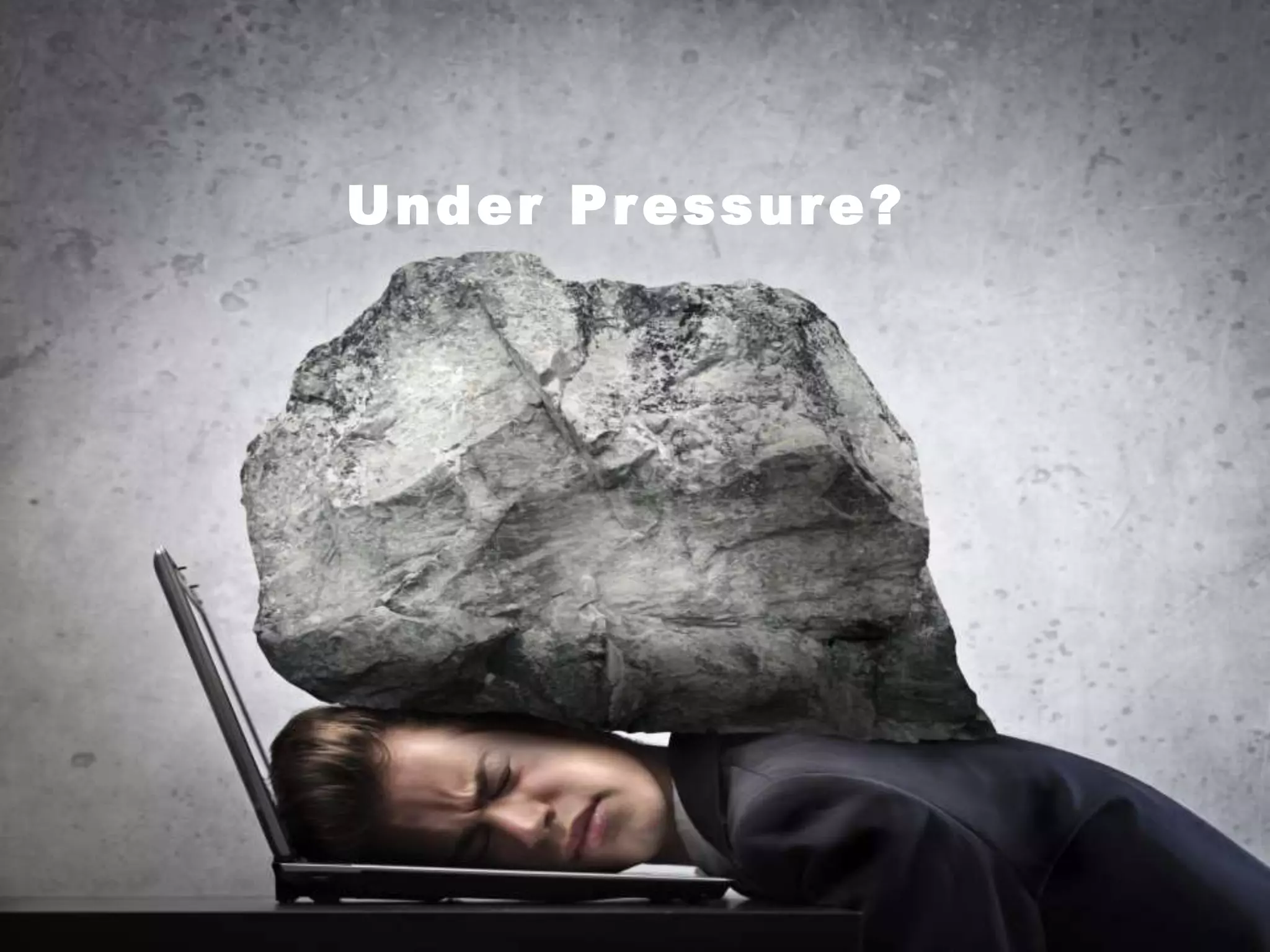
Under Pressure?
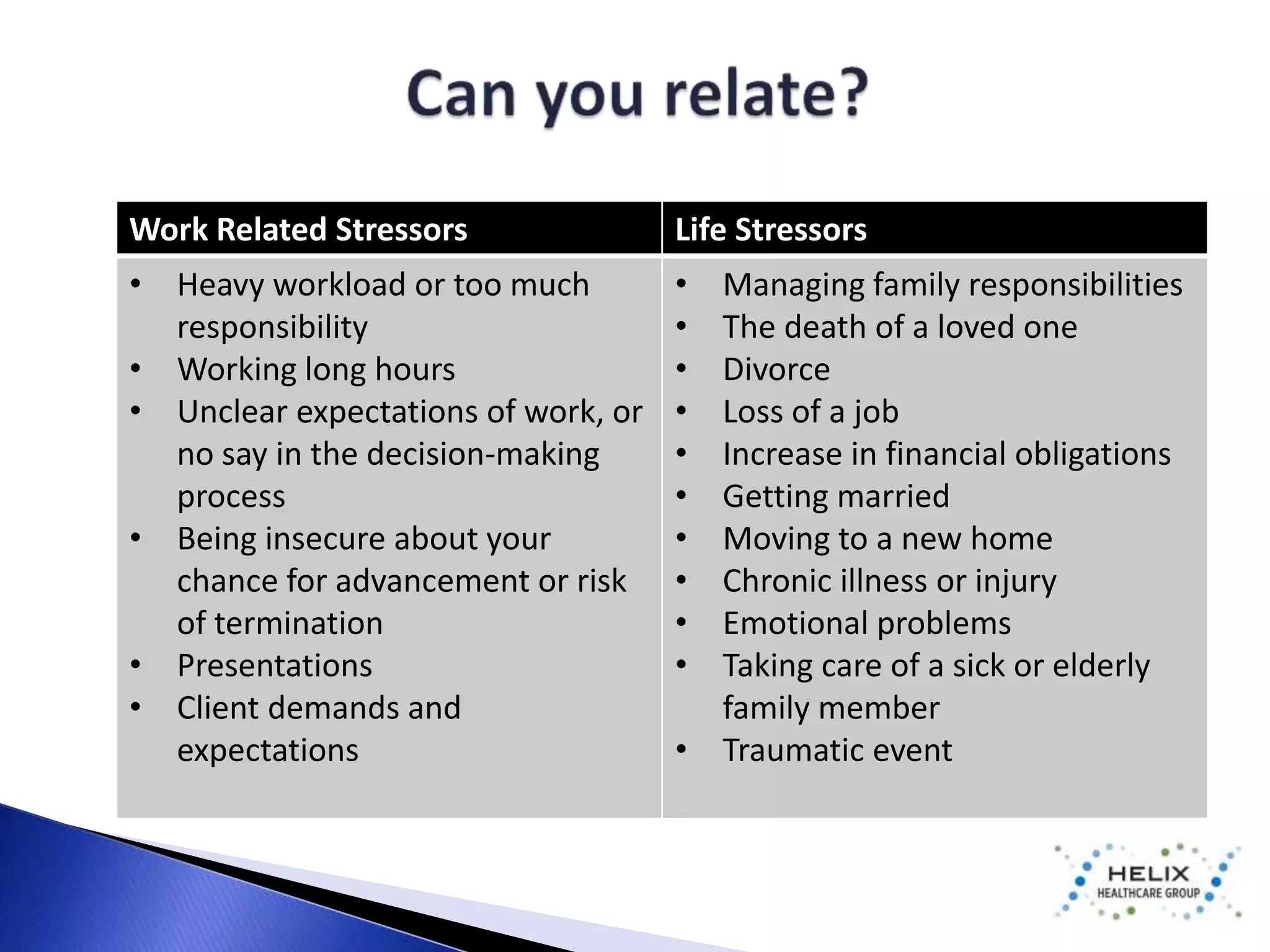
Work Related Stressors Life Stressors 
• Heavy workload or too much 
responsibility 
• Working long hours 
• Unclear expectations of work, or 
no say in the decision-making 
process 
• Being insecure about your 
chance for advancement or risk 
of termination 
• Presentations 
• Client demands and 
expectations 
• Managing family responsibilities 
• The death of a loved one 
• Divorce 
• Loss of a job 
• Increase in financial obligations 
• Getting married 
• Moving to a new home 
• Chronic illness or injury 
• Emotional problems 
• Taking care of a sick or elderly 
family member 
• Traumatic event
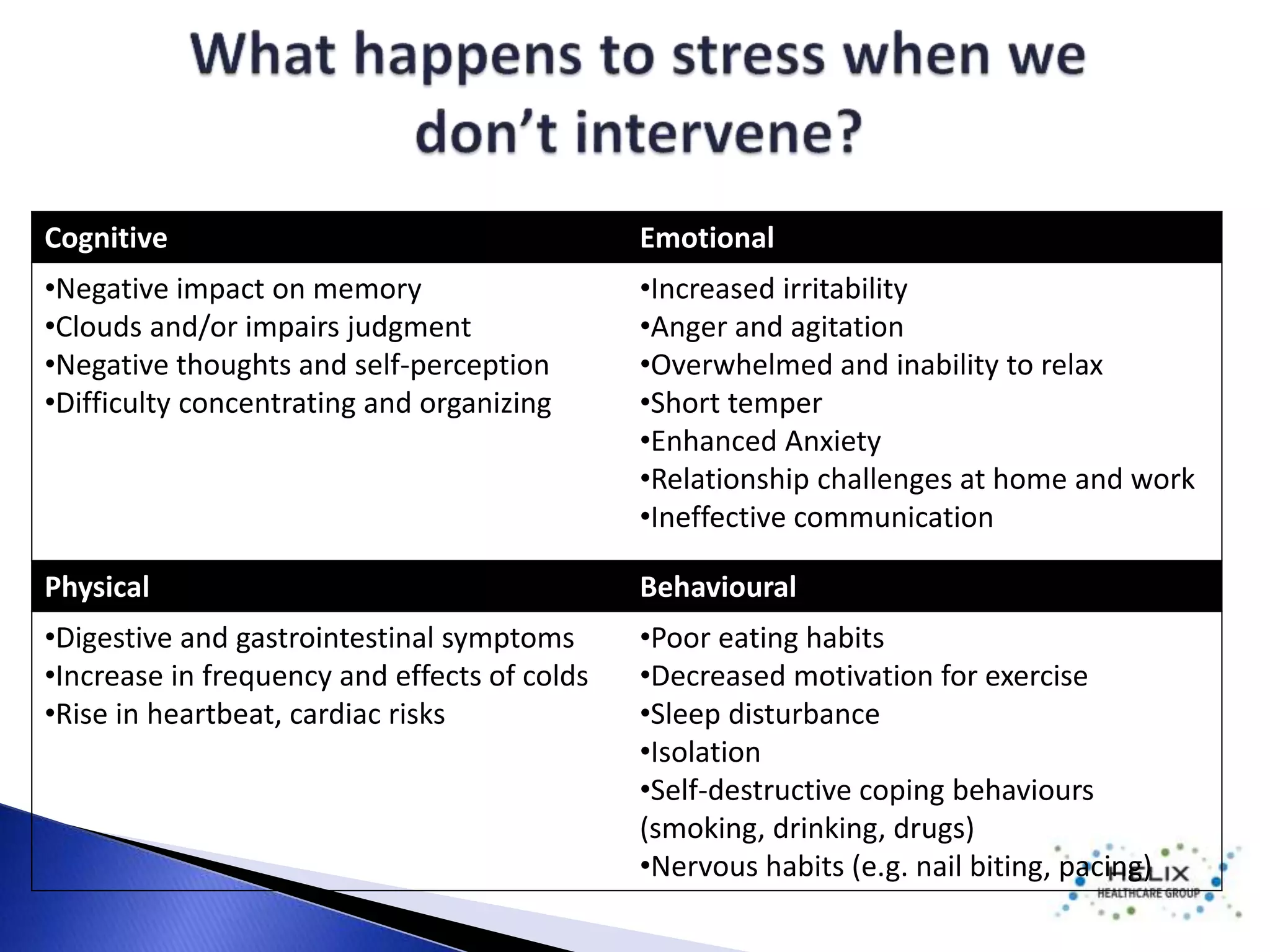
Cognitive Emotional 
•Negative impact on memory 
•Clouds and/or impairs judgment 
•Negative thoughts and self-perception 
•Difficulty concentrating and organizing 
•Increased irritability 
•Anger and agitation 
•Overwhelmed and inability to relax 
•Short temper 
•Enhanced Anxiety 
•Relationship challenges at home and work 
•Ineffective communication 
Physical Behavioural 
•Digestive and gastrointestinal symptoms 
•Increase in frequency and effects of colds 
•Rise in heartbeat, cardiac risks 
•Poor eating habits 
•Decreased motivation for exercise 
•Sleep disturbance 
•Isolation 
•Self-destructive coping behaviours 
(smoking, drinking, drugs) 
•Nervous habits (e.g. nail biting, pacing)
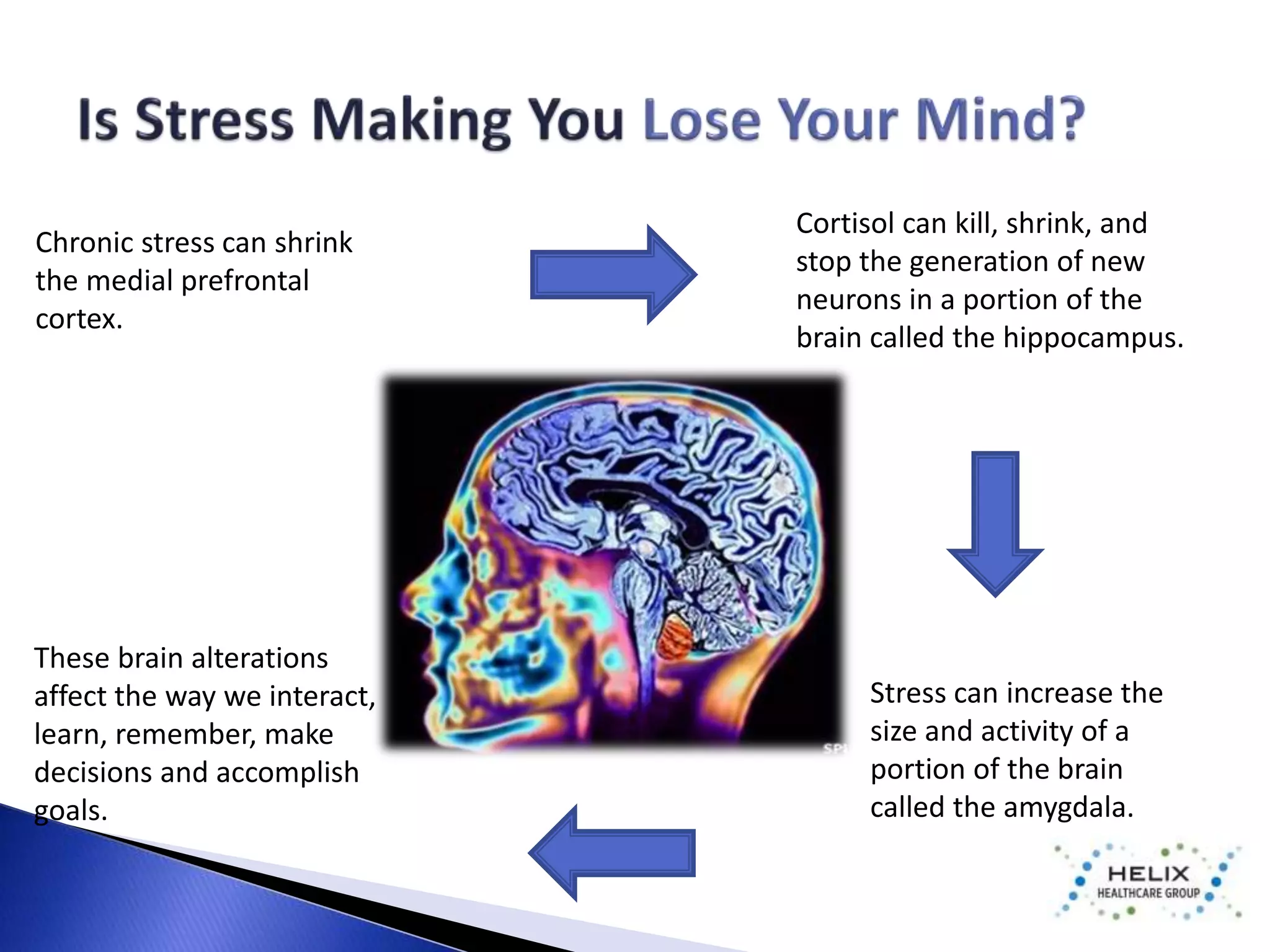
Cortisol can kill, shrink, and 
stop the generation of new 
neurons in a portion of the 
brain called the hippocampus. 
Chronic stress can shrink 
the medial prefrontal 
cortex. 
Stress can increase the 
size and activity of a 
portion of the brain 
called the amygdala. 
These brain alterations 
affect the way we interact, 
learn, remember, make 
decisions and accomplish 
goals.
You have a choice
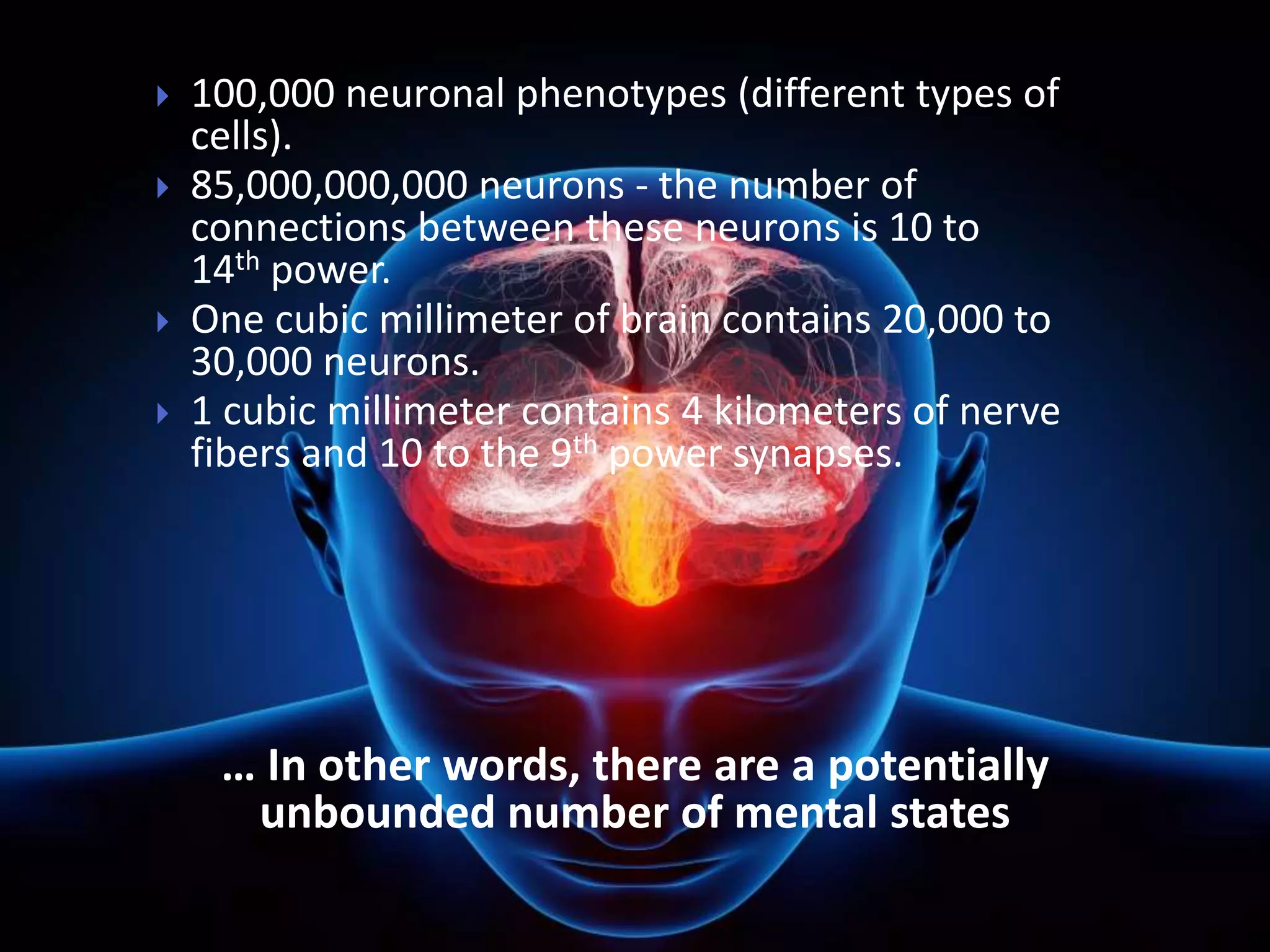
 100,000 neuronal phenotypes (different types of 
cells). 
 85,000,000,000 neurons - the number of 
connections between these neurons is 10 to 
14th power. 
 One cubic millimeter of brain contains 20,000 to 
30,000 neurons. 
 1 cubic millimeter contains 4 kilometers of nerve 
fibers and 10 to the 9th power synapses. 
… In other words, there are a potentially 
unbounded number of mental states
VS 
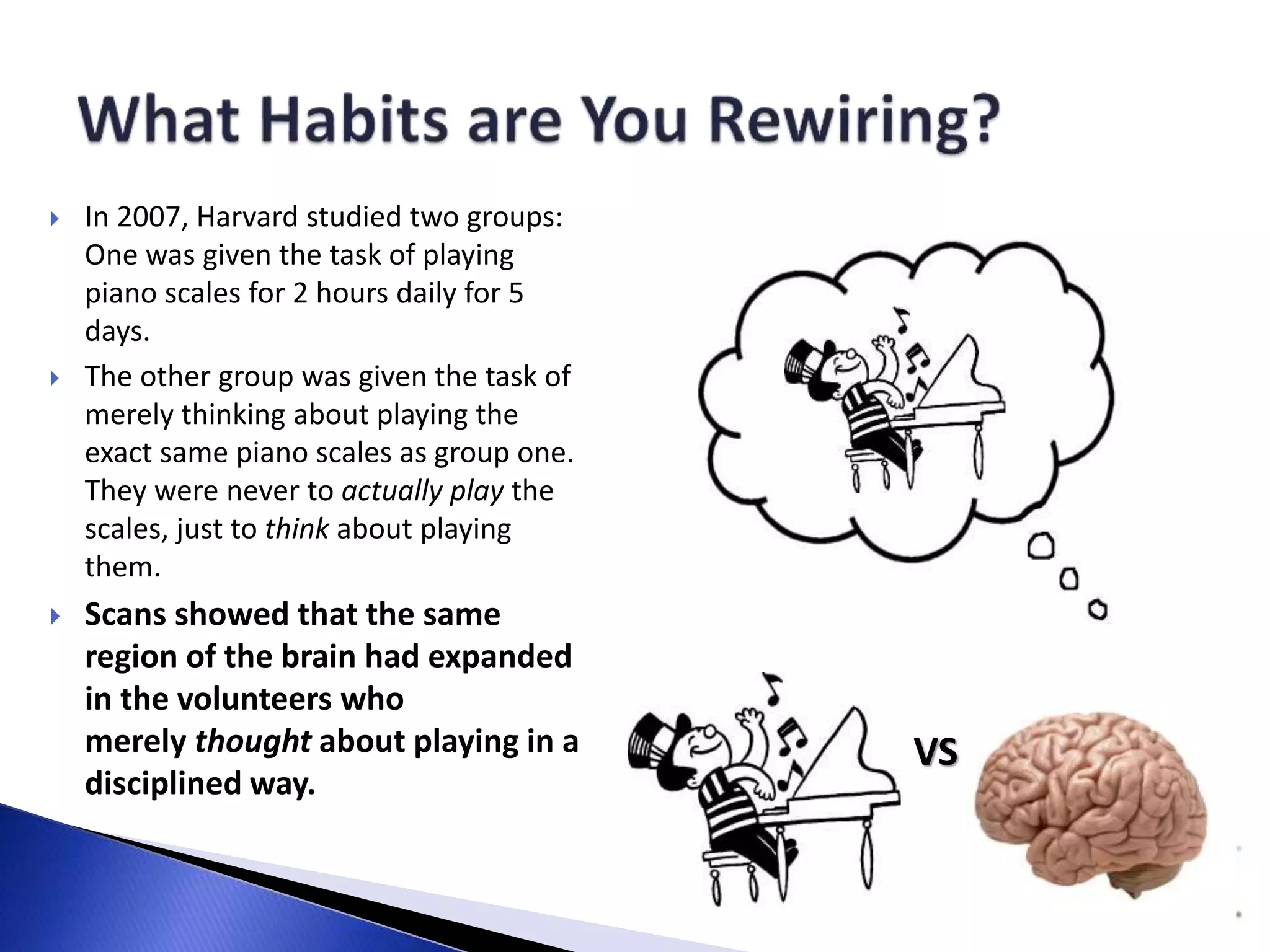
 In 2007, Harvard studied two groups: 
One was given the task of playing 
piano scales for 2 hours daily for 5 
days. 
 The other group was given the task of 
merely thinking about playing the 
exact same piano scales as group one. 
They were never to actually play the 
scales, just to think about playing 
them. 
 Scans showed that the same 
region of the brain had expanded 
in the volunteers who 
merely thought about playing in a 
disciplined way.
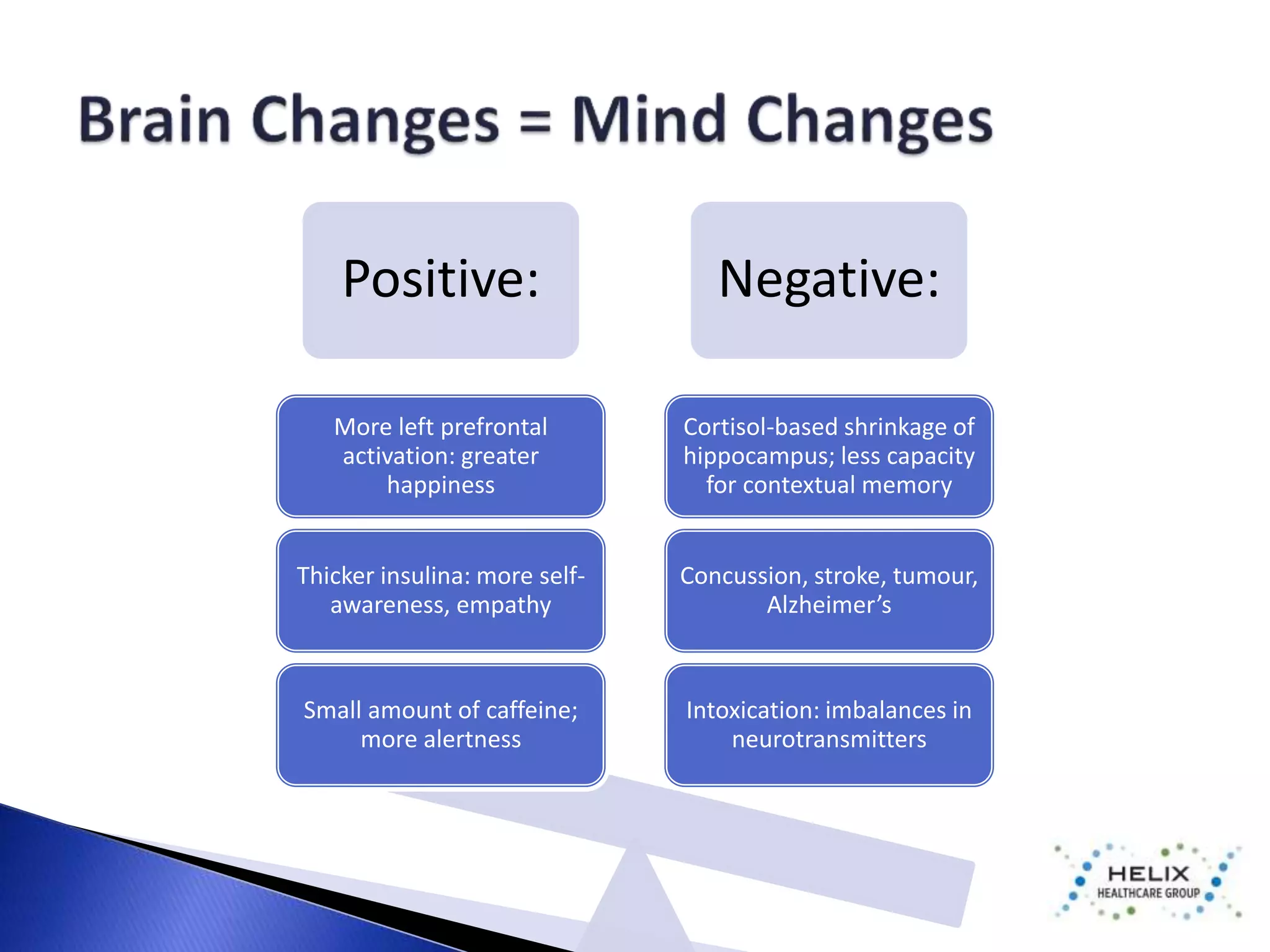
Positive: Negative: 
Cortisol-based shrinkage of 
hippocampus; less capacity 
for contextual memory 
Concussion, stroke, tumour, 
Alzheimer’s 
Intoxication: imbalances in 
neurotransmitters 
More left prefrontal 
activation: greater 
happiness 
Thicker insulina: more self-awareness, 
empathy 
Small amount of caffeine; 
more alertness
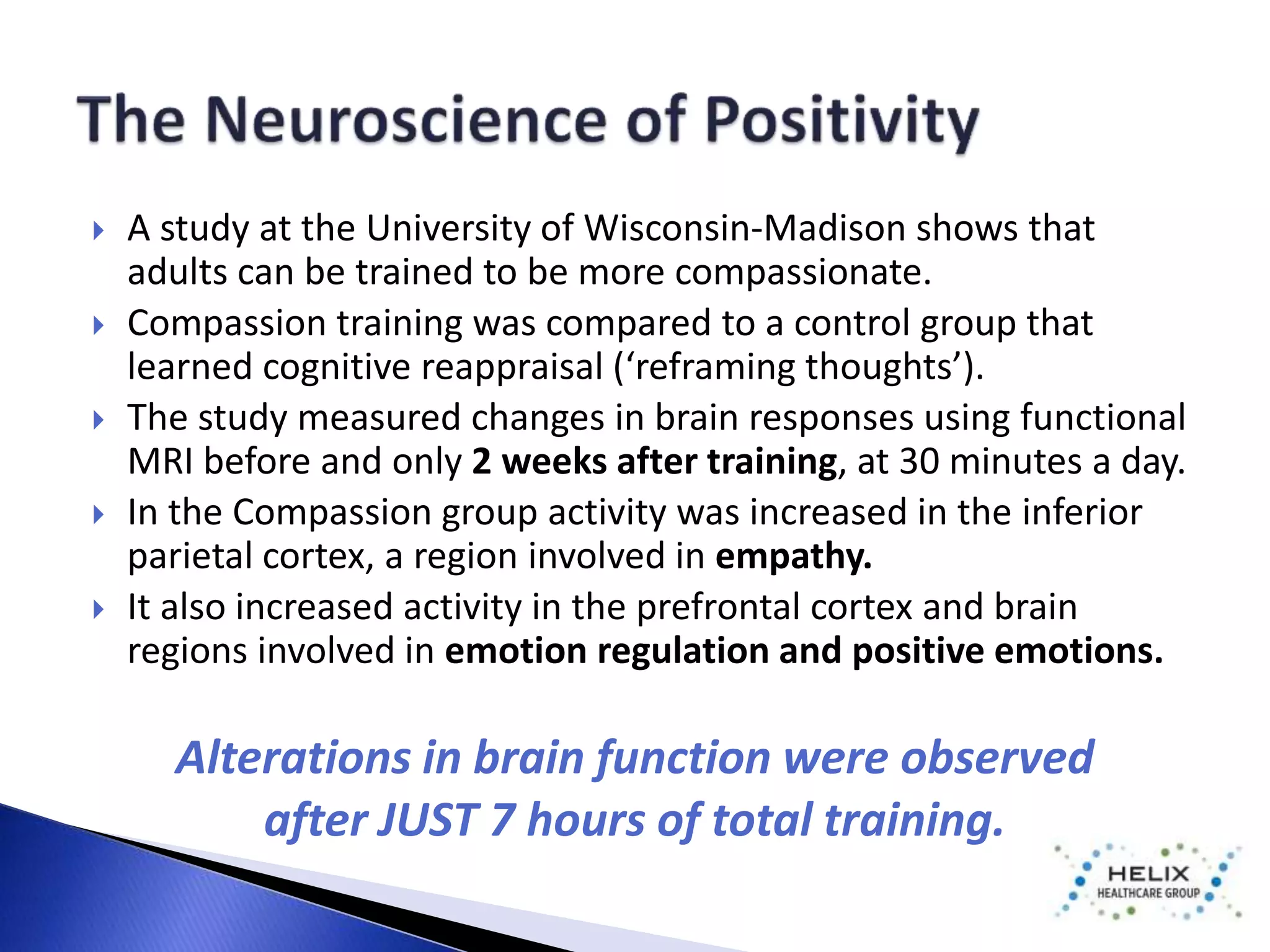
 A study at the University of Wisconsin-Madison shows that 
adults can be trained to be more compassionate. 
 Compassion training was compared to a control group that 
learned cognitive reappraisal (‘reframing thoughts’). 
 The study measured changes in brain responses using functional 
MRI before and only 2 weeks after training, at 30 minutes a day. 
 In the Compassion group activity was increased in the inferior 
parietal cortex, a region involved in empathy. 
 It also increased activity in the prefrontal cortex and brain 
regions involved in emotion regulation and positive emotions. 
Alterations in brain function were observed 
after JUST 7 hours of total training.
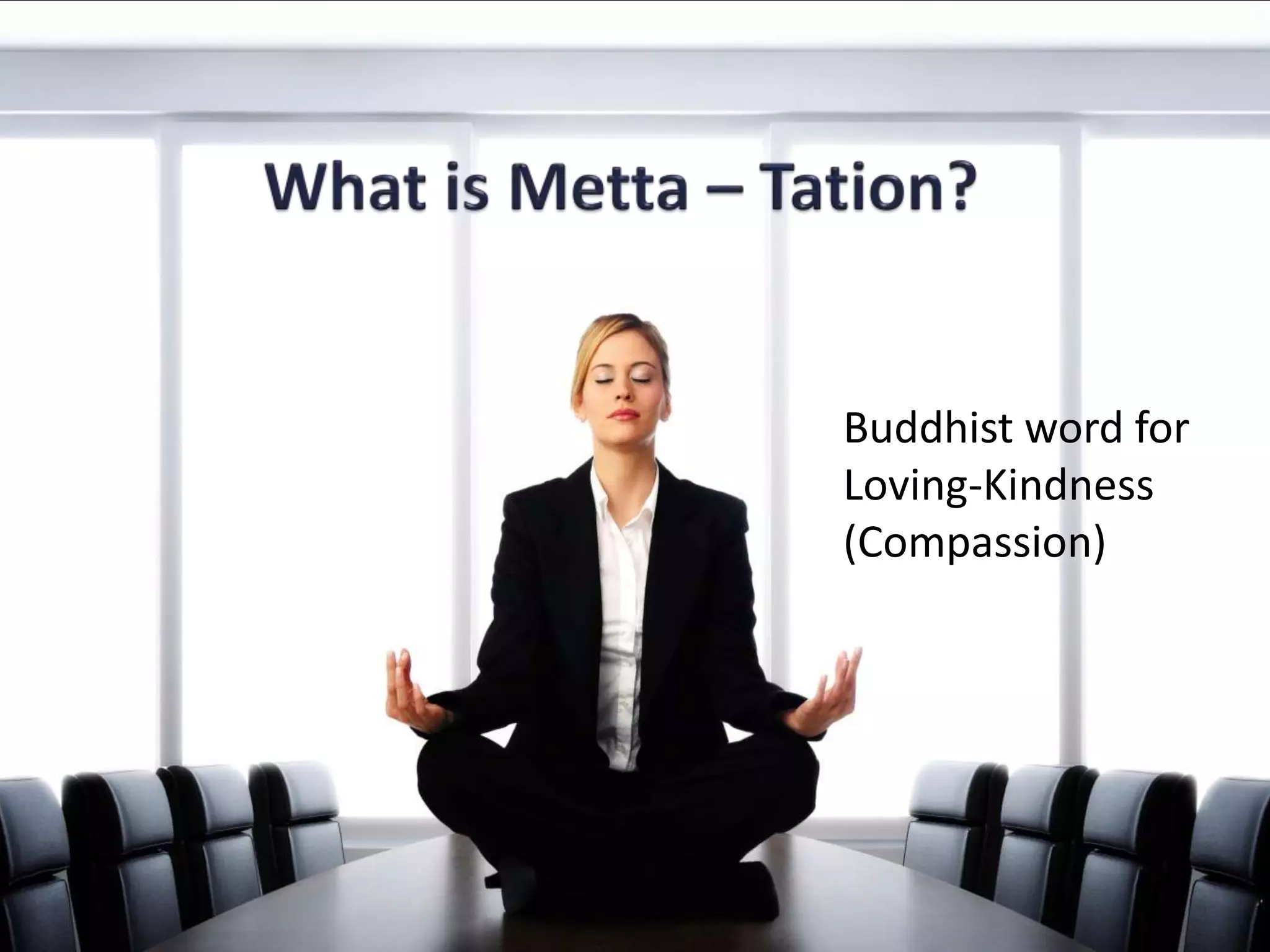
Buddhist word for 
Loving-Kindness 
(Compassion)
 A 2012 study from Harvard Medical School compared mindful 
meditation vs compassion meditation. 
 In both groups the right amygdala activity decreased in 
response to positive or neutral images. In the compassion 
meditation group the right amygdala activity increased in 
response to negative images. 
 This was also correlated with decreased depression scores, 
which suggests that having more compassion towards others 
may also be beneficial for oneself.
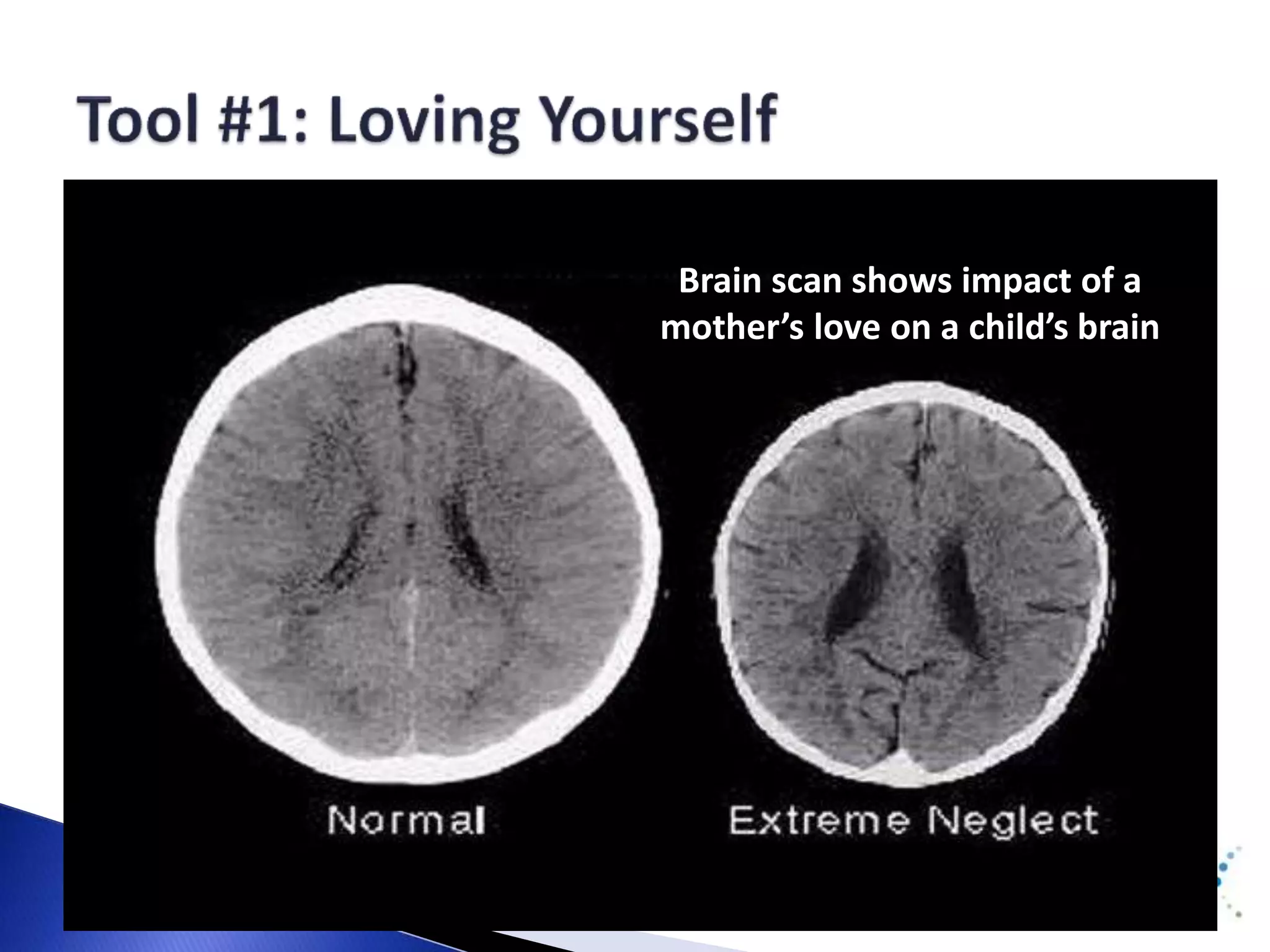
Brain scan shows impact of a 
mother’s love on a child’s brain
 Biochemical changes – Improved hormonal 
balance and an increase in production of 
DHEA, our ‘anti-aging hormone’. 
 Increased positivity – It produces a greater 
level of positive feelings, according to 
researchers from the University of Miami, 
who studied this process in 157 individuals 
over 13 days. 
 Improved immune system – It increases 
the IgA antibody, which serves as the first 
line of defense against pathogens. 
 Emotional “compound interest” – 
Experiencing an emotion reinforces the 
neural pathways so it becomes easier to 
recreate with continued practice. 
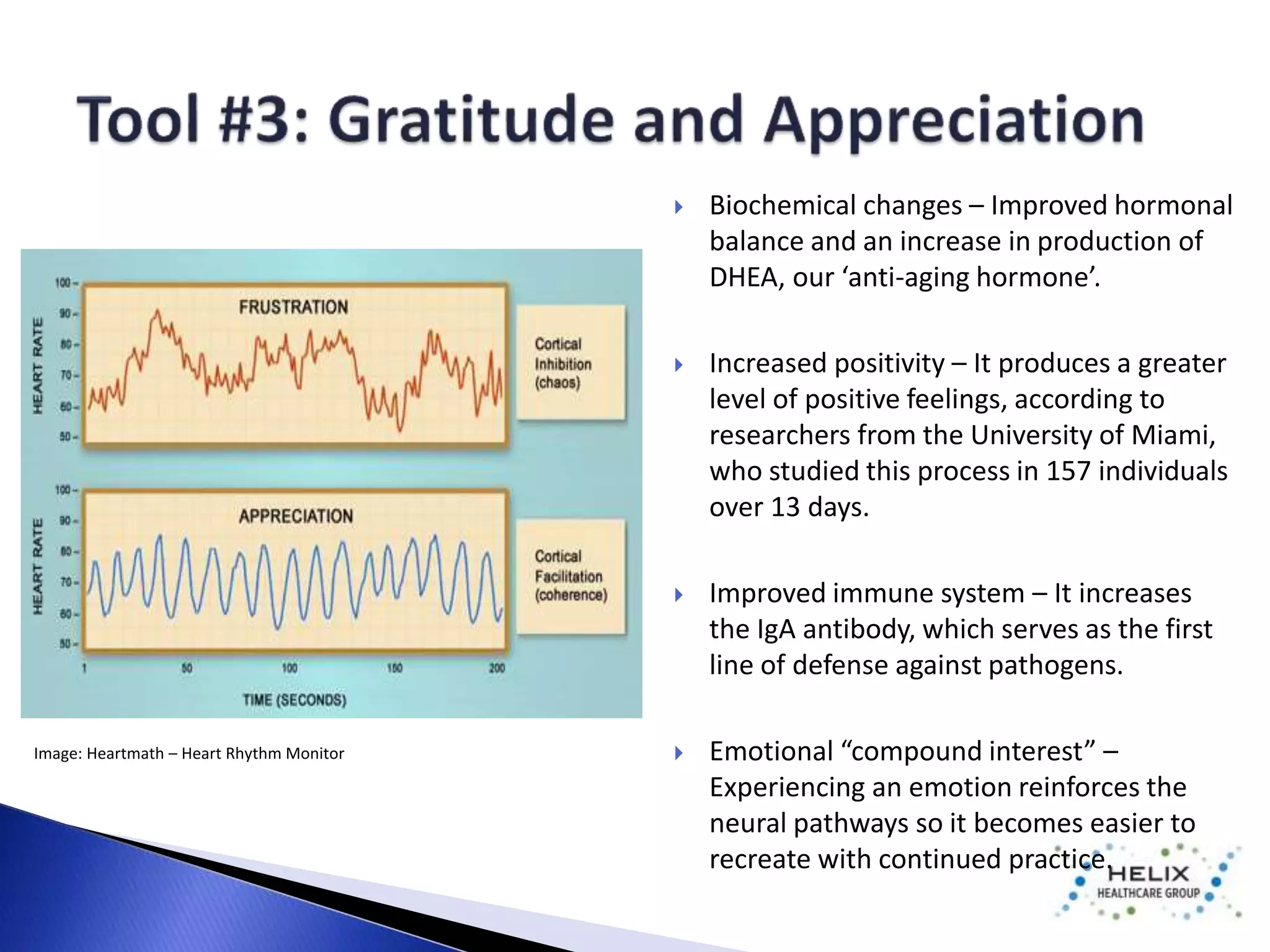
Image: Heartmath – Heart Rhythm Monitor
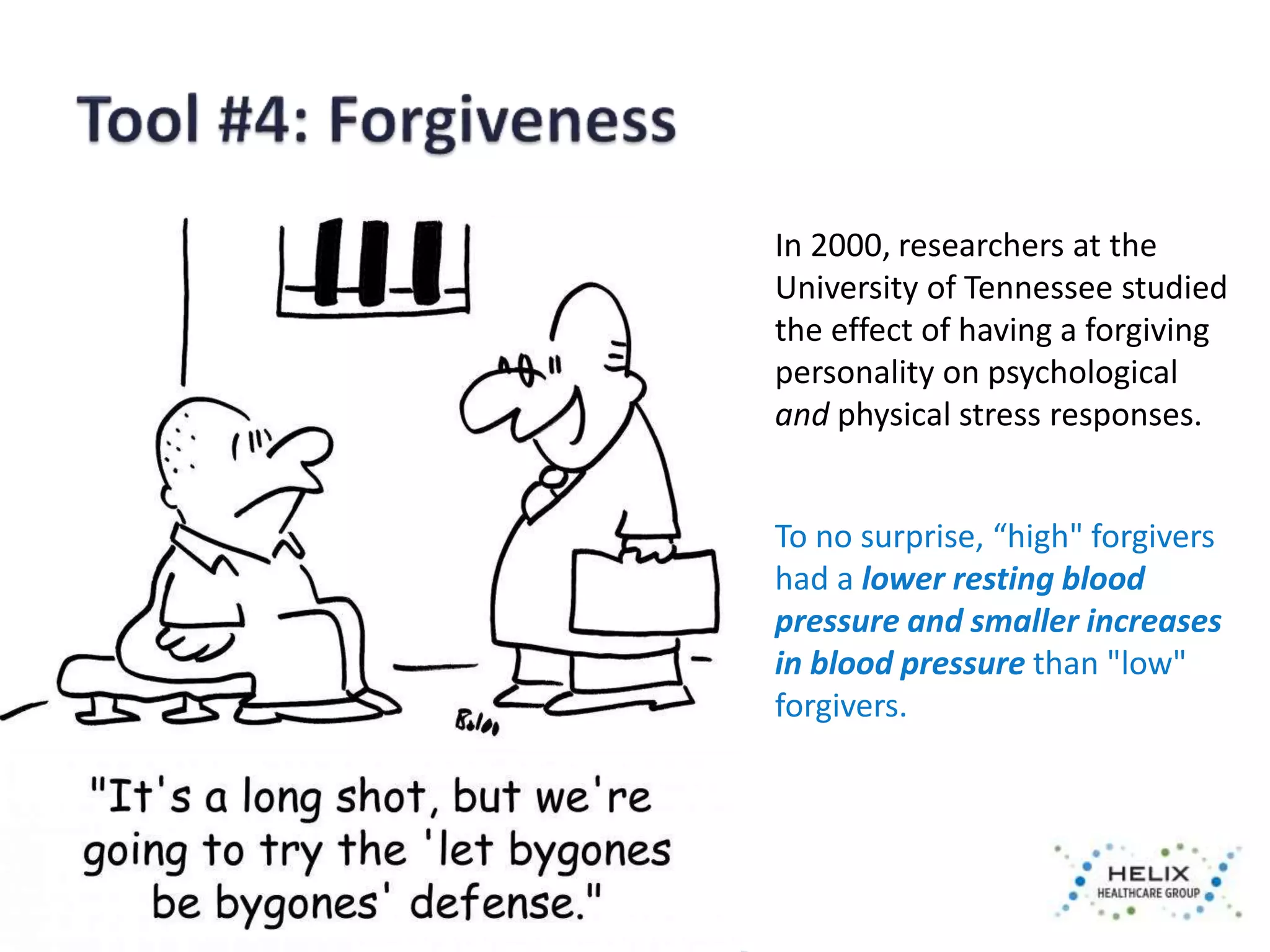
In 2000, researchers at the 
University of Tennessee studied 
the effect of having a forgiving 
personality on psychological 
and physical stress responses. 
To no surprise, “high" forgivers 
had a lower resting blood 
pressure and smaller increases 
in blood pressure than "low" 
forgivers.
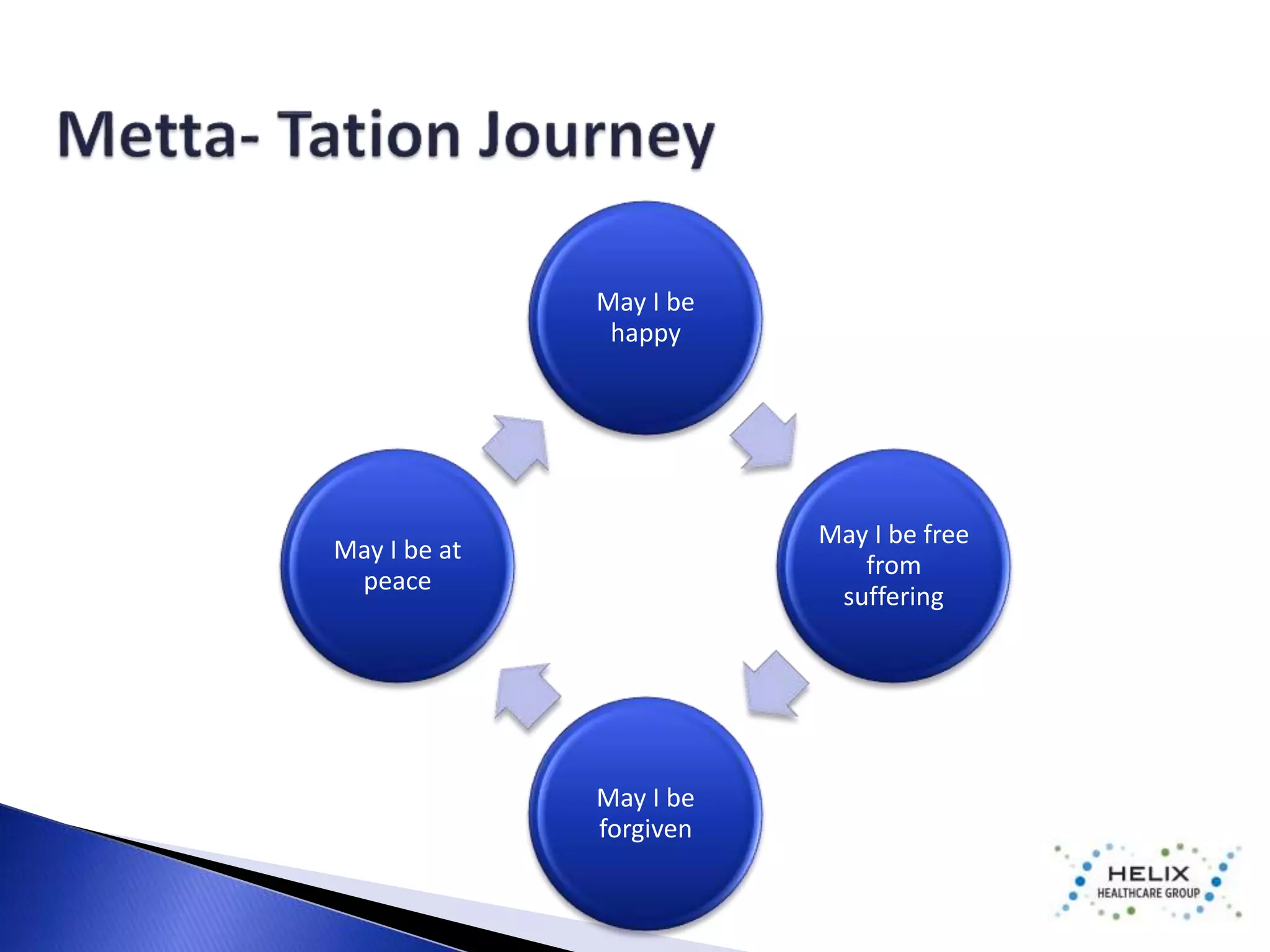
May I be 
happy 
May I be free 
from 
suffering 
May I be 
forgiven 
May I be at 
peace
Book a complimentary 
consultation at 416.921.2273 (CARE) 
www.helixhealthcaregroup.com
Metta-tation for Health, Happiness & Success

Metta-tation for Health, Happiness & Success

  • 1.
    Jesse Hanson, ClinicalDirector Helix Healthcare Group
  • 2.
  • 3.
    Work Related StressorsLife Stressors • Heavy workload or too much responsibility • Working long hours • Unclear expectations of work, or no say in the decision-making process • Being insecure about your chance for advancement or risk of termination • Presentations • Client demands and expectations • Managing family responsibilities • The death of a loved one • Divorce • Loss of a job • Increase in financial obligations • Getting married • Moving to a new home • Chronic illness or injury • Emotional problems • Taking care of a sick or elderly family member • Traumatic event
  • 4.
    Cognitive Emotional •Negativeimpact on memory •Clouds and/or impairs judgment •Negative thoughts and self-perception •Difficulty concentrating and organizing •Increased irritability •Anger and agitation •Overwhelmed and inability to relax •Short temper •Enhanced Anxiety •Relationship challenges at home and work •Ineffective communication Physical Behavioural •Digestive and gastrointestinal symptoms •Increase in frequency and effects of colds •Rise in heartbeat, cardiac risks •Poor eating habits •Decreased motivation for exercise •Sleep disturbance •Isolation •Self-destructive coping behaviours (smoking, drinking, drugs) •Nervous habits (e.g. nail biting, pacing)
  • 5.
    Cortisol can kill,shrink, and stop the generation of new neurons in a portion of the brain called the hippocampus. Chronic stress can shrink the medial prefrontal cortex. Stress can increase the size and activity of a portion of the brain called the amygdala. These brain alterations affect the way we interact, learn, remember, make decisions and accomplish goals.
  • 6.
    You have achoice
  • 8.
     100,000 neuronalphenotypes (different types of cells).  85,000,000,000 neurons - the number of connections between these neurons is 10 to 14th power.  One cubic millimeter of brain contains 20,000 to 30,000 neurons.  1 cubic millimeter contains 4 kilometers of nerve fibers and 10 to the 9th power synapses. … In other words, there are a potentially unbounded number of mental states
  • 9.
    VS  In2007, Harvard studied two groups: One was given the task of playing piano scales for 2 hours daily for 5 days.  The other group was given the task of merely thinking about playing the exact same piano scales as group one. They were never to actually play the scales, just to think about playing them.  Scans showed that the same region of the brain had expanded in the volunteers who merely thought about playing in a disciplined way.
  • 10.
    Positive: Negative: Cortisol-basedshrinkage of hippocampus; less capacity for contextual memory Concussion, stroke, tumour, Alzheimer’s Intoxication: imbalances in neurotransmitters More left prefrontal activation: greater happiness Thicker insulina: more self-awareness, empathy Small amount of caffeine; more alertness
  • 11.
     A studyat the University of Wisconsin-Madison shows that adults can be trained to be more compassionate.  Compassion training was compared to a control group that learned cognitive reappraisal (‘reframing thoughts’).  The study measured changes in brain responses using functional MRI before and only 2 weeks after training, at 30 minutes a day.  In the Compassion group activity was increased in the inferior parietal cortex, a region involved in empathy.  It also increased activity in the prefrontal cortex and brain regions involved in emotion regulation and positive emotions. Alterations in brain function were observed after JUST 7 hours of total training.
  • 13.
    Buddhist word for Loving-Kindness (Compassion)
  • 14.
     A 2012study from Harvard Medical School compared mindful meditation vs compassion meditation.  In both groups the right amygdala activity decreased in response to positive or neutral images. In the compassion meditation group the right amygdala activity increased in response to negative images.  This was also correlated with decreased depression scores, which suggests that having more compassion towards others may also be beneficial for oneself.
  • 15.
    Brain scan showsimpact of a mother’s love on a child’s brain
  • 17.
     Biochemical changes– Improved hormonal balance and an increase in production of DHEA, our ‘anti-aging hormone’.  Increased positivity – It produces a greater level of positive feelings, according to researchers from the University of Miami, who studied this process in 157 individuals over 13 days.  Improved immune system – It increases the IgA antibody, which serves as the first line of defense against pathogens.  Emotional “compound interest” – Experiencing an emotion reinforces the neural pathways so it becomes easier to recreate with continued practice. Image: Heartmath – Heart Rhythm Monitor
  • 18.
    In 2000, researchersat the University of Tennessee studied the effect of having a forgiving personality on psychological and physical stress responses. To no surprise, “high" forgivers had a lower resting blood pressure and smaller increases in blood pressure than "low" forgivers.
  • 20.
    May I be happy May I be free from suffering May I be forgiven May I be at peace
  • 23.
    Book a complimentary consultation at 416.921.2273 (CARE) www.helixhealthcaregroup.com

Editor's Notes

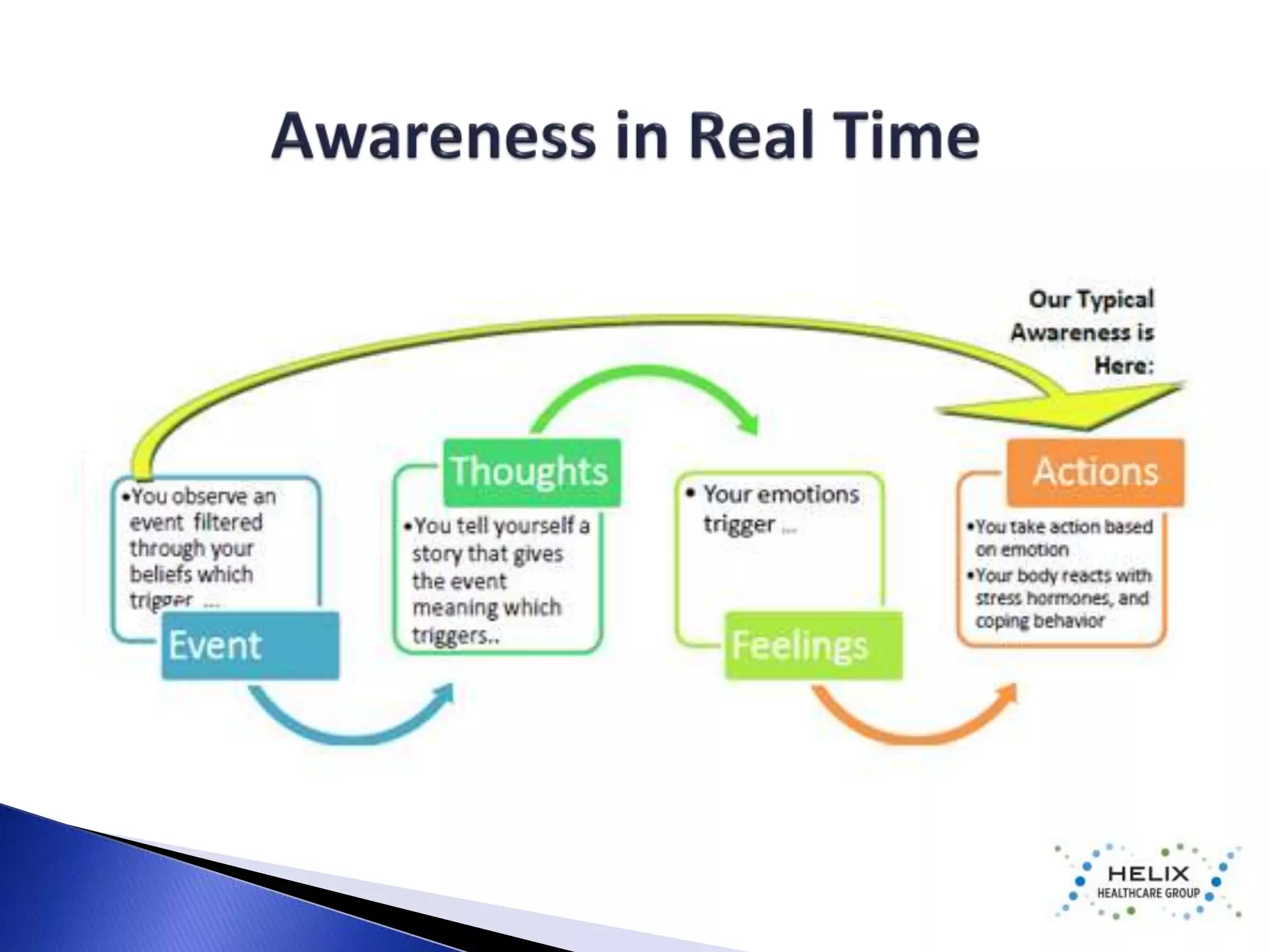
  • #4 Stress cannot be completely avoided or compartmentalized It must be managed and balanced Understanding our behaviours and reactions is critical to allow us to avoid exacerbating or increasing the impact of stress. The point of this slide is not simply to list what all the major causes of stress are, but to emphasize that we all have stress both personally and professionally and we cannot avoid it cause Life Happens! We also cannot always ensure that the two columns remain separate at all times (if we are stressed personally that may come out at work and vice versa). However understanding how we respond the above stressors and whether we are minimizing and effectively managing the stress or exacerbating the impact of these stressors is an important questions to ask. For example if we are insecure about what our trajectory is in this firm if there is a risk of termination…ask for feedback and find out what you are doing well and where there is need for improvement. This will reduce anxiety and allow you to know where you stand. Another example: if you are struggling with constant anxiety due to deadlines and high expectations you may want to look at how you are using your time and whether you are taking on more then you can realistically handle AND ARE YOU TAKING BREAKS Every single day we make choices when faced with certain stressors, we may choose poor behaviors or avoidance but we do have choices. How many of you can relate to two or more of the stressors listed up here.
  • #5 Unmanaged stress will effect your performance and it is not a sustainable method to follow. There are physical, cognitive, emotional and behavioral impacts and puts us in a negative space as individuals and as a firm. Use a personal example. My partner can focus so exclusively on getting job done that he will sacrifice physical health, decrease exercise, eat poorly and leave no time to recharge and then gets sick…..This is not an effective way to manage stress. We need to take the best care of ourselves in the face of stress rather then only when the work load is smaller because it enhances are tolerance and capacity to handle it. Questions for the Group: Are any of these items ones that seem familiar to you? Are there any stress impacts that aren’t listed here that you have experienced? What is the risk of having a workforce that is not managing these 4 quadrants? The firm and individuals of this firm cannot afford to not address this? (write on flip charts)
  • #9 Crash course on the brain – intro to neuroscience. “A lot of information in the brain is not fixed but is represented in this structural and functional connectivity and it’s this connectivity which we constantly, wittingly or unwittingly, change thru our habitual mental patterns.” And this might worry you as much as cheer you up: as little as 2 hours of repetitive activity changes connectivity in the brain.
  • #16 Researchers at Washington University School of Medicine in St. Louis, found that children whose mothers nurtured them early in life have a larger hippocampus, a key brain structure that is essential to learning, memory and response to stress, according to a study published in the Proceedings of the National Academy of Sciences Early Edition.
  • #18 These actual heart-monitor readouts contrast the heart-rhythm pattern of someone experiencing frustration, then appreciation.
  • #19 In a study exploring the effect of having a forgiving personality on both psychological and physical stress responses, University of Tennessee (UT) students discussed two betrayal experiences—by apparent and by a friend or romantic partner. As they spoke, researchers measured their blood pressure, heart rate, forehead muscle tension and skin conduction responses. The results, presented at the 2000 American Psychosomatic Society Annual Meeting, showed that "high" forgivers—those who forgive easily—had both a lower resting blood pressure and smaller increases in blood pressure rate than "low" forgivers—bigger grudge-holders. http://www.psychologytoday.com/articles/200007/forgive-live