Overview on
Marketing
‫التسويـق‬
Marketing Defined as
Process of creating,
distributing, promoting,
and pricing of goods,
services, and ideas to
facilitate satisfying
exchange relationships in
a dynamic environment.
:‫هو‬ ‫التسويق‬
‫أو‬ ،‫ق‬ْ‫ل‬َ‫خ‬ ‫عملية‬
،‫رويج‬َ‫ت‬ ‫أو‬ ،‫وزيع‬َ‫ت‬
‫أو‬،ِ‫سلع‬ ‫أوتسعير‬
‫أوأفكار‬ ،‫خدمات‬
ِ‫القات‬ِ‫ع‬ ‫سهيل‬َ‫لت‬
ِ‫ة‬‫رضي‬ُ‫م‬‫ال‬ ِ‫التبادل‬
.‫ديناميكية‬ ‫بيئة‬ ‫في‬
SALES & MARKETING‫البيع‬
‫والتسويق‬
• Selling: focuses on the
needs of the seller
• Marketing: focuses on the
need of the buyer.
• Selling: preoccupied with
the seller need to convert
his product into cash.
• Marketing: preoccupied
with the idea of satisfying
customer needs (demands).
•
:
‫على‬ ‫يرتكز‬ ‫البيع‬
ِ‫البائع‬ ِ‫احتياجات‬
•
:
‫على‬ ‫ـرتكز‬
‫ي‬ ‫التسويق‬
.‫المشتري‬ ِ‫احتياجات‬
•
:
َ‫ع‬‫البائ‬ ِ‫ة‬‫حاج‬ ‫البيع‬
‫إلى‬ ‫ه‬ِ‫ج‬َ‫نت‬ُ‫م‬ ‫حويل‬َ‫لت‬
.ِ‫د‬‫نقو‬
•
:
‫عملية‬ ‫التسويق‬
ِ‫احتياجات‬ ‫إرضاء‬
.) (
‫طلبات‬ ِ‫الزبون‬
Why YOU Should Study Marketing
‫يصرف‬
50
%
‫من‬
‫علي‬ ‫المنتج‬ ‫سعر‬
‫التسويق‬
50%
50%
50%
50%
‫؟‬ ‫التسويق‬ ‫نتعلم‬ ‫!لماذا‬
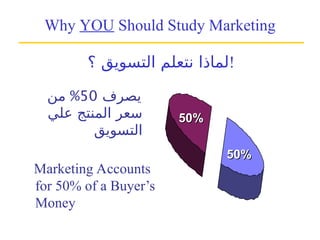
Marketing Accounts
for 50% of a Buyer’s
Money
The Marketing Concept‫التسويق‬ ‫مفهوم‬
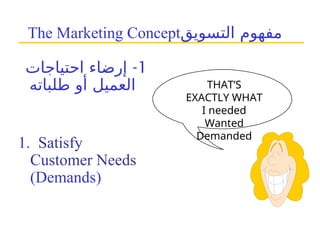
1. Satisfy
Customer Needs
(Demands)
THAT’S
EXACTLY WHAT
I needed
Wanted
Demanded
1
-
‫احتياجات‬ ‫إرضاء‬
‫طلباته‬ ‫أو‬ ‫العميل‬
2
-
‫من‬ ‫متناسقة‬ ‫مجموعة‬
‫واألعمال‬ ‫النشاطات‬
The Marketing Concept‫التسويق‬ ‫مفهوم‬
2. Coordinated Set of
Activities
3
-
‫تحقيق‬
‫األهداف‬
The Marketing Concept‫التسويق‬ ‫مفهوم‬
3. Achieve
Organizational Goals
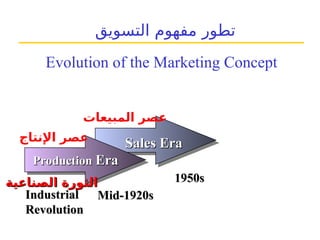
‫التسويق‬ ‫مفهوم‬ ‫تطور‬
Production
Production Era
Era
Industrial
Industrial
Revolution
Revolution
Mid-1920s
Mid-1920s
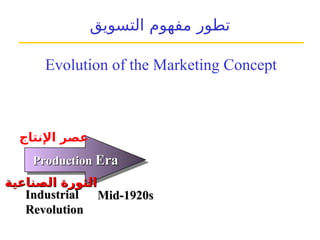
Evolution of the Marketing Concept
‫اإلنتاج‬ ‫عصر‬
‫الصناعية‬ ‫الثورة‬
‫الصناعية‬ ‫الثورة‬
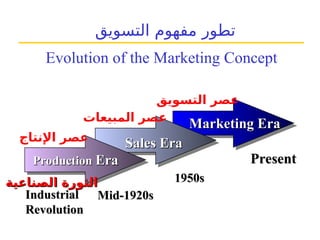
Evolution of the Marketing Concept
Production
Production Era
Era
Sales Era
Sales Era
Industrial
Industrial
Revolution
Revolution
Mid-1920s
Mid-1920s
1950s
1950s
‫التسويق‬ ‫مفهوم‬ ‫تطور‬
‫اإلنتاج‬ ‫عصر‬
‫المبيعات‬ ‫عصر‬
‫الصناعية‬ ‫الثورة‬
‫الصناعية‬ ‫الثورة‬
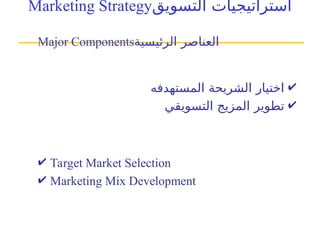
Evolution of the Marketing Concept
Present
Present
Production
Production Era
Era
Sales Era
Sales Era
Marketing Era
Marketing Era
Industrial
Industrial
Revolution
Revolution
Mid-1920s
Mid-1920s
1950s
1950s
‫التسويق‬ ‫مفهوم‬ ‫تطور‬
‫اإلنتاج‬ ‫عصر‬
‫المبيعات‬ ‫عصر‬
‫التسويق‬ ‫عصر‬
‫الصناعية‬ ‫الثورة‬
‫الصناعية‬ ‫الثورة‬
Marketing Strategy‫التسويق‬ ‫استراتيجيات‬
Major Components‫الرئيسية‬ ‫العناصر‬
 Target Market Selection
 Marketing Mix Development

‫المستهدفه‬ ‫الشريحة‬ ‫اختيار‬

‫ال‬ ‫تطوير‬
‫مزيج‬
‫التسويقي‬
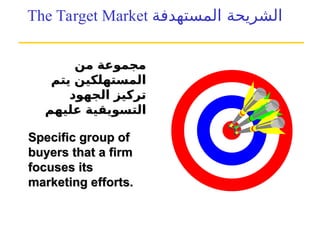
The Target Market ‫المستهدفة‬ ‫الشريحة‬
Specific group of
Specific group of
buyers that a firm
buyers that a firm
focuses its
focuses its
marketing efforts.
marketing efforts.
‫من‬ ‫مجموعة‬
‫من‬ ‫مجموعة‬
‫يتم‬ ‫المستهلكين‬
‫يتم‬ ‫المستهلكين‬
‫ال‬ ‫تركيز‬
‫ال‬ ‫تركيز‬
‫جهود‬
‫جهود‬
‫التسويقي‬
‫التسويقي‬
‫ة‬
‫ة‬
‫عليهم‬
‫عليهم‬
Customer
Customer
Needs
Needs
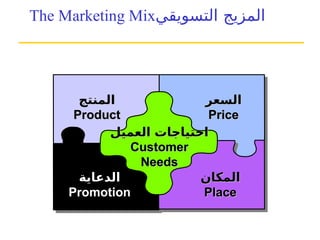
The Marketing Mix ‫ال‬
‫مزيج‬
‫التسويقي‬
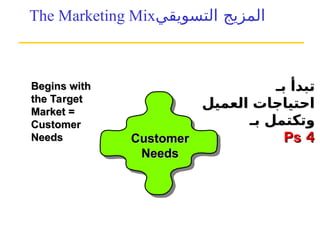
Begins with
Begins with
the Target
the Target
Market =
Market =
Customer
Customer
Needs
Needs
‫بـ‬ ‫تبدأ‬
‫بـ‬ ‫تبدأ‬
‫العميل‬ ‫احتياجات‬
‫العميل‬ ‫احتياجات‬
‫بـ‬ ‫وتكتمل‬
‫بـ‬ ‫وتكتمل‬
4
4
Ps
Ps
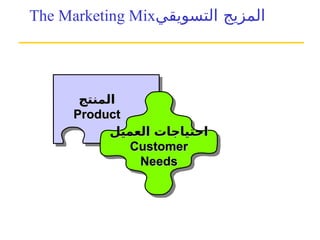
‫المنتج‬
‫المنتج‬
Product
Product
‫العميل‬ ‫احتياجات‬
‫العميل‬ ‫احتياجات‬
Customer
Customer
Needs
Needs
The Marketing Mix ‫ال‬
‫مزيج‬
‫التسويقي‬
‫العميل‬ ‫احتياجات‬
‫العميل‬ ‫احتياجات‬
Customer
Customer
Needs
Needs
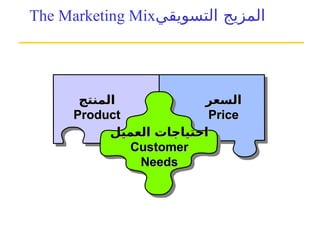
‫المنتج‬
‫المنتج‬
Product
Product
‫السعر‬
‫السعر‬
Price
Price
The Marketing Mix ‫ال‬
‫مزيج‬
‫التسويقي‬
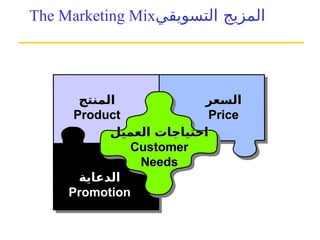
‫الدعاية‬
‫الدعاية‬
Promotion
Promotion
‫العميل‬ ‫احتياجات‬
‫العميل‬ ‫احتياجات‬
Customer
Customer
Needs
Needs
‫المنتج‬
‫المنتج‬
Product
Product
‫السعر‬
‫السعر‬
Price
Price
The Marketing Mix ‫ال‬
‫مزيج‬
‫التسويقي‬
‫المكان‬
‫المكان‬
Place
Place
‫الدعاية‬
‫الدعاية‬
Promotion
Promotion
‫العميل‬ ‫احتياجات‬
‫العميل‬ ‫احتياجات‬
Customer
Customer
Needs
Needs
‫المنتج‬
‫المنتج‬
Product
Product
‫السعر‬
‫السعر‬
Price
Price
The Marketing Mix ‫ال‬
‫مزيج‬
‫التسويقي‬
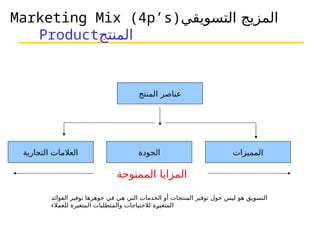
Marketing Mix (4p’s)‫التسويقي‬ ‫المزيج‬
Product‫المنتج‬
‫المنتج‬ ‫عناصر‬
‫التجارية‬ ‫العالمات‬ ‫الجودة‬ ‫المميزات‬
‫الفوائد‬ ‫توفير‬ ‫جوهرها‬ ‫في‬ ‫هي‬ ‫التي‬ ‫الخدمات‬ ‫أو‬ ‫المنتجات‬ ‫توفير‬ ‫حول‬ ‫ليس‬ ‫هو‬ ‫التسويق‬
‫للعمالء‬ ‫المتغيرة‬ ‫والمتطلبات‬ ‫لالحتياجات‬ ‫ـة‬
‫ر‬‫المتغي‬
‫الممنوحة‬ ‫المزايا‬
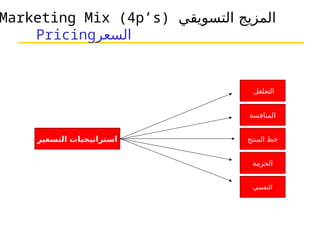
Marketing Mix (4p’s) ‫التسويقي‬ ‫المزيج‬
Pricing‫السعر‬
‫التسعير‬ ‫استراتيجيات‬
‫التغلغل‬
‫المنافسة‬
‫المنتج‬ ‫خط‬
‫الحزمة‬
‫النفسي‬
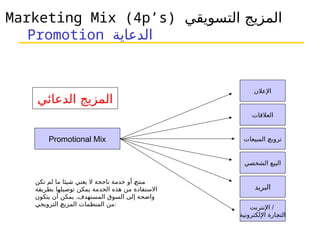
Marketing Mix (4p’s) ‫التسويقي‬ ‫المزيج‬
Promotion ‫الدعاية‬
Promotional Mix
‫اإلعالن‬
‫العالقات‬
‫المبيعات‬ ‫ـ‬
‫ج‬‫تروي‬
‫الشخصي‬ ‫البيع‬
‫البريد‬
‫اإلنترنت‬ /
‫اإللكترونية‬ ‫ـارة‬
‫ج‬‫الت‬
‫تكن‬ ‫لم‬ ‫ما‬ ‫شيئا‬ ‫يعني‬ ‫ال‬ ‫ناجحة‬ ‫خدمة‬ ‫أو‬ ‫ـ‬
‫ج‬‫منت‬
‫بطريقة‬ ‫توصيلها‬ ‫يمكن‬ ‫الخدمة‬ ‫هذه‬ ‫من‬ ‫االستفادة‬
.
‫يتكون‬ ‫أن‬ ‫يمكن‬ ‫المستهدف‬ ‫السوق‬ ‫إلى‬ ‫واضحة‬
‫الترويجي‬ ‫ـ‬
‫ج‬‫المزي‬ ‫المنظمات‬ ‫من‬:
‫الدعائي‬ ‫المزيج‬
Marketing Mix (4p’s) ‫التسويقي‬ ‫المزيج‬
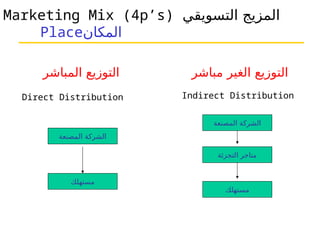
Place‫المكان‬
‫المصنعة‬ ‫الشركة‬
‫مستهلك‬
‫المصنعة‬ ‫الشركة‬
‫التجزئة‬ ‫متاجر‬
‫مستهلك‬
Direct Distribution Indirect Distribution
‫المباشر‬ ‫التوزيع‬ ‫مباشر‬ ‫الغير‬ ‫التوزيع‬
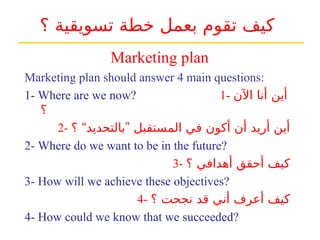
‫؟‬ ‫تسويقية‬ ‫خطة‬ ‫بعمل‬ ‫تقوم‬ ‫كيف‬
Marketing plan should answer 4 main questions:
1- Where are we now? 1- ‫اآلن‬ ‫أنا‬ ‫أين‬
‫؟‬
2- “ ”
‫؟‬ ‫بالتحديد‬ ‫المستقبل‬ ‫في‬ ‫أكون‬ ‫أن‬ ‫أريد‬ ‫أين‬
2- Where do we want to be in the future?
3- ‫؟‬ ‫أهدافي‬ ‫أحقق‬ ‫كيف‬
3- How will we achieve these objectives?
4- ‫؟‬ ‫نجحت‬ ‫قد‬ ‫أني‬ ‫أعرف‬ ‫كيف‬
4- How could we know that we succeeded?
Marketing plan
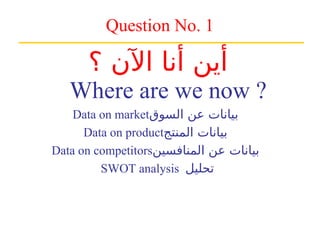
Question No. 1
Where are we now ?
Data on market‫السوق‬ ‫عن‬ ‫بيانات‬
Data on product‫المنتج‬ ‫بيانات‬
Data on competitors‫المنافسين‬ ‫عن‬ ‫بيانات‬
SWOT analysis ‫تحليل‬
‫؟‬ ‫اآلن‬ ‫أنا‬ ‫أين‬
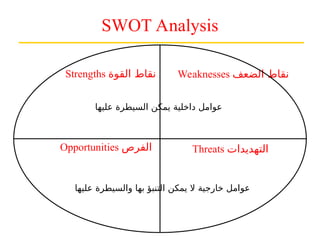
SWOT Analysis
‫عليها‬ ‫السيطرة‬ ‫يمكن‬ ‫داخلية‬ ‫عوامل‬
‫عليها‬ ‫والسيطرة‬ ‫بها‬ ‫التنبؤ‬ ‫يمكن‬ ‫ال‬ ‫خارجية‬ ‫عوامل‬
Strengths ‫القوة‬ ‫نقاط‬ Weaknesses ‫الضعف‬ ‫نقاط‬
Opportunities ‫الفرص‬ Threats ‫التهديدات‬
Question No. 2
Where do you want to be in the future?
Define your objectives.
S M A R T
Specific – Measurable – Ambitious – Realistic – Timed
- - - -
‫موقوت‬ ‫واقعية‬ ‫طموح‬ ‫للقياس‬ ‫قابلة‬ ‫محددة‬
“ ”
‫بالتحديد‬ ‫المستقبل‬ ‫في‬ ‫أكون‬ ‫أن‬ ‫أريد‬ ‫ن‬
Question No. 3
How will we achieve these objectives ?
‫استراتيجيات‬ ‫تطوير‬
- - (
‫مكان‬ ‫السعر‬ ‫المنتج‬ ‫ستستخدمه‬ ‫الذي‬ ‫التسويقي‬ ‫المزيج‬ ‫ما‬
) -
‫تشجيع‬
/
‫اإلنقسام‬ ‫تكتيكات‬
‫الميزانية‬ ‫مراقبة‬
‫الزمني‬ ‫النطاق‬
‫؟‬ ‫أهدافي‬ ‫أحقق‬ ‫كيف‬
How could we know that we succeeded ?
/ ‫نجاحها‬ ‫قياس‬ ‫خطوة‬ ‫لكل‬ ‫رصد‬ ‫خالل‬ ‫من‬
‫فشلها‬
Question No. 4
‫؟‬ ‫نجحت‬ ‫قد‬ ‫أني‬ ‫أعرف‬ ‫كيف‬
‫ت‬
‫ع‬
‫ل‬
‫م‬
‫النجاح‬ ‫علي‬ ‫يساعدك‬ ‫ما‬
‫و‬ ،
‫استعد‬
...‫لالنطالق‬
•
‫علي‬ ‫وتوكل‬ ،‫جهدك‬ ‫كل‬ ‫ابذل‬
‫الله‬
•
‫بالله‬ ‫واستعن‬ ‫تيأس‬ ‫ال‬
•
‫يساعدك‬ ‫ما‬ ‫كل‬ ‫تعلم‬
•
‫تعلمت‬ ‫ما‬ ‫طبق‬
•
‫اآلخرين‬ ‫خبرات‬ ‫من‬ ‫استفد‬
‫والنجاح‬ ‫لتوفيق‬
‫الله‬ ‫شاء‬ ‫إن‬
:‫تحياتي‬ ‫مع‬

مبادئ التسويق Overview on Marketing1.ppt

  • 1.
  • 2.
    Marketing Defined as Processof creating, distributing, promoting, and pricing of goods, services, and ideas to facilitate satisfying exchange relationships in a dynamic environment. :‫هو‬ ‫التسويق‬ ‫أو‬ ،‫ق‬ْ‫ل‬َ‫خ‬ ‫عملية‬ ،‫رويج‬َ‫ت‬ ‫أو‬ ،‫وزيع‬َ‫ت‬ ‫أو‬،ِ‫سلع‬ ‫أوتسعير‬ ‫أوأفكار‬ ،‫خدمات‬ ِ‫القات‬ِ‫ع‬ ‫سهيل‬َ‫لت‬ ِ‫ة‬‫رضي‬ُ‫م‬‫ال‬ ِ‫التبادل‬ .‫ديناميكية‬ ‫بيئة‬ ‫في‬
  • 3.
    SALES & MARKETING‫البيع‬ ‫والتسويق‬ •Selling: focuses on the needs of the seller • Marketing: focuses on the need of the buyer. • Selling: preoccupied with the seller need to convert his product into cash. • Marketing: preoccupied with the idea of satisfying customer needs (demands). • : ‫على‬ ‫يرتكز‬ ‫البيع‬ ِ‫البائع‬ ِ‫احتياجات‬ • : ‫على‬ ‫ـرتكز‬ ‫ي‬ ‫التسويق‬ .‫المشتري‬ ِ‫احتياجات‬ • : َ‫ع‬‫البائ‬ ِ‫ة‬‫حاج‬ ‫البيع‬ ‫إلى‬ ‫ه‬ِ‫ج‬َ‫نت‬ُ‫م‬ ‫حويل‬َ‫لت‬ .ِ‫د‬‫نقو‬ • : ‫عملية‬ ‫التسويق‬ ِ‫احتياجات‬ ‫إرضاء‬ .) ( ‫طلبات‬ ِ‫الزبون‬
  • 4.
    Why YOU ShouldStudy Marketing ‫يصرف‬ 50 % ‫من‬ ‫علي‬ ‫المنتج‬ ‫سعر‬ ‫التسويق‬ 50% 50% 50% 50% ‫؟‬ ‫التسويق‬ ‫نتعلم‬ ‫!لماذا‬ Marketing Accounts for 50% of a Buyer’s Money
  • 5.
    The Marketing Concept‫التسويق‬‫مفهوم‬ 1. Satisfy Customer Needs (Demands) THAT’S EXACTLY WHAT I needed Wanted Demanded 1 - ‫احتياجات‬ ‫إرضاء‬ ‫طلباته‬ ‫أو‬ ‫العميل‬
  • 6.
    2 - ‫من‬ ‫متناسقة‬ ‫مجموعة‬ ‫واألعمال‬‫النشاطات‬ The Marketing Concept‫التسويق‬ ‫مفهوم‬ 2. Coordinated Set of Activities
  • 7.
  • 8.
    ‫التسويق‬ ‫مفهوم‬ ‫تطور‬ Production ProductionEra Era Industrial Industrial Revolution Revolution Mid-1920s Mid-1920s Evolution of the Marketing Concept ‫اإلنتاج‬ ‫عصر‬ ‫الصناعية‬ ‫الثورة‬ ‫الصناعية‬ ‫الثورة‬
  • 9.
    Evolution of theMarketing Concept Production Production Era Era Sales Era Sales Era Industrial Industrial Revolution Revolution Mid-1920s Mid-1920s 1950s 1950s ‫التسويق‬ ‫مفهوم‬ ‫تطور‬ ‫اإلنتاج‬ ‫عصر‬ ‫المبيعات‬ ‫عصر‬ ‫الصناعية‬ ‫الثورة‬ ‫الصناعية‬ ‫الثورة‬
  • 10.
    Evolution of theMarketing Concept Present Present Production Production Era Era Sales Era Sales Era Marketing Era Marketing Era Industrial Industrial Revolution Revolution Mid-1920s Mid-1920s 1950s 1950s ‫التسويق‬ ‫مفهوم‬ ‫تطور‬ ‫اإلنتاج‬ ‫عصر‬ ‫المبيعات‬ ‫عصر‬ ‫التسويق‬ ‫عصر‬ ‫الصناعية‬ ‫الثورة‬ ‫الصناعية‬ ‫الثورة‬
  • 11.
    Marketing Strategy‫التسويق‬ ‫استراتيجيات‬ MajorComponents‫الرئيسية‬ ‫العناصر‬  Target Market Selection  Marketing Mix Development  ‫المستهدفه‬ ‫الشريحة‬ ‫اختيار‬  ‫ال‬ ‫تطوير‬ ‫مزيج‬ ‫التسويقي‬
  • 12.
    The Target Market‫المستهدفة‬ ‫الشريحة‬ Specific group of Specific group of buyers that a firm buyers that a firm focuses its focuses its marketing efforts. marketing efforts. ‫من‬ ‫مجموعة‬ ‫من‬ ‫مجموعة‬ ‫يتم‬ ‫المستهلكين‬ ‫يتم‬ ‫المستهلكين‬ ‫ال‬ ‫تركيز‬ ‫ال‬ ‫تركيز‬ ‫جهود‬ ‫جهود‬ ‫التسويقي‬ ‫التسويقي‬ ‫ة‬ ‫ة‬ ‫عليهم‬ ‫عليهم‬
  • 13.
    Customer Customer Needs Needs The Marketing Mix‫ال‬ ‫مزيج‬ ‫التسويقي‬ Begins with Begins with the Target the Target Market = Market = Customer Customer Needs Needs ‫بـ‬ ‫تبدأ‬ ‫بـ‬ ‫تبدأ‬ ‫العميل‬ ‫احتياجات‬ ‫العميل‬ ‫احتياجات‬ ‫بـ‬ ‫وتكتمل‬ ‫بـ‬ ‫وتكتمل‬ 4 4 Ps Ps
  • 14.
  • 15.
  • 16.
  • 17.
  • 18.
    Marketing Mix (4p’s)‫التسويقي‬‫المزيج‬ Product‫المنتج‬ ‫المنتج‬ ‫عناصر‬ ‫التجارية‬ ‫العالمات‬ ‫الجودة‬ ‫المميزات‬ ‫الفوائد‬ ‫توفير‬ ‫جوهرها‬ ‫في‬ ‫هي‬ ‫التي‬ ‫الخدمات‬ ‫أو‬ ‫المنتجات‬ ‫توفير‬ ‫حول‬ ‫ليس‬ ‫هو‬ ‫التسويق‬ ‫للعمالء‬ ‫المتغيرة‬ ‫والمتطلبات‬ ‫لالحتياجات‬ ‫ـة‬ ‫ر‬‫المتغي‬ ‫الممنوحة‬ ‫المزايا‬
  • 19.
    Marketing Mix (4p’s)‫التسويقي‬ ‫المزيج‬ Pricing‫السعر‬ ‫التسعير‬ ‫استراتيجيات‬ ‫التغلغل‬ ‫المنافسة‬ ‫المنتج‬ ‫خط‬ ‫الحزمة‬ ‫النفسي‬
  • 20.
    Marketing Mix (4p’s)‫التسويقي‬ ‫المزيج‬ Promotion ‫الدعاية‬ Promotional Mix ‫اإلعالن‬ ‫العالقات‬ ‫المبيعات‬ ‫ـ‬ ‫ج‬‫تروي‬ ‫الشخصي‬ ‫البيع‬ ‫البريد‬ ‫اإلنترنت‬ / ‫اإللكترونية‬ ‫ـارة‬ ‫ج‬‫الت‬ ‫تكن‬ ‫لم‬ ‫ما‬ ‫شيئا‬ ‫يعني‬ ‫ال‬ ‫ناجحة‬ ‫خدمة‬ ‫أو‬ ‫ـ‬ ‫ج‬‫منت‬ ‫بطريقة‬ ‫توصيلها‬ ‫يمكن‬ ‫الخدمة‬ ‫هذه‬ ‫من‬ ‫االستفادة‬ . ‫يتكون‬ ‫أن‬ ‫يمكن‬ ‫المستهدف‬ ‫السوق‬ ‫إلى‬ ‫واضحة‬ ‫الترويجي‬ ‫ـ‬ ‫ج‬‫المزي‬ ‫المنظمات‬ ‫من‬: ‫الدعائي‬ ‫المزيج‬
  • 21.
    Marketing Mix (4p’s)‫التسويقي‬ ‫المزيج‬ Place‫المكان‬ ‫المصنعة‬ ‫الشركة‬ ‫مستهلك‬ ‫المصنعة‬ ‫الشركة‬ ‫التجزئة‬ ‫متاجر‬ ‫مستهلك‬ Direct Distribution Indirect Distribution ‫المباشر‬ ‫التوزيع‬ ‫مباشر‬ ‫الغير‬ ‫التوزيع‬
  • 22.
    ‫؟‬ ‫تسويقية‬ ‫خطة‬‫بعمل‬ ‫تقوم‬ ‫كيف‬ Marketing plan should answer 4 main questions: 1- Where are we now? 1- ‫اآلن‬ ‫أنا‬ ‫أين‬ ‫؟‬ 2- “ ” ‫؟‬ ‫بالتحديد‬ ‫المستقبل‬ ‫في‬ ‫أكون‬ ‫أن‬ ‫أريد‬ ‫أين‬ 2- Where do we want to be in the future? 3- ‫؟‬ ‫أهدافي‬ ‫أحقق‬ ‫كيف‬ 3- How will we achieve these objectives? 4- ‫؟‬ ‫نجحت‬ ‫قد‬ ‫أني‬ ‫أعرف‬ ‫كيف‬ 4- How could we know that we succeeded? Marketing plan
  • 23.
    Question No. 1 Whereare we now ? Data on market‫السوق‬ ‫عن‬ ‫بيانات‬ Data on product‫المنتج‬ ‫بيانات‬ Data on competitors‫المنافسين‬ ‫عن‬ ‫بيانات‬ SWOT analysis ‫تحليل‬ ‫؟‬ ‫اآلن‬ ‫أنا‬ ‫أين‬
  • 24.
    SWOT Analysis ‫عليها‬ ‫السيطرة‬‫يمكن‬ ‫داخلية‬ ‫عوامل‬ ‫عليها‬ ‫والسيطرة‬ ‫بها‬ ‫التنبؤ‬ ‫يمكن‬ ‫ال‬ ‫خارجية‬ ‫عوامل‬ Strengths ‫القوة‬ ‫نقاط‬ Weaknesses ‫الضعف‬ ‫نقاط‬ Opportunities ‫الفرص‬ Threats ‫التهديدات‬
  • 25.
    Question No. 2 Wheredo you want to be in the future? Define your objectives. S M A R T Specific – Measurable – Ambitious – Realistic – Timed - - - - ‫موقوت‬ ‫واقعية‬ ‫طموح‬ ‫للقياس‬ ‫قابلة‬ ‫محددة‬ “ ” ‫بالتحديد‬ ‫المستقبل‬ ‫في‬ ‫أكون‬ ‫أن‬ ‫أريد‬ ‫ن‬
  • 26.
    Question No. 3 Howwill we achieve these objectives ? ‫استراتيجيات‬ ‫تطوير‬ - - ( ‫مكان‬ ‫السعر‬ ‫المنتج‬ ‫ستستخدمه‬ ‫الذي‬ ‫التسويقي‬ ‫المزيج‬ ‫ما‬ ) - ‫تشجيع‬ / ‫اإلنقسام‬ ‫تكتيكات‬ ‫الميزانية‬ ‫مراقبة‬ ‫الزمني‬ ‫النطاق‬ ‫؟‬ ‫أهدافي‬ ‫أحقق‬ ‫كيف‬
  • 27.
    How could weknow that we succeeded ? / ‫نجاحها‬ ‫قياس‬ ‫خطوة‬ ‫لكل‬ ‫رصد‬ ‫خالل‬ ‫من‬ ‫فشلها‬ Question No. 4 ‫؟‬ ‫نجحت‬ ‫قد‬ ‫أني‬ ‫أعرف‬ ‫كيف‬
  • 28.
    ‫ت‬ ‫ع‬ ‫ل‬ ‫م‬ ‫النجاح‬ ‫علي‬ ‫يساعدك‬‫ما‬ ‫و‬ ، ‫استعد‬ ...‫لالنطالق‬ • ‫علي‬ ‫وتوكل‬ ،‫جهدك‬ ‫كل‬ ‫ابذل‬ ‫الله‬ • ‫بالله‬ ‫واستعن‬ ‫تيأس‬ ‫ال‬ • ‫يساعدك‬ ‫ما‬ ‫كل‬ ‫تعلم‬ • ‫تعلمت‬ ‫ما‬ ‫طبق‬ • ‫اآلخرين‬ ‫خبرات‬ ‫من‬ ‫استفد‬ ‫والنجاح‬ ‫لتوفيق‬ ‫الله‬ ‫شاء‬ ‫إن‬ :‫تحياتي‬ ‫مع‬

Editor's Notes

  • #1 .
  • #4 I. Marketing costs consume a sizable portion of buyers' dollars. A. About one-half of a buyer's dollar goes to pay the costs of marketing. B. Because marketing expenses consume such a significant portion of a buyer's dollar, one should know how this money is used.
  • #5 I. The marketing concept According to the marketing concept, an organization should try to provide products that satisfy customers' needs through a coordinated set of activities that also allows the organization to achieve its goals. A. Basic elements of the marketing concept 1. Customer satisfaction is the major focus of the marketing concept. a. An organization must determine what customers want and use this information to create satisfying products. b. The firm must continue to alter, adapt, and develop products to keep pace with customers' changing desires and preferences.
  • #6 The marketing concept is not a second definition of marketing, but rather is a management philosophy guiding an organization's overall activities.
  • #7 Achieve Organizational Goals: The marketing concept is not a philanthropic view; a firm that adopts the marketing concept must satisfy not only its customers' objectives, but also its own, or it will not survive. Also, marketers must consider not only their current customers' needs, but also the long-term needs of society.
  • #8 I. The evolution of the marketing concept A. The production era 1. During the second half of the nineteenth century, the Industrial Revolution came into its own in the United States. 2. As a result of new technology and new ways of using labor, products poured into the marketplace, where consumer demand for the new manufactured goods was strong.
  • #9 I. The sales era A. Between the mid-1920s and the early 1950s, businesspeople viewed sales as the major means of increasing profits. B. During this era, businesspeople believed that the major marketing activities were personal selling, advertising, and distribution.
  • #10 I. The marketing era A. By the early 1950s, some businesspeople recognized that they must first determine what customers want and then produce it, rather than make products and try to persuade customers that they need what is produced. B. Today, businesses want to satisfy customers and build meaningful long-term buyer-seller relationships. Relationship marketing refers to long-term, mutually beneficial arrangements in which the buyer and seller focus on value enhancement through the creation of more satisfying exchanges. II. Implementing the marketing concept To implement the marketing concept, an organization must accept some general conditions and recognize and deal with several problems. Consequently, the marketing concept has yet to be fully accepted by all American businesses. A. To implement the marketing concept, management must first establish an information system that will enable the firm to learn about customers' needs and use the information to create satisfying products. Without an adequate information system, an organization cannot be customer-oriented.
  • #11 I. Marketing strategy A marketing strategy is a plan of action for developing, distributing, promoting, and pricing products that meet the needs of specific customers. To develop and manage marketing strategies, marketers focus on selecting a target market, developing a marketing mix, assessing environmental forces, and managing marketing efforts effectively (Figure 1.4). A. Marketing strategy: target market selection 1. A target market is a specific group of buyers on whose needs and wants a company focuses its marketing efforts. 2. Marketers may define a target market as a vast number of people or as a relatively small group. They may target multiple target markets, with different products, promotion, prices, and distribution systems for each market. 3. Marketing managers evaluate possible target markets to determine the following: a. How entry into a market would affect the firm's sales, costs, and profits
  • #12 Self Explanatory Slide
  • #14 I. The product variable is the aspect of the marketing mix that deals with researching consumers' wants and designing a good, service, or idea that satisfies those wants. A. Product variable decisions include creating and modifying packaging and brand names and decisions regarding warranty and repair services. B. Product variable decisions are important because they are involved directly with creating products that satisfy consumers.
  • #15 I. The price variable relates to decisions and actions associated with establishing pricing objectives and policies and determining product prices. A. Price is a critical component of the marketing mix because consumers are concerned about the value obtained in an exchange. B. Price is often used as a competitive tool.
  • #16 I. The promotion variable relates to activities used to inform individuals or groups about an organization and its products. Promotion can be used to: A. Increase public awareness of the organization and of new or existing products B. Educate consumers about a product's features C. Urge people to take a particular stance on a political or social issue D. Maintain interest in an established product E. Associate the firm or its products with things that make consumers feel good.
  • #17 In dealing with the distribution variable marketing managers seek to make products available in the quantities desired to as many customers as possible and to hold total inventory, transportation, and storage costs as low as possible.