Big Data
What is Big Data
• According to Simplilearn
We all use smart phones but have you ever wondered how much
data it generates in the form of texts, phone calls, emails, photos
videos, searches, and music, approximately 40 exabytes of data
gets generated every month by a single Smartphone user.
• According to Oracle.com
Big data is larger, more complex data sets, especially from new
data sources. These data sets are so voluminous that traditional
data processing software just can’t manage them. But these
massive volumes of data can be used to address business problems
you wouldn’t have been able to tackle before.
Now imagine this number multiplied by 5 billion Smartphone
users that's a lot for our mind to even process, isn't it
In fact this amount of data is quite a lot for traditional computing
systems to handle and this massive amount of data is what we
term as big data.
• More than 500 terabytes of data is uploaded to Face book alone
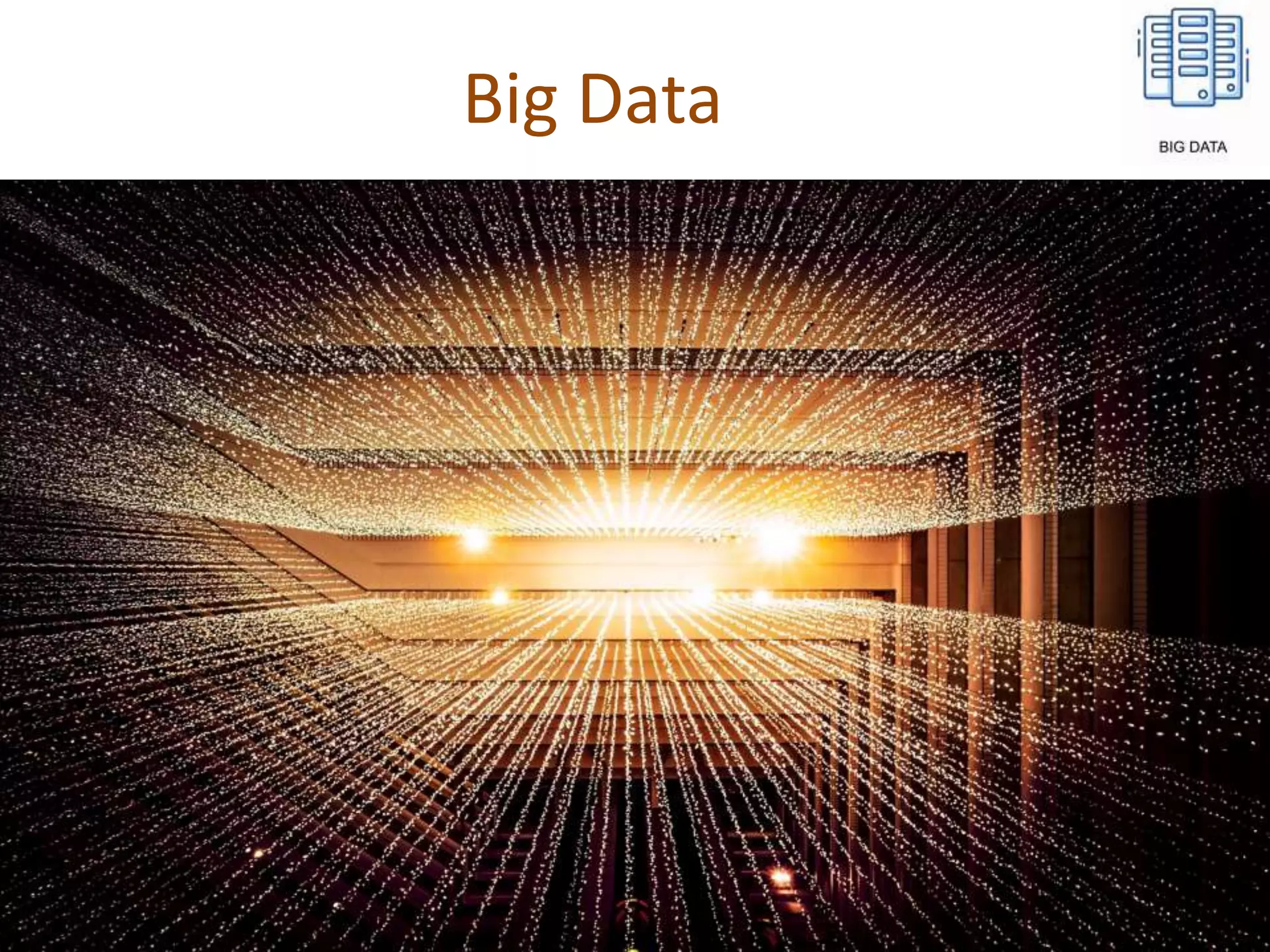
Iimage by Markus Spiiske
CLASSIFICATION OF BIG DATA
Big data is classified into
• Structured
• Semi structured
• Unstructured data
Structure data
According to Knowledge Hut
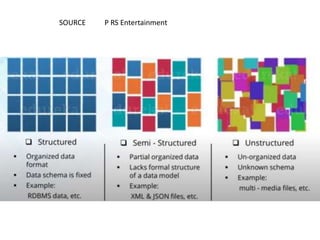
Structured data to the data which is already stored in databases, in
an ordered manner.
It accounts for about 20% of the total existing data and is used the
most in programming and computer-related activities.
According to Knowledge Hut..
• There are two sources of structured data- machines and humans. All the
data received from sensors, weblogs, and financial systems are classified
under machine-generated data.
• These include medical devices, GPS data, data of usage statistics captured by
servers and applications and the huge amount of data that usually move
through trading platforms, to name a few.
Continued...
• Human-generated structured data mainly includes all the data that
humans input into computers, such as names and other personal
details.
• When a person clicks a link on the internet or even makes a move
in a game, data is created, this can be used by companies to figure
out their customer behavior and make the appropriate business
decisions and modifications.
Unstructured data
• While structured data resides in the traditional row-column databases,
unstructured data is the opposite- they have no clear format in storage.
• The rest of the data created, about 80% of the total account for unstructured
big data.Most of the data a person encounters belong to this category- and
until recently, there was not much to do to it except storing it or analyzing
it manually.
Continued...
• Unstructured data is also classified based on its source, machine-
generated or human-generated.
• Machine-generated data accounts for all the satellite images, the
scientific data from various experiments and radar data captured
by various facets of technology
Continued...
• Human-generated unstructured data is found in abundance across
the internet since it includes social media data, mobile data, and
website content.
Continued...
• This means that the pictures we upload to Facebook or Instagram
handle, the videos we watch on YouTube and even the text
messages we send, it all contributes to the gigantic heap that is
unstructured data.
Semi Structure data
• The line between unstructured data and semi-structured data has
always been unclear since most of the semi-structured data appear
to be unstructured at a glance.
• Information that is not in the traditional database format as
structured data, but contains some organizational properties which
make it easier to process, are included in semi-structured data.
• For example, NoSQL documents are considered to be semi-
structured, since they contain keywords that can be used to
process the document easily.
SOURCE P RS Entertainment
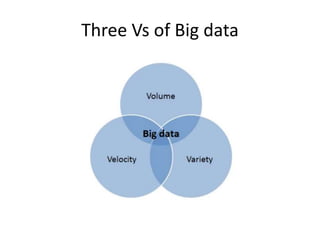
Three Vs of Big data
• Get all content related to data analysis and management from
www.lexiconn.in
• For website content on recent technologies and areas in the field
of Information Technology, get help from the domain experts at
LexiConn.
Write to hello@lexiconn.in

Overview of Big Data

  • 1.
  • 3.
    What is BigData • According to Simplilearn We all use smart phones but have you ever wondered how much data it generates in the form of texts, phone calls, emails, photos videos, searches, and music, approximately 40 exabytes of data gets generated every month by a single Smartphone user.
  • 4.
    • According toOracle.com Big data is larger, more complex data sets, especially from new data sources. These data sets are so voluminous that traditional data processing software just can’t manage them. But these massive volumes of data can be used to address business problems you wouldn’t have been able to tackle before.
  • 6.
    Now imagine thisnumber multiplied by 5 billion Smartphone users that's a lot for our mind to even process, isn't it In fact this amount of data is quite a lot for traditional computing systems to handle and this massive amount of data is what we term as big data.
  • 8.
    • More than500 terabytes of data is uploaded to Face book alone Iimage by Markus Spiiske
  • 9.
    CLASSIFICATION OF BIGDATA Big data is classified into • Structured • Semi structured • Unstructured data
  • 10.
    Structure data According toKnowledge Hut Structured data to the data which is already stored in databases, in an ordered manner. It accounts for about 20% of the total existing data and is used the most in programming and computer-related activities.
  • 11.
    According to KnowledgeHut.. • There are two sources of structured data- machines and humans. All the data received from sensors, weblogs, and financial systems are classified under machine-generated data. • These include medical devices, GPS data, data of usage statistics captured by servers and applications and the huge amount of data that usually move through trading platforms, to name a few.
  • 12.
    Continued... • Human-generated structureddata mainly includes all the data that humans input into computers, such as names and other personal details. • When a person clicks a link on the internet or even makes a move in a game, data is created, this can be used by companies to figure out their customer behavior and make the appropriate business decisions and modifications.
  • 13.
    Unstructured data • Whilestructured data resides in the traditional row-column databases, unstructured data is the opposite- they have no clear format in storage. • The rest of the data created, about 80% of the total account for unstructured big data.Most of the data a person encounters belong to this category- and until recently, there was not much to do to it except storing it or analyzing it manually.
  • 14.
    Continued... • Unstructured datais also classified based on its source, machine- generated or human-generated. • Machine-generated data accounts for all the satellite images, the scientific data from various experiments and radar data captured by various facets of technology
  • 15.
    Continued... • Human-generated unstructureddata is found in abundance across the internet since it includes social media data, mobile data, and website content.
  • 16.
    Continued... • This meansthat the pictures we upload to Facebook or Instagram handle, the videos we watch on YouTube and even the text messages we send, it all contributes to the gigantic heap that is unstructured data.
  • 17.
    Semi Structure data •The line between unstructured data and semi-structured data has always been unclear since most of the semi-structured data appear to be unstructured at a glance.
  • 18.
    • Information thatis not in the traditional database format as structured data, but contains some organizational properties which make it easier to process, are included in semi-structured data.
  • 19.
    • For example,NoSQL documents are considered to be semi- structured, since they contain keywords that can be used to process the document easily.
  • 20.
    SOURCE P RSEntertainment
  • 21.
    Three Vs ofBig data
  • 22.
    • Get allcontent related to data analysis and management from www.lexiconn.in • For website content on recent technologies and areas in the field of Information Technology, get help from the domain experts at LexiConn. Write to hello@lexiconn.in