1
D r Youssef Hammida
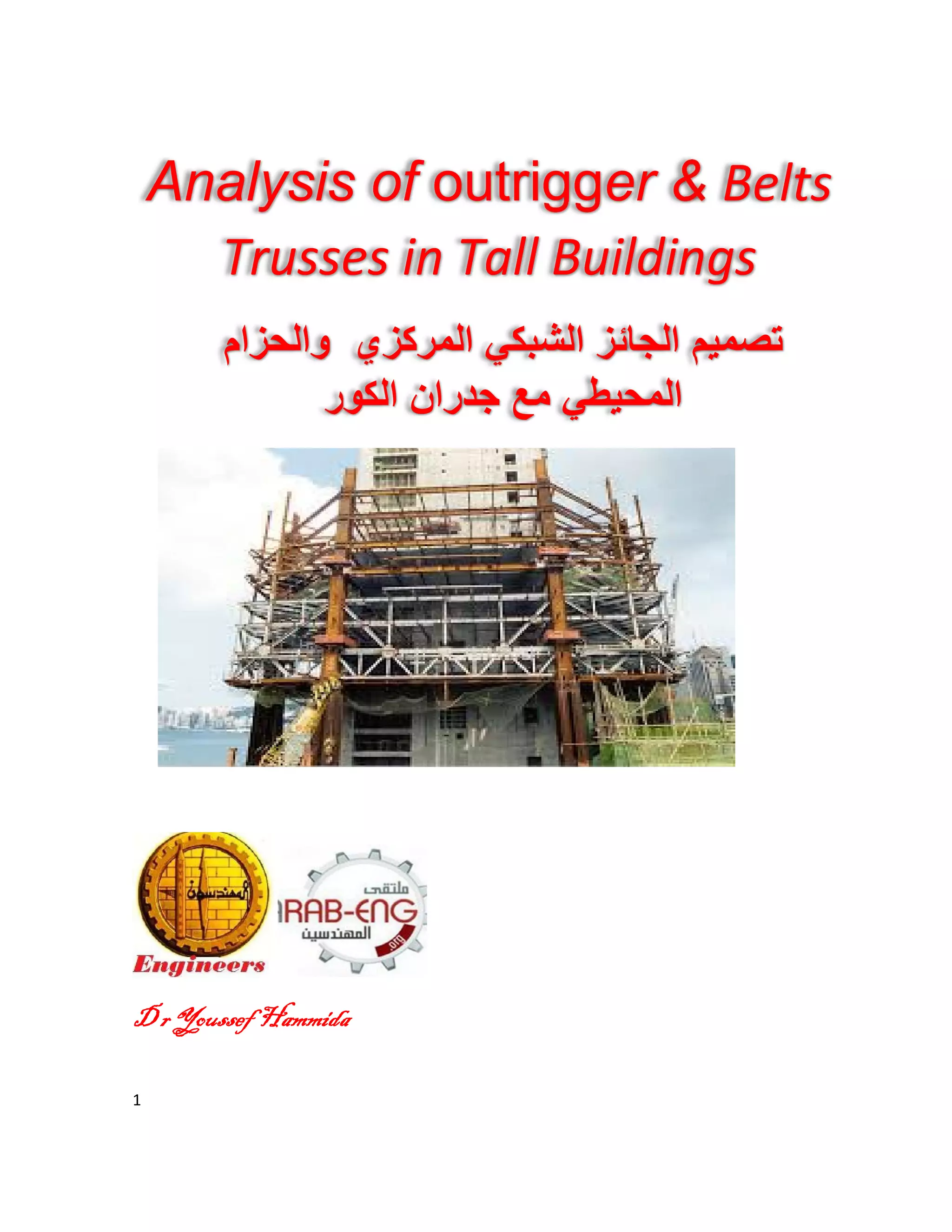
Analysis of outrigger & Belts
Trusses in Tall Buildings
‫ﺗﺻﻣﯾ‬‫م‬‫اﻟﺟ‬‫ﺎﺋز‬‫اﻟﻣرﻛزي‬ ‫اﻟﺷﺑﻛﻲ‬‫واﻟﺣزام‬
‫اﻟﻣﺣﯾطﻲ‬‫اﻟﻛور‬ ‫ﺟدران‬ ‫ﻣﻊ‬
2
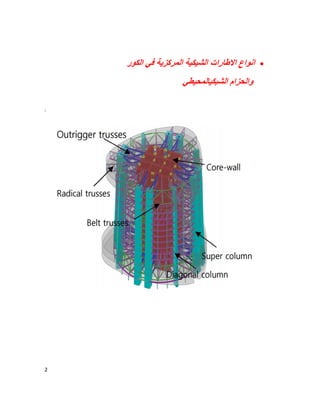
‫اﻟﻛور‬ ‫ﻓﻲ‬ ‫اﻟﻣرﻛزﯾﺔ‬ ‫اﻟﺷﯾﻛﯾﺔ‬ ‫اﻻطﺎرات‬ ‫اﻧواع‬
‫اﻟﺷﺑﻛﯾ‬ ‫واﻟﺣزام‬‫ﺎﻟﻣﺣﯾطﻲ‬
‫ا‬
3
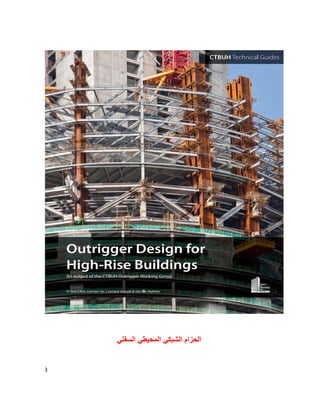
‫اﻟﻣﺣﯾطﻲ‬ ‫اﻟﺷﺑﻛﻲ‬ ‫اﻟﺣزام‬‫اﻟﺳﻔﻠﻲ‬
4
‫اﻟﺳﺣﺎب‬ ‫ﻧﺎطﺣﺎت‬ ‫ﺗﺻﻣﯾم‬
‫ﻧﺎ‬ ‫ﺗﺻﻣﯾم‬ ‫ان‬‫اﻟﺟﺎﻧﺑﯾﺔ‬ ‫اﻟﻘوى‬ ‫اﺣﻣﺎل‬ ‫ﻋﻠﻰ‬ ‫ﻛﻠﯾﺎ‬ ‫ﯾﻌﺗﻣد‬ ‫اﻟﺳﺣﺎب‬ ‫طﺣﺎت‬
‫واﻟزﻻزل‬ ‫اﻟرﯾﺎح‬ ‫ﻣن‬‫زاد‬ ‫اﻟﺑرﺟﯾﺔ‬ ‫واﻟﻧﺣﺎﻓﺔ‬ ‫اﻻرﺗﻘﺎع‬ ‫زاد‬ ‫ﻛﻠﻣﺎ‬
‫اﻟﺗﺻﻣﯾم‬ ‫ﻟﻣﮭﻧدﺳﻲ‬ ‫اﻟﺗﺣدي‬
‫اﻟﻌواﻣل‬ ‫ﺑﻌض‬ ‫ﺗﺄﻣﯾن‬ ‫ﯾﺗطﻠب‬ ‫واﻟﻧﺣﯾﻔﺔ‬ ‫اﻟﻌﺎﻟﯾﺔ‬ ‫اﻷﺑﻧﯾﺔ‬ ‫دراﺳﺔ‬
‫اﻷﻣﺎن‬ ‫ﻓﻲ‬ ‫اﻟﺿرورﯾﺔ‬
1-‫اﻟﻣﻘﺎوﻣﺔ‬‫اﻟﻌﻧﺎﺻر‬ ‫وﺗﺳﻠﯾﺢ‬ ‫ﻟﻣﻘطﻊ‬strength
2-‫واﻻﻧﺗﻘﺎل‬ ‫اﻟﺻﻼﺑﺔ‬drift)(
3-‫اﻟرﯾﺎح‬ ‫ﺗﺄﺛﯾر‬ ‫ﻣن‬ ‫واﻻھﺗزاز‬ ‫اﻟﺣرﻛﺔ‬
‫اﻟﻣﺳﻣوح‬ ‫ﺑﺎﻻﻧﺗﻘﺎل‬ ‫ﻣﺣﻛوك‬ ‫ااﻟﻌﻧﺎﺻر‬ ‫ﺗﺻﻣﯾم‬ ‫وﯾﻛون‬drift)(
 The design of skyscrapers is usually governed by the
lateral loads imposed on the structure.
 As buildings have gotten taller and narrower,
the structural engineer has been increasingly
challenged to meet the imposed drift requirements
 The design of tall and slender structures is
controlled by three governing factors, strength
(material capacity), stiffness (drift) and
serviceability (motion perception and
accelerations), produced by the action of lateral
loading, such as wind.
 The overall geometry of a building often dictates
which factor governs the overall design.
5
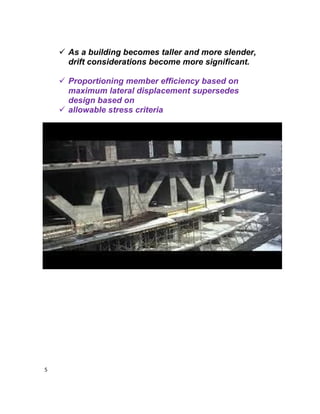
 As a building becomes taller and more slender,
drift considerations become more significant.
 Proportioning member efficiency based on
maximum lateral displacement supersedes
design based on
 allowable stress criteria
6
7
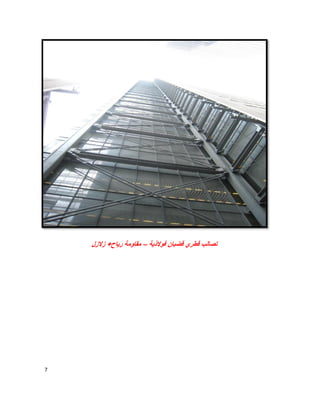
‫ﻓوﻻذﯾﺔ‬ ‫ﻗﺿﺑﺎن‬ ‫ﻗطري‬ ‫ﺗﺻﺎﻟب‬–‫زﻻزل‬ +‫رﯾﺎح‬ ‫ﻣﻘﺎوﻣﺔ‬
8
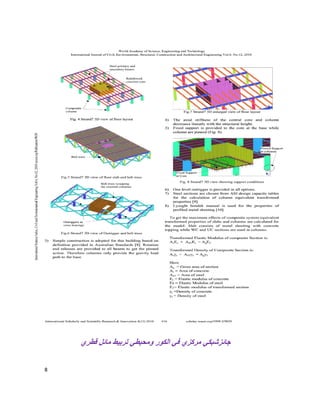
‫ﻓﻲ‬ ‫ﻣرﻛزي‬ ‫ﺟﺎﺋزﺷﺑﻛﻲ‬‫ﻗطري‬ ‫ﻣﺎﺋل‬ ‫ﺗرﺑﯾط‬ ‫وﻣﺣﯾطﻲ‬ ‫اﻟﻛور‬
9
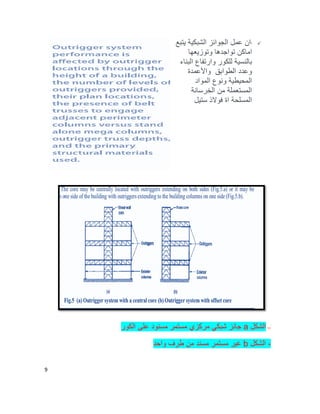
‫ا‬‫ﯾﺗﺑﻊ‬ ‫اﻟﺷﺑﻛﯾﺔ‬ ‫اﻟﺟواﺋز‬ ‫ﻋﻣل‬ ‫ان‬
‫وﺗوزﯾﻌﮭﺎ‬ ‫ﺗواﺟدھﺎ‬ ‫اﻣﺎﻛن‬
‫اﻟﺑﻧﺎء‬ ‫وارﺗﻔﺎع‬ ‫ﻟﻠﻛور‬ ‫ﺑﺎﻟﻧﺳﯾﺔ‬
‫واﻷﻋﻣدة‬ ‫اﻟطواﺑﻖ‬ ‫وﻋدد‬
‫اﻟﻣواد‬ ‫وﻧوع‬ ‫اﻟﻣﺣﯾطﯾﺔ‬
‫اﻟﺧرﺳﺎﻧﺔ‬ ‫ﻣن‬ ‫اﻟﻣﺳﺗﻌﻣﻠﺔ‬
‫ﺳﺗﯾل‬ ‫ﻓوﻻذ‬ ‫اة‬ ‫اﻟﻣﺳﻠﺣﺔ‬
--‫اﻟﺷﻛل‬a‫اﻟﻛور‬ ‫ﻋﻠﻰ‬ ‫ﻣﺳﻧود‬ ‫ﻣﺳﺗﻣر‬ ‫ﻣرﻛزي‬ ‫ﺷﺑﻛﻲ‬ ‫ﺟﺎﺋز‬
-‫اﻟﺷﻛل‬b‫واﺣد‬ ‫طرف‬ ‫ﻣن‬ ‫ﻣﺳﻧد‬ ‫ﻣﺳﺗﻣر‬ ‫ﻏﯾر‬
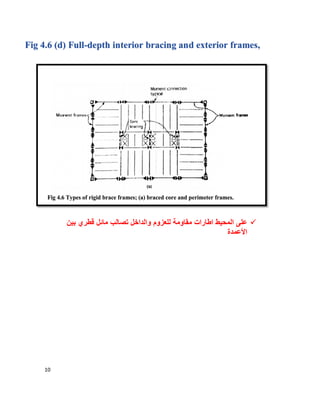
10
‫ﺑﯾن‬ ‫ﻗطري‬ ‫ﻣﺎﺋل‬ ‫ﺗﺻﺎﻟب‬ ‫واﻟداﺧل‬ ‫ﻟﻠﻌزوم‬ ‫ﻣﻘﺎوﻣﺔ‬ ‫اطﺎرات‬ ‫اﻟﻣﺣﯾط‬ ‫ﻋﻠﻰ‬
‫اﻷﻋﻣدة‬
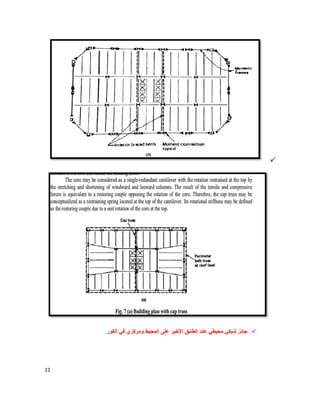
11

‫اﻟﻛور‬ ‫ﻓﻲ‬ ‫وﻣرﻛزي‬ ‫اﻟﻣﺣﯾط‬ ‫ﻋﻠﻰ‬ ‫اﻷﺧﯾر‬ ‫اﻟطﺎﺑﻖ‬ ‫ﻋﻧد‬ ‫ﻣﺣﯾطﻲ‬ ‫ﺷﺑﻛﻲ‬ ‫ﺟﺎﺋز‬
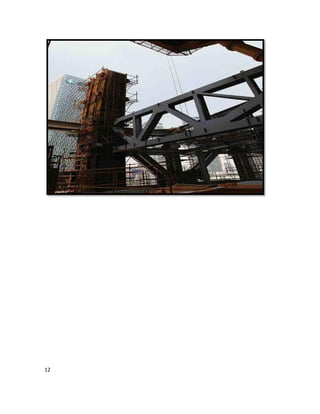
12
13
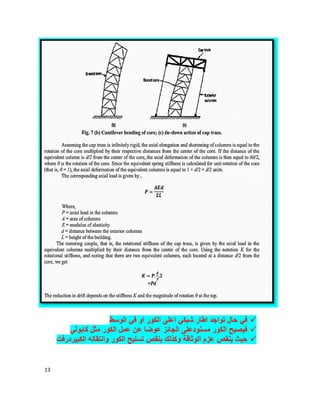
‫اﻟوﺳط‬ ‫ﻓﻲ‬ ‫او‬ ‫اﻟﻛور‬ ‫اﻋﻠﻰ‬ ‫ﺷﺑﻛﻲ‬ ‫اطﺎر‬ ‫ﺗواﺟد‬ ‫ﺣﺎل‬ ‫ﻓﻲ‬
‫ﻋوﺿﺎ‬ ‫اﻟﺟﺎﺋز‬ ‫ﻣﺳﻧودﻋﻠﻰ‬ ‫اﻟﻛور‬ ‫ﻓﯾﺻﯾﺢ‬‫ﻛﺎﺑوﻟﻲ‬ ‫ﻣﺛل‬ ‫اﻟﻛور‬ ‫ﻋﻣل‬ ‫ﻋن‬
‫اﻟﻛﺑﯾردرﻓت‬ ‫واﻧﺗﻘﺎﻟﮫ‬ ‫اﻟﻛور‬ ‫ﺗﺳﻠﯾﺢ‬ ‫ﺑﻧﻘص‬ ‫وﻛذﻟك‬ ‫اﻟوﺛﺎﻗﺔ‬ ‫ﻋزم‬ ‫ﯾﻧﻘص‬ ‫ﺣﯾث‬
14
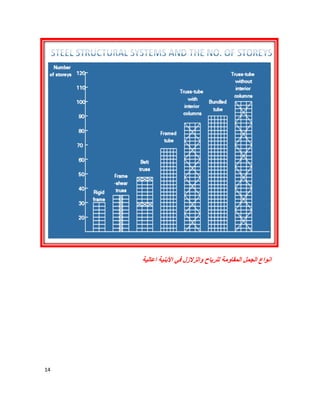
‫اﻋﺎﻟﯾﺔ‬ ‫اﻷﺑﻧﯾﺔ‬ ‫ﻓﻲ‬ ‫واﻟزﻻزل‬ ‫ﻟﻠرﯾﺎح‬ ‫اﻟﻣﻘﺎوﻣﺔ‬ ‫اﻟﺟﻣل‬ ‫اﻧواع‬
15
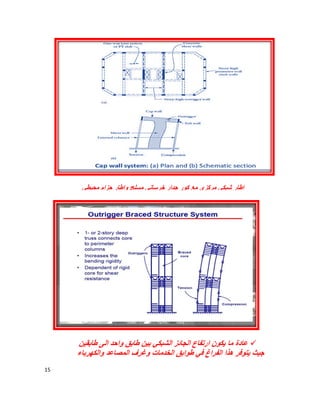
‫ﻣﺣﯾطﻲ‬ ‫ﺣزام‬ ‫واطﺎر‬ ‫ﻣﺳﻠﺞ‬ ‫ﺧرﺳﺎﻧﻲ‬ ‫ﺟدار‬ ‫ﻛور‬ ‫ﻣﻊ‬ ‫ﻣرﻛزي‬ ‫ﺷﺑﻛﻲ‬ ‫اطﺎر‬
‫ﻋﺎدة‬‫ﻣﺎ‬‫طﺎﺑﻘﯾن‬ ‫اﻟﻰ‬ ‫واﺣد‬ ‫طﺎﺑﻖ‬ ‫ﺑﯾن‬ ‫اﻟﺷﺑﻛﻲ‬ ‫اﻟﺟﺎﺋز‬ ‫ارﺗﻔﺎع‬ ‫ﯾﻛون‬
‫واﻟﻛ‬ ‫اﻟﻣﺻﺎﻋد‬ ‫وﻏرف‬ ‫اﻟﺧدﻣﺎت‬ ‫طواﺑﻖ‬ ‫ﻓﻲ‬ ‫اﻟﻔراغ‬ ‫ھذا‬ ‫ﯾﺗوﻓر‬ ‫ﺟﯾث‬‫ﮭرﺑﺎء‬
16
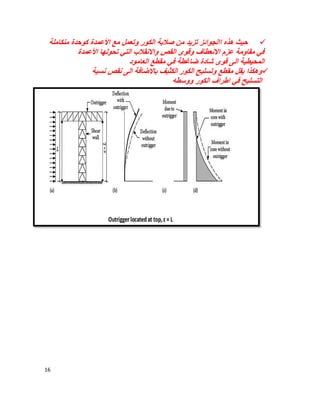
‫ھذه‬ ‫ﺣﯾث‬‫وﺗ‬ ‫اﻟﻛور‬ ‫ﺻﻼﺑﺔ‬ ‫ﻣن‬ ‫ﺗزﯾد‬ ‫ااﻟﺟواﺋز‬‫ﻣﻧﻛﺎﻣﻠﺔ‬ ‫ﻛوﺣدة‬ ‫اﻷﻋﻣدة‬ ‫ﻣﻊ‬ ‫ﻌﻣل‬
‫اﻷﻋﻣدة‬ ‫ﺗﺣوﻟﮭﺎ‬ ‫اﻟﺗﻲ‬ ‫واﻻﻧﻘﻼب‬ ‫اﻟﻘص‬ ‫وﻗوى‬ ‫اﻻﻧﻌطﺎف‬ ‫ﻋزم‬ ‫ﻣﻘﺎوﻣﺔ‬ ‫ﻓﻲ‬
‫اﻟﻰ‬ ‫اﻟﻣﺣﯾطﯾﺔ‬‫اﻟﻌﺎﻣود‬ ‫ﻣﻘطﻊ‬ ‫ﻓﻲ‬ ‫ﺿﺎﻏطﺔ‬ ‫ﺷﺎدة‬ ‫ﻗوى‬
‫ﻧﺳﯾﺔ‬ ‫ﻧﻘص‬ ‫اﻟﻰ‬ ‫ﺑﺎﻻﺿﺎﻓﺔ‬ ‫اﻟﻛﺛﺑف‬ ‫اﻟﻛور‬ ‫وﺗﺳﻠﯾﺢ‬ ‫ﻣﻘطﻊ‬ ‫ﯾﻘل‬ ‫وھﻛذا‬
‫ووﺳطﮫ‬ ‫اﻟﻛور‬ ‫اطراف‬ ‫ﻓﻲ‬ ‫اﻟﺗﺳﻠﯾﺢ‬
17
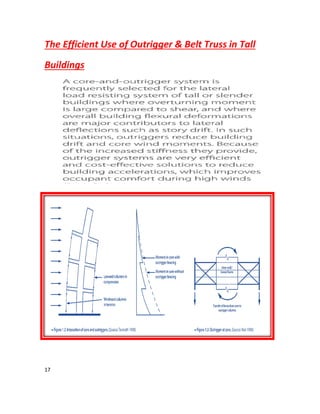
The Efficient Use of Outrigger & Belt Truss in Tall
Buildings
18
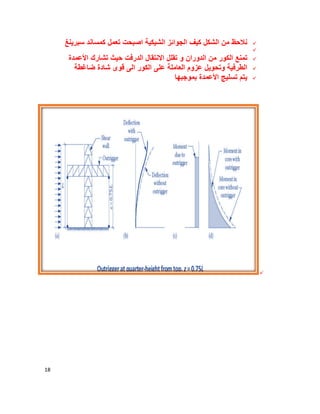
‫ﺳﺑرﯾﻧﻎ‬ ‫ﻛﻣﺳﺎﻧد‬ ‫ﺗﻌﻣل‬ ‫اﺻﺑﺣت‬ ‫اﻟﺷﯾﻛﯾﺔ‬ ‫اﻟﺟواﺋز‬ ‫ﻛﯾف‬ ‫اﻟﺷﻛل‬ ‫ﻣن‬ ‫ﻧﻼﺣظ‬

‫اﻷﻋﻣدة‬ ‫ﺗﺷﺎرك‬ ‫ﺣﯾث‬ ‫اﻟدرﻓت‬ ‫اﻻﻧﺗﻘﺎل‬ ‫ﺗﻘﻠل‬ ‫و‬ ‫اﻟدوران‬ ‫ﻣن‬ ‫اﻟﻛور‬ ‫ﺗﻣﻧﻊ‬
‫ﺿﺎﻏطﺔ‬ ‫ﺷﺎدة‬ ‫ﻗوى‬ ‫اﻟﻰ‬ ‫اﻟﻛور‬ ‫ﻋﻠﻰ‬ ‫اﻟﻌﺎﻣﻠﺔ‬ ‫ﻋزوم‬ ‫وﺗﺣوﯾل‬ ‫اﻟطرﻓﯾﺔ‬
‫ﺑﻣوﺟﺑﮭﺎ‬ ‫اﻷﻋﻣدة‬ ‫ﺗﺳﻠﯾﺞ‬ ‫ﯾﺗم‬

19
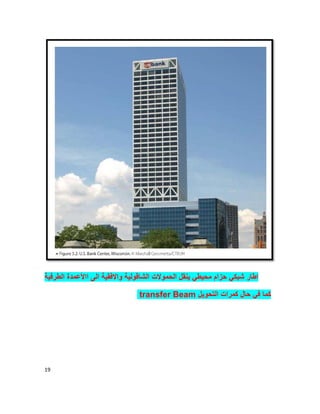
‫اﻟطرﻓﯾﺔ‬ ‫ااﻷﻋﻣدة‬ ‫اﻟﻰ‬ ‫واﻻﻓﻘﯾﺔ‬ ‫اﻟﺷﺎﻗوﻟﯾﺔ‬ ‫اﻟﺣﻣوﻻت‬ ‫ﯾﻧﻘل‬ ‫ﻣﺣﯾطﻲ‬ ‫ﺣزام‬ ‫ﺷﺑﻛﻲ‬ ‫اطﺎر‬
‫اﻟﺗﺣوﯾل‬ ‫ﻛﻣرات‬ ‫ﺣﺎل‬ ‫ﻓﻲ‬ ‫ﻛﻣﺎ‬transfer Beam
20
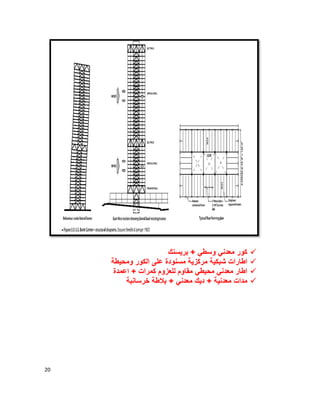
‫وﺳطﻲ‬ ‫ﻣﻌدﻧﻲ‬ ‫ﻛور‬+‫ﺑرﯾﺳﻧك‬
‫ﻣرﻛزﯾﺔ‬ ‫ﺷﺑﻛﯾﺔ‬ ‫اطﺎرات‬‫اﻟﻛور‬ ‫ﻋﻠﻰ‬ ‫ﻣﺳﻧودة‬‫وﻣﺣﯾطﺔ‬
‫اﻋﻣدة‬ + ‫ﻛﻣرات‬ ‫ﻟﻠﻌزوم‬ ‫ﻣﻘﺎوم‬ ‫ﻣﺣﯾطﻲ‬ ‫ﻣﻌدﻧﻲ‬ ‫اطﺎر‬
‫ﺧرﺳﺎﻧﺑﺔ‬ ‫ﺑﻼطﺔ‬ + ‫ﻣﻌدﻧﻲ‬ ‫دﯾك‬ + ‫ﻣﻌدﻧﯾﺔ‬ ‫ﻣدات‬
21
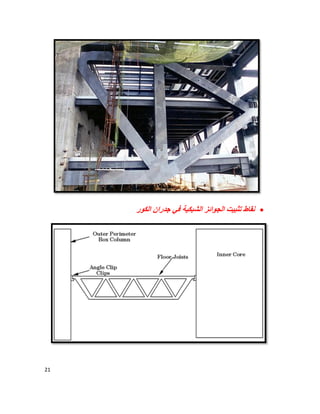
‫اﻟﻛور‬ ‫ﺟدران‬ ‫ﻓﻲ‬ ‫اﻟﺷﺑﻛﯾﺔ‬ ‫اﻟﺟواﺋز‬ ‫ﺗﺛﺑﯾت‬ ‫ﻧﻘﺎط‬
22
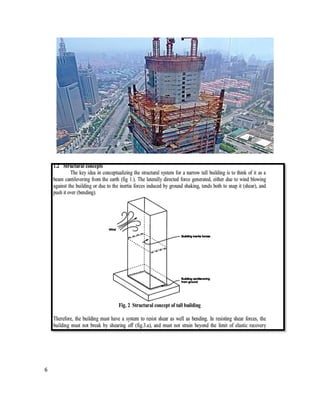
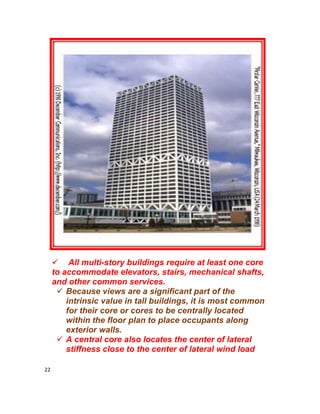
 All multi-story buildings require at least one core
to accommodate elevators, stairs, mechanical shafts,
and other common services.
 Because views are a significant part of the
intrinsic value in tall buildings, it is most common
for their core or cores to be centrally located
within the floor plan to place occupants along
exterior walls.
 A central core also locates the center of lateral
stiffness close to the center of lateral wind load
23
and center of mass for lateral seismic loads,
minimizing torsional forces.
 In high-seismic regions many tall buildings have a
dual system, sometimes called “core and frame” or
“tube in tube,” with a perimeter moment frame
providing significant torsional stiffness but a smaller
contribution to overturning stiffness.
When direct or conventional outrigger walls or
trusses are not acceptable for the building due to
space limitations or a column layout which is not
aligned with the core walls, an indirect,
“virtual”outrigger or belt truss system may be
used.
‫ﺳﻧﯾل‬ ‫ﻣﻌدﻧﻲ‬ ‫او‬ ‫ﻣﺳﻠﺣﺔ‬ ‫ﺧرﺳﺎﻧﺔ‬ ‫ﻛور‬ ‫ﺗواﺟد‬ ‫ﻣن‬ ‫ﺑد‬ ‫ﻻ‬ ‫اﻟﺑرﺟﯾﺔ‬ ‫اﻷﺑﻧﯾﺔ‬ ‫ﻓﻲ‬
‫ﻣرﻛز‬ ‫ﻣﻊ‬ ‫ﻣﺗطﺎﺑﻖ‬ ‫ﺗﻘرﺑﯾﺎ‬ ‫ﻣﺣوري‬ ‫ﺗﻣرﻛز‬‫ﻣرﻛزﯾﺔ‬ ‫وﺗﻘﻠﯾل‬ ‫واﻟﺻﻼﺑﺔ‬ ‫اﻟﻛﺗﻠﺔ‬
‫اﻟﻔﺗل‬
‫ﺳﺗﯾل‬ ‫ﻣﻌدﻧﯾﺔ‬ ‫ام‬ ‫ﺧرﺳﺎﻧﯾﺔ‬ ‫ﻟﻠﻌزوم‬ ‫ﻣﻘﺎوﻣﺔ‬ ‫ﻣﺣﯾطﯾﺔ‬ ‫اطﺎرات‬ ‫ﺗواﺟد‬ ‫ﻣن‬ ‫ﻻﺑد‬
‫ﻧظﺎﻣﻲ‬ ‫ﻛور‬ ‫ﯾﺗواﺟد‬ ‫ﻻ‬ ‫ﻋﻧدﻣﺎ‬‫ﻣﺣﯾطﻲ‬ ‫ﺷﺑﻛﻲ‬ ‫اطﺎر‬ ‫اﺳﺗﻌﻣﺎل‬ ‫ﻓﯾﻣﻛن‬ ‫ﺻﻧدوﻗﻲ‬
virtual”outrigger or belt truss
24
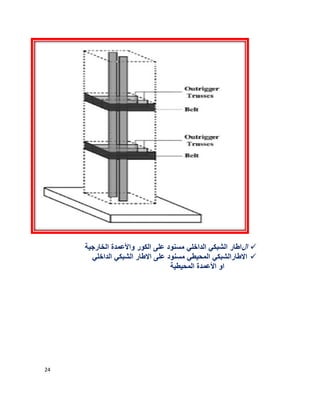
‫ال‬‫ﻋﻠ‬ ‫ﻣﺳﻧود‬ ‫اﻟداﺧﻠﻲ‬ ‫اﻟﺷﺑﻛﻲ‬ ‫اطﺎر‬‫اﻟﺧﺎرﺟﯾﺔ‬ ‫واﻷﻋﻣدة‬ ‫اﻟﻛور‬ ‫ﻰ‬
‫اﻻطﺎر‬‫اﻟﺷﺑﻛﻲ‬‫اﻟﻣﺣﯾطﻲ‬‫اﻟداﺧﻠﻲ‬ ‫اﻟﺷﺑﻛﻲ‬ ‫اﻻطﺎر‬ ‫ﻋﻠﻰ‬ ‫ﻣﺳﻧود‬
‫اﻟﻣﺣﯾطﯾﺔ‬ ‫اﻷﻋﻣدة‬ ‫او‬
25
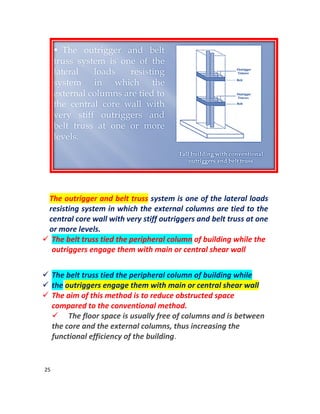
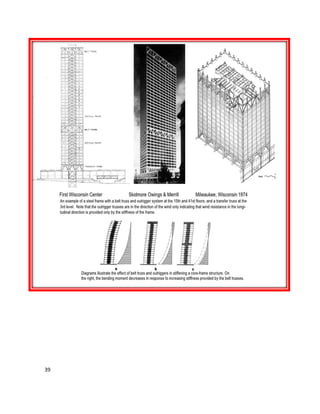
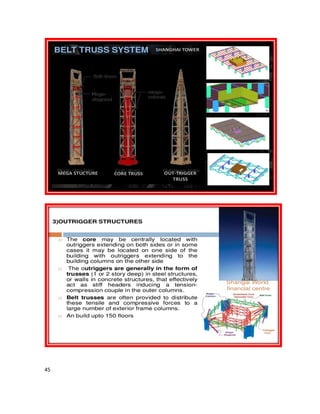
The outrigger and belt truss system is one of the lateral loads
resisting system in which the external columns are tied to the
central core wall with very stiff outriggers and belt truss at one
or more levels.
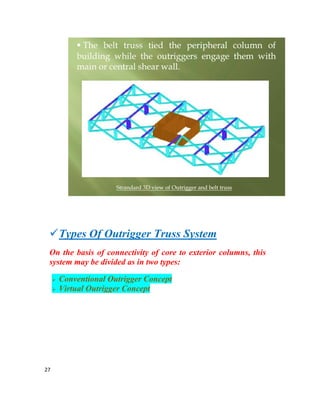
 The belt truss tied the peripheral column of building while the
outriggers engage them with main or central shear wall
 The belt truss tied the peripheral column of building while
 the outriggers engage them with main or central shear wall
 The aim of this method is to reduce obstructed space
compared to the conventional method.
 The floor space is usually free of columns and is between
the core and the external columns, thus increasing the
functional efficiency of the building.
26
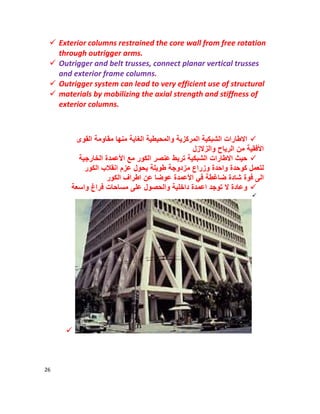
 Exterior columns restrained the core wall from free rotation
through outrigger arms.
 Outrigger and belt trusses, connect planar vertical trusses
and exterior frame columns.
 Outrigger system can lead to very efficient use of structural
 materials by mobilizing the axial strength and stiffness of
exterior columns.
‫اﻟﺷﺑﻛﯾﺔ‬ ‫اﻻطﺎرات‬‫اﻟﻘوى‬ ‫ﻣﻘﺎوﻣﺔ‬ ‫ﻣﻧﮭﺎ‬ ‫اﻟﻐﺎﯾﺔ‬ ‫واﻟﻣﺣﯾطﯾﺔ‬ ‫اﻟﻣرﻛزﯾﺔ‬
‫واﻟزﻻزل‬ ‫اﻟرﯾﺎح‬ ‫ﻣن‬ ‫اﻷﻓﻘﯾﺔ‬
‫اﻷ‬ ‫ﻣﻊ‬ ‫اﻟﻛور‬ ‫ﻋﻧﺻر‬ ‫ﺗرﺑط‬ ‫اﻟﺷﺑﻛﯾﺔ‬ ‫اﻻطﺎرات‬ ‫ﺣﯾث‬‫اﻟﺧﺎرﺟﯾﺔ‬ ‫ﻋﻣدة‬
‫اﻟﻛور‬ ‫اﻧﻘﻼب‬ ‫ﻋزم‬ ‫ﯾﺣول‬ ‫طوﯾﻠﺔ‬ ‫ﻣزدوﺟﺔ‬ ‫وزراع‬ ‫واﺣدة‬ ‫ﻛوﺣدة‬ ‫ﻟﺗﻌﻣل‬
‫اﻟﻛور‬ ‫اطراف‬ ‫ﻋن‬ ‫ﻋوﺿﺎ‬ ‫اﻷﻋﻣدة‬ ‫ﻓﻲ‬ ‫ﺿﺎﻏطﺔ‬ ‫ﺷﺎدة‬ ‫ﻓوة‬ ‫اﻟﻰ‬
‫اﻋﻣدة‬ ‫ﺗوﺟد‬ ‫ﻻ‬ ‫وﻋﺎدة‬‫واﺳﻌﺔ‬ ‫ﻓراغ‬ ‫ﻣﺳﺎﺣﺎت‬ ‫ﻋﻠﻰ‬ ‫واﻟﺣﺻول‬ ‫داﺧﻠﯾﺔ‬


27
Types Of Outrigger Truss System
On the basis of connectivity of core to exterior columns, this
system may be divided as in two types:
 Conventional Outrigger Concept
 Virtual Outrigger Concept
28
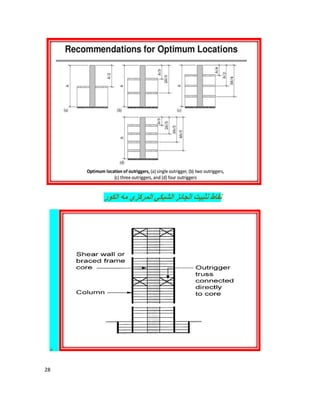
‫اﻟﻜﻮر‬ ‫ﻣﮫ‬ ‫اﻟﻤﺮﻛﺰي‬ ‫اﻟﺸﺒﻜﻲ‬ ‫اﻟﺠﺎﺋﺰ‬ ‫ﻧﺜﺒﯿﺖ‬ ‫ﻧﻘﺎط‬

29
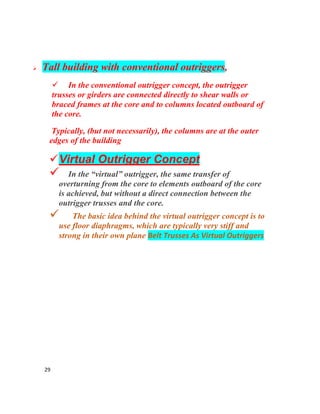
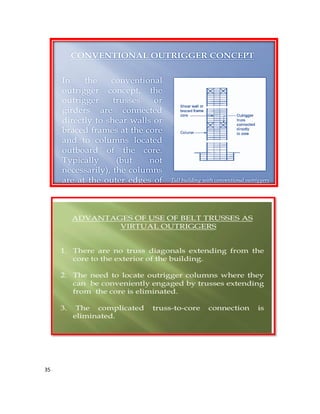
 Tall building with conventional outriggers,
 In the conventional outrigger concept, the outrigger
trusses or girders are connected directly to shear walls or
braced frames at the core and to columns located outboard of
the core.
Typically, (but not necessarily), the columns are at the outer
edges of the building
Virtual Outrigger Concept
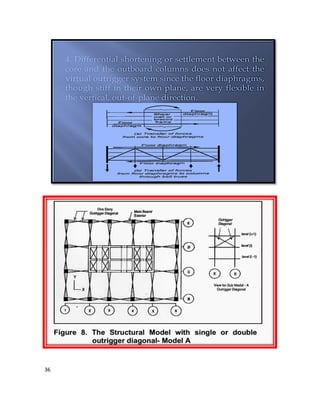
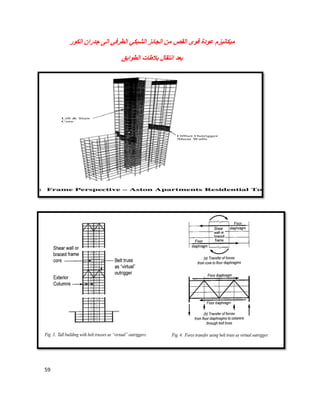
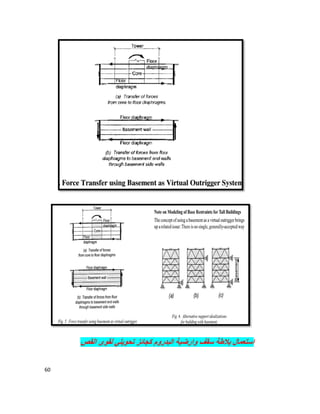
 In the “virtual” outrigger, the same transfer of
overturning from the core to elements outboard of the core
is achieved, but without a direct connection between the
outrigger trusses and the core.
 The basic idea behind the virtual outrigger concept is to
use floor diaphragms, which are typically very stiff and
strong in their own plane Belt Trusses As Virtual Outriggers
30
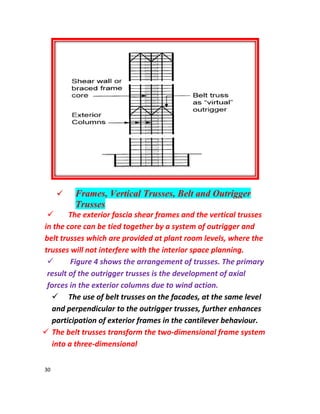
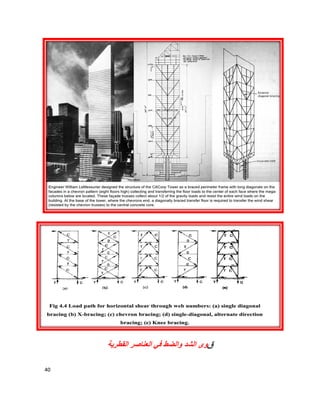
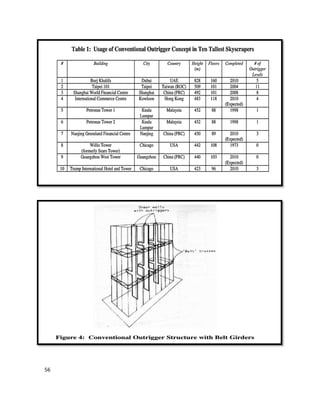
 Frames, Vertical Trusses, Belt and Outrigger
Trusses
 The exterior fascia shear frames and the vertical trusses
in the core can be tied together by a system of outrigger and
belt trusses which are provided at plant room levels, where the
trusses will not interfere with the interior space planning.
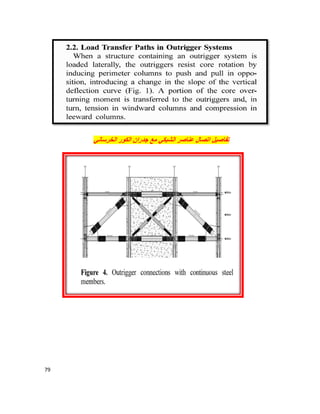
 Figure 4 shows the arrangement of trusses. The primary
result of the outrigger trusses is the development of axial
forces in the exterior columns due to wind action.
 The use of belt trusses on the facades, at the same level
and perpendicular to the outrigger trusses, further enhances
participation of exterior frames in the cantilever behaviour.
 The belt trusses transform the two-dimensional frame system
into a three-dimensional
31
32
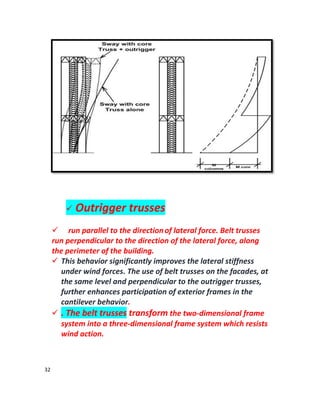
 Outrigger trusses
 run parallel to the directionof lateral force. Belt trusses
run perpendicular to the direction of the lateral force, along
the perimeter of the building.
 This behavior significantly improves the lateral stiffness
under wind forces. The use of belt trusses on the facades, at
the same level and perpendicular to the outrigger trusses,
further enhances participation of exterior frames in the
cantilever behavior.
 . The belt trusses transform the two-dimensional frame
system into a three-dimensional frame system which resists
wind action.
33
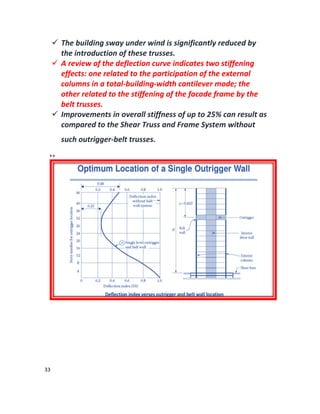
 The building sway under wind is significantly reduced by
the introduction of these trusses.
 A review of the deflection curve indicates two stiffening
effects: one related to the participation of the external
columns in a total-building-width cantilever mode; the
other related to the stiffening of the facade frame by the
belt trusses.
 Improvements in overall stiffness of up to 25% can result as
compared to the Shear Truss and Frame System without
such outrigger-belt trusses.
++
34
35
36
37
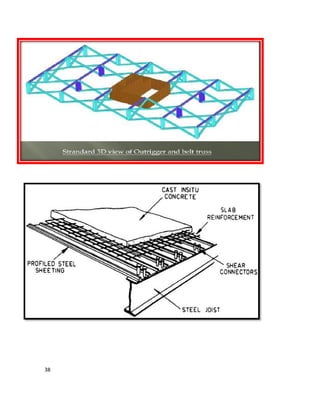
Three-Dimensional Model

A three-dimensional typical floor structural
model will be used for the study.
 The model is a60-storey reinforced concrete consisting frame
atthe periphery and core wall in the center.
 The building is viewed as an assemble of vertical
frames interconnected at each storey level by
diaphragm floor slab while the secondary beam
was considered as point load on main beam. The
static and dynamic computer analysis was
carried out using ETABS program [9].
‫اﻟﻔراﻏﯾﺔ‬ ‫اﻟﺷﺑﻛﯾﺔ‬ ‫اﻟﺟواﺋز‬
‫وﺑﺷﻛل‬ ‫اﻟطﺎﺑﻖ‬ ‫ارﺗﻔﺎع‬ ‫ﻛﺎﻣل‬ ‫ﻋﻠﻰ‬ ‫ارﺗﻔﺎﻋﮭﺎ‬ ‫ﯾﻛون‬‫ﺑوﻛس‬
‫ﻗطرﯾﺔ‬ ‫ﺗﺻﺎﻟب‬ ‫ﻋﻧﺎﺻر‬ ‫ﻣﻊ‬‫ﻋﺎﻣودﯾن‬ ‫ﺑﯾن‬ ‫ﯾﺻل‬ ‫ﻣﺗﺻﺎﻟب‬ ‫ﻗطري‬ ‫ﺑﺷﻛل‬ ‫او‬
‫واﻟﺳﻔﻠﻲ‬ ‫اﻟﻌﻠوي‬ ‫اﻟﺳﻘف‬ ‫ﺑﻼطﺔ‬ ‫وﺣﺎﻣﻠﺔ‬
‫ﻣﻌدﻧﯾﺔ‬ ‫ﺑﻣدادات‬ ‫ﻣدﻋم‬ ‫واﻟﺳﻘف‬‫ﻛﯾردر‬ ‫ﻣﻌدﻧﯾﺔ‬ ‫ﻛﻣرات‬ ‫ﻋﻠﻰ‬ ‫ﻣﺳﻧودة‬
‫ﺧرﺳﺎﻧﺔ‬ ‫+ﺑﻼطﺔ‬‫اﻷﻓﻘﻲ‬ ‫اﻟﻘوى‬ ‫ﻧﻘل‬ ‫ﻓﻲ‬ ‫ﺻﻠب‬ ‫ﻛدﯾﺎﻓرام‬ ‫ﺗﻌﻣل‬
38
39
40
‫ق‬‫اﻟﻘطرﯾﺔ‬ ‫اﻟﻌﻧﺎﺻر‬ ‫ﻓﻲ‬ ‫واﻟﺿط‬ ‫اﻟﺷد‬ ‫وى‬
41
42
43
44
45
46

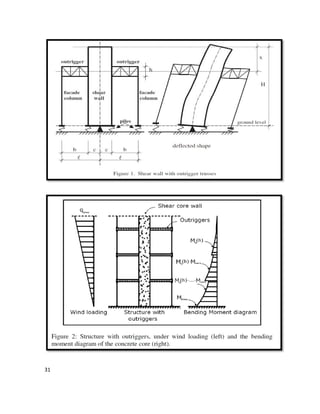
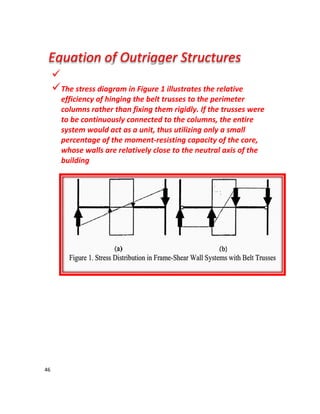
The stress diagram in Figure 1 illustrates the relative
efficiency of hinging the belt trusses to the perimeter
columns rather than fixing them rigidly. If the trusses were
to be continuously connected to the columns, the entire
system would act as a unit, thus utilizing only a small
percentage of the moment-resisting capacity of the core,
whose walls are relatively close to the neutral axis of the
building
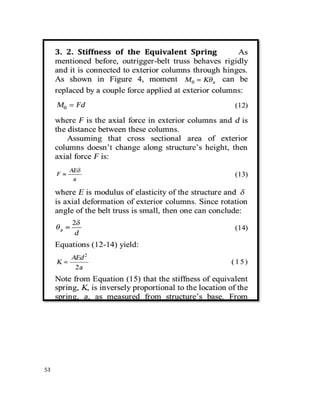
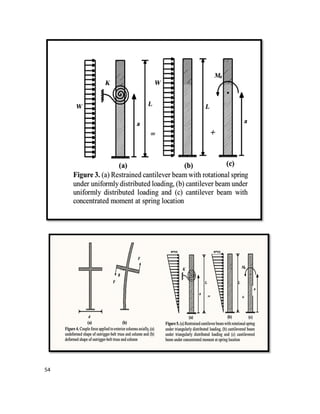
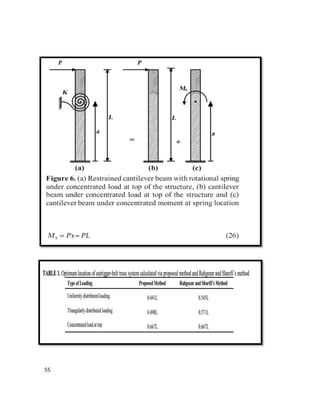
Equation of Outrigger Structures
47
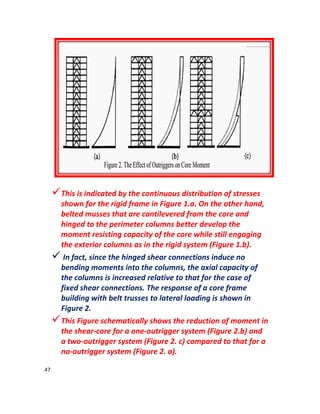
This is indicated by the continuous distribution of stresses
shown for the rigid frame in Figure 1.a. On the other hand,
belted musses that are cantilevered from the core and
hinged to the perimeter columns better develop the
moment resisting capacity of the core while still engaging
the exterior columns as in the rigid system (Figure 1.b).
 In fact, since the hinged shear connections induce no
bending moments into the columns, the axial capacity of
the columns is increased relative to that for the case of
fixed shear connections. The response of a core frame
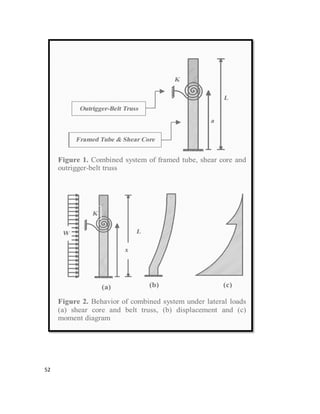
building with belt trusses to lateral loading is shown in
Figure 2.
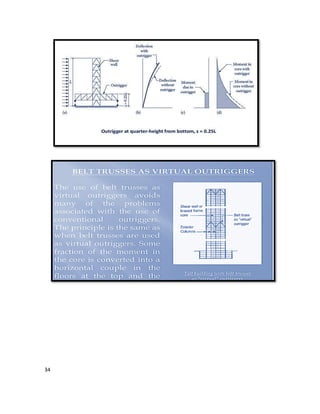
This Figure schematically shows the reduction of moment in
the shear-core for a one-outrigger system (Figure 2.b) and
a two-outrigger system (Figure 2. c) compared to that for a
no-outrigger system (Figure 2. a).
48
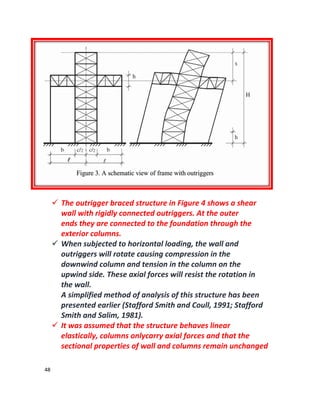
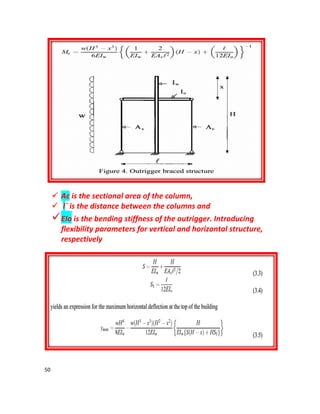
 The outrigger braced structure in Figure 4 shows a shear
wall with rigidly connected outriggers. At the outer
ends they are connected to the foundation through the
exterior columns.
 When subjected to horizontal loading, the wall and
outriggers will rotate causing compression in the
downwind column and tension in the column on the
upwind side. These axial forces will resist the rotation in
the wall.
A simplified method of analysis of this structure has been
presented earlier (Stafford Smith and Coull, 1991; Stafford
Smith and Salim, 1981).
 It was assumed that the structure behaves linear
elastically, columns onlycarry axial forces and that the
sectional properties of wall and columns remain unchanged
49
up the height of the
structure
‫اﻷﻋظﻣ‬ ‫اﻻﻧﺗﻘﺎل‬ ‫ﺣﺳﺎب‬‫اﻟطواﺑﻖ‬ ‫اﻋﻠﻰ‬ ‫ﻓﻲ‬ ‫ﻲ‬
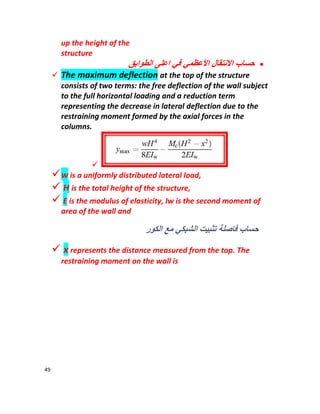
 The maximum deflection at the top of the structure
consists of two terms: the free deflection of the wall subject
to the full horizontal loading and a reduction term
representing the decrease in lateral deflection due to the
restraining moment formed by the axial forces in the
columns.

w is a uniformly distributed lateral load,
 H is the total height of the structure,
 E is the modulus of elasticity, Iw is the second moment of
area of the wall and
‫اﻟﻛور‬ ‫ﻣﻊ‬ ‫اﻟﺷﺑﻛﻲ‬ ‫ﺗﺛﺑﯾت‬ ‫ﻓﺎﺻﻠﺔ‬ ‫ﺣﺳﺎب‬
 x represents the distance measured from the top. The
restraining moment on the wall is
50
 Ac is the sectional area of the column,
 l` is the distance between the columns and
EIo is the bending stiffness of the outrigger. Introducing
flexibility parameters for vertical and horizontal structure,
respectively
51
52
53
54
55
56
57
58
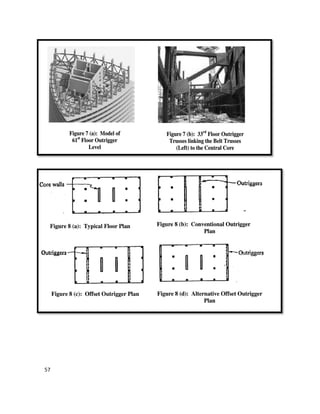
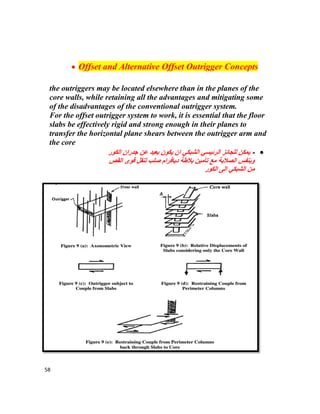
 Offset and Alternative Offset Outrigger Concepts
the outriggers may be located elsewhere than in the planes of the
core walls, while retaining all the advantages and mitigating some
of the disadvantages of the conventional outrigger system.
For the offset outrigger system to work, it is essential that the floor
slabs be effectively rigid and strong enough in their planes to
transfer the horizontal plane shears between the outrigger arm and
the core
-‫اﻟﻛور‬ ‫ﺟدران‬ ‫ﻋن‬ ‫ﺑﻌﯾد‬ ‫ﯾﻛون‬ ‫ان‬ ‫اﻟﺷﺑﻛﻲ‬ ‫اﻟرﺋﯾﺳﻲ‬ ‫ﻟﻠﺟﺎﺋز‬ ‫ﯾﻣﻛن‬
‫اﻟﻘص‬ ‫ﻗوى‬ ‫ﻟﻧﻘل‬ ‫ﺻﻠب‬ ‫دﯾﺎﻓرام‬ ‫ﺑﻼطﺔ‬ ‫ﺗﺄﻣﯾن‬ ‫ﻣﻊ‬ ‫اﻟﺻﻼﺑﺔ‬ ‫وﺑﻧﻔس‬
‫اﻟﻛور‬ ‫اﻟﻰ‬ ‫اﻟﺷﺑﻛﻲ‬ ‫ﻣن‬
59
‫ﻗوى‬ ‫ﻋودة‬ ‫ﻣﯾﻛﺎﻧﯾزم‬‫اﻟﻛور‬ ‫ﺟدران‬ ‫اﻟﻰ‬ ‫اﻟطرﻓﻲ‬ ‫اﻟﺷﺑﻛﻲ‬ ‫اﻟﺟﺎﺋز‬ ‫ﻣن‬ ‫اﻟﻘص‬
‫اﻟطواﺑﻖ‬ ‫ﺑﻼطﺎت‬ ‫اﻧﺗﻘﺎل‬ ‫ﺑﻌد‬
60
‫اﻟﻘص‬ ‫ﻟﻘوى‬ ‫ﺗﺣوﯾﻠﻲ‬ ‫ﻛﺟﺎﺋز‬ ‫اﻟﺑدروم‬ ‫وارﺿﯾﺔ‬ ‫ﺳﻘف‬ ‫ﺑﻼطﺔ‬ ‫اﺳﺗﻌﻣﺎل‬
61
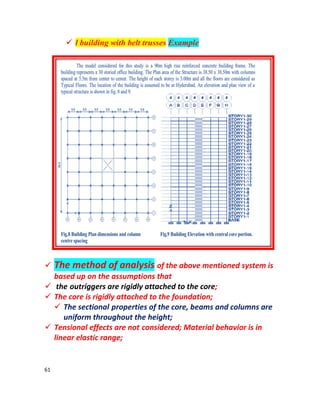
 l building with belt trusses Example
 The method of analysis of the above mentioned system is
based up on the assumptions that
 the outriggers are rigidly attached to the core;
 The core is rigidly attached to the foundation;
 The sectional properties of the core, beams and columns are
uniform throughout the height;
 Tensional effects are not considered; Material behavior is in
linear elastic range;
62
 The Outrigger Beams are flexurally rigid and induce
only axial forces in the columns;
 The lateral resistance is provided only by the bending resistance
of the core and the tie down action of the exterior columns
connected to the outrigger;
 The rotation of the core due to the
shear deformation is negligible.
 The following load combinations
are used to determine the maximum lateral deflection in the
structure.
i) DL+LL
ii) DL+LL±WL(x or y)
iii) DL+LL±EL(x or y)
iv) DL±WL(x or y)
v) DL±EL(x or y)
 The structure with above mentioned specifications and
assumptions is analyzed using the program ETABS and
bending moments, shear forces, lateral deflections are
calculated for both Wind & Earthquake loading.
 Since the wind load cases are governing, the graph and
tables are represents the same.
63
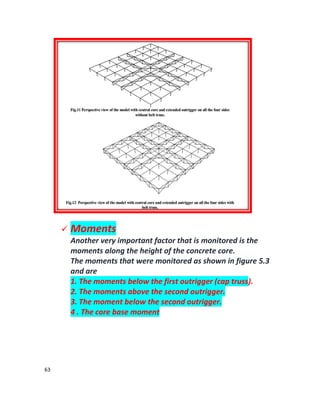
 Moments
Another very important factor that is monitored is the
moments along the height of the concrete core.
The moments that were monitored as shown in figure 5.3
and are
1. The moments below the first outrigger (cap truss).
2. The moments above the second outrigger.
3. The moment below the second outrigger.
4 . The core base moment
64
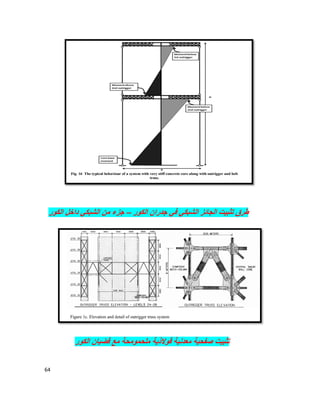
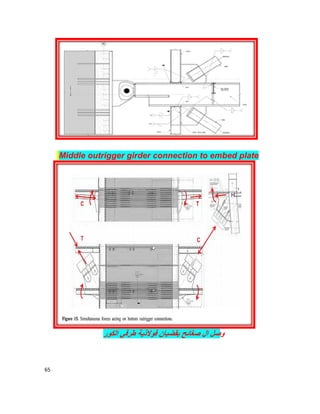
‫اﻟﻛور‬ ‫ﺟدران‬ ‫ﻓﻲ‬ ‫اﻟﺷﺑﻛﻲ‬ ‫اﻟﺟﺎﺋز‬ ‫ﺗﺛﺑﯾت‬ ‫طرق‬–‫اﻟﻛور‬ ‫داﺧل‬ ‫اﻟﺷﺑﻛﻲ‬ ‫ﻣن‬ ‫ﺟزء‬
‫اﻟﻛور‬ ‫ﻗﺿﯾﺎن‬ ‫ﻣﻊ‬ ‫ﻣﻠﺣﻣوﻣﺣﺔ‬ ‫ﻗوﻻذﯾﺔ‬ ‫ﻣﻌدﻧﯾﺔ‬ ‫ﺻﻔﺣﯾﺔ‬ ‫ﺗﺛﺑﯾت‬
65
Middle outrigger girder connection to embed plate.
‫اﻟﻛور‬ ‫طرﻓﻲ‬ ‫ﻓوﻻذﯾﺔ‬ ‫ﺑﻘﺿﺑﺎن‬ ‫ﺻﻐﺎﺋﺢ‬ ‫ال‬ ‫وﺻل‬
66
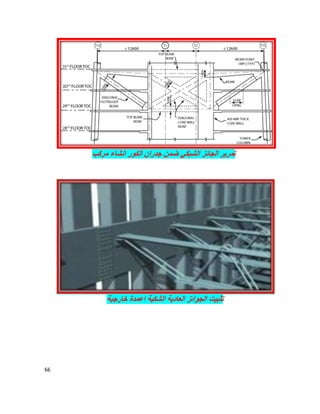
‫ﻣرﻛب‬ ‫اﻧﺷﺎء‬ ‫اﻟﻛور‬ ‫ﺟدران‬ ‫ﺿﻣن‬ ‫اﻟﺷﺑﻛﻲ‬ ‫اﻟﺟﺎﺋز‬ ‫ﺗﻣرﯾر‬
‫ﺧﺎرﺟﯾﺔ‬ ‫اﻋﻣدة‬ ‫اﻟﺷﻛﯾﺔ‬ ‫اﻟﻌﺎدﯾﺔ‬ ‫اﻟﺟواﺋز‬ ‫ﺗﺛﺑﯾت‬
67
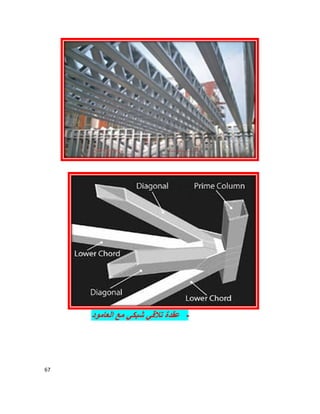
-‫اﻟﻌﺎﻣود‬ ‫ﻣﻊ‬ ‫ﺷﺑﻛﻲ‬ ‫ﺗﻼﻗﻲ‬ ‫ﻋﻘدة‬
68
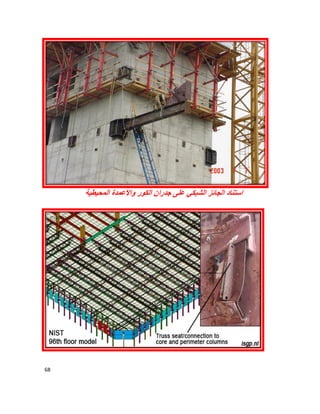
‫اﻟﻣﺣﯾطﯾﺔ‬ ‫واﻷﻋﻣدة‬ ‫اﻟﻛور‬ ‫ﺟدران‬ ‫ﻋﻠﻰ‬ ‫اﻟﺷﺑﻛﻲ‬ ‫اﻟﺟﺎﺋز‬ ‫اﺳﺗﻧﺎد‬
69
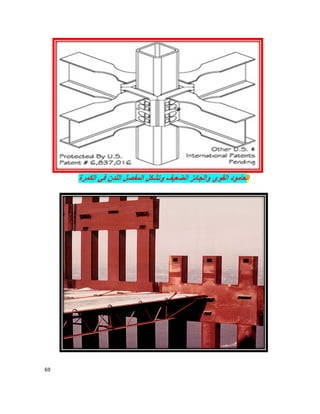
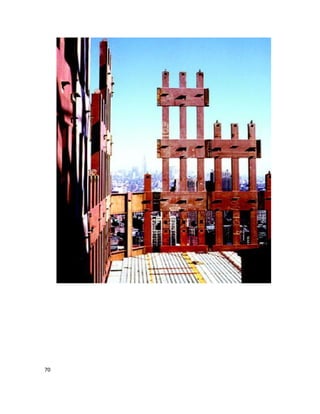
‫اﻟﻛﻣرة‬ ‫ﻓﻲ‬ ‫اﻟﻠدن‬ ‫اﻟﻣﻔﺻل‬ ‫وﺗﺷﻛل‬ ‫اﻟﺿﻌﯾف‬ ‫واﻟﺟﺎﺋز‬ ‫اﻟﻘوي‬ ‫اﻟﻌﺎﻣود‬
70
71
72
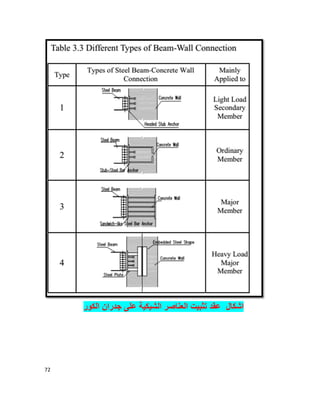
‫اﻟﻛور‬ ‫ﺟدران‬ ‫ﻋﻠﻰ‬ ‫اﻟﺷﯾﻛﯾﺔ‬ ‫اﻟﻌﻧﺎﺻر‬ ‫ﺗﺛﺑﯾت‬ ‫ﻋﻘد‬ ‫اﺷﻛﺎل‬
73
‫اﻷﻓﻘﯾﺔ‬ ‫اﻟﻛور‬ ‫ﺗﺳﻠﯾﺢ‬ ‫اﻟﻰ‬ ‫ﻣﻠﺣﻣوﻣﺔ‬ ‫ﻣﻌدﻧﯾﯨﺔ‬ ‫ﺻﻔﺎﺋﺢ‬
‫اﻟﻛور‬ ‫ﺟدران‬ ‫ﻣﻊ‬ ‫اﻟﺷﺑﻛﯾﺔ‬ ‫اﻟﻌﺗﺎﺻر‬ ‫ﻟوﺻل‬
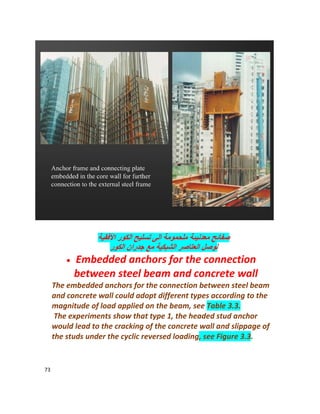
 Embedded anchors for the connection
between steel beam and concrete wall
The embedded anchors for the connection between steel beam
and concrete wall could adopt different types according to the
magnitude of load applied on the beam, see Table 3.3.
The experiments show that type 1, the headed stud anchor
would lead to the cracking of the concrete wall and slippage of
the studs under the cyclic reversed loading, see Figure 3.3.
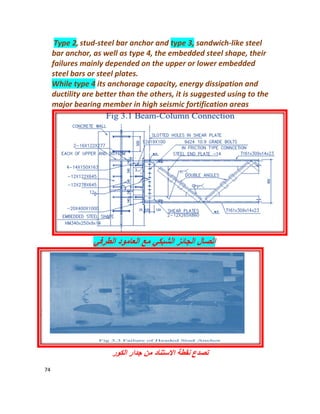
74
Type 2, stud-steel bar anchor and type 3, sandwich-like steel
bar anchor, as well as type 4, the embedded steel shape, their
failures mainly depended on the upper or lower embedded
steel bars or steel plates.
While type 4 its anchorage capacity, energy dissipation and
ductility are better than the others, it is suggested using to the
major bearing member in high seismic fortification areas
‫اﻟطرﻓﻲ‬ ‫اﻟﻌﺎﻣود‬ ‫ﻣﻊ‬ ‫اﻟﺷﺑﻛﻲ‬ ‫اﻟﺟﺎﺋز‬ ‫اﺗﺻﺎل‬
‫اﻟﻛور‬ ‫ﺟدار‬ ‫ﻣن‬ ‫اﻻﺳﺗﻧﺎد‬ ‫ﻧﻘطﺔ‬ ‫ﺗﺻدع‬
75
following conclusions are made from the present study
1. The use of outrigger and belt truss system in high-rise
buildings
increase the stiffness and makes the structural form
efficient under lateral load.
 2. The maximum drift at the top of structure when only core is
employed is around 50.63 mm and this is reduced by suitably
selecting the lateral system.
 The placing of outrigger at top storey as a cap truss is 48.20
mm and 47.63 mm with and without belt truss respectively.
Hence there are not much reductions in drift
with belt truss.

3. Using second outrigger with cap truss gives the reduction
of 18.55% and 23.01% with and without belt
truss.
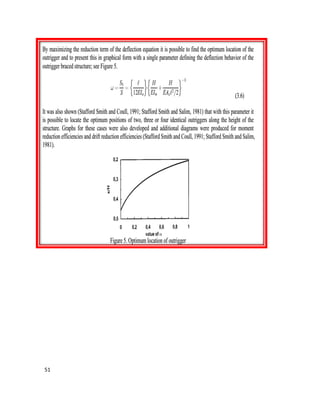
 The optimum location of second outrigger is middle height
of the building.

4. It can be conclude that the optimum location of the
outrigger is between 0.5 times its height.
CONCLUSIONS
76
‫اﻟﺗﺻﻣﯾم‬ ‫ﻣﻊ‬ ‫ﺗدارﻛﮭﺎ‬ ‫ﯾﺟب‬ ‫اﻋﺗﺑﺎرات‬
-‫ﻟﻠﻌزوم‬ ‫ﻣﻘﺎوﻣﺔ‬ ‫ﺧﺎﺻﺔ‬ ‫اطﺎرات‬ ‫اﻟﻛود‬ ‫ﻓﻲ‬ ‫ﺟﺎء‬ ‫ﻣﺎ‬ ‫ﺗطﺑﯾﻖ‬
‫ﻣﺣﯾطﺔ‬ ‫اﻋﻣدة‬ ‫اﻟﺿﻌﯾف‬ ‫واﻟﺟﺎﺋز‬ ‫اﻟﻘوي‬ ‫واﻟﻌﺎﻣود‬ ‫اﻟﻠدن‬ ‫اﻟﻣﻔﺻل‬ ‫وﺗﺷﻛل‬
-‫اﻟﻣرﻛزي‬ ‫اﻟﺷﺑﻛﻲ‬ ‫اﻟﺟﺎﺋز‬ ‫طﺎﺑﻖ‬ ‫ﻓﻲ‬ ‫وﺧﺎﺻﺔ‬ ‫واﻟﺿﻌﯾف‬ ‫اﻟﻠﯾن‬ ‫اﻟطﺎﺑﻖ‬‫واﻟﻣﺣﯾطﻲ‬
-‫اﻟﺗﺣوﯾل‬ ‫طﺎﺑﻖ‬ ‫ﻓﻲ‬ ‫وﺧﺎﺻﺔ‬ ‫اﻷﻓﻘﯾﺔ‬ ‫اﻟﻘوى‬ ‫وﻧﻘل‬ ‫ﻣﻣرات‬ ‫ﻣﻊ‬ ‫ﺻﻠب‬ ‫ودﯾﺎﻓرام‬ ‫اﻟﺑﻼطﺔ‬
-‫ﺿﺎﻏطﺔ‬ ‫ﻣﺣورﯾﺔ‬ ‫ﺣﻣوﻟﺔ‬ ‫وﺗﺄﺛﯾر‬ ‫اﻟﻸﻋﻣدة‬ ‫ﺗﻘﺎﺻر‬ ‫دراﺳﺔ‬ ‫ﺗﺣﻠﯾل‬
77
78
79
‫اﻟﺧرﺳﺎﻧﻲ‬ ‫اﻟﻛور‬ ‫ﺟدران‬ ‫ﻣﻊ‬ ‫اﻟﺷﺑﻛﻲ‬ ‫ﻋﻧﺎﺻر‬ ‫اﺗﺻﺎل‬ ‫ﺗﻔﺎﺻﯾل‬
80
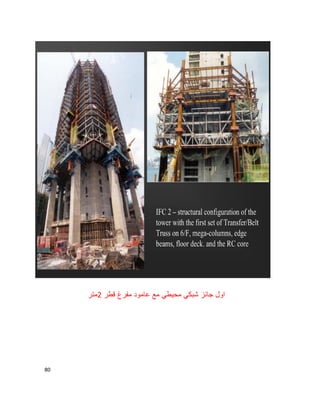
‫ﻗطر‬ ‫ﻣﻔرغ‬ ‫ﻋﺎﻣود‬ ‫ﻣﻊ‬ ‫ﻣﺣﯾطﻲ‬ ‫ﺷﺑﻛﻲ‬ ‫ﺟﺎﺋز‬ ‫اول‬2‫ﻣﺗر‬
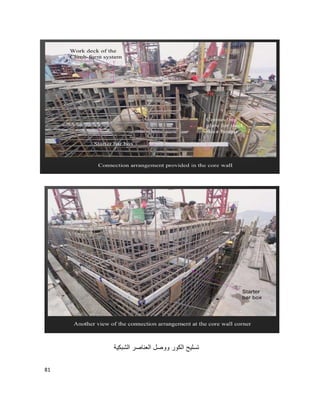
81
‫اﻟﺷﺑﻛﯾﺔ‬ ‫اﻟﻌﻧﺎﺻر‬ ‫ووﺻل‬ ‫اﻟﻛور‬ ‫ﺗﺳﻠﯾﺢ‬
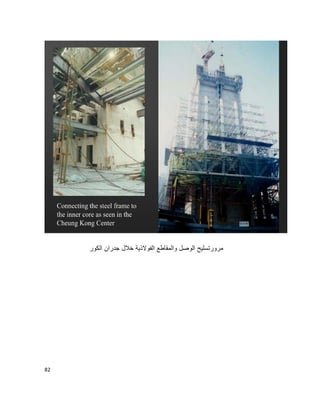
82
‫اﻟﻛور‬ ‫ﺟدران‬ ‫ﺧﻼل‬ ‫اﻟﻔوﻻذﯾﺔ‬ ‫واﻟﻣﻘﺎطﻊ‬ ‫اﻟوﺻل‬ ‫ﻣرورﺗﺳﻠﯾﺢ‬
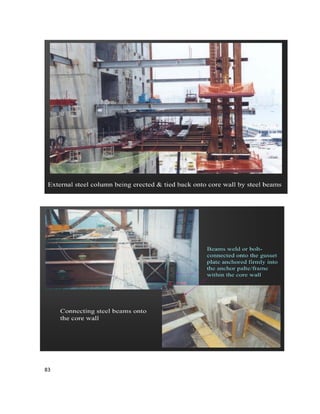
83
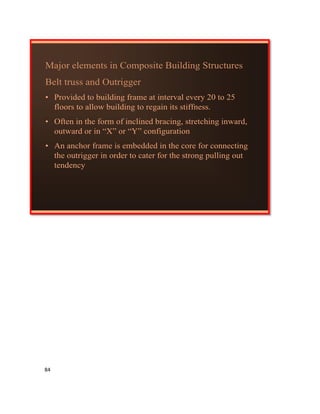
84
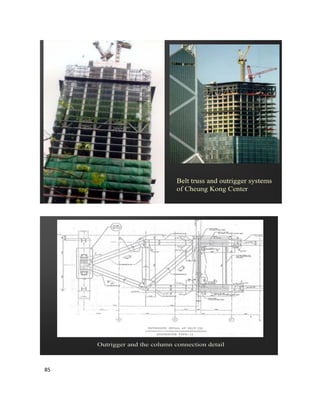
85
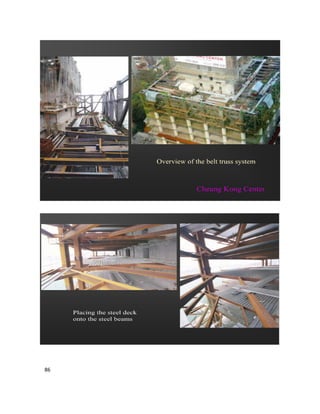
86
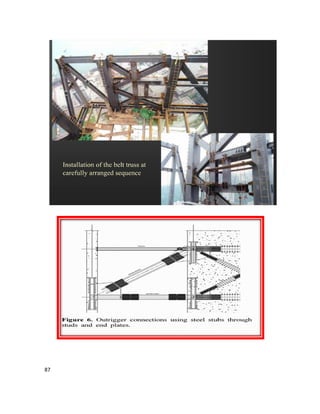
87
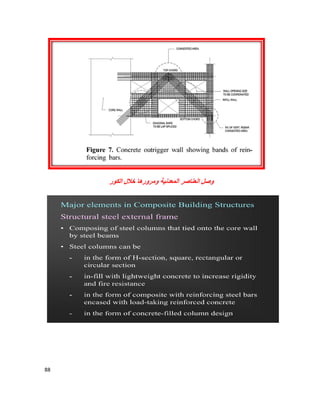
88
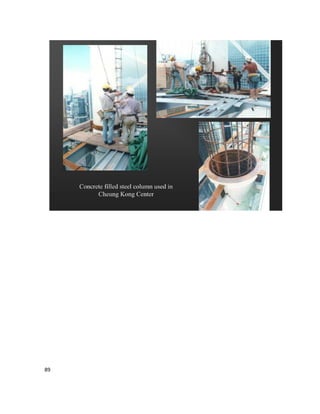
‫اﻟﻛور‬ ‫ﺧﻼل‬ ‫وﻣرورھﺎ‬ ‫اﻟﻣﻌدﻧﯾﺔ‬ ‫اﻟﻌﻧﺎﺻر‬ ‫وﺻل‬
89
90
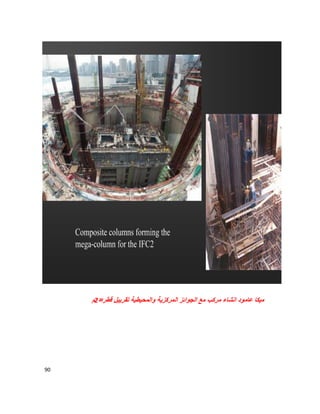
‫اﻟﺟواﺋز‬ ‫ﻣﻊ‬ ‫ﻣرﻛب‬ ‫اﻧﺷﺎء‬ ‫ﻋﺎﻣود‬ ‫ﻣﯾﻛﺎ‬‫ﺗﻘرﯾ‬ ‫واﻟﻣﺣﯾطﯾﺔ‬ ‫اﻟﻣرﻛزﯾﺔ‬=‫ﻗطر‬ ‫ﯾل‬2‫م‬
91
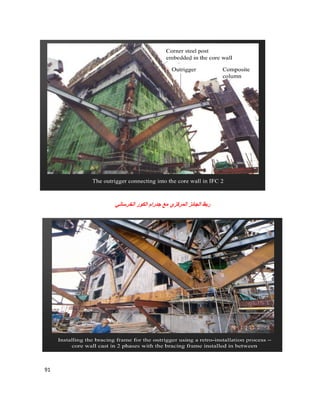
‫اﻟﺧرﺳﺎﻧﻲ‬ ‫اﻟﻛور‬ ‫ﺟدرام‬ ‫ﻣﻊ‬ ‫اﻟﻣرﻛزي‬ ‫اﻟﺟﺎﺋز‬ ‫رﺑط‬
92
93
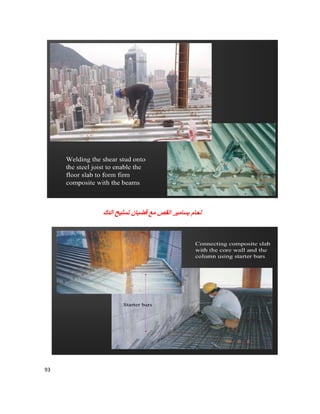
‫اﻟدك‬ ‫ﺗﺳﻠﯾﺢ‬ ‫ﻗﺿﺑﺎن‬ ‫ﻣﻊ‬ ‫اﻟﻘص‬ ‫ﺑﺳﺎﻣﯾر‬ ‫ﻟﺣﺎم‬
94
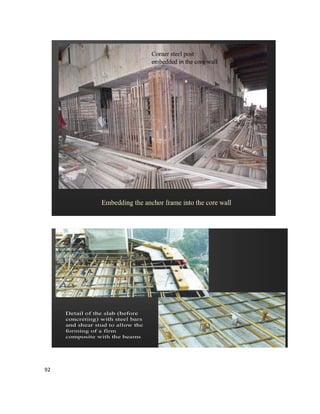
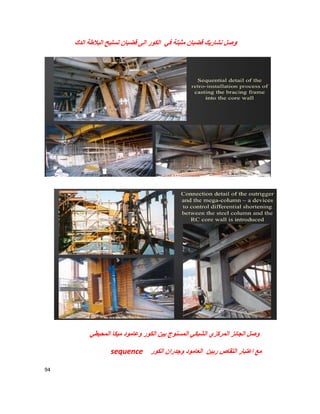
‫و‬‫ﻗﺿﺑﺎن‬ ‫ﻧﺷﺎرﯾك‬ ‫ﺻل‬‫ﻓﻲ‬ ‫ﻣﺛﺑﺗﺔ‬‫اﻟدك‬ ‫اﻟﺑﻼطﺔ‬ ‫ﺗﺳﻠﯾﺢ‬ ‫ﻗﺿﺑﺎن‬ ‫اﻟﻰ‬ ‫اﻟﻛور‬
‫اﻟﻣﺣﯾطﻲ‬ ‫ﻣﯾﻛﺎ‬ ‫وﻋﺎﻣود‬ ‫اﻟﻛور‬ ‫ﺑﯾن‬ ‫اﻟﻣﺳﻧوج‬ ‫اﻟﺷﺑﻛﻲ‬ ‫اﻟﻣرﻛزي‬ ‫اﻟﺟﺎﺋز‬ ‫وﺻل‬
‫اﻟﻛور‬ ‫وﺟدران‬ ‫اﻟﻌﺎﻣود‬ ‫رﺑﯾن‬ ‫اﻟﺗﻘﺎص‬ ‫اﻋﺗﺑﺎر‬ ‫ﻣﻊ‬sequence
95
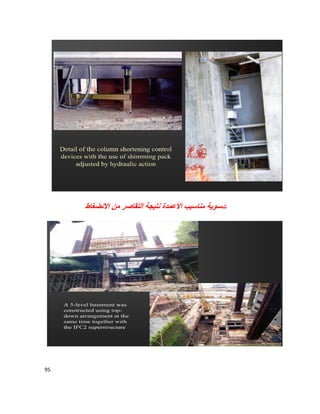
‫ت‬‫اﻻﻧﺿﻐﺎط‬ ‫ﻣن‬ ‫اﻟﺗﻘﺎﺻر‬ ‫ﻧﺗﯾﺟﺔ‬ ‫اﻷﻋﻣدة‬ ‫ﻣﻧﺎﺳﯾب‬ ‫ﺳوﯾﺔ‬
96
97
98
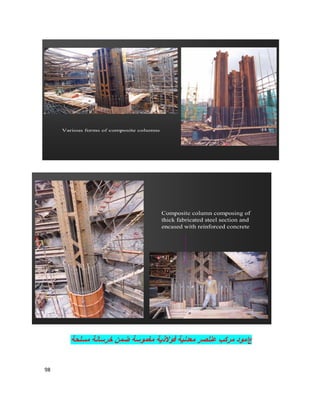
‫ﻣﺳﻠﺣﺔ‬ ‫ﺧرﺳﺎﻧﺔ‬ ‫ﺿﻣن‬ ‫ﻣﻐﻣوﺳﺔ‬ ‫ﻓوﻻذﯾﺔ‬ ‫ﻣﻌدﻧﯾﺔ‬ ‫ﻋﻧﻠﺻر‬ ‫ﻣرﻛب‬ ‫اﻣود‬‫ع‬
99
Dr Youssef Hammida

Outrigger belt trusses design - الجائز الشبكي المركزي والحزام المحيطي مع جدران الكور

  • 1.
    1 D r YoussefHammida Analysis of outrigger & Belts Trusses in Tall Buildings ‫ﺗﺻﻣﯾ‬‫م‬‫اﻟﺟ‬‫ﺎﺋز‬‫اﻟﻣرﻛزي‬ ‫اﻟﺷﺑﻛﻲ‬‫واﻟﺣزام‬ ‫اﻟﻣﺣﯾطﻲ‬‫اﻟﻛور‬ ‫ﺟدران‬ ‫ﻣﻊ‬
  • 2.
    2 ‫اﻟﻛور‬ ‫ﻓﻲ‬ ‫اﻟﻣرﻛزﯾﺔ‬‫اﻟﺷﯾﻛﯾﺔ‬ ‫اﻻطﺎرات‬ ‫اﻧواع‬ ‫اﻟﺷﺑﻛﯾ‬ ‫واﻟﺣزام‬‫ﺎﻟﻣﺣﯾطﻲ‬ ‫ا‬
  • 3.
  • 4.
    4 ‫اﻟﺳﺣﺎب‬ ‫ﻧﺎطﺣﺎت‬ ‫ﺗﺻﻣﯾم‬ ‫ﻧﺎ‬‫ﺗﺻﻣﯾم‬ ‫ان‬‫اﻟﺟﺎﻧﺑﯾﺔ‬ ‫اﻟﻘوى‬ ‫اﺣﻣﺎل‬ ‫ﻋﻠﻰ‬ ‫ﻛﻠﯾﺎ‬ ‫ﯾﻌﺗﻣد‬ ‫اﻟﺳﺣﺎب‬ ‫طﺣﺎت‬ ‫واﻟزﻻزل‬ ‫اﻟرﯾﺎح‬ ‫ﻣن‬‫زاد‬ ‫اﻟﺑرﺟﯾﺔ‬ ‫واﻟﻧﺣﺎﻓﺔ‬ ‫اﻻرﺗﻘﺎع‬ ‫زاد‬ ‫ﻛﻠﻣﺎ‬ ‫اﻟﺗﺻﻣﯾم‬ ‫ﻟﻣﮭﻧدﺳﻲ‬ ‫اﻟﺗﺣدي‬ ‫اﻟﻌواﻣل‬ ‫ﺑﻌض‬ ‫ﺗﺄﻣﯾن‬ ‫ﯾﺗطﻠب‬ ‫واﻟﻧﺣﯾﻔﺔ‬ ‫اﻟﻌﺎﻟﯾﺔ‬ ‫اﻷﺑﻧﯾﺔ‬ ‫دراﺳﺔ‬ ‫اﻷﻣﺎن‬ ‫ﻓﻲ‬ ‫اﻟﺿرورﯾﺔ‬ 1-‫اﻟﻣﻘﺎوﻣﺔ‬‫اﻟﻌﻧﺎﺻر‬ ‫وﺗﺳﻠﯾﺢ‬ ‫ﻟﻣﻘطﻊ‬strength 2-‫واﻻﻧﺗﻘﺎل‬ ‫اﻟﺻﻼﺑﺔ‬drift)( 3-‫اﻟرﯾﺎح‬ ‫ﺗﺄﺛﯾر‬ ‫ﻣن‬ ‫واﻻھﺗزاز‬ ‫اﻟﺣرﻛﺔ‬ ‫اﻟﻣﺳﻣوح‬ ‫ﺑﺎﻻﻧﺗﻘﺎل‬ ‫ﻣﺣﻛوك‬ ‫ااﻟﻌﻧﺎﺻر‬ ‫ﺗﺻﻣﯾم‬ ‫وﯾﻛون‬drift)(  The design of skyscrapers is usually governed by the lateral loads imposed on the structure.  As buildings have gotten taller and narrower, the structural engineer has been increasingly challenged to meet the imposed drift requirements  The design of tall and slender structures is controlled by three governing factors, strength (material capacity), stiffness (drift) and serviceability (motion perception and accelerations), produced by the action of lateral loading, such as wind.  The overall geometry of a building often dictates which factor governs the overall design.
  • 5.
    5  As abuilding becomes taller and more slender, drift considerations become more significant.  Proportioning member efficiency based on maximum lateral displacement supersedes design based on  allowable stress criteria
  • 6.
  • 7.
    7 ‫ﻓوﻻذﯾﺔ‬ ‫ﻗﺿﺑﺎن‬ ‫ﻗطري‬‫ﺗﺻﺎﻟب‬–‫زﻻزل‬ +‫رﯾﺎح‬ ‫ﻣﻘﺎوﻣﺔ‬
  • 8.
    8 ‫ﻓﻲ‬ ‫ﻣرﻛزي‬ ‫ﺟﺎﺋزﺷﺑﻛﻲ‬‫ﻗطري‬‫ﻣﺎﺋل‬ ‫ﺗرﺑﯾط‬ ‫وﻣﺣﯾطﻲ‬ ‫اﻟﻛور‬
  • 9.
    9 ‫ا‬‫ﯾﺗﺑﻊ‬ ‫اﻟﺷﺑﻛﯾﺔ‬ ‫اﻟﺟواﺋز‬‫ﻋﻣل‬ ‫ان‬ ‫وﺗوزﯾﻌﮭﺎ‬ ‫ﺗواﺟدھﺎ‬ ‫اﻣﺎﻛن‬ ‫اﻟﺑﻧﺎء‬ ‫وارﺗﻔﺎع‬ ‫ﻟﻠﻛور‬ ‫ﺑﺎﻟﻧﺳﯾﺔ‬ ‫واﻷﻋﻣدة‬ ‫اﻟطواﺑﻖ‬ ‫وﻋدد‬ ‫اﻟﻣواد‬ ‫وﻧوع‬ ‫اﻟﻣﺣﯾطﯾﺔ‬ ‫اﻟﺧرﺳﺎﻧﺔ‬ ‫ﻣن‬ ‫اﻟﻣﺳﺗﻌﻣﻠﺔ‬ ‫ﺳﺗﯾل‬ ‫ﻓوﻻذ‬ ‫اة‬ ‫اﻟﻣﺳﻠﺣﺔ‬ --‫اﻟﺷﻛل‬a‫اﻟﻛور‬ ‫ﻋﻠﻰ‬ ‫ﻣﺳﻧود‬ ‫ﻣﺳﺗﻣر‬ ‫ﻣرﻛزي‬ ‫ﺷﺑﻛﻲ‬ ‫ﺟﺎﺋز‬ -‫اﻟﺷﻛل‬b‫واﺣد‬ ‫طرف‬ ‫ﻣن‬ ‫ﻣﺳﻧد‬ ‫ﻣﺳﺗﻣر‬ ‫ﻏﯾر‬
  • 10.
    10 ‫ﺑﯾن‬ ‫ﻗطري‬ ‫ﻣﺎﺋل‬‫ﺗﺻﺎﻟب‬ ‫واﻟداﺧل‬ ‫ﻟﻠﻌزوم‬ ‫ﻣﻘﺎوﻣﺔ‬ ‫اطﺎرات‬ ‫اﻟﻣﺣﯾط‬ ‫ﻋﻠﻰ‬ ‫اﻷﻋﻣدة‬
  • 11.
    11  ‫اﻟﻛور‬ ‫ﻓﻲ‬ ‫وﻣرﻛزي‬‫اﻟﻣﺣﯾط‬ ‫ﻋﻠﻰ‬ ‫اﻷﺧﯾر‬ ‫اﻟطﺎﺑﻖ‬ ‫ﻋﻧد‬ ‫ﻣﺣﯾطﻲ‬ ‫ﺷﺑﻛﻲ‬ ‫ﺟﺎﺋز‬
  • 12.
  • 13.
    13 ‫اﻟوﺳط‬ ‫ﻓﻲ‬ ‫او‬‫اﻟﻛور‬ ‫اﻋﻠﻰ‬ ‫ﺷﺑﻛﻲ‬ ‫اطﺎر‬ ‫ﺗواﺟد‬ ‫ﺣﺎل‬ ‫ﻓﻲ‬ ‫ﻋوﺿﺎ‬ ‫اﻟﺟﺎﺋز‬ ‫ﻣﺳﻧودﻋﻠﻰ‬ ‫اﻟﻛور‬ ‫ﻓﯾﺻﯾﺢ‬‫ﻛﺎﺑوﻟﻲ‬ ‫ﻣﺛل‬ ‫اﻟﻛور‬ ‫ﻋﻣل‬ ‫ﻋن‬ ‫اﻟﻛﺑﯾردرﻓت‬ ‫واﻧﺗﻘﺎﻟﮫ‬ ‫اﻟﻛور‬ ‫ﺗﺳﻠﯾﺢ‬ ‫ﺑﻧﻘص‬ ‫وﻛذﻟك‬ ‫اﻟوﺛﺎﻗﺔ‬ ‫ﻋزم‬ ‫ﯾﻧﻘص‬ ‫ﺣﯾث‬
  • 14.
    14 ‫اﻋﺎﻟﯾﺔ‬ ‫اﻷﺑﻧﯾﺔ‬ ‫ﻓﻲ‬‫واﻟزﻻزل‬ ‫ﻟﻠرﯾﺎح‬ ‫اﻟﻣﻘﺎوﻣﺔ‬ ‫اﻟﺟﻣل‬ ‫اﻧواع‬
  • 15.
    15 ‫ﻣﺣﯾطﻲ‬ ‫ﺣزام‬ ‫واطﺎر‬‫ﻣﺳﻠﺞ‬ ‫ﺧرﺳﺎﻧﻲ‬ ‫ﺟدار‬ ‫ﻛور‬ ‫ﻣﻊ‬ ‫ﻣرﻛزي‬ ‫ﺷﺑﻛﻲ‬ ‫اطﺎر‬ ‫ﻋﺎدة‬‫ﻣﺎ‬‫طﺎﺑﻘﯾن‬ ‫اﻟﻰ‬ ‫واﺣد‬ ‫طﺎﺑﻖ‬ ‫ﺑﯾن‬ ‫اﻟﺷﺑﻛﻲ‬ ‫اﻟﺟﺎﺋز‬ ‫ارﺗﻔﺎع‬ ‫ﯾﻛون‬ ‫واﻟﻛ‬ ‫اﻟﻣﺻﺎﻋد‬ ‫وﻏرف‬ ‫اﻟﺧدﻣﺎت‬ ‫طواﺑﻖ‬ ‫ﻓﻲ‬ ‫اﻟﻔراغ‬ ‫ھذا‬ ‫ﯾﺗوﻓر‬ ‫ﺟﯾث‬‫ﮭرﺑﺎء‬
  • 16.
    16 ‫ھذه‬ ‫ﺣﯾث‬‫وﺗ‬ ‫اﻟﻛور‬‫ﺻﻼﺑﺔ‬ ‫ﻣن‬ ‫ﺗزﯾد‬ ‫ااﻟﺟواﺋز‬‫ﻣﻧﻛﺎﻣﻠﺔ‬ ‫ﻛوﺣدة‬ ‫اﻷﻋﻣدة‬ ‫ﻣﻊ‬ ‫ﻌﻣل‬ ‫اﻷﻋﻣدة‬ ‫ﺗﺣوﻟﮭﺎ‬ ‫اﻟﺗﻲ‬ ‫واﻻﻧﻘﻼب‬ ‫اﻟﻘص‬ ‫وﻗوى‬ ‫اﻻﻧﻌطﺎف‬ ‫ﻋزم‬ ‫ﻣﻘﺎوﻣﺔ‬ ‫ﻓﻲ‬ ‫اﻟﻰ‬ ‫اﻟﻣﺣﯾطﯾﺔ‬‫اﻟﻌﺎﻣود‬ ‫ﻣﻘطﻊ‬ ‫ﻓﻲ‬ ‫ﺿﺎﻏطﺔ‬ ‫ﺷﺎدة‬ ‫ﻗوى‬ ‫ﻧﺳﯾﺔ‬ ‫ﻧﻘص‬ ‫اﻟﻰ‬ ‫ﺑﺎﻻﺿﺎﻓﺔ‬ ‫اﻟﻛﺛﺑف‬ ‫اﻟﻛور‬ ‫وﺗﺳﻠﯾﺢ‬ ‫ﻣﻘطﻊ‬ ‫ﯾﻘل‬ ‫وھﻛذا‬ ‫ووﺳطﮫ‬ ‫اﻟﻛور‬ ‫اطراف‬ ‫ﻓﻲ‬ ‫اﻟﺗﺳﻠﯾﺢ‬
  • 17.
    17 The Efficient Useof Outrigger & Belt Truss in Tall Buildings
  • 18.
    18 ‫ﺳﺑرﯾﻧﻎ‬ ‫ﻛﻣﺳﺎﻧد‬ ‫ﺗﻌﻣل‬‫اﺻﺑﺣت‬ ‫اﻟﺷﯾﻛﯾﺔ‬ ‫اﻟﺟواﺋز‬ ‫ﻛﯾف‬ ‫اﻟﺷﻛل‬ ‫ﻣن‬ ‫ﻧﻼﺣظ‬  ‫اﻷﻋﻣدة‬ ‫ﺗﺷﺎرك‬ ‫ﺣﯾث‬ ‫اﻟدرﻓت‬ ‫اﻻﻧﺗﻘﺎل‬ ‫ﺗﻘﻠل‬ ‫و‬ ‫اﻟدوران‬ ‫ﻣن‬ ‫اﻟﻛور‬ ‫ﺗﻣﻧﻊ‬ ‫ﺿﺎﻏطﺔ‬ ‫ﺷﺎدة‬ ‫ﻗوى‬ ‫اﻟﻰ‬ ‫اﻟﻛور‬ ‫ﻋﻠﻰ‬ ‫اﻟﻌﺎﻣﻠﺔ‬ ‫ﻋزوم‬ ‫وﺗﺣوﯾل‬ ‫اﻟطرﻓﯾﺔ‬ ‫ﺑﻣوﺟﺑﮭﺎ‬ ‫اﻷﻋﻣدة‬ ‫ﺗﺳﻠﯾﺞ‬ ‫ﯾﺗم‬ 
  • 19.
    19 ‫اﻟطرﻓﯾﺔ‬ ‫ااﻷﻋﻣدة‬ ‫اﻟﻰ‬‫واﻻﻓﻘﯾﺔ‬ ‫اﻟﺷﺎﻗوﻟﯾﺔ‬ ‫اﻟﺣﻣوﻻت‬ ‫ﯾﻧﻘل‬ ‫ﻣﺣﯾطﻲ‬ ‫ﺣزام‬ ‫ﺷﺑﻛﻲ‬ ‫اطﺎر‬ ‫اﻟﺗﺣوﯾل‬ ‫ﻛﻣرات‬ ‫ﺣﺎل‬ ‫ﻓﻲ‬ ‫ﻛﻣﺎ‬transfer Beam
  • 20.
    20 ‫وﺳطﻲ‬ ‫ﻣﻌدﻧﻲ‬ ‫ﻛور‬+‫ﺑرﯾﺳﻧك‬ ‫ﻣرﻛزﯾﺔ‬‫ﺷﺑﻛﯾﺔ‬ ‫اطﺎرات‬‫اﻟﻛور‬ ‫ﻋﻠﻰ‬ ‫ﻣﺳﻧودة‬‫وﻣﺣﯾطﺔ‬ ‫اﻋﻣدة‬ + ‫ﻛﻣرات‬ ‫ﻟﻠﻌزوم‬ ‫ﻣﻘﺎوم‬ ‫ﻣﺣﯾطﻲ‬ ‫ﻣﻌدﻧﻲ‬ ‫اطﺎر‬ ‫ﺧرﺳﺎﻧﺑﺔ‬ ‫ﺑﻼطﺔ‬ + ‫ﻣﻌدﻧﻲ‬ ‫دﯾك‬ + ‫ﻣﻌدﻧﯾﺔ‬ ‫ﻣدات‬
  • 21.
    21 ‫اﻟﻛور‬ ‫ﺟدران‬ ‫ﻓﻲ‬‫اﻟﺷﺑﻛﯾﺔ‬ ‫اﻟﺟواﺋز‬ ‫ﺗﺛﺑﯾت‬ ‫ﻧﻘﺎط‬
  • 22.
    22  All multi-storybuildings require at least one core to accommodate elevators, stairs, mechanical shafts, and other common services.  Because views are a significant part of the intrinsic value in tall buildings, it is most common for their core or cores to be centrally located within the floor plan to place occupants along exterior walls.  A central core also locates the center of lateral stiffness close to the center of lateral wind load
  • 23.
    23 and center ofmass for lateral seismic loads, minimizing torsional forces.  In high-seismic regions many tall buildings have a dual system, sometimes called “core and frame” or “tube in tube,” with a perimeter moment frame providing significant torsional stiffness but a smaller contribution to overturning stiffness. When direct or conventional outrigger walls or trusses are not acceptable for the building due to space limitations or a column layout which is not aligned with the core walls, an indirect, “virtual”outrigger or belt truss system may be used. ‫ﺳﻧﯾل‬ ‫ﻣﻌدﻧﻲ‬ ‫او‬ ‫ﻣﺳﻠﺣﺔ‬ ‫ﺧرﺳﺎﻧﺔ‬ ‫ﻛور‬ ‫ﺗواﺟد‬ ‫ﻣن‬ ‫ﺑد‬ ‫ﻻ‬ ‫اﻟﺑرﺟﯾﺔ‬ ‫اﻷﺑﻧﯾﺔ‬ ‫ﻓﻲ‬ ‫ﻣرﻛز‬ ‫ﻣﻊ‬ ‫ﻣﺗطﺎﺑﻖ‬ ‫ﺗﻘرﺑﯾﺎ‬ ‫ﻣﺣوري‬ ‫ﺗﻣرﻛز‬‫ﻣرﻛزﯾﺔ‬ ‫وﺗﻘﻠﯾل‬ ‫واﻟﺻﻼﺑﺔ‬ ‫اﻟﻛﺗﻠﺔ‬ ‫اﻟﻔﺗل‬ ‫ﺳﺗﯾل‬ ‫ﻣﻌدﻧﯾﺔ‬ ‫ام‬ ‫ﺧرﺳﺎﻧﯾﺔ‬ ‫ﻟﻠﻌزوم‬ ‫ﻣﻘﺎوﻣﺔ‬ ‫ﻣﺣﯾطﯾﺔ‬ ‫اطﺎرات‬ ‫ﺗواﺟد‬ ‫ﻣن‬ ‫ﻻﺑد‬ ‫ﻧظﺎﻣﻲ‬ ‫ﻛور‬ ‫ﯾﺗواﺟد‬ ‫ﻻ‬ ‫ﻋﻧدﻣﺎ‬‫ﻣﺣﯾطﻲ‬ ‫ﺷﺑﻛﻲ‬ ‫اطﺎر‬ ‫اﺳﺗﻌﻣﺎل‬ ‫ﻓﯾﻣﻛن‬ ‫ﺻﻧدوﻗﻲ‬ virtual”outrigger or belt truss
  • 24.
    24 ‫ال‬‫ﻋﻠ‬ ‫ﻣﺳﻧود‬ ‫اﻟداﺧﻠﻲ‬‫اﻟﺷﺑﻛﻲ‬ ‫اطﺎر‬‫اﻟﺧﺎرﺟﯾﺔ‬ ‫واﻷﻋﻣدة‬ ‫اﻟﻛور‬ ‫ﻰ‬ ‫اﻻطﺎر‬‫اﻟﺷﺑﻛﻲ‬‫اﻟﻣﺣﯾطﻲ‬‫اﻟداﺧﻠﻲ‬ ‫اﻟﺷﺑﻛﻲ‬ ‫اﻻطﺎر‬ ‫ﻋﻠﻰ‬ ‫ﻣﺳﻧود‬ ‫اﻟﻣﺣﯾطﯾﺔ‬ ‫اﻷﻋﻣدة‬ ‫او‬
  • 25.
    25 The outrigger andbelt truss system is one of the lateral loads resisting system in which the external columns are tied to the central core wall with very stiff outriggers and belt truss at one or more levels.  The belt truss tied the peripheral column of building while the outriggers engage them with main or central shear wall  The belt truss tied the peripheral column of building while  the outriggers engage them with main or central shear wall  The aim of this method is to reduce obstructed space compared to the conventional method.  The floor space is usually free of columns and is between the core and the external columns, thus increasing the functional efficiency of the building.
  • 26.
    26  Exterior columnsrestrained the core wall from free rotation through outrigger arms.  Outrigger and belt trusses, connect planar vertical trusses and exterior frame columns.  Outrigger system can lead to very efficient use of structural  materials by mobilizing the axial strength and stiffness of exterior columns. ‫اﻟﺷﺑﻛﯾﺔ‬ ‫اﻻطﺎرات‬‫اﻟﻘوى‬ ‫ﻣﻘﺎوﻣﺔ‬ ‫ﻣﻧﮭﺎ‬ ‫اﻟﻐﺎﯾﺔ‬ ‫واﻟﻣﺣﯾطﯾﺔ‬ ‫اﻟﻣرﻛزﯾﺔ‬ ‫واﻟزﻻزل‬ ‫اﻟرﯾﺎح‬ ‫ﻣن‬ ‫اﻷﻓﻘﯾﺔ‬ ‫اﻷ‬ ‫ﻣﻊ‬ ‫اﻟﻛور‬ ‫ﻋﻧﺻر‬ ‫ﺗرﺑط‬ ‫اﻟﺷﺑﻛﯾﺔ‬ ‫اﻻطﺎرات‬ ‫ﺣﯾث‬‫اﻟﺧﺎرﺟﯾﺔ‬ ‫ﻋﻣدة‬ ‫اﻟﻛور‬ ‫اﻧﻘﻼب‬ ‫ﻋزم‬ ‫ﯾﺣول‬ ‫طوﯾﻠﺔ‬ ‫ﻣزدوﺟﺔ‬ ‫وزراع‬ ‫واﺣدة‬ ‫ﻛوﺣدة‬ ‫ﻟﺗﻌﻣل‬ ‫اﻟﻛور‬ ‫اطراف‬ ‫ﻋن‬ ‫ﻋوﺿﺎ‬ ‫اﻷﻋﻣدة‬ ‫ﻓﻲ‬ ‫ﺿﺎﻏطﺔ‬ ‫ﺷﺎدة‬ ‫ﻓوة‬ ‫اﻟﻰ‬ ‫اﻋﻣدة‬ ‫ﺗوﺟد‬ ‫ﻻ‬ ‫وﻋﺎدة‬‫واﺳﻌﺔ‬ ‫ﻓراغ‬ ‫ﻣﺳﺎﺣﺎت‬ ‫ﻋﻠﻰ‬ ‫واﻟﺣﺻول‬ ‫داﺧﻠﯾﺔ‬  
  • 27.
    27 Types Of OutriggerTruss System On the basis of connectivity of core to exterior columns, this system may be divided as in two types:  Conventional Outrigger Concept  Virtual Outrigger Concept
  • 28.
    28 ‫اﻟﻜﻮر‬ ‫ﻣﮫ‬ ‫اﻟﻤﺮﻛﺰي‬‫اﻟﺸﺒﻜﻲ‬ ‫اﻟﺠﺎﺋﺰ‬ ‫ﻧﺜﺒﯿﺖ‬ ‫ﻧﻘﺎط‬ 
  • 29.
    29  Tall buildingwith conventional outriggers,  In the conventional outrigger concept, the outrigger trusses or girders are connected directly to shear walls or braced frames at the core and to columns located outboard of the core. Typically, (but not necessarily), the columns are at the outer edges of the building Virtual Outrigger Concept  In the “virtual” outrigger, the same transfer of overturning from the core to elements outboard of the core is achieved, but without a direct connection between the outrigger trusses and the core.  The basic idea behind the virtual outrigger concept is to use floor diaphragms, which are typically very stiff and strong in their own plane Belt Trusses As Virtual Outriggers
  • 30.
    30  Frames, VerticalTrusses, Belt and Outrigger Trusses  The exterior fascia shear frames and the vertical trusses in the core can be tied together by a system of outrigger and belt trusses which are provided at plant room levels, where the trusses will not interfere with the interior space planning.  Figure 4 shows the arrangement of trusses. The primary result of the outrigger trusses is the development of axial forces in the exterior columns due to wind action.  The use of belt trusses on the facades, at the same level and perpendicular to the outrigger trusses, further enhances participation of exterior frames in the cantilever behaviour.  The belt trusses transform the two-dimensional frame system into a three-dimensional
  • 31.
  • 32.
    32  Outrigger trusses run parallel to the directionof lateral force. Belt trusses run perpendicular to the direction of the lateral force, along the perimeter of the building.  This behavior significantly improves the lateral stiffness under wind forces. The use of belt trusses on the facades, at the same level and perpendicular to the outrigger trusses, further enhances participation of exterior frames in the cantilever behavior.  . The belt trusses transform the two-dimensional frame system into a three-dimensional frame system which resists wind action.
  • 33.
    33  The buildingsway under wind is significantly reduced by the introduction of these trusses.  A review of the deflection curve indicates two stiffening effects: one related to the participation of the external columns in a total-building-width cantilever mode; the other related to the stiffening of the facade frame by the belt trusses.  Improvements in overall stiffness of up to 25% can result as compared to the Shear Truss and Frame System without such outrigger-belt trusses. ++
  • 34.
  • 35.
  • 36.
  • 37.
    37 Three-Dimensional Model  A three-dimensionaltypical floor structural model will be used for the study.  The model is a60-storey reinforced concrete consisting frame atthe periphery and core wall in the center.  The building is viewed as an assemble of vertical frames interconnected at each storey level by diaphragm floor slab while the secondary beam was considered as point load on main beam. The static and dynamic computer analysis was carried out using ETABS program [9]. ‫اﻟﻔراﻏﯾﺔ‬ ‫اﻟﺷﺑﻛﯾﺔ‬ ‫اﻟﺟواﺋز‬ ‫وﺑﺷﻛل‬ ‫اﻟطﺎﺑﻖ‬ ‫ارﺗﻔﺎع‬ ‫ﻛﺎﻣل‬ ‫ﻋﻠﻰ‬ ‫ارﺗﻔﺎﻋﮭﺎ‬ ‫ﯾﻛون‬‫ﺑوﻛس‬ ‫ﻗطرﯾﺔ‬ ‫ﺗﺻﺎﻟب‬ ‫ﻋﻧﺎﺻر‬ ‫ﻣﻊ‬‫ﻋﺎﻣودﯾن‬ ‫ﺑﯾن‬ ‫ﯾﺻل‬ ‫ﻣﺗﺻﺎﻟب‬ ‫ﻗطري‬ ‫ﺑﺷﻛل‬ ‫او‬ ‫واﻟﺳﻔﻠﻲ‬ ‫اﻟﻌﻠوي‬ ‫اﻟﺳﻘف‬ ‫ﺑﻼطﺔ‬ ‫وﺣﺎﻣﻠﺔ‬ ‫ﻣﻌدﻧﯾﺔ‬ ‫ﺑﻣدادات‬ ‫ﻣدﻋم‬ ‫واﻟﺳﻘف‬‫ﻛﯾردر‬ ‫ﻣﻌدﻧﯾﺔ‬ ‫ﻛﻣرات‬ ‫ﻋﻠﻰ‬ ‫ﻣﺳﻧودة‬ ‫ﺧرﺳﺎﻧﺔ‬ ‫+ﺑﻼطﺔ‬‫اﻷﻓﻘﻲ‬ ‫اﻟﻘوى‬ ‫ﻧﻘل‬ ‫ﻓﻲ‬ ‫ﺻﻠب‬ ‫ﻛدﯾﺎﻓرام‬ ‫ﺗﻌﻣل‬
  • 38.
  • 39.
  • 40.
  • 41.
  • 42.
  • 43.
  • 44.
  • 45.
  • 46.
    46  The stress diagramin Figure 1 illustrates the relative efficiency of hinging the belt trusses to the perimeter columns rather than fixing them rigidly. If the trusses were to be continuously connected to the columns, the entire system would act as a unit, thus utilizing only a small percentage of the moment-resisting capacity of the core, whose walls are relatively close to the neutral axis of the building Equation of Outrigger Structures
  • 47.
    47 This is indicatedby the continuous distribution of stresses shown for the rigid frame in Figure 1.a. On the other hand, belted musses that are cantilevered from the core and hinged to the perimeter columns better develop the moment resisting capacity of the core while still engaging the exterior columns as in the rigid system (Figure 1.b).  In fact, since the hinged shear connections induce no bending moments into the columns, the axial capacity of the columns is increased relative to that for the case of fixed shear connections. The response of a core frame building with belt trusses to lateral loading is shown in Figure 2. This Figure schematically shows the reduction of moment in the shear-core for a one-outrigger system (Figure 2.b) and a two-outrigger system (Figure 2. c) compared to that for a no-outrigger system (Figure 2. a).
  • 48.
    48  The outriggerbraced structure in Figure 4 shows a shear wall with rigidly connected outriggers. At the outer ends they are connected to the foundation through the exterior columns.  When subjected to horizontal loading, the wall and outriggers will rotate causing compression in the downwind column and tension in the column on the upwind side. These axial forces will resist the rotation in the wall. A simplified method of analysis of this structure has been presented earlier (Stafford Smith and Coull, 1991; Stafford Smith and Salim, 1981).  It was assumed that the structure behaves linear elastically, columns onlycarry axial forces and that the sectional properties of wall and columns remain unchanged
  • 49.
    49 up the heightof the structure ‫اﻷﻋظﻣ‬ ‫اﻻﻧﺗﻘﺎل‬ ‫ﺣﺳﺎب‬‫اﻟطواﺑﻖ‬ ‫اﻋﻠﻰ‬ ‫ﻓﻲ‬ ‫ﻲ‬  The maximum deflection at the top of the structure consists of two terms: the free deflection of the wall subject to the full horizontal loading and a reduction term representing the decrease in lateral deflection due to the restraining moment formed by the axial forces in the columns.  w is a uniformly distributed lateral load,  H is the total height of the structure,  E is the modulus of elasticity, Iw is the second moment of area of the wall and ‫اﻟﻛور‬ ‫ﻣﻊ‬ ‫اﻟﺷﺑﻛﻲ‬ ‫ﺗﺛﺑﯾت‬ ‫ﻓﺎﺻﻠﺔ‬ ‫ﺣﺳﺎب‬  x represents the distance measured from the top. The restraining moment on the wall is
  • 50.
    50  Ac isthe sectional area of the column,  l` is the distance between the columns and EIo is the bending stiffness of the outrigger. Introducing flexibility parameters for vertical and horizontal structure, respectively
  • 51.
  • 52.
  • 53.
  • 54.
  • 55.
  • 56.
  • 57.
  • 58.
    58  Offset andAlternative Offset Outrigger Concepts the outriggers may be located elsewhere than in the planes of the core walls, while retaining all the advantages and mitigating some of the disadvantages of the conventional outrigger system. For the offset outrigger system to work, it is essential that the floor slabs be effectively rigid and strong enough in their planes to transfer the horizontal plane shears between the outrigger arm and the core -‫اﻟﻛور‬ ‫ﺟدران‬ ‫ﻋن‬ ‫ﺑﻌﯾد‬ ‫ﯾﻛون‬ ‫ان‬ ‫اﻟﺷﺑﻛﻲ‬ ‫اﻟرﺋﯾﺳﻲ‬ ‫ﻟﻠﺟﺎﺋز‬ ‫ﯾﻣﻛن‬ ‫اﻟﻘص‬ ‫ﻗوى‬ ‫ﻟﻧﻘل‬ ‫ﺻﻠب‬ ‫دﯾﺎﻓرام‬ ‫ﺑﻼطﺔ‬ ‫ﺗﺄﻣﯾن‬ ‫ﻣﻊ‬ ‫اﻟﺻﻼﺑﺔ‬ ‫وﺑﻧﻔس‬ ‫اﻟﻛور‬ ‫اﻟﻰ‬ ‫اﻟﺷﺑﻛﻲ‬ ‫ﻣن‬
  • 59.
    59 ‫ﻗوى‬ ‫ﻋودة‬ ‫ﻣﯾﻛﺎﻧﯾزم‬‫اﻟﻛور‬‫ﺟدران‬ ‫اﻟﻰ‬ ‫اﻟطرﻓﻲ‬ ‫اﻟﺷﺑﻛﻲ‬ ‫اﻟﺟﺎﺋز‬ ‫ﻣن‬ ‫اﻟﻘص‬ ‫اﻟطواﺑﻖ‬ ‫ﺑﻼطﺎت‬ ‫اﻧﺗﻘﺎل‬ ‫ﺑﻌد‬
  • 60.
    60 ‫اﻟﻘص‬ ‫ﻟﻘوى‬ ‫ﺗﺣوﯾﻠﻲ‬‫ﻛﺟﺎﺋز‬ ‫اﻟﺑدروم‬ ‫وارﺿﯾﺔ‬ ‫ﺳﻘف‬ ‫ﺑﻼطﺔ‬ ‫اﺳﺗﻌﻣﺎل‬
  • 61.
    61  l buildingwith belt trusses Example  The method of analysis of the above mentioned system is based up on the assumptions that  the outriggers are rigidly attached to the core;  The core is rigidly attached to the foundation;  The sectional properties of the core, beams and columns are uniform throughout the height;  Tensional effects are not considered; Material behavior is in linear elastic range;
  • 62.
    62  The OutriggerBeams are flexurally rigid and induce only axial forces in the columns;  The lateral resistance is provided only by the bending resistance of the core and the tie down action of the exterior columns connected to the outrigger;  The rotation of the core due to the shear deformation is negligible.  The following load combinations are used to determine the maximum lateral deflection in the structure. i) DL+LL ii) DL+LL±WL(x or y) iii) DL+LL±EL(x or y) iv) DL±WL(x or y) v) DL±EL(x or y)  The structure with above mentioned specifications and assumptions is analyzed using the program ETABS and bending moments, shear forces, lateral deflections are calculated for both Wind & Earthquake loading.  Since the wind load cases are governing, the graph and tables are represents the same.
  • 63.
    63  Moments Another veryimportant factor that is monitored is the moments along the height of the concrete core. The moments that were monitored as shown in figure 5.3 and are 1. The moments below the first outrigger (cap truss). 2. The moments above the second outrigger. 3. The moment below the second outrigger. 4 . The core base moment
  • 64.
    64 ‫اﻟﻛور‬ ‫ﺟدران‬ ‫ﻓﻲ‬‫اﻟﺷﺑﻛﻲ‬ ‫اﻟﺟﺎﺋز‬ ‫ﺗﺛﺑﯾت‬ ‫طرق‬–‫اﻟﻛور‬ ‫داﺧل‬ ‫اﻟﺷﺑﻛﻲ‬ ‫ﻣن‬ ‫ﺟزء‬ ‫اﻟﻛور‬ ‫ﻗﺿﯾﺎن‬ ‫ﻣﻊ‬ ‫ﻣﻠﺣﻣوﻣﺣﺔ‬ ‫ﻗوﻻذﯾﺔ‬ ‫ﻣﻌدﻧﯾﺔ‬ ‫ﺻﻔﺣﯾﺔ‬ ‫ﺗﺛﺑﯾت‬
  • 65.
    65 Middle outrigger girderconnection to embed plate. ‫اﻟﻛور‬ ‫طرﻓﻲ‬ ‫ﻓوﻻذﯾﺔ‬ ‫ﺑﻘﺿﺑﺎن‬ ‫ﺻﻐﺎﺋﺢ‬ ‫ال‬ ‫وﺻل‬
  • 66.
    66 ‫ﻣرﻛب‬ ‫اﻧﺷﺎء‬ ‫اﻟﻛور‬‫ﺟدران‬ ‫ﺿﻣن‬ ‫اﻟﺷﺑﻛﻲ‬ ‫اﻟﺟﺎﺋز‬ ‫ﺗﻣرﯾر‬ ‫ﺧﺎرﺟﯾﺔ‬ ‫اﻋﻣدة‬ ‫اﻟﺷﻛﯾﺔ‬ ‫اﻟﻌﺎدﯾﺔ‬ ‫اﻟﺟواﺋز‬ ‫ﺗﺛﺑﯾت‬
  • 67.
  • 68.
    68 ‫اﻟﻣﺣﯾطﯾﺔ‬ ‫واﻷﻋﻣدة‬ ‫اﻟﻛور‬‫ﺟدران‬ ‫ﻋﻠﻰ‬ ‫اﻟﺷﺑﻛﻲ‬ ‫اﻟﺟﺎﺋز‬ ‫اﺳﺗﻧﺎد‬
  • 69.
    69 ‫اﻟﻛﻣرة‬ ‫ﻓﻲ‬ ‫اﻟﻠدن‬‫اﻟﻣﻔﺻل‬ ‫وﺗﺷﻛل‬ ‫اﻟﺿﻌﯾف‬ ‫واﻟﺟﺎﺋز‬ ‫اﻟﻘوي‬ ‫اﻟﻌﺎﻣود‬
  • 70.
  • 71.
  • 72.
    72 ‫اﻟﻛور‬ ‫ﺟدران‬ ‫ﻋﻠﻰ‬‫اﻟﺷﯾﻛﯾﺔ‬ ‫اﻟﻌﻧﺎﺻر‬ ‫ﺗﺛﺑﯾت‬ ‫ﻋﻘد‬ ‫اﺷﻛﺎل‬
  • 73.
    73 ‫اﻷﻓﻘﯾﺔ‬ ‫اﻟﻛور‬ ‫ﺗﺳﻠﯾﺢ‬‫اﻟﻰ‬ ‫ﻣﻠﺣﻣوﻣﺔ‬ ‫ﻣﻌدﻧﯾﯨﺔ‬ ‫ﺻﻔﺎﺋﺢ‬ ‫اﻟﻛور‬ ‫ﺟدران‬ ‫ﻣﻊ‬ ‫اﻟﺷﺑﻛﯾﺔ‬ ‫اﻟﻌﺗﺎﺻر‬ ‫ﻟوﺻل‬  Embedded anchors for the connection between steel beam and concrete wall The embedded anchors for the connection between steel beam and concrete wall could adopt different types according to the magnitude of load applied on the beam, see Table 3.3. The experiments show that type 1, the headed stud anchor would lead to the cracking of the concrete wall and slippage of the studs under the cyclic reversed loading, see Figure 3.3.
  • 74.
    74 Type 2, stud-steelbar anchor and type 3, sandwich-like steel bar anchor, as well as type 4, the embedded steel shape, their failures mainly depended on the upper or lower embedded steel bars or steel plates. While type 4 its anchorage capacity, energy dissipation and ductility are better than the others, it is suggested using to the major bearing member in high seismic fortification areas ‫اﻟطرﻓﻲ‬ ‫اﻟﻌﺎﻣود‬ ‫ﻣﻊ‬ ‫اﻟﺷﺑﻛﻲ‬ ‫اﻟﺟﺎﺋز‬ ‫اﺗﺻﺎل‬ ‫اﻟﻛور‬ ‫ﺟدار‬ ‫ﻣن‬ ‫اﻻﺳﺗﻧﺎد‬ ‫ﻧﻘطﺔ‬ ‫ﺗﺻدع‬
  • 75.
    75 following conclusions aremade from the present study 1. The use of outrigger and belt truss system in high-rise buildings increase the stiffness and makes the structural form efficient under lateral load.  2. The maximum drift at the top of structure when only core is employed is around 50.63 mm and this is reduced by suitably selecting the lateral system.  The placing of outrigger at top storey as a cap truss is 48.20 mm and 47.63 mm with and without belt truss respectively. Hence there are not much reductions in drift with belt truss.  3. Using second outrigger with cap truss gives the reduction of 18.55% and 23.01% with and without belt truss.  The optimum location of second outrigger is middle height of the building.  4. It can be conclude that the optimum location of the outrigger is between 0.5 times its height. CONCLUSIONS
  • 76.
    76 ‫اﻟﺗﺻﻣﯾم‬ ‫ﻣﻊ‬ ‫ﺗدارﻛﮭﺎ‬‫ﯾﺟب‬ ‫اﻋﺗﺑﺎرات‬ -‫ﻟﻠﻌزوم‬ ‫ﻣﻘﺎوﻣﺔ‬ ‫ﺧﺎﺻﺔ‬ ‫اطﺎرات‬ ‫اﻟﻛود‬ ‫ﻓﻲ‬ ‫ﺟﺎء‬ ‫ﻣﺎ‬ ‫ﺗطﺑﯾﻖ‬ ‫ﻣﺣﯾطﺔ‬ ‫اﻋﻣدة‬ ‫اﻟﺿﻌﯾف‬ ‫واﻟﺟﺎﺋز‬ ‫اﻟﻘوي‬ ‫واﻟﻌﺎﻣود‬ ‫اﻟﻠدن‬ ‫اﻟﻣﻔﺻل‬ ‫وﺗﺷﻛل‬ -‫اﻟﻣرﻛزي‬ ‫اﻟﺷﺑﻛﻲ‬ ‫اﻟﺟﺎﺋز‬ ‫طﺎﺑﻖ‬ ‫ﻓﻲ‬ ‫وﺧﺎﺻﺔ‬ ‫واﻟﺿﻌﯾف‬ ‫اﻟﻠﯾن‬ ‫اﻟطﺎﺑﻖ‬‫واﻟﻣﺣﯾطﻲ‬ -‫اﻟﺗﺣوﯾل‬ ‫طﺎﺑﻖ‬ ‫ﻓﻲ‬ ‫وﺧﺎﺻﺔ‬ ‫اﻷﻓﻘﯾﺔ‬ ‫اﻟﻘوى‬ ‫وﻧﻘل‬ ‫ﻣﻣرات‬ ‫ﻣﻊ‬ ‫ﺻﻠب‬ ‫ودﯾﺎﻓرام‬ ‫اﻟﺑﻼطﺔ‬ -‫ﺿﺎﻏطﺔ‬ ‫ﻣﺣورﯾﺔ‬ ‫ﺣﻣوﻟﺔ‬ ‫وﺗﺄﺛﯾر‬ ‫اﻟﻸﻋﻣدة‬ ‫ﺗﻘﺎﺻر‬ ‫دراﺳﺔ‬ ‫ﺗﺣﻠﯾل‬
  • 77.
  • 78.
  • 79.
    79 ‫اﻟﺧرﺳﺎﻧﻲ‬ ‫اﻟﻛور‬ ‫ﺟدران‬‫ﻣﻊ‬ ‫اﻟﺷﺑﻛﻲ‬ ‫ﻋﻧﺎﺻر‬ ‫اﺗﺻﺎل‬ ‫ﺗﻔﺎﺻﯾل‬
  • 80.
    80 ‫ﻗطر‬ ‫ﻣﻔرغ‬ ‫ﻋﺎﻣود‬‫ﻣﻊ‬ ‫ﻣﺣﯾطﻲ‬ ‫ﺷﺑﻛﻲ‬ ‫ﺟﺎﺋز‬ ‫اول‬2‫ﻣﺗر‬
  • 81.
  • 82.
    82 ‫اﻟﻛور‬ ‫ﺟدران‬ ‫ﺧﻼل‬‫اﻟﻔوﻻذﯾﺔ‬ ‫واﻟﻣﻘﺎطﻊ‬ ‫اﻟوﺻل‬ ‫ﻣرورﺗﺳﻠﯾﺢ‬
  • 83.
  • 84.
  • 85.
  • 86.
  • 87.
  • 88.
    88 ‫اﻟﻛور‬ ‫ﺧﻼل‬ ‫وﻣرورھﺎ‬‫اﻟﻣﻌدﻧﯾﺔ‬ ‫اﻟﻌﻧﺎﺻر‬ ‫وﺻل‬
  • 89.
  • 90.
    90 ‫اﻟﺟواﺋز‬ ‫ﻣﻊ‬ ‫ﻣرﻛب‬‫اﻧﺷﺎء‬ ‫ﻋﺎﻣود‬ ‫ﻣﯾﻛﺎ‬‫ﺗﻘرﯾ‬ ‫واﻟﻣﺣﯾطﯾﺔ‬ ‫اﻟﻣرﻛزﯾﺔ‬=‫ﻗطر‬ ‫ﯾل‬2‫م‬
  • 91.
    91 ‫اﻟﺧرﺳﺎﻧﻲ‬ ‫اﻟﻛور‬ ‫ﺟدرام‬‫ﻣﻊ‬ ‫اﻟﻣرﻛزي‬ ‫اﻟﺟﺎﺋز‬ ‫رﺑط‬
  • 92.
  • 93.
    93 ‫اﻟدك‬ ‫ﺗﺳﻠﯾﺢ‬ ‫ﻗﺿﺑﺎن‬‫ﻣﻊ‬ ‫اﻟﻘص‬ ‫ﺑﺳﺎﻣﯾر‬ ‫ﻟﺣﺎم‬
  • 94.
    94 ‫و‬‫ﻗﺿﺑﺎن‬ ‫ﻧﺷﺎرﯾك‬ ‫ﺻل‬‫ﻓﻲ‬‫ﻣﺛﺑﺗﺔ‬‫اﻟدك‬ ‫اﻟﺑﻼطﺔ‬ ‫ﺗﺳﻠﯾﺢ‬ ‫ﻗﺿﺑﺎن‬ ‫اﻟﻰ‬ ‫اﻟﻛور‬ ‫اﻟﻣﺣﯾطﻲ‬ ‫ﻣﯾﻛﺎ‬ ‫وﻋﺎﻣود‬ ‫اﻟﻛور‬ ‫ﺑﯾن‬ ‫اﻟﻣﺳﻧوج‬ ‫اﻟﺷﺑﻛﻲ‬ ‫اﻟﻣرﻛزي‬ ‫اﻟﺟﺎﺋز‬ ‫وﺻل‬ ‫اﻟﻛور‬ ‫وﺟدران‬ ‫اﻟﻌﺎﻣود‬ ‫رﺑﯾن‬ ‫اﻟﺗﻘﺎص‬ ‫اﻋﺗﺑﺎر‬ ‫ﻣﻊ‬sequence
  • 95.
    95 ‫ت‬‫اﻻﻧﺿﻐﺎط‬ ‫ﻣن‬ ‫اﻟﺗﻘﺎﺻر‬‫ﻧﺗﯾﺟﺔ‬ ‫اﻷﻋﻣدة‬ ‫ﻣﻧﺎﺳﯾب‬ ‫ﺳوﯾﺔ‬
  • 96.
  • 97.
  • 98.
    98 ‫ﻣﺳﻠﺣﺔ‬ ‫ﺧرﺳﺎﻧﺔ‬ ‫ﺿﻣن‬‫ﻣﻐﻣوﺳﺔ‬ ‫ﻓوﻻذﯾﺔ‬ ‫ﻣﻌدﻧﯾﺔ‬ ‫ﻋﻧﻠﺻر‬ ‫ﻣرﻛب‬ ‫اﻣود‬‫ع‬
  • 99.