Putting Security in Context
A risk-based approach to security assessments
Bob Egner, CMO
be@outpost24.com
1
2
Helping customers improve security posture since 2001
Over 2,000 customers in all regions of the world
Really good at breaking technology
Today’s topic
3
Reality check for security
Risk based approach to cyber
security assessments
Takeaways
1,000,000
discovered
1,000,000
infrastructure vulnerabilities
6,000
discovered
6,000
web applications
8
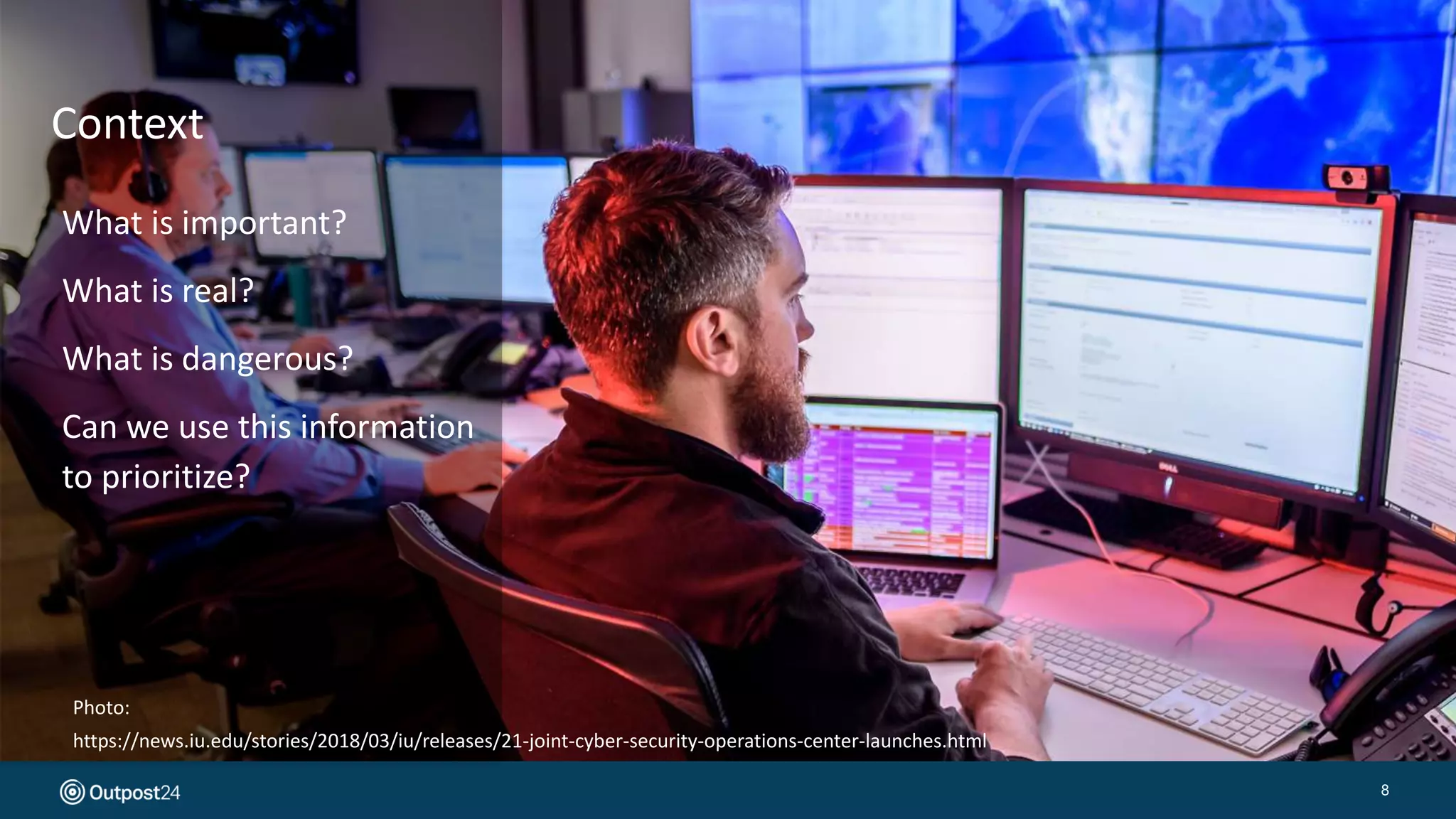
What is important?
What is real?
What is dangerous?
Can we use this information
to prioritize?
Context
Photo:
https://news.iu.edu/stories/2018/03/iu/releases/21-joint-cyber-security-operations-center-launches.html
Reality check for security
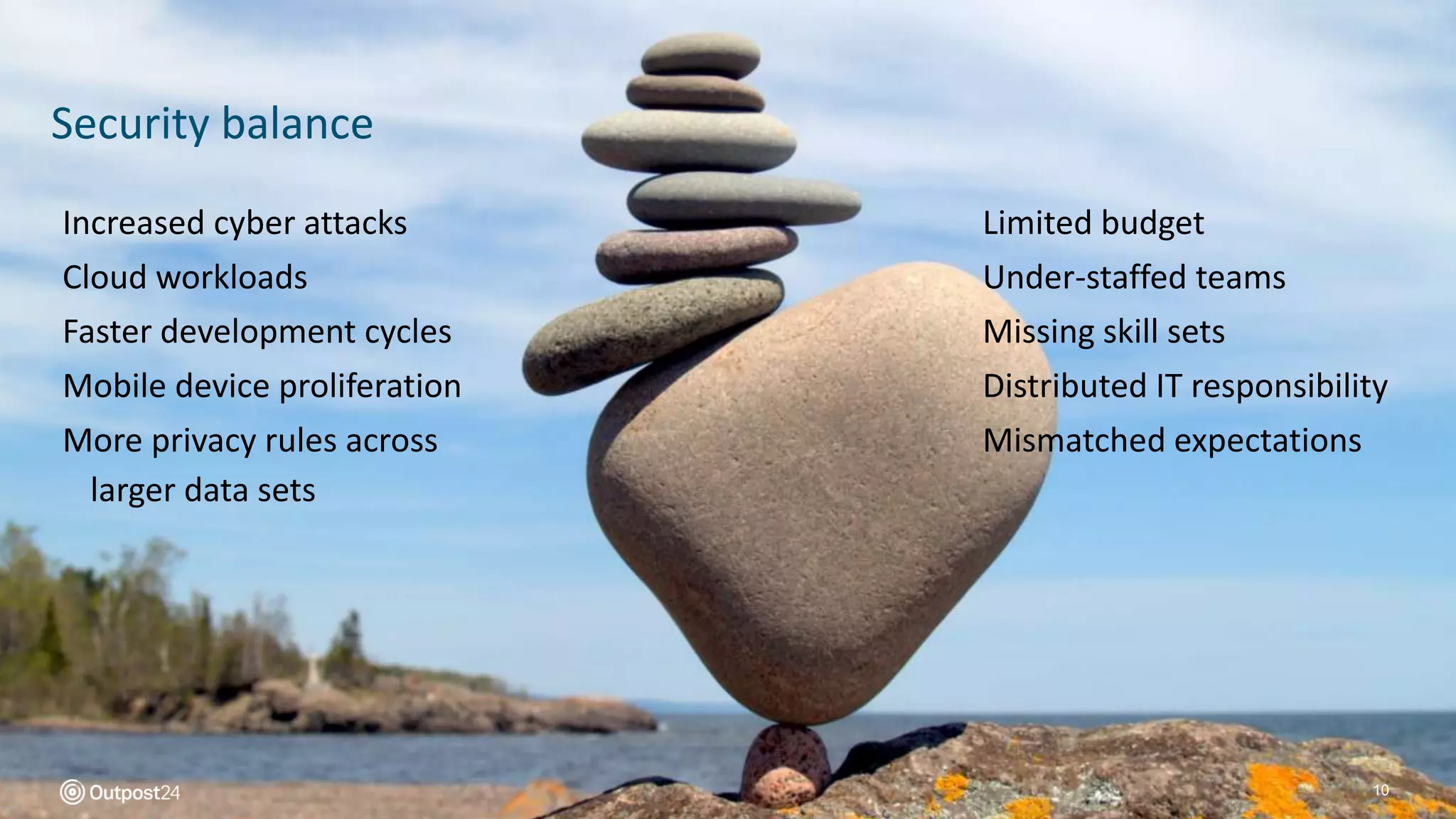
Security balance
10
Increased cyber attacks
Cloud workloads
Faster development cycles
Mobile device proliferation
More privacy rules across
larger data sets
Limited budget
Under-staffed teams
Missing skill sets
Distributed IT responsibility
Mismatched expectations
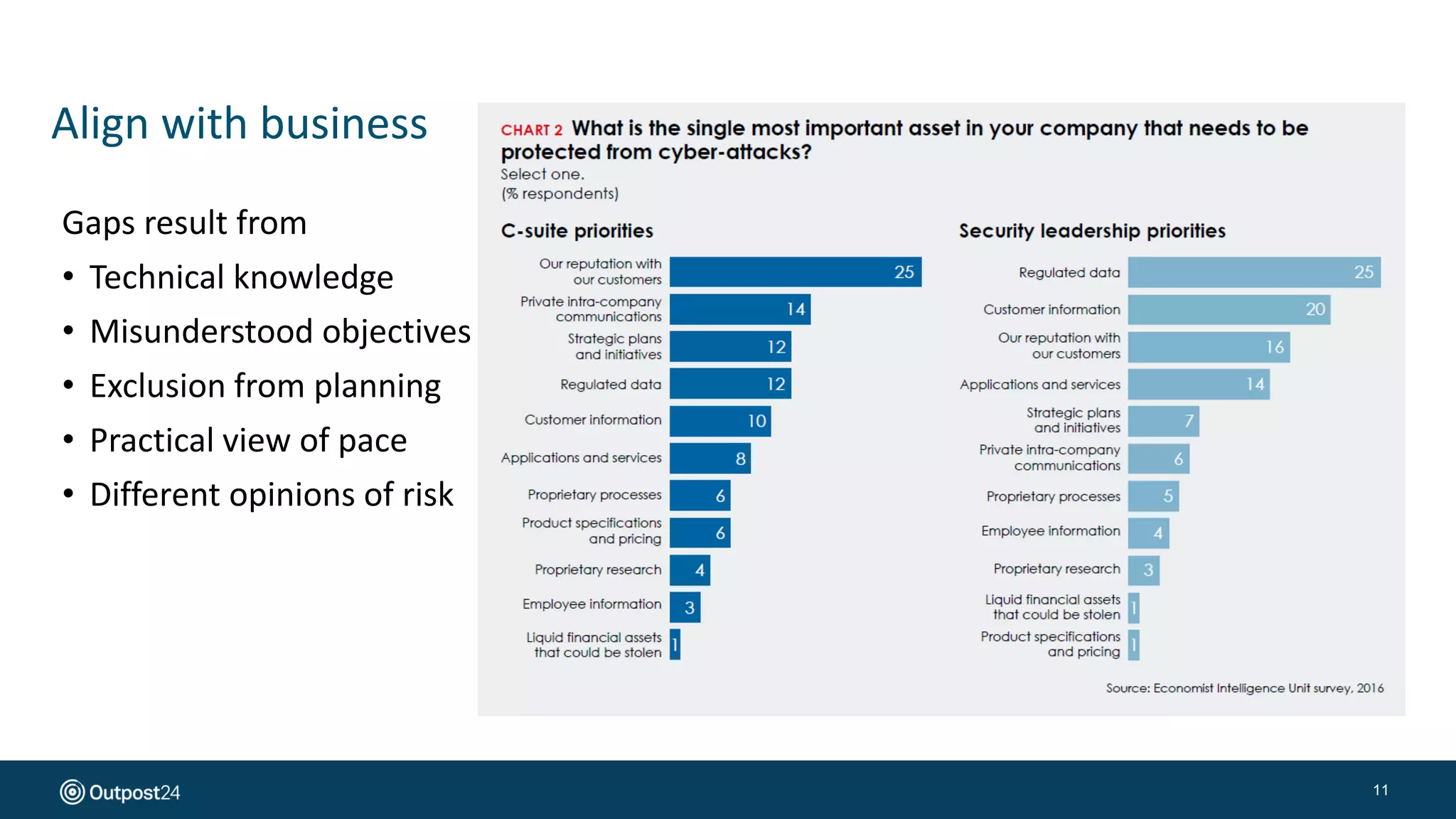
Align with business
11
Gaps result from
• Technical knowledge
• Misunderstood objectives
• Exclusion from planning
• Practical view of pace
• Different opinions of risk
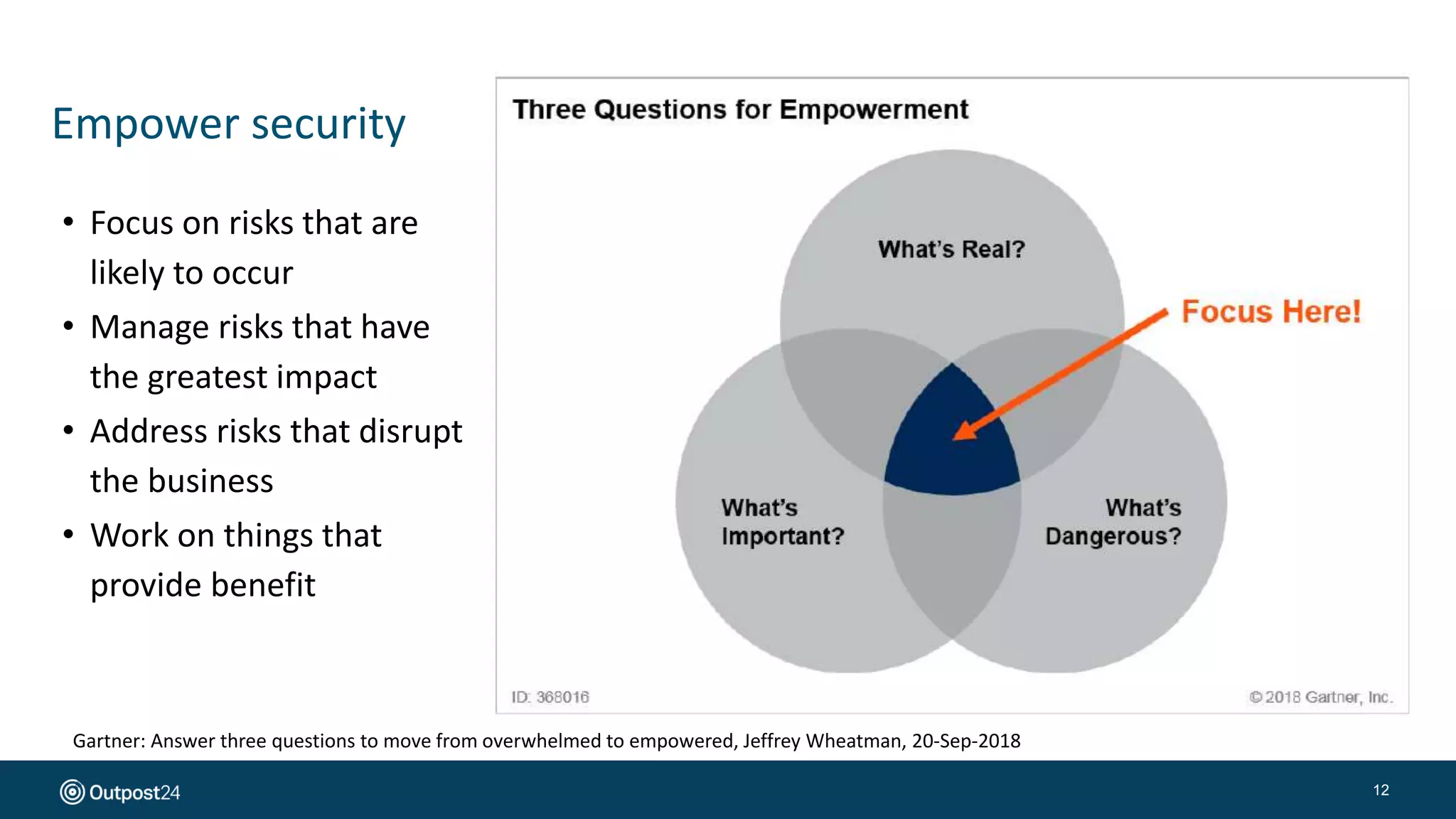
Empower security
12
• Focus on risks that are
likely to occur
• Manage risks that have
the greatest impact
• Address risks that disrupt
the business
• Work on things that
provide benefit
Gartner: Answer three questions to move from overwhelmed to empowered, Jeffrey Wheatman, 20-Sep-2018
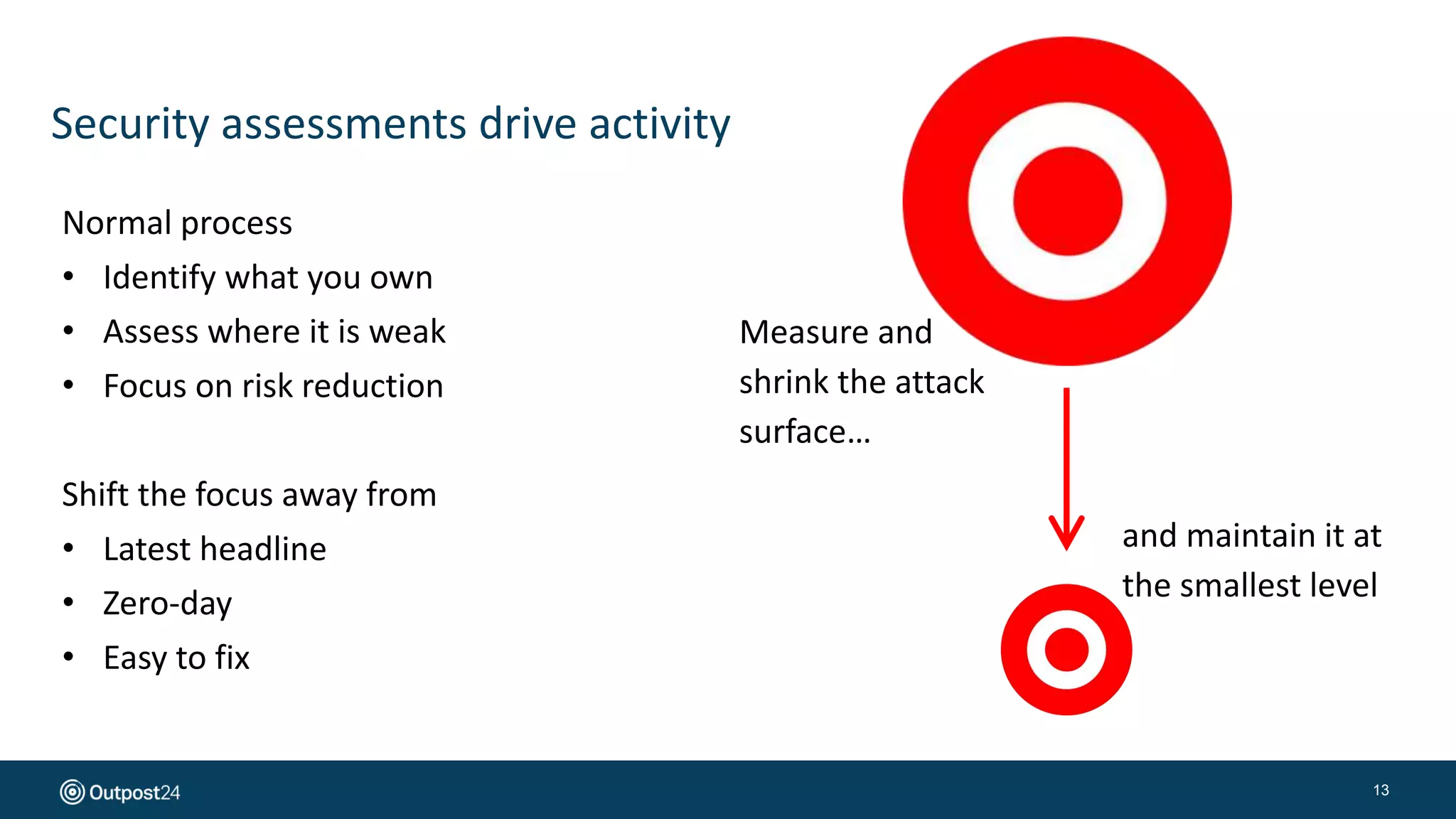
Security assessments drive activity
13
Normal process
• Identify what you own
• Assess where it is weak
• Focus on risk reduction
Shift the focus away from
• Latest headline
• Zero-day
• Easy to fix
Measure and
shrink the attack
surface…
and maintain it at
the smallest level
Risk based approach
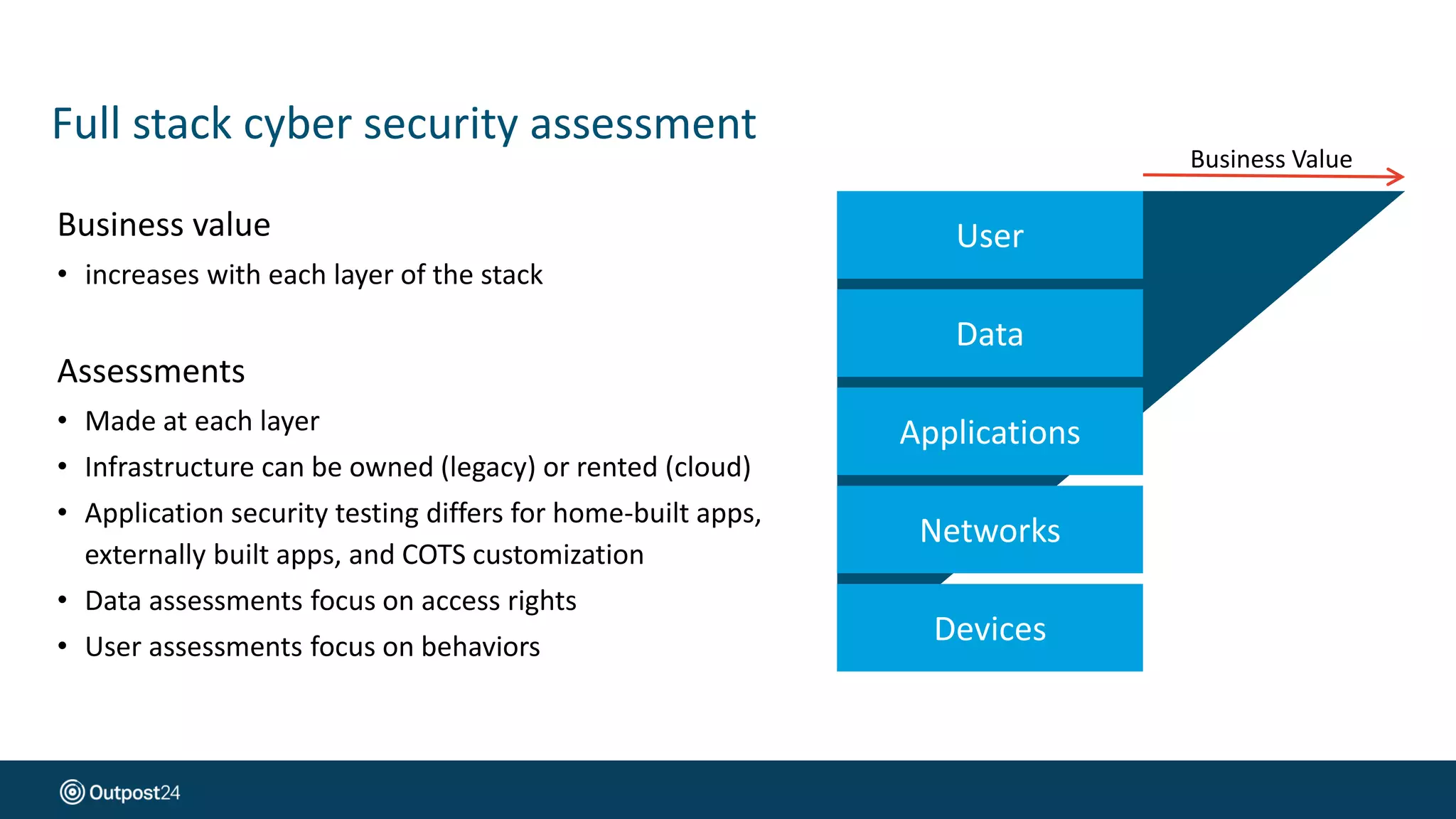
Full stack cyber security assessment
Business value
• increases with each layer of the stack
Assessments
• Made at each layer
• Infrastructure can be owned (legacy) or rented (cloud)
• Application security testing differs for home-built apps,
externally built apps, and COTS customization
• Data assessments focus on access rights
• User assessments focus on behaviors
Networks
Applications
Data
User
Devices
Business Value
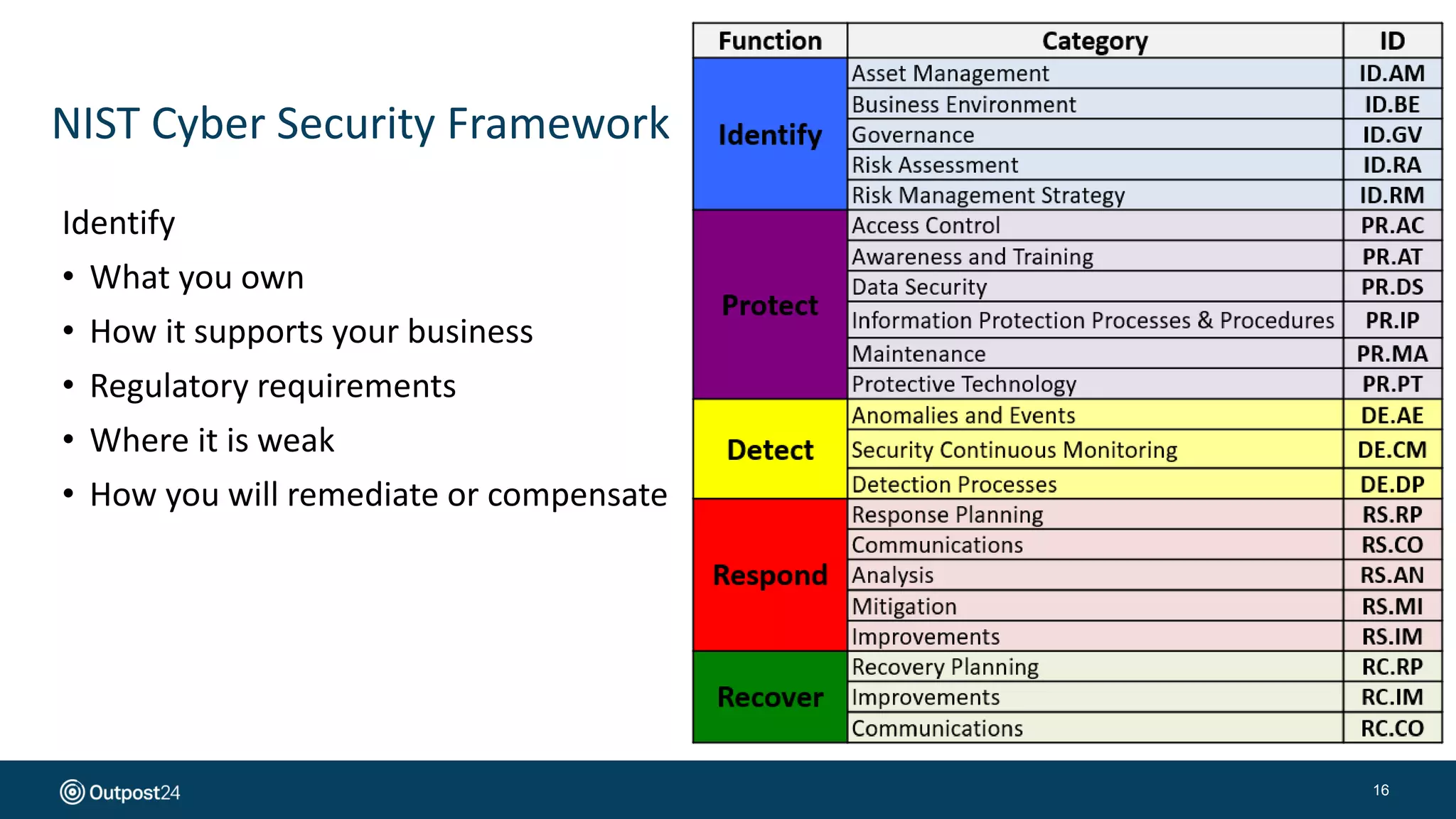
NIST Cyber Security Framework
16
Identify
• What you own
• How it supports your business
• Regulatory requirements
• Where it is weak
• How you will remediate or compensate
Assessment
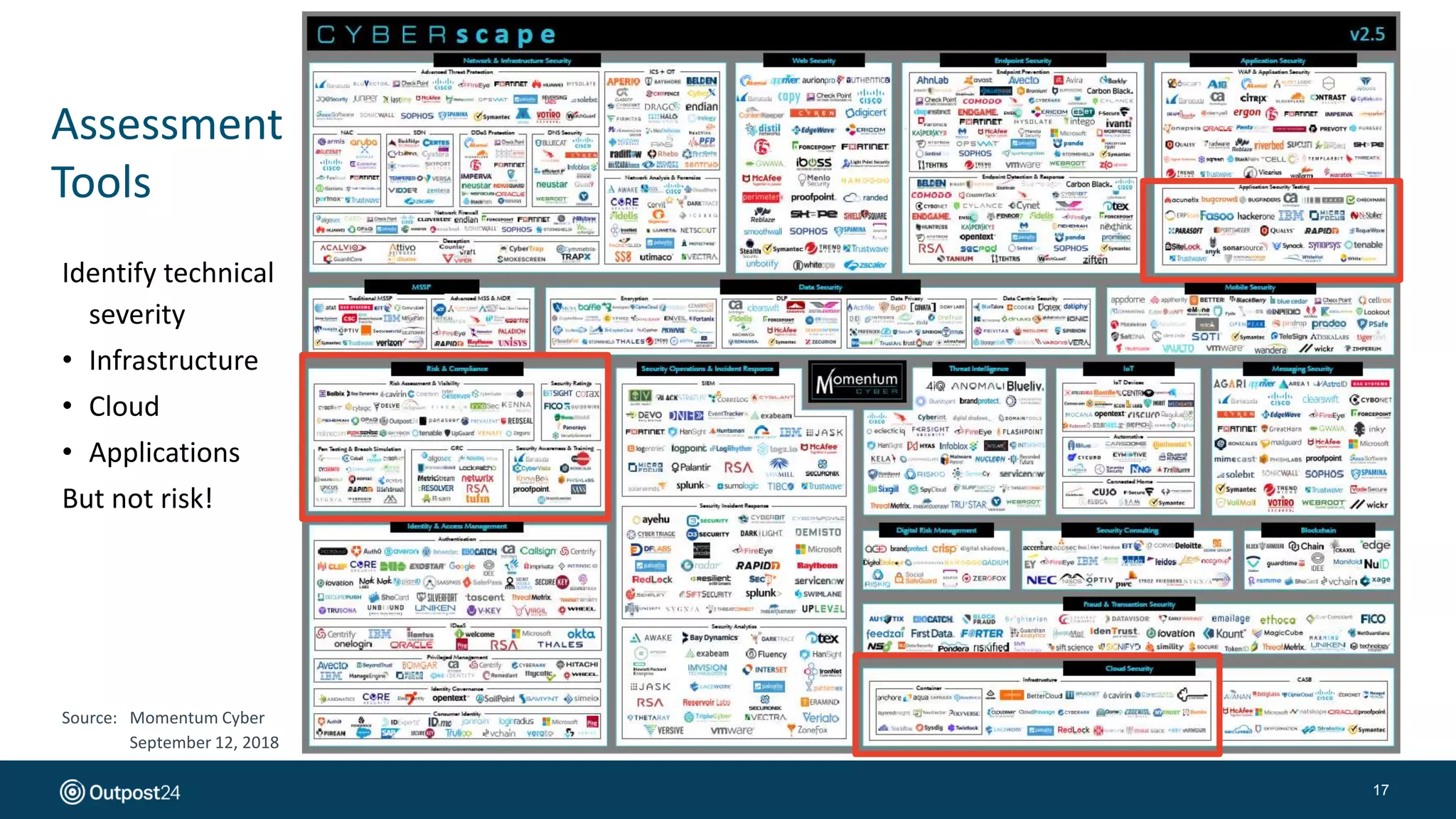
Tools
17
Source: Momentum Cyber
September 12, 2018
Identify technical
severity
• Infrastructure
• Cloud
• Applications
But not risk!
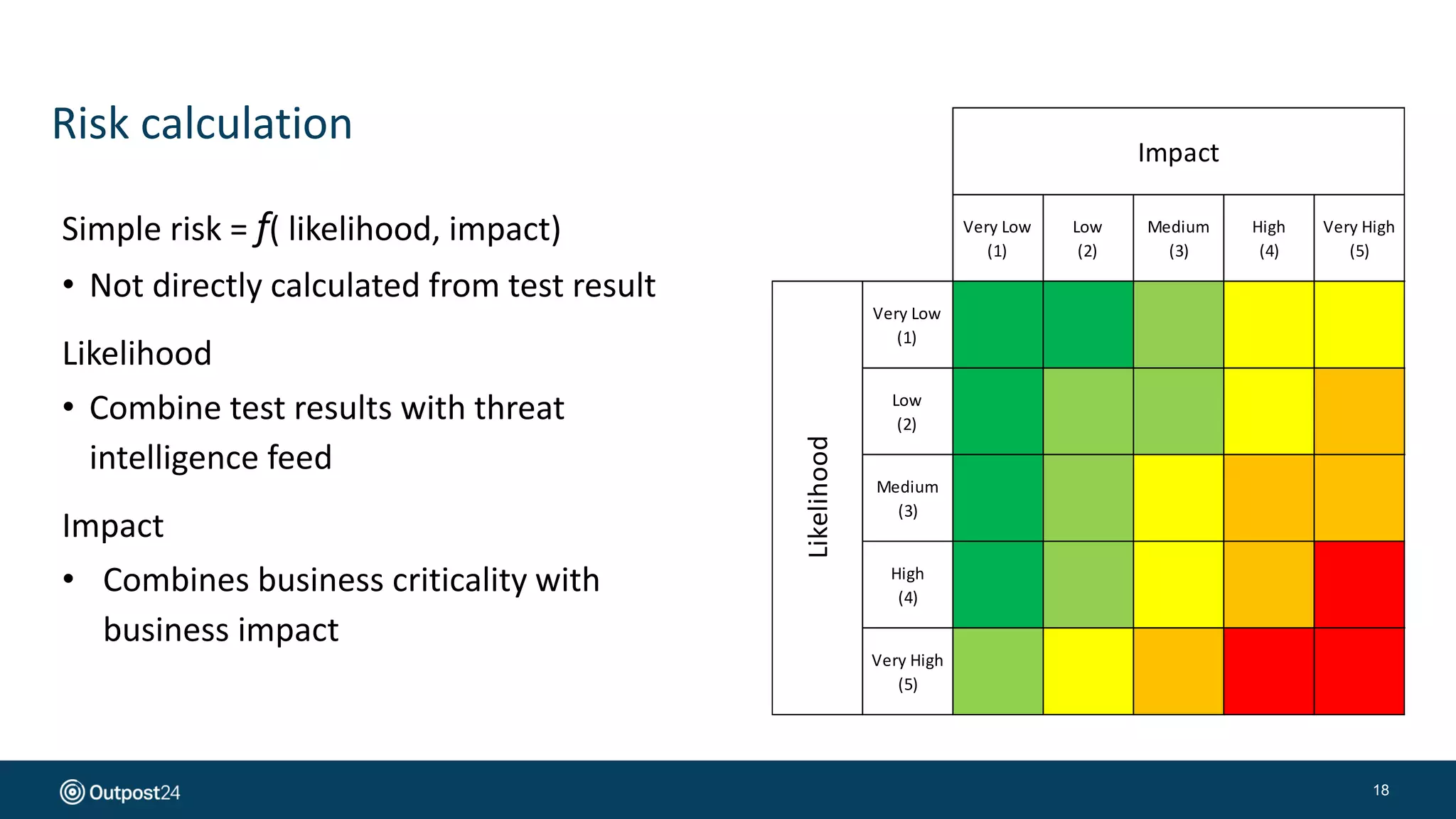
Risk calculation
18
Simple risk = f( likelihood, impact)
• Not directly calculated from test result
Likelihood
• Combine test results with threat
intelligence feed
Impact
• Combines business criticality with
business impact
Very Low
(1)
Low
(2)
Medium
(3)
High
(4)
Very High
(5)
Very Low
(1)
Low
(2)
Medium
(3)
High
(4)
Very High
(5)
Impact
Likelihood
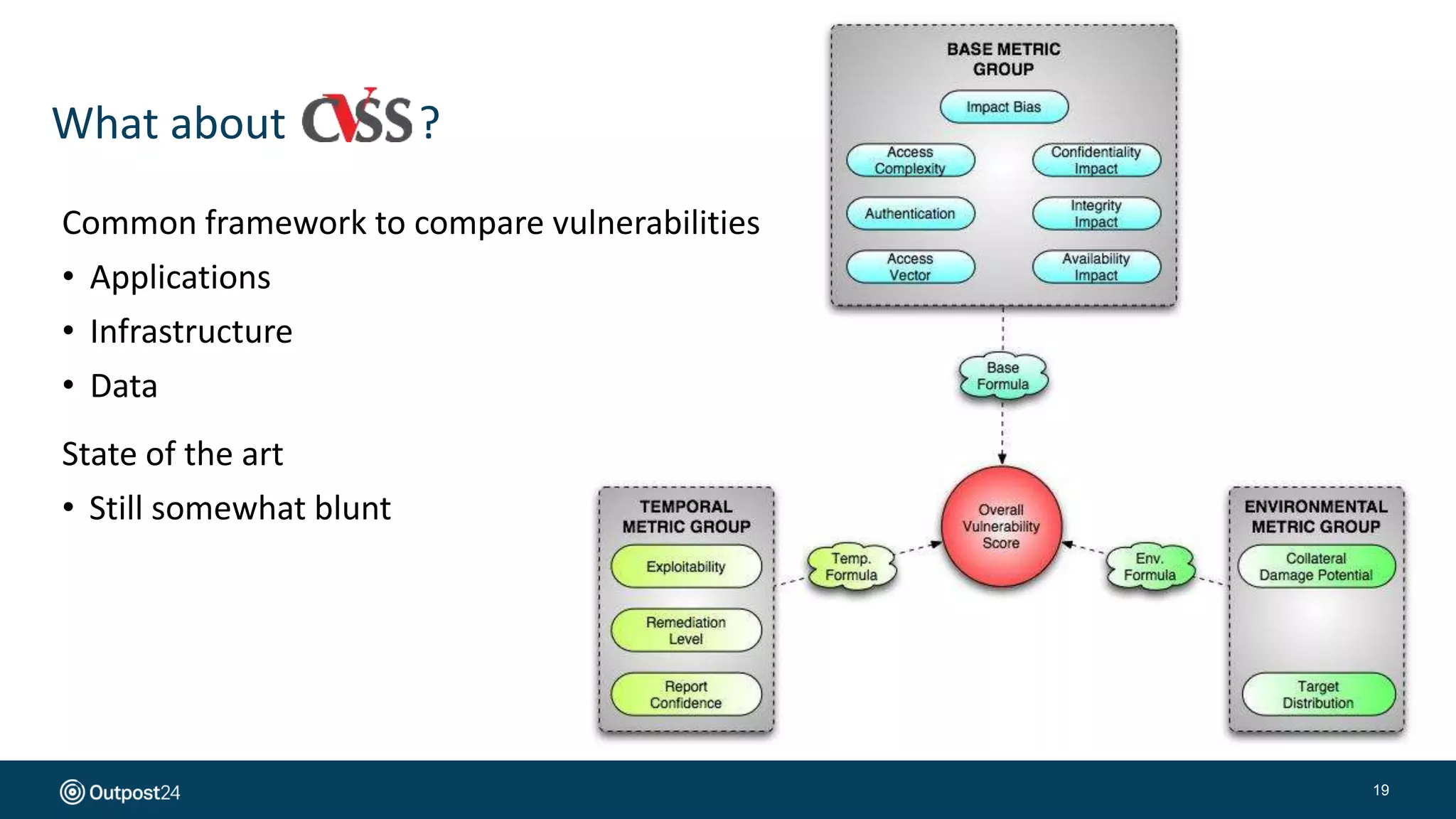
What about ?
19
Common framework to compare vulnerabilities
• Applications
• Infrastructure
• Data
State of the art
• Still somewhat blunt
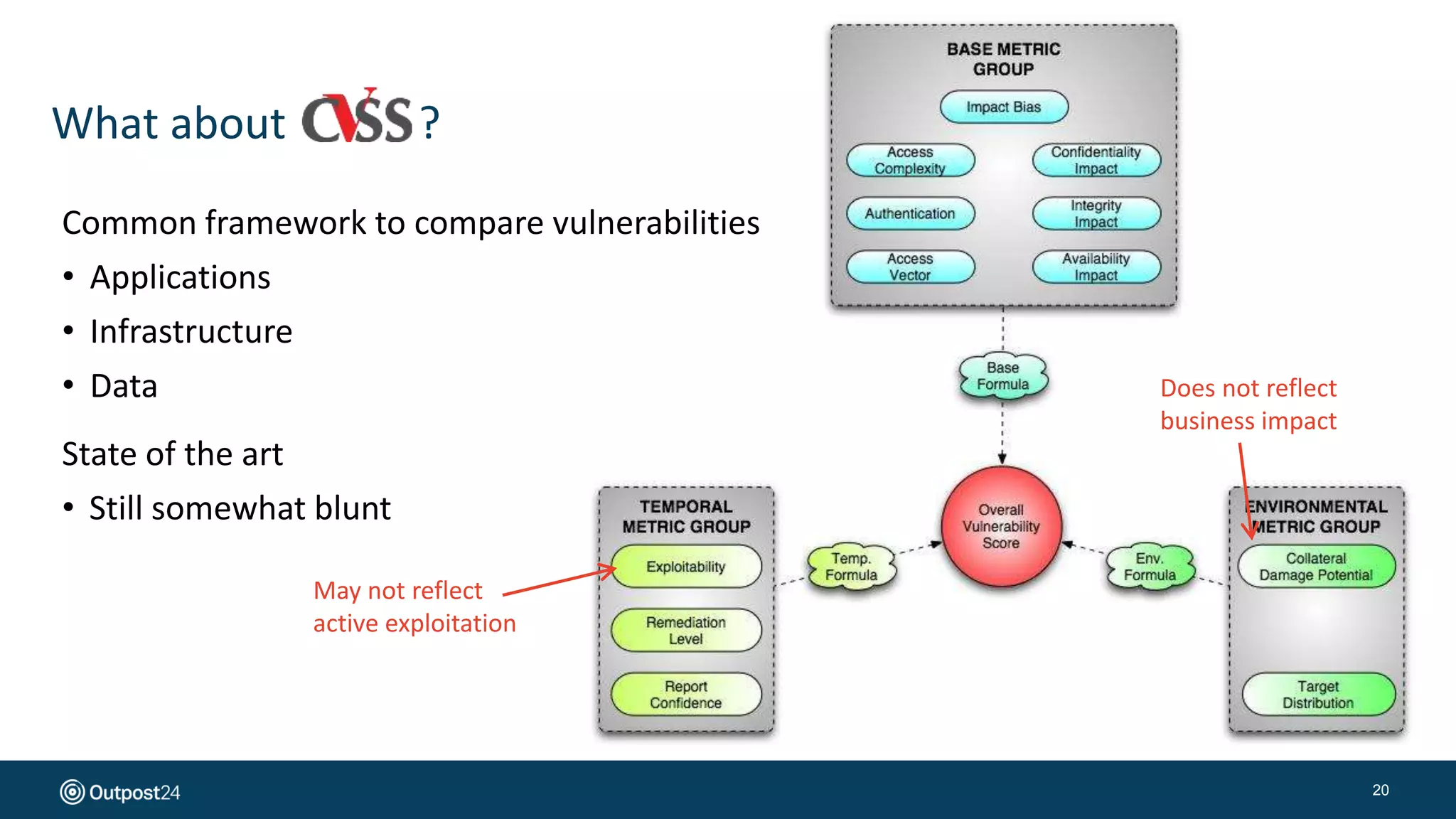
What about ?
20
Common framework to compare vulnerabilities
• Applications
• Infrastructure
• Data
State of the art
• Still somewhat blunt
May not reflect
active exploitation
Does not reflect
business impact
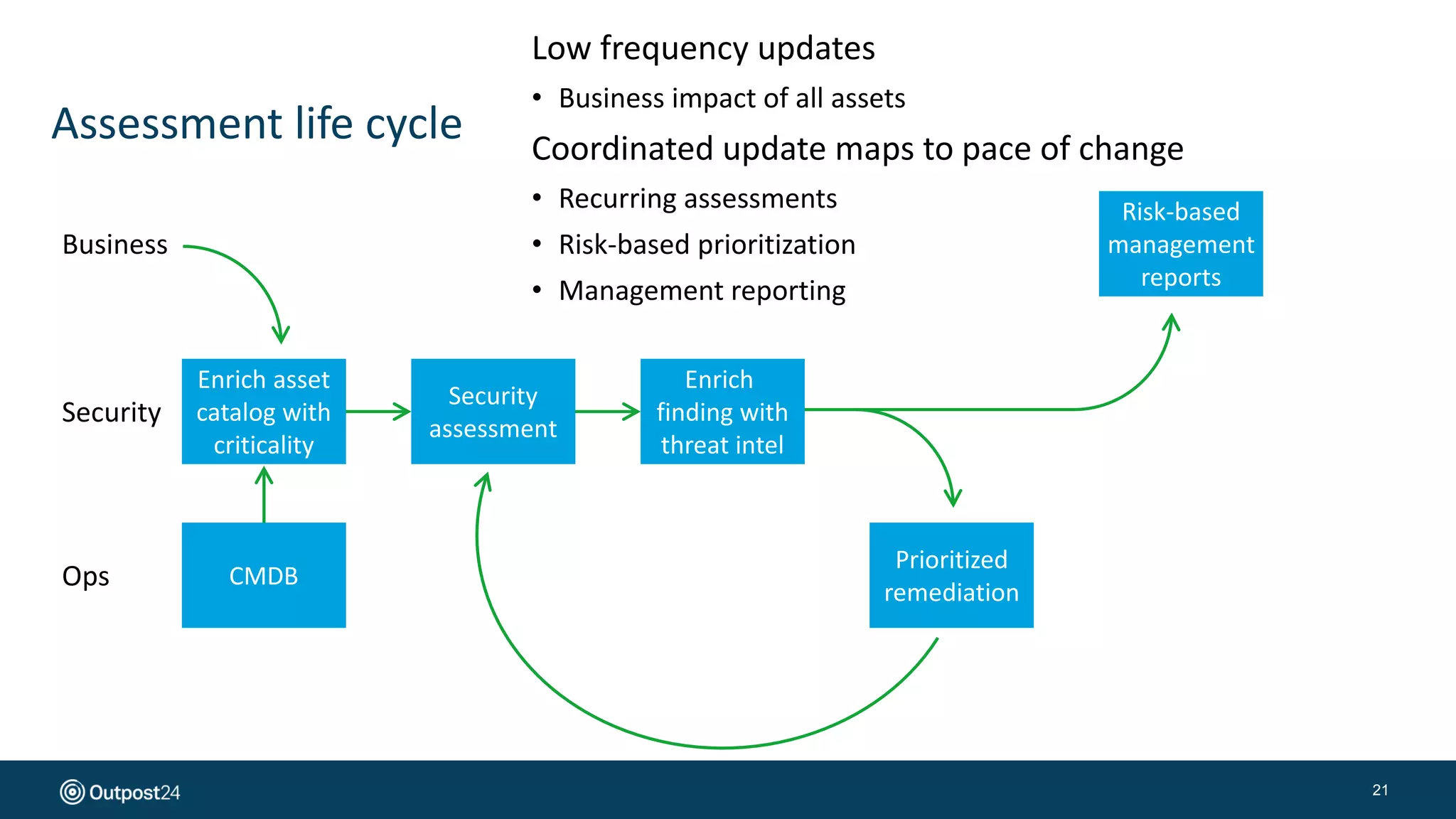
Assessment life cycle
21
Security
assessment
Security
Ops
Business
CMDB
Enrich asset
catalog with
criticality
Enrich
finding with
threat intel
Prioritized
remediation
Low frequency updates
• Business impact of all assets
Coordinated update maps to pace of change
• Recurring assessments
• Risk-based prioritization
• Management reporting
Risk-based
management
reports
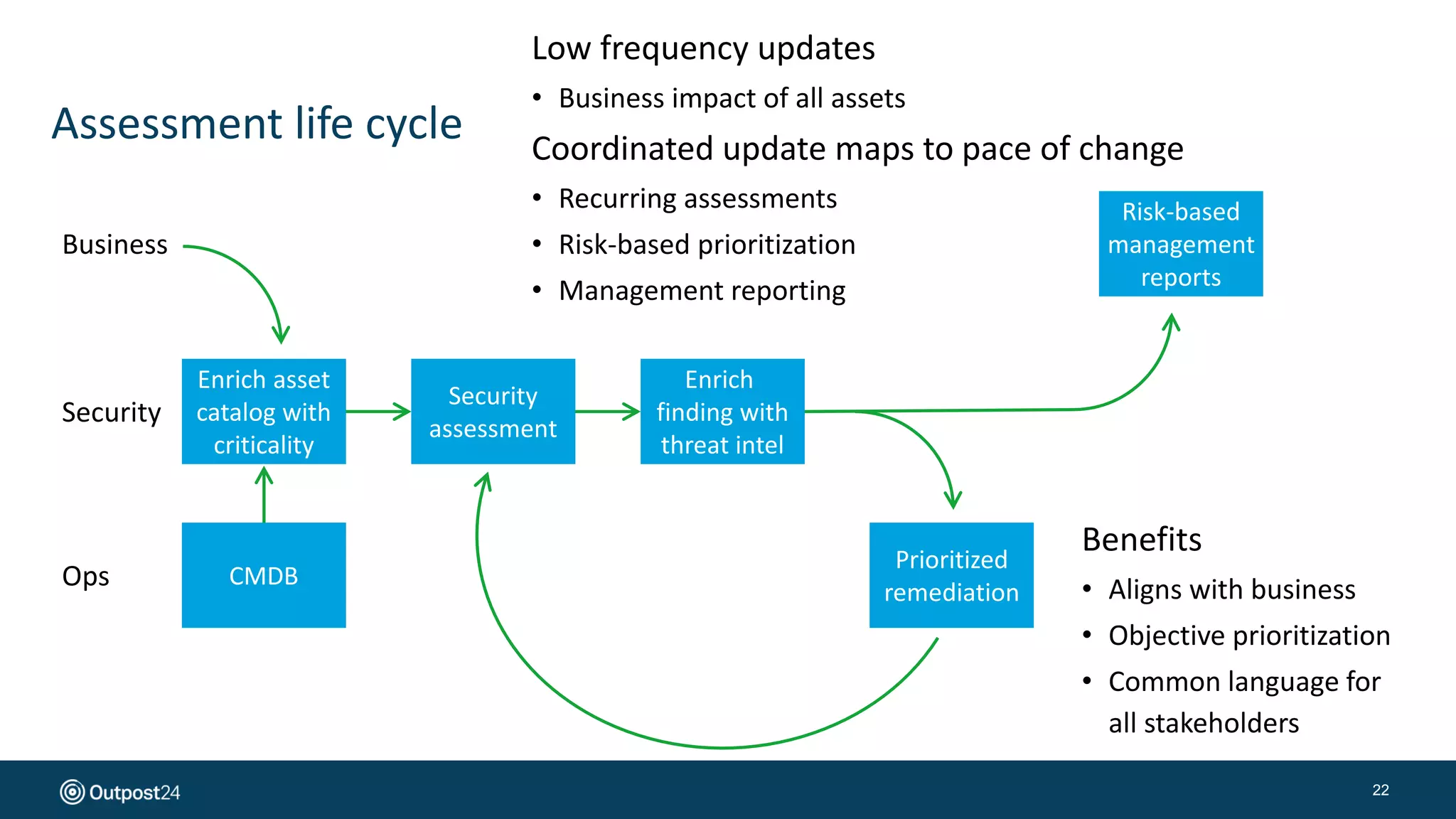
Assessment life cycle
22
Security
assessment
Security
Ops
Business
CMDB
Enrich asset
catalog with
criticality
Enrich
finding with
threat intel
Prioritized
remediation
Low frequency updates
• Business impact of all assets
Coordinated update maps to pace of change
• Recurring assessments
• Risk-based prioritization
• Management reporting
Benefits
• Aligns with business
• Objective prioritization
• Common language for
all stakeholders
Risk-based
management
reports
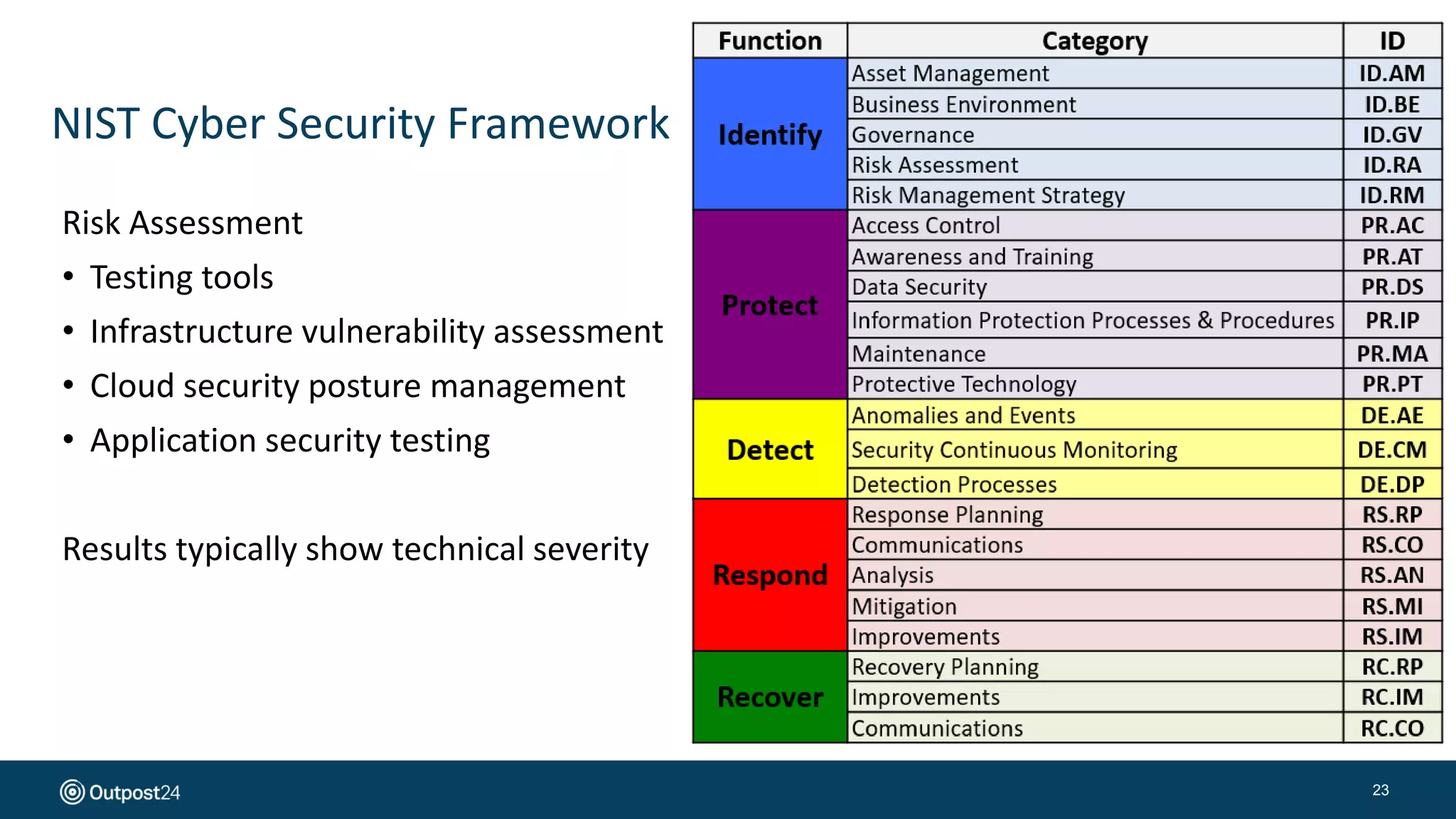
NIST Cyber Security Framework
23
Risk Assessment
• Testing tools
• Infrastructure vulnerability assessment
• Cloud security posture management
• Application security testing
Results typically show technical severity
Infrastructure assessments
24
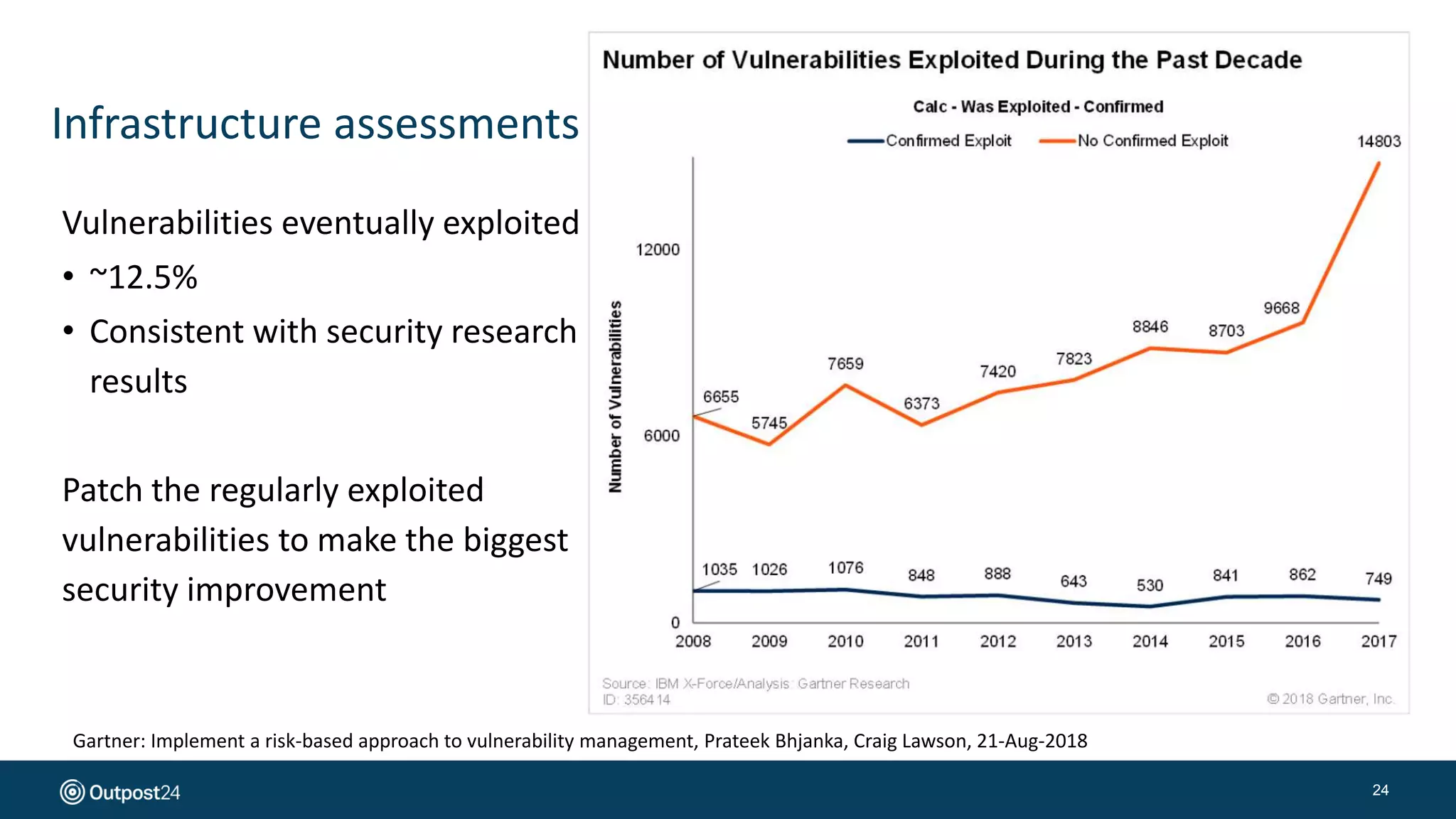
Vulnerabilities eventually exploited
• ~12.5%
• Consistent with security research
results
Patch the regularly exploited
vulnerabilities to make the biggest
security improvement
Gartner: Implement a risk-based approach to vulnerability management, Prateek Bhjanka, Craig Lawson, 21-Aug-2018
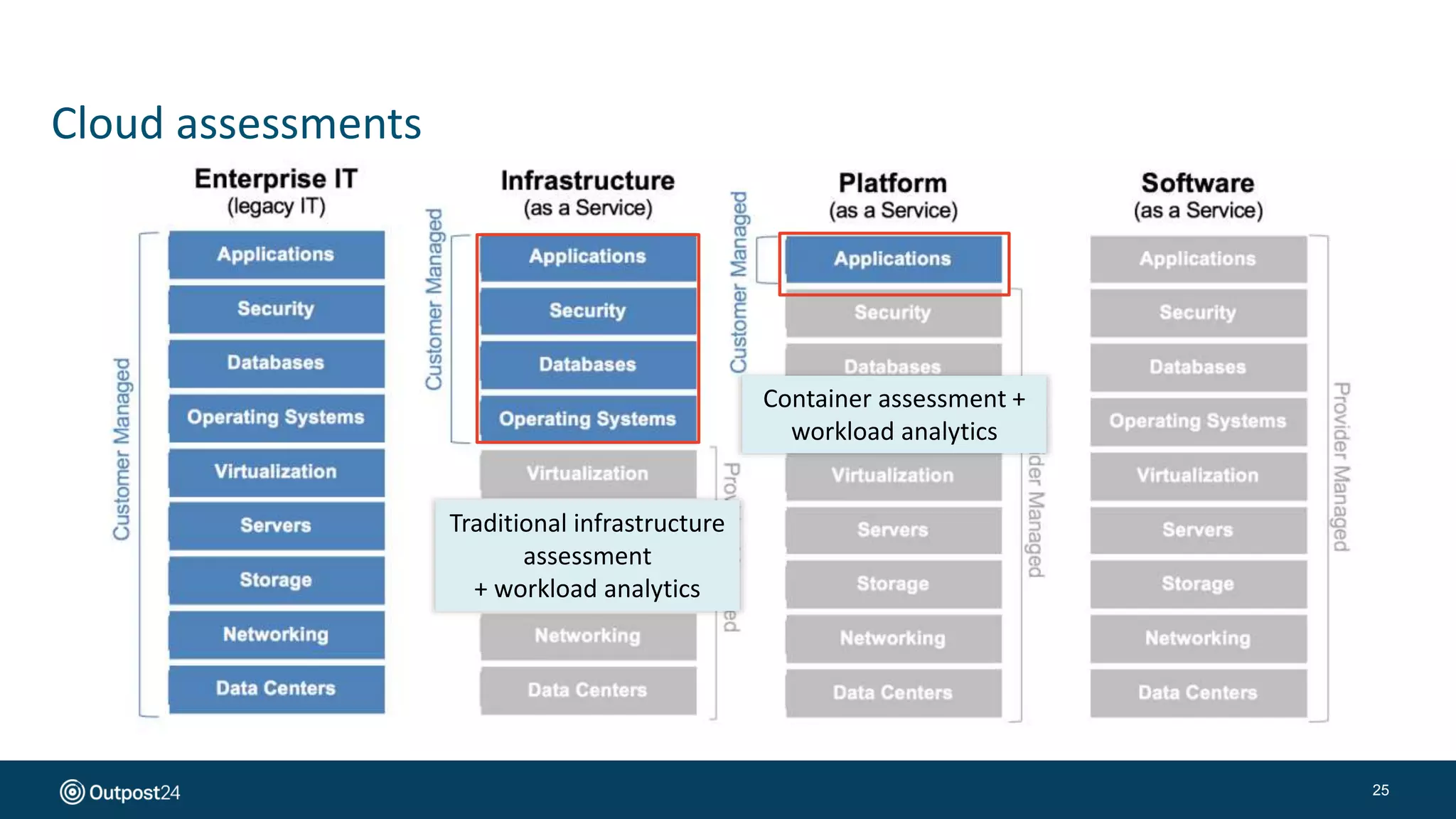
Cloud assessments
25
Traditional infrastructure
assessment
+ workload analytics
Container assessment +
workload analytics
Application assessments
26
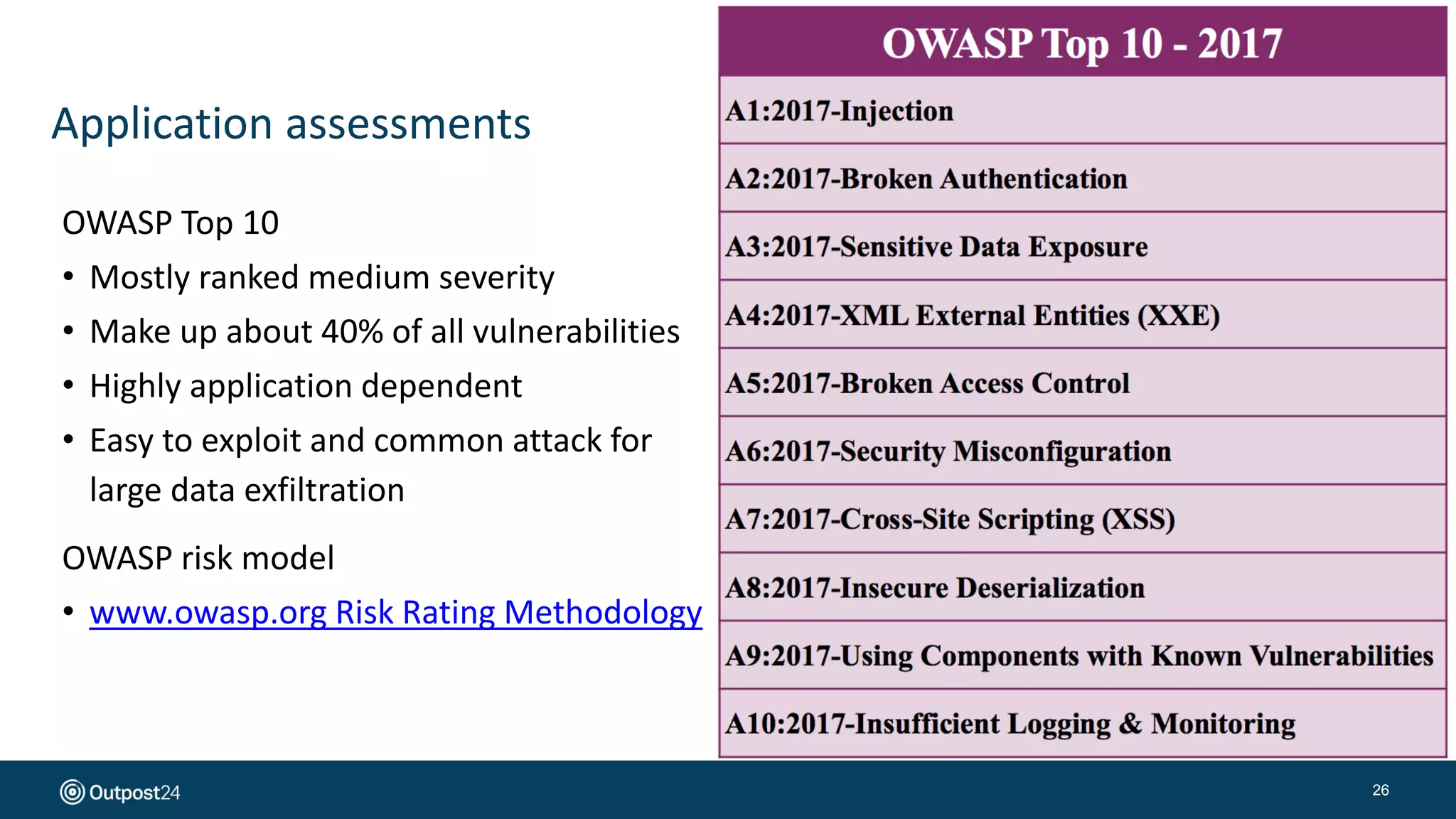
OWASP Top 10
• Mostly ranked medium severity
• Make up about 40% of all vulnerabilities
• Highly application dependent
• Easy to exploit and common attack for
large data exfiltration
OWASP risk model
• www.owasp.org Risk Rating Methodology
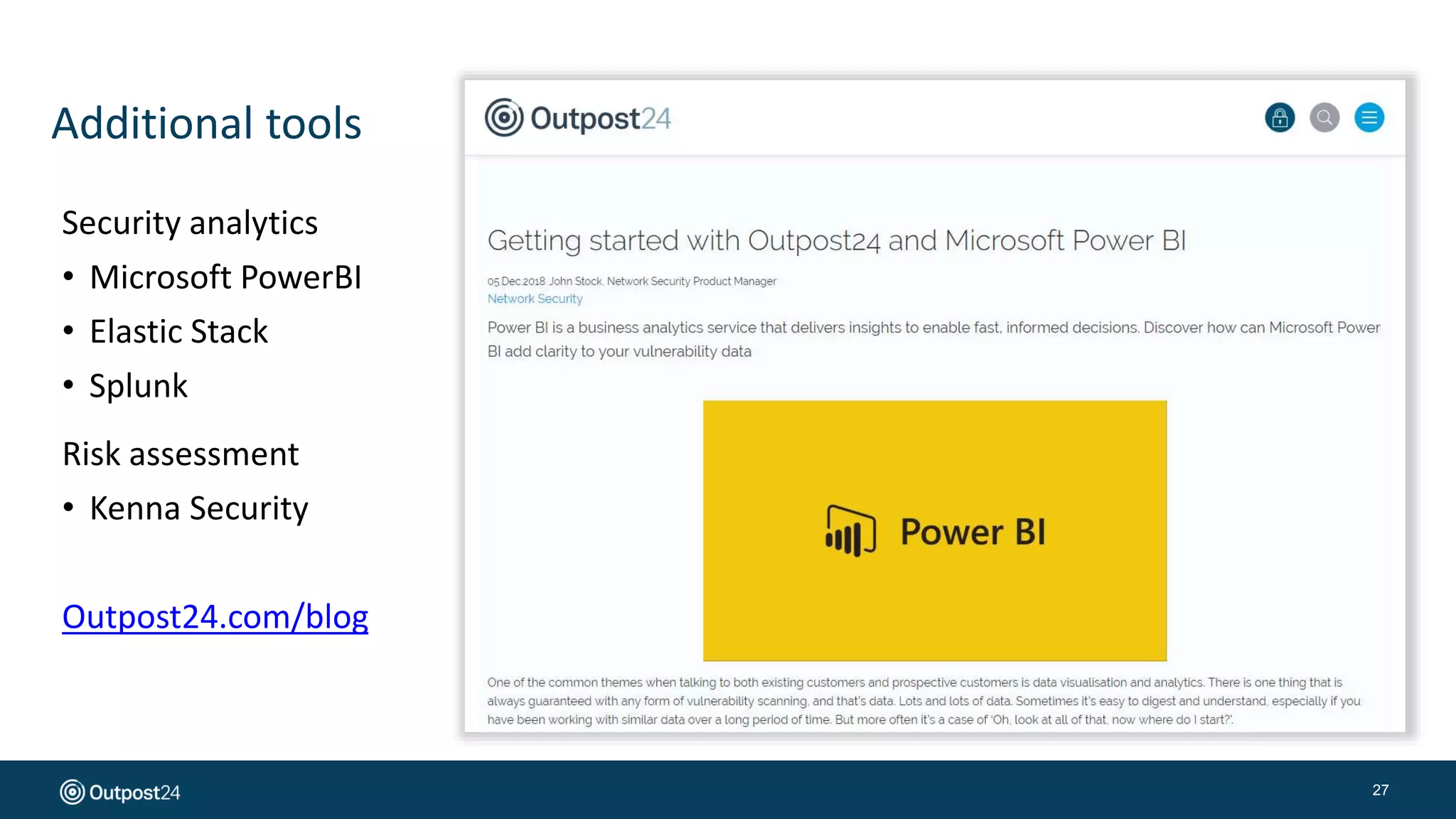
Additional tools
27
Security analytics
• Microsoft PowerBI
• Elastic Stack
• Splunk
Risk assessment
• Kenna Security
Outpost24.com/blog
Takeaways
29
Takeaways
Work on the things that provide benefit
• Focus on risks that are likely to occur
• Manage risks that have the greatest impact
• Address risks that disrupt the business
Assess the full stack at a pace that matches frequency of change
Q & A Thanks!
Bob Egner, CMO
be@outpost24.com

Outpost24 webinar: Risk-based approach to security assessments

  • 1.
    Putting Security inContext A risk-based approach to security assessments Bob Egner, CMO be@outpost24.com 1
  • 2.
    2 Helping customers improvesecurity posture since 2001 Over 2,000 customers in all regions of the world Really good at breaking technology
  • 3.
    Today’s topic 3 Reality checkfor security Risk based approach to cyber security assessments Takeaways
  • 4.
  • 5.
  • 6.
  • 7.
  • 8.
    8 What is important? Whatis real? What is dangerous? Can we use this information to prioritize? Context Photo: https://news.iu.edu/stories/2018/03/iu/releases/21-joint-cyber-security-operations-center-launches.html
  • 9.
  • 10.
    Security balance 10 Increased cyberattacks Cloud workloads Faster development cycles Mobile device proliferation More privacy rules across larger data sets Limited budget Under-staffed teams Missing skill sets Distributed IT responsibility Mismatched expectations
  • 11.
    Align with business 11 Gapsresult from • Technical knowledge • Misunderstood objectives • Exclusion from planning • Practical view of pace • Different opinions of risk
  • 12.
    Empower security 12 • Focuson risks that are likely to occur • Manage risks that have the greatest impact • Address risks that disrupt the business • Work on things that provide benefit Gartner: Answer three questions to move from overwhelmed to empowered, Jeffrey Wheatman, 20-Sep-2018
  • 13.
    Security assessments driveactivity 13 Normal process • Identify what you own • Assess where it is weak • Focus on risk reduction Shift the focus away from • Latest headline • Zero-day • Easy to fix Measure and shrink the attack surface… and maintain it at the smallest level
  • 14.
  • 15.
    Full stack cybersecurity assessment Business value • increases with each layer of the stack Assessments • Made at each layer • Infrastructure can be owned (legacy) or rented (cloud) • Application security testing differs for home-built apps, externally built apps, and COTS customization • Data assessments focus on access rights • User assessments focus on behaviors Networks Applications Data User Devices Business Value
  • 16.
    NIST Cyber SecurityFramework 16 Identify • What you own • How it supports your business • Regulatory requirements • Where it is weak • How you will remediate or compensate
  • 17.
    Assessment Tools 17 Source: Momentum Cyber September12, 2018 Identify technical severity • Infrastructure • Cloud • Applications But not risk!
  • 18.
    Risk calculation 18 Simple risk= f( likelihood, impact) • Not directly calculated from test result Likelihood • Combine test results with threat intelligence feed Impact • Combines business criticality with business impact Very Low (1) Low (2) Medium (3) High (4) Very High (5) Very Low (1) Low (2) Medium (3) High (4) Very High (5) Impact Likelihood
  • 19.
    What about ? 19 Commonframework to compare vulnerabilities • Applications • Infrastructure • Data State of the art • Still somewhat blunt
  • 20.
    What about ? 20 Commonframework to compare vulnerabilities • Applications • Infrastructure • Data State of the art • Still somewhat blunt May not reflect active exploitation Does not reflect business impact
  • 21.
    Assessment life cycle 21 Security assessment Security Ops Business CMDB Enrichasset catalog with criticality Enrich finding with threat intel Prioritized remediation Low frequency updates • Business impact of all assets Coordinated update maps to pace of change • Recurring assessments • Risk-based prioritization • Management reporting Risk-based management reports
  • 22.
    Assessment life cycle 22 Security assessment Security Ops Business CMDB Enrichasset catalog with criticality Enrich finding with threat intel Prioritized remediation Low frequency updates • Business impact of all assets Coordinated update maps to pace of change • Recurring assessments • Risk-based prioritization • Management reporting Benefits • Aligns with business • Objective prioritization • Common language for all stakeholders Risk-based management reports
  • 23.
    NIST Cyber SecurityFramework 23 Risk Assessment • Testing tools • Infrastructure vulnerability assessment • Cloud security posture management • Application security testing Results typically show technical severity
  • 24.
    Infrastructure assessments 24 Vulnerabilities eventuallyexploited • ~12.5% • Consistent with security research results Patch the regularly exploited vulnerabilities to make the biggest security improvement Gartner: Implement a risk-based approach to vulnerability management, Prateek Bhjanka, Craig Lawson, 21-Aug-2018
  • 25.
    Cloud assessments 25 Traditional infrastructure assessment +workload analytics Container assessment + workload analytics
  • 26.
    Application assessments 26 OWASP Top10 • Mostly ranked medium severity • Make up about 40% of all vulnerabilities • Highly application dependent • Easy to exploit and common attack for large data exfiltration OWASP risk model • www.owasp.org Risk Rating Methodology
  • 27.
    Additional tools 27 Security analytics •Microsoft PowerBI • Elastic Stack • Splunk Risk assessment • Kenna Security Outpost24.com/blog
  • 28.
  • 29.
    29 Takeaways Work on thethings that provide benefit • Focus on risks that are likely to occur • Manage risks that have the greatest impact • Address risks that disrupt the business Assess the full stack at a pace that matches frequency of change
  • 30.
    Q & AThanks! Bob Egner, CMO be@outpost24.com

Editor's Notes

  • #13 This simple approach can help CISOs avoid common mistakes, such as: Treating theoretical risks that are highly unlikely to occur Managing risks that would have negligible impact on business goals Addressing risks to the point that business stakeholders can’t achieve their objectives Allocating resources in the wrong way, in other words, working on things that don't provide appropriate benefit
  • #16 Most security practitioners know about vulnerability assessment (looking for CVEs and misconfigured ports) - But how does that change when you delegate some trust to your cloud provider? Most security practitioners know about penetration testing - But applications are being released faster, and continue to be the richest targets for data breaches Where is your data stored, and who has access to it? Who are your users, and what systems and data do they have access to?
  • #18 The cyber-security landscape continues to get more complex it’s confusing array of claims and “possible” benefits There is a lot of overlap across segments, with vendors in one segment claiming benefits from another Which results in customers feeling uncertain about what they should do, where they should spend
  • #19 Impact is probably the hardest part Comes from the business Survey / interview of system owner Maybe Recovery precedence gives you clues
  • #25 MS08-067 – conficker worm MS10-061 – print spooler MS14-068 – privilege escalation MS17-010 - Eternal Blue CVE-2014-6271 – Shellshock
  • #26 Workloads = applications + security + data + OS
  • #28 Can help you analyze, visualize