Metabolic Bone Diseases
Osteoporosis
Overview
Dr. Fathi Neana, MD
Chief of Orthopaedics
Dr. Fakhry & Dr. A. Al-Garzaie Hospital
Saudi Arabia
May,03 - 2018
‫ي‬ِّ‫ن‬ِّ‫إ‬ ِّ‫ب‬َ‫ر‬ َ‫ل‬‫ا‬َ‫ق‬(‫ي‬ِّ‫ن‬ِّ‫م‬ ُ‫م‬ْ‫ظ‬َ‫ع‬ْ‫ل‬‫ا‬ َ‫ن‬َ‫ه‬َ‫و‬)‫و‬(ْ‫أ‬َّ‫الر‬ َ‫ل‬َ‫ع‬َ‫ت‬ْ‫ش‬‫ا‬ُ‫س‬‫ا‬ً‫ب‬ْ‫ي‬َ‫ش‬)َ‫ر‬ َ‫ك‬ِّ‫ئ‬‫َا‬‫ع‬ُ‫د‬ِّ‫ب‬ ‫ُن‬‫ك‬َ‫أ‬ ْ‫م‬َ‫ل‬َ‫و‬ِّ‫ب‬
‫ا‬ًّ‫ي‬ِّ‫ق‬َ‫ش‬(4)‫مريم‬ ‫سورة‬
New Lifestyle diseases
Non-communicable diseases (NCDs)
• Obesity – Metabolic syndrome
• Coronary artery disease
• Diabetes type 2
• Hypertension
• Arteriosclerosis
• Stroke
• Cancer
• Depression - anxiety
• Arthritis
• Osteomalacia
• Osteoporosis
• Swimmer's ear – loss of
hearing
• Ch. obstructive pulmonary
disease
• Liver Cirrhosis
• Nephritis
• Etc, etc, etc…
Emerged as bigger killers than infectious or hereditary ones. The leading
cause of death in the world. 63% of all annual deaths. > 38 million people
are killed /year.
1- Cardiovascular diseases (17.5 million)
Complications of hypertension (9.4 million)
2- Cancers (8.2 million)
3- Respiratory diseases (4 million)
5- Diabetes (1.5 million)
These 4 diseases account for 80 % of all NCDs deaths (> 38 million)
4- USA’s 4th Leading Cause of Death – Pharma’s Drugs
Posted on June 25, 2012 by Child Health Safety
Causes:
• Stress-Depression
• Diet
• Sleep-awake
• Lack of Exercise
• Sun avoidance
• Wireless WiFi devices
• Leaky gut syndrome
• Other pollutants
Including Medicines
The Root cause and Culprit
Behind Chronic Diseases, Cancer and Aging
1- A state of chronic low grade inflammation
Dr. Richard K. Bernstein
Diabetes & Inflammation—the Vicious Cycle
(Hyperglycemia – Omega 6 - Obesity) - Leukotriene B(4)
(LTB(4)
2- Mitochondrial dysfunction (not the genetic
make up)
Dr. Ron Rosedale
Breakthrough views on clinical metabolic biochemistry
1- Harmful Effects of too much Sugar
->> Insulin and leptin receptor resistance
->> Free radicals (ROS) 90% Mitochondr
2- Harmful Effects of too much Protein
->> Activation of the mTOR metabolic signaling pathway
3- Physical inactivity (Exercise)
4- Pollutants
5- Drugs causing mitochondrial toxicity
(Iatrogenic)
Mitochondrial dysfunction
Energy (ATP - ADP)
Leukotriene B(4) (LTB(4)
acts as a signal to relay
information from cell to
cell over long distances.
1- Osteoporosis is a serious public health concern. Due to its prevalence worldwide
2- Currently over 200 million people worldwide suffer from this disease
3- Approximately 30% of all postmenopausal women have osteoporosis in the USA & Europe
4- At least 40% of these women and 15-30% of men will sustain one or more fragility fractures in
their remaining lifetime
5- Ageing of populations worldwide will be responsible for a major increase in the incidence of
osteoporosis in postmenopausal women
6- An initial fracture is a major risk factor for a new fracture.
An increased risk of 86% for any fracture in people that have already sustained a fracture
8- Patients with a history of vertebral fracture have a 2.3-fold increased risk of future hip fracture
and a 1.4-fold increase in risk of distal forearm fracture
Epidemiology
Epidemiology | International Osteoporosis Foundation
https://www.iofbonehealth.org/epidemiology
By 2050
1- The worldwide incidence of
hip fracture in men is projected
to increase by 240% in women
and 310% in men
2- The estimated number of hip
fractures worldwide will rise
from 1.66 million in 1990 to
6.26 million in 2050, even if
age-adjusted incidence rates
remain stable10.
Projections
Epidemiology | International Osteoporosis Foundation
https://www.iofbonehealth.org/epidemiology
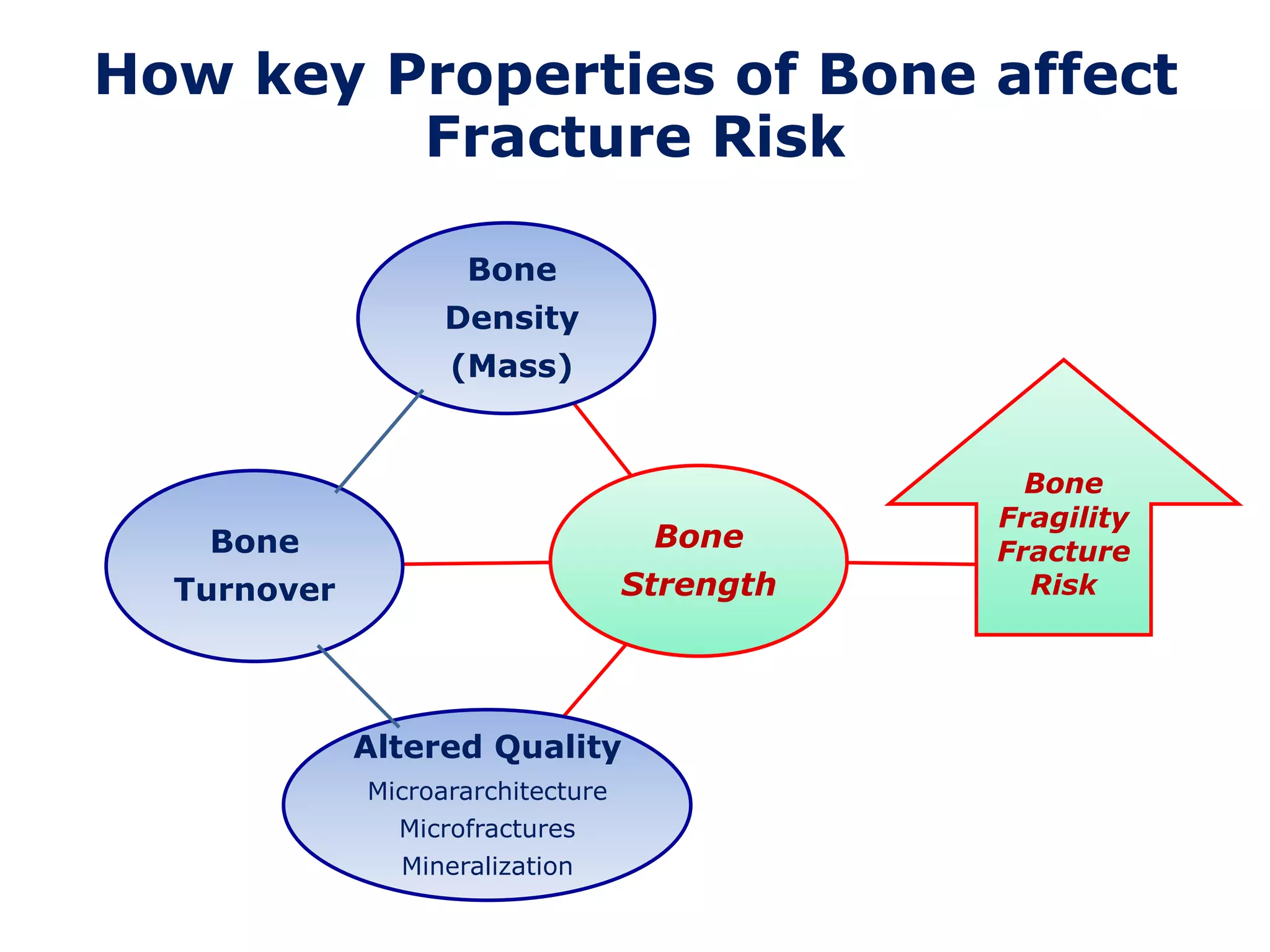
Definition of Osteoporosis
The National Institutes of Health (NIH) Consensus Conference, 2000
Skeletal disorder characterized by
compromised Bone strength
Bone strength primarily reflects the
integration of
1- Bone Density (Mass)
2- Bone Quality (3M)
3- Bone Turnover (Recycling)
leading to an increased
Fragility and risk of fracture
Bone strength
Bone
Turnover
Bone Quality
Microararchitecture
Microfractures
Mineralization
Bone Density
(Mass)
Bone
Strength
How key Properties of Bone affect
Fracture Risk
Bone
Strength
Bone
Density
(Mass)
Fragility
Fracture
Risk
Altered Quality
Microararchitecture
Microfractures
Mineralization
Bone
Turnover
Bone
Fragility
Fracture
Risk
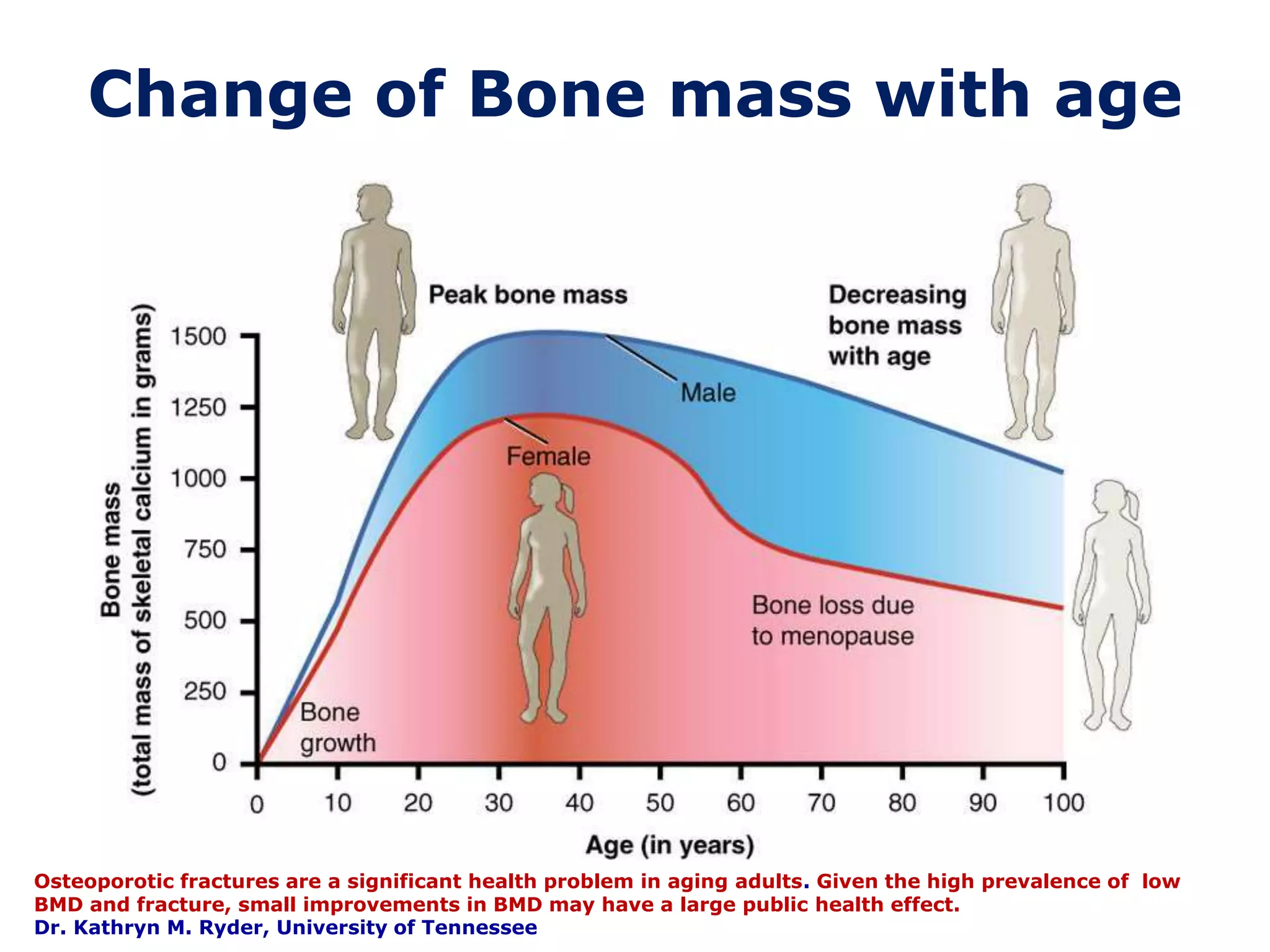
Change of Bone mass with age
Osteoporotic fractures are a significant health problem in aging adults. Given the high prevalence of low
BMD and fracture, small improvements in BMD may have a large public health effect.
Dr. Kathryn M. Ryder, University of Tennessee
Bone Turnover changes
PTH, an 84-amino acid peptide hormone
Amino-terminal fragment [PTH(1-34)
RA , Osteoporosis
On Bisphosphonates
Bisphosphonates
What is our aim
Bone BMD
or
Fracture risk
Bone Quality change
Micro architecture – Micro fractures - Mineralization
Bone strength
is not the only problem with ageing
Other problems of ageing
1- Impaired vision
2- Hearing, Vestibular problems
3- Reduced muscle strength
4- Neuromuscular coordination, balance, gait
4- Cognitive impairment, dependence
5- Housing type, living alone, bereavement
6- Fear of falling, loss of confidence
‫تعالى‬ ‫هللا‬ ‫يقول‬:‫ي‬ِّ‫ن‬ِّ‫إ‬ ِّ‫ب‬َ‫ر‬ َ‫ل‬‫ا‬َ‫ق‬(‫ي‬ِّ‫ن‬ِّ‫م‬ ُ‫م‬ْ‫ظ‬َ‫ع‬ْ‫ل‬‫ا‬ َ‫ن‬َ‫ه‬َ‫و‬)‫و‬(ُ‫س‬ْ‫أ‬َّ‫الر‬ َ‫ل‬َ‫ع‬َ‫ت‬ْ‫ش‬‫ا‬ْ‫ي‬َ‫ش‬‫ا‬ً‫ب‬)‫ا‬ًّ‫ي‬ِّ‫ق‬َ‫ش‬ ِّ‫ب‬َ‫ر‬ َ‫ك‬ِّ‫ئ‬‫َا‬‫ع‬ُ‫د‬ِّ‫ب‬ ‫ُن‬‫ك‬َ‫أ‬ ْ‫م‬َ‫ل‬َ‫و‬(4)
‫مريم‬ ‫سورة‬
Praying: "O my Lord! infirm indeed are my bones, and the hair of my head doth glisten with
grey: but never am I unblest, O my Lord, in my prayer to Thee! (4) Maryam
‫تعالى‬ ‫هللا‬ ‫يقول‬:
َّ‫م‬ُ‫ث‬ ٍ‫ف‬ْ‫ع‬َ‫ض‬ ‫ن‬ِّ‫م‬ ‫ُم‬‫ك‬َ‫ق‬َ‫ل‬َ‫خ‬ ‫ِّي‬‫ذ‬َّ‫ل‬‫ا‬ ُ َّ‫اَّلل‬ُ‫ق‬ ٍ‫ف‬ْ‫ع‬َ‫ض‬ ِّ‫د‬ْ‫ع‬َ‫ب‬ ‫ن‬ِّ‫م‬ َ‫ل‬َ‫ع‬َ‫ج‬ً‫ة‬َّ‫و‬
ٍ‫ة‬َّ‫و‬ُ‫ق‬ ِّ‫د‬ْ‫ع‬َ‫ب‬ ‫ن‬ِّ‫م‬ َ‫ل‬َ‫ع‬َ‫ج‬ َّ‫م‬ُ‫ث‬(‫ا‬ً‫ف‬ْ‫ع‬َ‫ض‬)َ‫و‬(ً‫ة‬َ‫ب‬ْ‫ي‬َ‫ش‬)‫ا‬َ‫م‬ ُ‫ق‬ُ‫ل‬ْ‫خ‬َ‫ي‬ ۚ
ُ‫ِّير‬‫د‬َ‫ق‬ْ‫ل‬‫ا‬ ُ‫م‬‫ي‬ِّ‫ل‬َ‫ع‬ْ‫ل‬‫ا‬ َ‫و‬ُ‫ه‬َ‫و‬ ۖ ُ‫ء‬‫َا‬‫ش‬َ‫ي‬(54)
‫الروم‬ ‫سورة‬
It is Allah Who created you in a state of (helpless)
weakness, then gave (you) strength after
weakness, then, after strength, gave (you
weakness and a hoary head: He creates as He wills,
and it is He Who has all knowledge and power (54)
Al-Room
Senility, Flamed head, Bone weakness
and General weakness
Is an integral part of its surrounding environment (the
body or the host)
It is affected by the condition of the other systems
It is made up of different organs
Bones
Muscles
Tendons
Cartilage
Ligaments
Nerves
Vessels
The musculoskeletal system
• Bones tissues are dominating
but it contain other tissues too
• Nervous tissue and nerves
• Blood tissue and blood vessels
• Cartilage as in articular
cartilages
• Epithelial tissue lining as in the
blood vessels
Bones is an organ containing
different tissues
Bone tissue is a specialized connective
tissue
Tissue Purpose Components
Collagenous
fibers
Bind bones
and other
tissues to
each other
Alpha
polypeptide
chains
Elastic fibers
Allow organs
like arteries
and lungs to
recoil
Elastic micro
fibril and
elastin
Reticular
fibers
Form a
scaffolding
for other cells
Type III
collagen
Types of connective tissue fibers
Matrix of Collagen fibers (Ossein)
is a type of protein fiber found abundantly throughout
our body.
It provides strength and cushioning to many different
areas of the body, including the skin.
Collagen fibers
is found in our various types of connective tissue such
as cartilage, tendons, bones, and ligaments
(musculoskeletal system )
Bone mineral (also called inorganic bone
phase, bone salt, or bone apatite)
Carbonated hydroxyapatite
a naturally occurring mineral
form of calcium apatite
• 65% Inorganic (Hydroxyapatite)
– Mostly Calcium and inorganic
orthophosphate deposited
between collagen
• 35% Organic
– 28% collagen
– 5%
• Osteocalcin
• Sialoprotein
• Phosphoprotein
• Osteonectin
• Bone specific protein
25
Bone tissue is a specialized
connective tissue
1- Protection
2- Shape
3- Blood cell formation
4- Mineral storage
5- Support
6- Movement
Skeleton provide a wide variety of
functions
• Bones tissue is one of the most
remarkable tissues of the human
body. It combine between strength
and resiliency (similar to wood)
• Bones are living, dynamic structures,
Far from being inert and lifeless
• Like all tissues it is in a state of
continuous turnover (changeable).
It is constantly being remodeled.
• Remodeling equation means we have
to lose bone to build new bone
(new bones replace the aged one by
Resorption – Formation process)
Bone remodeling and metabolism
RANK (Receptor activator of nuclear factor
Kappa B)
RANKL (Receptor activator of nuclear factor
Kappa B ligand) (PTH in malignancy)
OPG (Osteoprotegerin) RANKL inhibitor
(Estrogen – Prolia)
Osteoprotegerin is a decoy receptor for the receptor activator of
nuclear factor Kappa B ligand. By binding RANKL, OPG
prevents RANK-mediated nuclear factor kappa B (NF-kB)
activation which is a central and rapid acting transcription factor
for immune-related genes, and a key regulator of inflammation,
innate immunity, and cell survival and differentiation
also known as osteoclastogenesis inhibitory factor(OCIF),
or tumor necrosis factor receptor super family member
11B (TNFRSF11B), is a protein that in humans is encoded by
theTNFRSF11B gene.
Osteoprotegerin is a cytokine receptor, and a member of the
tumoro necrosis factor (TNF) receptor super family.
Abbreviations
RANK – RANKL - OPG
The ratio of OPG:RANKL produced by osteoblasts
will determine the extent of bone resorption.
(RANK – RANKL – OPG)
Abbreviations
ERRs
Estrogen-related receptors
The ERRs are orphan nuclear
receptors,
Their endogenous ligand has not yet
determined.
They are named because of
sequence homology with estrogen
receptors
But do not appear to bind estrogens
or other tested steroid hormones.
ERRs
ERRa is the oldest orphan nuclear receptor. Combining affinity chromatography with tissue lipidomics,
Wei et al. identify cholesterol as an endogenous ERRa agonist.
ERRa mediates the effects of cholesterol on osteoclasts, macrophages, and myocytes, as well as the pharmacological effects of statins and
bisphosphonates on bone resorption and skeletal remodeling.
Cholesterol is a Ligand for
estrogen-related receptors
ERRα
What is the Osteoclast
Osteoclast is the Bone macrophage
Macrophage of the universe
Black holes
Black hole of the body
Macrophage
ْ‫ب‬ُ‫س‬َ‫ف‬ ‫ا‬َ‫ت‬َ‫د‬َ‫س‬َ‫ف‬َ‫ل‬ ُ َّ‫اَّلل‬ َّ‫َّل‬ِّ‫إ‬ ٌ‫ة‬َ‫ه‬ِّ‫ل‬‫آ‬ ‫ا‬َ‫م‬ِّ‫ه‬‫ي‬ِّ‫ف‬ َ‫ان‬َ‫ك‬ ْ‫و‬َ‫ل‬ُ‫ف‬ َِِّ‫ي‬ ‫ا‬َّ‫م‬َ‫ع‬ ِِّْ‫ر‬َ‫ع‬ْ‫ل‬‫ا‬ ِّ‫ب‬َ‫ر‬ ِّ َّ‫اَّلل‬ َ‫ان‬َ‫َح‬‫ون‬
22‫األنبياء‬ ‫سورة‬
(22) If there were, in the heavens and the earth, other gods besides Allah, there
would have been confusion in both! but glory to Allah, the Lord of the Throne:
(High is He) above what they attribute to Him!
Cell Name Anatomical Location
Adipose tissue macrophages Adipose tissue
Monocytes Bone marrow/blood
Kupffer cells Liver
Sinus histiocytes Lymph nodes
Alveolar macrophages (dust cells) Pulmonary alveoli of lungs
Tissue macrophages (histiocytes)
leading to giant cells
Connective tissue
Langerhans cells Skin and mucosa
Microglia Central nervous system
Hofbauer cells Placenta
Intraglomerular mesangial cells Kidney
Osteoclasts Bone
Epithelioid cells Granulomas
Red pulp
macrophages (Sinusoidal lining
cells)
Red pulp of spleen
Peritoneal macrophages Peritoneal cavity
LysoMac [33] Peyer's patch
Each type of macrophage, determined by
its location, has a specific name
fixed macrophages, stay at strategic
locations such as the lungs, liver, neural
tissue, one, spleen and connective tissue,
ingesting foreign materials
and recruiting additional macrophages if
needed
Functions
Phagocytosis
Role in adaptive immunity
Role in muscle regeneration
Role in wound healing
Role in limb regeneration
Role in iron homeostasis
What is the Osteoblast and the
Osteocyte
Osteoblast is the gait through which most Osteoclastic activity & bone remodeling is controlled. (The ratio of OPG :
RANKL will determine the extent of bone resorption). Estrogen vs. PTH (in diseases as in PT adenoma – bone
malignancy)
Bone remodeling and metabolism
Bone remodeling is well balanced otherwise pathological problems may occur
Remodeling & Metabolism are
triggered and controlled by:
1- Vitamin D, Vitamin K2, Calcium,
Magnesium, etc
in the extracellular fluid
2- Mechanical stresses
on the bone tissue
3- Other factors like
Growth factors
Hormones PTH, Calcitonin, Estrogen,
etc
Cytokines
Factors affecting Bone remodeling
and metabolism
Bone is constantly being
remodeled. Remodeling &
Metabolism are triggered and
controlled by:
1- Vitamin D, Vitamin K2, Calcium,
Magnesium, etc
in the extracellular fluid
2- Mechanical stresses
on the bone tissue
3- Other factors like
Growth factors
Hormones PTH, Calcitonin,
Estrogen, etc
Cytokines
Optimal
Bone
Strength
Calcium
Vitamin K2
Magnesium
Vitamin D3
1- Vitamin D, Vitamin K2, Calcium and
Magnesium
Rule of Vitamin D3
Vitamin D - Sunshine Vitamin
7-dehydro cholesterol -> VitD3 -> 25-hydroxy VitD3 -
> 1-25-hydrroxy VitD3
Sun’s rays is one of the best ways to get
vitamin D
Two types of ultraviolet rays; UVA and UVB
It’s the UVB rays that convert the
cholesterol in our skin into vitamin D
Functions of Vitamin D
• Calcium and Phosphorus
Homeostasis (PTH, Calcitonin)
• Calcium and Phosphorus
absorption (small intestine)
• Calcium reabsorption (bone
and kidney)
• Maintain blood calcium levels
• Bone formation
• Stimulate calcium uptake for
deposition as calcium
phosphate (Osteoblasts: bone-
forming cells)
• Hormone (Vit D receptor)
• Regulation of gene expression
• Cell growth
Calcium Homeostasis (Vit D – PTH – Calcitonin)
Rule of Calcium
Calcium Homeostasis
Calcium - Vit D – PTH – Calcitonin (Vitamin K2 – Magnesium)
Rule of Vitamin K2
Vitamin K Update
Summarized by Walter SorochanPosted November 03, 2015;
The belief that vitamin K is required only just for normal blood
clotting is now obsolete!
Vitamin K acts as a cofactor in helping other nutrients function in
the body.
Vitamin K has many forms, each with new discovered specific
functions.
Ingesting calcium supplements in hopes of preventing
osteoporosis without adequate vitamin K may be causing
hardening of the arteries.
Many persons may be deficient in Vitamin K by not eating enough
green leafy vegetables and fermented foods like Gouda cheese
and Natto.
Rule of Vitamin K2
Rule of Vitamin K2
Table 1. Classification of the 17 Gla-proteins according to their function
Function Name of protein
Haemostasis (procoagulant activity) Prothrombin, factors VII, IX, and X
Haemostasis (anticoagulant activity) Proteins C, S, and Z
Artery calcification inhibition Matrix Gla-Protein (MGP)
Bone metabolism Osteocalcin
Cell growth regulation Growth-arrest sequence 6 protein (Gas6)
Functions unknown
Gla-rich protein (GRP)
Periostin
Periostin-like factor
Four transmembrane Gla-proteins
Rule of Vitamin K2
Rule of Magnesium
The fourth most abundant Cation in the body
Plays an important physiological role in many of its functions.
Magnesium deficiency: a variety of causes including gastrointestinal and renal
losses.
Magnesium deficiency can cause hypocalcaemia, hypokalaemia, cardiac &
neurological manifestations.
Chronic Magnesium deficiency associated with diabetes, hypertension, Coronary
Heart disease and Osteoporosis.
Magnesium as a therapeutic agent used in asthma, myocardial infarction, and pre-
eclampsia
Magnesium, NOT Calcium,
Is The Key To Healthy Bones
By Erin Elizabeth -
December 30, 2016
Intake and absorption of Magnesium during childhood are key predictors of total
bone mineral content and bone density
While dietary calcium intake was not significantly associated with such measures.
Greater magnesium intake is significantly related to higher bone mineral density
(BMD) in men and women.
There is an approximate 2 percent increase in whole-body BMD for every 100
milligram per day increase in magnesium.
Magnesium is a “lesser-studied” component of bone that may play a role in
calcium metabolism and bone strength
According to the National Osteoporosis Foundation (NOF), food
will always be the best source of calcium: “People who get the
recommended amount of calcium from foods do not need to take
a calcium supplement. These individuals still may need to take a
vitamin D supplement. Getting too much calcium from
supplements may increase the risk of kidney stones and other
health problems.”
The best source of calcium: “People who get the recommended amount of Calcium from
foods do not need to take a calcium supplement
Calcium Supplement with deficiency in Vitamin D, Magnesium and Vitamin K2 will Direct
the Calcium to the vessel walls and kidney not to the bones
Magnesium, NOT Calcium,
Is The Key To Healthy Bones
By Erin Elizabeth -
December 30, 2016
1- Weight bearing activities
stimulate Osteoblasts (Ratio of
OPG > RANKL) - (Teriparatide –
Forteo)
2- Its anabolic effect at the
same time stop or reverse
osteoporosis
3- 60% reduction in fracture
incidence
2- Mechanical stresses
Rule of Exercise in Osteoporosis
3- Other factors
Rule of Parathyroid hormone PTH
OPG (Osteoprotegerin) production is
stimulated in vivo by the female sex
hormone estrogen,[7
as well as the osteoporosis
drug, strontium. Denosumab is a
pharmacologic agent that in essence acts like
Osteoprotegerin as a decoy receptor for
Osteoclastic RANKL.
Rule of Oestrogen
Figure 1Effects of glucocorticoids on the skeleton
Glucocorticoids can affect bone cells directly (grey arrows) or indirectly via a range of factors (black arrows).
Rule of Glucocorticoids
Prevention
and
Treatment
Prevention and Treatment of what ?
What we are aiming for ?
1- Osteoporosis
by increasing BMD ?
Or
2- Fragility fracture
by reducing the multiple Risk
factors ?
Prevention and
Treatment
Prevention and Treatment of
Osteoporosis & Fragility fracture
Therapeutic Life style
1- Good Nutritious Diet
2- Exercise
3- Prevention of falls
Drug therapy
1- Anti resorptive agents
2- Bone forming agents
3- Other agents
Therapeutic
Life style
1- Good Nutritious Diet
Non acidifying - Rich in Magnesium,
Vitamin D Vitamin K2, Calcium
2- Exercise and Densercise
It acts like parathyroid hormone small doses by
stimulating Osteoblasts towards Bone
formation. (Ratio of OPG > RANKL)
Exercise with its anabolic effect, may at the
same time stop or reverse osteoporosis.
3- Prevention of falls
Slippery stairs & floor
Illumination
Obstacles & furniture
Psychological support
Therapeutic Life style
1- Good Nutritious Diet
Non acidifying foods - Rich in Magnesium, Vitamin D, Vitamin K2
and Calcium
2- Exercise
Osteoblasts Respond well to increased stresses on bones
Wt. bearing exercise is the best anti resorptive bone forming agent
1- Reduce risk of fragility fracture
60% reduction in fracture incidence
2- Weight bearing activities stimulate
Osteoblasts
(Ratio of OPG > RANKL)
3- Anabolic effect
Bones and muscles (HGH)
stop or reverse osteoporosis
4- Muscle power – Neuromuscular
coordination – Mood
Peak secretion of Hormones
Endorphins – serotonin - catecholamine
5- Mitochondrial Biogenesis
Root cause of Ch disease, cancer, aging
Bone Mass and Activity
80
85
90
95
100
105
110
115
%SedentaryControl
Row Volleyball Basketball Swim Run Weights
Sports
3- Prevention of falls
Prevention of falls
Sentinel Events
Thousands of patients all over the world die every year because of serious incidents happening to them while
receiving care inside hospitals. CBAHI and all other healthcare accreditation organizations have one purpose in
common: contribute to improved quality, safety and experience of healthcare services through systems that are
patient/family-centered, provide for early identiication and review of near misses and reportable events, and
ensure lessons are learnt so preventable adverse events are not repeated.
Sentinel Events (SE) are relatively infrequent but they do occur. Simply deined, a sentinel event is any event
leading to serious patient harm or death and is caused by healthcare rather than the patient’s underlying illness.
By investigating sentinel events, we can identify deiciencies in healthcare systems and processes, and put
actions in place to prevent recurrence.
The Ministry of Health has identiied the following events as must-to report events:
Unexpected death
Maternal death
Wrong patient, wrong procedure, or wrong site.
Retained instrument or sponge
Medication error leading to death or major morbidity
Infant abduction or infant discharged to the wrong family
Unexpected loss of a limb or a function
Hemolytic blood transfusion reaction
Inpatient suicide
Gas embolism
“Much to the shock of my doctor, who had told me that I was stuck with a disease for
the rest of my life, I reversed osteoporosis in just one year without ever taking the
medication he prescribed. I was ecstatic and felt a responsibility to share this
information with others, and that’s how the Save Institute was born.”
Vivian Goldschmidt MA, Save Institute Founder
Vivian Goldschmidt here, Medical
Researcher with a Masters Degree
in Nutritional Sciences and
Biochemistry and founder of Save
Our Bones.
Vivian Goldschmidt, founder of Save Our Bones
and creator of the Save Our Bones Program
✓Number 1: Rethink your bone health. ✓Number 2: Stop the bone
thieves. ✓Number 3: Rebuild your bones.
The principles are simple diet, lifestyle, and exercise actions.
1. Rethink Your Bone Health
Osteoporosis is not a disease.
Save Our Bones Program
2. Stop The Bone Thieves
* These are your number one enemies, and range from bone stealing foods and drinks,
to dangerous osteoporosis drugs that are literally starving and drying up your bones.
These drugs are Actonel, Boniva, Fosamax, Reclast, Forteo, Evista, Strontium Ranelate
(Protelos), Miacalcin, Fortical, Prolia, and all their generic counterparts. And they all have
one thing in common: They do more harm than good.
* The true cause of osteoporosis: an imbalance in the body’s chemistry. Therefore,
achieving biochemical balance is the core of the osteoporosis solution
The true cause of
osteoporosis:
an imbalance in the body’s
chemistry.
Therefore, achieving
biochemical balance is the
core of the osteoporosis
solution
3. Rebuild Your Bones
Supplements.
They are:
✓Calcium
✓Magnesium
✓Zinc
✓Boron
✓Copper
✓Manganese
✓Silicon
✓Vitamin D
✓Vitamin K
✓Vitamin B Complex
✓Vitamin C
✓Coenzyme Q10
✓Fish Oil
Foods.
contain the essential
nutrients you need for
healthy bones.
✓Yogurt
✓Cabbage
✓Broccoli
✓Spinach
✓Lima Beans
✓Collard Greens
✓Sesame Seeds
✓Almonds
You do not have to
eliminate all the acidifying
foods?
✓Beef
✓Turkey
✓Tuna
✓Eggs
Densercise
Intense exercise against resistance
Drug therapy
1- Anti resorptive agents
Bisphosphonate, Estrogen analogs,
Raloxifene SERMs, Calcitonin
2- Bone anabolic agents
Teriparatide (Forteo, recombinant PTH)
Calcium salts, Sodium fluoride
3- Other agents (RANKL inhibitors)
1- Denosumab (marketed as Prolia®)
was approved for the treatment of osteoporosis in June 2010 fully human
monoclonal antibody that mimics the activity of OPG (Osteoprotegerin).
2- Strontium ranelate (Protelos)
Oral strontium ranelate is an alternative oral treatment, belonging to a class of
drugs called "dual action bone agents" (DABAs)
Drug therapy
It seems that Bisphosphonates
is in the way too
Bisphosphonate
Statin
Teriparatide
Forteo
Denosumab
Prolia
Bisphosphonate + Statins vs. Teriparatide (Forteo) vs.
Denosumab (Prolia)
Cell Metabolism
Volume 23, Issue 3, Pages 479-491 March 2016)
Ligand Activation of ERRα by Cholesterol Mediates Statin and
Bisphosphonate Effects
The Citric acid cycle - Krebs cycle - TCA cycle
Bisphosphonate and Statin both block the Mevalonic acid pathway
The citric acid cycle is a key metabolic pathway that unifies
carbohydrate, fat, and protein metabolism.The reactions of
the cycle are carried out by 8 enzymes that completely oxidize
acetate, in the form of Acetyl CoA
BISPHOSPHANATE
Prolia
For What it is prescribed?
UPPER GI ADVERSE EFFECTS
ACUTE PHASE REACTION
SEVERE MUSCULOSKELETAL PAIN
HYPOCALCEMIA
ESOPHAGEAL CANCER WITH ORAL BISPHOSPHONATES
OCULAR INFLAMMATION
OSTEONECROSIS OF THE JAW
ATRIAL FIBRILLATION
SEVERE SUPPRESSION OF BONE TURNOVER
SUBTROCHANTERIC FEMORAL FRACTURES
SHORT-TERM ADVERSE EFFECTS OF BISPHOSPHONATE THERAPY
LONG -TERM ADVERSE EFFECTS OF BISPHOSPHONATE THERAPY
1- Bisphosphonate Interactions
interact with several common medications. Some make the drug less effective, while others can
increase the risk of side effects. These include:
•Aspirin and NSAIDs drugs (ibuprofen, naproxen and anaprox): causes increased stomach irritation.
•Iron supplements and magnesium products: prevents absorption.
•Antacids: makes it less effective.
2- FDA Recalls and Warnings
Warning letter for “overstating the benefits while minimizing the risks
Femur Fractures
Osteonecrosis of the Jaw
Barrett’s esophagus, dysphagia and gastritis esophageal cancer
Incapacitating bone, joint and muscle pains
Irregular heartbeat
Painful eye disorders that cause inflammation and distorted vision.
3- Cases Against Fosamax Increase
Court cases against Merck began in 2004 once research proved that Fosamax causes Osteonecrosis of
the jaw. Patients with side effects such as femur fractures, Dead Jaw Syndrome, esophagus problems
and musculoskeletal pain have filed lawsuits against Merck.Thousands of patients have filed in a
multidistrict litigation (MDL) in NewYork and New Jersey. With MDL cases, pre-trial proceedings are
heard together; however, each case has a separate trial
Bisphosphonate side effects
*That makes mainstream medicine the actual leading cause of death
and injury in the United States.
Russell Blaylock, M.D
The Big Drug Lie!
*You might believe that heart disease and cancer are the leading killers in this country
100,000 Americans die each year from side effects of pharmaceutical drugs as prescribed
by their doctors?
Our conventional American medical system causes an astronomical 783,936 deaths per
year.
Russell Blaylock, M.D., practiced conventional medicine as a board-certified neurosurgeon for nearly 30 years. After watching
both his parents die from neurodegenerative disorders that could not be helped by mainstream treatment, he began to research
safe and effective natural cures.
Top 5 Reasons Why You Should Never Take
Osteoporosis Drugs
By Vivian Goldschmidt, MA
Reason #1: Drugs Are Synthetic Chemicals That Work
Against the Body
Bone Loss is Only Half of the Remodeling Equation
That’s right – you have to lose bone to build new bone
Reason #2: All Osteoporosis Drugs Have Bad Side Effects
Bisphosphonates.
Osteonecrosis of the jaw (ONJ)
Atrial fibrillation risk of serious atrial fibrillation by 40%.
Esophageal cancer 75% attributed to Fosamax
Increased fracture risk The most ironic (and ridiculous) side effect
Other side effects: nausea, flatulence, blurred vision, joint pain, muscle pain, and
abdominal cramping
Reason #3: Quite Often, Osteoporosis Drugs Don’t
Work
appear to increase bone density by halting healthy remodeling.
The price of osteoporosis drugs is just too high!
Reason #4: Drug “Approvals” are Meaningless
Despite the fact that how Forteo “works” was a complete mystery, and despite this
potentially fatal side effect osteosarcoma, Forteo was approved by the FDA.
Another seemingly “natural” drug not only may cause cancer; it’s also entirely useless
in increasing bone density. Calcitonin or Calcitonin salmon, the fish-based nasal
spray, pill, or injection that doesn’t even “work,” and may actually cause cancer in
those taking the drug in pill form.4
Reason #5: Osteoporosis, as Stated in the Save Our Bones Program, is
Not a Disease
the true cause of osteoporosis: an imbalance in the body’s chemistry. Therefore,
achieving biochemical balance is the core of the osteoporosis solution
Good Nutritious Diet
Non acidifying - Rich in Magnesium,
Vitamin D Vitamin K2, Calcium
Exercise
It acts like parathyroid hormone small doses by
stimulating Osteoblasts towards Bone
formation. (Ratio of OPG > RANKL)
Exercise with its anabolic effect, may at the
same time stop or reverse osteoporosis.
Prevention of falls
Slippery stairs & floor
Illumination
Obstacles & furniture
Psychological support
Therapeutic Life style
Osteoporosis overview

Osteoporosis overview

  • 1.
    Metabolic Bone Diseases Osteoporosis Overview Dr.Fathi Neana, MD Chief of Orthopaedics Dr. Fakhry & Dr. A. Al-Garzaie Hospital Saudi Arabia May,03 - 2018
  • 2.
    ‫ي‬ِّ‫ن‬ِّ‫إ‬ ِّ‫ب‬َ‫ر‬ َ‫ل‬‫ا‬َ‫ق‬(‫ي‬ِّ‫ن‬ِّ‫م‬ُ‫م‬ْ‫ظ‬َ‫ع‬ْ‫ل‬‫ا‬ َ‫ن‬َ‫ه‬َ‫و‬)‫و‬(ْ‫أ‬َّ‫الر‬ َ‫ل‬َ‫ع‬َ‫ت‬ْ‫ش‬‫ا‬ُ‫س‬‫ا‬ً‫ب‬ْ‫ي‬َ‫ش‬)َ‫ر‬ َ‫ك‬ِّ‫ئ‬‫َا‬‫ع‬ُ‫د‬ِّ‫ب‬ ‫ُن‬‫ك‬َ‫أ‬ ْ‫م‬َ‫ل‬َ‫و‬ِّ‫ب‬ ‫ا‬ًّ‫ي‬ِّ‫ق‬َ‫ش‬(4)‫مريم‬ ‫سورة‬
  • 3.
    New Lifestyle diseases Non-communicablediseases (NCDs) • Obesity – Metabolic syndrome • Coronary artery disease • Diabetes type 2 • Hypertension • Arteriosclerosis • Stroke • Cancer • Depression - anxiety • Arthritis • Osteomalacia • Osteoporosis • Swimmer's ear – loss of hearing • Ch. obstructive pulmonary disease • Liver Cirrhosis • Nephritis • Etc, etc, etc… Emerged as bigger killers than infectious or hereditary ones. The leading cause of death in the world. 63% of all annual deaths. > 38 million people are killed /year. 1- Cardiovascular diseases (17.5 million) Complications of hypertension (9.4 million) 2- Cancers (8.2 million) 3- Respiratory diseases (4 million) 5- Diabetes (1.5 million) These 4 diseases account for 80 % of all NCDs deaths (> 38 million) 4- USA’s 4th Leading Cause of Death – Pharma’s Drugs Posted on June 25, 2012 by Child Health Safety Causes: • Stress-Depression • Diet • Sleep-awake • Lack of Exercise • Sun avoidance • Wireless WiFi devices • Leaky gut syndrome • Other pollutants Including Medicines
  • 4.
    The Root causeand Culprit Behind Chronic Diseases, Cancer and Aging 1- A state of chronic low grade inflammation Dr. Richard K. Bernstein Diabetes & Inflammation—the Vicious Cycle (Hyperglycemia – Omega 6 - Obesity) - Leukotriene B(4) (LTB(4) 2- Mitochondrial dysfunction (not the genetic make up) Dr. Ron Rosedale Breakthrough views on clinical metabolic biochemistry 1- Harmful Effects of too much Sugar ->> Insulin and leptin receptor resistance ->> Free radicals (ROS) 90% Mitochondr 2- Harmful Effects of too much Protein ->> Activation of the mTOR metabolic signaling pathway 3- Physical inactivity (Exercise) 4- Pollutants 5- Drugs causing mitochondrial toxicity (Iatrogenic) Mitochondrial dysfunction Energy (ATP - ADP) Leukotriene B(4) (LTB(4) acts as a signal to relay information from cell to cell over long distances.
  • 5.
    1- Osteoporosis isa serious public health concern. Due to its prevalence worldwide 2- Currently over 200 million people worldwide suffer from this disease 3- Approximately 30% of all postmenopausal women have osteoporosis in the USA & Europe 4- At least 40% of these women and 15-30% of men will sustain one or more fragility fractures in their remaining lifetime 5- Ageing of populations worldwide will be responsible for a major increase in the incidence of osteoporosis in postmenopausal women 6- An initial fracture is a major risk factor for a new fracture. An increased risk of 86% for any fracture in people that have already sustained a fracture 8- Patients with a history of vertebral fracture have a 2.3-fold increased risk of future hip fracture and a 1.4-fold increase in risk of distal forearm fracture Epidemiology Epidemiology | International Osteoporosis Foundation https://www.iofbonehealth.org/epidemiology
  • 9.
    By 2050 1- Theworldwide incidence of hip fracture in men is projected to increase by 240% in women and 310% in men 2- The estimated number of hip fractures worldwide will rise from 1.66 million in 1990 to 6.26 million in 2050, even if age-adjusted incidence rates remain stable10. Projections Epidemiology | International Osteoporosis Foundation https://www.iofbonehealth.org/epidemiology
  • 10.
    Definition of Osteoporosis TheNational Institutes of Health (NIH) Consensus Conference, 2000 Skeletal disorder characterized by compromised Bone strength Bone strength primarily reflects the integration of 1- Bone Density (Mass) 2- Bone Quality (3M) 3- Bone Turnover (Recycling) leading to an increased Fragility and risk of fracture
  • 11.
  • 12.
    How key Propertiesof Bone affect Fracture Risk Bone Strength Bone Density (Mass) Fragility Fracture Risk Altered Quality Microararchitecture Microfractures Mineralization Bone Turnover Bone Fragility Fracture Risk
  • 13.
    Change of Bonemass with age Osteoporotic fractures are a significant health problem in aging adults. Given the high prevalence of low BMD and fracture, small improvements in BMD may have a large public health effect. Dr. Kathryn M. Ryder, University of Tennessee
  • 15.
    Bone Turnover changes PTH,an 84-amino acid peptide hormone Amino-terminal fragment [PTH(1-34)
  • 16.
    RA , Osteoporosis OnBisphosphonates
  • 17.
    Bisphosphonates What is ouraim Bone BMD or Fracture risk
  • 18.
    Bone Quality change Microarchitecture – Micro fractures - Mineralization
  • 19.
    Bone strength is notthe only problem with ageing Other problems of ageing 1- Impaired vision 2- Hearing, Vestibular problems 3- Reduced muscle strength 4- Neuromuscular coordination, balance, gait 4- Cognitive impairment, dependence 5- Housing type, living alone, bereavement 6- Fear of falling, loss of confidence
  • 21.
    ‫تعالى‬ ‫هللا‬ ‫يقول‬:‫ي‬ِّ‫ن‬ِّ‫إ‬ِّ‫ب‬َ‫ر‬ َ‫ل‬‫ا‬َ‫ق‬(‫ي‬ِّ‫ن‬ِّ‫م‬ ُ‫م‬ْ‫ظ‬َ‫ع‬ْ‫ل‬‫ا‬ َ‫ن‬َ‫ه‬َ‫و‬)‫و‬(ُ‫س‬ْ‫أ‬َّ‫الر‬ َ‫ل‬َ‫ع‬َ‫ت‬ْ‫ش‬‫ا‬ْ‫ي‬َ‫ش‬‫ا‬ً‫ب‬)‫ا‬ًّ‫ي‬ِّ‫ق‬َ‫ش‬ ِّ‫ب‬َ‫ر‬ َ‫ك‬ِّ‫ئ‬‫َا‬‫ع‬ُ‫د‬ِّ‫ب‬ ‫ُن‬‫ك‬َ‫أ‬ ْ‫م‬َ‫ل‬َ‫و‬(4) ‫مريم‬ ‫سورة‬ Praying: "O my Lord! infirm indeed are my bones, and the hair of my head doth glisten with grey: but never am I unblest, O my Lord, in my prayer to Thee! (4) Maryam ‫تعالى‬ ‫هللا‬ ‫يقول‬: َّ‫م‬ُ‫ث‬ ٍ‫ف‬ْ‫ع‬َ‫ض‬ ‫ن‬ِّ‫م‬ ‫ُم‬‫ك‬َ‫ق‬َ‫ل‬َ‫خ‬ ‫ِّي‬‫ذ‬َّ‫ل‬‫ا‬ ُ َّ‫اَّلل‬ُ‫ق‬ ٍ‫ف‬ْ‫ع‬َ‫ض‬ ِّ‫د‬ْ‫ع‬َ‫ب‬ ‫ن‬ِّ‫م‬ َ‫ل‬َ‫ع‬َ‫ج‬ً‫ة‬َّ‫و‬ ٍ‫ة‬َّ‫و‬ُ‫ق‬ ِّ‫د‬ْ‫ع‬َ‫ب‬ ‫ن‬ِّ‫م‬ َ‫ل‬َ‫ع‬َ‫ج‬ َّ‫م‬ُ‫ث‬(‫ا‬ً‫ف‬ْ‫ع‬َ‫ض‬)َ‫و‬(ً‫ة‬َ‫ب‬ْ‫ي‬َ‫ش‬)‫ا‬َ‫م‬ ُ‫ق‬ُ‫ل‬ْ‫خ‬َ‫ي‬ ۚ ُ‫ِّير‬‫د‬َ‫ق‬ْ‫ل‬‫ا‬ ُ‫م‬‫ي‬ِّ‫ل‬َ‫ع‬ْ‫ل‬‫ا‬ َ‫و‬ُ‫ه‬َ‫و‬ ۖ ُ‫ء‬‫َا‬‫ش‬َ‫ي‬(54) ‫الروم‬ ‫سورة‬ It is Allah Who created you in a state of (helpless) weakness, then gave (you) strength after weakness, then, after strength, gave (you weakness and a hoary head: He creates as He wills, and it is He Who has all knowledge and power (54) Al-Room Senility, Flamed head, Bone weakness and General weakness
  • 22.
    Is an integralpart of its surrounding environment (the body or the host) It is affected by the condition of the other systems It is made up of different organs Bones Muscles Tendons Cartilage Ligaments Nerves Vessels The musculoskeletal system
  • 23.
    • Bones tissuesare dominating but it contain other tissues too • Nervous tissue and nerves • Blood tissue and blood vessels • Cartilage as in articular cartilages • Epithelial tissue lining as in the blood vessels Bones is an organ containing different tissues
  • 24.
    Bone tissue isa specialized connective tissue Tissue Purpose Components Collagenous fibers Bind bones and other tissues to each other Alpha polypeptide chains Elastic fibers Allow organs like arteries and lungs to recoil Elastic micro fibril and elastin Reticular fibers Form a scaffolding for other cells Type III collagen Types of connective tissue fibers Matrix of Collagen fibers (Ossein) is a type of protein fiber found abundantly throughout our body. It provides strength and cushioning to many different areas of the body, including the skin. Collagen fibers is found in our various types of connective tissue such as cartilage, tendons, bones, and ligaments (musculoskeletal system ) Bone mineral (also called inorganic bone phase, bone salt, or bone apatite) Carbonated hydroxyapatite a naturally occurring mineral form of calcium apatite
  • 25.
    • 65% Inorganic(Hydroxyapatite) – Mostly Calcium and inorganic orthophosphate deposited between collagen • 35% Organic – 28% collagen – 5% • Osteocalcin • Sialoprotein • Phosphoprotein • Osteonectin • Bone specific protein 25 Bone tissue is a specialized connective tissue
  • 26.
    1- Protection 2- Shape 3-Blood cell formation 4- Mineral storage 5- Support 6- Movement Skeleton provide a wide variety of functions
  • 27.
    • Bones tissueis one of the most remarkable tissues of the human body. It combine between strength and resiliency (similar to wood) • Bones are living, dynamic structures, Far from being inert and lifeless • Like all tissues it is in a state of continuous turnover (changeable). It is constantly being remodeled. • Remodeling equation means we have to lose bone to build new bone (new bones replace the aged one by Resorption – Formation process) Bone remodeling and metabolism
  • 28.
    RANK (Receptor activatorof nuclear factor Kappa B) RANKL (Receptor activator of nuclear factor Kappa B ligand) (PTH in malignancy) OPG (Osteoprotegerin) RANKL inhibitor (Estrogen – Prolia) Osteoprotegerin is a decoy receptor for the receptor activator of nuclear factor Kappa B ligand. By binding RANKL, OPG prevents RANK-mediated nuclear factor kappa B (NF-kB) activation which is a central and rapid acting transcription factor for immune-related genes, and a key regulator of inflammation, innate immunity, and cell survival and differentiation also known as osteoclastogenesis inhibitory factor(OCIF), or tumor necrosis factor receptor super family member 11B (TNFRSF11B), is a protein that in humans is encoded by theTNFRSF11B gene. Osteoprotegerin is a cytokine receptor, and a member of the tumoro necrosis factor (TNF) receptor super family. Abbreviations RANK – RANKL - OPG The ratio of OPG:RANKL produced by osteoblasts will determine the extent of bone resorption.
  • 29.
  • 30.
    Abbreviations ERRs Estrogen-related receptors The ERRsare orphan nuclear receptors, Their endogenous ligand has not yet determined. They are named because of sequence homology with estrogen receptors But do not appear to bind estrogens or other tested steroid hormones.
  • 31.
  • 32.
    ERRa is theoldest orphan nuclear receptor. Combining affinity chromatography with tissue lipidomics, Wei et al. identify cholesterol as an endogenous ERRa agonist. ERRa mediates the effects of cholesterol on osteoclasts, macrophages, and myocytes, as well as the pharmacological effects of statins and bisphosphonates on bone resorption and skeletal remodeling. Cholesterol is a Ligand for estrogen-related receptors ERRα
  • 34.
    What is theOsteoclast
  • 35.
    Osteoclast is theBone macrophage
  • 36.
    Macrophage of theuniverse Black holes Black hole of the body Macrophage ْ‫ب‬ُ‫س‬َ‫ف‬ ‫ا‬َ‫ت‬َ‫د‬َ‫س‬َ‫ف‬َ‫ل‬ ُ َّ‫اَّلل‬ َّ‫َّل‬ِّ‫إ‬ ٌ‫ة‬َ‫ه‬ِّ‫ل‬‫آ‬ ‫ا‬َ‫م‬ِّ‫ه‬‫ي‬ِّ‫ف‬ َ‫ان‬َ‫ك‬ ْ‫و‬َ‫ل‬ُ‫ف‬ َِِّ‫ي‬ ‫ا‬َّ‫م‬َ‫ع‬ ِِّْ‫ر‬َ‫ع‬ْ‫ل‬‫ا‬ ِّ‫ب‬َ‫ر‬ ِّ َّ‫اَّلل‬ َ‫ان‬َ‫َح‬‫ون‬ 22‫األنبياء‬ ‫سورة‬ (22) If there were, in the heavens and the earth, other gods besides Allah, there would have been confusion in both! but glory to Allah, the Lord of the Throne: (High is He) above what they attribute to Him!
  • 37.
    Cell Name AnatomicalLocation Adipose tissue macrophages Adipose tissue Monocytes Bone marrow/blood Kupffer cells Liver Sinus histiocytes Lymph nodes Alveolar macrophages (dust cells) Pulmonary alveoli of lungs Tissue macrophages (histiocytes) leading to giant cells Connective tissue Langerhans cells Skin and mucosa Microglia Central nervous system Hofbauer cells Placenta Intraglomerular mesangial cells Kidney Osteoclasts Bone Epithelioid cells Granulomas Red pulp macrophages (Sinusoidal lining cells) Red pulp of spleen Peritoneal macrophages Peritoneal cavity LysoMac [33] Peyer's patch Each type of macrophage, determined by its location, has a specific name fixed macrophages, stay at strategic locations such as the lungs, liver, neural tissue, one, spleen and connective tissue, ingesting foreign materials and recruiting additional macrophages if needed Functions Phagocytosis Role in adaptive immunity Role in muscle regeneration Role in wound healing Role in limb regeneration Role in iron homeostasis
  • 38.
    What is theOsteoblast and the Osteocyte Osteoblast is the gait through which most Osteoclastic activity & bone remodeling is controlled. (The ratio of OPG : RANKL will determine the extent of bone resorption). Estrogen vs. PTH (in diseases as in PT adenoma – bone malignancy)
  • 39.
  • 40.
    Bone remodeling andmetabolism Bone remodeling is well balanced otherwise pathological problems may occur Remodeling & Metabolism are triggered and controlled by: 1- Vitamin D, Vitamin K2, Calcium, Magnesium, etc in the extracellular fluid 2- Mechanical stresses on the bone tissue 3- Other factors like Growth factors Hormones PTH, Calcitonin, Estrogen, etc Cytokines
  • 41.
    Factors affecting Boneremodeling and metabolism Bone is constantly being remodeled. Remodeling & Metabolism are triggered and controlled by: 1- Vitamin D, Vitamin K2, Calcium, Magnesium, etc in the extracellular fluid 2- Mechanical stresses on the bone tissue 3- Other factors like Growth factors Hormones PTH, Calcitonin, Estrogen, etc Cytokines
  • 42.
    Optimal Bone Strength Calcium Vitamin K2 Magnesium Vitamin D3 1-Vitamin D, Vitamin K2, Calcium and Magnesium
  • 43.
    Rule of VitaminD3 Vitamin D - Sunshine Vitamin 7-dehydro cholesterol -> VitD3 -> 25-hydroxy VitD3 - > 1-25-hydrroxy VitD3 Sun’s rays is one of the best ways to get vitamin D Two types of ultraviolet rays; UVA and UVB It’s the UVB rays that convert the cholesterol in our skin into vitamin D
  • 45.
    Functions of VitaminD • Calcium and Phosphorus Homeostasis (PTH, Calcitonin) • Calcium and Phosphorus absorption (small intestine) • Calcium reabsorption (bone and kidney) • Maintain blood calcium levels • Bone formation • Stimulate calcium uptake for deposition as calcium phosphate (Osteoblasts: bone- forming cells) • Hormone (Vit D receptor) • Regulation of gene expression • Cell growth Calcium Homeostasis (Vit D – PTH – Calcitonin)
  • 46.
  • 47.
    Calcium Homeostasis Calcium -Vit D – PTH – Calcitonin (Vitamin K2 – Magnesium)
  • 48.
    Rule of VitaminK2 Vitamin K Update Summarized by Walter SorochanPosted November 03, 2015; The belief that vitamin K is required only just for normal blood clotting is now obsolete! Vitamin K acts as a cofactor in helping other nutrients function in the body. Vitamin K has many forms, each with new discovered specific functions. Ingesting calcium supplements in hopes of preventing osteoporosis without adequate vitamin K may be causing hardening of the arteries. Many persons may be deficient in Vitamin K by not eating enough green leafy vegetables and fermented foods like Gouda cheese and Natto.
  • 49.
  • 50.
  • 51.
    Table 1. Classificationof the 17 Gla-proteins according to their function Function Name of protein Haemostasis (procoagulant activity) Prothrombin, factors VII, IX, and X Haemostasis (anticoagulant activity) Proteins C, S, and Z Artery calcification inhibition Matrix Gla-Protein (MGP) Bone metabolism Osteocalcin Cell growth regulation Growth-arrest sequence 6 protein (Gas6) Functions unknown Gla-rich protein (GRP) Periostin Periostin-like factor Four transmembrane Gla-proteins Rule of Vitamin K2
  • 52.
    Rule of Magnesium Thefourth most abundant Cation in the body Plays an important physiological role in many of its functions. Magnesium deficiency: a variety of causes including gastrointestinal and renal losses. Magnesium deficiency can cause hypocalcaemia, hypokalaemia, cardiac & neurological manifestations. Chronic Magnesium deficiency associated with diabetes, hypertension, Coronary Heart disease and Osteoporosis. Magnesium as a therapeutic agent used in asthma, myocardial infarction, and pre- eclampsia
  • 53.
    Magnesium, NOT Calcium, IsThe Key To Healthy Bones By Erin Elizabeth - December 30, 2016 Intake and absorption of Magnesium during childhood are key predictors of total bone mineral content and bone density While dietary calcium intake was not significantly associated with such measures. Greater magnesium intake is significantly related to higher bone mineral density (BMD) in men and women. There is an approximate 2 percent increase in whole-body BMD for every 100 milligram per day increase in magnesium.
  • 54.
    Magnesium is a“lesser-studied” component of bone that may play a role in calcium metabolism and bone strength According to the National Osteoporosis Foundation (NOF), food will always be the best source of calcium: “People who get the recommended amount of calcium from foods do not need to take a calcium supplement. These individuals still may need to take a vitamin D supplement. Getting too much calcium from supplements may increase the risk of kidney stones and other health problems.” The best source of calcium: “People who get the recommended amount of Calcium from foods do not need to take a calcium supplement Calcium Supplement with deficiency in Vitamin D, Magnesium and Vitamin K2 will Direct the Calcium to the vessel walls and kidney not to the bones Magnesium, NOT Calcium, Is The Key To Healthy Bones By Erin Elizabeth - December 30, 2016
  • 55.
    1- Weight bearingactivities stimulate Osteoblasts (Ratio of OPG > RANKL) - (Teriparatide – Forteo) 2- Its anabolic effect at the same time stop or reverse osteoporosis 3- 60% reduction in fracture incidence 2- Mechanical stresses Rule of Exercise in Osteoporosis
  • 56.
  • 57.
  • 58.
    OPG (Osteoprotegerin) productionis stimulated in vivo by the female sex hormone estrogen,[7 as well as the osteoporosis drug, strontium. Denosumab is a pharmacologic agent that in essence acts like Osteoprotegerin as a decoy receptor for Osteoclastic RANKL. Rule of Oestrogen
  • 59.
    Figure 1Effects ofglucocorticoids on the skeleton Glucocorticoids can affect bone cells directly (grey arrows) or indirectly via a range of factors (black arrows). Rule of Glucocorticoids
  • 60.
  • 61.
    Prevention and Treatmentof what ? What we are aiming for ? 1- Osteoporosis by increasing BMD ? Or 2- Fragility fracture by reducing the multiple Risk factors ?
  • 62.
  • 63.
    Prevention and Treatmentof Osteoporosis & Fragility fracture Therapeutic Life style 1- Good Nutritious Diet 2- Exercise 3- Prevention of falls Drug therapy 1- Anti resorptive agents 2- Bone forming agents 3- Other agents
  • 64.
  • 65.
    1- Good NutritiousDiet Non acidifying - Rich in Magnesium, Vitamin D Vitamin K2, Calcium 2- Exercise and Densercise It acts like parathyroid hormone small doses by stimulating Osteoblasts towards Bone formation. (Ratio of OPG > RANKL) Exercise with its anabolic effect, may at the same time stop or reverse osteoporosis. 3- Prevention of falls Slippery stairs & floor Illumination Obstacles & furniture Psychological support Therapeutic Life style
  • 66.
    1- Good NutritiousDiet Non acidifying foods - Rich in Magnesium, Vitamin D, Vitamin K2 and Calcium
  • 67.
    2- Exercise Osteoblasts Respondwell to increased stresses on bones Wt. bearing exercise is the best anti resorptive bone forming agent 1- Reduce risk of fragility fracture 60% reduction in fracture incidence 2- Weight bearing activities stimulate Osteoblasts (Ratio of OPG > RANKL) 3- Anabolic effect Bones and muscles (HGH) stop or reverse osteoporosis 4- Muscle power – Neuromuscular coordination – Mood Peak secretion of Hormones Endorphins – serotonin - catecholamine 5- Mitochondrial Biogenesis Root cause of Ch disease, cancer, aging
  • 68.
    Bone Mass andActivity 80 85 90 95 100 105 110 115 %SedentaryControl Row Volleyball Basketball Swim Run Weights Sports
  • 69.
  • 70.
  • 71.
    Sentinel Events Thousands ofpatients all over the world die every year because of serious incidents happening to them while receiving care inside hospitals. CBAHI and all other healthcare accreditation organizations have one purpose in common: contribute to improved quality, safety and experience of healthcare services through systems that are patient/family-centered, provide for early identiication and review of near misses and reportable events, and ensure lessons are learnt so preventable adverse events are not repeated. Sentinel Events (SE) are relatively infrequent but they do occur. Simply deined, a sentinel event is any event leading to serious patient harm or death and is caused by healthcare rather than the patient’s underlying illness. By investigating sentinel events, we can identify deiciencies in healthcare systems and processes, and put actions in place to prevent recurrence. The Ministry of Health has identiied the following events as must-to report events: Unexpected death Maternal death Wrong patient, wrong procedure, or wrong site. Retained instrument or sponge Medication error leading to death or major morbidity Infant abduction or infant discharged to the wrong family Unexpected loss of a limb or a function Hemolytic blood transfusion reaction Inpatient suicide Gas embolism
  • 72.
    “Much to theshock of my doctor, who had told me that I was stuck with a disease for the rest of my life, I reversed osteoporosis in just one year without ever taking the medication he prescribed. I was ecstatic and felt a responsibility to share this information with others, and that’s how the Save Institute was born.” Vivian Goldschmidt MA, Save Institute Founder Vivian Goldschmidt here, Medical Researcher with a Masters Degree in Nutritional Sciences and Biochemistry and founder of Save Our Bones.
  • 73.
    Vivian Goldschmidt, founderof Save Our Bones and creator of the Save Our Bones Program
  • 74.
    ✓Number 1: Rethinkyour bone health. ✓Number 2: Stop the bone thieves. ✓Number 3: Rebuild your bones. The principles are simple diet, lifestyle, and exercise actions. 1. Rethink Your Bone Health Osteoporosis is not a disease. Save Our Bones Program 2. Stop The Bone Thieves * These are your number one enemies, and range from bone stealing foods and drinks, to dangerous osteoporosis drugs that are literally starving and drying up your bones. These drugs are Actonel, Boniva, Fosamax, Reclast, Forteo, Evista, Strontium Ranelate (Protelos), Miacalcin, Fortical, Prolia, and all their generic counterparts. And they all have one thing in common: They do more harm than good. * The true cause of osteoporosis: an imbalance in the body’s chemistry. Therefore, achieving biochemical balance is the core of the osteoporosis solution
  • 75.
    The true causeof osteoporosis: an imbalance in the body’s chemistry. Therefore, achieving biochemical balance is the core of the osteoporosis solution
  • 76.
    3. Rebuild YourBones Supplements. They are: ✓Calcium ✓Magnesium ✓Zinc ✓Boron ✓Copper ✓Manganese ✓Silicon ✓Vitamin D ✓Vitamin K ✓Vitamin B Complex ✓Vitamin C ✓Coenzyme Q10 ✓Fish Oil Foods. contain the essential nutrients you need for healthy bones. ✓Yogurt ✓Cabbage ✓Broccoli ✓Spinach ✓Lima Beans ✓Collard Greens ✓Sesame Seeds ✓Almonds You do not have to eliminate all the acidifying foods? ✓Beef ✓Turkey ✓Tuna ✓Eggs
  • 77.
  • 78.
  • 79.
    1- Anti resorptiveagents Bisphosphonate, Estrogen analogs, Raloxifene SERMs, Calcitonin 2- Bone anabolic agents Teriparatide (Forteo, recombinant PTH) Calcium salts, Sodium fluoride 3- Other agents (RANKL inhibitors) 1- Denosumab (marketed as Prolia®) was approved for the treatment of osteoporosis in June 2010 fully human monoclonal antibody that mimics the activity of OPG (Osteoprotegerin). 2- Strontium ranelate (Protelos) Oral strontium ranelate is an alternative oral treatment, belonging to a class of drugs called "dual action bone agents" (DABAs) Drug therapy
  • 80.
    It seems thatBisphosphonates is in the way too
  • 81.
  • 82.
    Cell Metabolism Volume 23,Issue 3, Pages 479-491 March 2016) Ligand Activation of ERRα by Cholesterol Mediates Statin and Bisphosphonate Effects
  • 83.
    The Citric acidcycle - Krebs cycle - TCA cycle Bisphosphonate and Statin both block the Mevalonic acid pathway The citric acid cycle is a key metabolic pathway that unifies carbohydrate, fat, and protein metabolism.The reactions of the cycle are carried out by 8 enzymes that completely oxidize acetate, in the form of Acetyl CoA BISPHOSPHANATE
  • 86.
  • 88.
    For What itis prescribed?
  • 89.
    UPPER GI ADVERSEEFFECTS ACUTE PHASE REACTION SEVERE MUSCULOSKELETAL PAIN HYPOCALCEMIA ESOPHAGEAL CANCER WITH ORAL BISPHOSPHONATES OCULAR INFLAMMATION OSTEONECROSIS OF THE JAW ATRIAL FIBRILLATION SEVERE SUPPRESSION OF BONE TURNOVER SUBTROCHANTERIC FEMORAL FRACTURES SHORT-TERM ADVERSE EFFECTS OF BISPHOSPHONATE THERAPY LONG -TERM ADVERSE EFFECTS OF BISPHOSPHONATE THERAPY
  • 90.
    1- Bisphosphonate Interactions interactwith several common medications. Some make the drug less effective, while others can increase the risk of side effects. These include: •Aspirin and NSAIDs drugs (ibuprofen, naproxen and anaprox): causes increased stomach irritation. •Iron supplements and magnesium products: prevents absorption. •Antacids: makes it less effective. 2- FDA Recalls and Warnings Warning letter for “overstating the benefits while minimizing the risks Femur Fractures Osteonecrosis of the Jaw Barrett’s esophagus, dysphagia and gastritis esophageal cancer Incapacitating bone, joint and muscle pains Irregular heartbeat Painful eye disorders that cause inflammation and distorted vision. 3- Cases Against Fosamax Increase Court cases against Merck began in 2004 once research proved that Fosamax causes Osteonecrosis of the jaw. Patients with side effects such as femur fractures, Dead Jaw Syndrome, esophagus problems and musculoskeletal pain have filed lawsuits against Merck.Thousands of patients have filed in a multidistrict litigation (MDL) in NewYork and New Jersey. With MDL cases, pre-trial proceedings are heard together; however, each case has a separate trial Bisphosphonate side effects
  • 93.
    *That makes mainstreammedicine the actual leading cause of death and injury in the United States. Russell Blaylock, M.D The Big Drug Lie! *You might believe that heart disease and cancer are the leading killers in this country 100,000 Americans die each year from side effects of pharmaceutical drugs as prescribed by their doctors? Our conventional American medical system causes an astronomical 783,936 deaths per year. Russell Blaylock, M.D., practiced conventional medicine as a board-certified neurosurgeon for nearly 30 years. After watching both his parents die from neurodegenerative disorders that could not be helped by mainstream treatment, he began to research safe and effective natural cures.
  • 94.
    Top 5 ReasonsWhy You Should Never Take Osteoporosis Drugs By Vivian Goldschmidt, MA Reason #1: Drugs Are Synthetic Chemicals That Work Against the Body Bone Loss is Only Half of the Remodeling Equation That’s right – you have to lose bone to build new bone Reason #2: All Osteoporosis Drugs Have Bad Side Effects Bisphosphonates. Osteonecrosis of the jaw (ONJ) Atrial fibrillation risk of serious atrial fibrillation by 40%. Esophageal cancer 75% attributed to Fosamax Increased fracture risk The most ironic (and ridiculous) side effect Other side effects: nausea, flatulence, blurred vision, joint pain, muscle pain, and abdominal cramping
  • 95.
    Reason #3: QuiteOften, Osteoporosis Drugs Don’t Work appear to increase bone density by halting healthy remodeling. The price of osteoporosis drugs is just too high! Reason #4: Drug “Approvals” are Meaningless Despite the fact that how Forteo “works” was a complete mystery, and despite this potentially fatal side effect osteosarcoma, Forteo was approved by the FDA. Another seemingly “natural” drug not only may cause cancer; it’s also entirely useless in increasing bone density. Calcitonin or Calcitonin salmon, the fish-based nasal spray, pill, or injection that doesn’t even “work,” and may actually cause cancer in those taking the drug in pill form.4 Reason #5: Osteoporosis, as Stated in the Save Our Bones Program, is Not a Disease the true cause of osteoporosis: an imbalance in the body’s chemistry. Therefore, achieving biochemical balance is the core of the osteoporosis solution
  • 96.
    Good Nutritious Diet Nonacidifying - Rich in Magnesium, Vitamin D Vitamin K2, Calcium Exercise It acts like parathyroid hormone small doses by stimulating Osteoblasts towards Bone formation. (Ratio of OPG > RANKL) Exercise with its anabolic effect, may at the same time stop or reverse osteoporosis. Prevention of falls Slippery stairs & floor Illumination Obstacles & furniture Psychological support Therapeutic Life style