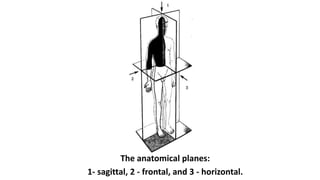
The anatomical planes:
1- sagittal, 2 - frontal, and 3 - horizontal.
•OSTEOSYNDESMOLOGY
IS THE SCIENCE OF THE BONES AND
THEIR ARTICULATIONS
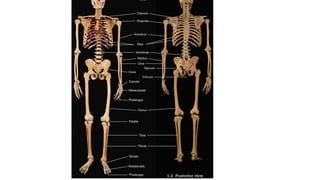
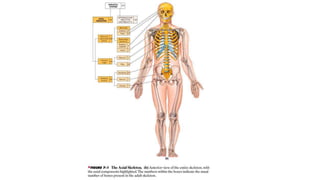
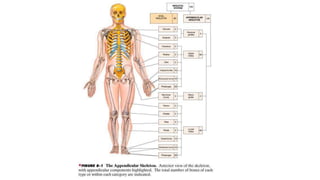
The skeleton (G. skeletos - dried up)
8-10% of the weight of the body consists of skeleton
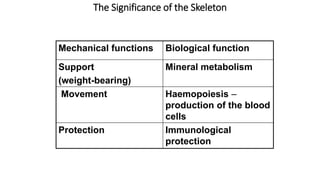
The Significance of the Skeleton
Mechanical functions Biological function
Support
(weight-bearing)
Mineral metabolism
Movement Haemopoiesis –
production of the blood
cells
Protection Immunological
protection
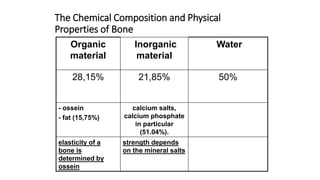
The Chemical Composition and Physical
Properties of Bone
Organic
material
Inorganic
material
Water
28,15% 21,85% 50%
- ossein
- fat (15,75%)
calcium salts,
calcium phosphate
in particular
(51.04%).
elasticity of a
bone is
determined by
ossein
strength depends
on the mineral salts
• A bone also contains vitamins A, D, and C.
• A lack of salts or vitamin D in the period of growth reduces bone
hardness and causes deformities of bones (rickets) in children.
• Vitamin A deficiency leads to abnormal thickness of the bones, and
the bone cavities and canals become empty.
The age changes in a bone
• The bones of young children, which contain comparatively greater
amounts of organic materials (ossein), are marked by greater
pliability, and their fractures are consequently rare.
• In old age, when the proportion of the organic and inorganic
materials changes in favour of the latter, bones become less elastic
and more fragile. As a result, bone fractures are encountered most
frequently in individuals of old age.
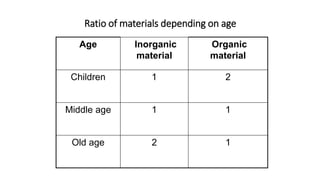
Ratio of materials depending on age
Age Inorganic
material
Organic
material
Children 1 2
Middle age 1 1
Old age 2 1
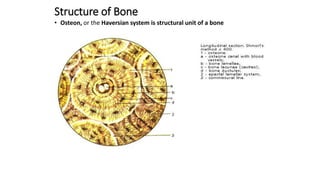
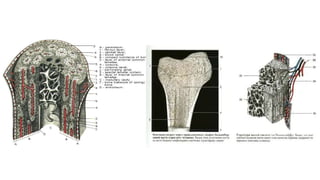
Structure of Bone
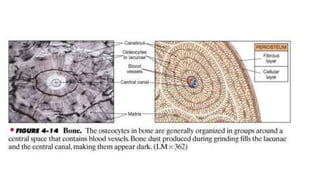
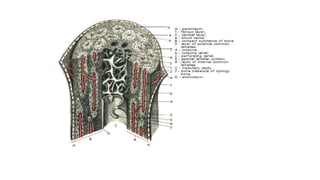
• Osteon, or the Haversian system is structural unit of a bone
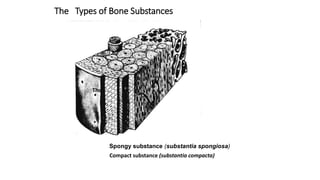
The Types of Bone Substances
The
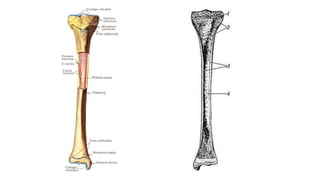
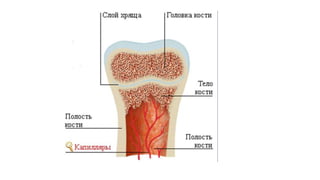
Compact substance (substantia compacta)
Spongy substance (substantia spongiosa)
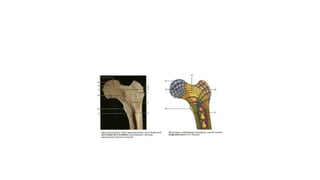
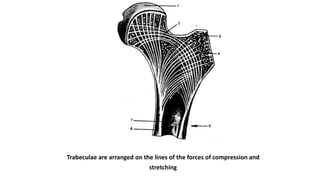
Trabeculae are arranged on the lines of the forces of compression and
stretching
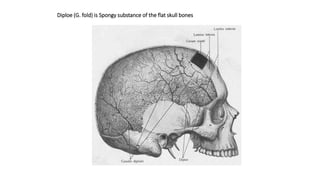
Diploe (G. fold) is Spongy substance of the flat skull bones
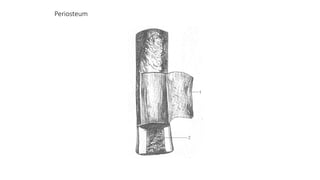
Periosteum
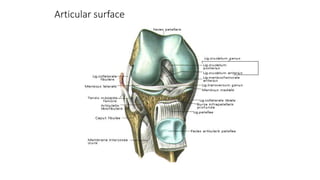
Articular surface
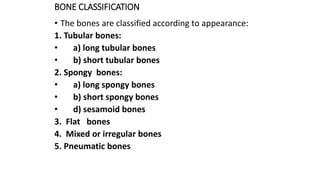
BONE CLASSIFICATION
• The bones are classified according to appearance:
1. Tubular bones:
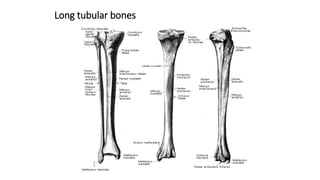
• a) long tubular bones
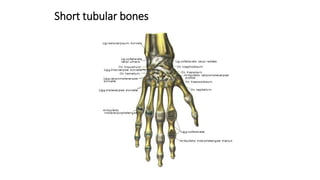
• b) short tubular bones
2. Spongy bones:
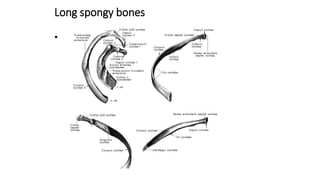
• a) long spongy bones
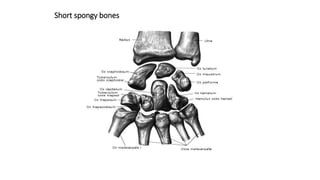
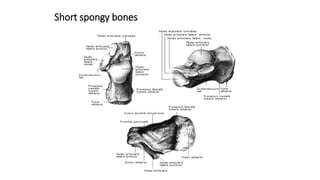
• b) short spongy bones
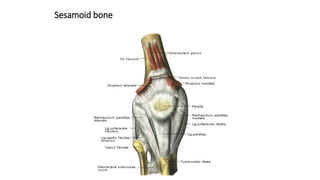
• d) sesamoid bones
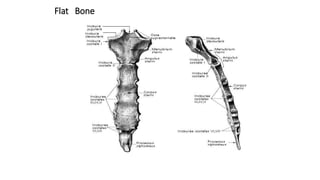
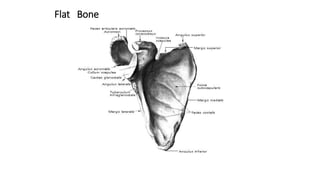
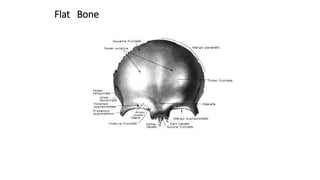
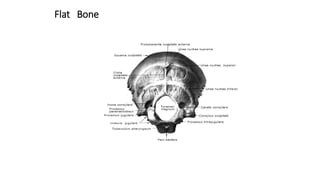
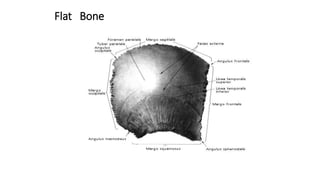
3. Flat bones
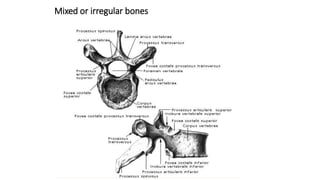
4. Mixed or irregular bones
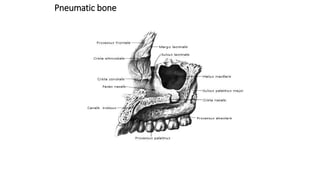
5. Pneumatic bones
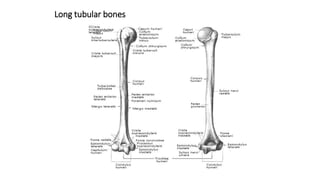
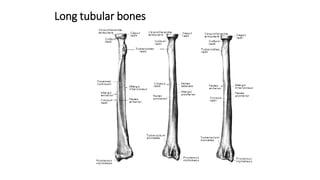
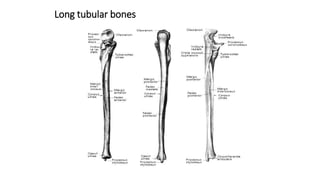
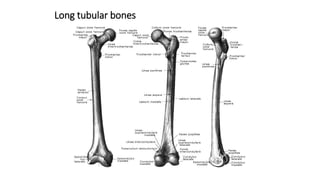
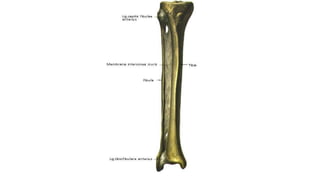
Long tubular bones
Long tubular bones
Long tubular bones
Long tubular bones
Long tubular bones
Short tubular bones
Short spongy bones
Short spongy bones
Long spongy bones
•
Sesamoid bone
Flat Bone
Flat Bone
Flat Bone
Flat Bone
Flat Bone
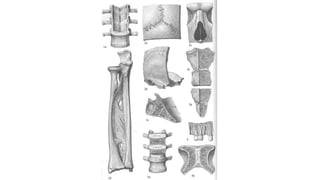
Mixed or irregular bones
Pneumatic bone
• The phylogenesis (G. phylon – genus; genesis - development) is
the evolutionary development of organisms from the lower stages
of organization to the higher organized vertebrates - mammals
and human being (homo sapiens).
• The ontogenesis (G. ontos – being) is the individual
development of organisms, which lasts from the moment of
fertilization to the time of death. The whole ontogenesis is
divided into two large periods between which the moment of
birth is.
• The intrauterine or prenatal period, in which the newly conceived
organism develops in the mother’s womb, lasts from the moment
of fertilization to the time of birth.
• The extrauterine or postnatal period (L. natus – birth), in which
the new individual continues development outside the mother’s
body. It lasts from the moment of birth until death.
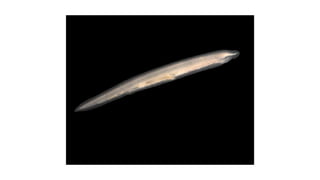
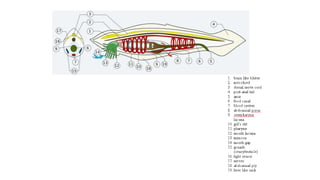
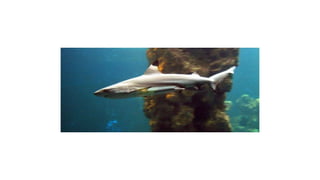
The Stages of the Development of the Skeleton
• Connective-tissue (membranous) skeleton,
• Cartilaginous skeleton,
• Bony skeleton.
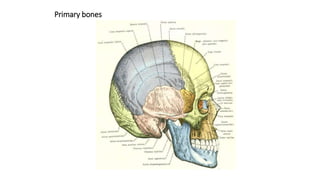
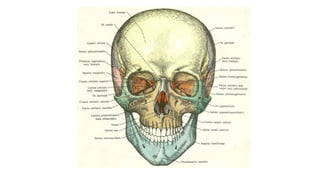
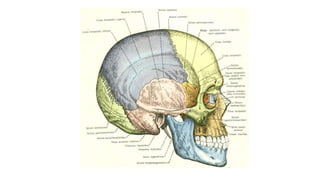
Primary bones
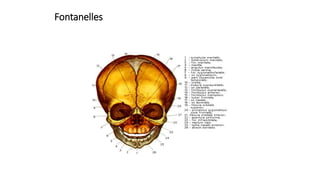
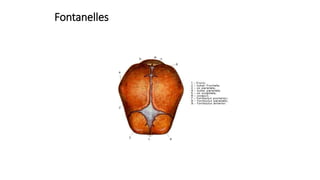
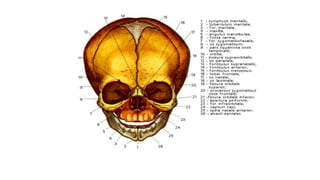
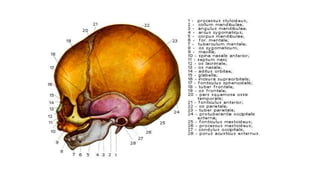
Fontanelles
Fontanelles
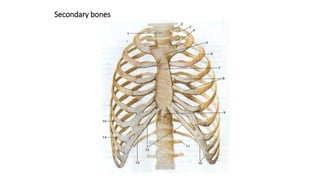
Secondary bones
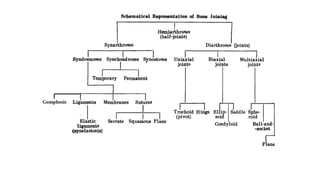
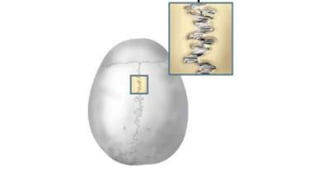
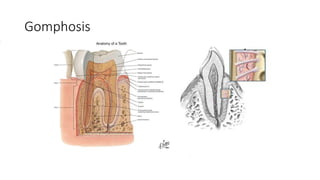
Gomphosis
2b
2c
3b
3c
1b
5b
1a
2a
3a
5a
4
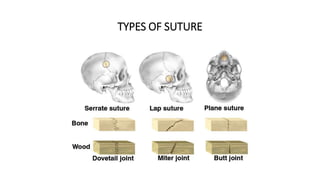
TYPES OF SUTURE
Gomphosis
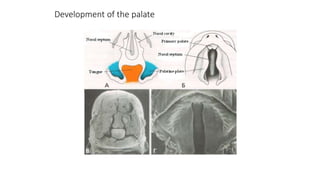
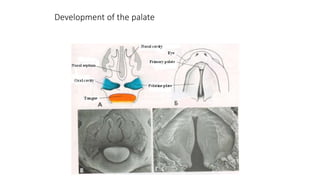
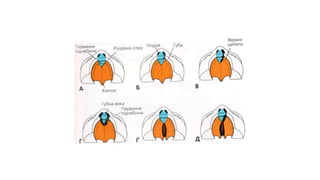
Development of the palate
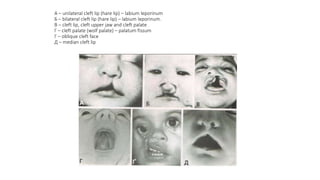
A – unilateral cleft lip (hare lip) – labium leporinum
Б – bilateral cleft lip (hare lip) – labium leporinum.
В – cleft lip, cleft upper jaw and cleft palate
Г – cleft palate (wolf palate) – palatum fissum
Г – oblique cleft face
Д – median cleft lip
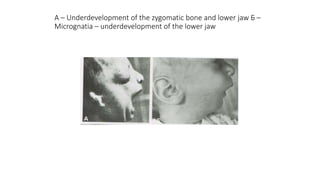
A – Underdevelopment of the zygomatic bone and lower jaw Б –
Micrognatia – underdevelopment of the lower jaw
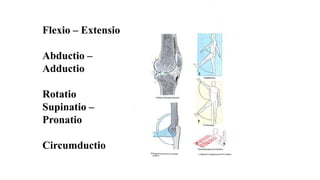
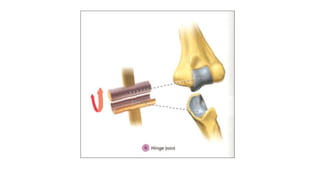
Flexio – Extensio
Abductio –
Adductio
Rotatio
Supinatio –
Pronatio
Circumductio
Gomphosis
1a
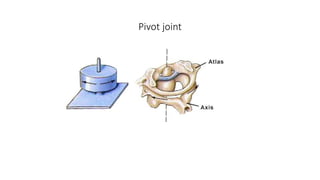
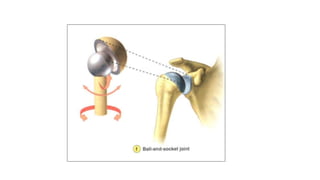
Pivot joint
Osteology 2-1.pptx
Osteology 2-1.pptx
Osteology 2-1.pptx
Osteology 2-1.pptx
Osteology 2-1.pptx
Osteology 2-1.pptx
Osteology 2-1.pptx
Osteology 2-1.pptx
Osteology 2-1.pptx
Osteology 2-1.pptx
Osteology 2-1.pptx
Osteology 2-1.pptx

Osteology 2-1.pptx

  • 1.
    The anatomical planes: 1-sagittal, 2 - frontal, and 3 - horizontal.
  • 2.
    •OSTEOSYNDESMOLOGY IS THE SCIENCEOF THE BONES AND THEIR ARTICULATIONS The skeleton (G. skeletos - dried up) 8-10% of the weight of the body consists of skeleton
  • 3.
    The Significance ofthe Skeleton Mechanical functions Biological function Support (weight-bearing) Mineral metabolism Movement Haemopoiesis – production of the blood cells Protection Immunological protection
  • 4.
    The Chemical Compositionand Physical Properties of Bone Organic material Inorganic material Water 28,15% 21,85% 50% - ossein - fat (15,75%) calcium salts, calcium phosphate in particular (51.04%). elasticity of a bone is determined by ossein strength depends on the mineral salts
  • 5.
    • A bonealso contains vitamins A, D, and C. • A lack of salts or vitamin D in the period of growth reduces bone hardness and causes deformities of bones (rickets) in children. • Vitamin A deficiency leads to abnormal thickness of the bones, and the bone cavities and canals become empty.
  • 6.
    The age changesin a bone • The bones of young children, which contain comparatively greater amounts of organic materials (ossein), are marked by greater pliability, and their fractures are consequently rare. • In old age, when the proportion of the organic and inorganic materials changes in favour of the latter, bones become less elastic and more fragile. As a result, bone fractures are encountered most frequently in individuals of old age.
  • 7.
    Ratio of materialsdepending on age Age Inorganic material Organic material Children 1 2 Middle age 1 1 Old age 2 1
  • 8.
    Structure of Bone •Osteon, or the Haversian system is structural unit of a bone
  • 11.
    The Types ofBone Substances The Compact substance (substantia compacta) Spongy substance (substantia spongiosa)
  • 13.
    Trabeculae are arrangedon the lines of the forces of compression and stretching
  • 14.
    Diploe (G. fold)is Spongy substance of the flat skull bones
  • 17.
  • 19.
  • 20.
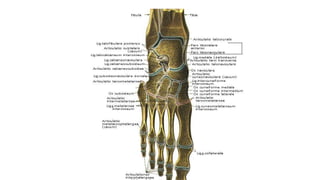
    BONE CLASSIFICATION • Thebones are classified according to appearance: 1. Tubular bones: • a) long tubular bones • b) short tubular bones 2. Spongy bones: • a) long spongy bones • b) short spongy bones • d) sesamoid bones 3. Flat bones 4. Mixed or irregular bones 5. Pneumatic bones
  • 21.
  • 22.
  • 23.
  • 24.
  • 25.
  • 26.
  • 27.
  • 29.
  • 30.
  • 31.
  • 32.
  • 33.
  • 34.
  • 35.
  • 36.
  • 37.
  • 38.
  • 39.
    • The phylogenesis(G. phylon – genus; genesis - development) is the evolutionary development of organisms from the lower stages of organization to the higher organized vertebrates - mammals and human being (homo sapiens). • The ontogenesis (G. ontos – being) is the individual development of organisms, which lasts from the moment of fertilization to the time of death. The whole ontogenesis is divided into two large periods between which the moment of birth is. • The intrauterine or prenatal period, in which the newly conceived organism develops in the mother’s womb, lasts from the moment of fertilization to the time of birth. • The extrauterine or postnatal period (L. natus – birth), in which the new individual continues development outside the mother’s body. It lasts from the moment of birth until death.
  • 40.
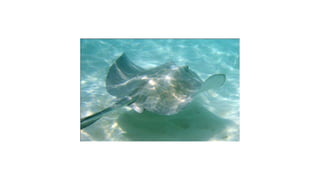
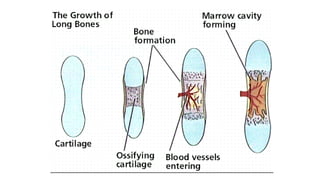
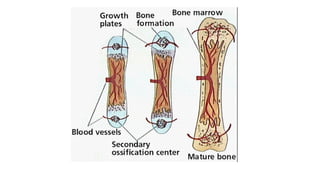
    The Stages ofthe Development of the Skeleton • Connective-tissue (membranous) skeleton, • Cartilaginous skeleton, • Bony skeleton.
  • 48.
  • 49.
  • 50.
  • 51.
  • 55.
  • 56.
  • 68.
  • 71.
  • 78.
  • 79.
  • 81.
    A – unilateralcleft lip (hare lip) – labium leporinum Б – bilateral cleft lip (hare lip) – labium leporinum. В – cleft lip, cleft upper jaw and cleft palate Г – cleft palate (wolf palate) – palatum fissum Г – oblique cleft face Д – median cleft lip
  • 82.
    A – Underdevelopmentof the zygomatic bone and lower jaw Б – Micrognatia – underdevelopment of the lower jaw
  • 95.
    Flexio – Extensio Abductio– Adductio Rotatio Supinatio – Pronatio Circumductio
  • 103.
  • 104.
  • 105.