2017
Bernhard Sterchi
Orientation and Alignment in a VUCA World
Part of the Complexity Navigator’s Compass
agile or Agile?
Bernhard Sterchi
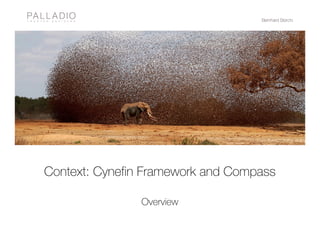
Context: Cynefin Framework and Compass
Overview
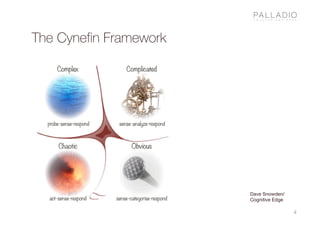
The Cynefin Framework
4
Dave Snowden/
Cognitive Edge
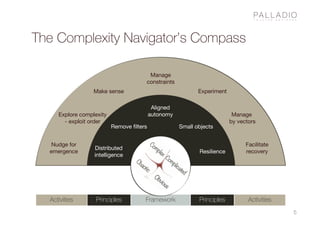
The Complexity Navigator’s Compass
5
FrameworkActivities Principles
Distributed
intelligence
Resilience
Small objects
Aligned
autonomy
Remove filters
Nudge for
emergence
Explore complexity
- exploit order
Make sense
Manage
constraints
Experiment
Manage
by vectors
Facilitate
recovery
Principles Activities
2016
Bernhard Sterchi
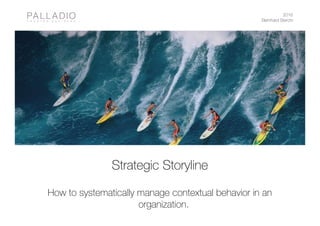
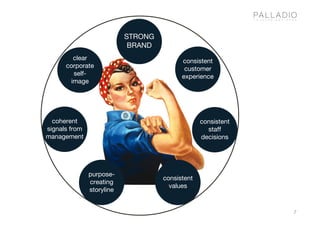
Strategic Storyline
How to systematically manage contextual behavior in an
organization.
7
coherent
signals from
management
STRONG
BRAND
consistent
customer
experience
consistent
values
purpose-
creating
storyline
clear
corporate
self-
image
consistent
staff
decisions
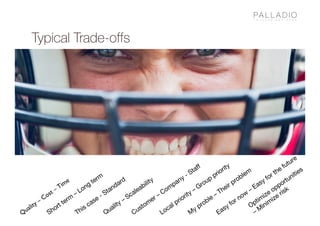
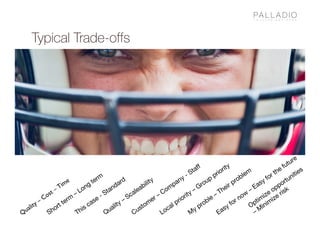
Typical Trade-offs
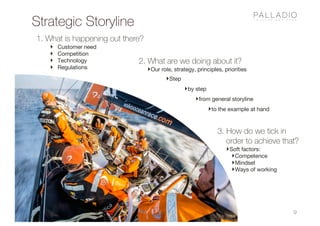
Strategic Storyline
9
1. What is happening out there?
‣ Customer need
‣ Competition
‣ Technology
‣ Regulations
2. What are we doing about it?
‣Our role, strategy, principles, priorities
‣Step
‣by step
‣from general storyline
‣to the example at hand
3. How do we tick in
order to achieve that?
‣Soft factors:
‣Competence
‣Mindset
‣Ways of working
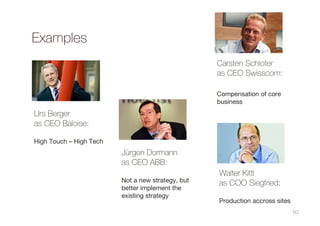
Examples
10
Urs Berger
as CEO Baloise:
High Touch – High Tech
Jürgen Dormann
as CEO ABB:
Not a new strategy, but
better implement the
existing strategy
Carsten Schloter
as CEO Swisscom:
Compensation of core
business
Walter Kittl
as COO Siegfried:
Production accross sites
Now it’s your turn!
11
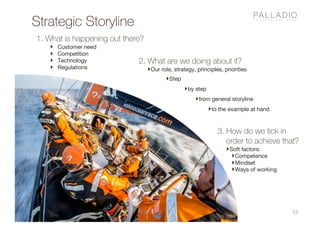
Strategic Storyline
12
1. What is happening out there?
‣ Customer need
‣ Competition
‣ Technology
‣ Regulations
2. What are we doing about it?
‣Our role, strategy, principles, priorities
‣Step
‣by step
‣from general storyline
‣to the example at hand
3. How do we tick in
order to achieve that?
‣Soft factors:
‣Competence
‣Mindset
‣Ways of working
Management by Rules of Thumb
Heuristics for mastering complexity
Bernhard Sterchi
Dealing with Human Complexity
14
Typical Trade-offs
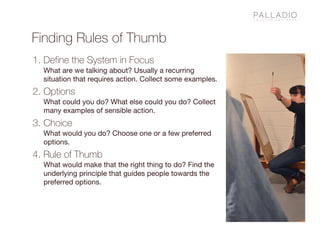
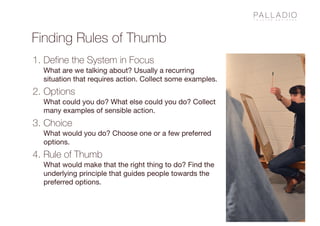
Finding Rules of Thumb
1. Define the System in Focus
What are we talking about? Usually a recurring
situation that requires action. Collect some examples.
2. Options
What could you do? What else could you do? Collect
many examples of sensible action.
3. Choice
What would you do? Choose one or a few preferred
options.
4. Rule of Thumb
What would make that the right thing to do? Find the
underlying principle that guides people towards the
preferred options.
Generic examples of situations for
Time Out discussions
17
• (Shop): A customer walks into the shop with a broken product. The
guarantee has expired a month ago, but the customer was abroad. What do
you do?
• (Teamleader): The existing CMS (reporting system) is tedious to fill in, and it
does not match the actual processes and division of responsibility. But for
the moment it’s what we have, and top management is using it. What do
you do?
• (Expert): Something is wrong. If you fix it, it would be fast and you would be
sure it’s right. But it’s another team’s responsibility, and they have made the
mistake in the first place. What do you do?
• (Manager): One of your direct reports proposes a solution. You know it
could be much better. You don’t know all the details. Time is an issue. What
do you do?
Now it’s your turn!
18
Finding Rules of Thumb
1. Define the System in Focus
What are we talking about? Usually a recurring
situation that requires action. Collect some examples.
2. Options
What could you do? What else could you do? Collect
many examples of sensible action.
3. Choice
What would you do? Choose one or a few preferred
options.
4. Rule of Thumb
What would make that the right thing to do? Find the
underlying principle that guides people towards the
preferred options.
Want to learn more?
Navigating Complexity
June 6.-8. 2017
Saint-Paul de Vence, France
20
Bernhard Sterchi, Palladio Trusted Advisers, Gerbergasse 30, Postfach, CH-4001 Basel, +41 78 783 72 44, bernhard.sterchi@palladio.net, www.palladio.net

Orientation and alignment in a vuca world

  • 1.
    2017 Bernhard Sterchi Orientation andAlignment in a VUCA World Part of the Complexity Navigator’s Compass
  • 2.
  • 3.
    Bernhard Sterchi Context: CynefinFramework and Compass Overview
  • 4.
    The Cynefin Framework 4 DaveSnowden/ Cognitive Edge
  • 5.
    The Complexity Navigator’sCompass 5 FrameworkActivities Principles Distributed intelligence Resilience Small objects Aligned autonomy Remove filters Nudge for emergence Explore complexity - exploit order Make sense Manage constraints Experiment Manage by vectors Facilitate recovery Principles Activities
  • 6.
    2016 Bernhard Sterchi Strategic Storyline Howto systematically manage contextual behavior in an organization.
  • 7.
  • 8.
  • 9.
    Strategic Storyline 9 1. Whatis happening out there? ‣ Customer need ‣ Competition ‣ Technology ‣ Regulations 2. What are we doing about it? ‣Our role, strategy, principles, priorities ‣Step ‣by step ‣from general storyline ‣to the example at hand 3. How do we tick in order to achieve that? ‣Soft factors: ‣Competence ‣Mindset ‣Ways of working
  • 10.
    Examples 10 Urs Berger as CEOBaloise: High Touch – High Tech Jürgen Dormann as CEO ABB: Not a new strategy, but better implement the existing strategy Carsten Schloter as CEO Swisscom: Compensation of core business Walter Kittl as COO Siegfried: Production accross sites
  • 11.
  • 12.
    Strategic Storyline 12 1. Whatis happening out there? ‣ Customer need ‣ Competition ‣ Technology ‣ Regulations 2. What are we doing about it? ‣Our role, strategy, principles, priorities ‣Step ‣by step ‣from general storyline ‣to the example at hand 3. How do we tick in order to achieve that? ‣Soft factors: ‣Competence ‣Mindset ‣Ways of working
  • 13.
    Management by Rulesof Thumb Heuristics for mastering complexity Bernhard Sterchi
  • 14.
    Dealing with HumanComplexity 14
  • 15.
  • 16.
    Finding Rules ofThumb 1. Define the System in Focus What are we talking about? Usually a recurring situation that requires action. Collect some examples. 2. Options What could you do? What else could you do? Collect many examples of sensible action. 3. Choice What would you do? Choose one or a few preferred options. 4. Rule of Thumb What would make that the right thing to do? Find the underlying principle that guides people towards the preferred options.
  • 17.
    Generic examples ofsituations for Time Out discussions 17 • (Shop): A customer walks into the shop with a broken product. The guarantee has expired a month ago, but the customer was abroad. What do you do? • (Teamleader): The existing CMS (reporting system) is tedious to fill in, and it does not match the actual processes and division of responsibility. But for the moment it’s what we have, and top management is using it. What do you do? • (Expert): Something is wrong. If you fix it, it would be fast and you would be sure it’s right. But it’s another team’s responsibility, and they have made the mistake in the first place. What do you do? • (Manager): One of your direct reports proposes a solution. You know it could be much better. You don’t know all the details. Time is an issue. What do you do?
  • 18.
  • 19.
    Finding Rules ofThumb 1. Define the System in Focus What are we talking about? Usually a recurring situation that requires action. Collect some examples. 2. Options What could you do? What else could you do? Collect many examples of sensible action. 3. Choice What would you do? Choose one or a few preferred options. 4. Rule of Thumb What would make that the right thing to do? Find the underlying principle that guides people towards the preferred options.
  • 20.
    Want to learnmore? Navigating Complexity June 6.-8. 2017 Saint-Paul de Vence, France 20
  • 21.
    Bernhard Sterchi, PalladioTrusted Advisers, Gerbergasse 30, Postfach, CH-4001 Basel, +41 78 783 72 44, bernhard.sterchi@palladio.net, www.palladio.net