PRESENTED BY MR. ROOP SINGH
CLASS- M.COM(2ND)yr
SEMESTER-4th, ROLL NO-22
 The appraisal of the external environment of a firm
help in deciding WHAT IT MIGHT CHOOSE TO DO.
 The study of internal Environment on the other
hand enables a firm to decide about WHAT IT CAN
DO
 DYNAMICS OF INTERNAL ENVIRONMENT:- The
resources behaviour ,strenghts and weaknesses,
synergistic effect and competencies of an
organisation determine the nature of internal
environment.
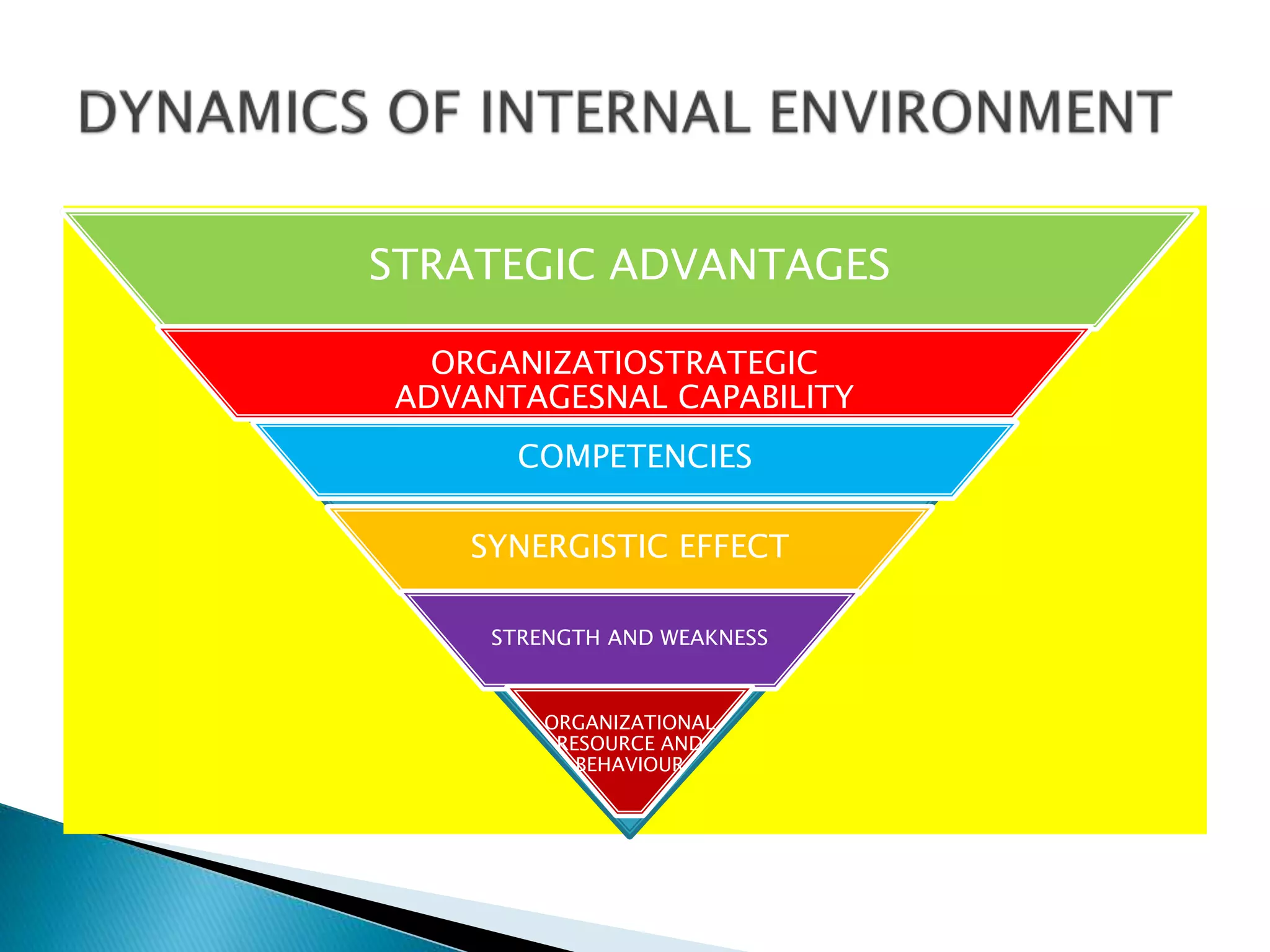
 S
STRATEGIC ADVANTAGES
ORGANIZATIOSTRATEGIC
ADVANTAGESNAL CAPABILITY
COMPETENCIES
SYNERGISTIC EFFECT
STRENGTH AND WEAKNESS
ORGANIZATIONAL
RESOURCE AND
BEHAVIOUR
 QUALITATIVE ANALYSIS
 VALUE CHAIN ANALYSIS
 QUANTITATIVE ANALYSIS
 HISTORICAL ANALYSIS
 INDUSTRY STANDARDS
 BENCHMARKING
 BALANCE SCORECARD
 KEY FACTOR RATING
 Strategy formulation is the process by which an
organisation choose courses of action to
achieve its goals
 Strategy formulation is the process of developing the
strategy. And the process by which an
organization choose the most appropriate
course of action to achieve its defined goals.
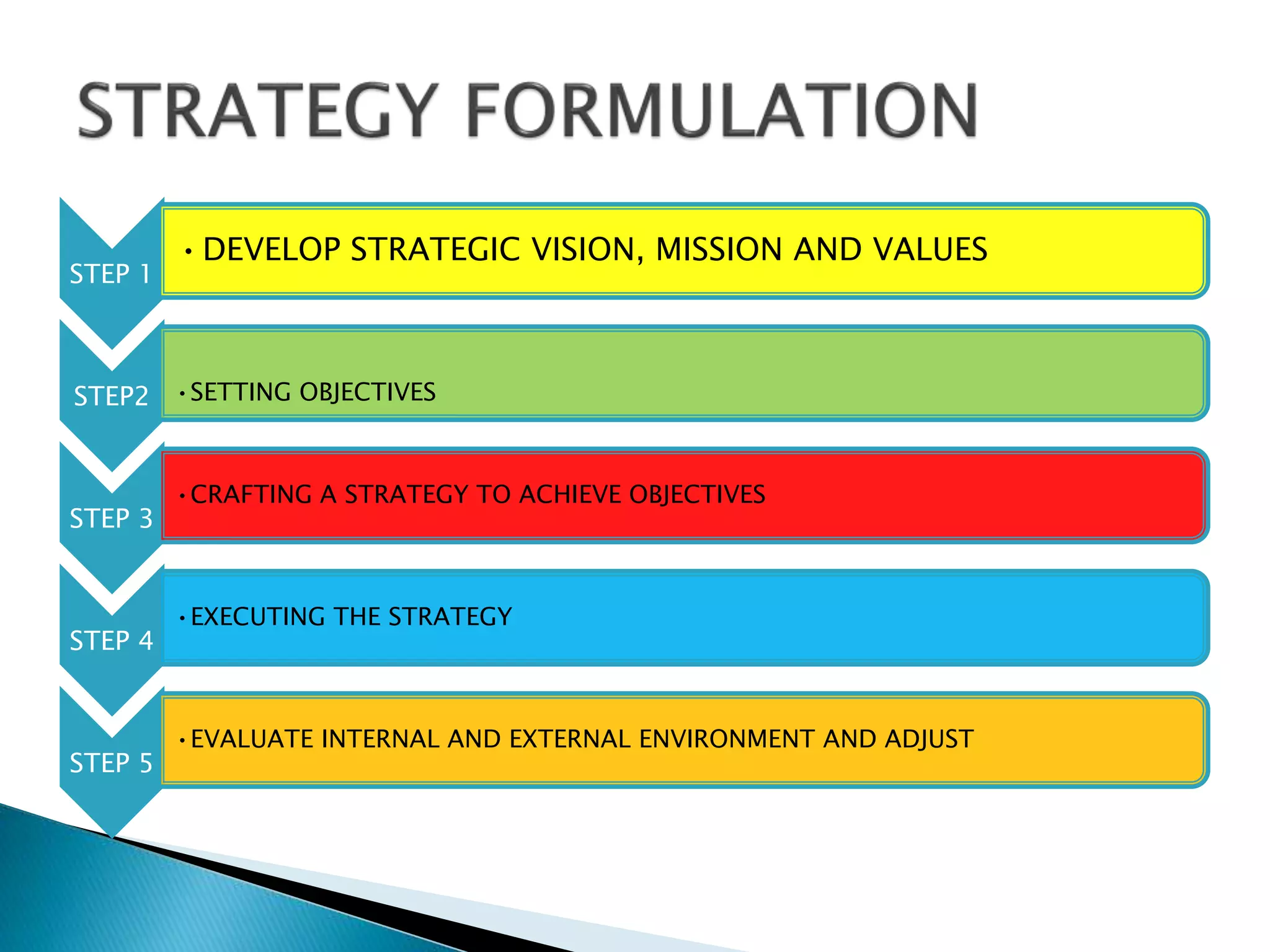
STEP 1
•DEVELOP STRATEGIC VISION, MISSION AND VALUES
STEP2 •SETTING OBJECTIVES
STEP 3
•CRAFTING A STRATEGY TO ACHIEVE OBJECTIVES
STEP 4
•EXECUTING THE STRATEGY
STEP 5
•EVALUATE INTERNAL AND EXTERNAL ENVIRONMENT AND ADJUST
An organization’s strategic mission offers a
long-range perspective of what the
organization strives for going forward.
A clearly stated mission will provide the
organization wit a guide for carrying out its
plans. Elements of a strong strategic mission
statement should include the values that the
organization hold the nature of business.
 This the second step in the strategic
formulation process require an organization
to indentify the performance targeted needed
to reach clearly objectives.
 These objectives may include:
 Market position relative to the competition,
 Production of goods and services,
 Desired market share, improved customer
services,
 Its require an organization to determine
where its fits into the market palace.
 This applies not only to the organization as a
whole, but to each individual unit and
department throughout the enterprise.
 Developing a strategy is only effective if it is put
into place. An organization the marketplace.
 However, without implementing the strategy
 Te method employed for implementation
strategies are known as tactics. These individual
actions enable an organization to built a
foundation for implementation.
 As in any plan a regular evaluation of processes
and result is vital to ongoing success.
 An organization should consider following questions:-
o Have market conditions changed that may
require a change in corporate direction?
o Are there new entries in the marketplace to
pose a competitive threat?
o Has the organization been successful in
translating their strategy into actionable steps?
THANK
YOU!

Oranisation appraissal and strategy formulation

  • 1.
    PRESENTED BY MR.ROOP SINGH CLASS- M.COM(2ND)yr SEMESTER-4th, ROLL NO-22
  • 2.
     The appraisalof the external environment of a firm help in deciding WHAT IT MIGHT CHOOSE TO DO.  The study of internal Environment on the other hand enables a firm to decide about WHAT IT CAN DO  DYNAMICS OF INTERNAL ENVIRONMENT:- The resources behaviour ,strenghts and weaknesses, synergistic effect and competencies of an organisation determine the nature of internal environment.
  • 3.
     S STRATEGIC ADVANTAGES ORGANIZATIOSTRATEGIC ADVANTAGESNALCAPABILITY COMPETENCIES SYNERGISTIC EFFECT STRENGTH AND WEAKNESS ORGANIZATIONAL RESOURCE AND BEHAVIOUR
  • 4.
     QUALITATIVE ANALYSIS VALUE CHAIN ANALYSIS  QUANTITATIVE ANALYSIS  HISTORICAL ANALYSIS  INDUSTRY STANDARDS  BENCHMARKING  BALANCE SCORECARD  KEY FACTOR RATING
  • 5.
     Strategy formulationis the process by which an organisation choose courses of action to achieve its goals  Strategy formulation is the process of developing the strategy. And the process by which an organization choose the most appropriate course of action to achieve its defined goals.
  • 6.
    STEP 1 •DEVELOP STRATEGICVISION, MISSION AND VALUES STEP2 •SETTING OBJECTIVES STEP 3 •CRAFTING A STRATEGY TO ACHIEVE OBJECTIVES STEP 4 •EXECUTING THE STRATEGY STEP 5 •EVALUATE INTERNAL AND EXTERNAL ENVIRONMENT AND ADJUST
  • 7.
    An organization’s strategicmission offers a long-range perspective of what the organization strives for going forward. A clearly stated mission will provide the organization wit a guide for carrying out its plans. Elements of a strong strategic mission statement should include the values that the organization hold the nature of business.
  • 8.
     This thesecond step in the strategic formulation process require an organization to indentify the performance targeted needed to reach clearly objectives.  These objectives may include:  Market position relative to the competition,  Production of goods and services,  Desired market share, improved customer services,
  • 9.
     Its requirean organization to determine where its fits into the market palace.  This applies not only to the organization as a whole, but to each individual unit and department throughout the enterprise.
  • 10.
     Developing astrategy is only effective if it is put into place. An organization the marketplace.  However, without implementing the strategy  Te method employed for implementation strategies are known as tactics. These individual actions enable an organization to built a foundation for implementation.
  • 11.
     As inany plan a regular evaluation of processes and result is vital to ongoing success.  An organization should consider following questions:- o Have market conditions changed that may require a change in corporate direction? o Are there new entries in the marketplace to pose a competitive threat? o Has the organization been successful in translating their strategy into actionable steps?
  • 12.