AIS
Optimal Building
Design and Glazing
Case Study
AIS
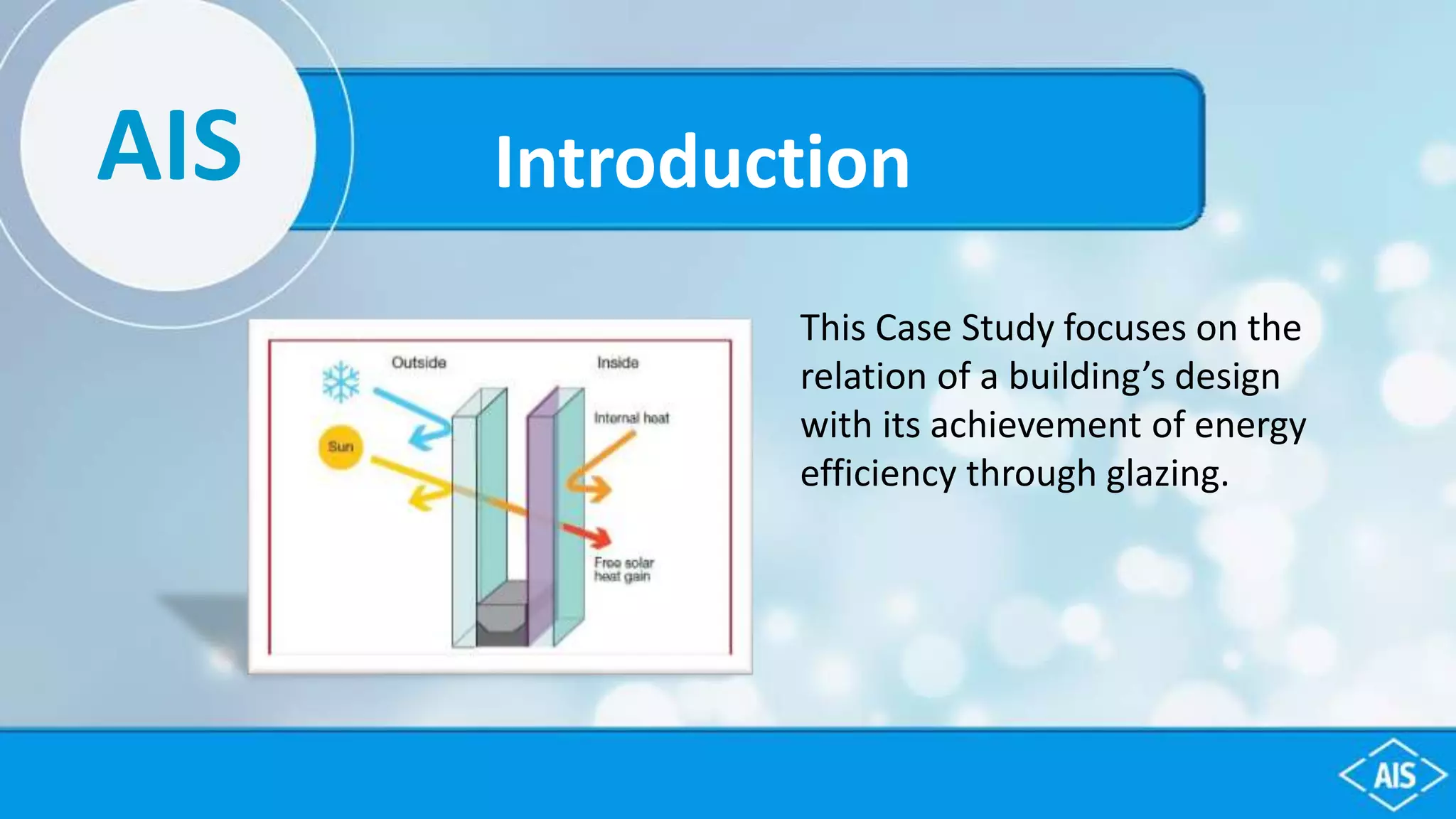
This Case Study focuses on the
relation of a building’s design
with its achievement of energy
efficiency through glazing.
Introduction
AIS Glazing solutions
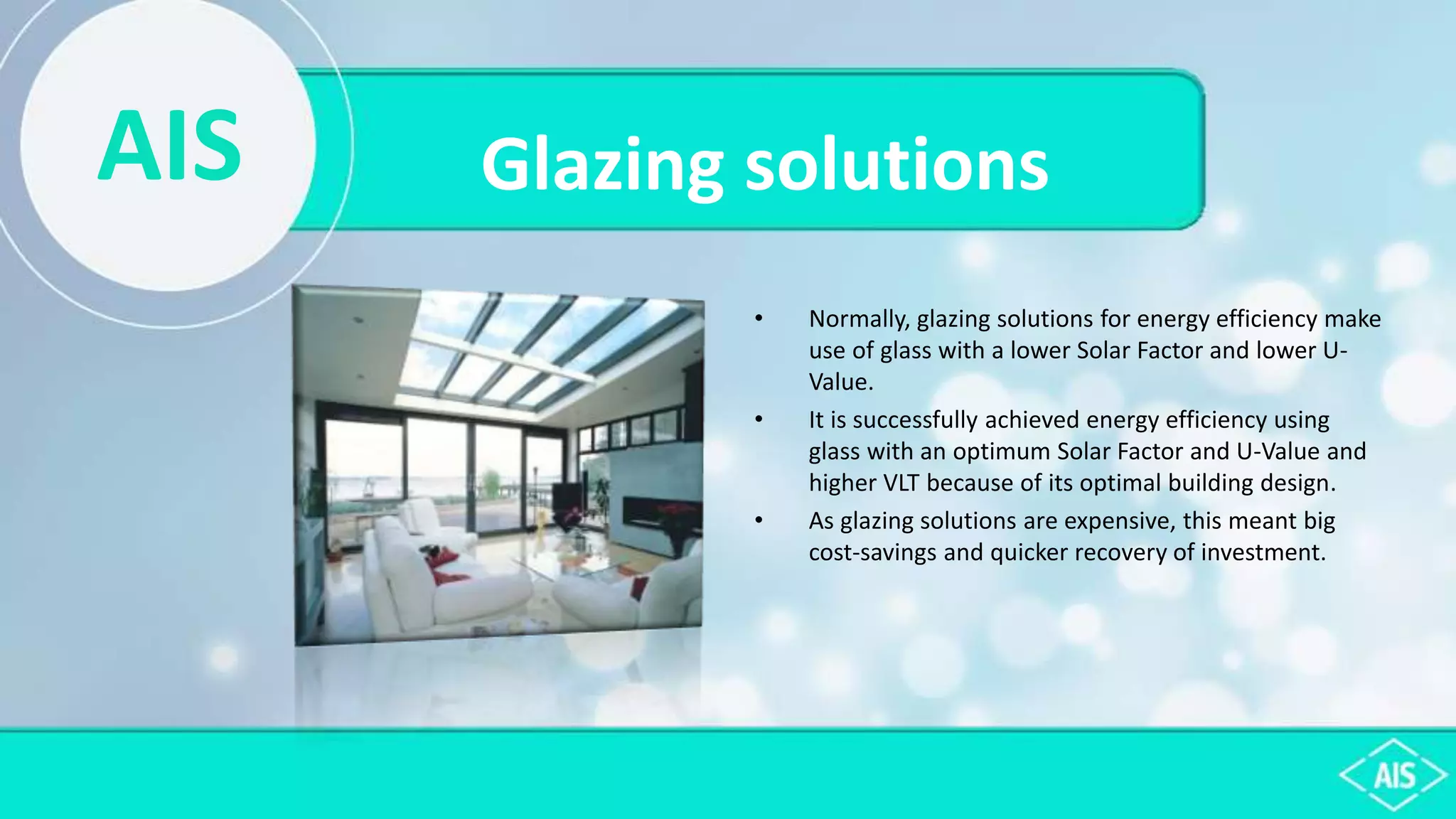
• Normally, glazing solutions for energy efficiency make
use of glass with a lower Solar Factor and lower U-
Value.
• It is successfully achieved energy efficiency using
glass with an optimum Solar Factor and U-Value and
higher VLT because of its optimal building design.
• As glazing solutions are expensive, this meant big
cost-savings and quicker recovery of investment.
AIS
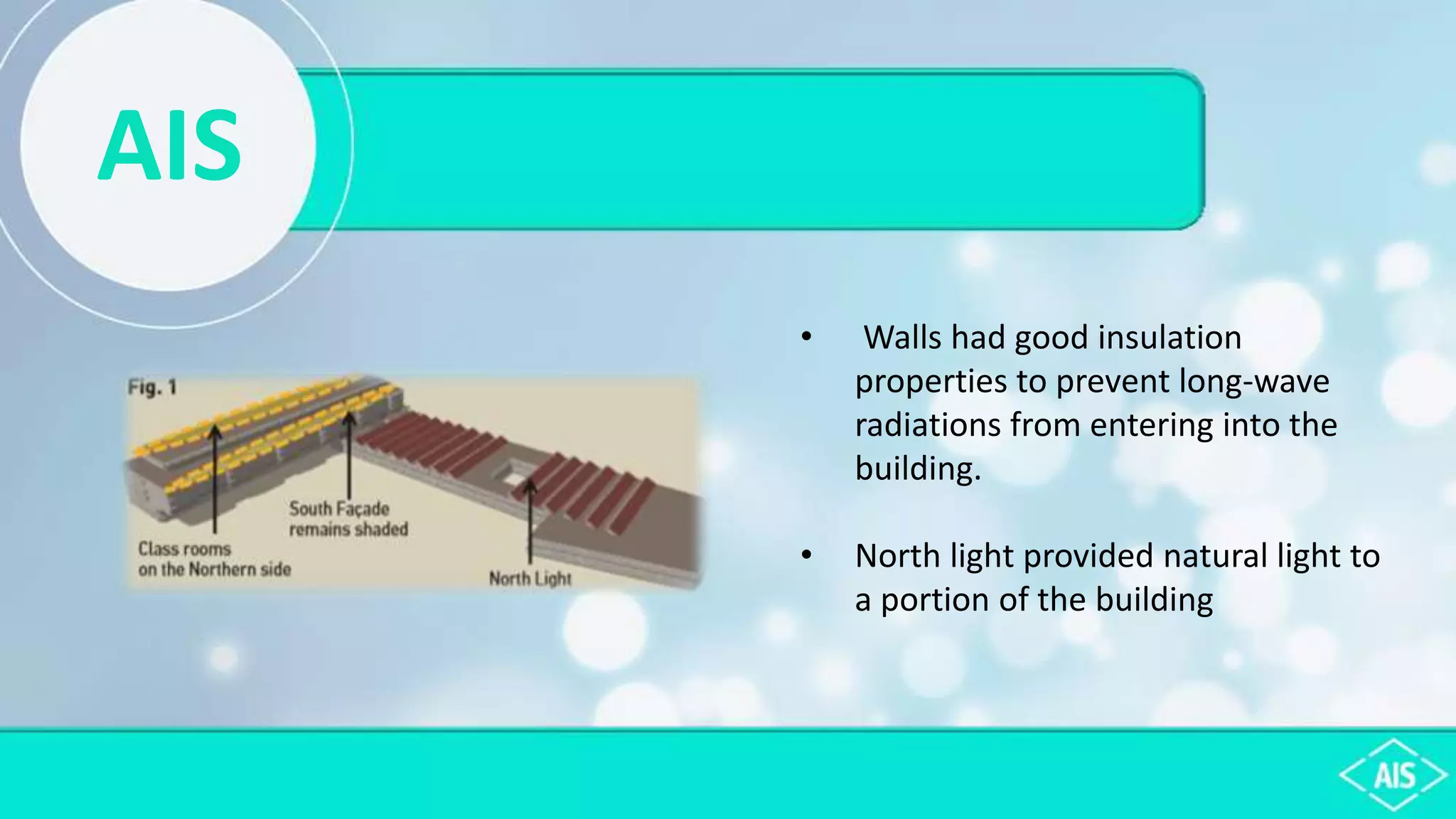
• Classrooms located on the north side received diffused light and no
direct heat.
• South-facing classrooms were provided with a shading device to
prevent direct heat and glare.
• Buffer zones, created by placing the service areas along the east façade
and corridors along the west façade, prevented heat ingress in the
offices.
HEAT SOLUTION
AIS
• Walls had good insulation
properties to prevent long-wave
radiations from entering into the
building.
• North light provided natural light to
a portion of the building
AIS Performance parameter Table
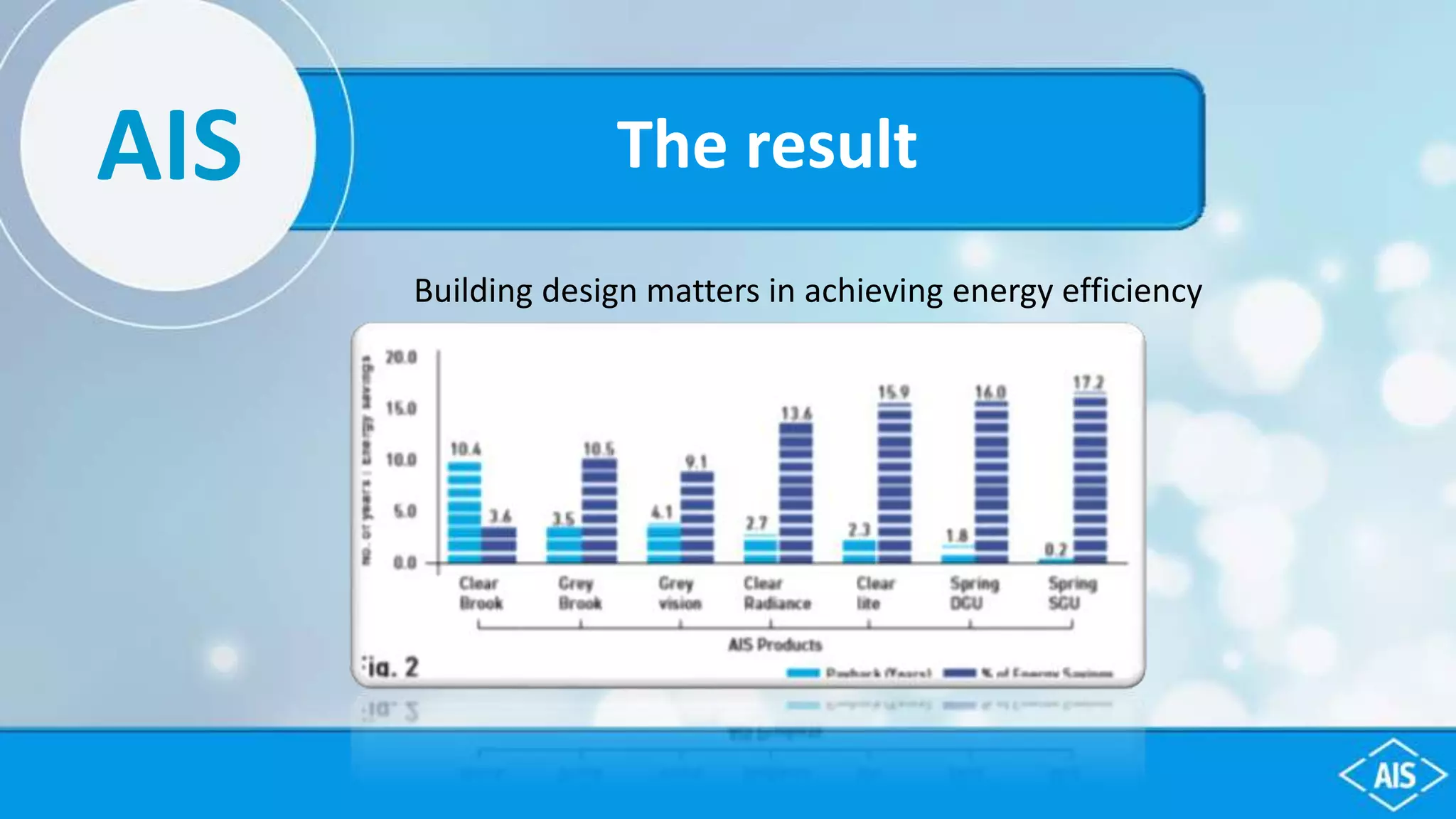
Building design matters in achieving energy efficiency
The resultAIS
• A detailed building energy analysis was conducted wherein various AIS
products were considered, (Performance parameters given in Table 1.)
• As shown in Fig 2, Spring SGU (Solar Control product from the Ecosense
range) which has Solar Factor (SF) = 64%, Visual Light Transmission (VLT)
= 65%,
• And U-Value = 5.4 w/ m2k performs best out of all the glasses with 17%
energy savings and 2 months’ payback period, when compared to base
case Clear DGU (double glaze unit).
The resultAIS
AIS
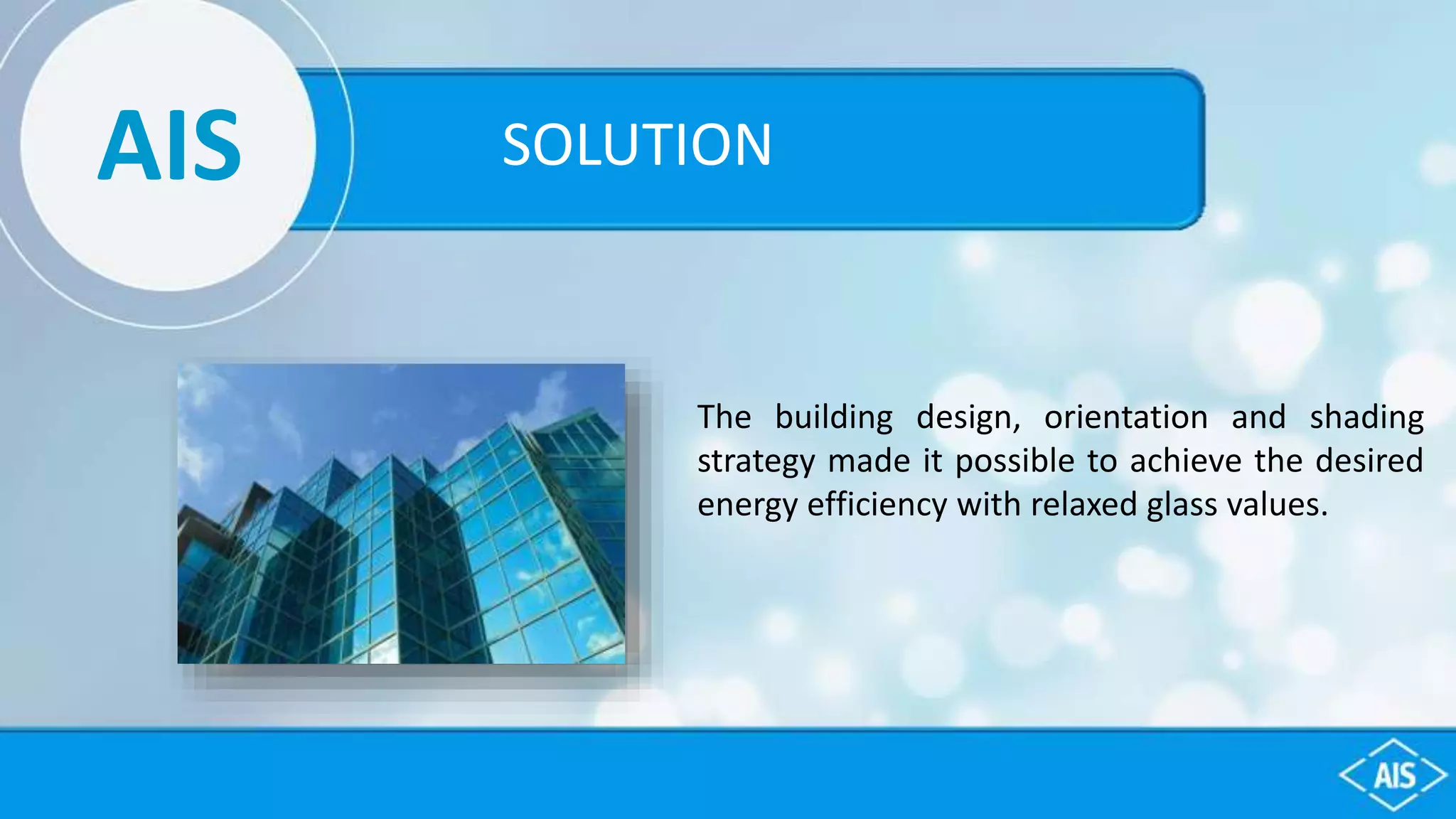
The building design, orientation and shading
strategy made it possible to achieve the desired
energy efficiency with relaxed glass values.
SOLUTION
Connect. Share. Communicate
Facebook: https://www.facebook.com/AsahiIndiaGlassLtd
Twitter: https://twitter.com/AsahiIndia
LinkedIn: http://www.linkedin.com/pub/asahi-glass-india/13/9b6/112
Google Plus: https://plus.google.com/110304295275998512778/posts
Quora: https://www.quora.com/Asahi-India
Pinterest: http://www.pinterest.com/AsahiIndiaGlass/
To know more about AIS Glass and for some interesting
content, connect with us on social media.
Social
Media

Optimal building design and glazing

  • 1.
  • 2.
    AIS This Case Studyfocuses on the relation of a building’s design with its achievement of energy efficiency through glazing. Introduction
  • 3.
    AIS Glazing solutions •Normally, glazing solutions for energy efficiency make use of glass with a lower Solar Factor and lower U- Value. • It is successfully achieved energy efficiency using glass with an optimum Solar Factor and U-Value and higher VLT because of its optimal building design. • As glazing solutions are expensive, this meant big cost-savings and quicker recovery of investment.
  • 4.
    AIS • Classrooms locatedon the north side received diffused light and no direct heat. • South-facing classrooms were provided with a shading device to prevent direct heat and glare. • Buffer zones, created by placing the service areas along the east façade and corridors along the west façade, prevented heat ingress in the offices. HEAT SOLUTION
  • 5.
    AIS • Walls hadgood insulation properties to prevent long-wave radiations from entering into the building. • North light provided natural light to a portion of the building
  • 6.
  • 7.
    Building design mattersin achieving energy efficiency The resultAIS
  • 8.
    • A detailedbuilding energy analysis was conducted wherein various AIS products were considered, (Performance parameters given in Table 1.) • As shown in Fig 2, Spring SGU (Solar Control product from the Ecosense range) which has Solar Factor (SF) = 64%, Visual Light Transmission (VLT) = 65%, • And U-Value = 5.4 w/ m2k performs best out of all the glasses with 17% energy savings and 2 months’ payback period, when compared to base case Clear DGU (double glaze unit). The resultAIS
  • 9.
    AIS The building design,orientation and shading strategy made it possible to achieve the desired energy efficiency with relaxed glass values. SOLUTION
  • 10.
    Connect. Share. Communicate Facebook:https://www.facebook.com/AsahiIndiaGlassLtd Twitter: https://twitter.com/AsahiIndia LinkedIn: http://www.linkedin.com/pub/asahi-glass-india/13/9b6/112 Google Plus: https://plus.google.com/110304295275998512778/posts Quora: https://www.quora.com/Asahi-India Pinterest: http://www.pinterest.com/AsahiIndiaGlass/ To know more about AIS Glass and for some interesting content, connect with us on social media. Social Media