Optical illusions 
and undecidable figures 
A small project to start 
with GeoGebra 
by students of grade 8 
of Pestalozzi Gymnasium Unna
Optical illusions and undecidable figures 
Comment from the teacher: 
The following constructions were made from grade 8 who learn for 
some weeks how to work with Geogebra. I looked for smaller 
projects of 1-3 lessons (45 min. each lessons). 
I choosed this project as one of the first steps to teach how to use 
Geogebra for dynamic constructions and make tools to facilitate 
work. 
The project was to to choose an optical illusion and after that a 
undecidable figure (I had some cards and books) and construct this 
figures. In addition to the construction they should try to explain the 
illusion shortly (the translation was made by older students). 
I made for the MMM project annotation on each slide of what I 
intended and what I pointed out when students presented her work 
to the others. Important for me was to to clarify what it means to 
construct dynamically and to show easy ways using reflection, 
rotation …
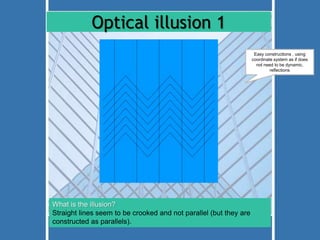
Optical illusion 1 
What is the illusion? 
Straight lines seem to be crooked and not parallel (but they are 
constructed as parallels). 
Easy constructions , using 
coordinate system as if does 
not need to be dynamic, 
reflections
Optical illusion 2 
Learn, how to construct 
dynamically (horizontale line 
was divided in 4 parts) 
What is the illusion? 
The lenght of the upper horizontal line seems to be longer than the 
llenght of the lower horizonal line. (This construction was made dynamically)
Optical illusion 3 
How to get construct 
dynamically by using the the 
first radius, using the radius to 
fix the eges of the square 
What is the illusion? 
The sides of the square seem to be crooked (but they are straight 
lines). (This construction was made dynamically by adding the half of the first radius to 
the previous radius.)
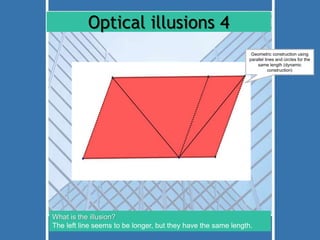
Optical illusions 4 
Geometric construction using 
parallel lines and circles for the 
What is the illusion? 
The left line seems to be longer, but they have the same length. 
same length (dynamic 
construction)
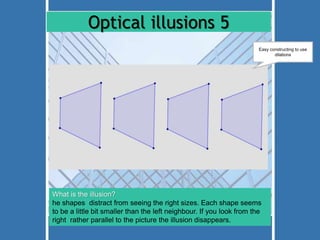
Optical illusions 5 
Easy constructing to use 
What is the illusion? 
he shapes distract from seeing the right sizes. Each shape seems 
to be a little bit smaller than the left neighbour. If you look from the 
right rather parallel to the picture the illusion disappears. 
dilations
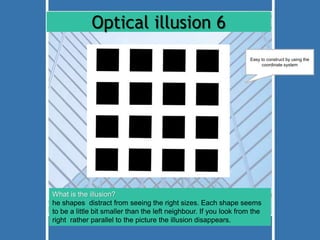
Optical illusion 6 
Easy to construct by using the 
What is the illusion? 
he shapes distract from seeing the right sizes. Each shape seems 
to be a little bit smaller than the left neighbour. If you look from the 
right rather parallel to the picture the illusion disappears. 
coordinate system
Optical illusion 7 
Learning how to construct arcs 
of a circle, and using dilations 
What is the illusion? 
The two parts of a ring of circles sseem to be different with different 
radius. But the two shapes are equal (congruent). (This construction was 
made dynamically.)
Optical illusion 8 
What is the illusion? 
he shapes distract from seeing the right sizes. Each shape seems 
to be a little bit smaller than the left neighbour. If you look from the 
right rather parallel to the picture the illusion disappears.
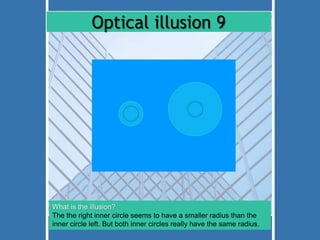
Optical illusion 9 
What is the illusion? 
The the right inner circle seems to have a smaller radius than the 
inner circle left. But both inner circles really have the same radius.
Optical illusion 10 
Dynamic construction of one 
arrow then reflections and 
What is the illusion? 
There are arrows which are oriented to the top. But the outlines of 
these arrows go to bottom. 
dilations
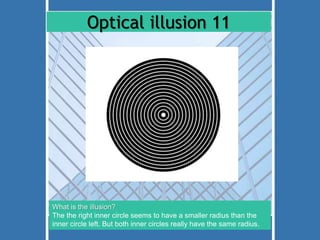
Optical illusion 11 
What is the illusion? 
The the right inner circle seems to have a smaller radius than the 
inner circle left. But both inner circles really have the same radius.
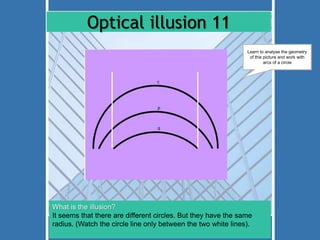
Optical illusion 11 
Learn to analyse the geometry 
of this picture and work with 
What is the illusion? 
It seems that there are different circles. But they have the same 
radius. (Watch the circle line only between the two white lines). 
arcs of a circle
Optical illusion 12 
A dynamic construction 
using 3 basic points and a 
What is the illusion? 
Sometimes you think to look into an open book, sometimes it is as 
you look at the back of an standing book. Both views switch. 
reflection.
Optical illusion 13 
The student made a tool for 
the different coloumns. 
What is the illusion? 
If you imagine a horizontale line between the black forms you think it 
is not straight. The forms don‘t seem to be trapeziods but they are 
squares!
Undecidable figure 1 
Whyis it impssible? 
Easily to „construct“ by using 
the coordinate system. More 
complex if it has be to 
constructed dynamically.
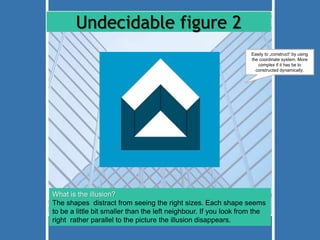
Undecidable figure 2 
Easily to „construct“ by using 
the coordinate system. More 
complex if it has be to 
constructed dynamically. 
What is the illusion? 
The shapes distract from seeing the right sizes. Each shape seems 
to be a little bit smaller than the left neighbour. If you look from the 
right rather parallel to the picture the illusion disappears.
Undeciderable figure 3 
Easily to „construct“ by using 
the coordinate system. 
What is the illusion? 
It seems to be 3 dimensional but at the edge left there is confusion 
because it does not figure for a 3D figure.
Undecidable figure 4 
Why is it indecidable? 
This 3d figure cannot exist. If you built it with wood the parts are not 
in the same plane. From special points of view it looks this this 
picture.
Undecidarable figure 5 
The aim was to to construct it dyna-mially 
using parallels and circles of 
the the same radius. Construction 
needs a lot of concentration! 
What is the illusion? 
It seems to be a frame but when you watch the last edge there is 
confusion.
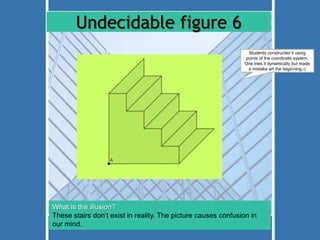
Undecidable figure 6 
Students constructed it using 
points of the coordinate system. 
One tries it dynamically but made 
a mistake art the beginning,-) 
What is the illusion? 
These stairs don‘t exist in reality. The picture causes confusion in 
our mind.
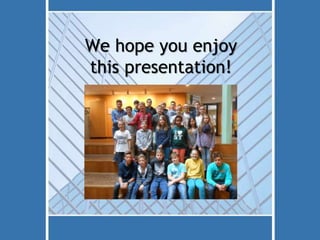
We hope you enjoy 
this presentation!

Optical illusions3

  • 1.
    Optical illusions andundecidable figures A small project to start with GeoGebra by students of grade 8 of Pestalozzi Gymnasium Unna
  • 2.
    Optical illusions andundecidable figures Comment from the teacher: The following constructions were made from grade 8 who learn for some weeks how to work with Geogebra. I looked for smaller projects of 1-3 lessons (45 min. each lessons). I choosed this project as one of the first steps to teach how to use Geogebra for dynamic constructions and make tools to facilitate work. The project was to to choose an optical illusion and after that a undecidable figure (I had some cards and books) and construct this figures. In addition to the construction they should try to explain the illusion shortly (the translation was made by older students). I made for the MMM project annotation on each slide of what I intended and what I pointed out when students presented her work to the others. Important for me was to to clarify what it means to construct dynamically and to show easy ways using reflection, rotation …
  • 3.
    Optical illusion 1 What is the illusion? Straight lines seem to be crooked and not parallel (but they are constructed as parallels). Easy constructions , using coordinate system as if does not need to be dynamic, reflections
  • 4.
    Optical illusion 2 Learn, how to construct dynamically (horizontale line was divided in 4 parts) What is the illusion? The lenght of the upper horizontal line seems to be longer than the llenght of the lower horizonal line. (This construction was made dynamically)
  • 5.
    Optical illusion 3 How to get construct dynamically by using the the first radius, using the radius to fix the eges of the square What is the illusion? The sides of the square seem to be crooked (but they are straight lines). (This construction was made dynamically by adding the half of the first radius to the previous radius.)
  • 6.
    Optical illusions 4 Geometric construction using parallel lines and circles for the What is the illusion? The left line seems to be longer, but they have the same length. same length (dynamic construction)
  • 7.
    Optical illusions 5 Easy constructing to use What is the illusion? he shapes distract from seeing the right sizes. Each shape seems to be a little bit smaller than the left neighbour. If you look from the right rather parallel to the picture the illusion disappears. dilations
  • 8.
    Optical illusion 6 Easy to construct by using the What is the illusion? he shapes distract from seeing the right sizes. Each shape seems to be a little bit smaller than the left neighbour. If you look from the right rather parallel to the picture the illusion disappears. coordinate system
  • 9.
    Optical illusion 7 Learning how to construct arcs of a circle, and using dilations What is the illusion? The two parts of a ring of circles sseem to be different with different radius. But the two shapes are equal (congruent). (This construction was made dynamically.)
  • 10.
    Optical illusion 8 What is the illusion? he shapes distract from seeing the right sizes. Each shape seems to be a little bit smaller than the left neighbour. If you look from the right rather parallel to the picture the illusion disappears.
  • 11.
    Optical illusion 9 What is the illusion? The the right inner circle seems to have a smaller radius than the inner circle left. But both inner circles really have the same radius.
  • 12.
    Optical illusion 10 Dynamic construction of one arrow then reflections and What is the illusion? There are arrows which are oriented to the top. But the outlines of these arrows go to bottom. dilations
  • 13.
    Optical illusion 11 What is the illusion? The the right inner circle seems to have a smaller radius than the inner circle left. But both inner circles really have the same radius.
  • 14.
    Optical illusion 11 Learn to analyse the geometry of this picture and work with What is the illusion? It seems that there are different circles. But they have the same radius. (Watch the circle line only between the two white lines). arcs of a circle
  • 15.
    Optical illusion 12 A dynamic construction using 3 basic points and a What is the illusion? Sometimes you think to look into an open book, sometimes it is as you look at the back of an standing book. Both views switch. reflection.
  • 16.
    Optical illusion 13 The student made a tool for the different coloumns. What is the illusion? If you imagine a horizontale line between the black forms you think it is not straight. The forms don‘t seem to be trapeziods but they are squares!
  • 17.
    Undecidable figure 1 Whyis it impssible? Easily to „construct“ by using the coordinate system. More complex if it has be to constructed dynamically.
  • 18.
    Undecidable figure 2 Easily to „construct“ by using the coordinate system. More complex if it has be to constructed dynamically. What is the illusion? The shapes distract from seeing the right sizes. Each shape seems to be a little bit smaller than the left neighbour. If you look from the right rather parallel to the picture the illusion disappears.
  • 19.
    Undeciderable figure 3 Easily to „construct“ by using the coordinate system. What is the illusion? It seems to be 3 dimensional but at the edge left there is confusion because it does not figure for a 3D figure.
  • 20.
    Undecidable figure 4 Why is it indecidable? This 3d figure cannot exist. If you built it with wood the parts are not in the same plane. From special points of view it looks this this picture.
  • 21.
    Undecidarable figure 5 The aim was to to construct it dyna-mially using parallels and circles of the the same radius. Construction needs a lot of concentration! What is the illusion? It seems to be a frame but when you watch the last edge there is confusion.
  • 22.
    Undecidable figure 6 Students constructed it using points of the coordinate system. One tries it dynamically but made a mistake art the beginning,-) What is the illusion? These stairs don‘t exist in reality. The picture causes confusion in our mind.
  • 23.
    We hope youenjoy this presentation!