Operating System
Structures
Simple Batch, Multiprogrammed, Time-shared, Personal Computer,
Parallel, Distributed, and Real-Time Systems
GM
by GVS Manohar
Introduction to OS Structures
Operating System Structures
Operating system structures define
how an OS manages processes,
memory, and hardware resources
efficiently.
Importance
Crucial for system performance,
reliability, and scalability.
Relevance
Understanding different structures is
crucial for software development,
system optimization, and efficient
resource management
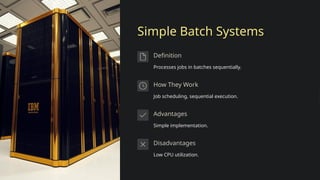
Simple Batch Systems
Definition
Processes jobs in batches sequentially.
How They Work
Job scheduling, sequential execution.
Advantages
Simple implementation.
Disadvantages
Low CPU utilization.
Multiprogrammed Systems
Definition
Allows multiple processes to share
the CPU, improving resource
utilization and efficiency over single-
tasking systems..
Concept
Ensures the CPU is always executing
a task by running another process
when one is waiting, reducing idle
time.
Efficiency
Enhances performance by interleaving multiple processes, minimizing delays, and
optimizing task completion time.
Time-Shared Systems
Definition
Multitasking allows multiple users or processes to run
simultaneously, optimizing resource utilization and productivity.
Key Features
The OS efficiently switches tasks, making it appear as if multiple
applications run at the same time.
User Interaction
Users can switch between applications without losing
progress, enhancing workflow and efficiency.
Personal Computer (PC) Systems
Definition
PCs are designed for individual use,
supporting various applications for
personal and professional tasks.
Evolution
PCs evolved from single-tasking
command-line systems to multitasking
platforms with graphical user interfaces
(GUIs).
Characteristics
• User-Friendly Interface: Intuitive GUI
for easy interaction.
• Multitasking Support: Runs multiple
applications simultaneously.
• Customizability: Upgradable
hardware and software.
• Networking Capabilities: Supports
internet and local network
connections.
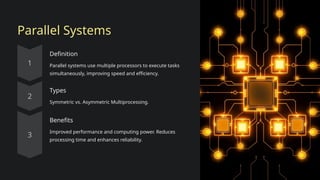
Parallel Systems
Definition
Parallel systems use multiple processors to execute tasks
simultaneously, improving speed and efficiency.
Types
Symmetric vs. Asymmetric Multiprocessing.
Benefits
Improved performance and computing power. Reduces
processing time and enhances reliability.
Distributed Systems
Definition
Networked
computing resources
collaborate to
enhance system
capabilities.
Advantages
Resource sharing and
improved efficiency
across the network.
Concept
Fault tolerance
ensures reliability,
even with component
failures.
Real-Time Systems
Definition
Designed to handle time-critical operations where
responses must occur within a defined time frame.
Hard vs Soft
Strict deadlines vs. flexible deadlines.
Applications
Embedded systems, industrial automation, robotics.
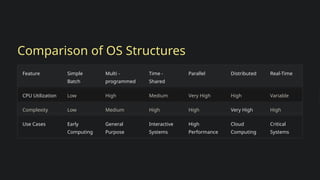
Comparison of OS Structures
Feature Simple
Batch
Multi -
programmed
Time -
Shared
Parallel Distributed Real-Time
CPU Utilization Low High Medium Very High High Variable
Complexity Low Medium High High Very High High
Use Cases Early
Computing
General
Purpose
Interactive
Systems
High
Performance
Cloud
Computing
Critical
Systems
THANK YOU

Operating-System-Structures and Types of OS

  • 1.
    Operating System Structures Simple Batch,Multiprogrammed, Time-shared, Personal Computer, Parallel, Distributed, and Real-Time Systems GM by GVS Manohar
  • 2.
    Introduction to OSStructures Operating System Structures Operating system structures define how an OS manages processes, memory, and hardware resources efficiently. Importance Crucial for system performance, reliability, and scalability. Relevance Understanding different structures is crucial for software development, system optimization, and efficient resource management
  • 3.
    Simple Batch Systems Definition Processesjobs in batches sequentially. How They Work Job scheduling, sequential execution. Advantages Simple implementation. Disadvantages Low CPU utilization.
  • 4.
    Multiprogrammed Systems Definition Allows multipleprocesses to share the CPU, improving resource utilization and efficiency over single- tasking systems.. Concept Ensures the CPU is always executing a task by running another process when one is waiting, reducing idle time. Efficiency Enhances performance by interleaving multiple processes, minimizing delays, and optimizing task completion time.
  • 5.
    Time-Shared Systems Definition Multitasking allowsmultiple users or processes to run simultaneously, optimizing resource utilization and productivity. Key Features The OS efficiently switches tasks, making it appear as if multiple applications run at the same time. User Interaction Users can switch between applications without losing progress, enhancing workflow and efficiency.
  • 6.
    Personal Computer (PC)Systems Definition PCs are designed for individual use, supporting various applications for personal and professional tasks. Evolution PCs evolved from single-tasking command-line systems to multitasking platforms with graphical user interfaces (GUIs). Characteristics • User-Friendly Interface: Intuitive GUI for easy interaction. • Multitasking Support: Runs multiple applications simultaneously. • Customizability: Upgradable hardware and software. • Networking Capabilities: Supports internet and local network connections.
  • 7.
    Parallel Systems Definition Parallel systemsuse multiple processors to execute tasks simultaneously, improving speed and efficiency. Types Symmetric vs. Asymmetric Multiprocessing. Benefits Improved performance and computing power. Reduces processing time and enhances reliability.
  • 8.
    Distributed Systems Definition Networked computing resources collaborateto enhance system capabilities. Advantages Resource sharing and improved efficiency across the network. Concept Fault tolerance ensures reliability, even with component failures.
  • 9.
    Real-Time Systems Definition Designed tohandle time-critical operations where responses must occur within a defined time frame. Hard vs Soft Strict deadlines vs. flexible deadlines. Applications Embedded systems, industrial automation, robotics.
  • 10.
    Comparison of OSStructures Feature Simple Batch Multi - programmed Time - Shared Parallel Distributed Real-Time CPU Utilization Low High Medium Very High High Variable Complexity Low Medium High High Very High High Use Cases Early Computing General Purpose Interactive Systems High Performance Cloud Computing Critical Systems
  • 11.