Open Data
Definition and
Management
• Why is it necessary to understand
what open data means and why the
definitions should be followed?
• Simple answer:
Interoperability
• Interoperability means the ability of
diverse systems and organizations
to work together (inter-operate).
• Without interoperability building
large, complex systems becomes
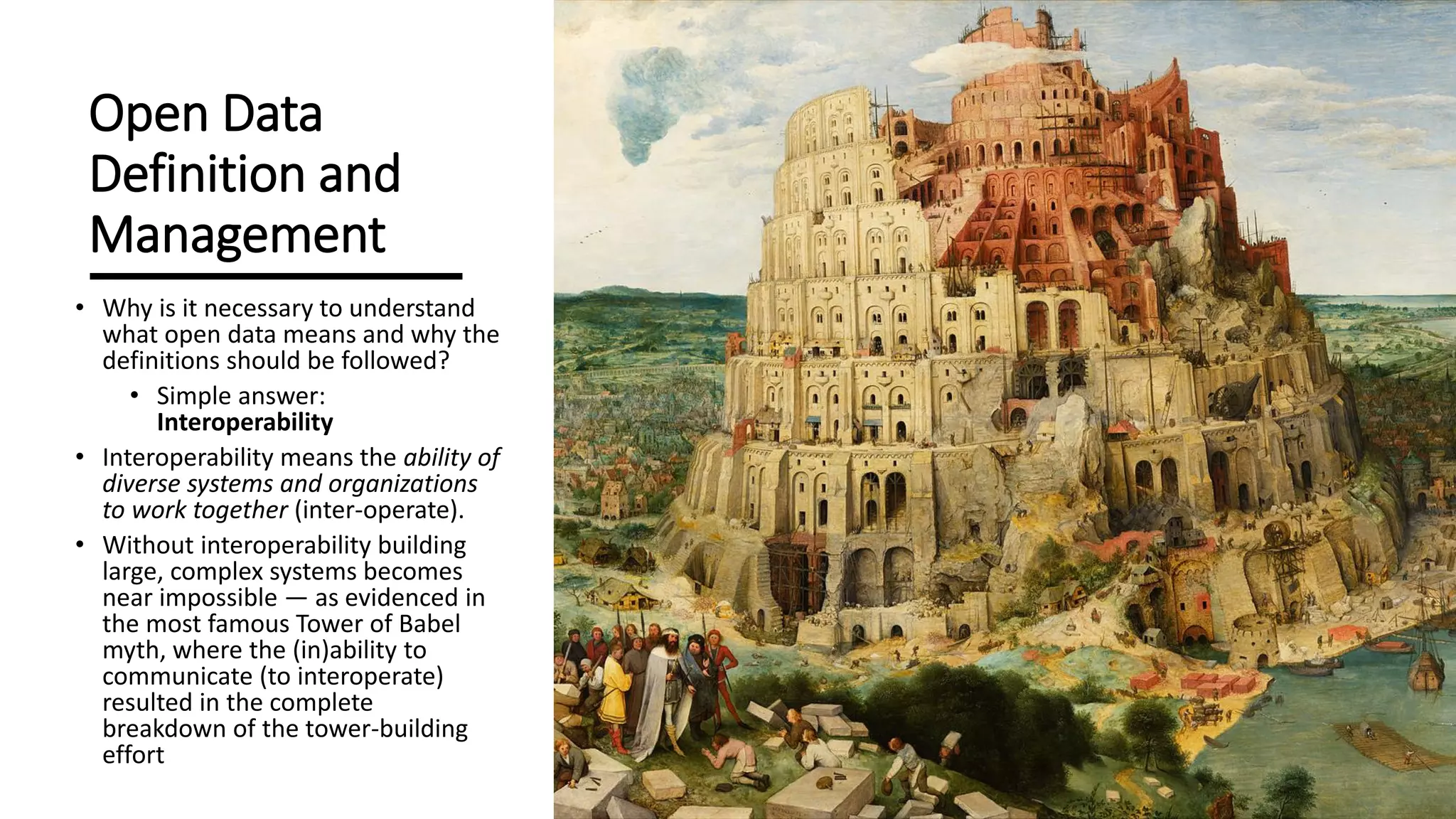
near impossible — as evidenced in
the most famous Tower of Babel
myth, where the (in)ability to
communicate (to interoperate)
resulted in the complete
breakdown of the tower-building
effort
Open Data Definition and Management
• Open data and content can be freely used, modified, and shared by anyone for
any purpose (Open Definition)
• The most important precise details what this means: (OpenDataHandbook)
• Availability and Access: the data must be available as a whole and at no
more than a reasonable reproduction cost, preferably by downloading
over the internet. The data must also be available in a convenient and
modifiable form.
• Re-use and Redistribution: the data must be provided under terms that
permit re-use and redistribution including the intermixing with other
datasets
• Universal Participation: everyone must be able to use, re-use and
redistribute
Open Data Definition and Management
How is Open Data typically formatted? See What is Open Data?
video by U of G Library
Open Data Definition and Management
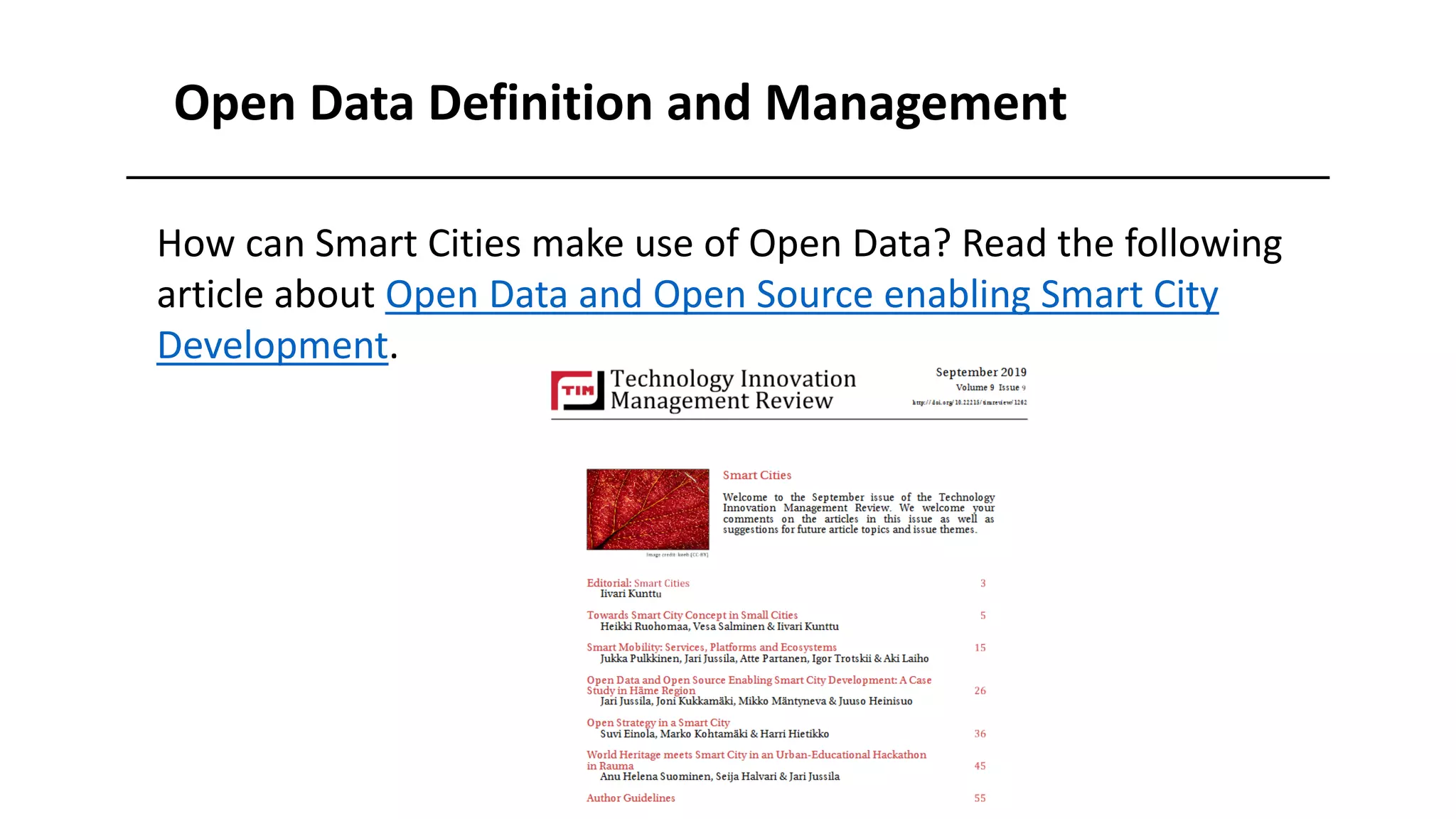
How can Smart Cities make use of Open Data? Read the following
article about Open Data and Open Source enabling Smart City
Development.
Standard APIs and Service
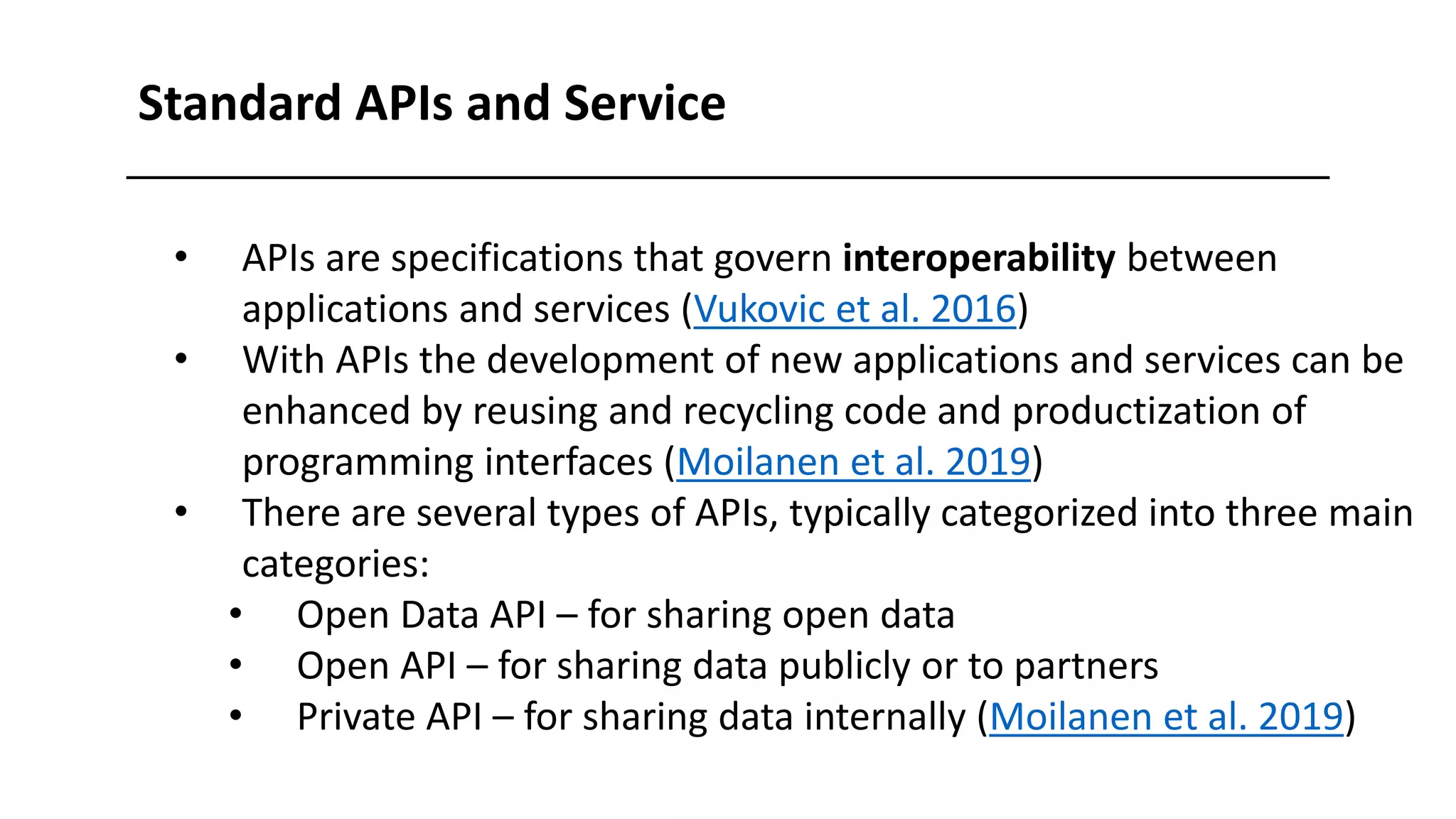
• APIs are specifications that govern interoperability between
applications and services (Vukovic et al. 2016)
• With APIs the development of new applications and services can be
enhanced by reusing and recycling code and productization of
programming interfaces (Moilanen et al. 2019)
• There are several types of APIs, typically categorized into three main
categories:
• Open Data API – for sharing open data
• Open API – for sharing data publicly or to partners
• Private API – for sharing data internally (Moilanen et al. 2019)
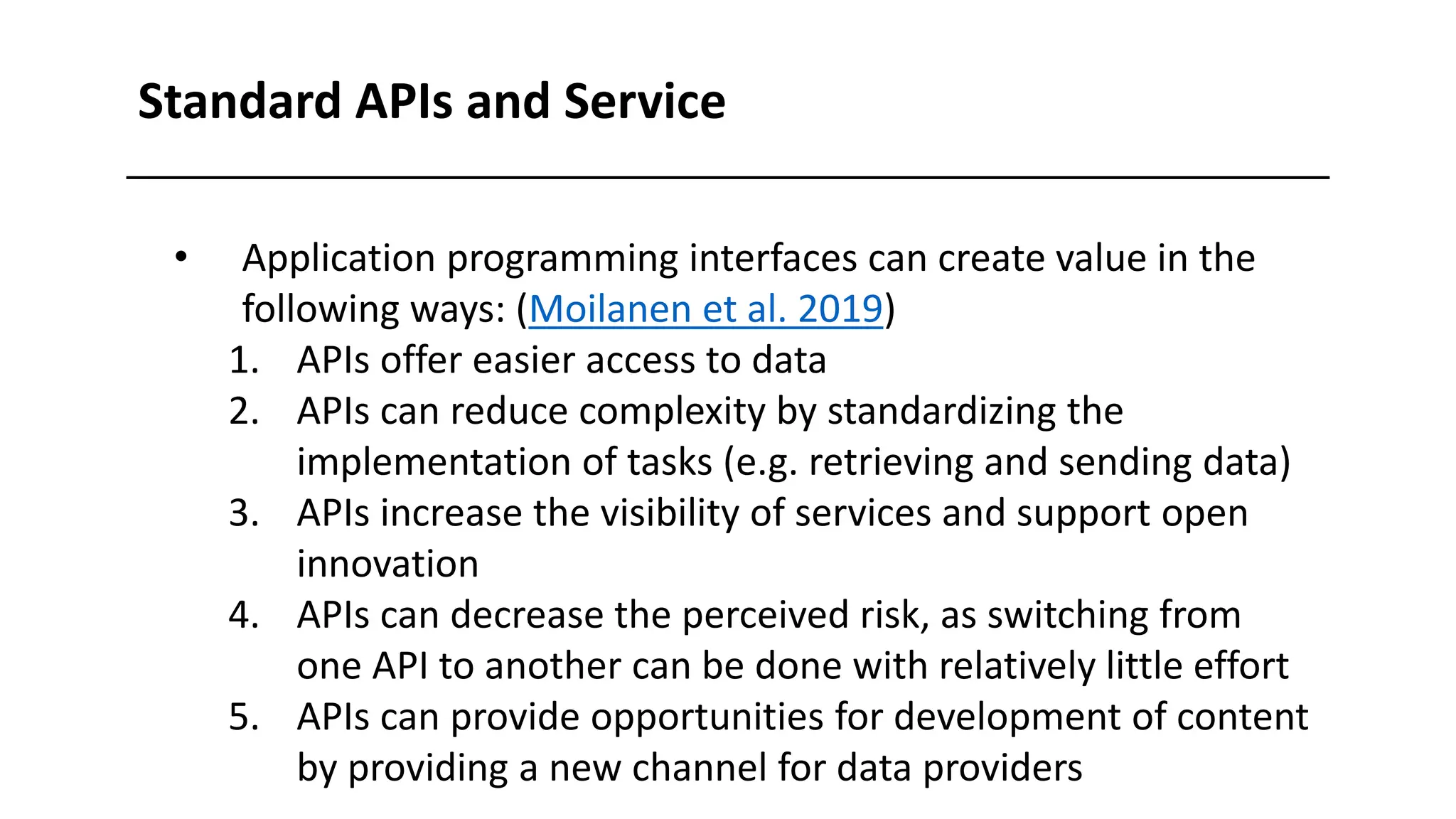
• Application programming interfaces can create value in the
following ways: (Moilanen et al. 2019)
1. APIs offer easier access to data
2. APIs can reduce complexity by standardizing the
implementation of tasks (e.g. retrieving and sending data)
3. APIs increase the visibility of services and support open
innovation
4. APIs can decrease the perceived risk, as switching from
one API to another can be done with relatively little effort
5. APIs can provide opportunities for development of content
by providing a new channel for data providers
Standard APIs and Service
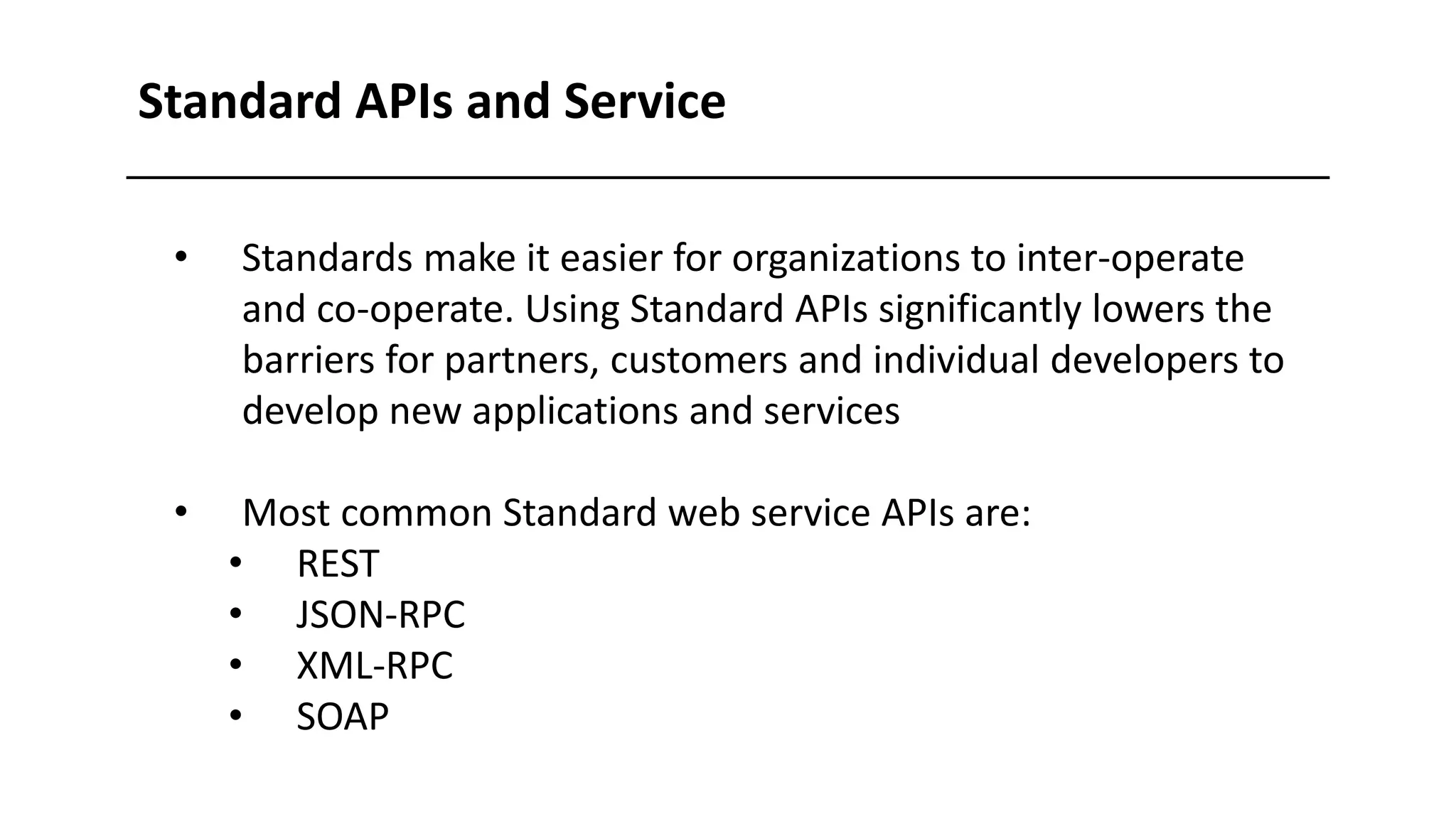
• Standards make it easier for organizations to inter-operate
and co-operate. Using Standard APIs significantly lowers the
barriers for partners, customers and individual developers to
develop new applications and services
• Most common Standard web service APIs are:
• REST
• JSON-RPC
• XML-RPC
• SOAP
Standard APIs and Service
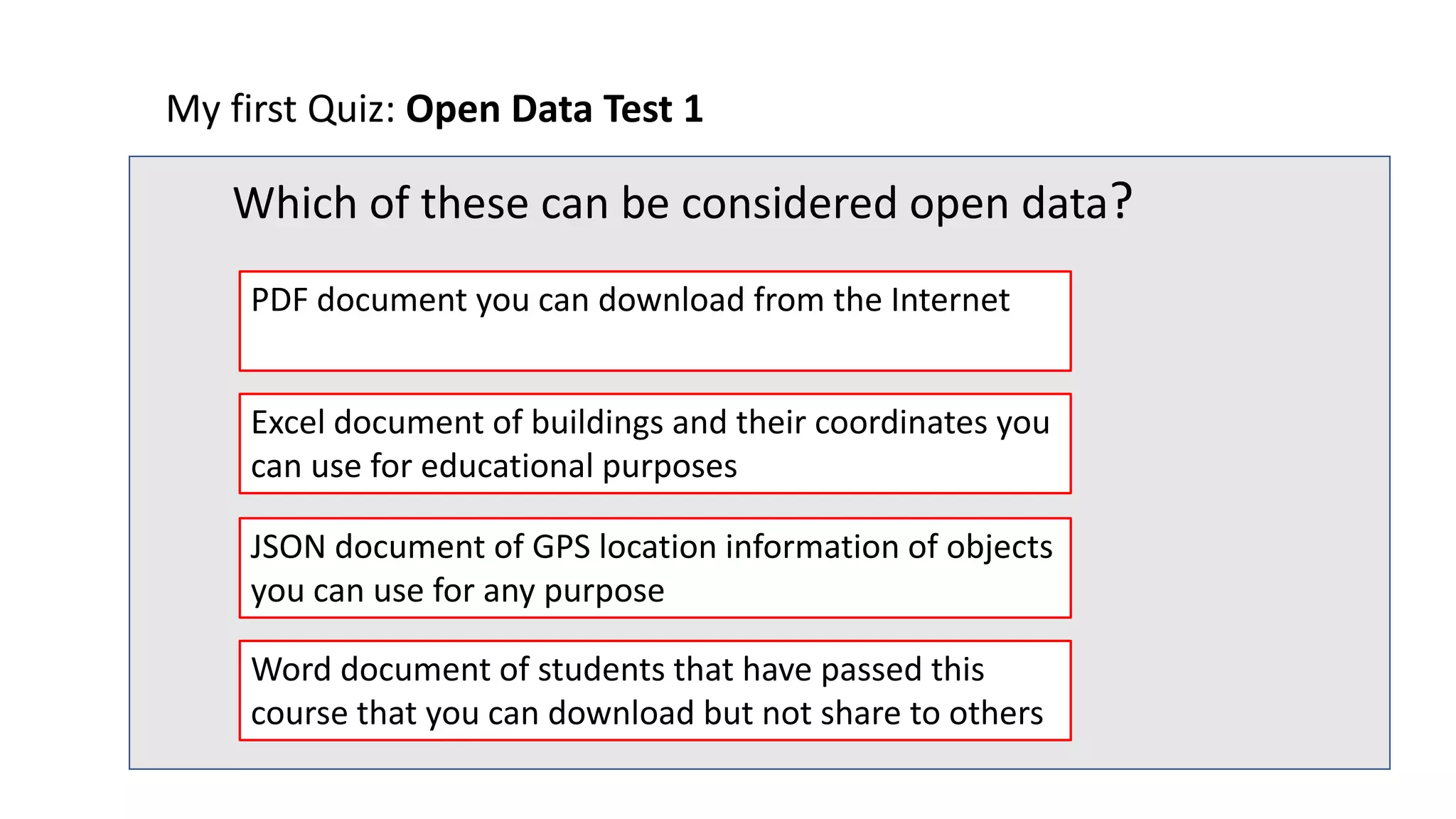
My first Quiz: Open Data Test 1
Which of these can be considered open data?
JSON document of GPS location information of objects
you can use for any purpose
Excel document of buildings and their coordinates you
can use for educational purposes
PDF document you can download from the Internet
Word document of students that have passed this
course that you can download but not share to others
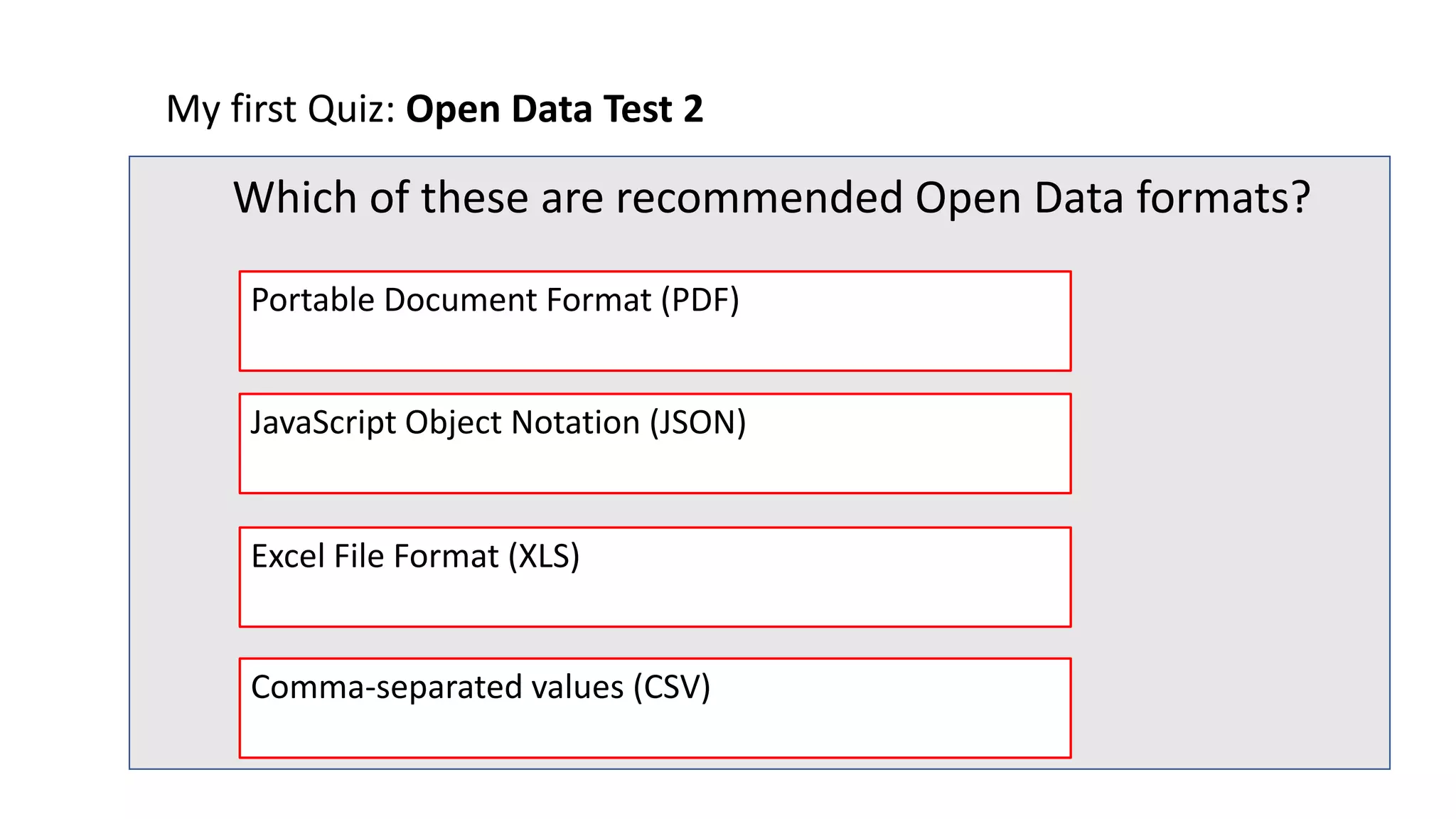
My first Quiz: Open Data Test 2
Which of these are recommended Open Data formats?
Excel File Format (XLS)
JavaScript Object Notation (JSON)
Portable Document Format (PDF)
Comma-separated values (CSV)
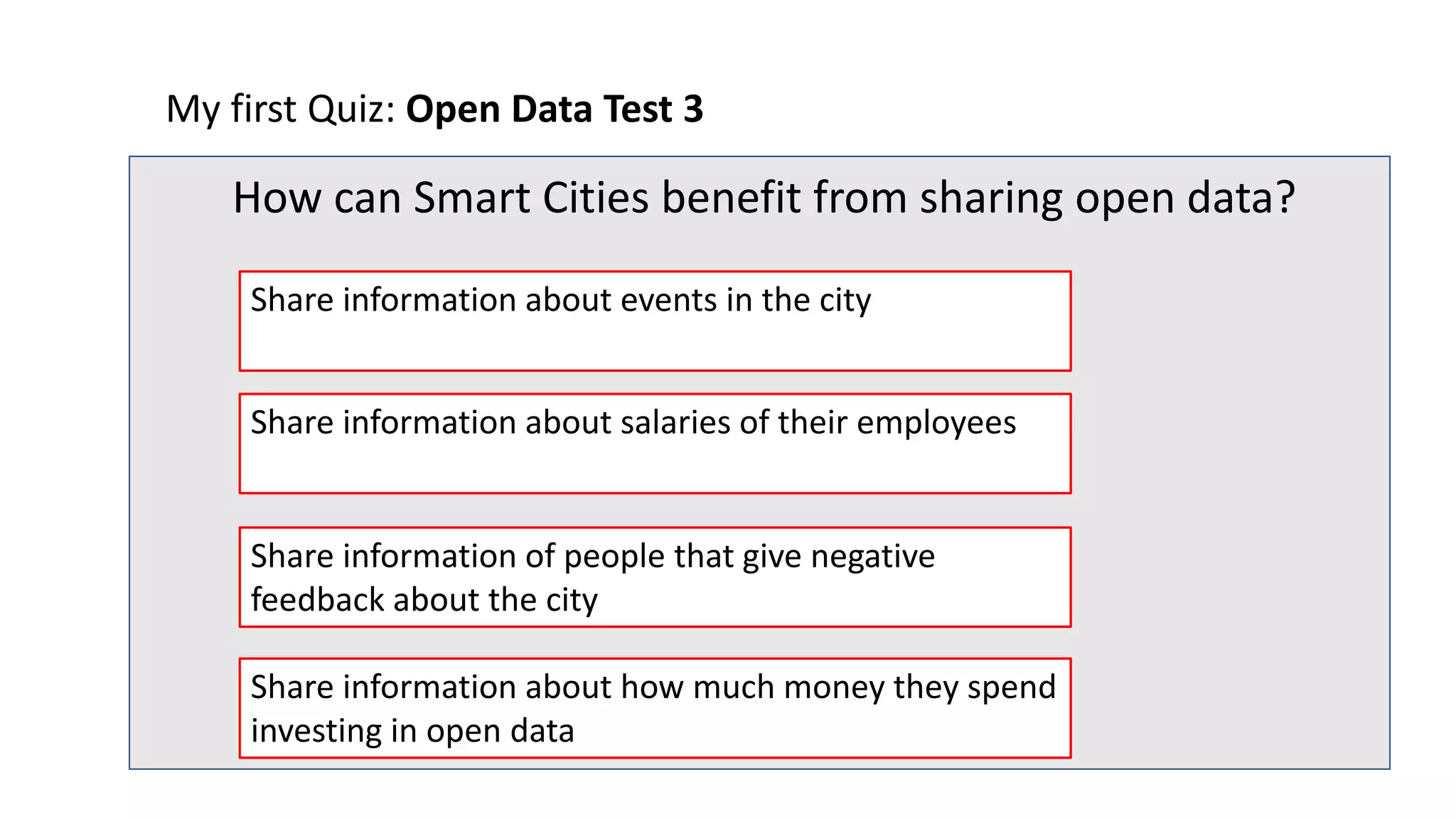
My first Quiz: Open Data Test 3
How can Smart Cities benefit from sharing open data?
Share information of people that give negative
feedback about the city
Share information about salaries of their employees
Share information about events in the city
Share information about how much money they spend
investing in open data
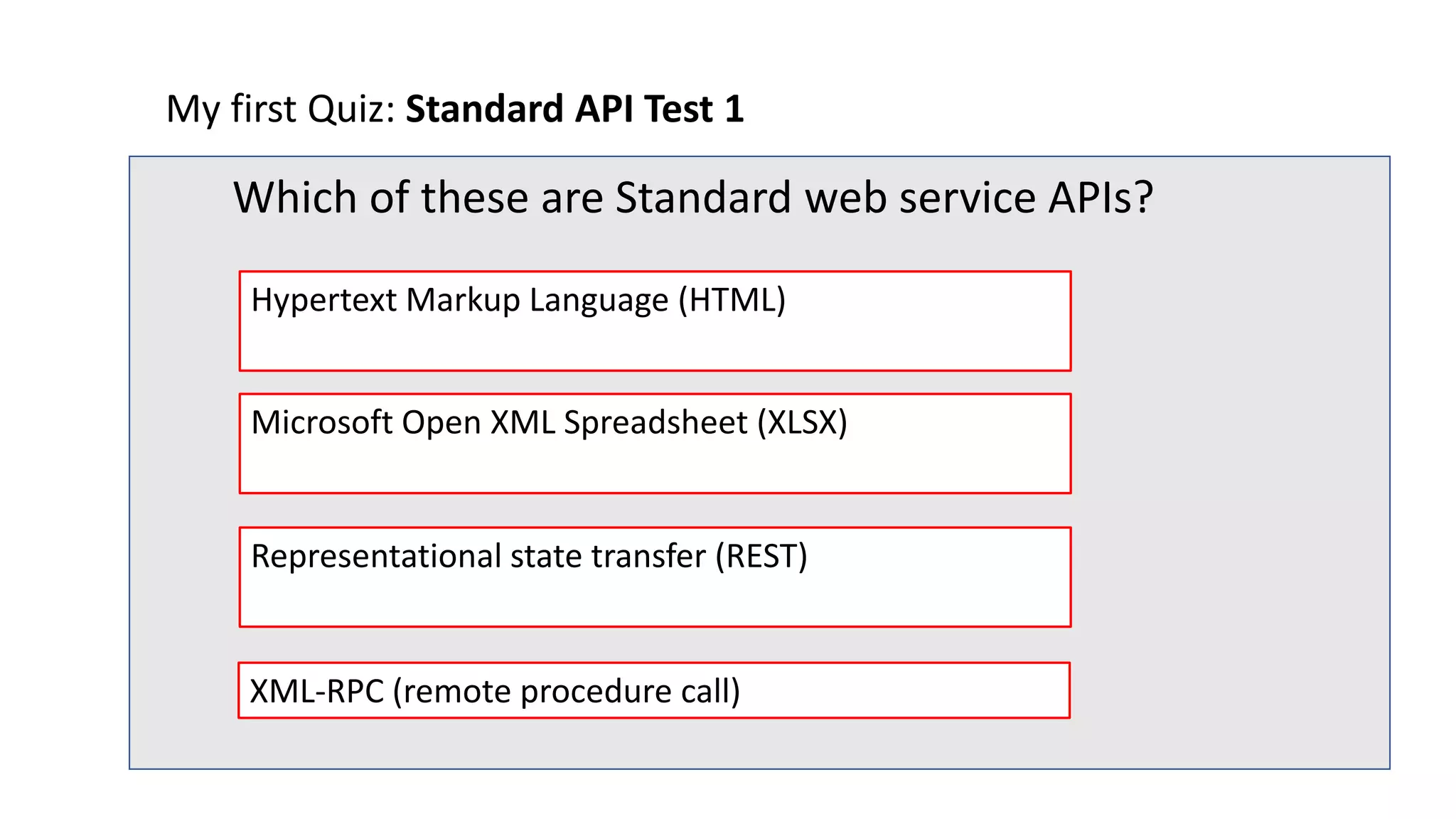
My first Quiz: Standard API Test 1
Which of these are Standard web service APIs?
Representational state transfer (REST)
Microsoft Open XML Spreadsheet (XLSX)
Hypertext Markup Language (HTML)
XML-RPC (remote procedure call)
Open Data and Standard APIs

Open Data and Standard APIs

  • 1.
    Open Data Definition and Management •Why is it necessary to understand what open data means and why the definitions should be followed? • Simple answer: Interoperability • Interoperability means the ability of diverse systems and organizations to work together (inter-operate). • Without interoperability building large, complex systems becomes near impossible — as evidenced in the most famous Tower of Babel myth, where the (in)ability to communicate (to interoperate) resulted in the complete breakdown of the tower-building effort
  • 2.
    Open Data Definitionand Management • Open data and content can be freely used, modified, and shared by anyone for any purpose (Open Definition) • The most important precise details what this means: (OpenDataHandbook) • Availability and Access: the data must be available as a whole and at no more than a reasonable reproduction cost, preferably by downloading over the internet. The data must also be available in a convenient and modifiable form. • Re-use and Redistribution: the data must be provided under terms that permit re-use and redistribution including the intermixing with other datasets • Universal Participation: everyone must be able to use, re-use and redistribute
  • 3.
    Open Data Definitionand Management How is Open Data typically formatted? See What is Open Data? video by U of G Library
  • 4.
    Open Data Definitionand Management How can Smart Cities make use of Open Data? Read the following article about Open Data and Open Source enabling Smart City Development.
  • 5.
    Standard APIs andService • APIs are specifications that govern interoperability between applications and services (Vukovic et al. 2016) • With APIs the development of new applications and services can be enhanced by reusing and recycling code and productization of programming interfaces (Moilanen et al. 2019) • There are several types of APIs, typically categorized into three main categories: • Open Data API – for sharing open data • Open API – for sharing data publicly or to partners • Private API – for sharing data internally (Moilanen et al. 2019)
  • 6.
    • Application programminginterfaces can create value in the following ways: (Moilanen et al. 2019) 1. APIs offer easier access to data 2. APIs can reduce complexity by standardizing the implementation of tasks (e.g. retrieving and sending data) 3. APIs increase the visibility of services and support open innovation 4. APIs can decrease the perceived risk, as switching from one API to another can be done with relatively little effort 5. APIs can provide opportunities for development of content by providing a new channel for data providers Standard APIs and Service
  • 7.
    • Standards makeit easier for organizations to inter-operate and co-operate. Using Standard APIs significantly lowers the barriers for partners, customers and individual developers to develop new applications and services • Most common Standard web service APIs are: • REST • JSON-RPC • XML-RPC • SOAP Standard APIs and Service
  • 8.
    My first Quiz:Open Data Test 1 Which of these can be considered open data? JSON document of GPS location information of objects you can use for any purpose Excel document of buildings and their coordinates you can use for educational purposes PDF document you can download from the Internet Word document of students that have passed this course that you can download but not share to others
  • 9.
    My first Quiz:Open Data Test 2 Which of these are recommended Open Data formats? Excel File Format (XLS) JavaScript Object Notation (JSON) Portable Document Format (PDF) Comma-separated values (CSV)
  • 10.
    My first Quiz:Open Data Test 3 How can Smart Cities benefit from sharing open data? Share information of people that give negative feedback about the city Share information about salaries of their employees Share information about events in the city Share information about how much money they spend investing in open data
  • 11.
    My first Quiz:Standard API Test 1 Which of these are Standard web service APIs? Representational state transfer (REST) Microsoft Open XML Spreadsheet (XLSX) Hypertext Markup Language (HTML) XML-RPC (remote procedure call)