Open Development Explained

http://openforchange.info/content/open-development-explained
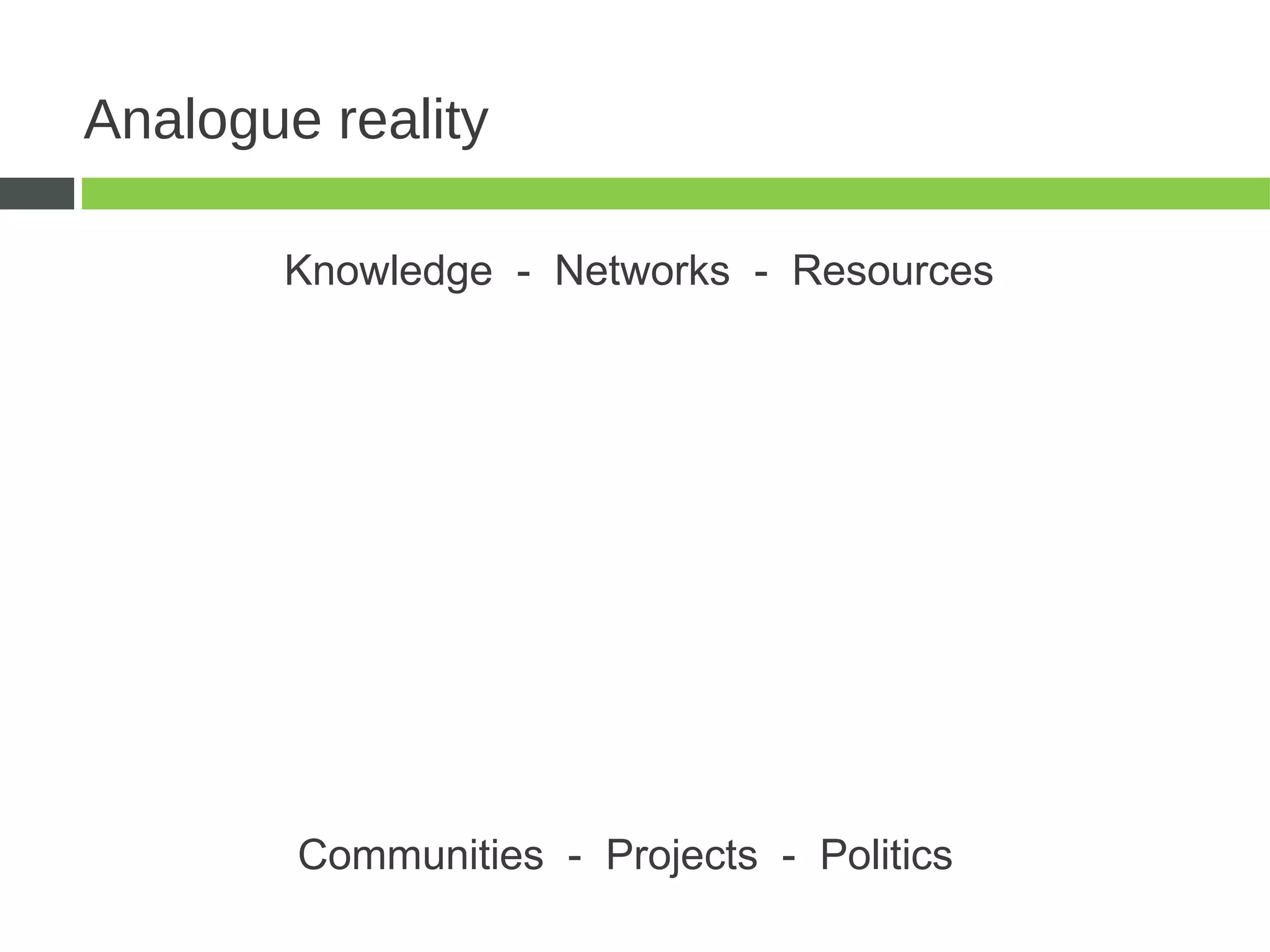
Analogue reality

       Knowledge - Networks - Resources


        Communities - Projects - Politics
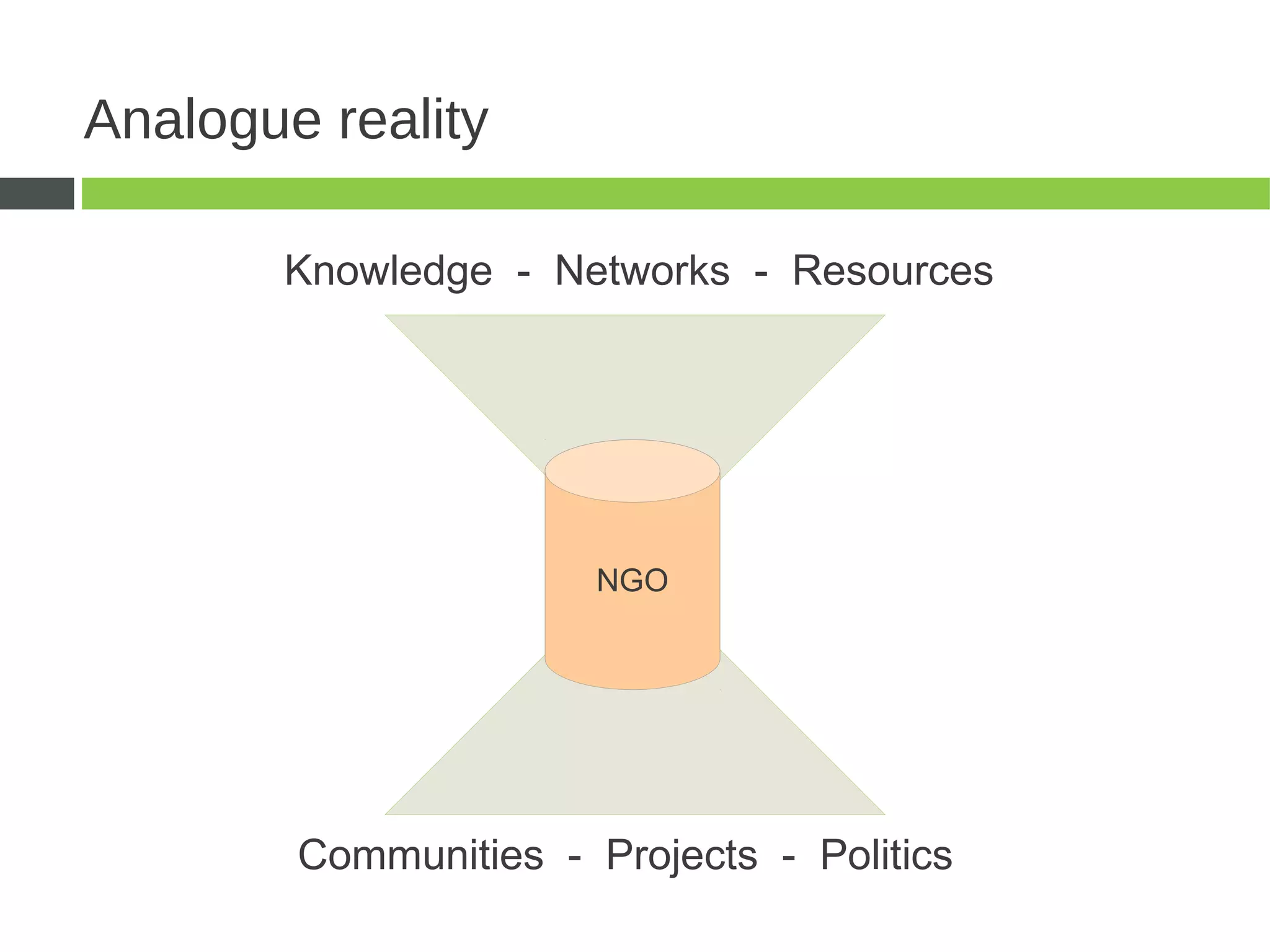
Analogue reality

       Knowledge - Networks - Resources


                       NGO


        Communities - Projects - Politics
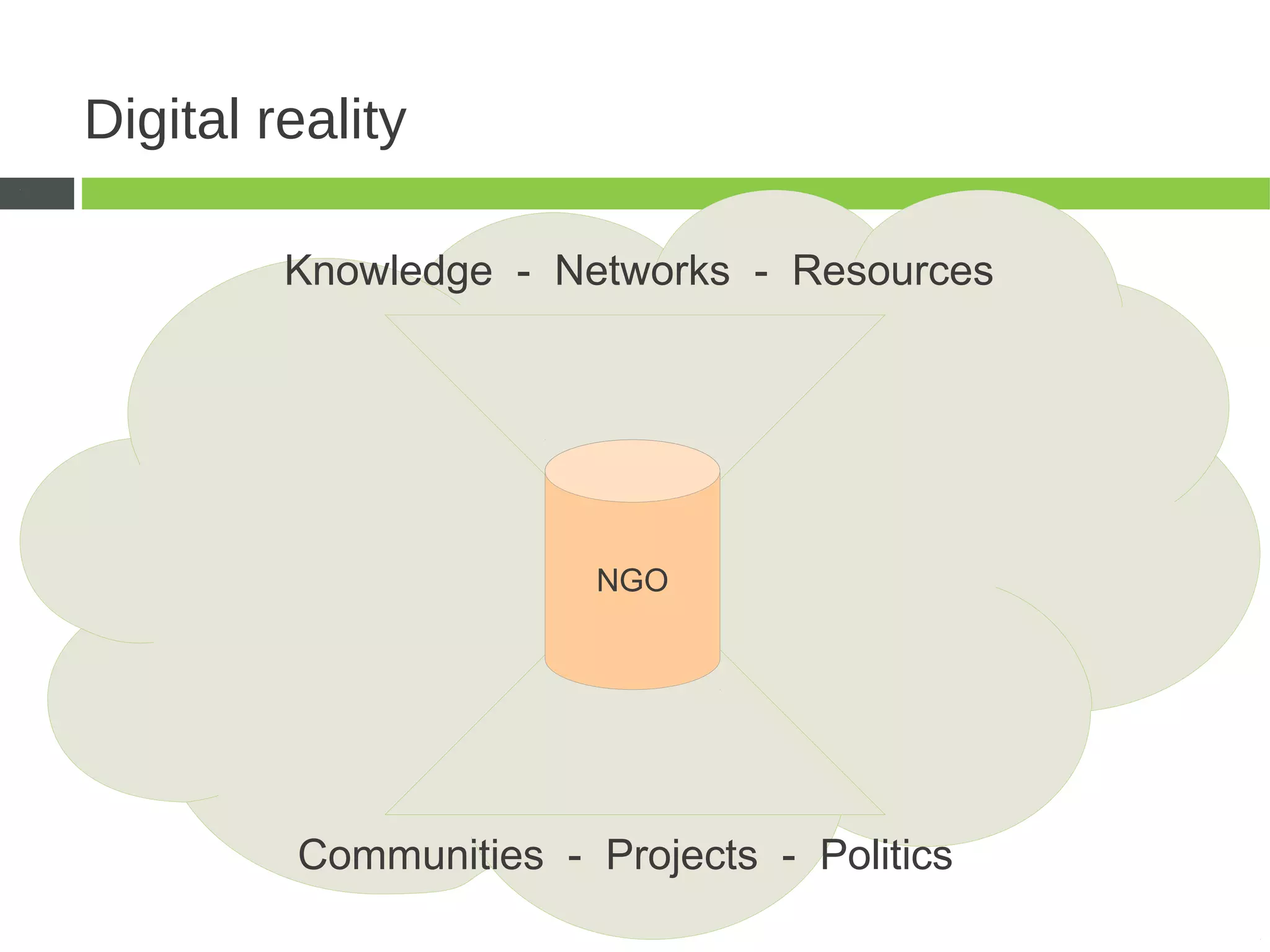
Digital reality

         Knowledge - Networks - Resources


                        NGO


         Communities - Projects - Politics
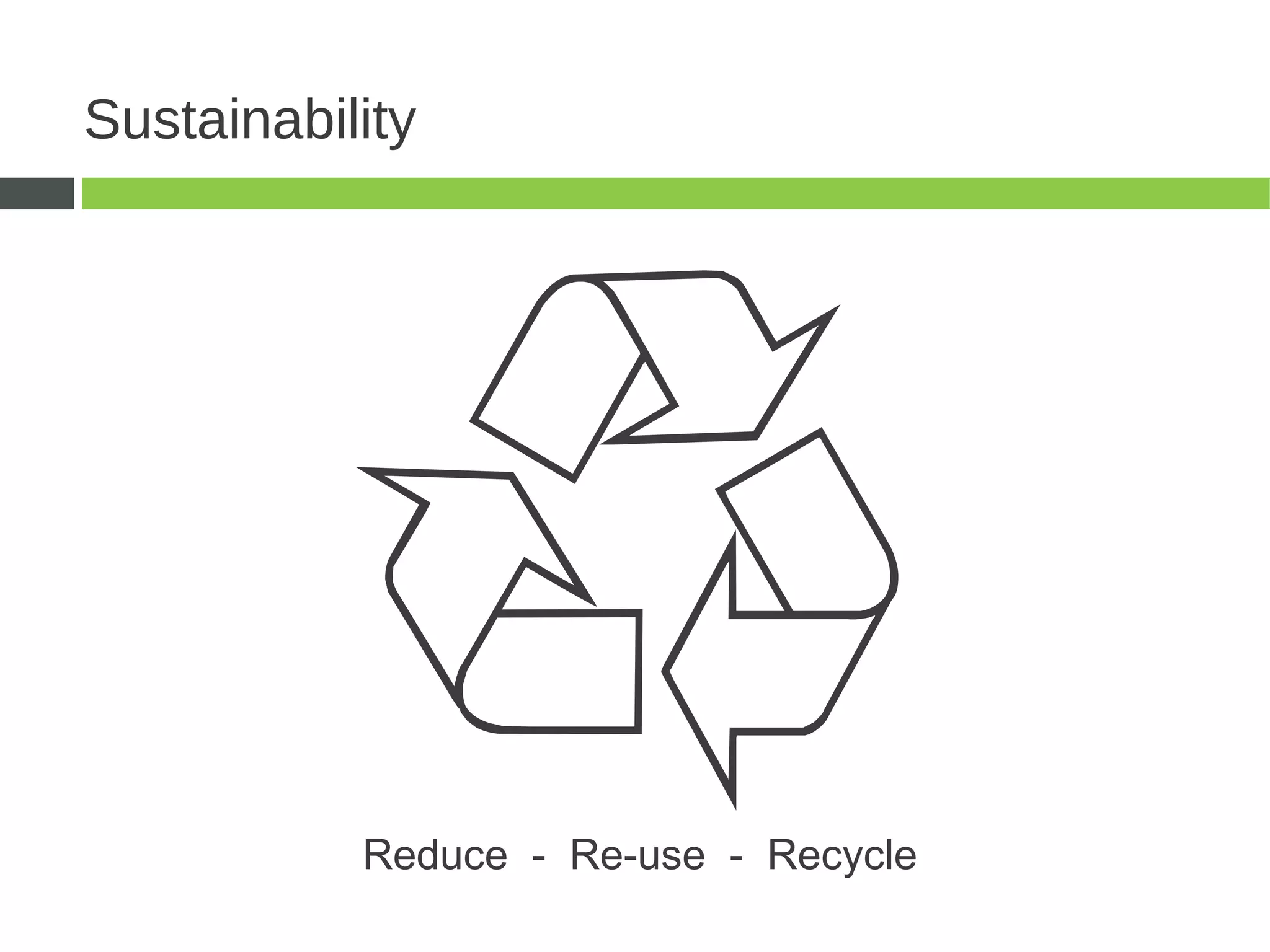
Sustainability


           Þ
           Reduce - Re-use - Recycle
Open
Open
Open
Open
Open
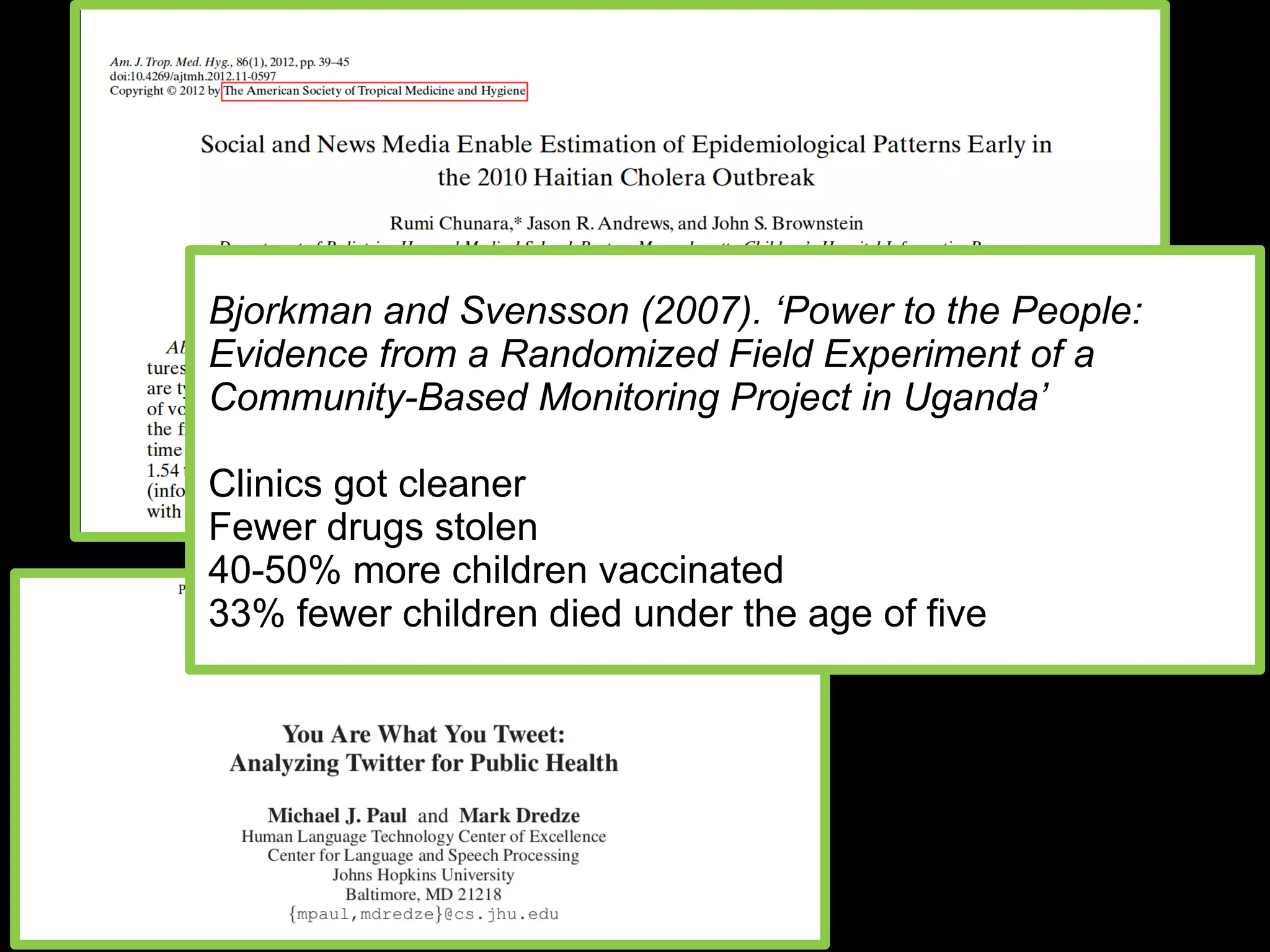
Bjorkman and Svensson (2007). ‘Power to the People:
Evidence from a Randomized Field Experiment of a
Community-Based Monitoring Project in Uganda’

Clinics got cleaner
Fewer drugs stolen
40-50% more children vaccinated
33% fewer children died under the age of five
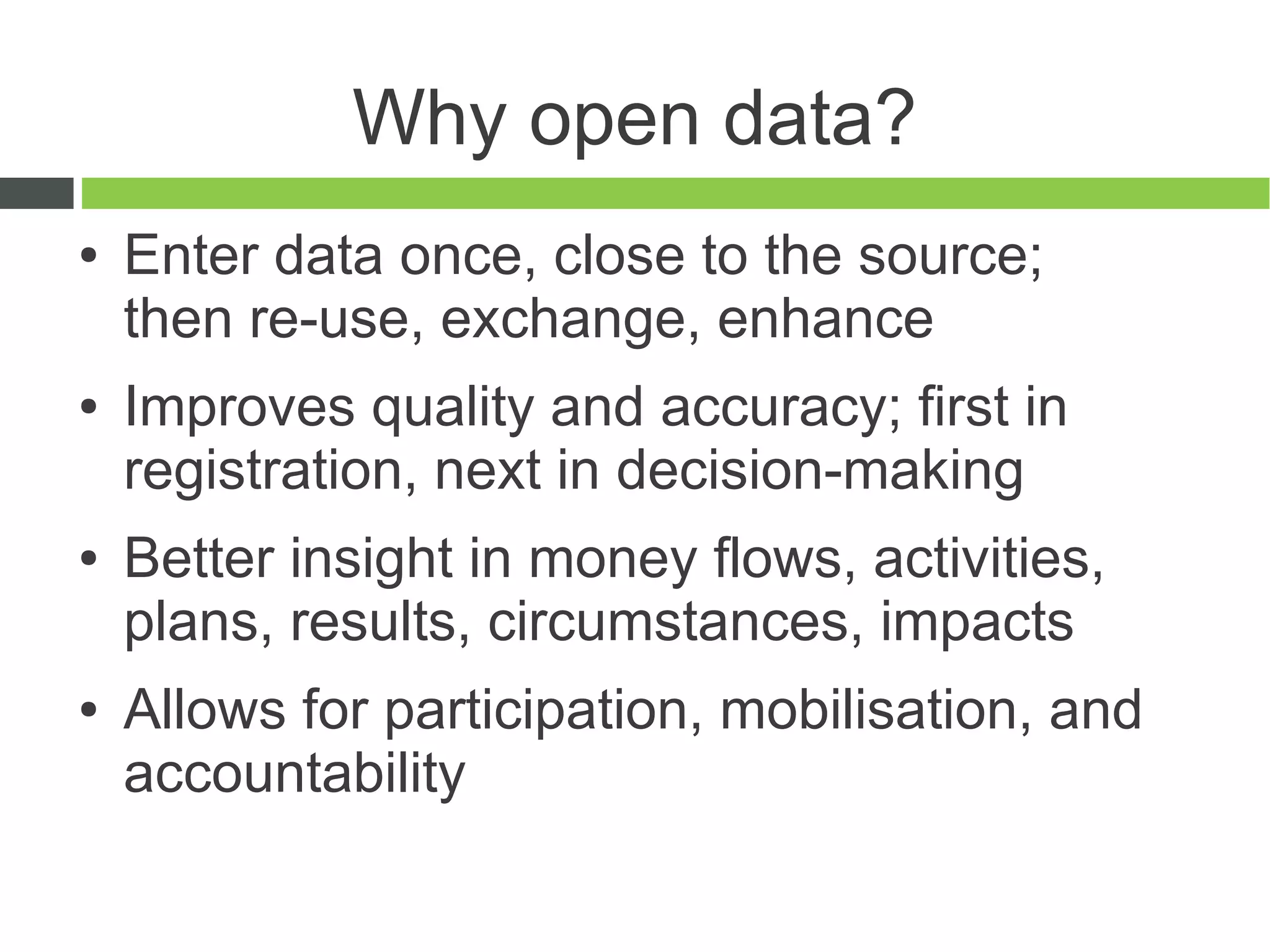
Why open data?
●   Enter data once, close to the source;
    then re-use, exchange, enhance
●   Improves quality and accuracy; first in
    registration, next in decision-making
●   Better insight in money flows, activities,
    plans, results, circumstances, impacts
●   Allows for participation, mobilisation, and
    accountability
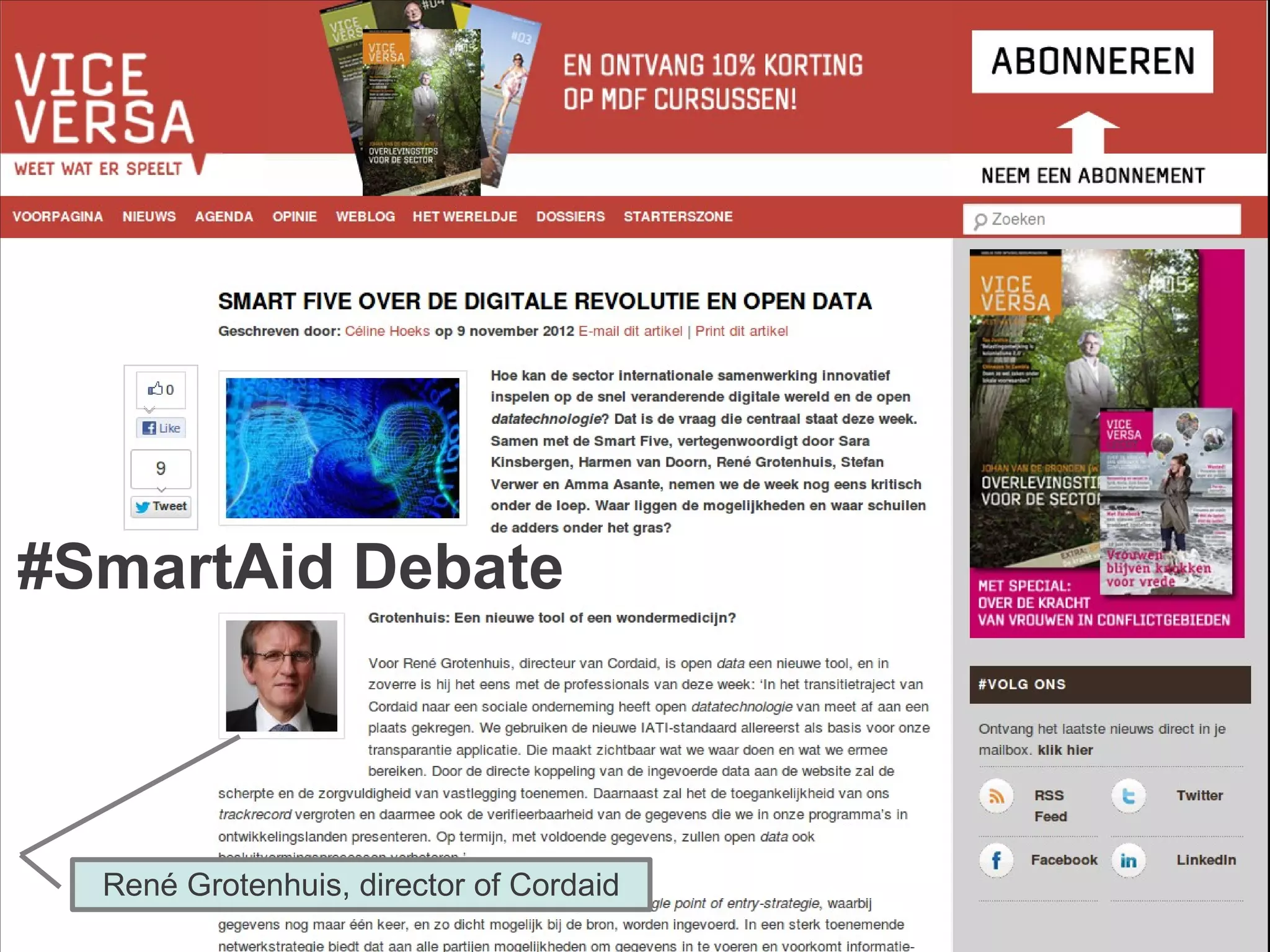
#SmartAid Debate


  RenĂŠ Grotenhuis, director of Cordaid
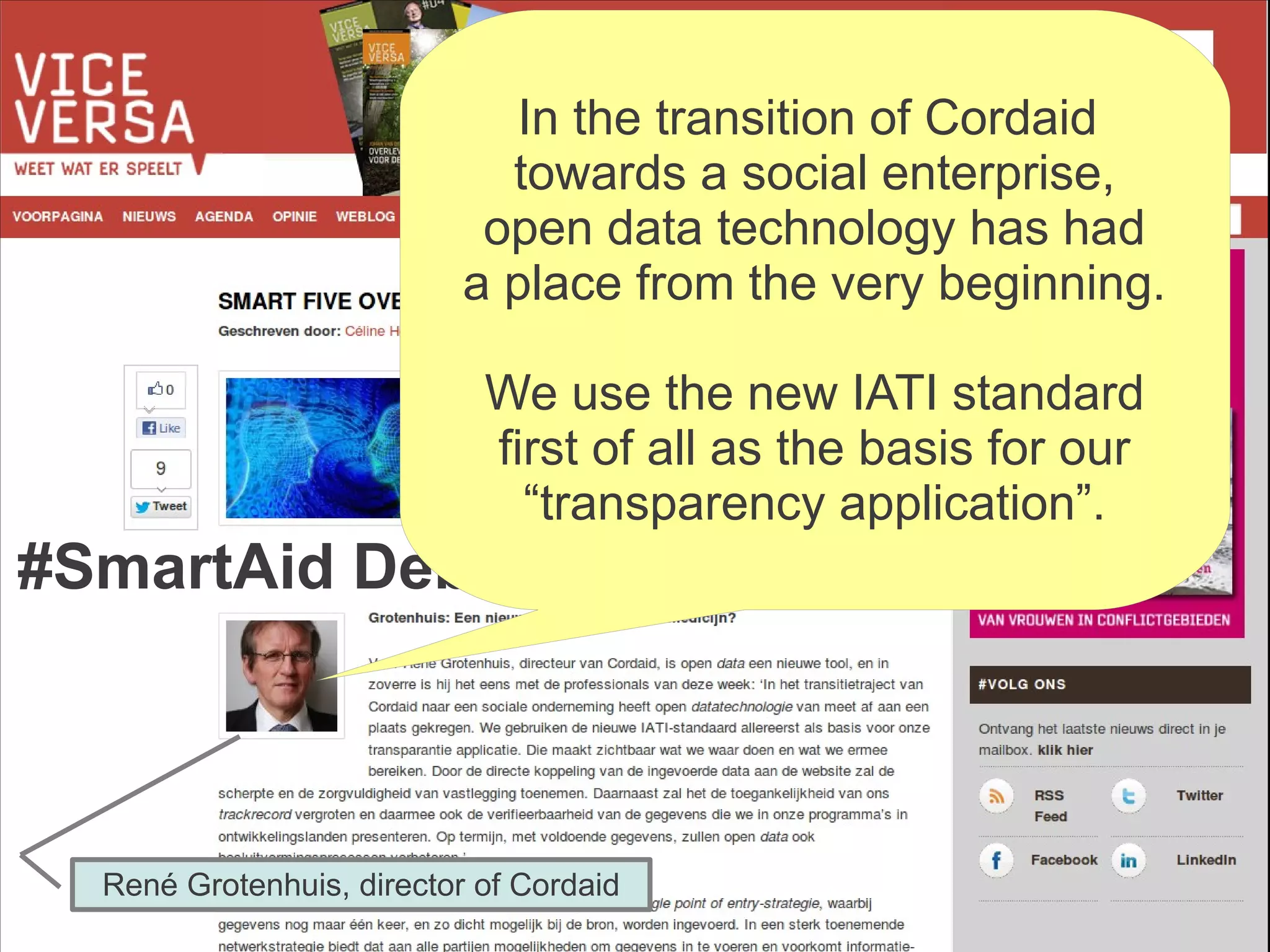
In the transition of Cordaid
                             towards a social enterprise,
                            open data technology has had
                           a place from the very beginning.

                            We use the new IATI standard
                            first of all as the basis for our
                              “transparency application”.
#SmartAid Debate


  RenĂŠ Grotenhuis, director of Cordaid
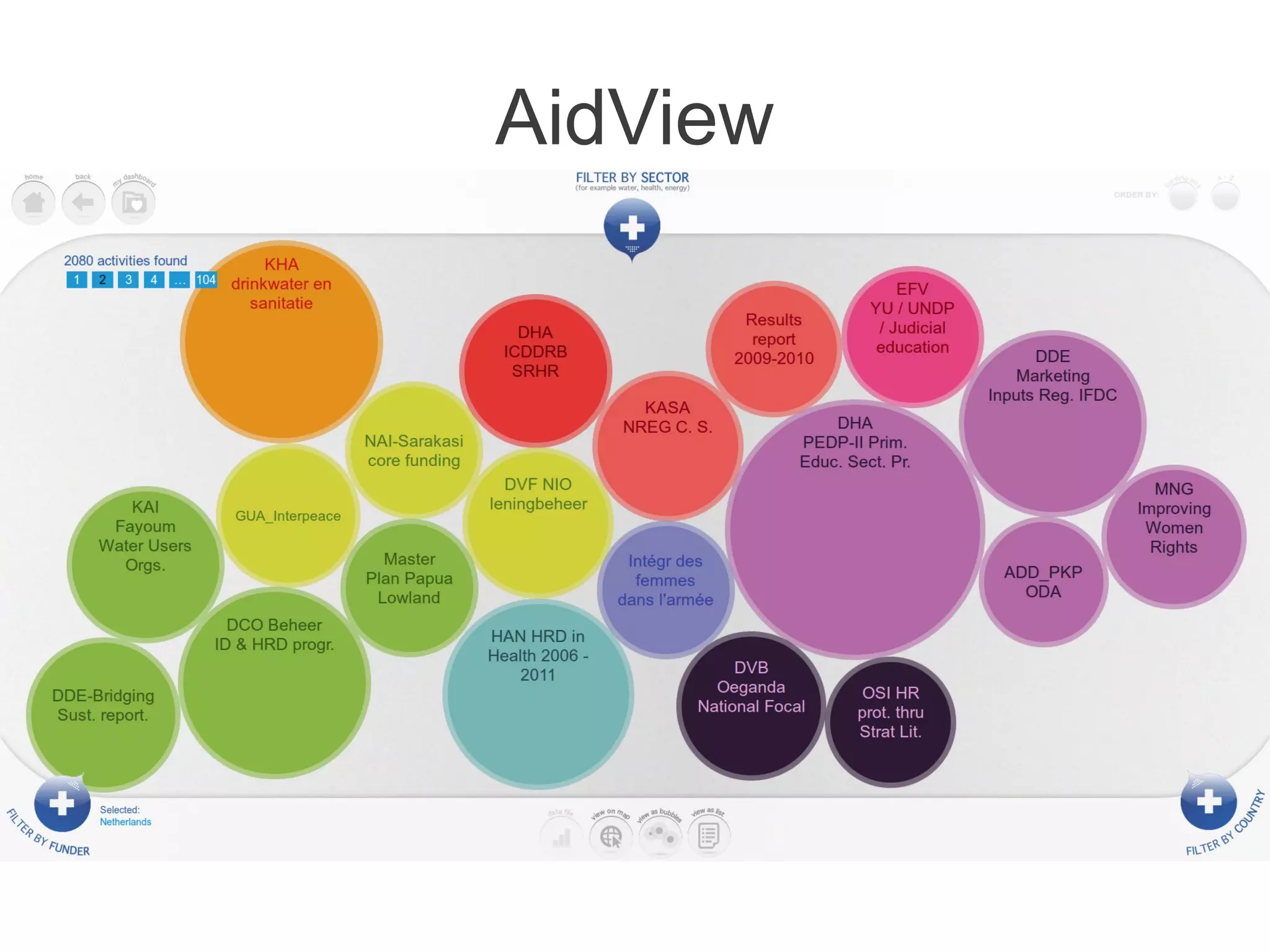
AidView
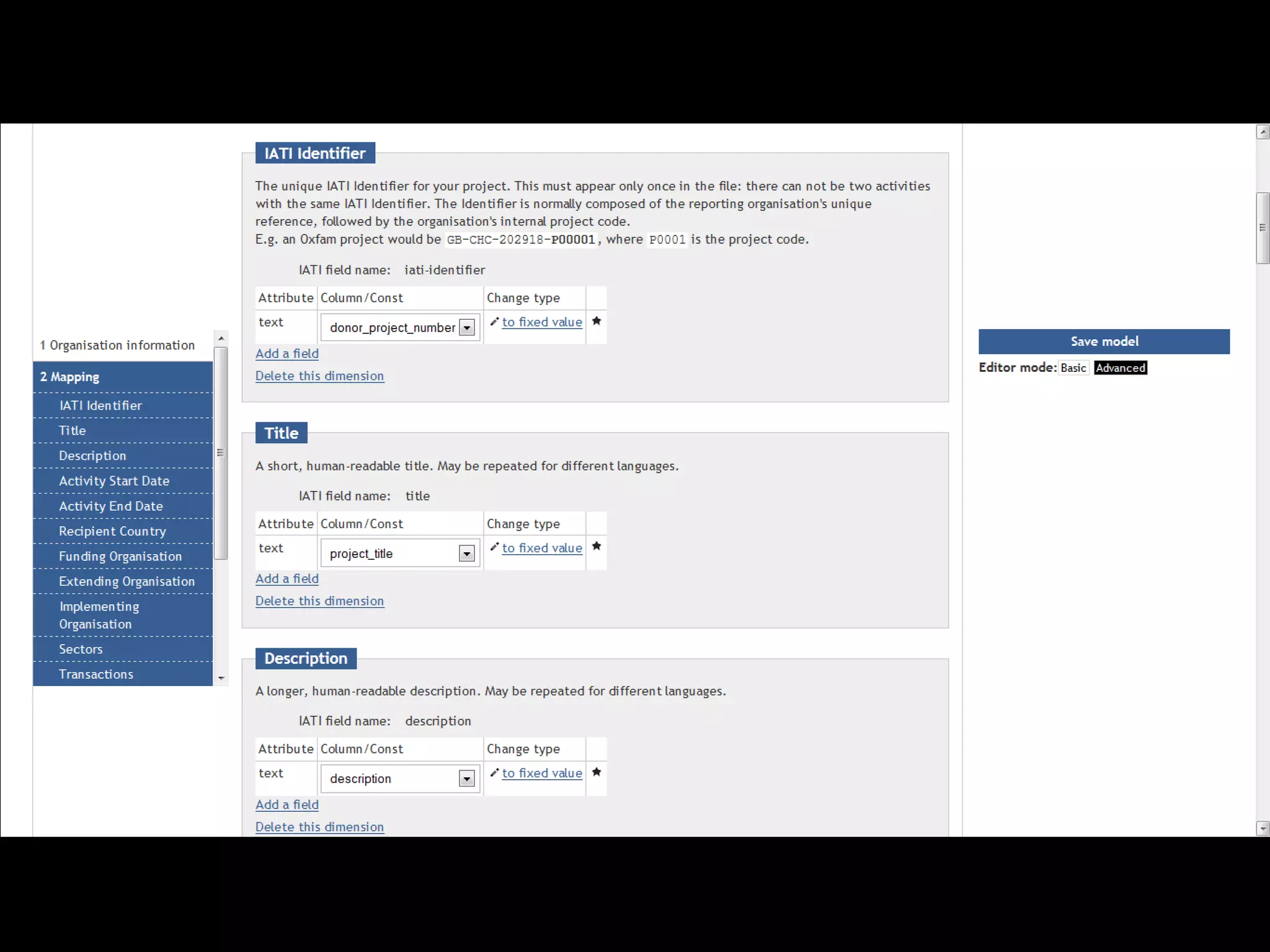
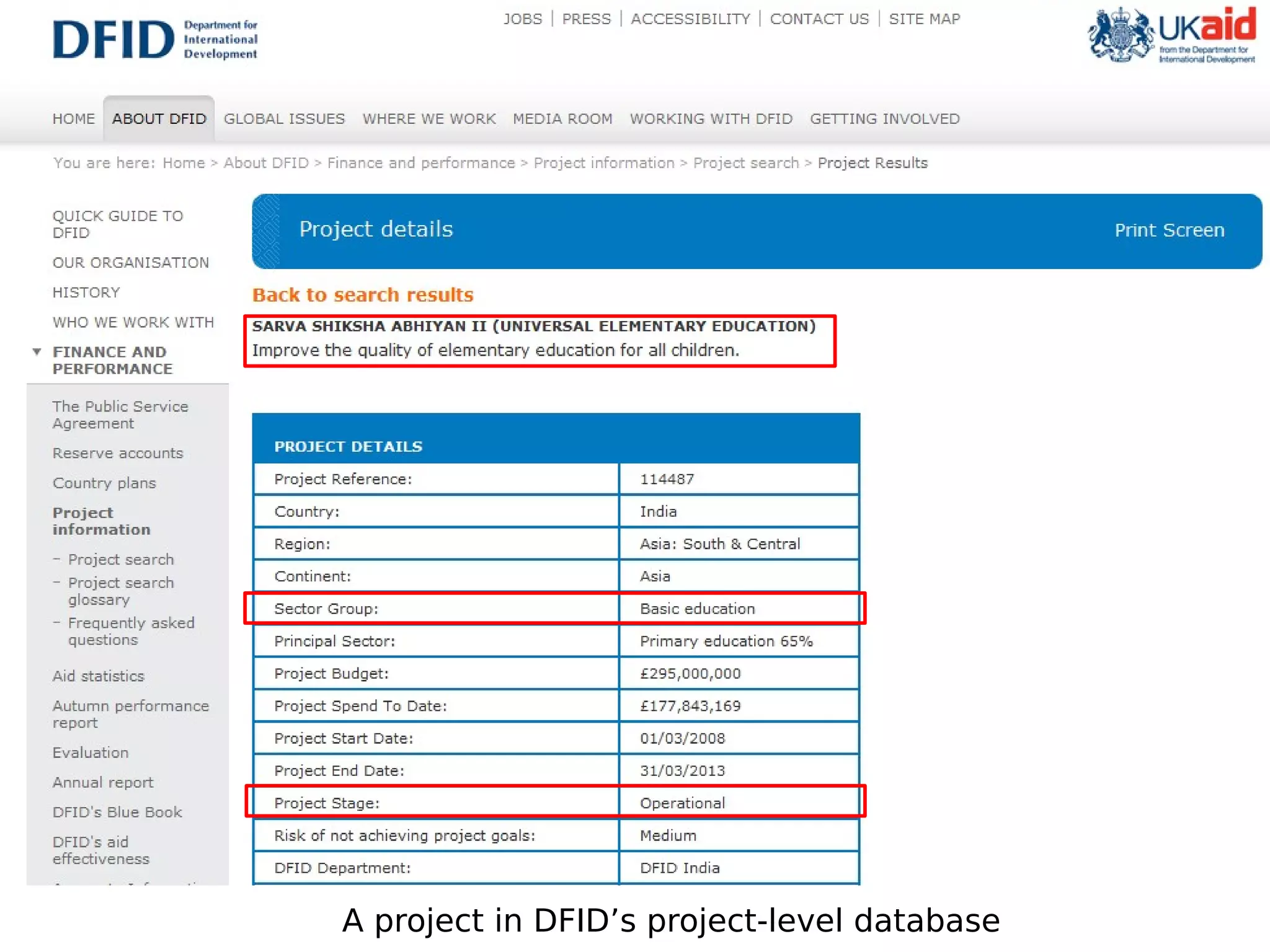
A project in DFID’s project-level database
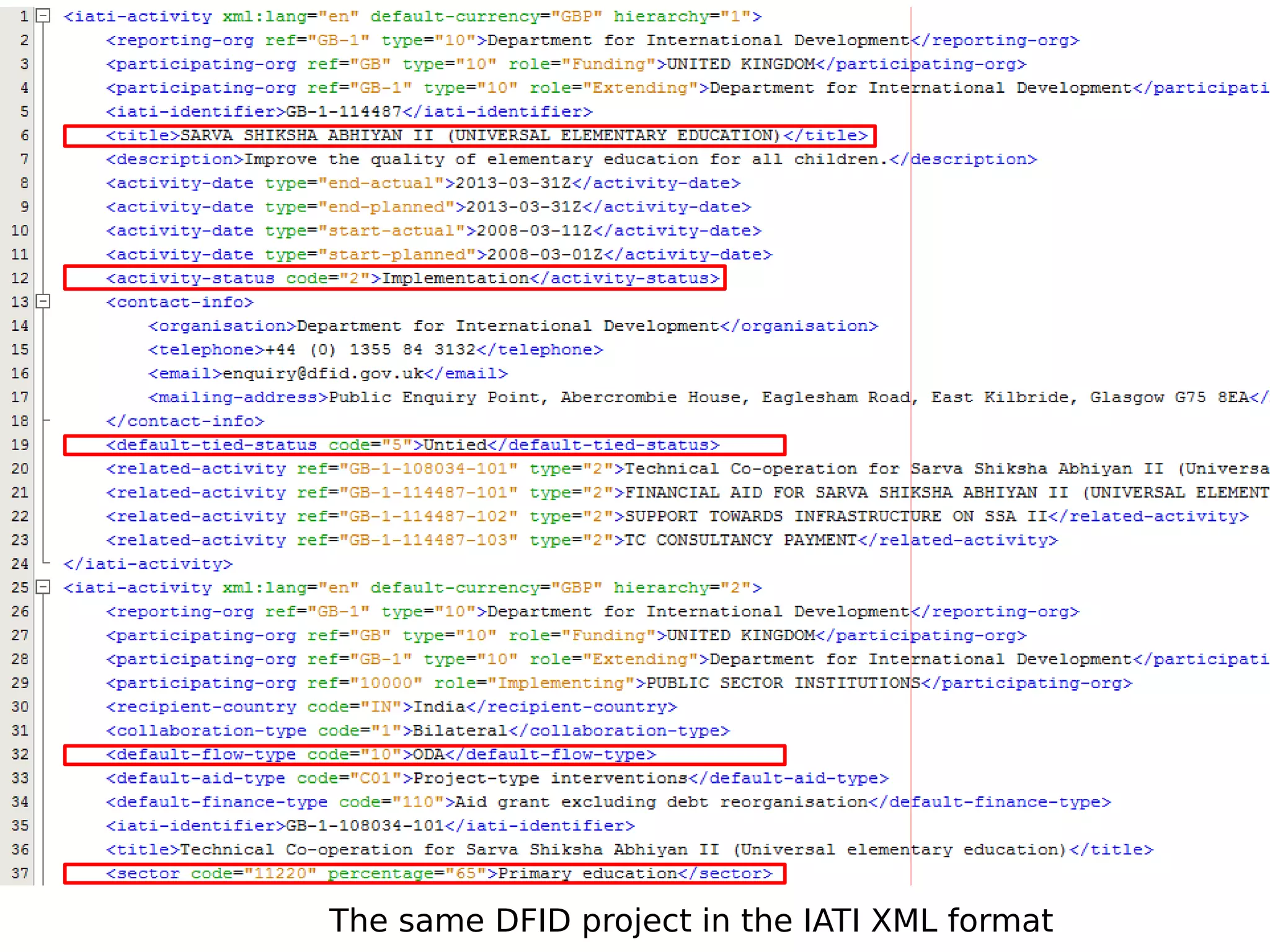
The same DFID project in the IATI XML format
More information?
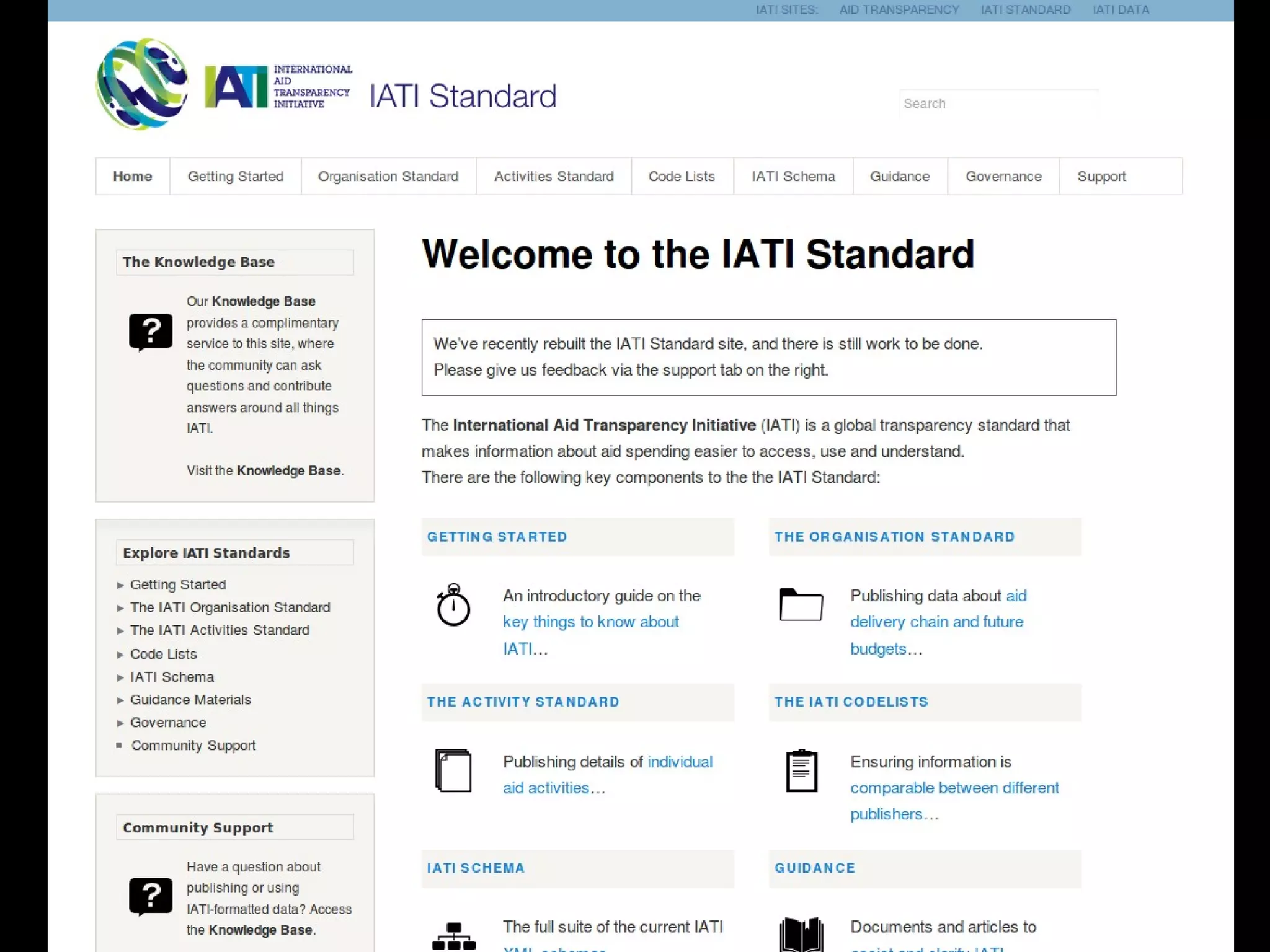
●   www.iatistandard.org
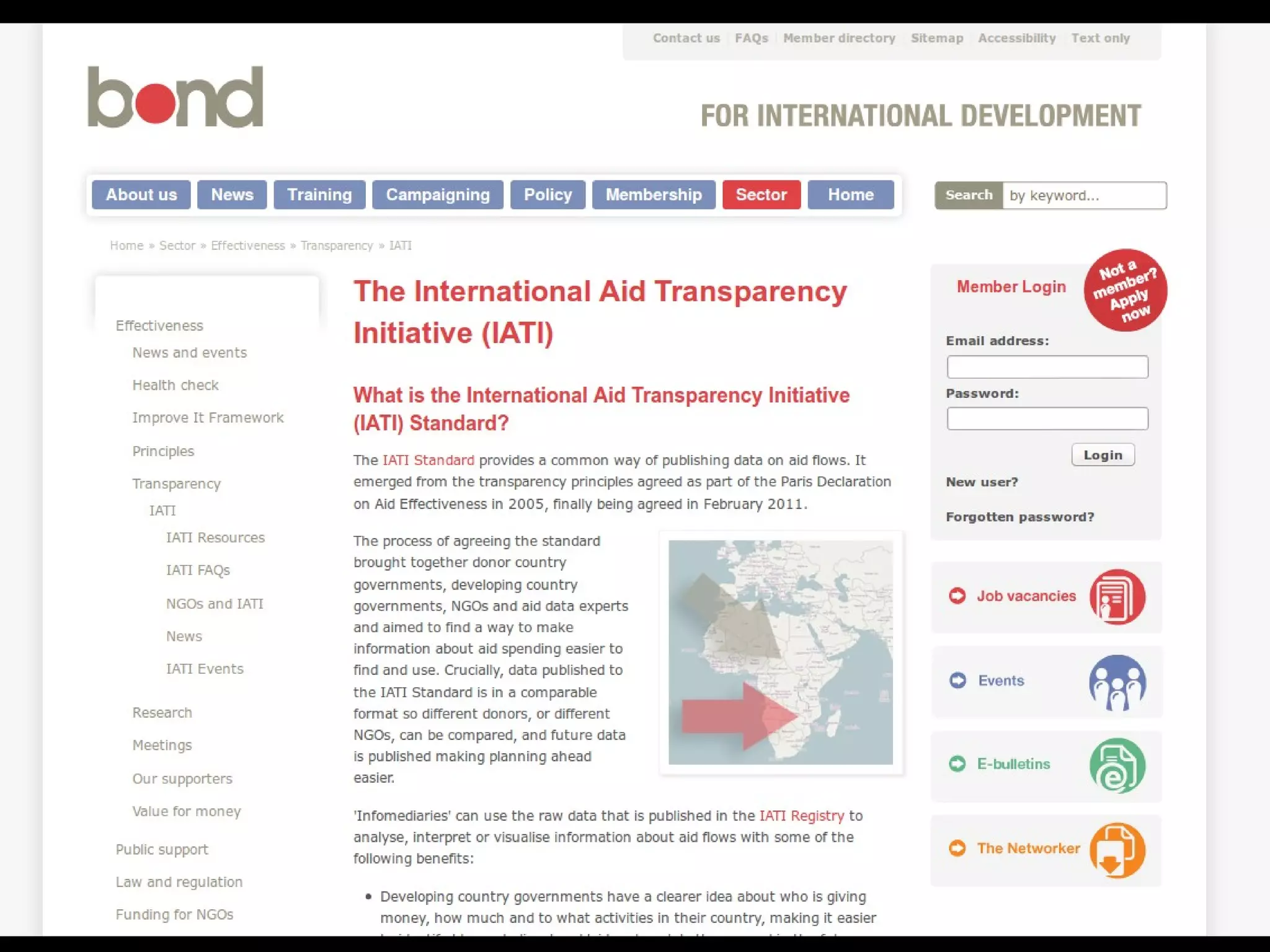
●   www.bond.org.uk/transparency
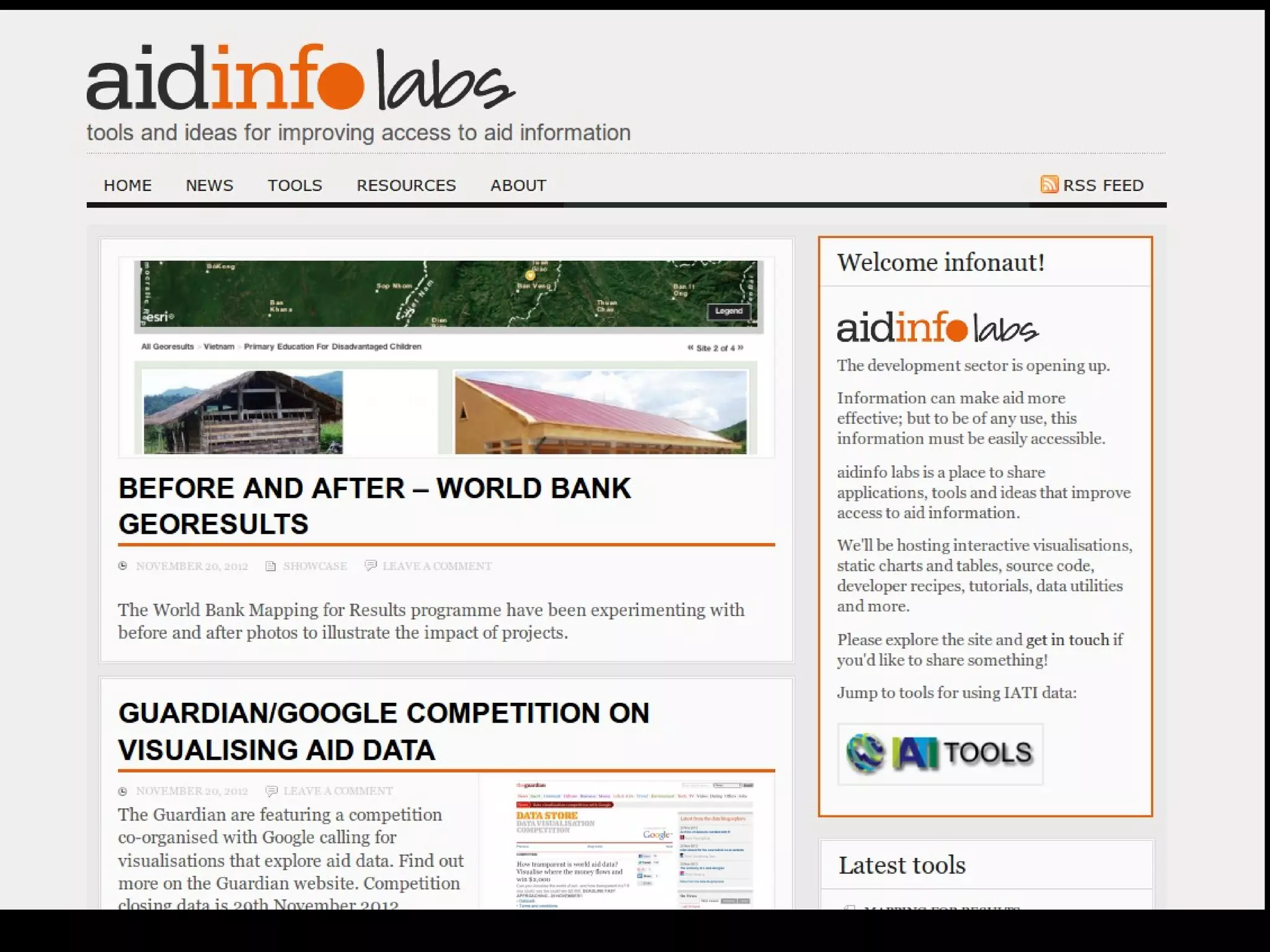
●   www.aidinfolabs.org


    ●   Open for Change: Rolf Kleef
        –   rolf@openforchange.info
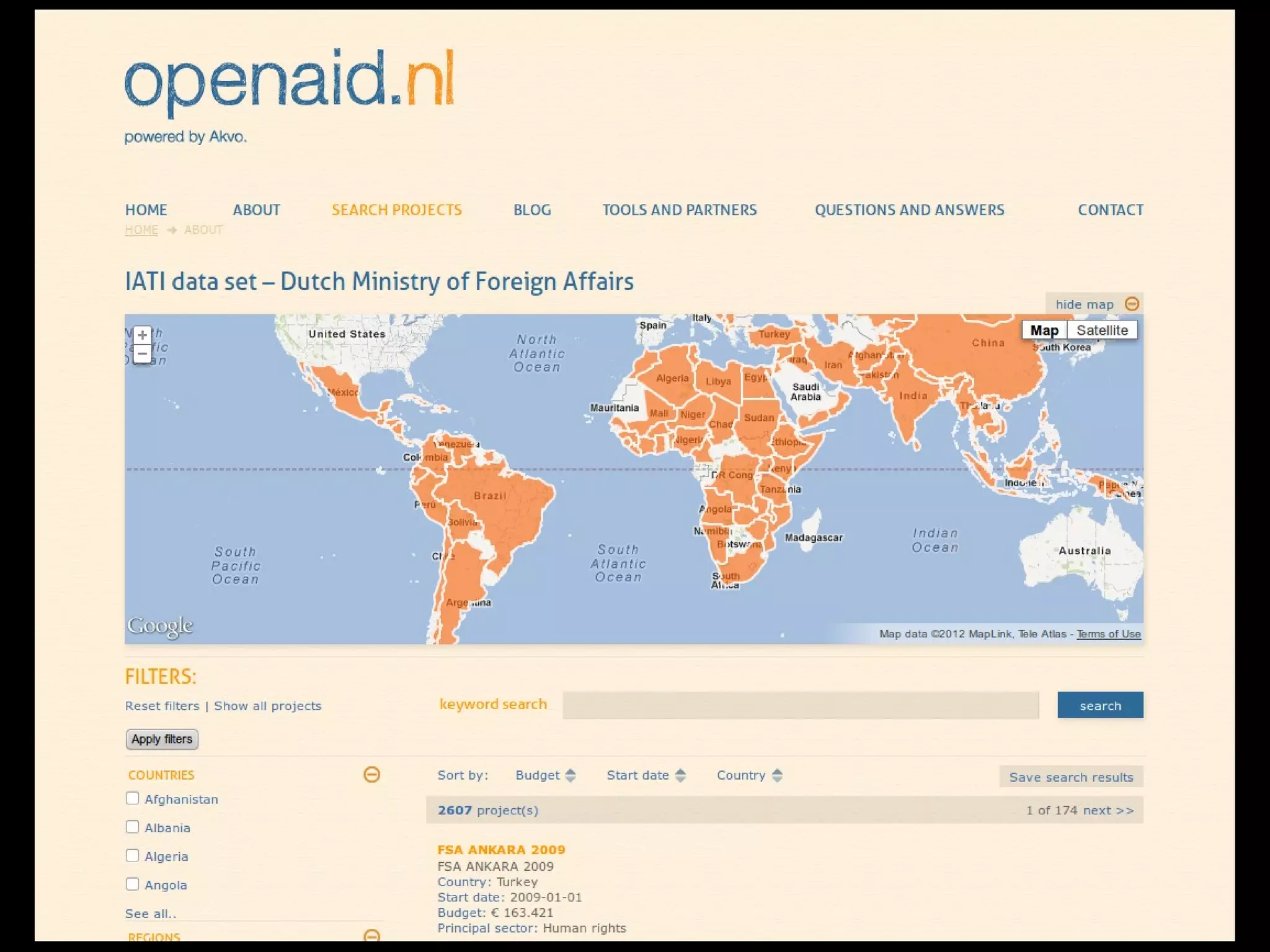
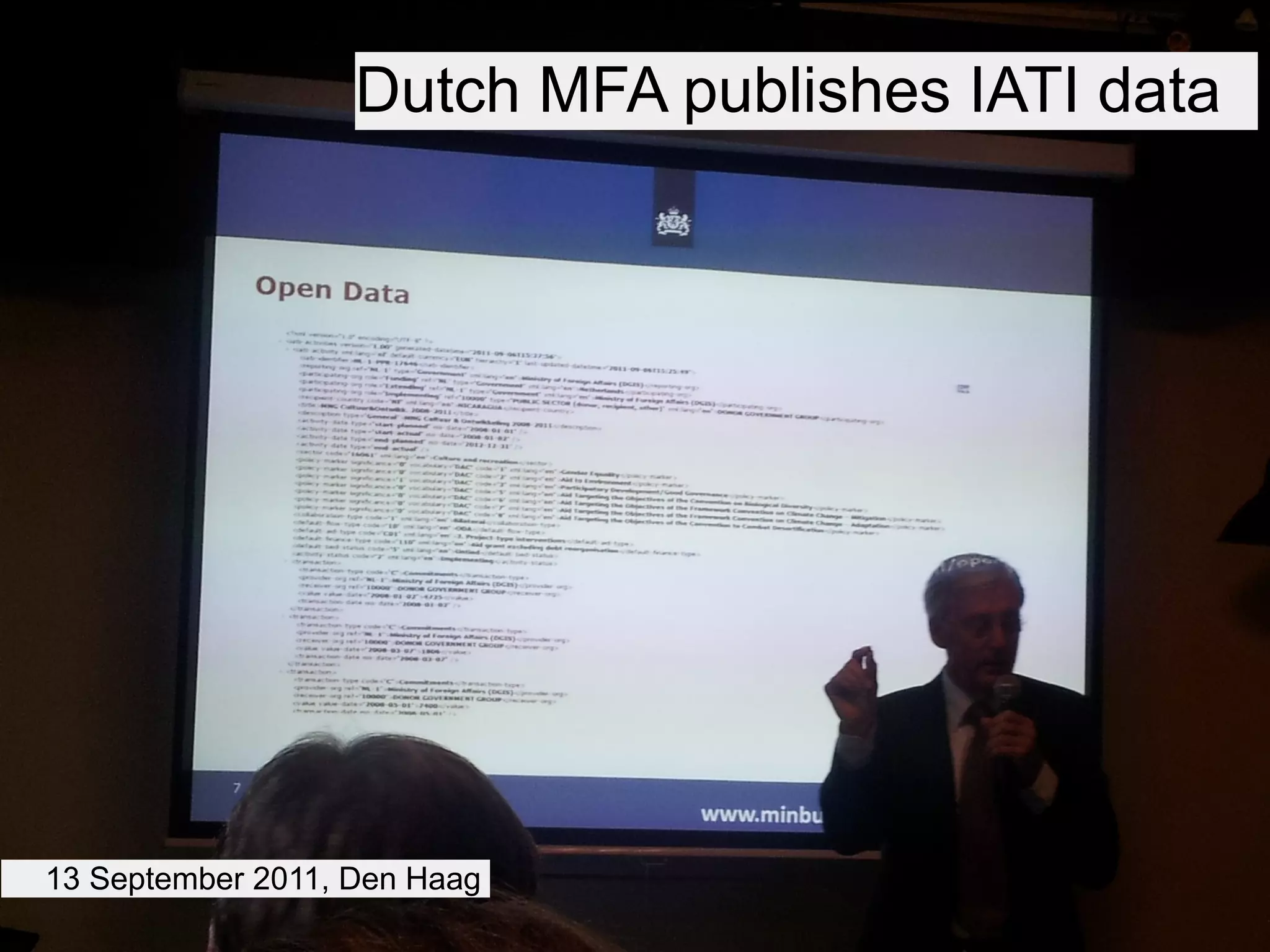
Dutch released in IATI IATI data
  Government data MFA publishes


13 September 2011, Den Haag
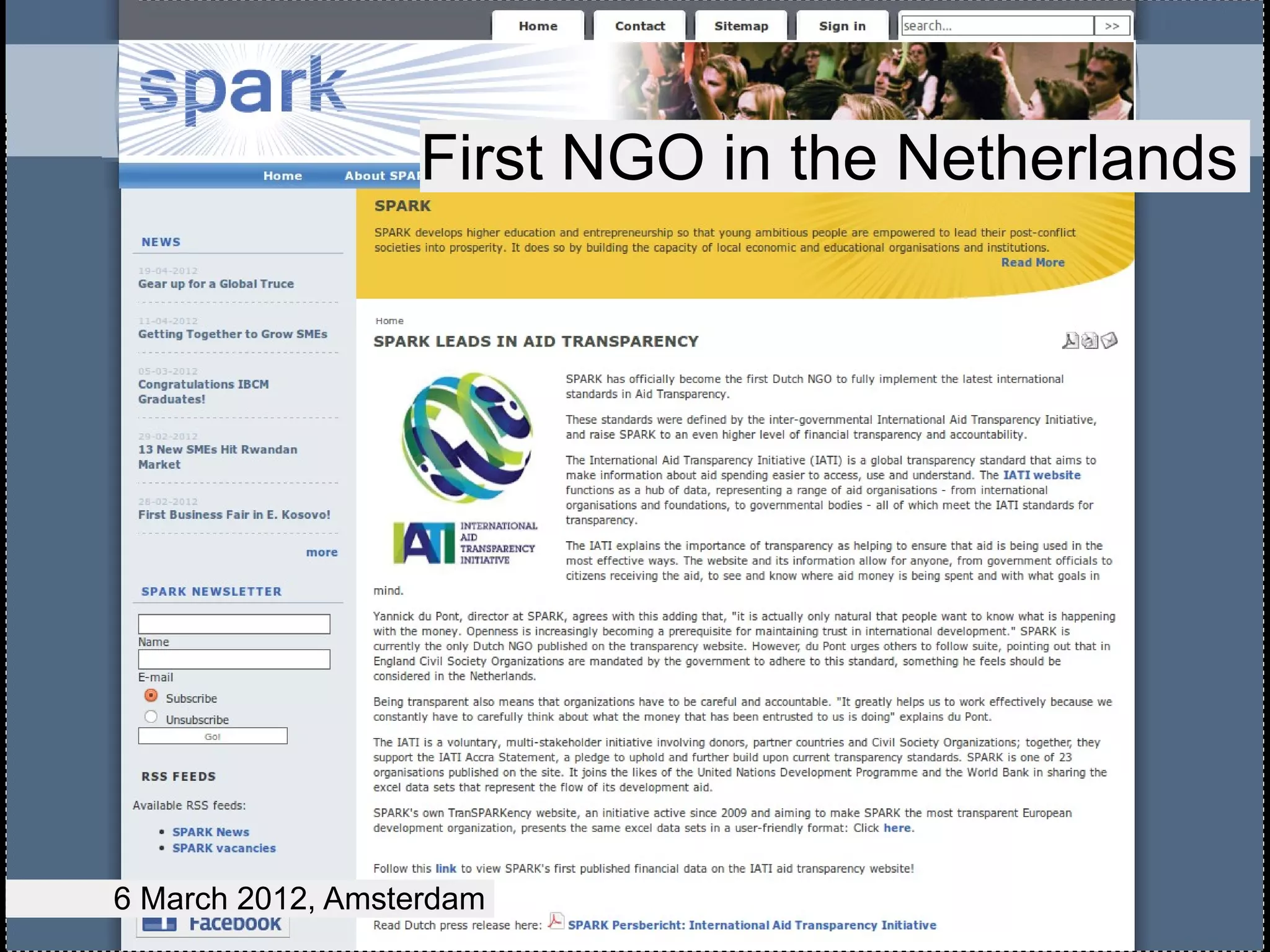
First NGO in the Netherlands


6 March 2012, Amsterdam
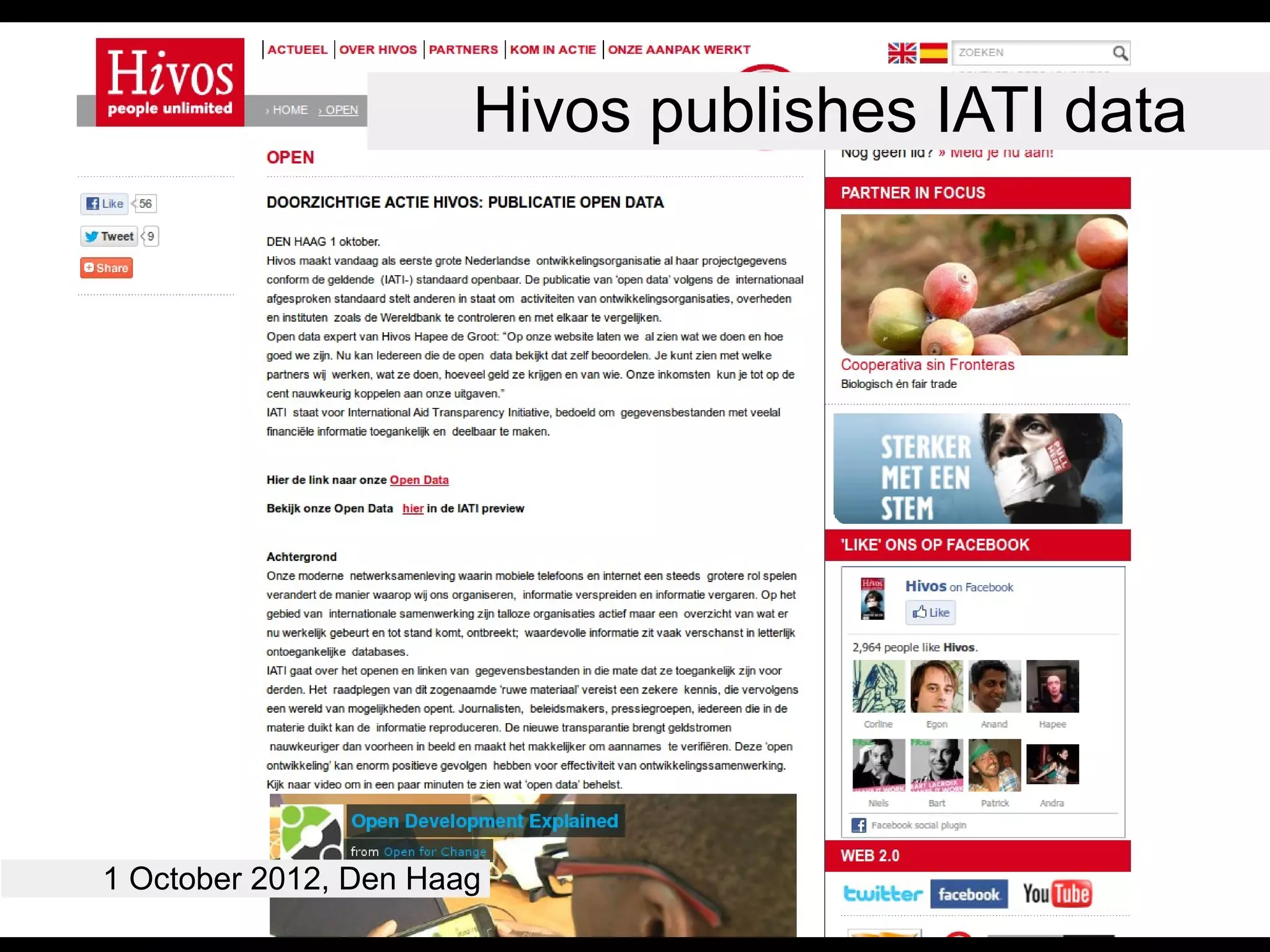
Hivos publishes IATI data


1 October 2012, Den Haag
Ambition

Agenda on the Implementation of the IATI
Standard by Dutch NGOs working in
International Development
 ●   Istanbul Principles for CSO Development Effectiveness
 ●   Busan Partnership for Effective Development
 ●   Commitment to IATI, but in line with CSO principles
Busan partnership for Effective
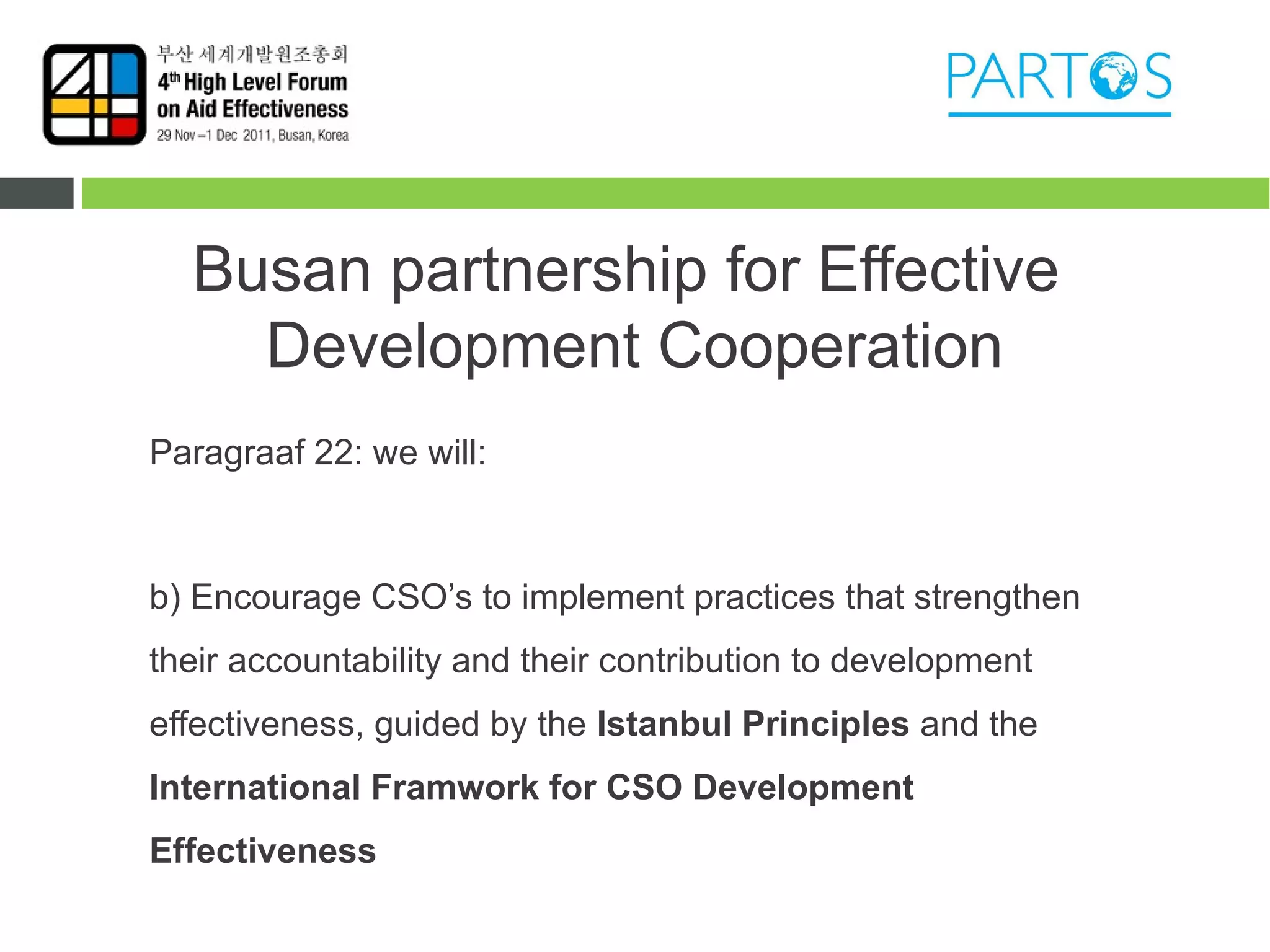
    Development Cooperation
Paragraaf 22: we will:


b) Encourage CSO’s to implement practices that strengthen
their accountability and their contribution to development
effectiveness, guided by the Istanbul Principles and the
International Framwork for CSO Development
Effectiveness
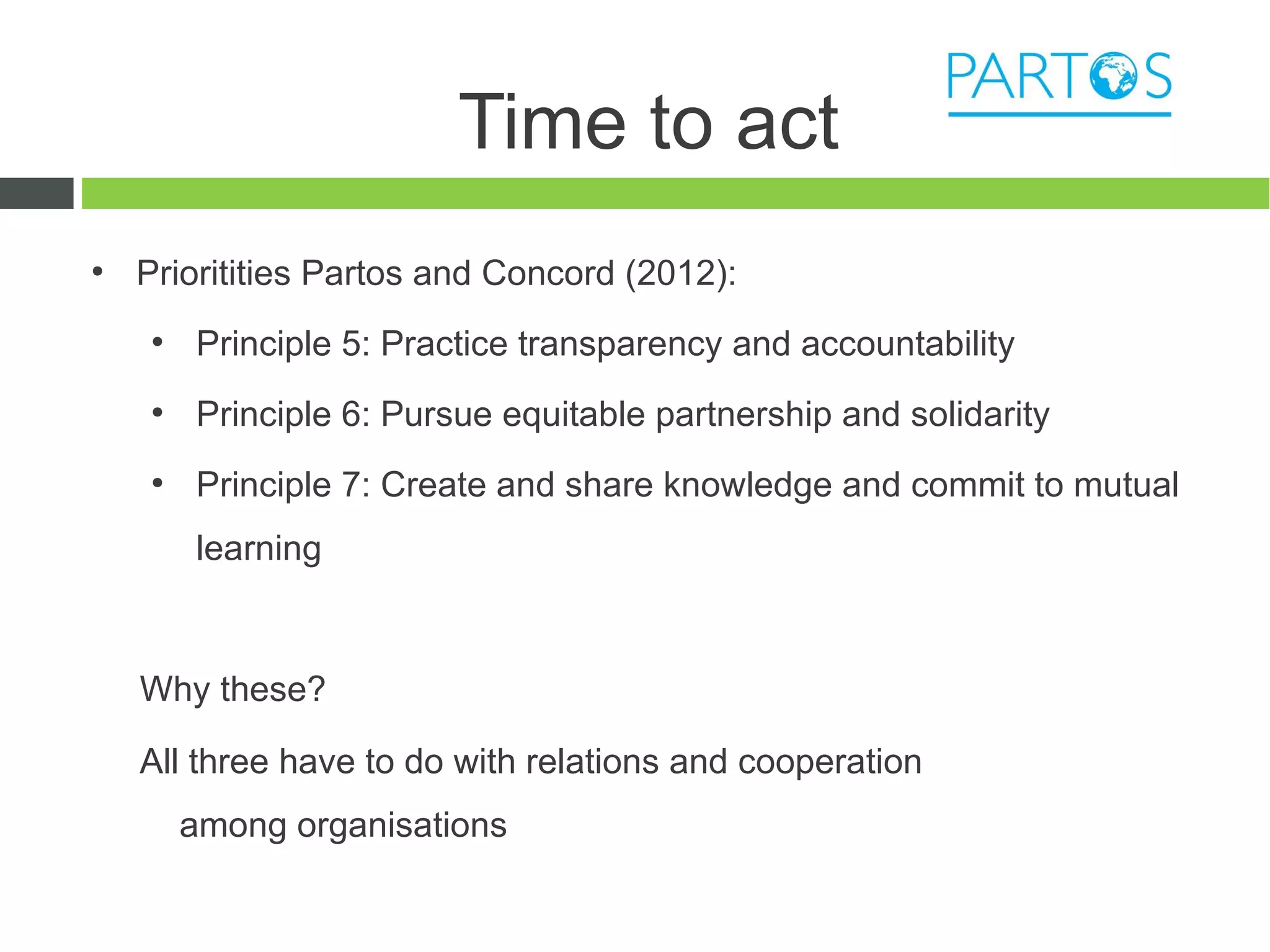
Time to act
●
    Prioritities Partos and Concord (2012):
    ●
        Principle 5: Practice transparency and accountability
    ●
        Principle 6: Pursue equitable partnership and solidarity
    ●
        Principle 7: Create and share knowledge and commit to mutual
        learning


    Why these?

    All three have to do with relations and cooperation
        among organisations
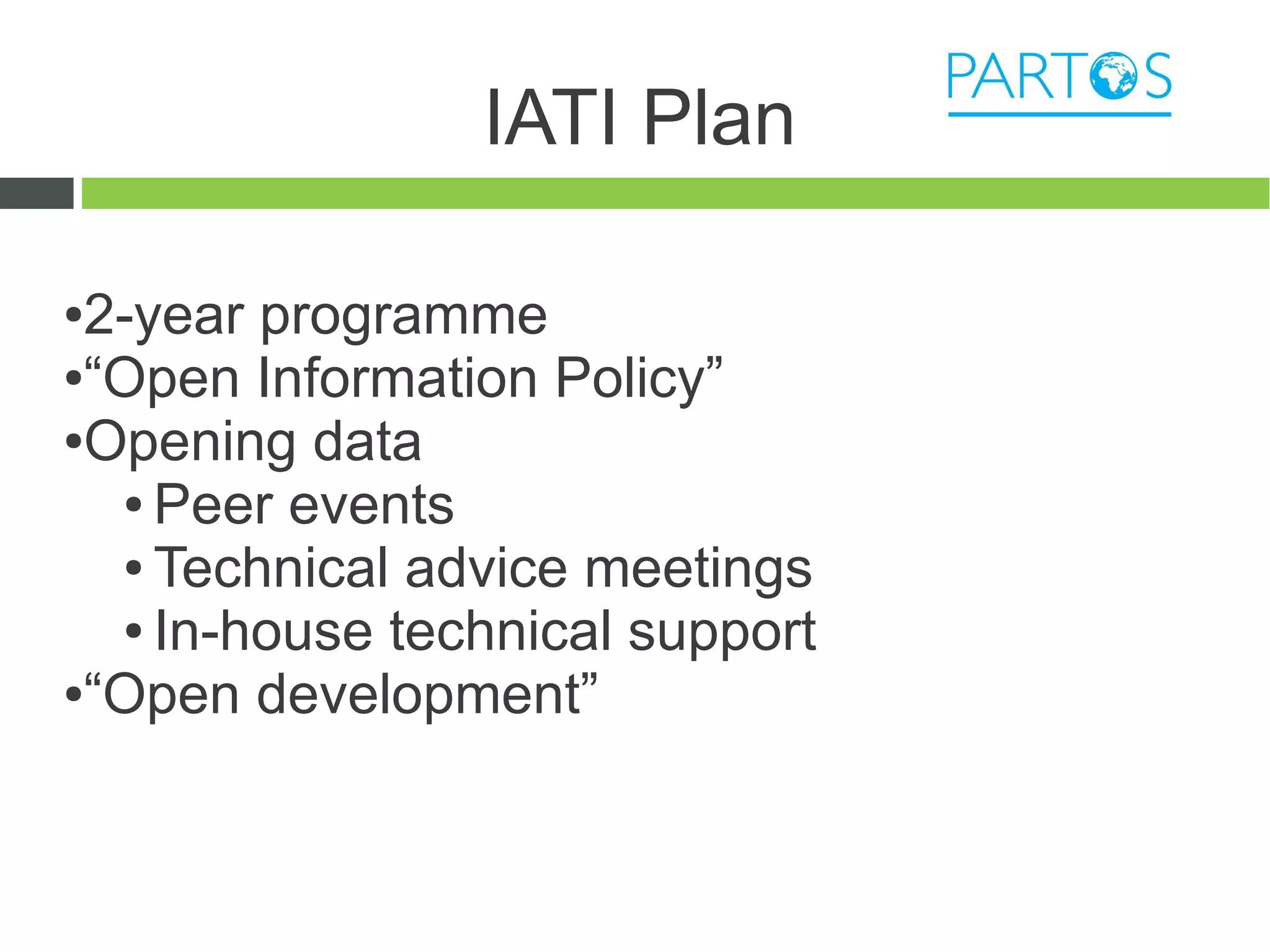
IATI Plan

●2-year programme
●“Open Information Policy”

●Opening data

  ● Peer events

  ● Technical advice meetings

  ● In-house technical support

●“Open development”

Open Data and IATI

  • 2.
  • 3.
    Analogue reality Knowledge - Networks - Resources Communities - Projects - Politics
  • 4.
    Analogue reality Knowledge - Networks - Resources NGO Communities - Projects - Politics
  • 5.
    Digital reality Knowledge - Networks - Resources NGO Communities - Projects - Politics
  • 6.
    Sustainability Þ Reduce - Re-use - Recycle
  • 7.
  • 8.
  • 9.
  • 10.
  • 11.
  • 22.
    Bjorkman and Svensson(2007). ‘Power to the People: Evidence from a Randomized Field Experiment of a Community-Based Monitoring Project in Uganda’ Clinics got cleaner Fewer drugs stolen 40-50% more children vaccinated 33% fewer children died under the age of five
  • 24.
    Why open data? ● Enter data once, close to the source; then re-use, exchange, enhance ● Improves quality and accuracy; first in registration, next in decision-making ● Better insight in money flows, activities, plans, results, circumstances, impacts ● Allows for participation, mobilisation, and accountability
  • 25.
    #SmartAid Debate RenĂŠ Grotenhuis, director of Cordaid
  • 26.
    In the transitionof Cordaid towards a social enterprise, open data technology has had a place from the very beginning. We use the new IATI standard first of all as the basis for our “transparency application”. #SmartAid Debate René Grotenhuis, director of Cordaid
  • 35.
  • 39.
    A project inDFID’s project-level database
  • 40.
    The same DFIDproject in the IATI XML format
  • 46.
    More information? ● www.iatistandard.org ● www.bond.org.uk/transparency ● www.aidinfolabs.org ● Open for Change: Rolf Kleef – rolf@openforchange.info
  • 48.
    Dutch released inIATI IATI data Government data MFA publishes 13 September 2011, Den Haag
  • 49.
    First NGO inthe Netherlands 6 March 2012, Amsterdam
  • 50.
    Hivos publishes IATIdata 1 October 2012, Den Haag
  • 51.
    Ambition Agenda on theImplementation of the IATI Standard by Dutch NGOs working in International Development ● Istanbul Principles for CSO Development Effectiveness ● Busan Partnership for Effective Development ● Commitment to IATI, but in line with CSO principles

  • 52.
    Busan partnership forEffective Development Cooperation Paragraaf 22: we will: b) Encourage CSO’s to implement practices that strengthen their accountability and their contribution to development effectiveness, guided by the Istanbul Principles and the International Framwork for CSO Development Effectiveness
  • 53.
    Time to act ● Prioritities Partos and Concord (2012): ● Principle 5: Practice transparency and accountability ● Principle 6: Pursue equitable partnership and solidarity ● Principle 7: Create and share knowledge and commit to mutual learning Why these? All three have to do with relations and cooperation among organisations
  • 54.
    IATI Plan ●2-year programme ●“OpenInformation Policy” ●Opening data ● Peer events ● Technical advice meetings ● In-house technical support ●“Open development”