
“OPEN & SOCIAL INNOVATION -
KNOWLEDGE CREATION IN THIRD PLACES”
David VALLAT
(Université Lyon 1 – TRIANGLE UMR CNRS 5206 – ENS de Lyon)
david.vallat@univ-lyon1.fr / @DavidVALLAT
https://halshs.archives-ouvertes.fr/halshs-01512929
“Open & Social Innovation - Knowledge Creation in Practice”
Roundtable
Saturday 23 June - 10:45am - 12:15pm
Imadegawa Campus: Ryoshinkan Building RY422
NETWORK F: Knowledge, Technology, and Innovation
niversité Lyon 1
Associated Entries
David Vallat
Session
eatured Panel - Author Meets Critics: "Capital without Borders: Wealth Managers and the One Percent" by Brooke
Harrington (Harvard University Press, 2016)
eatured Panels & Speakers
Thursday, June 29, 2017
10:45 AM - 12:15 PM
Rockefeller - AMPHI C
Session
eatured Panel - Author Meets Critics: "L'ordre de la dette: Enquête sur les infortunes de l’État et la prospérité du
marché" by Benjamin Lemoine (La Découverte, 2016)
SASE 30th Annual Conference
June 2018 – Doshisha University - Kyoto
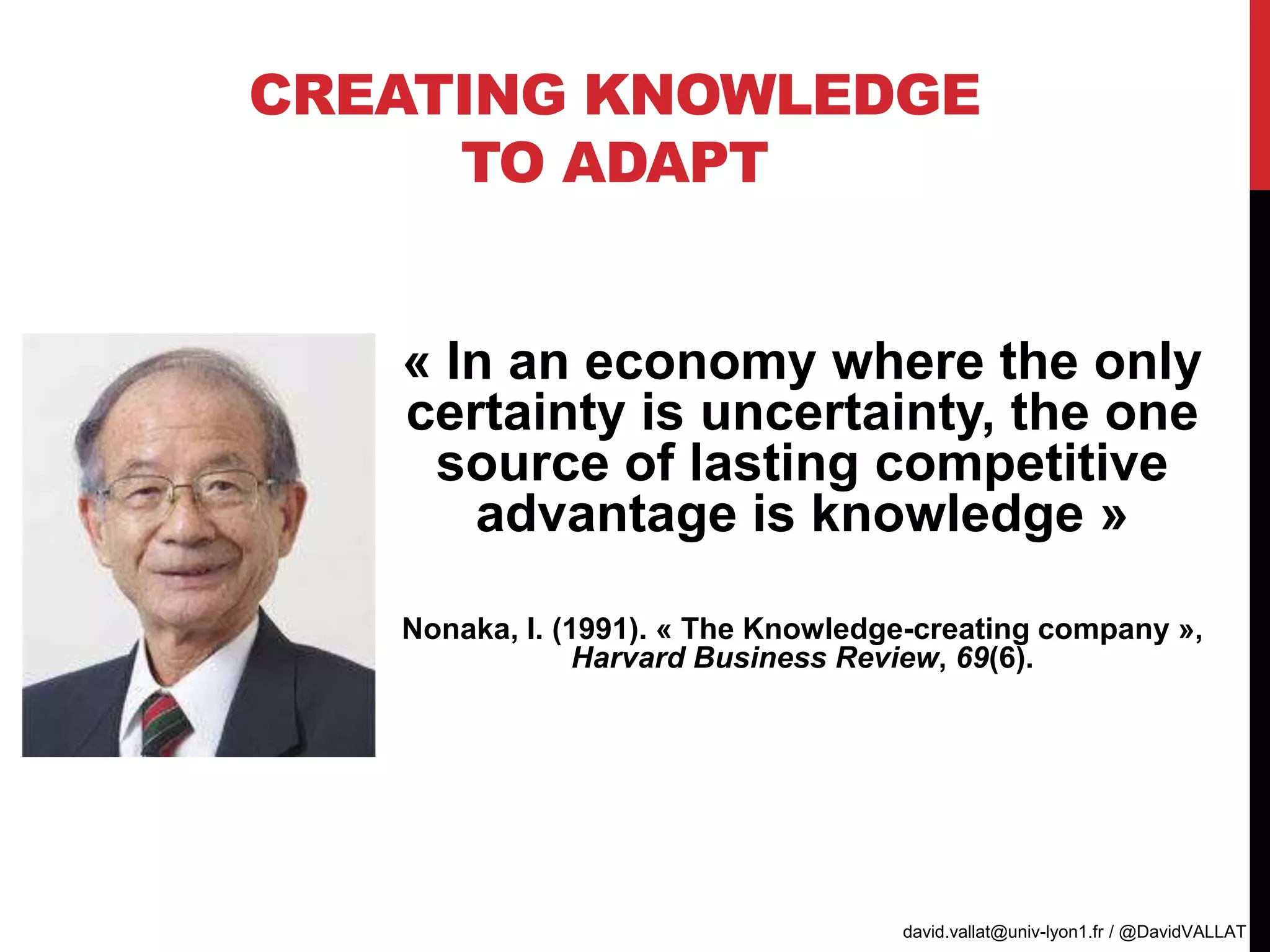
CREATING KNOWLEDGE
TO ADAPT
« In an economy where the only
certainty is uncertainty, the one
source of lasting competitive
advantage is knowledge »
Nonaka, I. (1991). « The Knowledge-creating company »,
Harvard Business Review, 69(6).
david.vallat@univ-lyon1.fr / @DavidVALLAT
FROM OPEN INNOVATION TO
DEMOCRATIZING INNOVATION
• ‘‘The presence of many smart people outside
your own company is not simply a problem for you
or a fact of life to be regretted. It poses an
opportunity for you’’.
Chesbrough H.W. (2003), Open Innovation: The New Imperative for Creating and Profiting from
Technology, Harvard Business Press.
• ‘‘Users’ ability to innovate is improving radically
and rapidly as a result of the steadily improving
quality of computer software and hardware,
improved access to easy-to-use tools and
components for innovation, and access to a
steadily richer innovation commons’’.
Hippel E. von (2005), Democratizing Innovation, MIT Press.
david.vallat@univ-lyon1.fr / @DavidVALLAT
3
AIMS 2017
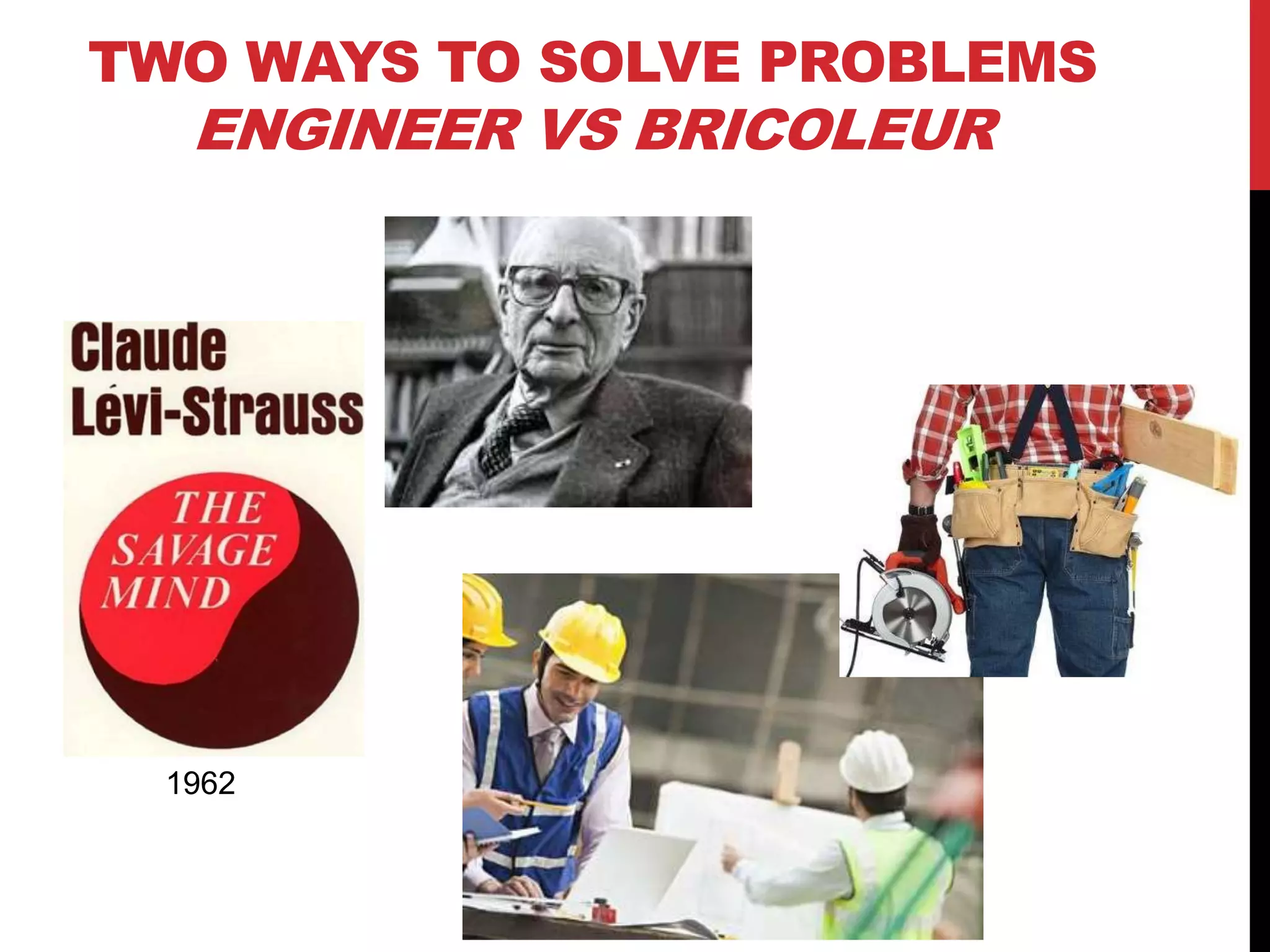
TWO WAYS TO SOLVE PROBLEMS
ENGINEER VS BRICOLEUR
1962
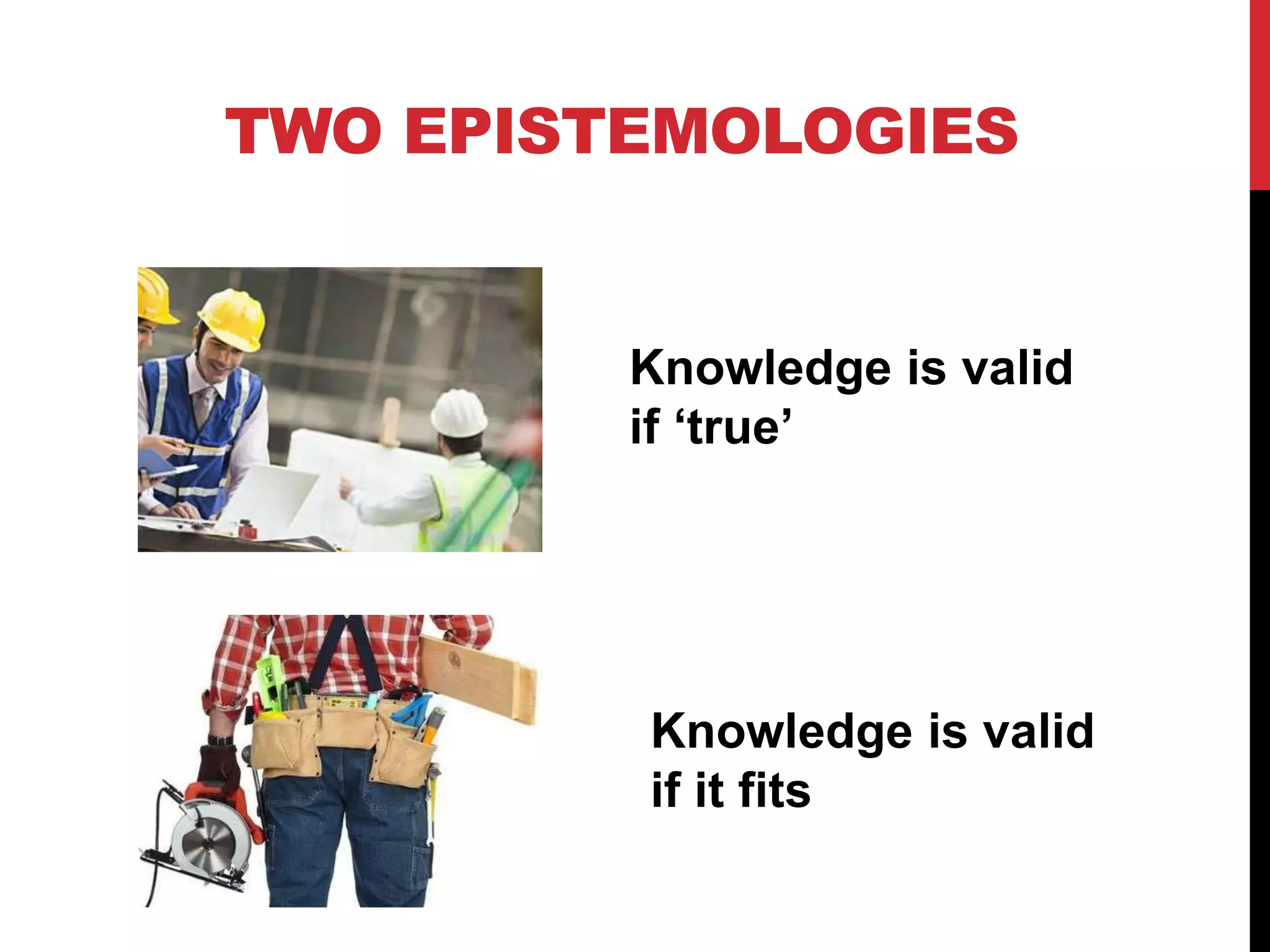
TWO EPISTEMOLOGIES
Knowledge is valid
if ‘true’
Knowledge is valid
if it fits
THIRD PLACE
AND THE SPIRIT OF
‘BRICOLAGE’
david.vallat@univ-lyon1.fr
6
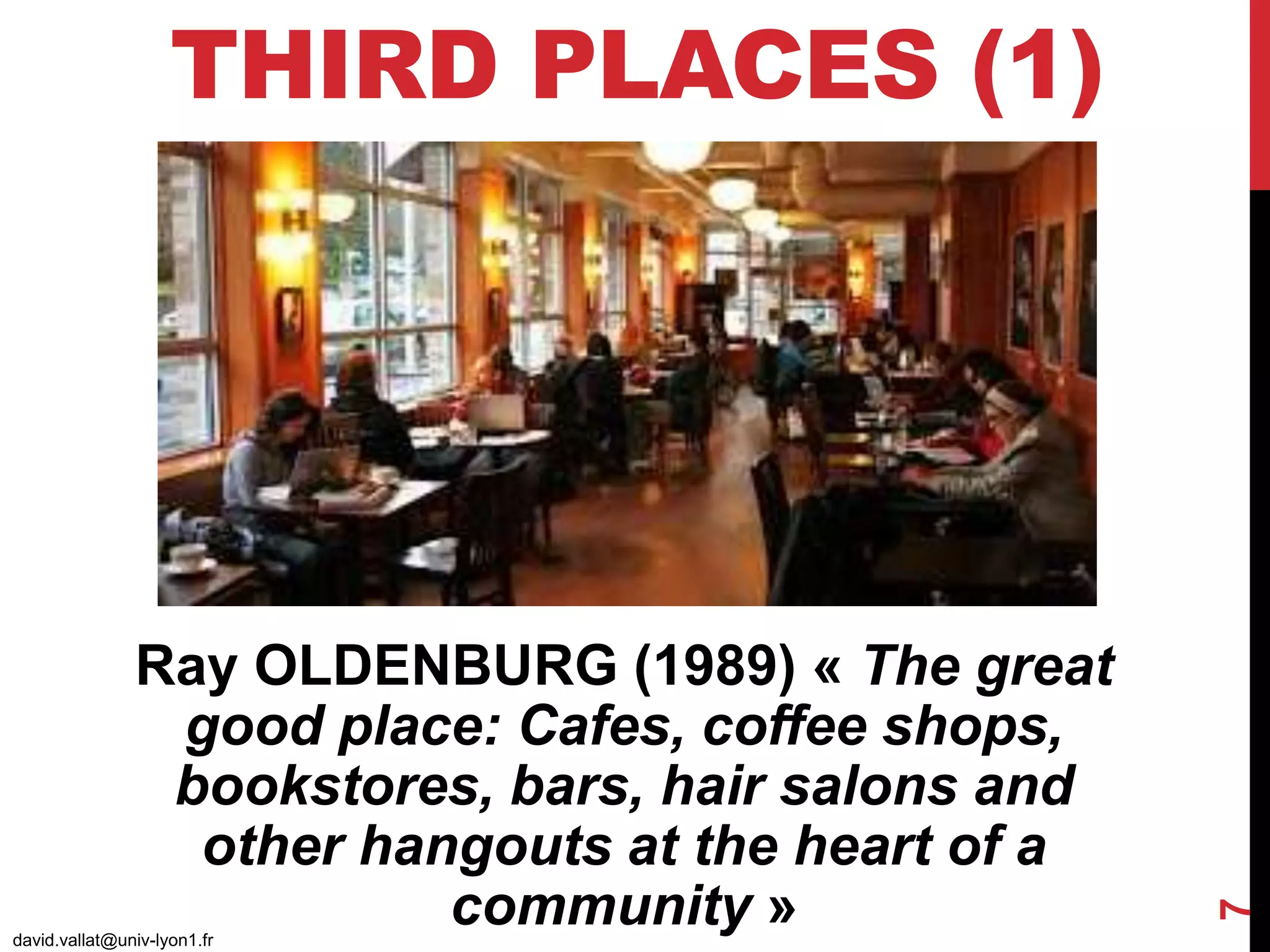
THIRD PLACES (1)
david.vallat@univ-lyon1.fr
7
Ray OLDENBURG (1989) « The great
good place: Cafes, coffee shops,
bookstores, bars, hair salons and
other hangouts at the heart of a
community »
THIRD PLACES (2)
david.vallat@univ-lyon1.fr
8
"[... ] daily life, in order to be relaxed
and fulfilling, must find its balance in
three realms of experience. One is
domestic, a second is gainful or
productive, and the third is inclusively
sociable, offering both the basis of
community and the celebration of it"
(p. 14).
THIRD PLACES (3)
david.vallat@univ-lyon1.fr
9
A Neutral Ground
• "In order for the city and its neighborhoods to
offer the rich and varied association that is their
promise and potential, there must be neutral
ground upon which people may gather". (p. 22).
• "A place that is a leveler is, by its nature, an
inclusive place" (p. 24).
• "Neutral ground provides the place, and leveling
sets the stage for the cardinal an sustaining
activity of third places everywhere. That activity
is conversation" (p. 26).
THIRD PLACES (4)
david.vallat@univ-lyon1.fr
10
The Regulars
• "The third place is just so much space unless the right people are
there to make it come alive, and they are the regulars" (p. 33).
• "Every regular was once a newcomer, and the acceptance of
newcomers is essential to the sustained vitality of the third place"
(p. 34).
• "Since public life in America is relatively devoid of those connecting
rituals that in other cultures serve to ensure the introductions of
strangers, the order of welcome is doubly important" (p. 35).
The Mood is Playful
• "Whether pronounced or low key, however, the playful spirit is of
utmost importance. Here joy and acceptance reign over anxiety and
alienation" (p. 38).
A Home Away From Home
• "Though a radically different kind of setting from the home, the third
place is remarkably similar to a good home in the psychological
comfort and support that it extends" (p. 42).
THIRD PLACES 2.0
david.vallat@univ-lyon1.fr
11
12
LEARNING FROM
THIRD PLACES 2.0
New work practices
New learning practices
New knowledge creation practices
Open and distributed innovation
…
Because of a new culture.
13
‘‘2.0’’
Analogy with ‘Web 2.0’
 Content producer
 Community maker
 Knowledge worker
(Collaboration)
"MAVERICK" COMMUNITIES
‘‘This process of development is inherently
innovative. "Maverick" communities of this
sort offer the core of a large organization a
means and a model to examine the potential of
alternative views of organizational activity
through spontaneously occurring experiments
that are simultaneously informed and checked
by experience’’. (Brown & Duguid, 1991)
Brown J.S. & Duguid P. (1991), "Organizational learning and communities-of-practice: toward a unified
view of working, learning, and innovation", Organization Science, vol. 2, n°1, p.p. 40–57.
david.vallat@univ-lyon1.fr / @DavidVALLAT
14
AIMS 2017
15
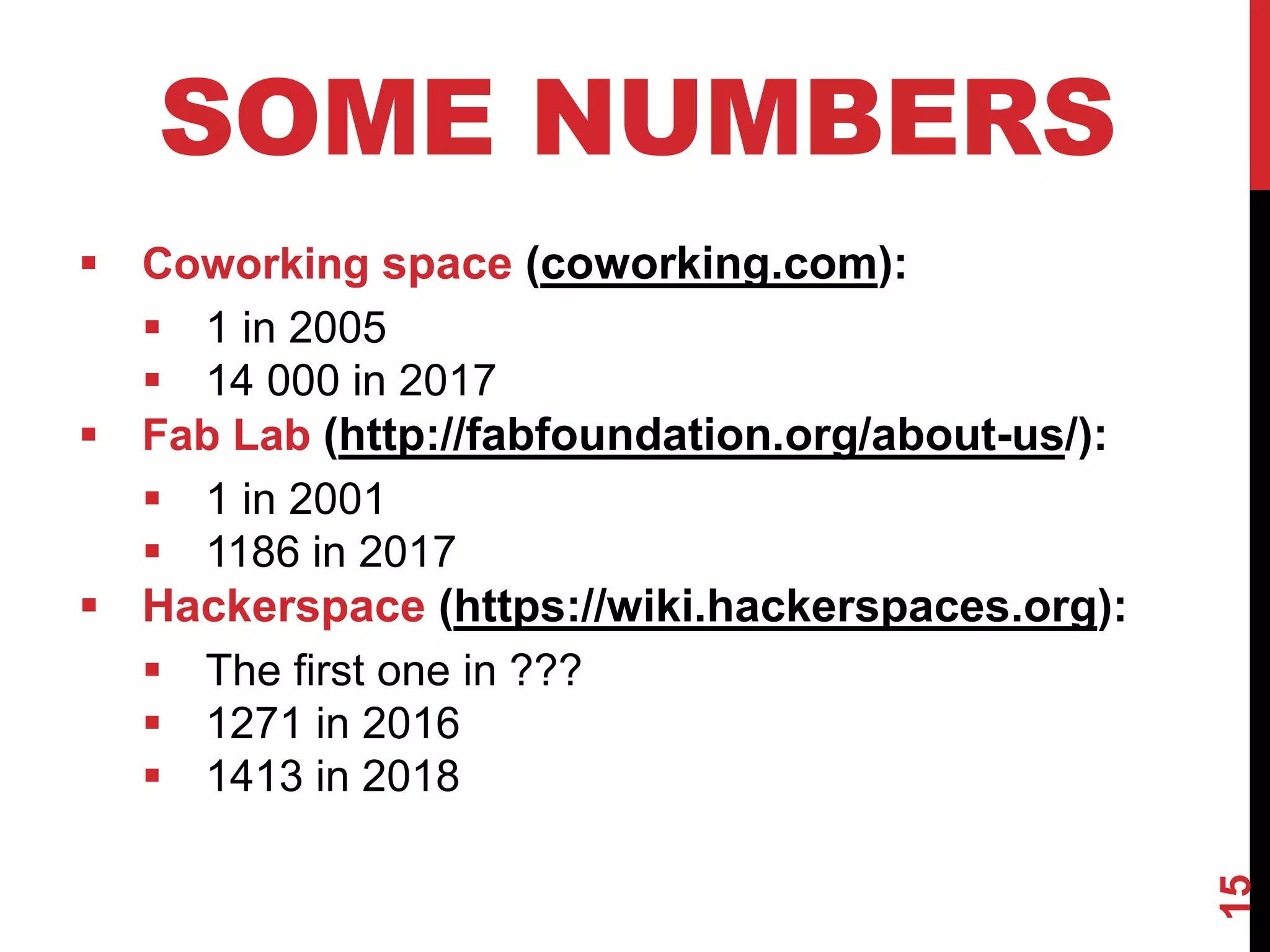
SOME NUMBERS
 Coworking space (coworking.com):
 1 in 2005
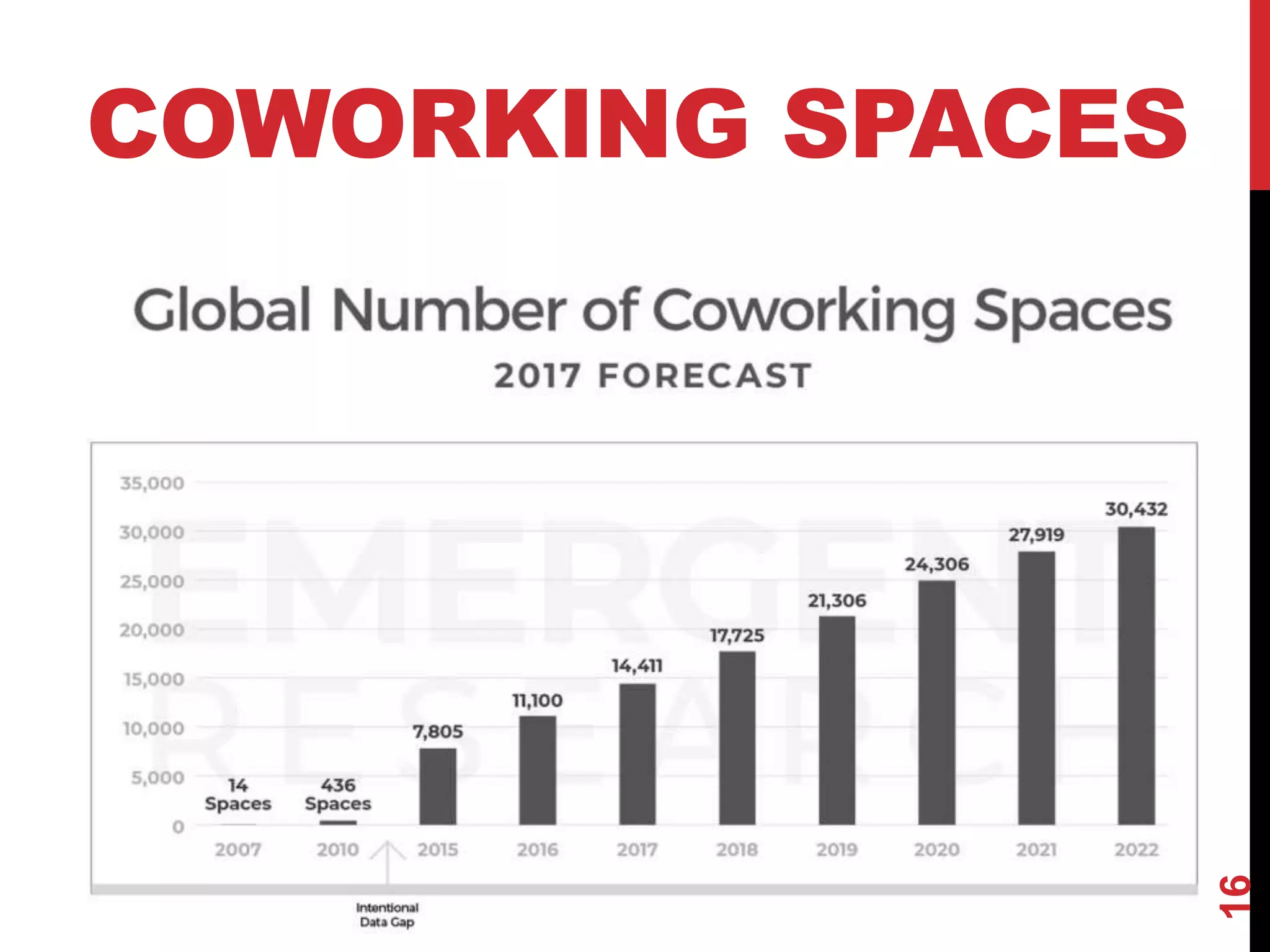
 14 000 in 2017
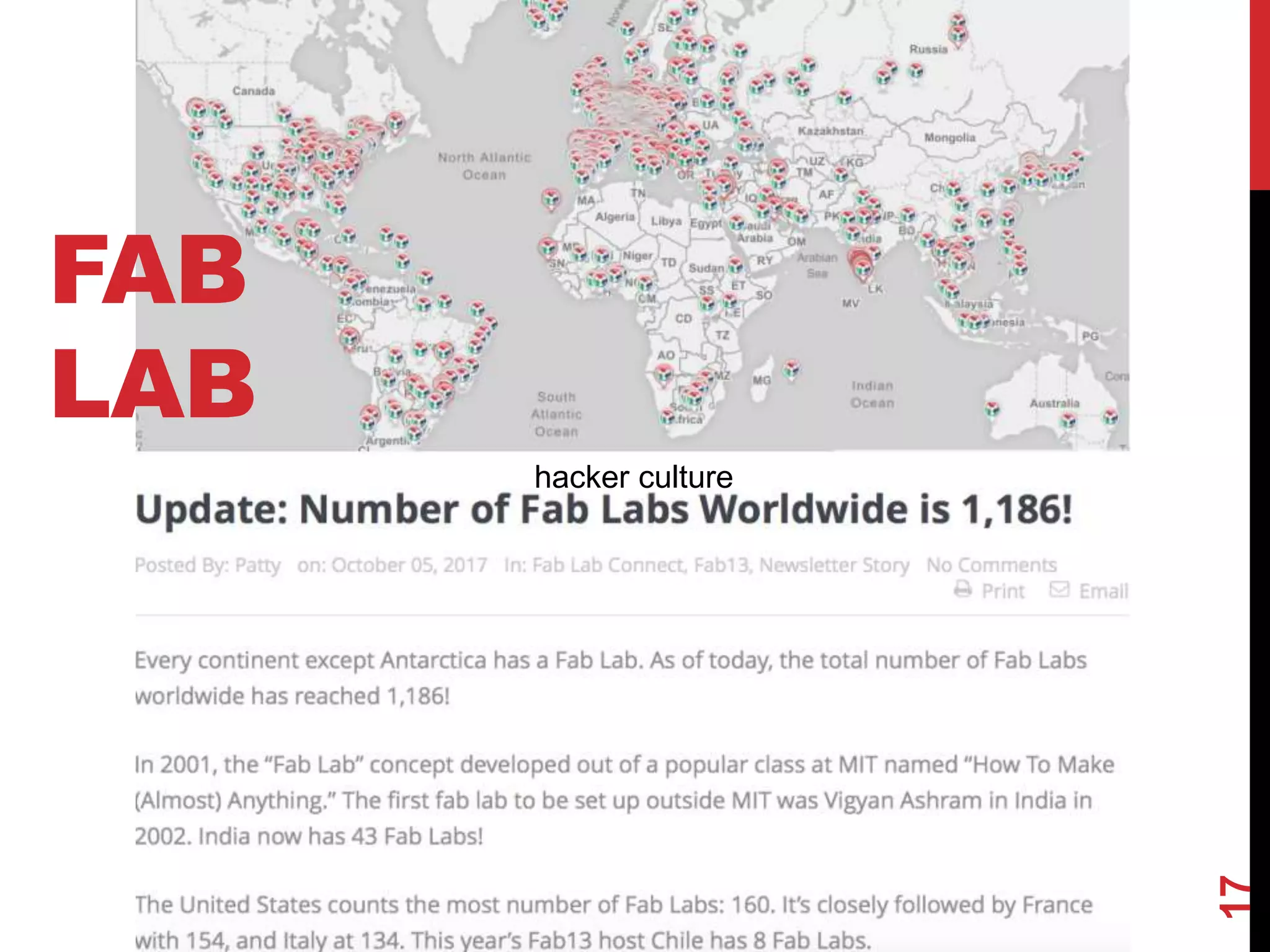
 Fab Lab (http://fabfoundation.org/about-us/):
 1 in 2001
 1186 in 2017
 Hackerspace (https://wiki.hackerspaces.org):
 The first one in ???
 1271 in 2016
 1413 in 2018
16
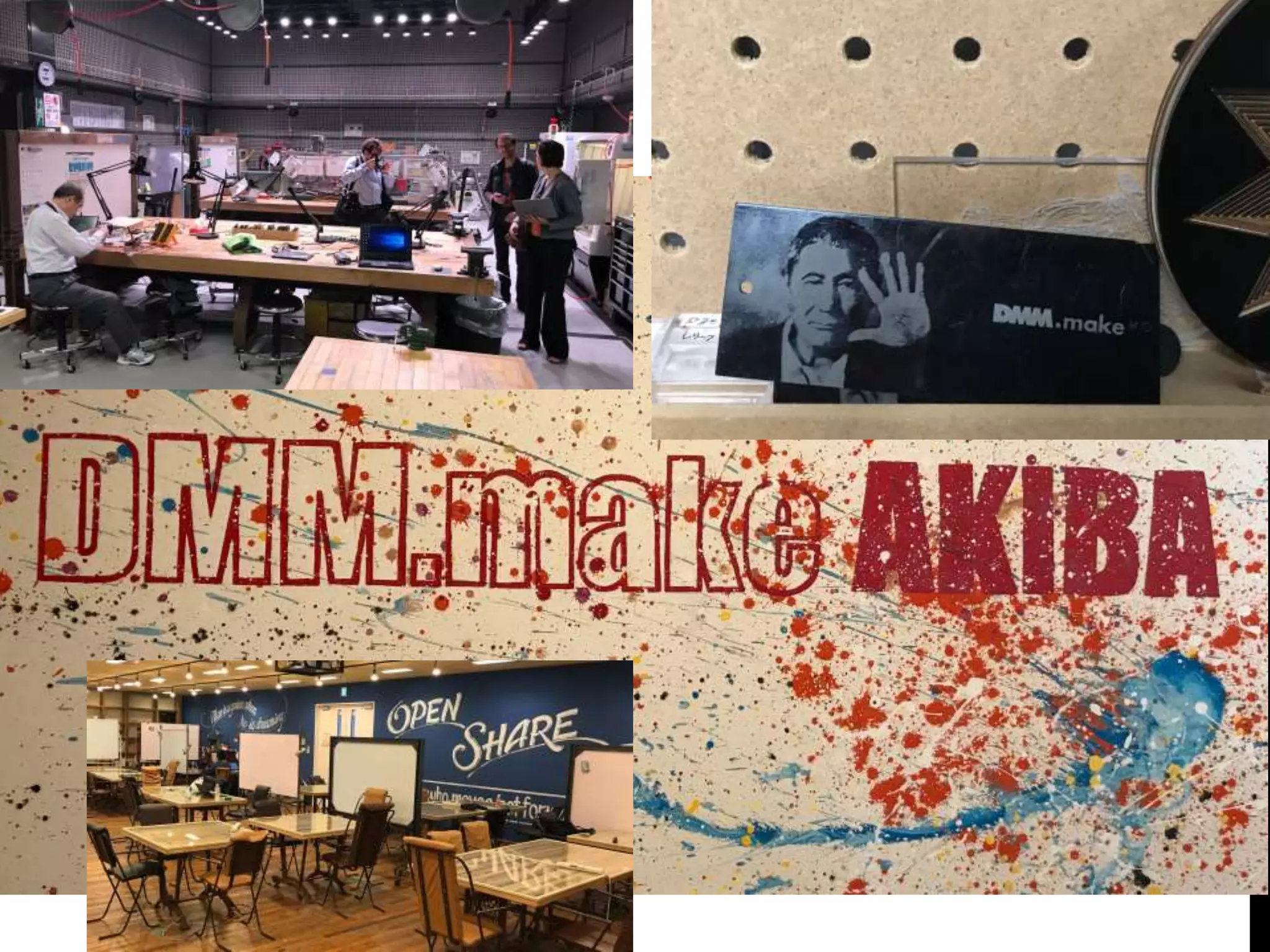
COWORKING SPACES
17
hacker culture
FAB
LAB
18
THE HACKER
CULTURE
‘‘[…] collaborators make technology
at the same time that they experiment
in the making of a social
commonwealth; it is there where the
hard work of freedom is practiced.’’
Coleman E.G. (2012), Coding Freedom: The Ethics and Aesthetics of Hacking,
Princeton University Press, p. 210.
HACKER PRAXIS
‘‘Hackers who are seen (and at times portray
themselves) as quintessentially individualistic
often live this individualism through
remarkably cooperative channels’’. (Coleman,
2012)
‘‘To manage the complexity of the
technological landscape, hackers turn to fellow
hackers (along with manuals, books, mailing
lists, documentation, and search engines) for
constant information, guidance, and help.’’
(Coleman, 2012)
david.vallat@univ-lyon1.fr / @DavidVALLAT
19
AIMS 2017
20
OPEN ACCESS
CULTURE
‘‘Open access is the name of the
revolutionary kind of access these
authors, unencumbered by a motive of
financial gain, are free to provide to their
readers. Open access (OA) literature is
digital, online, free of charge, and free of
most copyright and licensing
restrictions’’. (Suber, 2012, p. 4)
Suber P. (2012), Open Access, MIT Press.
21
FAB LAB CHARTER (MIT)
What is a fab lab?
• Fab labs are a global network of local labs, enabling invention by providing access to tools
for digital fabrication
What's in a fab lab?
• Fab labs share an evolving inventory of core capabilities to make (almost) anything,
allowing people and projects to be shared
What does the fab lab network provide?
• Operational, educational, technical, financial, and logistical assistance beyond what's
available within one lab
Who can use a fab lab?
• Fab labs are available as a community resource, offering open access for individuals as
well as scheduled access for programs
What are your responsibilities?
• safety: not hurting people or machines
• operations: assisting with cleaning, maintaining, and improving the lab
• knowledge: contributing to documentation and instruction
Who owns fab lab inventions?
• Designs and processes developed in fab labs can be protected and sold however an
inventor chooses, but should remain available for individuals to use and learn from
How can businesses use a fab lab?
• Commercial activities can be prototyped and incubated in a fab lab, but they must not
conflict with other uses, they should grow beyond rather than within the lab, and they are
expected to benefit the inventors, labs, and networks that contribute to their success
23
WHAT CAN WE LEARN? (1)
Producing = Sensemaking
• Aristotelian Philosophy: PRAXIS vs POIESIS
• POIESIS: activity to produce something
• PRAXIS: activity engaged for itself (to improve oneself) =>
‘bricolage’ / hacker culture
Community Building (collaboration)
• Inclusive Philosophy (the ‘Commons’) / ‘inclusive label’ (MIT
Charter)
• Concierge / Community Manager
• Political agenda
• New Management Practicies
Open Innovation
• ‘Neutral Ground’
• Partnerships with Universities
• Third Place as middleground
24
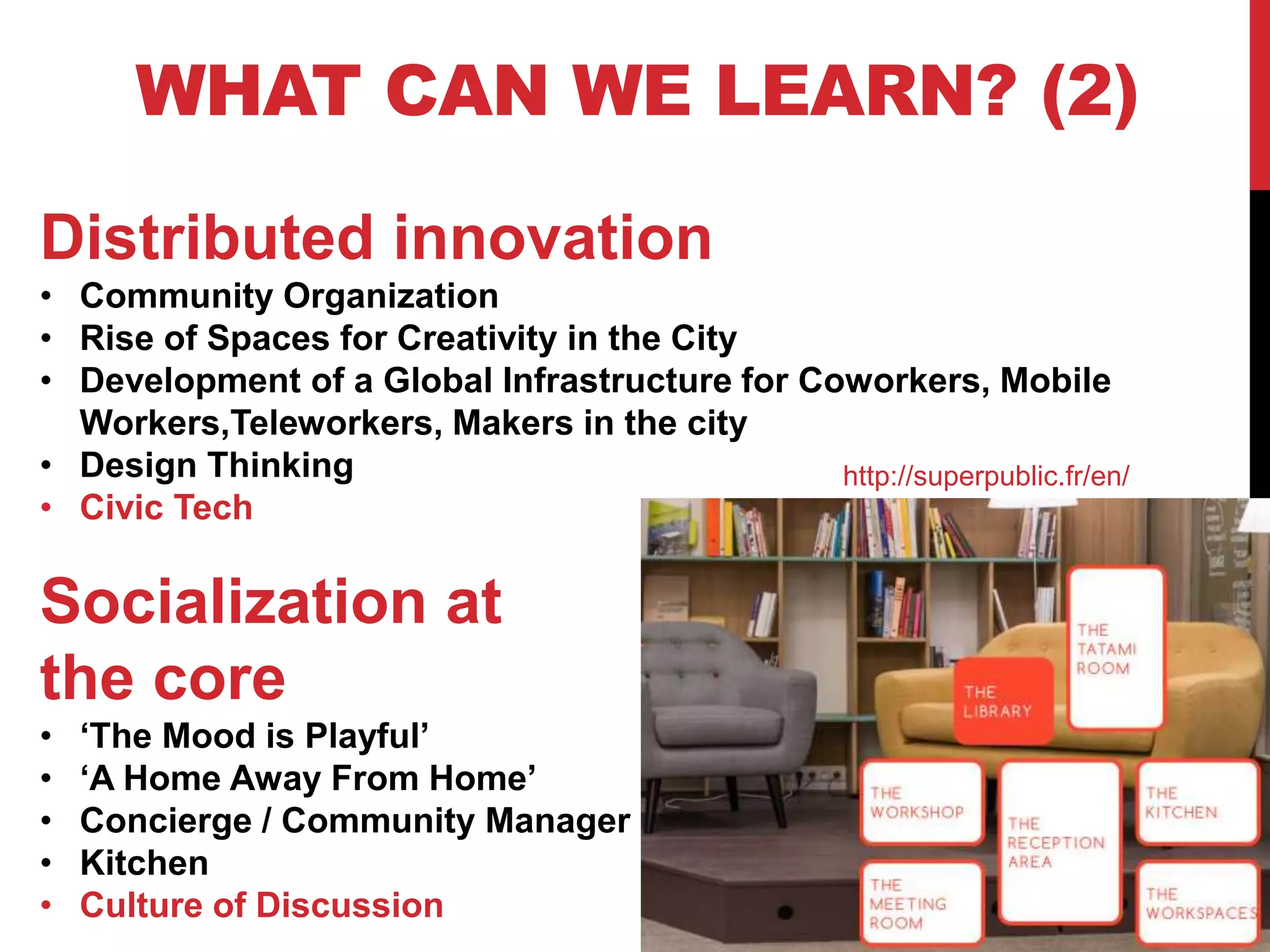
WHAT CAN WE LEARN? (2)
Distributed innovation
• Community Organization
• Rise of Spaces for Creativity in the City
• Development of a Global Infrastructure for Coworkers, Mobile
Workers,Teleworkers, Makers in the city
• Design Thinking
• Civic Tech
Socialization at
the core
• ‘The Mood is Playful’
• ‘A Home Away From Home’
• Concierge / Community Manager
• Kitchen
• Culture of Discussion
http://superpublic.fr/en/
25
WHAT CAN WE LEARN? (3)
New Place for Science and Creativity
• A Renewed Academic Presence in the City
• A More Distributed and ‘Experiential’ Logic (A New Epistemology
=> ‘bricolage’)
• New Methodologies (shared experience):
• Learning Expedition (knowledge co-creation)
• Documentation (collaborative documentation, live tweet, narration)
• Pedagogical Innovation (Simulation/Experience)
26
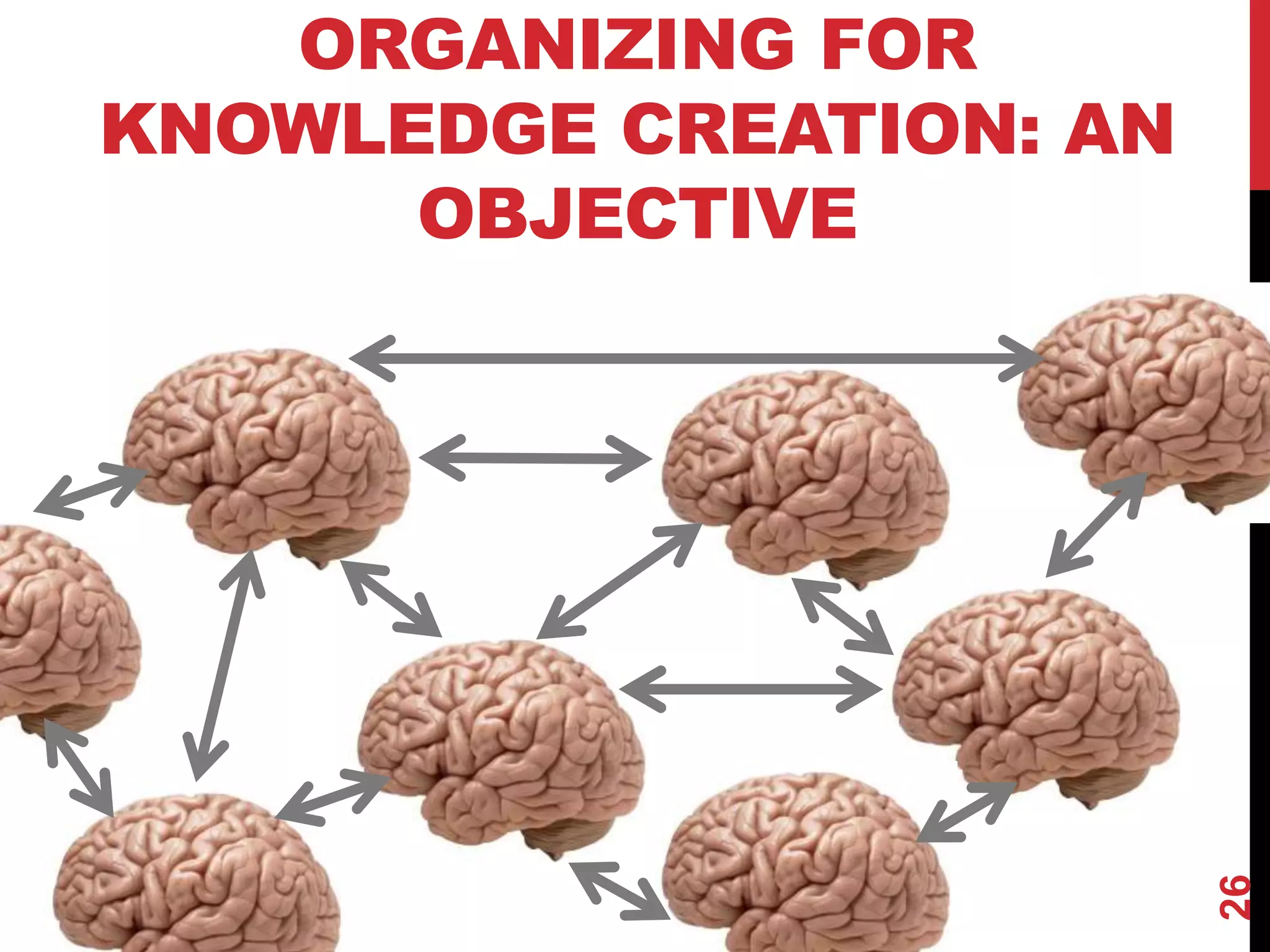
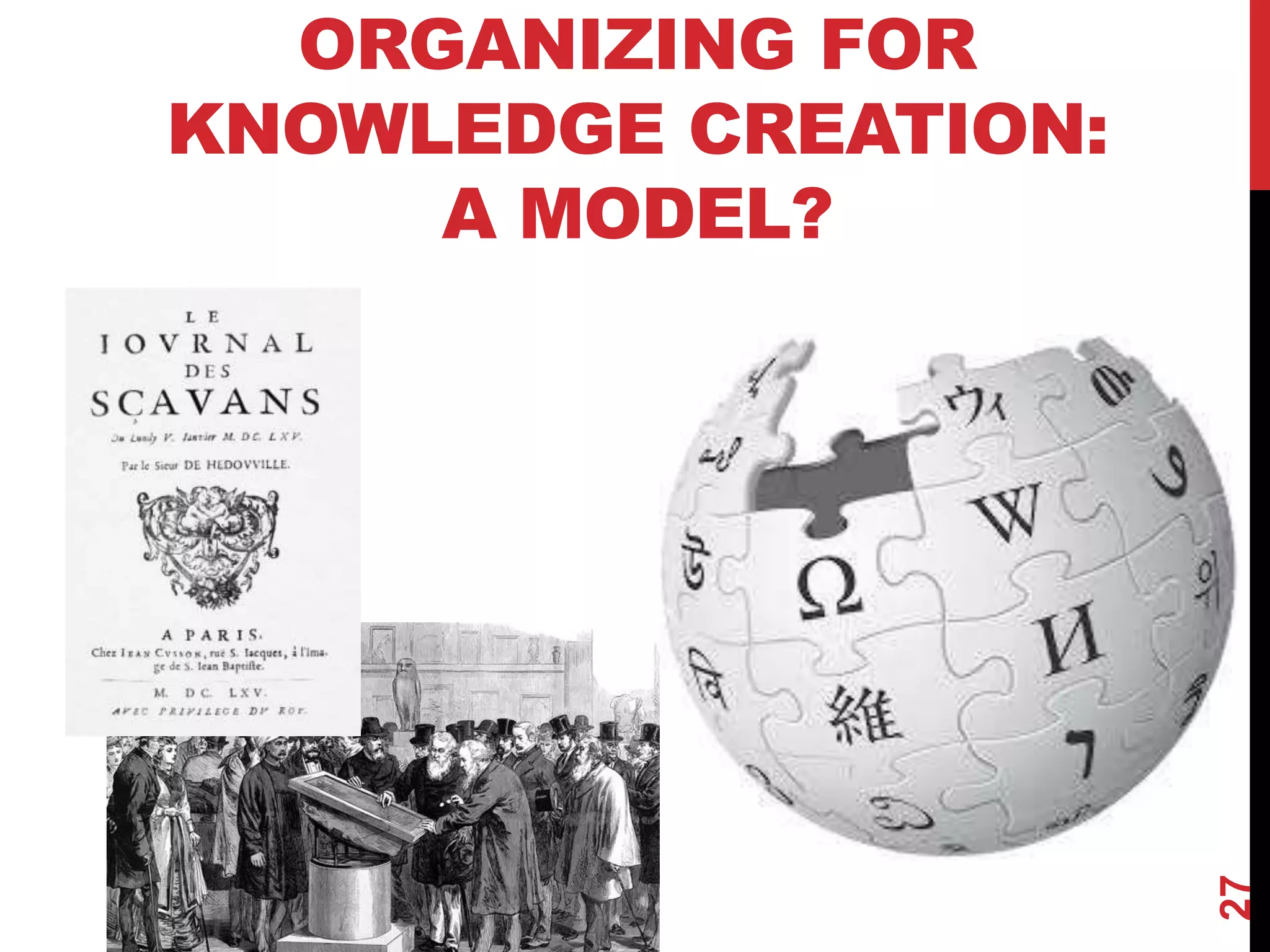
ORGANIZING FOR
KNOWLEDGE CREATION: AN
OBJECTIVE
27
ORGANIZING FOR
KNOWLEDGE CREATION:
A MODEL?
28
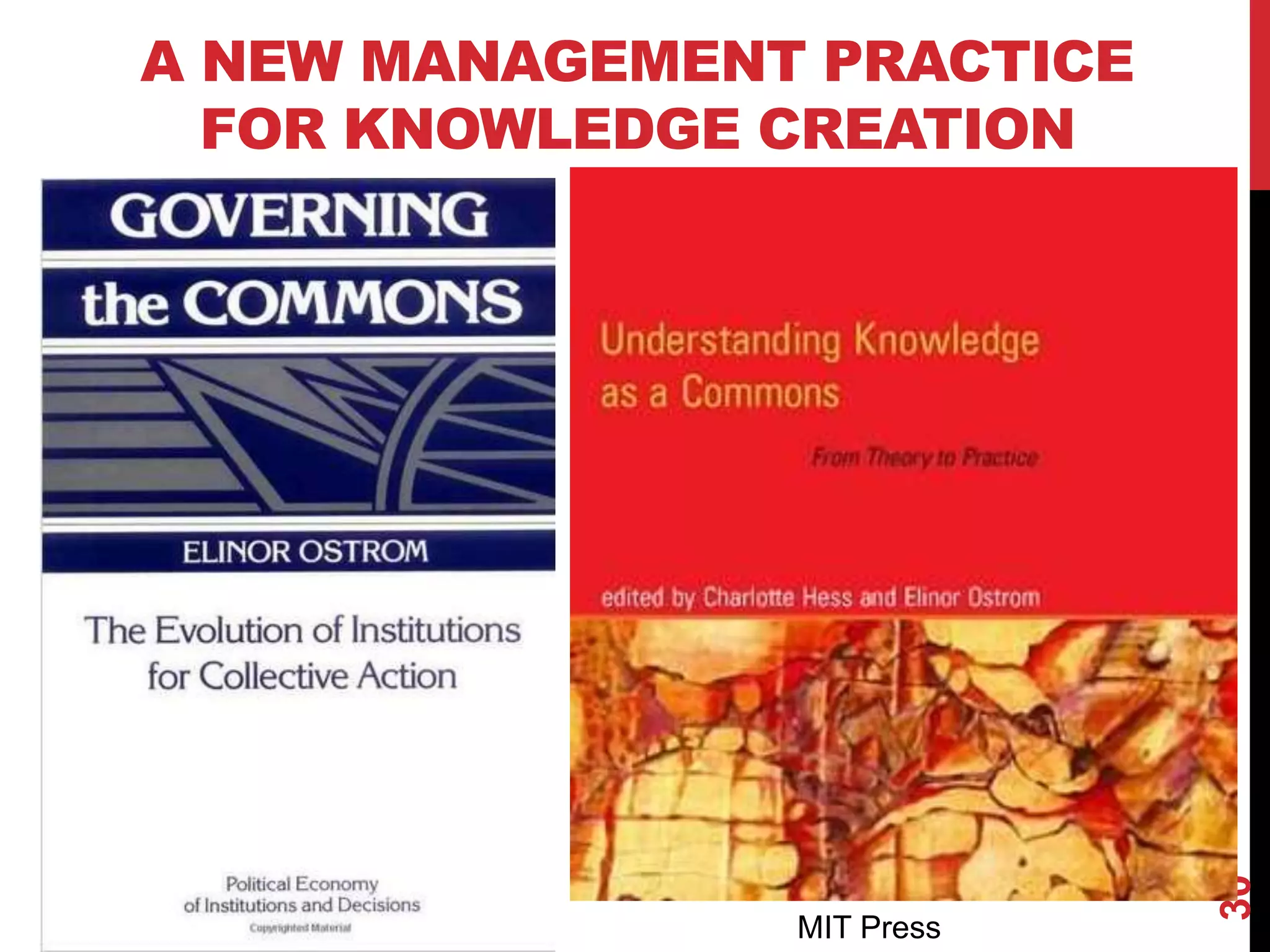
A NEW MANAGEMENT
PRACTICE: THE COMMONS
THE COMMONS
• ‘‘Commons is a general term that refers to a ressource shared by
a group of people. In a commons, the ressource can be small and
serve a tiny group (the family refrigerator), it can be a community-
level (sidewalks, playgrounds, libraries, and so on), or it can extend
to international and global levels (deep seas, the atmosphere, the
internet, and scientific knowledge). The commons can be well
bounded (a community park or library); transboundary (the Danube
River, migrating wildlife, the Internet); or without clear boundaries
(knowledge, the ozone layer).’’ Hess C. & Ostrom E. (2011), Understanding
Knowledge as a Commons: From Theory to Practice, MIT Press, pp. 4-5.
• The ressource becomes a commons when it is
managed.
david.vallat@univ-lyon1.fr
29
30
A NEW MANAGEMENT PRACTICE
FOR KNOWLEDGE CREATION
MIT Press

Open and social innovation - knowledge creation in third places

  • 1.
    “OPEN & SOCIALINNOVATION - KNOWLEDGE CREATION IN THIRD PLACES” David VALLAT (Université Lyon 1 – TRIANGLE UMR CNRS 5206 – ENS de Lyon) david.vallat@univ-lyon1.fr / @DavidVALLAT https://halshs.archives-ouvertes.fr/halshs-01512929 “Open & Social Innovation - Knowledge Creation in Practice” Roundtable Saturday 23 June - 10:45am - 12:15pm Imadegawa Campus: Ryoshinkan Building RY422 NETWORK F: Knowledge, Technology, and Innovation niversité Lyon 1 Associated Entries David Vallat Session eatured Panel - Author Meets Critics: "Capital without Borders: Wealth Managers and the One Percent" by Brooke Harrington (Harvard University Press, 2016) eatured Panels & Speakers Thursday, June 29, 2017 10:45 AM - 12:15 PM Rockefeller - AMPHI C Session eatured Panel - Author Meets Critics: "L'ordre de la dette: Enquête sur les infortunes de l’État et la prospérité du marché" by Benjamin Lemoine (La Découverte, 2016) SASE 30th Annual Conference June 2018 – Doshisha University - Kyoto
  • 2.
    CREATING KNOWLEDGE TO ADAPT «In an economy where the only certainty is uncertainty, the one source of lasting competitive advantage is knowledge » Nonaka, I. (1991). « The Knowledge-creating company », Harvard Business Review, 69(6). david.vallat@univ-lyon1.fr / @DavidVALLAT
  • 3.
    FROM OPEN INNOVATIONTO DEMOCRATIZING INNOVATION • ‘‘The presence of many smart people outside your own company is not simply a problem for you or a fact of life to be regretted. It poses an opportunity for you’’. Chesbrough H.W. (2003), Open Innovation: The New Imperative for Creating and Profiting from Technology, Harvard Business Press. • ‘‘Users’ ability to innovate is improving radically and rapidly as a result of the steadily improving quality of computer software and hardware, improved access to easy-to-use tools and components for innovation, and access to a steadily richer innovation commons’’. Hippel E. von (2005), Democratizing Innovation, MIT Press. david.vallat@univ-lyon1.fr / @DavidVALLAT 3 AIMS 2017
  • 4.
    TWO WAYS TOSOLVE PROBLEMS ENGINEER VS BRICOLEUR 1962
  • 5.
    TWO EPISTEMOLOGIES Knowledge isvalid if ‘true’ Knowledge is valid if it fits
  • 6.
    THIRD PLACE AND THESPIRIT OF ‘BRICOLAGE’ david.vallat@univ-lyon1.fr 6
  • 7.
    THIRD PLACES (1) david.vallat@univ-lyon1.fr 7 RayOLDENBURG (1989) « The great good place: Cafes, coffee shops, bookstores, bars, hair salons and other hangouts at the heart of a community »
  • 8.
    THIRD PLACES (2) david.vallat@univ-lyon1.fr 8 "[...] daily life, in order to be relaxed and fulfilling, must find its balance in three realms of experience. One is domestic, a second is gainful or productive, and the third is inclusively sociable, offering both the basis of community and the celebration of it" (p. 14).
  • 9.
    THIRD PLACES (3) david.vallat@univ-lyon1.fr 9 ANeutral Ground • "In order for the city and its neighborhoods to offer the rich and varied association that is their promise and potential, there must be neutral ground upon which people may gather". (p. 22). • "A place that is a leveler is, by its nature, an inclusive place" (p. 24). • "Neutral ground provides the place, and leveling sets the stage for the cardinal an sustaining activity of third places everywhere. That activity is conversation" (p. 26).
  • 10.
    THIRD PLACES (4) david.vallat@univ-lyon1.fr 10 TheRegulars • "The third place is just so much space unless the right people are there to make it come alive, and they are the regulars" (p. 33). • "Every regular was once a newcomer, and the acceptance of newcomers is essential to the sustained vitality of the third place" (p. 34). • "Since public life in America is relatively devoid of those connecting rituals that in other cultures serve to ensure the introductions of strangers, the order of welcome is doubly important" (p. 35). The Mood is Playful • "Whether pronounced or low key, however, the playful spirit is of utmost importance. Here joy and acceptance reign over anxiety and alienation" (p. 38). A Home Away From Home • "Though a radically different kind of setting from the home, the third place is remarkably similar to a good home in the psychological comfort and support that it extends" (p. 42).
  • 11.
  • 12.
    12 LEARNING FROM THIRD PLACES2.0 New work practices New learning practices New knowledge creation practices Open and distributed innovation … Because of a new culture.
  • 13.
    13 ‘‘2.0’’ Analogy with ‘Web2.0’  Content producer  Community maker  Knowledge worker (Collaboration)
  • 14.
    "MAVERICK" COMMUNITIES ‘‘This processof development is inherently innovative. "Maverick" communities of this sort offer the core of a large organization a means and a model to examine the potential of alternative views of organizational activity through spontaneously occurring experiments that are simultaneously informed and checked by experience’’. (Brown & Duguid, 1991) Brown J.S. & Duguid P. (1991), "Organizational learning and communities-of-practice: toward a unified view of working, learning, and innovation", Organization Science, vol. 2, n°1, p.p. 40–57. david.vallat@univ-lyon1.fr / @DavidVALLAT 14 AIMS 2017
  • 15.
    15 SOME NUMBERS  Coworkingspace (coworking.com):  1 in 2005  14 000 in 2017  Fab Lab (http://fabfoundation.org/about-us/):  1 in 2001  1186 in 2017  Hackerspace (https://wiki.hackerspaces.org):  The first one in ???  1271 in 2016  1413 in 2018
  • 16.
  • 17.
  • 18.
    18 THE HACKER CULTURE ‘‘[…] collaboratorsmake technology at the same time that they experiment in the making of a social commonwealth; it is there where the hard work of freedom is practiced.’’ Coleman E.G. (2012), Coding Freedom: The Ethics and Aesthetics of Hacking, Princeton University Press, p. 210.
  • 19.
    HACKER PRAXIS ‘‘Hackers whoare seen (and at times portray themselves) as quintessentially individualistic often live this individualism through remarkably cooperative channels’’. (Coleman, 2012) ‘‘To manage the complexity of the technological landscape, hackers turn to fellow hackers (along with manuals, books, mailing lists, documentation, and search engines) for constant information, guidance, and help.’’ (Coleman, 2012) david.vallat@univ-lyon1.fr / @DavidVALLAT 19 AIMS 2017
  • 20.
    20 OPEN ACCESS CULTURE ‘‘Open accessis the name of the revolutionary kind of access these authors, unencumbered by a motive of financial gain, are free to provide to their readers. Open access (OA) literature is digital, online, free of charge, and free of most copyright and licensing restrictions’’. (Suber, 2012, p. 4) Suber P. (2012), Open Access, MIT Press.
  • 21.
    21 FAB LAB CHARTER(MIT) What is a fab lab? • Fab labs are a global network of local labs, enabling invention by providing access to tools for digital fabrication What's in a fab lab? • Fab labs share an evolving inventory of core capabilities to make (almost) anything, allowing people and projects to be shared What does the fab lab network provide? • Operational, educational, technical, financial, and logistical assistance beyond what's available within one lab Who can use a fab lab? • Fab labs are available as a community resource, offering open access for individuals as well as scheduled access for programs What are your responsibilities? • safety: not hurting people or machines • operations: assisting with cleaning, maintaining, and improving the lab • knowledge: contributing to documentation and instruction Who owns fab lab inventions? • Designs and processes developed in fab labs can be protected and sold however an inventor chooses, but should remain available for individuals to use and learn from How can businesses use a fab lab? • Commercial activities can be prototyped and incubated in a fab lab, but they must not conflict with other uses, they should grow beyond rather than within the lab, and they are expected to benefit the inventors, labs, and networks that contribute to their success
  • 23.
    23 WHAT CAN WELEARN? (1) Producing = Sensemaking • Aristotelian Philosophy: PRAXIS vs POIESIS • POIESIS: activity to produce something • PRAXIS: activity engaged for itself (to improve oneself) => ‘bricolage’ / hacker culture Community Building (collaboration) • Inclusive Philosophy (the ‘Commons’) / ‘inclusive label’ (MIT Charter) • Concierge / Community Manager • Political agenda • New Management Practicies Open Innovation • ‘Neutral Ground’ • Partnerships with Universities • Third Place as middleground
  • 24.
    24 WHAT CAN WELEARN? (2) Distributed innovation • Community Organization • Rise of Spaces for Creativity in the City • Development of a Global Infrastructure for Coworkers, Mobile Workers,Teleworkers, Makers in the city • Design Thinking • Civic Tech Socialization at the core • ‘The Mood is Playful’ • ‘A Home Away From Home’ • Concierge / Community Manager • Kitchen • Culture of Discussion http://superpublic.fr/en/
  • 25.
    25 WHAT CAN WELEARN? (3) New Place for Science and Creativity • A Renewed Academic Presence in the City • A More Distributed and ‘Experiential’ Logic (A New Epistemology => ‘bricolage’) • New Methodologies (shared experience): • Learning Expedition (knowledge co-creation) • Documentation (collaborative documentation, live tweet, narration) • Pedagogical Innovation (Simulation/Experience)
  • 26.
  • 27.
  • 28.
  • 29.
    THE COMMONS • ‘‘Commonsis a general term that refers to a ressource shared by a group of people. In a commons, the ressource can be small and serve a tiny group (the family refrigerator), it can be a community- level (sidewalks, playgrounds, libraries, and so on), or it can extend to international and global levels (deep seas, the atmosphere, the internet, and scientific knowledge). The commons can be well bounded (a community park or library); transboundary (the Danube River, migrating wildlife, the Internet); or without clear boundaries (knowledge, the ozone layer).’’ Hess C. & Ostrom E. (2011), Understanding Knowledge as a Commons: From Theory to Practice, MIT Press, pp. 4-5. • The ressource becomes a commons when it is managed. david.vallat@univ-lyon1.fr 29
  • 30.
    30 A NEW MANAGEMENTPRACTICE FOR KNOWLEDGE CREATION MIT Press

Editor's Notes

  • #2 Action research : methodo Recherche transformative
  • #3 Pour l’entreprise
  • #8 Donner caractéristiques
  • #9 Donner caractéristiques
  • #10 Donner caractéristiques
  • #11 Donner caractéristiques
  • #15 2.0 culture in third place create maverick communities
  • #18 "vertige épistémique » Morin
  • #24 In EUROPE
  • #28 1874 - Quelques spécialistes se penchent sur la pierre de Rosette. Jean-François Champollion avait mis huit ans pour percer son secret. Il l'annonça à la communauté scientifique en 1822. PRINCIPES : Organiser le débat d’idées Accepter erreur/critique Se baser sur des faits/ des observations/ des hypothèses non infirmées Transparence de l’élaboration des hypothèses Le Journal des sçavans (de 1665 à 1790), devenu Le Journal des savans (de 1791 à 1830), puis Le Journal des savants, est le plus ancien périodique littéraire et scientifique d'Europe La parution du premier numéro du Journal des sçavans suscita immédiatement l'intérêt des membres de la Royal Society de Londres. À peine trois mois plus tard, le 6 mars 1665, un journal similaire, mais consacré plus spécialement aux nouvelles observations et expérimentations scientifiques, fut lancé par Henry Oldenburg sous le titre Philosophical Transactions. Ce périodique, dont la publication n'a jamais été interrompue, servit de modèle à tous les journaux scientifiques ultérieurs en Europe. Il fut bientôt suivi en Italie par le Giornale de' letterati en 1668, puis en Allemagne par les Acta eruditorum Lipsiensium d'Otto Mencke en 1682.
  • #29 Selon les attributs « exclusion » (bien privé vs bien public) et « privation » (rivalité) ; historiquement les commons n’existent que là où l’exclusion était difficile et la privation forte (poissons, prés communaux, etc.) Selon des faisceaux de droits (droits d’accès et de prélèvement, droit de gérer, droit d’exclure, droit de céder ou de vendre) Selon le mode de gouvernance organisant les faisceaux de droits (pour éviter free riding et organiser la durabilité du commun).
  • #30 Comprendre cette notion de bien commun passe par un classement des biens économiques selon deux critères : le critère d’exclusion (exclusion) rend compte du caractère privé ou public du bien à travers cette question : peut-on facilement ou non exclure certains individus de l’utilisation de ce bien ? (régime de propriété) le critère de rivalité (rivalry) ou privation (subtractability) indiquent le degré de privation d’un bien en fonction de son usage selon la question : est-ce que l’utilisation personnelle d’un bien prive les autres de son usage ? Exclusion (facile ou non) Privation (forte ou faible) La connaissance est un commons par extension = au début les commons n’était que là où l’exclusion était difficile et la privation forte (poissons) 2e mvt des commons Benkler Ostrom : Understanding Knowledge as a Commons MIT Press CONNAISSANCE = bien public (exclusion pas facile et privation faible) ATTENTION À LA PRIVATISATION D INTERNET (agence qui gère circulation dans tuyau et donne site) ATTENTION À LA NSA ATTENTION À TRANSPARENCE