Open Access and Scholarly
Communications
V. Sriram
Chief Librarian, K.N.Raj Library
Centre for Development Studies
Thiruvananthapuram
Thiruvananthapuram
Online Lecture
St. Teresa’s College
Ernakulam, India
15th December 2021
Contents
 Open Access Publishing
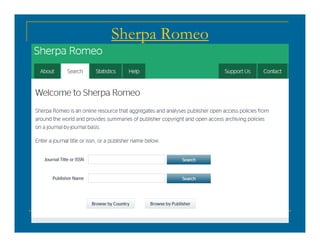
 Self-archiving and SHERPA-RoMEO
 Avoiding Predatory Publishers
 Tools for journals selection
 Writing for community
 Social networking
Avenues of Publication
 Journal article
 Article in a collection
 Contribution to
newspapers
Commentaries
 Book
 Book editorial
 Book section / chapter
 Book review
 WP / OP / Notes
 Commentaries
 Internal or external
report
 Dissertation / Thesis
 WP / OP / Notes
 Popular publications
 Blogs / Wikis
 Multimedia
 Video
 Podcasts
Open Access
 Articles are free to all interested readers
 No copyright barriers between the readers
and the article.
 OA stands for unrestricted access and
unrestricted reuse
 OA Policies of funders to higher education
institutions
Open Access
 OA Initiatives
Budapest OA Initiative 2002
Bethesda Statement on OA Publishing 2003
Berlin Declaration on OA Knowledge 2003
OA Publishing
 Gold OA
 Hybrid OA
 Green OA
Diamond OA
 Diamond OA
OA Benefits
 Accelerated discovery
 Inclusive
 Faster research
Global visibility
 Global visibility
 Knowledge economy
 Immediate use
Misconceptions about OA
 Author loses copyright
 No peer review
 Not indexed in global DB
 No impact factor
 Extra work by authors to self-archive
 Spamming by predatory publishers
 Non availability of good OA in all
subjects
OA Publishers
BioMed Central publishes 272 peer-
reviewed open access journals.
http://www.biomedcentral.com/
Public Library of Science (PLOS)
http://www.plos.org/
Directory of Open Access Journals (DOAJ)
http://doaj.org/ (More than 16620 journals)
Self Archiving
What?
 Authors make their articles freely available on
the Internet.
 Versions : –
Preprint
Post print - Author
Post print - Publisher
Self Archiving
Why?
 Articles made available openly are read and
cited more.
 Several funding agencies required that the
publications financed by them should be
available for free for everyone.
Self Archiving
How?
 Self-archiving by :
Author’s website,
Subject archives,
Institutional archive.
 Awareness about publisher policies on
archiving.
https://authorservices.wiley.com/author-
resources/Journal-Authors/licensing/self-
archiving.html
Sherpa Romeo
Predatory Publishers
 Several publishers publish counterfeit
journals to exploit open access model.
 They lack transparency. Quality of
publications are poor, and questionable.
 Scholars and researchers also take
unethical shortcuts and try to publish by
paying.
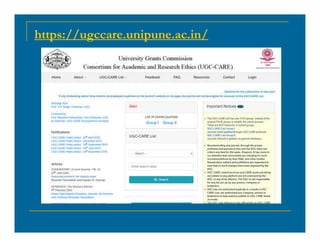
https://ugccare.unipune.ac.in/
Find the right journal
 Journal website
 Editor / Editorial Board Members
 Journal coverage / objectives
 Journal Indexing Services, DOAJ, COPE
 Peer review process, timelines to publish.
 Read the past issues of the journal
 UGC – CARE List of Journals
 Think! Check! Submit!
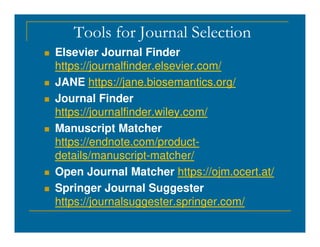
Tools for Journal Selection
 Elsevier Journal Finder
https://journalfinder.elsevier.com/
 JANE https://jane.biosemantics.org/
 Journal Finder
https://journalfinder.wiley.com/
Manuscript Matcher
 Manuscript Matcher
https://endnote.com/product-
details/manuscript-matcher/
 Open Journal Matcher https://ojm.ocert.at/
 Springer Journal Suggester
https://journalsuggester.springer.com/
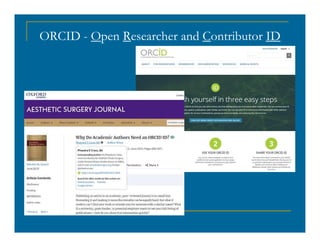
ORCID - Open Researcher and Contributor ID
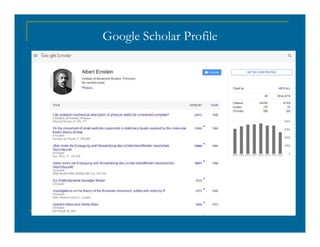
Google Scholar Profile
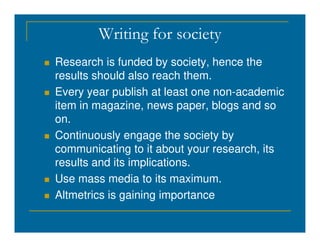
Writing for society
 Research is funded by society, hence the
results should also reach them.
 Every year publish at least one non-academic
item in magazine, news paper, blogs and so
on.
on.
 Continuously engage the society by
communicating to it about your research, its
results and its implications.
 Use mass media to its maximum.
 Altmetrics is gaining importance
Contributing to mother tongue
 Publish at least one item per year in your
mother tongue.
 Knowledge base in any language will grow
and get enriched only with systematic efforts.
 Every language has its own importance in the
development of the region.
Social Networking
 Website / Blog - Wordpress, Blogger
 Multimedia Storage – You Tube
 Podcast – Spotify, Sound Cloud
 Presentations, Notes – Slide Share
 Social networking – Facebook, Twitter,
LinkedIn, Telegram
 Subject networks – SSRN, ArtsRN, MedRN
 Kerala Scholars t.me/keralascholars
Thank you!
V. Sriram
vsrirams@gmail.com

Open Access and Scholarly Communications

  • 1.
    Open Access andScholarly Communications V. Sriram Chief Librarian, K.N.Raj Library Centre for Development Studies Thiruvananthapuram Thiruvananthapuram Online Lecture St. Teresa’s College Ernakulam, India 15th December 2021
  • 2.
    Contents  Open AccessPublishing  Self-archiving and SHERPA-RoMEO  Avoiding Predatory Publishers  Tools for journals selection  Tools for journals selection  Writing for community  Social networking
  • 3.
    Avenues of Publication Journal article  Article in a collection  Contribution to newspapers Commentaries  Book  Book editorial  Book section / chapter  Book review  WP / OP / Notes  Commentaries  Internal or external report  Dissertation / Thesis  WP / OP / Notes  Popular publications  Blogs / Wikis  Multimedia  Video  Podcasts
  • 4.
    Open Access  Articlesare free to all interested readers  No copyright barriers between the readers and the article.  OA stands for unrestricted access and  OA stands for unrestricted access and unrestricted reuse  OA Policies of funders to higher education institutions
  • 5.
    Open Access  OAInitiatives Budapest OA Initiative 2002 Bethesda Statement on OA Publishing 2003 Berlin Declaration on OA Knowledge 2003 Berlin Declaration on OA Knowledge 2003
  • 6.
    OA Publishing  GoldOA  Hybrid OA  Green OA Diamond OA  Diamond OA
  • 7.
    OA Benefits  Accelerateddiscovery  Inclusive  Faster research Global visibility  Global visibility  Knowledge economy  Immediate use
  • 8.
    Misconceptions about OA Author loses copyright  No peer review  Not indexed in global DB  No impact factor  Extra work by authors to self-archive  Spamming by predatory publishers  Non availability of good OA in all subjects
  • 9.
    OA Publishers BioMed Centralpublishes 272 peer- reviewed open access journals. http://www.biomedcentral.com/ Public Library of Science (PLOS) Public Library of Science (PLOS) http://www.plos.org/ Directory of Open Access Journals (DOAJ) http://doaj.org/ (More than 16620 journals)
  • 10.
    Self Archiving What?  Authorsmake their articles freely available on the Internet.  Versions : – Preprint Post print - Author Post print - Publisher
  • 11.
    Self Archiving Why?  Articlesmade available openly are read and cited more.  Several funding agencies required that the publications financed by them should be available for free for everyone.
  • 12.
    Self Archiving How?  Self-archivingby : Author’s website, Subject archives, Institutional archive. Institutional archive.  Awareness about publisher policies on archiving. https://authorservices.wiley.com/author- resources/Journal-Authors/licensing/self- archiving.html
  • 13.
  • 14.
    Predatory Publishers  Severalpublishers publish counterfeit journals to exploit open access model.  They lack transparency. Quality of publications are poor, and questionable.  Scholars and researchers also take  Scholars and researchers also take unethical shortcuts and try to publish by paying.
  • 15.
  • 16.
    Find the rightjournal  Journal website  Editor / Editorial Board Members  Journal coverage / objectives  Journal Indexing Services, DOAJ, COPE  Peer review process, timelines to publish.  Peer review process, timelines to publish.  Read the past issues of the journal  UGC – CARE List of Journals  Think! Check! Submit!
  • 17.
    Tools for JournalSelection  Elsevier Journal Finder https://journalfinder.elsevier.com/  JANE https://jane.biosemantics.org/  Journal Finder https://journalfinder.wiley.com/ Manuscript Matcher  Manuscript Matcher https://endnote.com/product- details/manuscript-matcher/  Open Journal Matcher https://ojm.ocert.at/  Springer Journal Suggester https://journalsuggester.springer.com/
  • 18.
    ORCID - OpenResearcher and Contributor ID
  • 19.
  • 20.
    Writing for society Research is funded by society, hence the results should also reach them.  Every year publish at least one non-academic item in magazine, news paper, blogs and so on. on.  Continuously engage the society by communicating to it about your research, its results and its implications.  Use mass media to its maximum.  Altmetrics is gaining importance
  • 21.
    Contributing to mothertongue  Publish at least one item per year in your mother tongue.  Knowledge base in any language will grow and get enriched only with systematic efforts.  Every language has its own importance in the  Every language has its own importance in the development of the region.
  • 22.
    Social Networking  Website/ Blog - Wordpress, Blogger  Multimedia Storage – You Tube  Podcast – Spotify, Sound Cloud  Presentations, Notes – Slide Share  Presentations, Notes – Slide Share  Social networking – Facebook, Twitter, LinkedIn, Telegram  Subject networks – SSRN, ArtsRN, MedRN  Kerala Scholars t.me/keralascholars
  • 23.