















Where We’re Headed
Construction Technology
Trends to Watch
……………………………………………………
……………………………………………………
LAUREN HASEGAWA
Co-Founder, Bridgit
Today, we’re talking about
current trends in
construction technology
and what’s on the
horizon.
… So your team can stay
ahead of the curve, be
more efficient and
communicate better
#OGCATechTrends
@GoBridgit
@lahasegawa
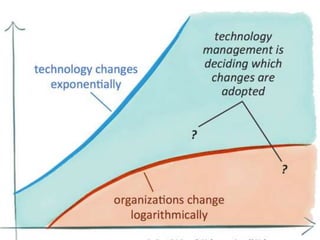
Technology is evolving at an
exponential rate
It took less than 40 years
to go from the first PC
to the first iPad
… and just 4 years to go
from the first iPad to
Google Glass
We need to pay attention
to emerging trends in
technology
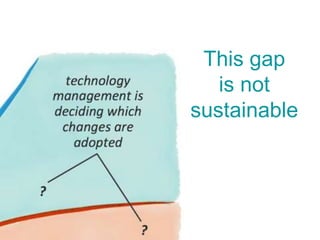
The gap between technology
changes and organizational
changes
=
Efficiency waiting to
happen
This gap
is not
sustainable
Today, we’re talking about…
Current construction technology
• Going paperless
• Mobile apps: SaaS vs. standalone apps
• The connected jobsite + automation
New trends in construction technology
• Drones
• Augmented reality / wearables
Where We’re At
Current Construction
Technology Trends
……………………………………………………
……………………………………………………
Going Paperless in
Construction
Paperless construction is finally an attainable
reality. Increase mobility, productivity and
data collection using the cloud.
……………………………………………………
……………………………………………………
Why Paperless?
Dynamic documents.
Notes and updates recorded on paper cannot be searched,
duplicated or properly digitized
Data opportunities.
Everyone is talking about “big data” sets these days. With paper,
you essentially have no data.
Enhanced sharing & communication.
Digital documents can be shared, updated and accessed in the click
of a button. This makes communication much easier, especially on
large projects.
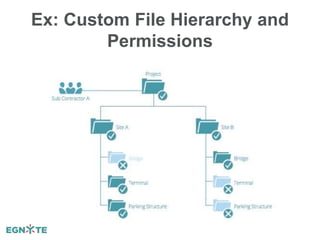
Ex: Custom File Hierarchy and
Permissions
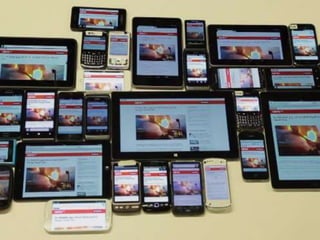
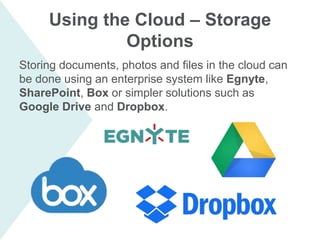
Storing documents, photos and files in the cloud can
be done using an enterprise system like Egnyte,
SharePoint, Box or simpler solutions such as
Google Drive and Dropbox.
Using the Cloud – Storage
Options
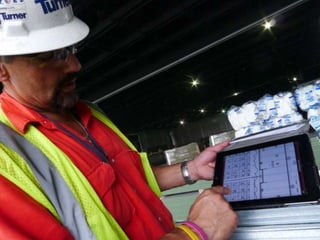
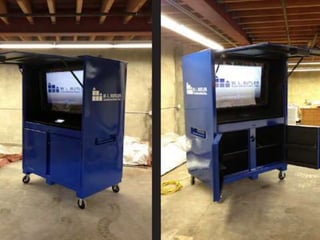
When you’re working towards going
paperless, the hardware you have available
on-site is key.
• Rugged and durable
• Large screen sizes
• Enough hardware to go around
The Proper Hardware is Key
Going Paperless: Where to Start?
Going paperless is best done as a gradual process.
You can start small and still see big results!
Use the cloud to share.
Start by analyzing everything that gets printed and identifying if
there are any opportunities to share this information over email or
as a file stored in the could instead of printing
Invest in proper hardware.
Often times, screen size is the biggest reason that documents need
to exist as a hard copy instead of digital. Better hardware such as
TV screens or tablets can help here
Research the software options / mobile apps.
Identify opportunities to use software instead of manual processes
and begin investigating effective solutions
Mobile Apps: SaaS vs.
Standalone Apps
Software as a Service (SaaS) applications
in construction let your team stay
connected no matter where they are.
……………………………………………………
……………………………………………………
What is SaaS?
• Software as a Service (or SaaS) is a way of
delivering applications over the Internet — as a
service.
• Examples of SaaS companies you may be familiar
with are LinkedIn, Dropbox and now, Bridgit
• Instead of installing and maintaining software, you
simply access it via the Internet, freeing yourself from
complex software and hardware management.
Definition from salesforce.com
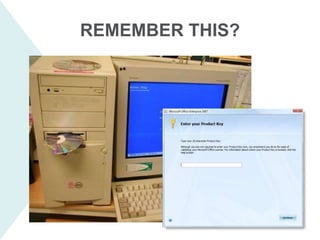
REMEMBER THIS?
Software as a Service (SaaS)
=
No desktop downloads
No manual updates
No more wasted time
Why is this different from
typical software?
• No upfront costs: Because SaaS products don’t require any
installation or customization before they can be activated, there are
typically no upfront costs associated with them
• Access from anywhere: SaaS products work from the cloud,
meaning over the internet instead of from a file saved to your
personal computer
• No manual updates: With SaaS, there is never the need to
download a pesky software update and communicate it with the
entire remote team
• True collaboration: Working from the cloud means that true team
collaboration is finally possible
Mobile SaaS vs. stand-alone apps
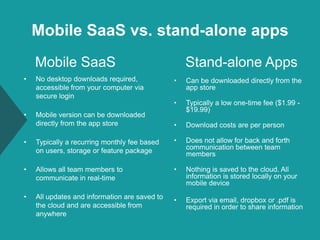
• No desktop downloads required,
accessible from your computer via
secure login
• Mobile version can be downloaded
directly from the app store
• Typically a recurring monthly fee based
on users, storage or feature package
• Allows all team members to
communicate in real-time
• All updates and information are saved to
the cloud and are accessible from
anywhere
Mobile SaaS Stand-alone Apps
• Can be downloaded directly from the
app store
• Typically a low one-time fee ($1.99 -
$19.99)
• Download costs are per person
• Does not allow for back and forth
communication between team
members
• Nothing is saved to the cloud. All
information is stored locally on your
mobile device
• Export via email, dropbox or .pdf is
required in order to share information
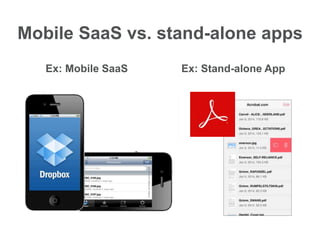
Ex: Mobile SaaS Ex: Stand-alone App
Mobile SaaS vs. stand-alone apps
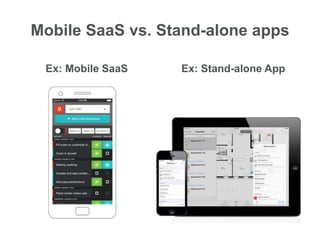
Ex: Mobile SaaS Ex: Stand-alone App
Mobile SaaS vs. Stand-alone apps
The Connected Jobsite
& Efficiency Through
Automation
Ever heard of “work smarter not harder”?
That’s what connections and
automation are all about.
……………………………………………………
……………………………………………………
Using the
cloud to
connect
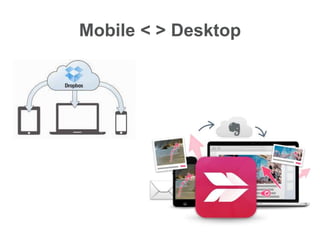
Mobile < > Desktop
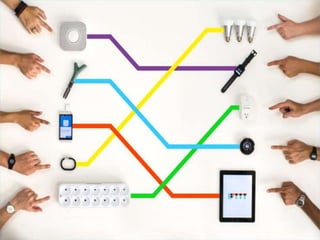
What Can We Automate?
• File storage and sorting
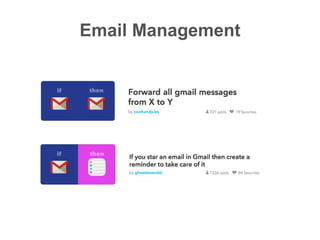
• Email management
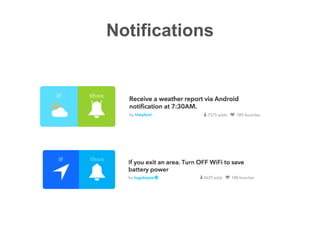
• Notifications
• …and more!
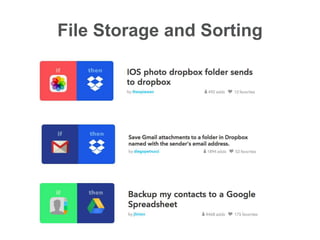
File Storage and Sorting
Email Management
Notifications
Why automation?
Testing out workflow automations is a great way to:
1. Decrease re-work and speed up processes (e.g.
transferring site photos onto the computer)
2. Get comfortable using technology in smaller steps
3. Better understand the capabilities of software to
increase efficiency in construction project
management
4. Brainstorm ways that more sophisticated (and
custom) automations can help your team be more
productive
Where We’re Headed
New Trends in
Construction Technology
……………………………………………………
……………………………………………………
Drones & UAVs for on-site
photography and video
Drones and UAVs (unmanned aerial
vehicles) are making site photography in
remote areas easier than ever.
……………………………………………………
……………………………………………………
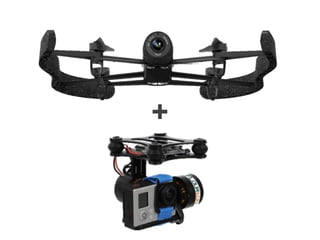
How would you
take this photo?
Site photography is used in three basic
situations:
1. Pre-construction for surveying of terrain,
environmental issues, etc.
2. Construction progress photography
3. Maintenance management
The Current State of Site
Photography
The options for high quality aerial images have
been historically expensive and cumbersome.
• Satellites
• Helicopters
• LiDar Maps
The Current State of Site
Photography
The photos are then
manually reviewed by field
engineers and compared
with separate models /
specifications
While helpful for the time being, field engineers
agree that these processes are:
• Highly subjective as they are based on one
field engineer’s judgment or experience
• Tedious as they require manual effort
• Difficult to scale, again, due to their manual
nature
How Current Photography is
Failing Us
+
Drone / UAV Photography
Some companies in the civil construction space
have already begun to experiment with drone
enabled photography
• Taking aerial imagery of a site prior to
construction and integrating the model over top
• Digitizing graphical terrain of an area for
construction and bringing that into the model
• Surveying areas, quantity takeoffs and
analyzing environmental issues
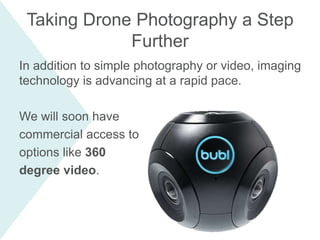
In addition to simple photography or video, imaging
technology is advancing at a rapid pace.
We will soon have
commercial access to
options like 360
degree video.
Taking Drone Photography a Step
Further
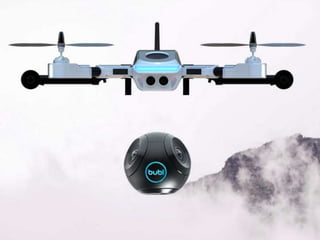
How would you
take this photo?
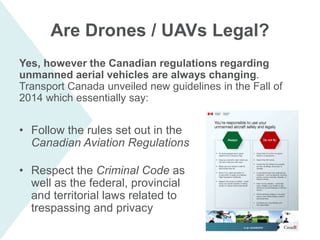
Yes, however the Canadian regulations regarding
unmanned aerial vehicles are always changing.
Transport Canada unveiled new guidelines in the Fall of
2014 which essentially say:
• Follow the rules set out in the
Canadian Aviation Regulations
• Respect the Criminal Code as
well as the federal, provincial
and territorial laws related to
trespassing and privacy
Are Drones / UAVs Legal?
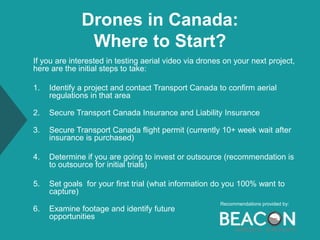
Drones in Canada:
Where to Start?
If you are interested in testing aerial video via drones on your next project,
here are the initial steps to take:
1. Identify a project and contact Transport Canada to confirm aerial
regulations in that area
2. Secure Transport Canada Insurance and Liability Insurance
3. Secure Transport Canada flight permit (currently 10+ week wait after
insurance is purchased)
4. Determine if you are going to invest or outsource (recommendation is
to outsource for initial trials)
5. Set goals for your first trial (what information do you 100% want to
capture)
6. Examine footage and identify future
opportunities
Recommendations provided by:
Augmented Reality &
Wearables
Drones and UAVs (unmanned aerial
vehicles) are making site photography in
remote areas easier than ever.
……………………………………………………
……………………………………………………
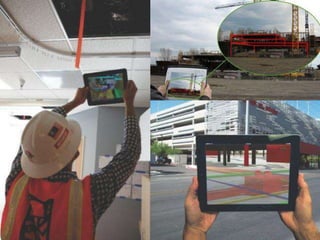
We’ve been communicating
3D intentions with 2D tools:
Spreadsheets, paper drawings, etc.
Augmented reality is
helping to improve that
…and wearables are
making it even better
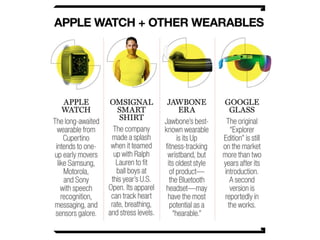
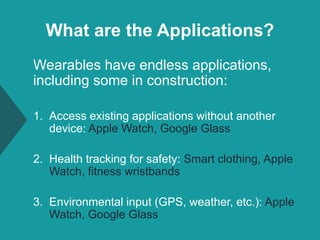
What are the Applications?
Wearables have endless applications,
including some in construction:
1. Access existing applications without another
device: Apple Watch, Google Glass
2. Health tracking for safety: Smart clothing, Apple
Watch, fitness wristbands
3. Environmental input (GPS, weather, etc.): Apple
Watch, Google Glass
Solutions are all around us.
It’s time to start the
conversation.
• Stay informed
• Encourage discussion
• Identify problems and seek
solutions
• Be open-minded, but stay critical
• Support evolving industry initiatives
related to technology
What seems like a stretch of
the imagination today, may
well be the reality of
tomorrow.
Lauren Hasegawa
Co-Founder, Bridgit
lauren@gobridgit.com
www.gobridgit.com
Thank you.

Construction Technology Trends - Where We're at and Where We're Headed

  • 1.
    Where We’re Headed ConstructionTechnology Trends to Watch …………………………………………………… ……………………………………………………
  • 2.
    LAUREN HASEGAWA Co-Founder, Bridgit Today,we’re talking about current trends in construction technology and what’s on the horizon. … So your team can stay ahead of the curve, be more efficient and communicate better
  • 3.
  • 6.
    Technology is evolvingat an exponential rate
  • 7.
    It took lessthan 40 years to go from the first PC to the first iPad
  • 8.
    … and just4 years to go from the first iPad to Google Glass
  • 10.
    We need topay attention to emerging trends in technology
  • 11.
    The gap betweentechnology changes and organizational changes = Efficiency waiting to happen
  • 12.
  • 13.
    Today, we’re talkingabout… Current construction technology • Going paperless • Mobile apps: SaaS vs. standalone apps • The connected jobsite + automation New trends in construction technology • Drones • Augmented reality / wearables
  • 14.
    Where We’re At CurrentConstruction Technology Trends …………………………………………………… ……………………………………………………
  • 15.
    Going Paperless in Construction Paperlessconstruction is finally an attainable reality. Increase mobility, productivity and data collection using the cloud. …………………………………………………… ……………………………………………………
  • 17.
    Why Paperless? Dynamic documents. Notesand updates recorded on paper cannot be searched, duplicated or properly digitized Data opportunities. Everyone is talking about “big data” sets these days. With paper, you essentially have no data. Enhanced sharing & communication. Digital documents can be shared, updated and accessed in the click of a button. This makes communication much easier, especially on large projects.
  • 18.
    Ex: Custom FileHierarchy and Permissions
  • 19.
    Storing documents, photosand files in the cloud can be done using an enterprise system like Egnyte, SharePoint, Box or simpler solutions such as Google Drive and Dropbox. Using the Cloud – Storage Options
  • 20.
    When you’re workingtowards going paperless, the hardware you have available on-site is key. • Rugged and durable • Large screen sizes • Enough hardware to go around The Proper Hardware is Key
  • 23.
    Going Paperless: Whereto Start? Going paperless is best done as a gradual process. You can start small and still see big results! Use the cloud to share. Start by analyzing everything that gets printed and identifying if there are any opportunities to share this information over email or as a file stored in the could instead of printing Invest in proper hardware. Often times, screen size is the biggest reason that documents need to exist as a hard copy instead of digital. Better hardware such as TV screens or tablets can help here Research the software options / mobile apps. Identify opportunities to use software instead of manual processes and begin investigating effective solutions
  • 24.
    Mobile Apps: SaaSvs. Standalone Apps Software as a Service (SaaS) applications in construction let your team stay connected no matter where they are. …………………………………………………… ……………………………………………………
  • 25.
    What is SaaS? •Software as a Service (or SaaS) is a way of delivering applications over the Internet — as a service. • Examples of SaaS companies you may be familiar with are LinkedIn, Dropbox and now, Bridgit • Instead of installing and maintaining software, you simply access it via the Internet, freeing yourself from complex software and hardware management. Definition from salesforce.com
  • 26.
  • 27.
    Software as aService (SaaS) = No desktop downloads No manual updates No more wasted time
  • 28.
    Why is thisdifferent from typical software? • No upfront costs: Because SaaS products don’t require any installation or customization before they can be activated, there are typically no upfront costs associated with them • Access from anywhere: SaaS products work from the cloud, meaning over the internet instead of from a file saved to your personal computer • No manual updates: With SaaS, there is never the need to download a pesky software update and communicate it with the entire remote team • True collaboration: Working from the cloud means that true team collaboration is finally possible
  • 29.
    Mobile SaaS vs.stand-alone apps • No desktop downloads required, accessible from your computer via secure login • Mobile version can be downloaded directly from the app store • Typically a recurring monthly fee based on users, storage or feature package • Allows all team members to communicate in real-time • All updates and information are saved to the cloud and are accessible from anywhere Mobile SaaS Stand-alone Apps • Can be downloaded directly from the app store • Typically a low one-time fee ($1.99 - $19.99) • Download costs are per person • Does not allow for back and forth communication between team members • Nothing is saved to the cloud. All information is stored locally on your mobile device • Export via email, dropbox or .pdf is required in order to share information
  • 30.
    Ex: Mobile SaaSEx: Stand-alone App Mobile SaaS vs. stand-alone apps
  • 31.
    Ex: Mobile SaaSEx: Stand-alone App Mobile SaaS vs. Stand-alone apps
  • 32.
    The Connected Jobsite &Efficiency Through Automation Ever heard of “work smarter not harder”? That’s what connections and automation are all about. …………………………………………………… ……………………………………………………
  • 33.
  • 34.
    Mobile < >Desktop
  • 37.
    What Can WeAutomate? • File storage and sorting • Email management • Notifications • …and more!
  • 38.
  • 39.
  • 40.
  • 41.
    Why automation? Testing outworkflow automations is a great way to: 1. Decrease re-work and speed up processes (e.g. transferring site photos onto the computer) 2. Get comfortable using technology in smaller steps 3. Better understand the capabilities of software to increase efficiency in construction project management 4. Brainstorm ways that more sophisticated (and custom) automations can help your team be more productive
  • 42.
    Where We’re Headed NewTrends in Construction Technology …………………………………………………… ……………………………………………………
  • 43.
    Drones & UAVsfor on-site photography and video Drones and UAVs (unmanned aerial vehicles) are making site photography in remote areas easier than ever. …………………………………………………… ……………………………………………………
  • 44.
    How would you takethis photo?
  • 45.
    Site photography isused in three basic situations: 1. Pre-construction for surveying of terrain, environmental issues, etc. 2. Construction progress photography 3. Maintenance management The Current State of Site Photography
  • 46.
    The options forhigh quality aerial images have been historically expensive and cumbersome. • Satellites • Helicopters • LiDar Maps The Current State of Site Photography The photos are then manually reviewed by field engineers and compared with separate models / specifications
  • 47.
    While helpful forthe time being, field engineers agree that these processes are: • Highly subjective as they are based on one field engineer’s judgment or experience • Tedious as they require manual effort • Difficult to scale, again, due to their manual nature How Current Photography is Failing Us
  • 48.
  • 49.
    Drone / UAVPhotography Some companies in the civil construction space have already begun to experiment with drone enabled photography • Taking aerial imagery of a site prior to construction and integrating the model over top • Digitizing graphical terrain of an area for construction and bringing that into the model • Surveying areas, quantity takeoffs and analyzing environmental issues
  • 50.
    In addition tosimple photography or video, imaging technology is advancing at a rapid pace. We will soon have commercial access to options like 360 degree video. Taking Drone Photography a Step Further
  • 51.
    How would you takethis photo?
  • 52.
    Yes, however theCanadian regulations regarding unmanned aerial vehicles are always changing. Transport Canada unveiled new guidelines in the Fall of 2014 which essentially say: • Follow the rules set out in the Canadian Aviation Regulations • Respect the Criminal Code as well as the federal, provincial and territorial laws related to trespassing and privacy Are Drones / UAVs Legal?
  • 53.
    Drones in Canada: Whereto Start? If you are interested in testing aerial video via drones on your next project, here are the initial steps to take: 1. Identify a project and contact Transport Canada to confirm aerial regulations in that area 2. Secure Transport Canada Insurance and Liability Insurance 3. Secure Transport Canada flight permit (currently 10+ week wait after insurance is purchased) 4. Determine if you are going to invest or outsource (recommendation is to outsource for initial trials) 5. Set goals for your first trial (what information do you 100% want to capture) 6. Examine footage and identify future opportunities Recommendations provided by:
  • 54.
    Augmented Reality & Wearables Dronesand UAVs (unmanned aerial vehicles) are making site photography in remote areas easier than ever. …………………………………………………… ……………………………………………………
  • 55.
    We’ve been communicating 3Dintentions with 2D tools: Spreadsheets, paper drawings, etc.
  • 56.
  • 58.
  • 61.
    What are theApplications? Wearables have endless applications, including some in construction: 1. Access existing applications without another device: Apple Watch, Google Glass 2. Health tracking for safety: Smart clothing, Apple Watch, fitness wristbands 3. Environmental input (GPS, weather, etc.): Apple Watch, Google Glass
  • 62.
    Solutions are allaround us. It’s time to start the conversation.
  • 63.
    • Stay informed •Encourage discussion • Identify problems and seek solutions • Be open-minded, but stay critical • Support evolving industry initiatives related to technology
  • 64.
    What seems likea stretch of the imagination today, may well be the reality of tomorrow.
  • 65.

Editor's Notes

  • #17 When we take the functionality of a phone, and basically make it the size of a small tablet, we get a…
  • #21 Tablets or phablets for larger screen sizes
  • #22 Tablets or Phablets
  • #23 On-site TVs in the trailer – this was done by a Plangrid customer
  • #45 When we take the functionality of a phone, and basically make it the size of a small tablet, we get a…
  • #48 http://kevinkarsch.com/publications/sa14-constructaide-hires.pdf
  • #58 This is good
  • #64 (newsletters, articles, ask questions) (at work, with industry peers, networking)