@drmichaelmills
Jesse von Doom [CC BY 3.0
(https://creativecommons.org/licenses/by/3.0)], via Wikimedia Commons
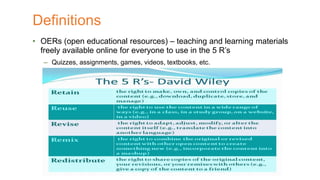
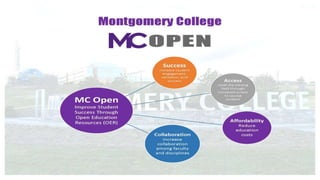
• OERs (open educational resources) – teaching and learning materials
freely available online for everyone to use in the 5 R’s
– Quizzes, assignments, games, videos, textbooks, etc.
Definitions
• Z-courses (zero-cost textbook courses) – courses that assign textbooks
that are openly licensed and free (exceptions are course materials and
supplies), and require regular Internet access
– BIOL 101, BSAD 101, COMM 108, ECON 201/202, PSYC 102, SOCY 100, etc.
• Z-degrees – degrees in which courses use OERs or zero-cost textbooks
– Business, Communications, Criminal Justice, Early Childhood Education, General
Studies
More Definitions
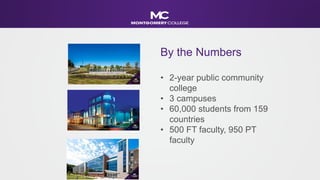
By the Numbers
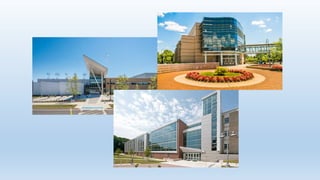
• 2-year public community
college
• 3 campuses
• 60,000 students from 159
countries
• 500 FT faculty, 950 PT
faculty
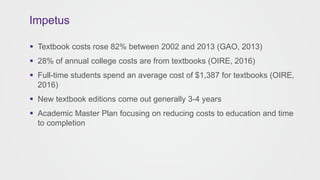
 Textbook costs rose 82% between 2002 and 2013 (GAO, 2013)
 28% of annual college costs are from textbooks (OIRE, 2016)
 Full-time students spend an average cost of $1,387 for textbooks (OIRE,
2016)
 New textbook editions come out generally 3-4 years
 Academic Master Plan focusing on reducing costs to education and time
to completion
Impetus
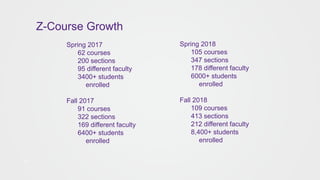
Z-Course Growth
10
Spring 2017
62 courses
200 sections
95 different faculty
3400+ students
enrolled
Fall 2017
91 courses
322 sections
169 different faculty
6400+ students
enrolled
Spring 2018
105 courses
347 sections
178 different faculty
6000+ students
enrolled
Fall 2018
109 courses
413 sections
212 different faculty
8,400+ students
enrolled
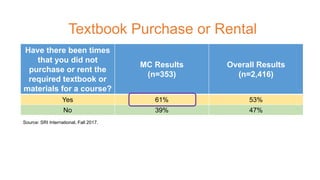
Textbook Purchase or Rental
Have there been times
that you did not
purchase or rent the
required textbook or
materials for a course?
MC Results
(n=353)
Overall Results
(n=2,416)
Yes 61% 53%
No 39% 47%
Source: SRI International, Fall 2017.
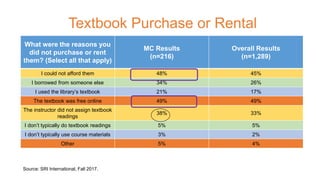
Textbook Purchase or Rental
What were the reasons you
did not purchase or rent
them? (Select all that apply)
MC Results
(n=216)
Overall Results
(n=1,289)
I could not afford them 48% 45%
I borrowed from someone else 34% 26%
I used the library’s textbook 21% 17%
The textbook was free online 49% 49%
The instructor did not assign textbook
readings
38% 33%
I don’t typically do textbook readings 5% 5%
I don’t typically use course materials 3% 2%
Other 5% 4%
Source: SRI International, Fall 2017.
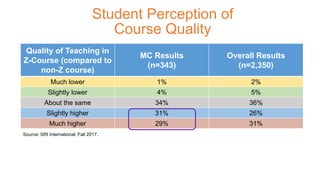
Student Perception of
Course Quality
Quality of Teaching in
Z-Course (compared to
non-Z course)
MC Results
(n=343)
Overall Results
(n=2,350)
Much lower 1% 2%
Slightly lower 4% 5%
About the same 34% 36%
Slightly higher 31% 26%
Much higher 29% 31%
Source: SRI International, Fall 2017.
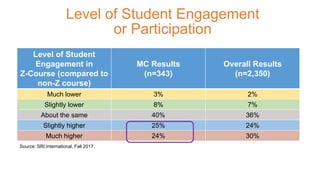
Level of Student Engagement
or Participation
Level of Student
Engagement in
Z-Course (compared to
non-Z course)
MC Results
(n=343)
Overall Results
(n=2,350)
Much lower 3% 2%
Slightly lower 8% 7%
About the same 40% 36%
Slightly higher 25% 24%
Much higher 24% 30%
Source: SRI International, Fall 2017.
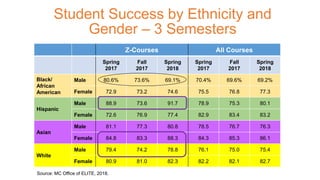
Z-Courses All Courses
Spring
2017
Fall
2017
Spring
2018
Spring
2017
Fall
2017
Spring
2018
Black/
African
American
Male 80.6% 73.6% 69.1% 70.4% 69.6% 69.2%
Female 72.9 73.2 74.6 75.5 76.8 77.3
Hispanic
Male 88.9 73.6 91.7 78.9 75.3 80.1
Female 72.6 76.9 77.4 82.9 83.4 83.2
Asian
Male 81.1 77.3 80.8 78.5 76.7 76.3
Female 84.8 83.3 88.3 84.3 85.3 86.1
White
Male 79.4 74.2 78.8 76.1 75.0 75.4
Female 80.9 81.0 82.3 82.2 82.1 82.7
Student Success by Ethnicity and
Gender – 3 Semesters
Source: MC Office of ELITE, 2018.
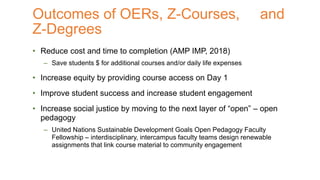
• Reduce cost and time to completion (AMP IMP, 2018)
– Save students $ for additional courses and/or daily life expenses
• Increase equity by providing course access on Day 1
• Improve student success and increase student engagement
• Increase social justice by moving to the next layer of “open” – open
pedagogy
– United Nations Sustainable Development Goals Open Pedagogy Faculty
Fellowship – interdisciplinary, intercampus faculty teams design renewable
assignments that link course material to community engagement
Outcomes of OERs, Z-Courses, and
Z-Degrees
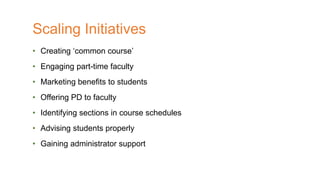
• Creating ‘common course’
• Engaging part-time faculty
• Marketing benefits to students
• Offering PD to faculty
• Identifying sections in course schedules
• Advising students properly
• Gaining administrator support
Scaling Initiatives
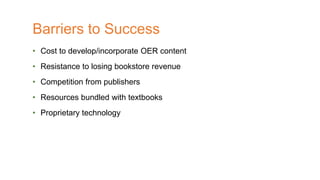
• Cost to develop/incorporate OER content
• Resistance to losing bookstore revenue
• Competition from publishers
• Resources bundled with textbooks
• Proprietary technology
Barriers to Success
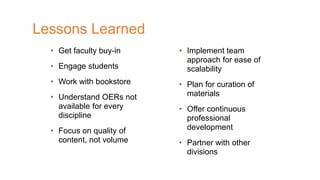
• Get faculty buy-in
• Engage students
• Work with bookstore
• Understand OERs not
available for every
discipline
• Focus on quality of
content, not volume
Lessons Learned
• Implement team
approach for ease of
scalability
• Plan for curation of
materials
• Offer continuous
professional
development
• Partner with other
divisions
23
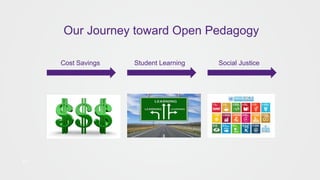
Cost Savings Student Learning Social Justice
Our Journey toward Open Pedagogy
24
“I cannot say whether things will get
better if we change; what I can say is
that they must change if they are to get
better.”
—George Lichtenberg
Definitions of Open Pedagogy and
Renewable Assignments
25
https://www.montgomerycollege.edu/offices/elite/unesco/
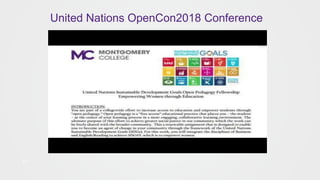
United Nations Sustainable
Development Goals Open Pedagogy
Faculty Fellowship
26
 Summer 2018 faculty meetings  Fall 2018 assignments 
Spring 2019 faculty/student showcase
 15 faculty divided into 7 teams
 12 disciplines
 3 campuses
 16 courses across 25 different sections in face-to-face and
online formats
 570+ students impacted
27
United Nations OpenCon2018 Conference
Discussion Question
28
How would you engage your students in
social justice efforts?
Student Work
29
https://www.montgomerycollege.edu/offices/elite/unesco/#cust-00-
studentsprojects-content
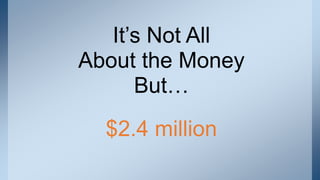
$2.4 million
It’s Not All
About the Money
But…
31
• MC Open Student Page
– https://www.montgomerycollege.edu/academics/mc-open/
• MC Open Faculty Page
– https://www.montgomerycollege.edu/offices/elite/mc-open-faculty.html
• Student Testimonials
– https://youtu.be/jO5OxPRwe7Q
• United Nations Open Pedagogy Faculty Fellowship
– https://www.montgomerycollege.edu/offices/elite/unesco/
• MC Open Ads
– https://youtu.be/yBgL8nZE5Lo
Resources
• Johns Hopkins
– http://ocw.jhsph.edu/index.cfm/go/find.browse#topics/topicID/15/
• Concordia University
– http://libguides.cu-portland.edu/OER/ess
• University of Oklahoma
– http://guides.ou.edu/hes
• Intro to Health textbook
– https://docs.google.com/document/d/1g4OYMjgg7ISQeITbqjoWIAd_f5PoXZB_JA
IsoQxKfyg/edit#
Health Resources
• Nursing
– https://opentextbc.ca/clinicalskills/
– https://www.nottingham.ac.uk/helmopen/
• Disease Prevention and Healthy Lifestyles
– https://courses.lumenlearning.com/suny-monroecc-hed110/
• Lifetime Fitness and Wellness
– https://courses.lumenlearning.com/fitness/
Health Resources
• Health Sciences
– https://teachingcommons.us/medicine/
– https://libguides.furman.edu/oer/subject/health-sciences
– https://libguides.gvsu.edu/oer/healthsciences
– https://guides.nyu.edu/health/oer
– https://libguides.und.edu/c.php?g=656518&p=4649224
Health Resources
Michael.mills@montgomerycollege.edu
240-567-6001

OER Mills jan2019

  • 2.
    @drmichaelmills Jesse von Doom[CC BY 3.0 (https://creativecommons.org/licenses/by/3.0)], via Wikimedia Commons
  • 3.
    • OERs (openeducational resources) – teaching and learning materials freely available online for everyone to use in the 5 R’s – Quizzes, assignments, games, videos, textbooks, etc. Definitions
  • 4.
    • Z-courses (zero-costtextbook courses) – courses that assign textbooks that are openly licensed and free (exceptions are course materials and supplies), and require regular Internet access – BIOL 101, BSAD 101, COMM 108, ECON 201/202, PSYC 102, SOCY 100, etc. • Z-degrees – degrees in which courses use OERs or zero-cost textbooks – Business, Communications, Criminal Justice, Early Childhood Education, General Studies More Definitions
  • 7.
    By the Numbers •2-year public community college • 3 campuses • 60,000 students from 159 countries • 500 FT faculty, 950 PT faculty
  • 9.
     Textbook costsrose 82% between 2002 and 2013 (GAO, 2013)  28% of annual college costs are from textbooks (OIRE, 2016)  Full-time students spend an average cost of $1,387 for textbooks (OIRE, 2016)  New textbook editions come out generally 3-4 years  Academic Master Plan focusing on reducing costs to education and time to completion Impetus
  • 10.
    Z-Course Growth 10 Spring 2017 62courses 200 sections 95 different faculty 3400+ students enrolled Fall 2017 91 courses 322 sections 169 different faculty 6400+ students enrolled Spring 2018 105 courses 347 sections 178 different faculty 6000+ students enrolled Fall 2018 109 courses 413 sections 212 different faculty 8,400+ students enrolled
  • 12.
    Textbook Purchase orRental Have there been times that you did not purchase or rent the required textbook or materials for a course? MC Results (n=353) Overall Results (n=2,416) Yes 61% 53% No 39% 47% Source: SRI International, Fall 2017.
  • 13.
    Textbook Purchase orRental What were the reasons you did not purchase or rent them? (Select all that apply) MC Results (n=216) Overall Results (n=1,289) I could not afford them 48% 45% I borrowed from someone else 34% 26% I used the library’s textbook 21% 17% The textbook was free online 49% 49% The instructor did not assign textbook readings 38% 33% I don’t typically do textbook readings 5% 5% I don’t typically use course materials 3% 2% Other 5% 4% Source: SRI International, Fall 2017.
  • 14.
    Student Perception of CourseQuality Quality of Teaching in Z-Course (compared to non-Z course) MC Results (n=343) Overall Results (n=2,350) Much lower 1% 2% Slightly lower 4% 5% About the same 34% 36% Slightly higher 31% 26% Much higher 29% 31% Source: SRI International, Fall 2017.
  • 15.
    Level of StudentEngagement or Participation Level of Student Engagement in Z-Course (compared to non-Z course) MC Results (n=343) Overall Results (n=2,350) Much lower 3% 2% Slightly lower 8% 7% About the same 40% 36% Slightly higher 25% 24% Much higher 24% 30% Source: SRI International, Fall 2017.
  • 16.
    Z-Courses All Courses Spring 2017 Fall 2017 Spring 2018 Spring 2017 Fall 2017 Spring 2018 Black/ African American Male80.6% 73.6% 69.1% 70.4% 69.6% 69.2% Female 72.9 73.2 74.6 75.5 76.8 77.3 Hispanic Male 88.9 73.6 91.7 78.9 75.3 80.1 Female 72.6 76.9 77.4 82.9 83.4 83.2 Asian Male 81.1 77.3 80.8 78.5 76.7 76.3 Female 84.8 83.3 88.3 84.3 85.3 86.1 White Male 79.4 74.2 78.8 76.1 75.0 75.4 Female 80.9 81.0 82.3 82.2 82.1 82.7 Student Success by Ethnicity and Gender – 3 Semesters Source: MC Office of ELITE, 2018.
  • 19.
    • Reduce costand time to completion (AMP IMP, 2018) – Save students $ for additional courses and/or daily life expenses • Increase equity by providing course access on Day 1 • Improve student success and increase student engagement • Increase social justice by moving to the next layer of “open” – open pedagogy – United Nations Sustainable Development Goals Open Pedagogy Faculty Fellowship – interdisciplinary, intercampus faculty teams design renewable assignments that link course material to community engagement Outcomes of OERs, Z-Courses, and Z-Degrees
  • 20.
    • Creating ‘commoncourse’ • Engaging part-time faculty • Marketing benefits to students • Offering PD to faculty • Identifying sections in course schedules • Advising students properly • Gaining administrator support Scaling Initiatives
  • 21.
    • Cost todevelop/incorporate OER content • Resistance to losing bookstore revenue • Competition from publishers • Resources bundled with textbooks • Proprietary technology Barriers to Success
  • 22.
    • Get facultybuy-in • Engage students • Work with bookstore • Understand OERs not available for every discipline • Focus on quality of content, not volume Lessons Learned • Implement team approach for ease of scalability • Plan for curation of materials • Offer continuous professional development • Partner with other divisions
  • 23.
    23 Cost Savings StudentLearning Social Justice Our Journey toward Open Pedagogy
  • 24.
    24 “I cannot saywhether things will get better if we change; what I can say is that they must change if they are to get better.” —George Lichtenberg
  • 25.
    Definitions of OpenPedagogy and Renewable Assignments 25 https://www.montgomerycollege.edu/offices/elite/unesco/
  • 26.
    United Nations Sustainable DevelopmentGoals Open Pedagogy Faculty Fellowship 26  Summer 2018 faculty meetings  Fall 2018 assignments  Spring 2019 faculty/student showcase  15 faculty divided into 7 teams  12 disciplines  3 campuses  16 courses across 25 different sections in face-to-face and online formats  570+ students impacted
  • 27.
  • 28.
    Discussion Question 28 How wouldyou engage your students in social justice efforts?
  • 29.
  • 30.
    $2.4 million It’s NotAll About the Money But…
  • 31.
  • 32.
    • MC OpenStudent Page – https://www.montgomerycollege.edu/academics/mc-open/ • MC Open Faculty Page – https://www.montgomerycollege.edu/offices/elite/mc-open-faculty.html • Student Testimonials – https://youtu.be/jO5OxPRwe7Q • United Nations Open Pedagogy Faculty Fellowship – https://www.montgomerycollege.edu/offices/elite/unesco/ • MC Open Ads – https://youtu.be/yBgL8nZE5Lo Resources
  • 33.
    • Johns Hopkins –http://ocw.jhsph.edu/index.cfm/go/find.browse#topics/topicID/15/ • Concordia University – http://libguides.cu-portland.edu/OER/ess • University of Oklahoma – http://guides.ou.edu/hes • Intro to Health textbook – https://docs.google.com/document/d/1g4OYMjgg7ISQeITbqjoWIAd_f5PoXZB_JA IsoQxKfyg/edit# Health Resources
  • 34.
    • Nursing – https://opentextbc.ca/clinicalskills/ –https://www.nottingham.ac.uk/helmopen/ • Disease Prevention and Healthy Lifestyles – https://courses.lumenlearning.com/suny-monroecc-hed110/ • Lifetime Fitness and Wellness – https://courses.lumenlearning.com/fitness/ Health Resources
  • 35.
    • Health Sciences –https://teachingcommons.us/medicine/ – https://libguides.furman.edu/oer/subject/health-sciences – https://libguides.gvsu.edu/oer/healthsciences – https://guides.nyu.edu/health/oer – https://libguides.und.edu/c.php?g=656518&p=4649224 Health Resources
  • 37.