Prof. Dr. Hans Bruyninckx (Catholic University Leuven)
Brussels, May 2013
1
1. Transboundary cooperation and the low
carbon economy (LCE)
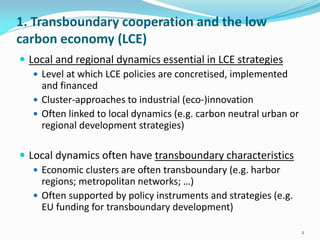
 Local and regional dynamics essential in LCE strategies
 Level at which LCE policies are concretised, implemented
and financed
 Cluster-approaches to industrial (eco-)innovation
 Often linked to local dynamics (e.g. carbon neutral urban or
regional development strategies)
 Local dynamics often have transboundary characteristics
 Economic clusters are often transboundary (e.g. harbor
regions; metropolitan networks; …)
 Often supported by policy instruments and strategies (e.g.
EU funding for transboundary development)
2
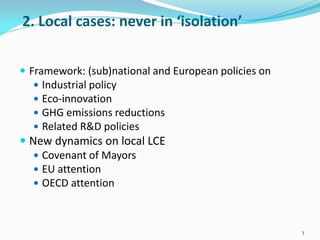
2. Local cases: never in ‘isolation’
 Framework: (sub)national and European policies on
 Industrial policy
 Eco-innovation
 GHG emissions reductions
 Related R&D policies
 New dynamics on local LCE
 Covenant of Mayors
 EU attention
 OECD attention
3
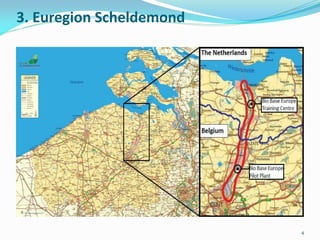
3. Euregion Scheldemond
4
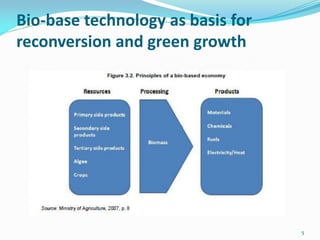
Bio-base technology as basis for
reconversion and green growth
5
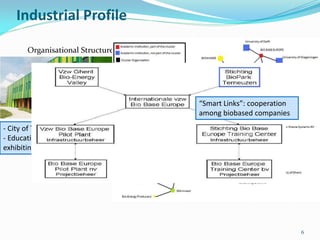
Industrial Profile
6
Organisational Structure Bio Base Europe
- Port of Ghent
- Education opportunities: “close the critical
gap between scientific feasibility and
industrial application of new biobased
products and processes”
- Train employees for biobased green jobs
- City of Terneuzen
- Education, networking, technological innovation and
exhibiting
“Smart Links”: cooperation
among biobased companies
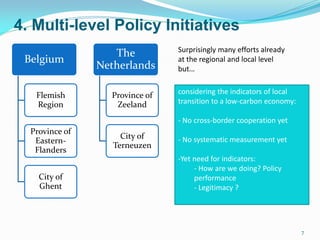
4. Multi-level Policy Initiatives
7
Belgium
Flemish
Region
Province of
Eastern-
Flanders
City of
Ghent
The
Netherlands
Province of
Zeeland
City of
Terneuzen
Surprisingly many efforts already
at the regional and local level
but…
considering the indicators of local
transition to a low-carbon economy:
- No cross-border cooperation yet
- No systematic measurement yet
-Yet need for indicators:
- How are we doing? Policy
performance
- Legitimacy ?
5. Reflections on the use of local LC-indicators
A number of enduring problems of data-gathering
- ‘region’ does not coincide with any data gathering ‘institution’
- Transboundary characteristics complicate this
- Data availability; consistency; comparability; …
- Longitudinal nature of LCE/S transition
Result: hardly any of the indicators are used at this moment
Yet, … many indicator processes are running at the local level
- labor-, capacity-, time-intensive
- Little coherence, compatibility at the level of Belgium/Flanders
- Little structured ‘learning’
31-5-2013 8
6. Emerging Policy Messages
 Challenges for data gathering remain strong
 Yet, … many indicator processes are running at the
local level
 Two steps approach: the core (eg: GHG emissions of the
region; Carbon intensity of the economy of the region; carbon
intensity of employment) and the complementary
adjusted local set
 Specific process approach for crossborder areas
 Opportunities for for exchange, learning,
methodological and policy development!
9
7. Role for RIOs (Benelux)
 LCE and Green Growth
 Relevance for specific region?
 Part of core political/policy attention?
 How to integrate in working program?
 Indicator development and use
 Specific competences in cross-border cooperation: how to
use this for indicator processes?
 Setting the stage for other cross-border areas of high
significance for LC-future
10

OECD LEED Benelux report on green growth - Hans Bruyninckx

  • 1.
    Prof. Dr. HansBruyninckx (Catholic University Leuven) Brussels, May 2013 1
  • 2.
    1. Transboundary cooperationand the low carbon economy (LCE)  Local and regional dynamics essential in LCE strategies  Level at which LCE policies are concretised, implemented and financed  Cluster-approaches to industrial (eco-)innovation  Often linked to local dynamics (e.g. carbon neutral urban or regional development strategies)  Local dynamics often have transboundary characteristics  Economic clusters are often transboundary (e.g. harbor regions; metropolitan networks; …)  Often supported by policy instruments and strategies (e.g. EU funding for transboundary development) 2
  • 3.
    2. Local cases:never in ‘isolation’  Framework: (sub)national and European policies on  Industrial policy  Eco-innovation  GHG emissions reductions  Related R&D policies  New dynamics on local LCE  Covenant of Mayors  EU attention  OECD attention 3
  • 4.
  • 5.
    Bio-base technology asbasis for reconversion and green growth 5
  • 6.
    Industrial Profile 6 Organisational StructureBio Base Europe - Port of Ghent - Education opportunities: “close the critical gap between scientific feasibility and industrial application of new biobased products and processes” - Train employees for biobased green jobs - City of Terneuzen - Education, networking, technological innovation and exhibiting “Smart Links”: cooperation among biobased companies
  • 7.
    4. Multi-level PolicyInitiatives 7 Belgium Flemish Region Province of Eastern- Flanders City of Ghent The Netherlands Province of Zeeland City of Terneuzen Surprisingly many efforts already at the regional and local level but… considering the indicators of local transition to a low-carbon economy: - No cross-border cooperation yet - No systematic measurement yet -Yet need for indicators: - How are we doing? Policy performance - Legitimacy ?
  • 8.
    5. Reflections onthe use of local LC-indicators A number of enduring problems of data-gathering - ‘region’ does not coincide with any data gathering ‘institution’ - Transboundary characteristics complicate this - Data availability; consistency; comparability; … - Longitudinal nature of LCE/S transition Result: hardly any of the indicators are used at this moment Yet, … many indicator processes are running at the local level - labor-, capacity-, time-intensive - Little coherence, compatibility at the level of Belgium/Flanders - Little structured ‘learning’ 31-5-2013 8
  • 9.
    6. Emerging PolicyMessages  Challenges for data gathering remain strong  Yet, … many indicator processes are running at the local level  Two steps approach: the core (eg: GHG emissions of the region; Carbon intensity of the economy of the region; carbon intensity of employment) and the complementary adjusted local set  Specific process approach for crossborder areas  Opportunities for for exchange, learning, methodological and policy development! 9
  • 10.
    7. Role forRIOs (Benelux)  LCE and Green Growth  Relevance for specific region?  Part of core political/policy attention?  How to integrate in working program?  Indicator development and use  Specific competences in cross-border cooperation: how to use this for indicator processes?  Setting the stage for other cross-border areas of high significance for LC-future 10