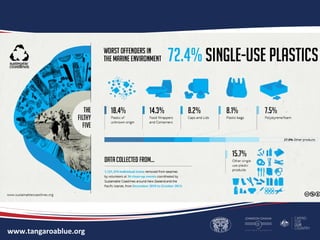
What is Marine Debris?
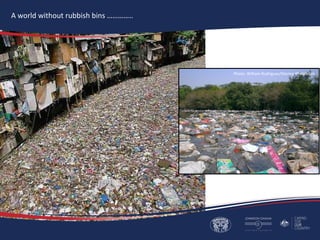
A world without rubbish bins …………..
Photo: William Rodriguez/Marine Photobank
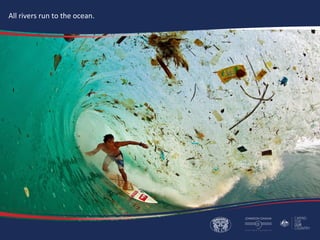
All rivers run to the ocean.
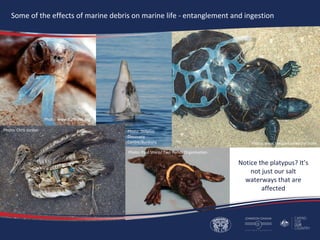
Notice the platypus? It’s
not just our salt
waterways that are
affected
www.tangaroablue.org
China, Indonesia,Some of the effects of marine debris on marine life - entanglement and ingestion
Photo: www.surfrider.org
Photo: www.theplasticfreechef.com
Photo: Chris Jordan
Photo: Paul Sharp/ Two Hands Organisation
Photo: Dolphin
Discovery
Centre/Bunbury
www.tangaroablue.org
Pre-production plastic
resin pellets
Fragmenting post-production plastic items
www.tangaroablue.org
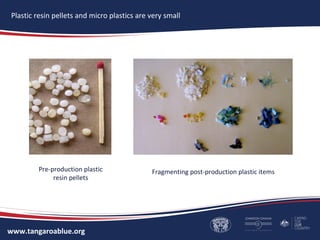
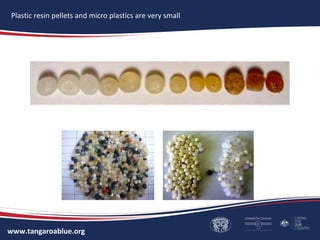
Plastic resin pellets and micro plastics are very small
Pre-production plastic
resin pellets
Fragmenting post-production plastic items
www.tangaroablue.org
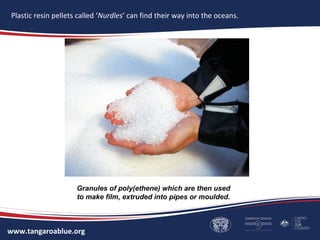
Plastic resin pellets called ‘Nurdles’ can find their way into the oceans.
Granules of poly(ethene) which are then used
to make film, extruded into pipes or moulded.
www.tangaroablue.org
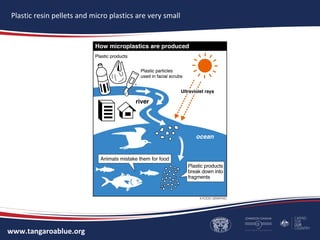
Plastic resin pellets and micro plastics are very small
www.tangaroablue.org
Plastic resin pellets and micro plastics are very small
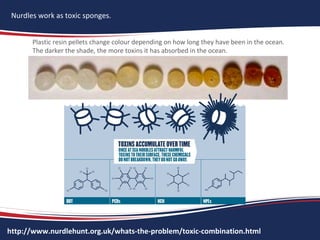
Plastic resin pellets change colour depending on how long they have been in the ocean.
The darker the shade, the more toxins it has absorbed in the ocean.
The chemical pollutants are organic compounds known as Persistent Organic Pollutants
(POPs). They are called ‘persistent’ because they do not go away and stay in the food chain.
http://www.nurdlehunt.org.uk/whats-the-problem/toxic-combination.html
Nurdles work as toxic sponges.
Plastic resin pellets change colour depending on how long they have been in the ocean.
The darker the shade, the more toxins it has absorbed in the ocean.
The chemical pollutants are organic compounds known as Persistent Organic Pollutants
(POPs). They are called ‘persistent’ because they do not go away and stay in the food chain.
www.tangaroablue.org
A plastic resin pellet can easily be ingested along with other planktonic food sources,
making a toxic meal for marine life.
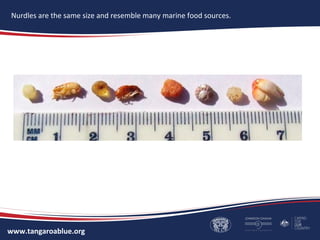
Nurdles are the same size and resemble many marine food sources.
Marine life often mistake micro plastics and resin pellets as fish eggs and other small food
sources.
www.tangaroablue.org
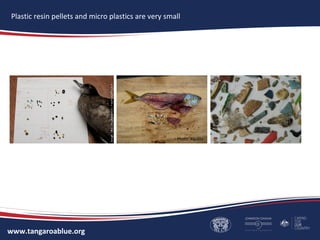
These pieces of plastic
came out of a turtle’s
stomach!
Plastic resin pellets and micro plastics are very small
Photo: Algalita
This is a rainbow runnner
caught in the North
Pacific – it had ingested
plastics. Can you see the
plastic resin pellet?
This is a shearwater bird –
over 100 of these birds
were found at Freshwater
Beach in Sydney, many
had pellets and micro
plastics in them.
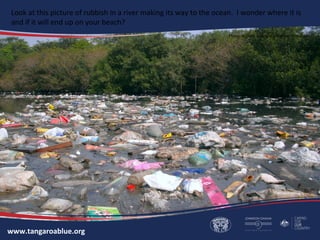
Look at this picture of rubbish in a river making its way to the ocean. I wonder where it is
and if it will end up on your beach?
www.tangaroablue.org
Photo: William Rodriguez/Marine Photobank
www.tangaroablue.org
Site
Number of Clean-
ups
Total Items
Average of Land
Source Index
Average of Sea
Source Index
Average of
Percentage of Plastic
Site Locality Centre
Thursday Island
Federal Beach
10 1809 62% 38% 46% Thursday Island Torres Strait
Chilli Beach
Middle
4 4215 1% 99% 93% Cape Weymouth Lockhart
Cape Kimberley
North and South
6 54233 3% 97% 76% Cape Kimberley Cape Kimberley
4MB Middle
Section
129 54280 47% 53% 69% Port Douglas Port Douglas
Tallebudgera
Beach
1 1144 45% 55% 57% Palm Beach Gold Coast
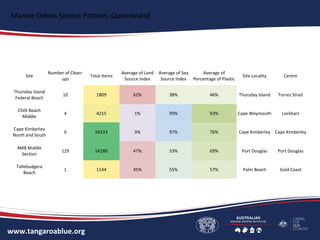
Marine Debris Source Pattern, Queensland
www.tangaroablue.org
Highly
mobile
Limited
dispersion
Encumbered drift
Unencumbered drift
Disposed of
at sea
Decreasing chance of the item having a local source
with respect to the clean-up location
Broken glass
Beer stubbies
Broken glass
Beer stubbies
Cigarette butts
Aluminium cans
Plastic bags
Fishing line
Cigarette butts
Aluminium cans
Plastic bags
Fishing line
Plastic bits and pieces
Lids and tops
Plastic food packaging
Plastic film remnants
Plastic bits and pieces
Lids and tops
Plastic food packaging
Plastic film remnants
Polystyrene foam
Plastic drink bottles
Drinking straws and cutlery
Polystyrene foam
Plastic drink bottles
Drinking straws and cutlery
Commercial fishing remnants
Rope and nets
Rope and net scraps
Commercial fishing remnants
Rope and nets
Rope and net scraps
Does not
disperse
How the index works
www.tangaroablue.org
James Cook University marine debris data on Ross River, Townsville
Kay Critchell 2012 – Research topic data
www.tangaroablue.org
These items were all found on Australian beaches in North Queensland
These products are not
made in Australia
How do you think they
ended up on our
beaches?
www.tangaroablue.org
Once the rubbish is in the ocean, it spreads around everywhere and accumulates in
rubbish pools called gyres
There are at least
five of them in the
world at the
moment!
Photo: www.sciencelearn.org.nz
www.tangaroablue.org
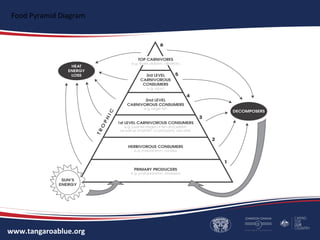
Food Pyramid Diagram
www.tangaroablue.org
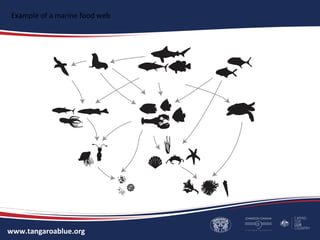
Example of a marine food web
www.tangaroablue.org
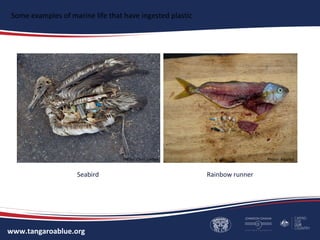
Some examples of marine life that have ingested plastic
Seabird Rainbow runner
Photo: Chris Jordan Photo: Algalita
www.tangaroablue.org
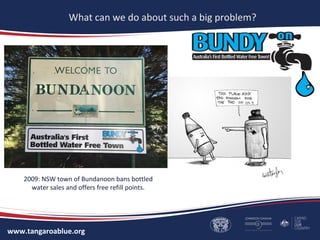
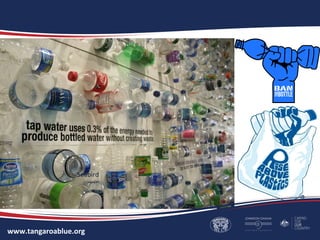
What can we do about such a big problem?
2009: NSW town of Bundanoon bans bottled
water sales and offers free refill points.
www.tangaroablue.org
Seabird
1. What are the impacts of plastic pollution on the condition and ecological integrity of benthic
habitats?
2. What are the sub-lethal (acute) impacts of exposure to plastic pollution?
3. How will climate change influence the impact and mitigation of plastic pollution?
4. What are the impacts of plastics on ecological processes in key marine and estuarine habitats?
5. What are the alternatives to plastic?
6. What are the costs and benefits of mitigating plastic pollution?
7. What are the barriers and opportunities for delivering effective education and awareness
strategies?
8. How can we use structured decision making to determine mitigation strategies for reducing
plastic pollution impacts and measure their effectiveness?
9. What are the social implications of plastic pollution impacts and their management?
10. How can we improve data integration to quantify risk and refine management?
www.tangaroablue.org
Top 20 Priority Marine Debris Research Questions
Amanda Vegter 2012 – Research topic data James Cook University
11. How does plastic pollution contribute to the transfer of non-native, invasive species?
12. What are the population-level impacts of plastic pollution and can they be quantified?
13. What factors drive the transport and deposition of plastic pollution in the marine
environment?
14. Where are the global hotspots of accumulated plastic pollution (sinks)?
15. What and where are the main sources of plastic pollution entering the marine environment?
16. What are the species-level impacts of plastic pollution and can they be quantified?
17. What are the barriers and opportunities for developing standard approaches to quantify
plastic pollution in the marine and coastal habitats?
18. How does plastic pollution impact the trophic system?
19. What types of plastics are having the greatest impact on both marine habitats and the marine
environment?
20. What are the species- and population-level impacts of wildlife entanglement?
www.tangaroablue.org
Top 20 Priority Research Questions
www.tangaroablue.org

Ocean Debris - Plastic Pollution and Marine Environments.

  • 1.
  • 2.
    A world withoutrubbish bins ………….. Photo: William Rodriguez/Marine Photobank
  • 3.
    All rivers runto the ocean.
  • 4.
    Notice the platypus?It’s not just our salt waterways that are affected www.tangaroablue.org China, Indonesia,Some of the effects of marine debris on marine life - entanglement and ingestion Photo: www.surfrider.org Photo: www.theplasticfreechef.com Photo: Chris Jordan Photo: Paul Sharp/ Two Hands Organisation Photo: Dolphin Discovery Centre/Bunbury
  • 5.
  • 6.
  • 7.
    www.tangaroablue.org Plastic resin pelletsand micro plastics are very small Pre-production plastic resin pellets Fragmenting post-production plastic items
  • 8.
    www.tangaroablue.org Plastic resin pelletscalled ‘Nurdles’ can find their way into the oceans. Granules of poly(ethene) which are then used to make film, extruded into pipes or moulded.
  • 9.
    www.tangaroablue.org Plastic resin pelletsand micro plastics are very small
  • 10.
    www.tangaroablue.org Plastic resin pelletsand micro plastics are very small Plastic resin pellets change colour depending on how long they have been in the ocean. The darker the shade, the more toxins it has absorbed in the ocean. The chemical pollutants are organic compounds known as Persistent Organic Pollutants (POPs). They are called ‘persistent’ because they do not go away and stay in the food chain.
  • 11.
    http://www.nurdlehunt.org.uk/whats-the-problem/toxic-combination.html Nurdles work astoxic sponges. Plastic resin pellets change colour depending on how long they have been in the ocean. The darker the shade, the more toxins it has absorbed in the ocean. The chemical pollutants are organic compounds known as Persistent Organic Pollutants (POPs). They are called ‘persistent’ because they do not go away and stay in the food chain.
  • 12.
    www.tangaroablue.org A plastic resinpellet can easily be ingested along with other planktonic food sources, making a toxic meal for marine life. Nurdles are the same size and resemble many marine food sources.
  • 13.
    Marine life oftenmistake micro plastics and resin pellets as fish eggs and other small food sources. www.tangaroablue.org These pieces of plastic came out of a turtle’s stomach! Plastic resin pellets and micro plastics are very small Photo: Algalita This is a rainbow runnner caught in the North Pacific – it had ingested plastics. Can you see the plastic resin pellet? This is a shearwater bird – over 100 of these birds were found at Freshwater Beach in Sydney, many had pellets and micro plastics in them.
  • 14.
    Look at thispicture of rubbish in a river making its way to the ocean. I wonder where it is and if it will end up on your beach? www.tangaroablue.org Photo: William Rodriguez/Marine Photobank
  • 15.
    www.tangaroablue.org Site Number of Clean- ups TotalItems Average of Land Source Index Average of Sea Source Index Average of Percentage of Plastic Site Locality Centre Thursday Island Federal Beach 10 1809 62% 38% 46% Thursday Island Torres Strait Chilli Beach Middle 4 4215 1% 99% 93% Cape Weymouth Lockhart Cape Kimberley North and South 6 54233 3% 97% 76% Cape Kimberley Cape Kimberley 4MB Middle Section 129 54280 47% 53% 69% Port Douglas Port Douglas Tallebudgera Beach 1 1144 45% 55% 57% Palm Beach Gold Coast Marine Debris Source Pattern, Queensland
  • 16.
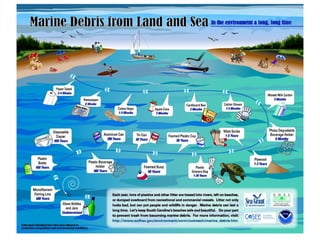
    www.tangaroablue.org Highly mobile Limited dispersion Encumbered drift Unencumbered drift Disposedof at sea Decreasing chance of the item having a local source with respect to the clean-up location Broken glass Beer stubbies Broken glass Beer stubbies Cigarette butts Aluminium cans Plastic bags Fishing line Cigarette butts Aluminium cans Plastic bags Fishing line Plastic bits and pieces Lids and tops Plastic food packaging Plastic film remnants Plastic bits and pieces Lids and tops Plastic food packaging Plastic film remnants Polystyrene foam Plastic drink bottles Drinking straws and cutlery Polystyrene foam Plastic drink bottles Drinking straws and cutlery Commercial fishing remnants Rope and nets Rope and net scraps Commercial fishing remnants Rope and nets Rope and net scraps Does not disperse How the index works
  • 17.
    www.tangaroablue.org James Cook Universitymarine debris data on Ross River, Townsville Kay Critchell 2012 – Research topic data
  • 19.
    www.tangaroablue.org These items wereall found on Australian beaches in North Queensland These products are not made in Australia How do you think they ended up on our beaches?
  • 20.
    www.tangaroablue.org Once the rubbishis in the ocean, it spreads around everywhere and accumulates in rubbish pools called gyres There are at least five of them in the world at the moment! Photo: www.sciencelearn.org.nz
  • 21.
  • 22.
  • 23.
    www.tangaroablue.org Some examples ofmarine life that have ingested plastic Seabird Rainbow runner Photo: Chris Jordan Photo: Algalita
  • 24.
    www.tangaroablue.org What can wedo about such a big problem? 2009: NSW town of Bundanoon bans bottled water sales and offers free refill points.
  • 25.
  • 26.
    1. What arethe impacts of plastic pollution on the condition and ecological integrity of benthic habitats? 2. What are the sub-lethal (acute) impacts of exposure to plastic pollution? 3. How will climate change influence the impact and mitigation of plastic pollution? 4. What are the impacts of plastics on ecological processes in key marine and estuarine habitats? 5. What are the alternatives to plastic? 6. What are the costs and benefits of mitigating plastic pollution? 7. What are the barriers and opportunities for delivering effective education and awareness strategies? 8. How can we use structured decision making to determine mitigation strategies for reducing plastic pollution impacts and measure their effectiveness? 9. What are the social implications of plastic pollution impacts and their management? 10. How can we improve data integration to quantify risk and refine management? www.tangaroablue.org Top 20 Priority Marine Debris Research Questions Amanda Vegter 2012 – Research topic data James Cook University
  • 27.
    11. How doesplastic pollution contribute to the transfer of non-native, invasive species? 12. What are the population-level impacts of plastic pollution and can they be quantified? 13. What factors drive the transport and deposition of plastic pollution in the marine environment? 14. Where are the global hotspots of accumulated plastic pollution (sinks)? 15. What and where are the main sources of plastic pollution entering the marine environment? 16. What are the species-level impacts of plastic pollution and can they be quantified? 17. What are the barriers and opportunities for developing standard approaches to quantify plastic pollution in the marine and coastal habitats? 18. How does plastic pollution impact the trophic system? 19. What types of plastics are having the greatest impact on both marine habitats and the marine environment? 20. What are the species- and population-level impacts of wildlife entanglement? www.tangaroablue.org Top 20 Priority Research Questions
  • 28.

Editor's Notes

  • #2 The Australian Marine Debris Initiative is coordinated by Tangaroa Blue Foundation. It is a national network of volunteers, industry groups, government and communities focused on the removal of marine debris from the coastline, collection of standardised data on what is being found, analysis and tracking of debris sources and implementation of mitigation strategies to find solutions to the marine debris issue.