Legacy Controls Systems &Virtualization
April 2015 by Jerome-Axel Cain
Controls Systems Obsolescence
 An inevitable phenomenon with 2 possible main origins
— (i) Failure of the Controls System itself
• High failure rate of critical parts (chassis, processors, I/O & communications modules...)
• Lack of spare parts
• Lack of OEM support
• No expertise available anymore
— (ii) Failure of the Programming Platform/Node
• Aging/failure of the platform physical host (PC)
• Aging of the Operating System of the physical host (Windows XP)
 Failure (i) can be postponed almost indefinitely as long as:
— System remains functional and reliable
— Spare parts inventory is adequate and/or can be replenished
— Troubleshooting expertise is on-hand
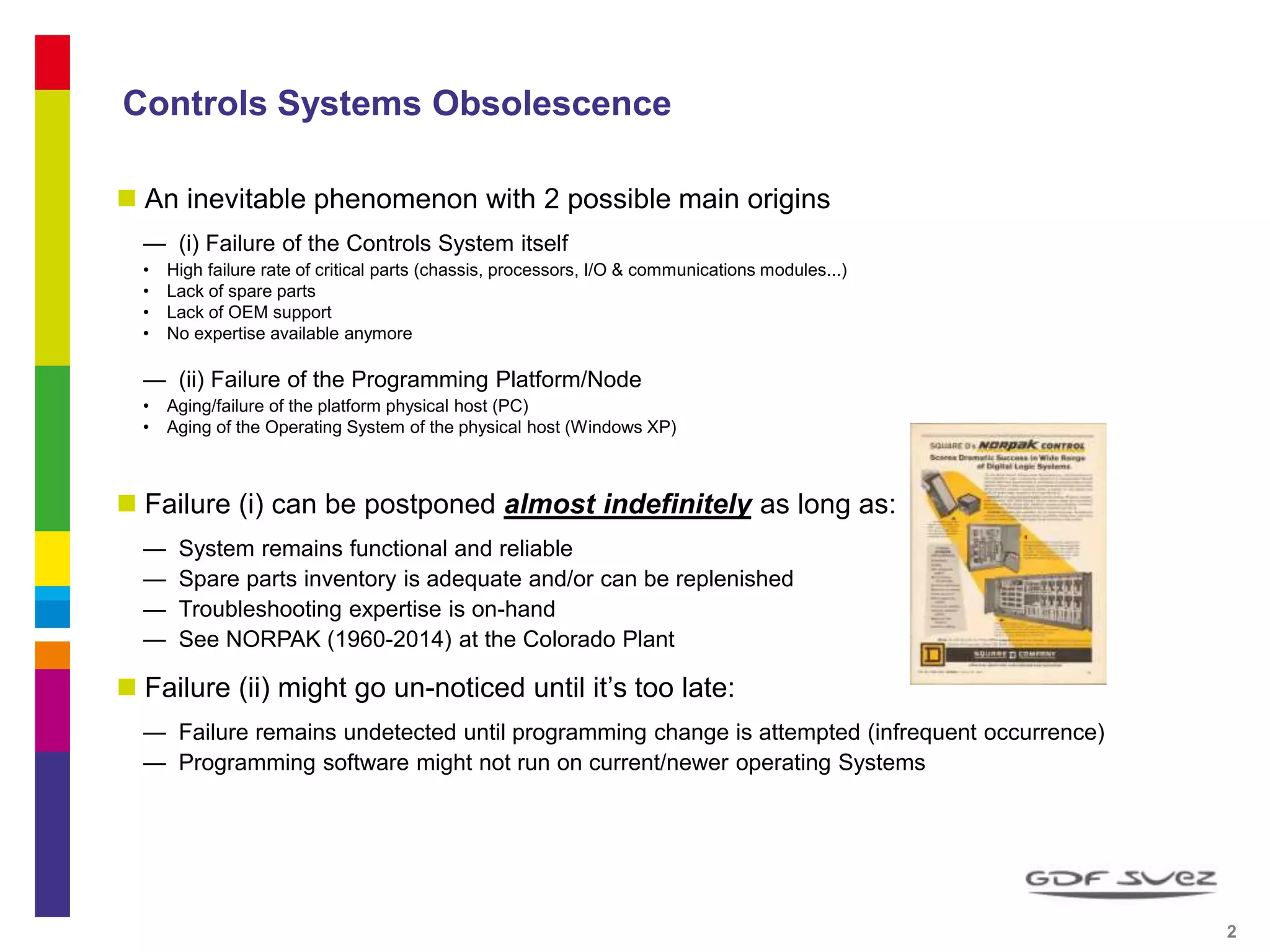
— See NORPAK (1960-2014) at the Colorado Plant
 Failure (ii) might go un-noticed until it’s too late:
— Failure remains undetected until programming change is attempted (infrequent occurrence)
— Programming software might not run on current/newer operating Systems
2 2
Controls Systems Obsolescence
 At Colorado Energy Nations, failure (ii) presented itself twice recently:
— Boiler 1-2-4 Combustion Controls
• Honeywell S9000 9100e Programmable Logic Controllers
• Functional & reliable, spare parts OK, expertise available BUT …
• Programming node (Multipro) was a 10 year old PC running Windows XP showing signs of imminent failure
• Windows XP was not commercially available anymore with purchase of a new PC
— Boiler 4-5 CEMS System
• Upgrade of RegPerfect Windows 2003 server because of ongoing RAID partial hard drive failures
• RegPerfect machine was CEMS PLCs programming node as well
• New RegPerfect Windows 2008 machine could not run Rockwell’s RSLogix5000 v13 programming software for CEMS PLCs
 In each case , 2 possible solutions:
— Upgrade of the Controls System itself
• Boiler 1-2-4 PLCs: $500k
• Boiler 4-5 CEMS: $350K
— Virtualization of the Programming Node
• Boiler 1-2-4 PLCs: through free version of VMware vSphere application
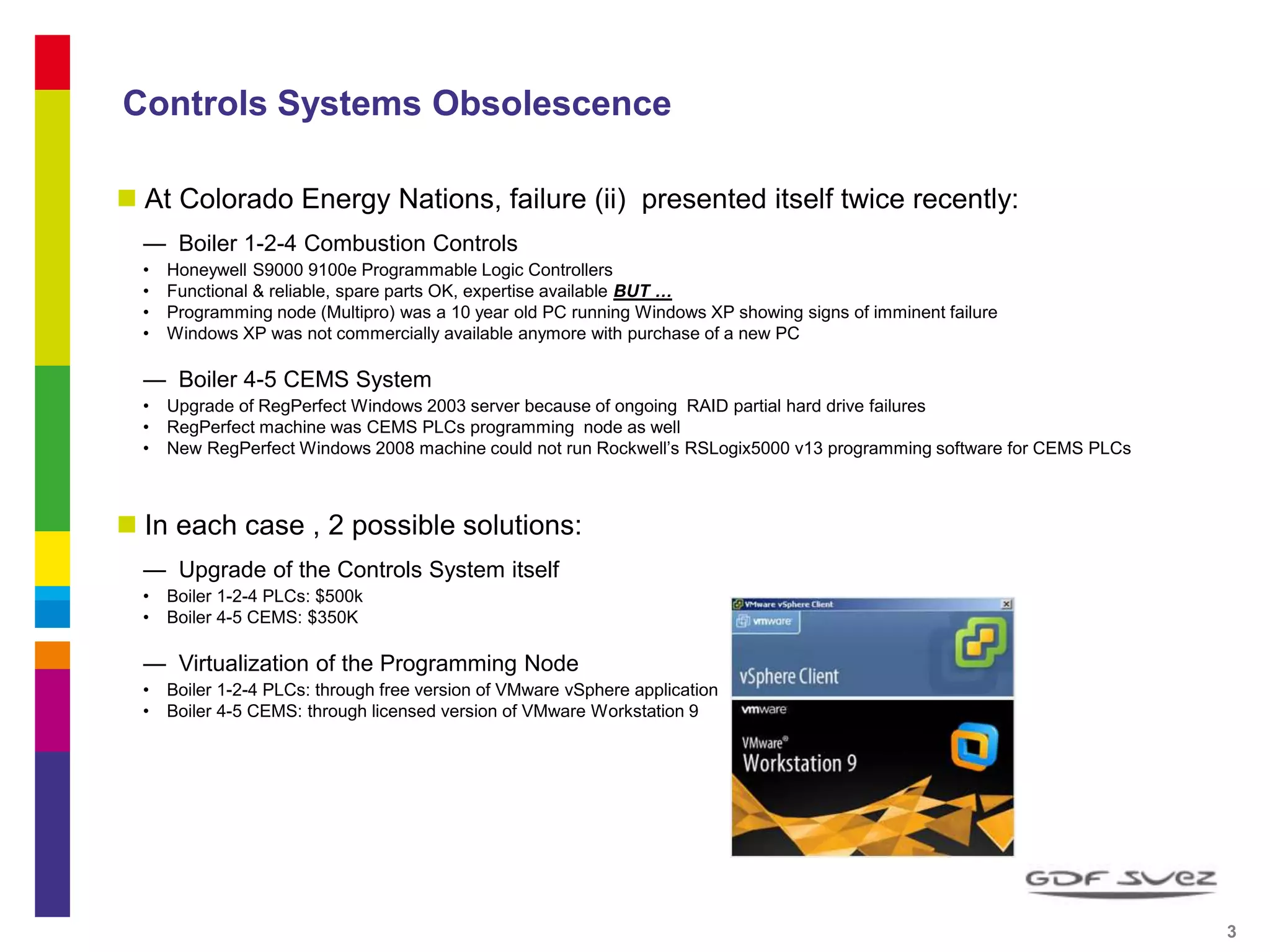
• Boiler 4-5 CEMS: through licensed version of VMware Workstation 9
3 3
Programming Node Virtualization
 Boiler 1-2-4 Combustion Controls: networked approach
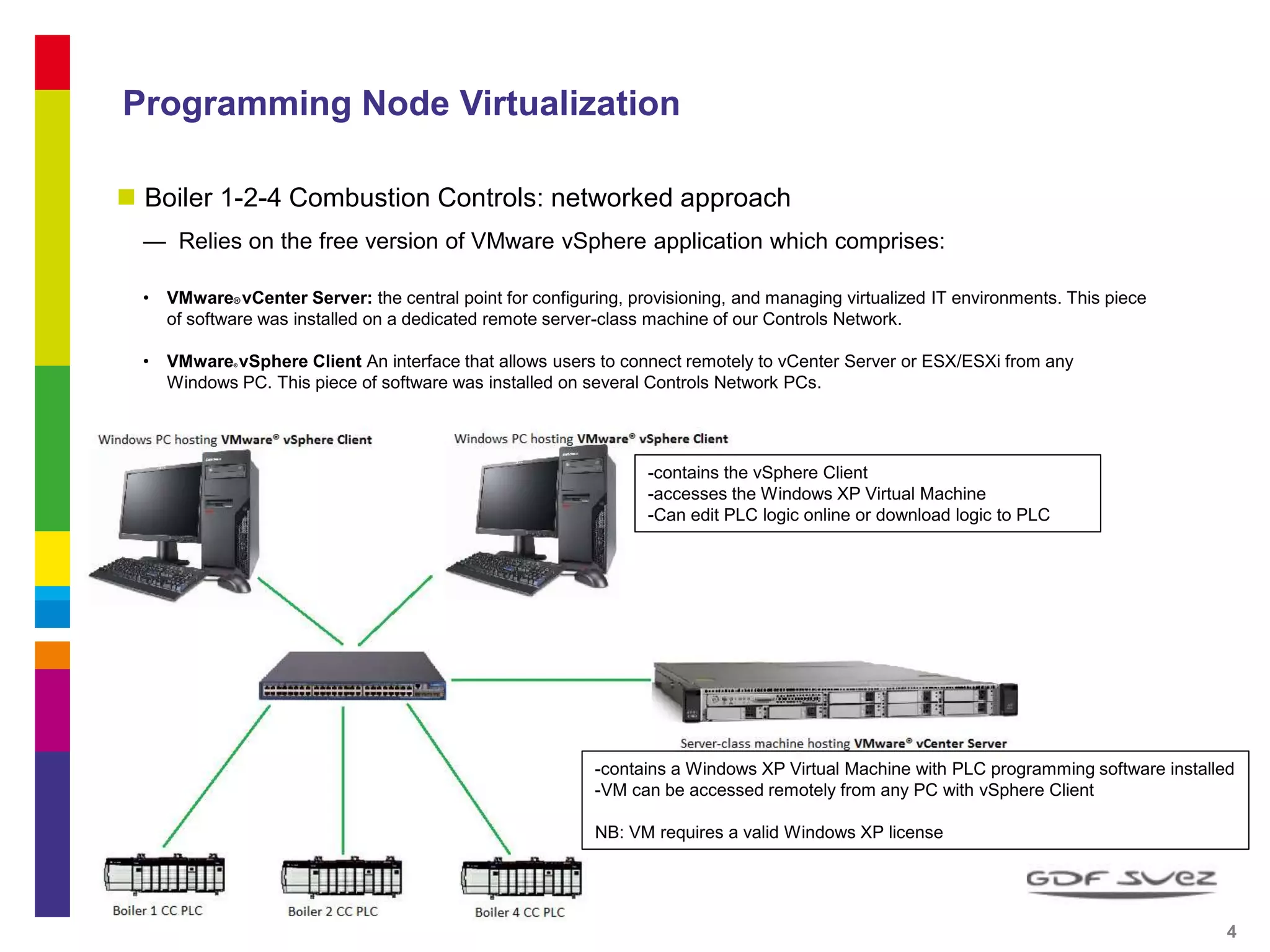
— Relies on the free version of VMware vSphere application which comprises:
• VMware® vCenter Server: the central point for configuring, provisioning, and managing virtualized IT environments. This piece
of software was installed on a dedicated remote server-class machine of our Controls Network.
• VMware® vSphere Client An interface that allows users to connect remotely to vCenter Server or ESX/ESXi from any
Windows PC. This piece of software was installed on several Controls Network PCs.
4 4
-contains a Windows XP Virtual Machine with PLC programming software installed
-VM can be accessed remotely from any PC with vSphere Client
NB: VM requires a valid Windows XP license
-contains the vSphere Client
-accesses the Windows XP Virtual Machine
-Can edit PLC logic online or download logic to PLC
Programming Node Virtualization
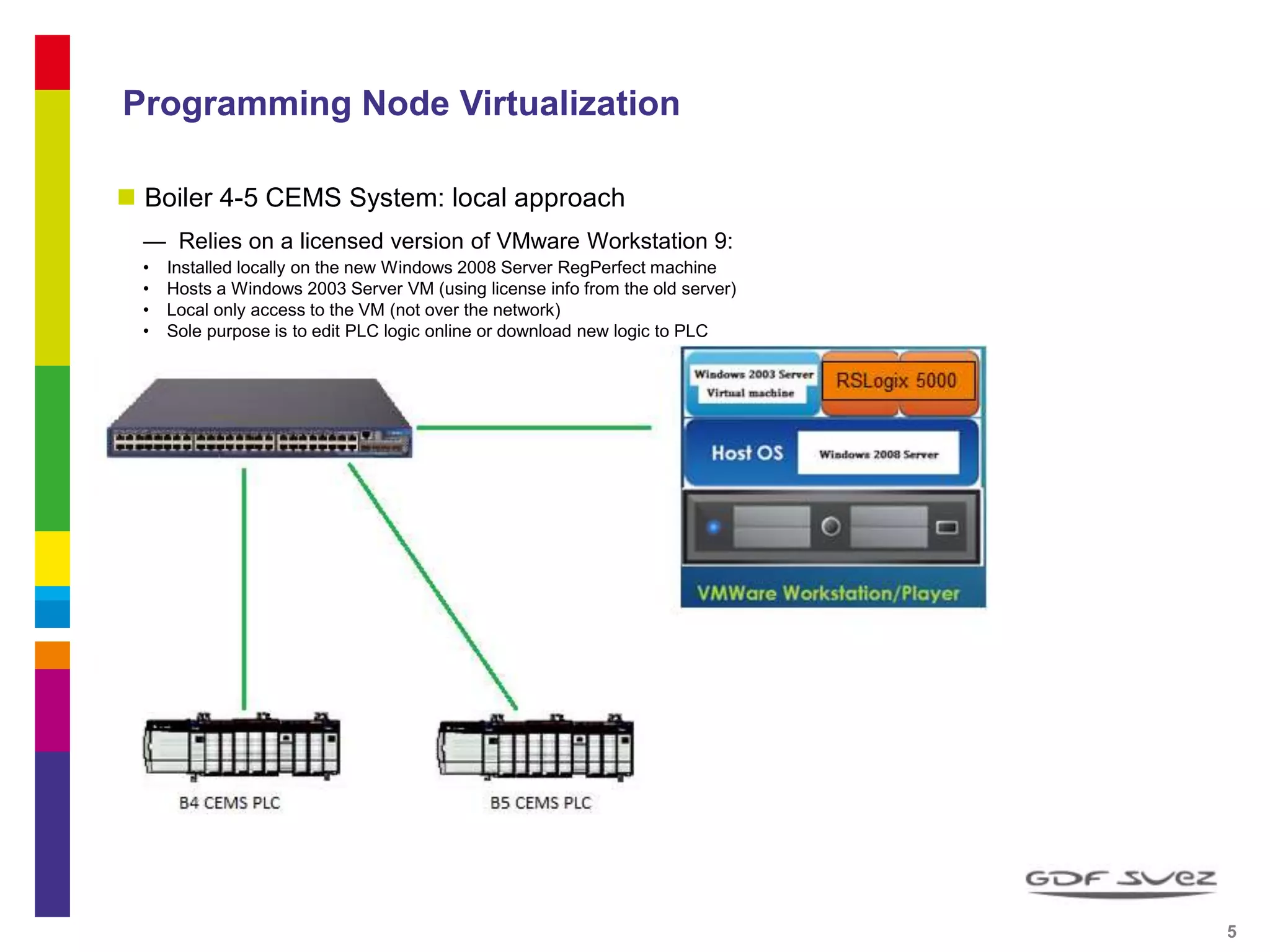
 Boiler 4-5 CEMS System: local approach
— Relies on a licensed version of VMware Workstation 9:
• Installed locally on the new Windows 2008 Server RegPerfect machine
• Hosts a Windows 2003 Server VM (using license info from the old server)
• Local only access to the VM (not over the network)
• Sole purpose is to edit PLC logic online or download new logic to PLC
5 5
Conclusions
 Useful life of 2 important PLC systems extended:
— For several years
— At minimal cost vs. price of full PLC upgrades
• $500 for the purchase of used rack server for VM Server
• $300 for the VMware Workstation 9 license
 A somewhat hidden issue:
— CEMS vendor (Teledyne Monitor Labs)
• At first unaware of legacy PLC programming issue after server upgrade
• Now proposes our VM solution to customers to avoid PLC hardware upgrades
 An approach that can be applied further:
— Possible virtualization of entire legacy SCADA systems offers multiple advantages:
• Easy migration with full version of VMware vSphere
• Hardware redundancy at the VM server level
• No more reliance on old PCs that can fail at any time
• Rebuilding of SCADA server / client / historian takes minutes in VM environment vs days in non-VM environment
6 6

obs_virtual

  • 1.
    Legacy Controls Systems&Virtualization April 2015 by Jerome-Axel Cain
  • 2.
    Controls Systems Obsolescence An inevitable phenomenon with 2 possible main origins — (i) Failure of the Controls System itself • High failure rate of critical parts (chassis, processors, I/O & communications modules...) • Lack of spare parts • Lack of OEM support • No expertise available anymore — (ii) Failure of the Programming Platform/Node • Aging/failure of the platform physical host (PC) • Aging of the Operating System of the physical host (Windows XP)  Failure (i) can be postponed almost indefinitely as long as: — System remains functional and reliable — Spare parts inventory is adequate and/or can be replenished — Troubleshooting expertise is on-hand — See NORPAK (1960-2014) at the Colorado Plant  Failure (ii) might go un-noticed until it’s too late: — Failure remains undetected until programming change is attempted (infrequent occurrence) — Programming software might not run on current/newer operating Systems 2 2
  • 3.
    Controls Systems Obsolescence At Colorado Energy Nations, failure (ii) presented itself twice recently: — Boiler 1-2-4 Combustion Controls • Honeywell S9000 9100e Programmable Logic Controllers • Functional & reliable, spare parts OK, expertise available BUT … • Programming node (Multipro) was a 10 year old PC running Windows XP showing signs of imminent failure • Windows XP was not commercially available anymore with purchase of a new PC — Boiler 4-5 CEMS System • Upgrade of RegPerfect Windows 2003 server because of ongoing RAID partial hard drive failures • RegPerfect machine was CEMS PLCs programming node as well • New RegPerfect Windows 2008 machine could not run Rockwell’s RSLogix5000 v13 programming software for CEMS PLCs  In each case , 2 possible solutions: — Upgrade of the Controls System itself • Boiler 1-2-4 PLCs: $500k • Boiler 4-5 CEMS: $350K — Virtualization of the Programming Node • Boiler 1-2-4 PLCs: through free version of VMware vSphere application • Boiler 4-5 CEMS: through licensed version of VMware Workstation 9 3 3
  • 4.
    Programming Node Virtualization Boiler 1-2-4 Combustion Controls: networked approach — Relies on the free version of VMware vSphere application which comprises: • VMware® vCenter Server: the central point for configuring, provisioning, and managing virtualized IT environments. This piece of software was installed on a dedicated remote server-class machine of our Controls Network. • VMware® vSphere Client An interface that allows users to connect remotely to vCenter Server or ESX/ESXi from any Windows PC. This piece of software was installed on several Controls Network PCs. 4 4 -contains a Windows XP Virtual Machine with PLC programming software installed -VM can be accessed remotely from any PC with vSphere Client NB: VM requires a valid Windows XP license -contains the vSphere Client -accesses the Windows XP Virtual Machine -Can edit PLC logic online or download logic to PLC
  • 5.
    Programming Node Virtualization Boiler 4-5 CEMS System: local approach — Relies on a licensed version of VMware Workstation 9: • Installed locally on the new Windows 2008 Server RegPerfect machine • Hosts a Windows 2003 Server VM (using license info from the old server) • Local only access to the VM (not over the network) • Sole purpose is to edit PLC logic online or download new logic to PLC 5 5
  • 6.
    Conclusions  Useful lifeof 2 important PLC systems extended: — For several years — At minimal cost vs. price of full PLC upgrades • $500 for the purchase of used rack server for VM Server • $300 for the VMware Workstation 9 license  A somewhat hidden issue: — CEMS vendor (Teledyne Monitor Labs) • At first unaware of legacy PLC programming issue after server upgrade • Now proposes our VM solution to customers to avoid PLC hardware upgrades  An approach that can be applied further: — Possible virtualization of entire legacy SCADA systems offers multiple advantages: • Easy migration with full version of VMware vSphere • Hardware redundancy at the VM server level • No more reliance on old PCs that can fail at any time • Rebuilding of SCADA server / client / historian takes minutes in VM environment vs days in non-VM environment 6 6