Observational
Learning
Presented to : Dr. Bazgha Moin Qazi
Presented by : Muskan Fatima (2021-142)
BS Elementary Education
University of the Punjab
Introduction :
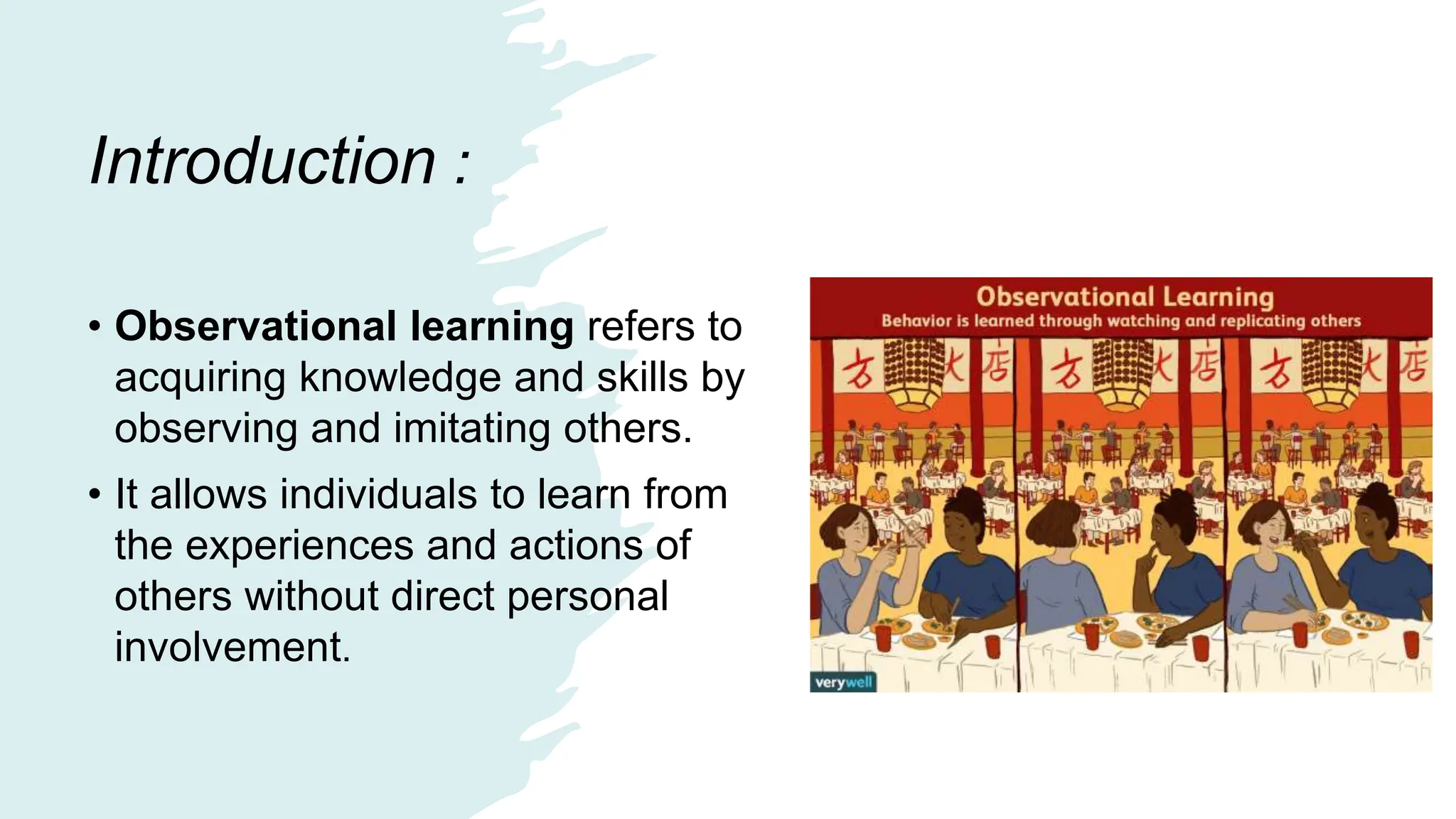
• Observational learning refers to
acquiring knowledge and skills by
observing and imitating others.
• It allows individuals to learn from
the experiences and actions of
others without direct personal
involvement.
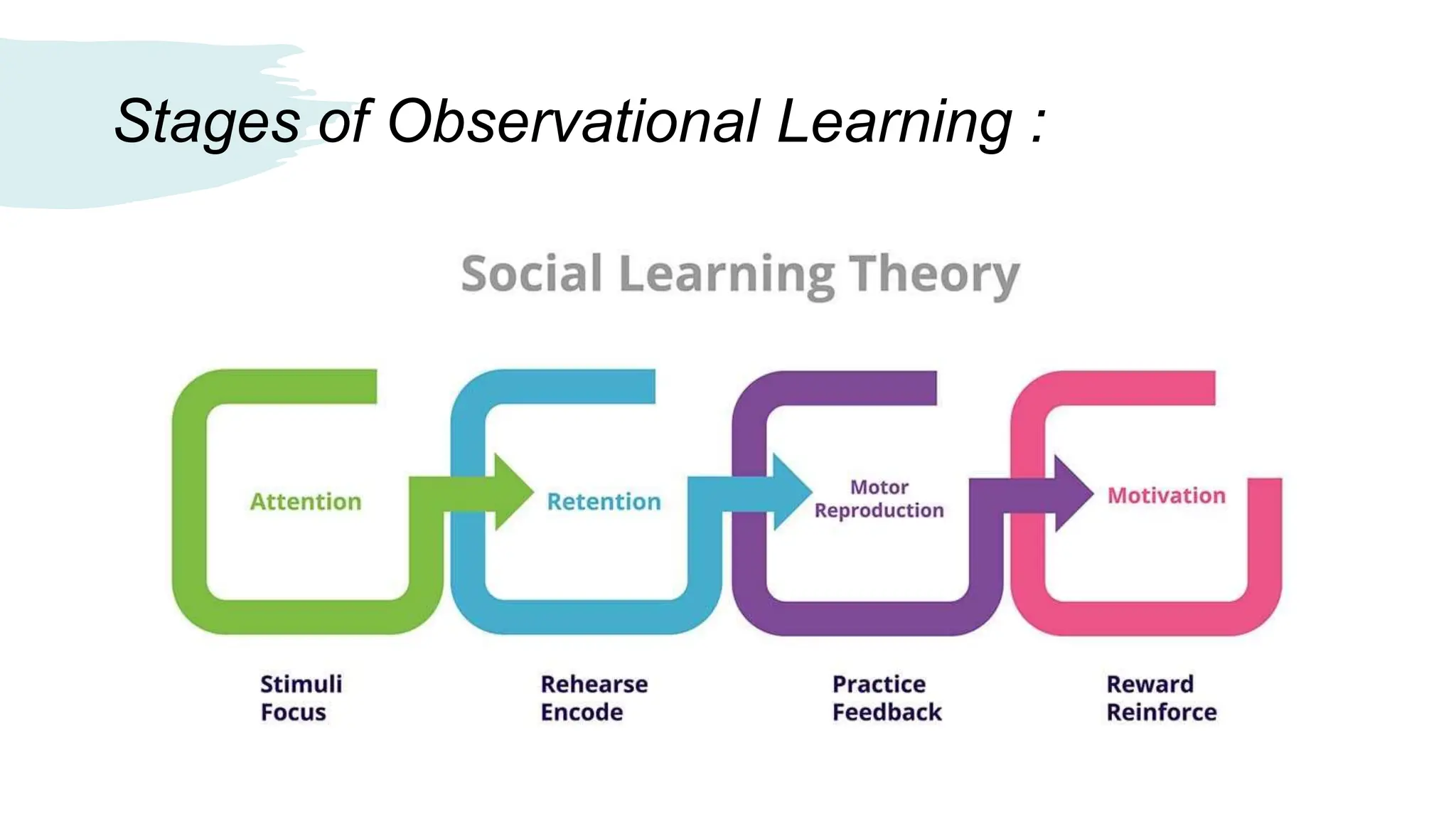
Stages of Observational Learning :
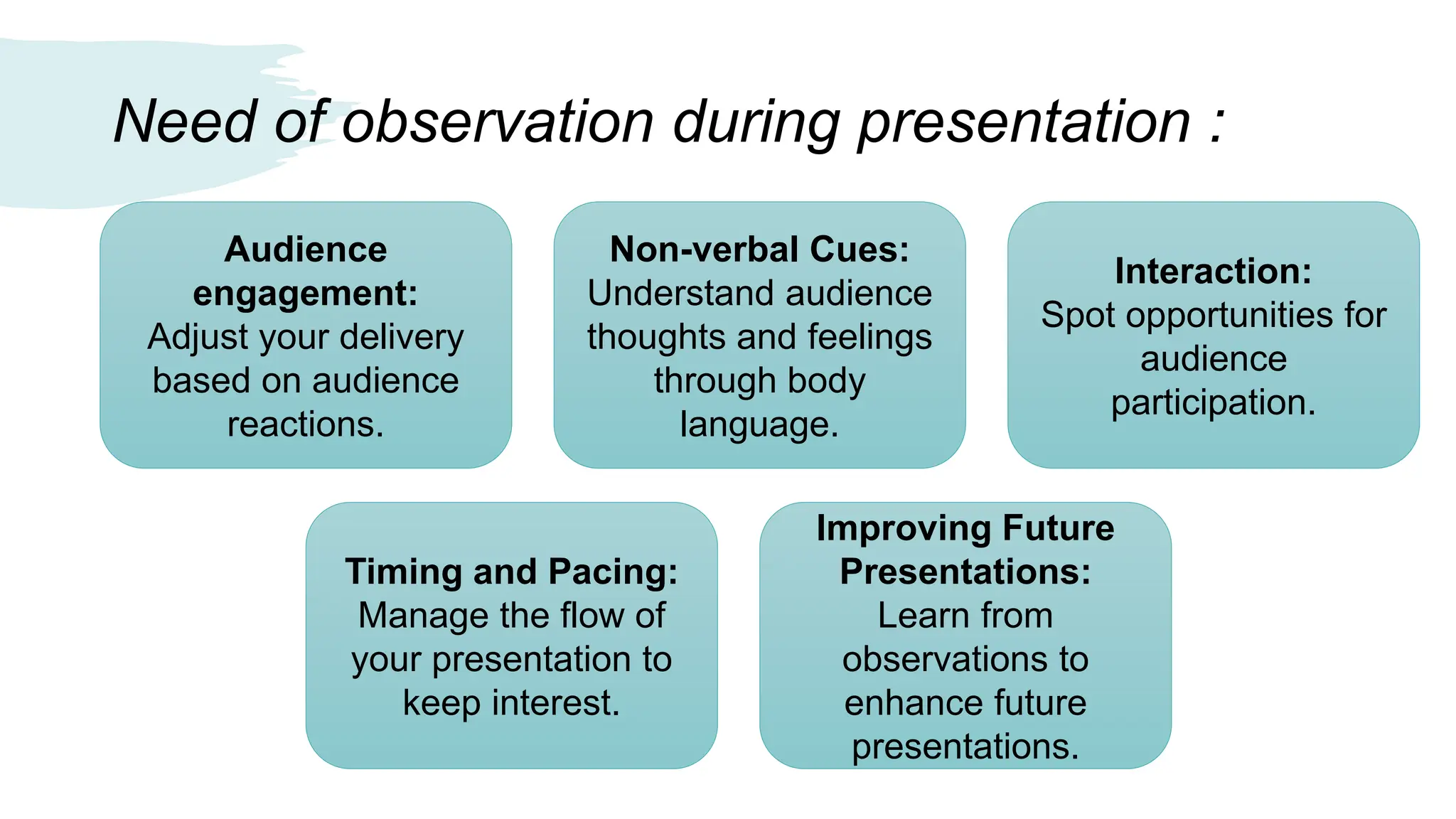
Need of observation during presentation :
Audience
engagement:
Adjust your delivery
based on audience
reactions.
Non-verbal Cues:
Understand audience
thoughts and feelings
through body
language.
Interaction:
Spot opportunities for
audience
participation.
Timing and Pacing:
Manage the flow of
your presentation to
keep interest.
Improving Future
Presentations:
Learn from
observations to
enhance future
presentations.
Benefits of Observational Learning :
• Quick learning.
• Acquisition of skills and knowledge.
• Problem-Solving skills.
• Enhances listening skills.
• Personal and emotional development.
• Motivation.
Techniques for Effective Observation :
• Be present and mindful.
• Pay attention to detail.
• Be patient.
• Avoid distractions and interruptions.
• Focus on speaker’s words and delivery style.
• Taking notes and asking questions.
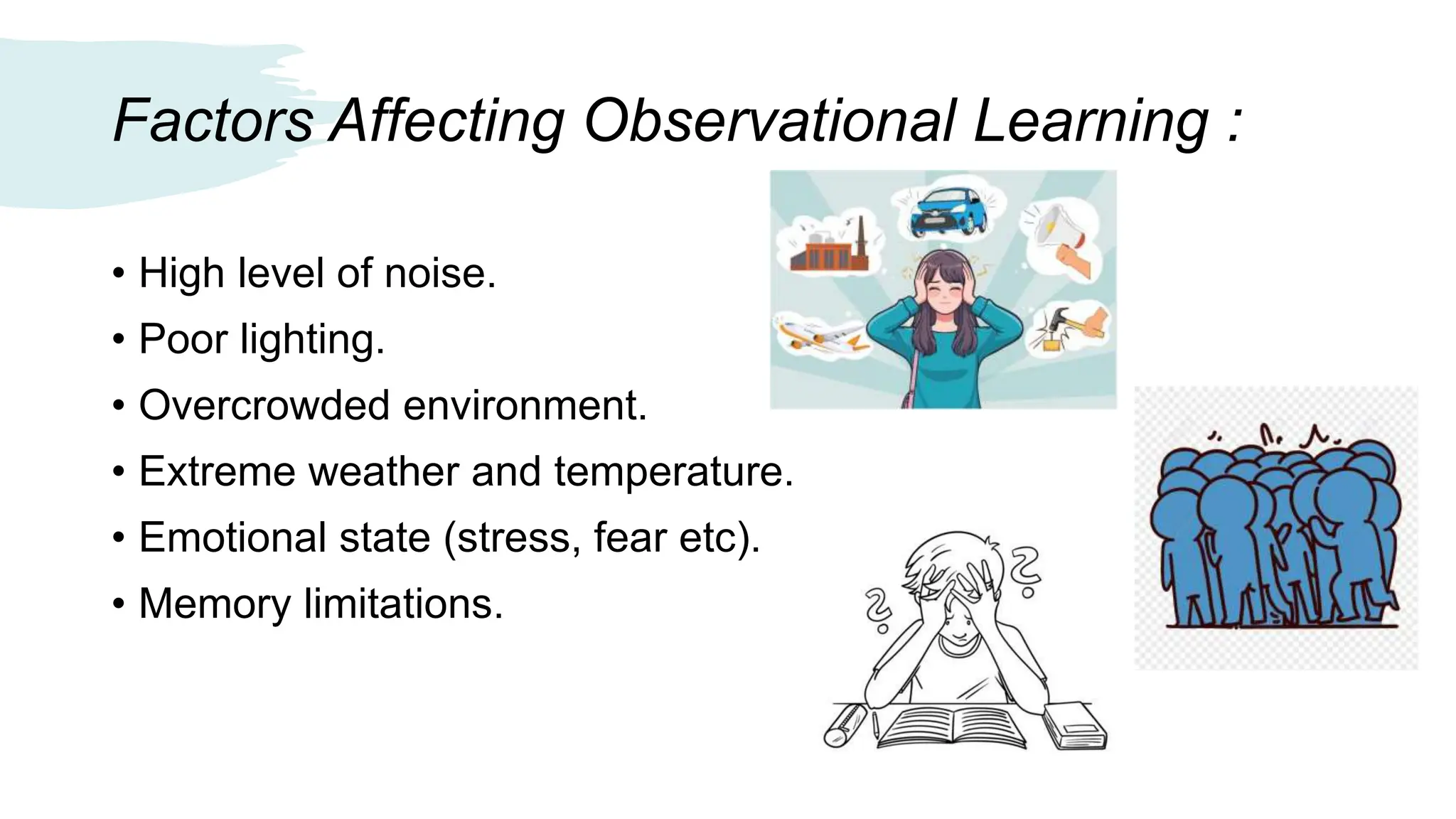
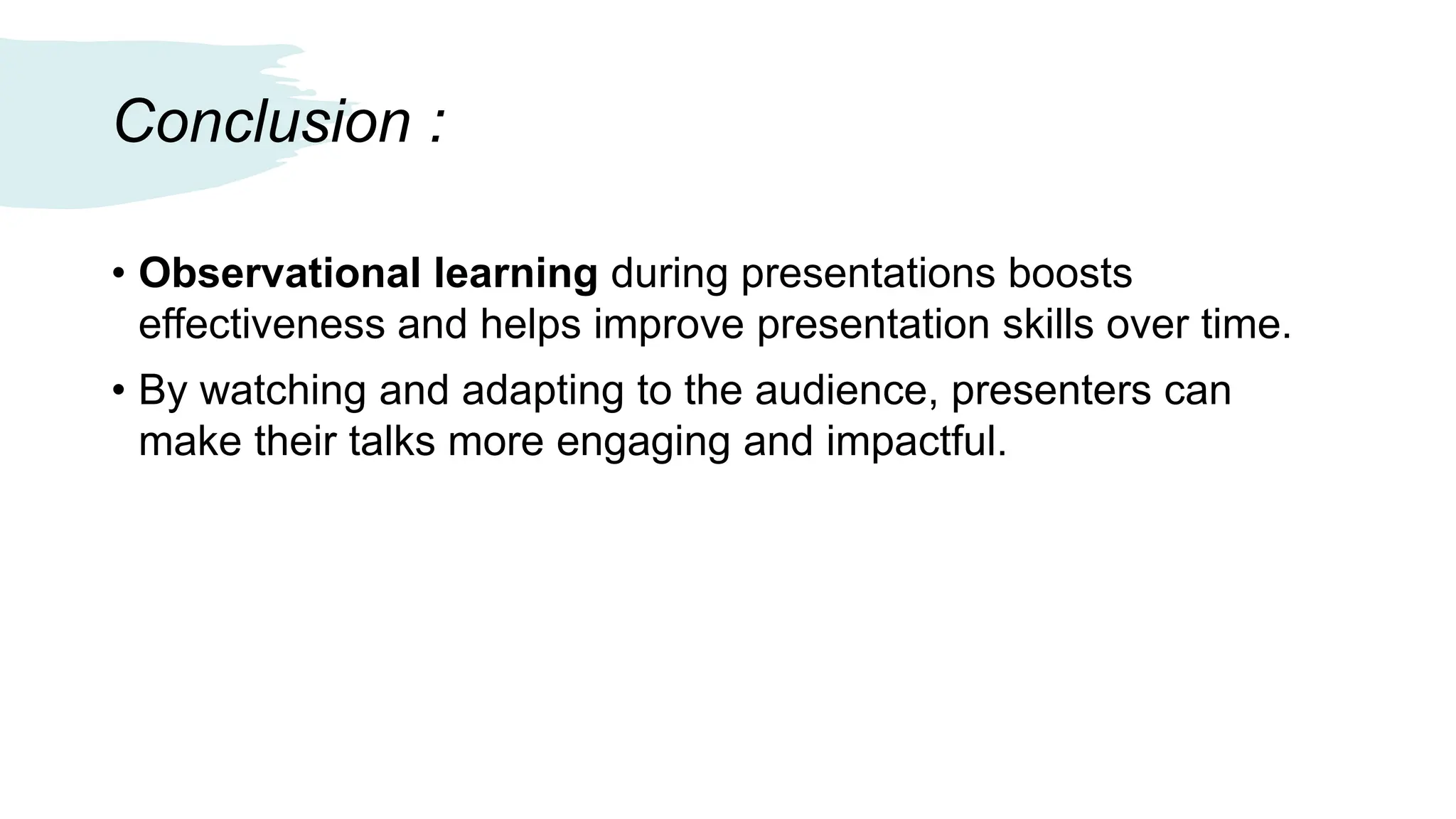
Factors Affecting Observational Learning :
• High level of noise.
• Poor lighting.
• Overcrowded environment.
• Extreme weather and temperature.
• Emotional state (stress, fear etc).
• Memory limitations.
Conclusion :
• Observational learning during presentations boosts
effectiveness and helps improve presentation skills over time.
• By watching and adapting to the audience, presenters can
make their talks more engaging and impactful.
Observational Learning during Presentation.pptx

Observational Learning during Presentation.pptx

  • 1.
    Observational Learning Presented to :Dr. Bazgha Moin Qazi Presented by : Muskan Fatima (2021-142) BS Elementary Education University of the Punjab
  • 2.
    Introduction : • Observationallearning refers to acquiring knowledge and skills by observing and imitating others. • It allows individuals to learn from the experiences and actions of others without direct personal involvement.
  • 3.
  • 4.
    Need of observationduring presentation : Audience engagement: Adjust your delivery based on audience reactions. Non-verbal Cues: Understand audience thoughts and feelings through body language. Interaction: Spot opportunities for audience participation. Timing and Pacing: Manage the flow of your presentation to keep interest. Improving Future Presentations: Learn from observations to enhance future presentations.
  • 5.
    Benefits of ObservationalLearning : • Quick learning. • Acquisition of skills and knowledge. • Problem-Solving skills. • Enhances listening skills. • Personal and emotional development. • Motivation.
  • 6.
    Techniques for EffectiveObservation : • Be present and mindful. • Pay attention to detail. • Be patient. • Avoid distractions and interruptions. • Focus on speaker’s words and delivery style. • Taking notes and asking questions.
  • 7.
    Factors Affecting ObservationalLearning : • High level of noise. • Poor lighting. • Overcrowded environment. • Extreme weather and temperature. • Emotional state (stress, fear etc). • Memory limitations.
  • 8.
    Conclusion : • Observationallearning during presentations boosts effectiveness and helps improve presentation skills over time. • By watching and adapting to the audience, presenters can make their talks more engaging and impactful.