Observation Technique
Life Performance
Outcomes
I am a credible, responsive
communicator and team player,
building harmonious community
through active collaboration.
Essential Performance
Outcomes
Willingly share responsibilities and
participate actively in fostering group
collegiality, cohesion and
effectiveness.
Intended Learning
Outcomes
Willingly share responsibilities and
participate actively in the new lesson
about the market.
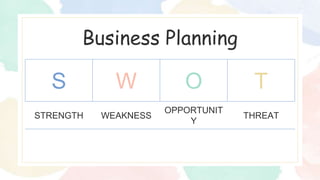
Business Planning
S W O T
STRENGTH WEAKNESS
OPPORTUNIT
Y
THREAT
Observation Technique is probably one of the best
ways of gathering data about customers in their natural
setting without having to interact or talk to them.
Observation Technique
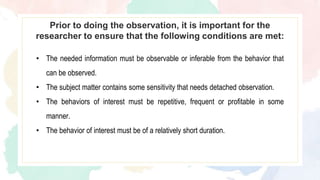
Prior to doing the observation, it is important for the
researcher to ensure that the following conditions are met:
• The needed information must be observable or inferable from the behavior that
can be observed.
• The subject matter contains some sensitivity that needs detached observation.
• The behaviors of interest must be repetitive, frequent or profitable in some
manner.
• The behavior of interest must be of a relatively short duration.
Survey is the most preferred instrument for in
depth quantitative research.
Survey Research
In planning a survey, there are three important
concerns that one has to look into:
• Questionnaire Design
• Sampling Technique
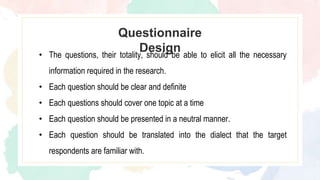
Questionnaire
Design
• The questions, their totality, should be able to elicit all the necessary
information required in the research.
• Each question should be clear and definite
• Each questions should cover one topic at a time
• Each question should be presented in a neutral manner.
• Each question should be translated into the dialect that the target
respondents are familiar with.
Sampling
Techniques
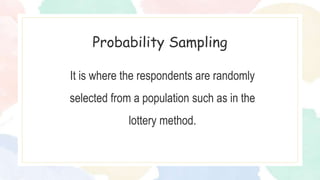
It is where the respondents are randomly
selected from a population such as in the
lottery method.
Probability Sampling
Types of Probability
Sampling Method
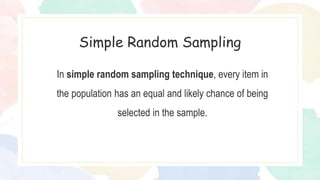
In simple random sampling technique, every item in
the population has an equal and likely chance of being
selected in the sample.
Simple Random Sampling
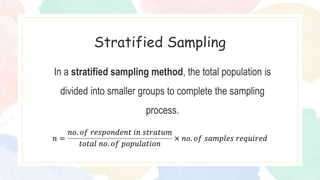
In a stratified sampling method, the total population is
divided into smaller groups to complete the sampling
process.
Stratified Sampling
𝑛 =
𝑛𝑜. 𝑜𝑓 𝑟𝑒𝑠𝑝𝑜𝑛𝑑𝑒𝑛𝑡 𝑖𝑛 𝑠𝑡𝑟𝑎𝑡𝑢𝑚
𝑡𝑜𝑡𝑎𝑙 𝑛𝑜. 𝑜𝑓 𝑝𝑜𝑝𝑢𝑙𝑎𝑡𝑖𝑜𝑛
× 𝑛𝑜. 𝑜𝑓 𝑠𝑎𝑚𝑝𝑙𝑒𝑠 𝑟𝑒𝑞𝑢𝑖𝑟𝑒𝑑
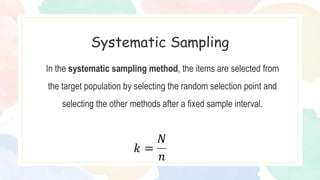
In the systematic sampling method, the items are selected from
the target population by selecting the random selection point and
selecting the other methods after a fixed sample interval.
Systematic Sampling
𝑘 =
𝑁
𝑛
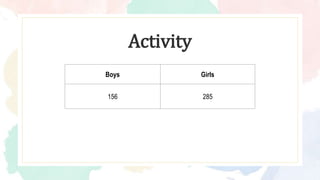
Activity
Boys Girls
156 285
It refers to the technique that is resorted to “ when
it is difficult to estimate the population of the study
because they are mobile or transitory in a given
location.
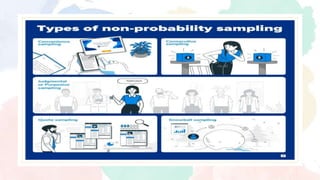
Non-Probability Sampling
Types of Non-
Probability Sampling
Method
Convenience sampling is a non-probability sampling
technique where samples are selected from the population
only because they are conveniently available to the
researcher.
Convinience Sampling
Consecutive sampling technique gives the researcher a
chance to work with many topics and fine-tune his/her
research by collecting results that have vital insights
Consecutive Sampling
Quota sampling is defined as a non-probability sampling
method in which researchers create a sample involving
individuals that represent a population.
Quota Sampling
In the judgmental sampling method, researchers select the
samples based purely on the researcher’s knowledge and
credibility.
Judgmental Sampling
Snowball sampling or chain-referral sampling is defined as a
non-probability sampling technique in which the samples
have traits that are rare to find.
Snowball Sampling
Steps in
Conducting a
Survey Research
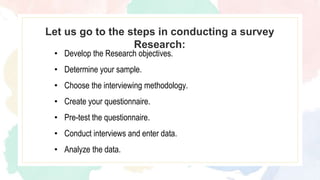
Let us go to the steps in conducting a survey
Research:
• Develop the Research objectives.
• Determine your sample.
• Choose the interviewing methodology.
• Create your questionnaire.
• Pre-test the questionnaire.
• Conduct interviews and enter data.
• Analyze the data.
Reflections
• Are there any special foods preferences, buying habits and ways of
dressing that are unique to your local area? What are they? Reflect on
what cultural and or historical factors brought these about.
• Who is your peer or reference group? Does your group have a special
interest that influences what you do and buy?
• Given your home or area of residence, how do your environmental
surroundings affect what you do and buy?
(5 sentences each questions.)
Intended Learning
Outcomes
Willingly share responsibilities and
participate actively in the new lesson
about the market.
Essential Performance
Outcomes
Willingly share responsibilities and
participate actively in fostering group
collegiality, cohesion and
effectiveness.
observation Technique.pptx

observation Technique.pptx

  • 1.
  • 2.
    Life Performance Outcomes I ama credible, responsive communicator and team player, building harmonious community through active collaboration.
  • 3.
    Essential Performance Outcomes Willingly shareresponsibilities and participate actively in fostering group collegiality, cohesion and effectiveness.
  • 4.
    Intended Learning Outcomes Willingly shareresponsibilities and participate actively in the new lesson about the market.
  • 5.
    Business Planning S WO T STRENGTH WEAKNESS OPPORTUNIT Y THREAT
  • 6.
    Observation Technique isprobably one of the best ways of gathering data about customers in their natural setting without having to interact or talk to them. Observation Technique
  • 7.
    Prior to doingthe observation, it is important for the researcher to ensure that the following conditions are met: • The needed information must be observable or inferable from the behavior that can be observed. • The subject matter contains some sensitivity that needs detached observation. • The behaviors of interest must be repetitive, frequent or profitable in some manner. • The behavior of interest must be of a relatively short duration.
  • 8.
    Survey is themost preferred instrument for in depth quantitative research. Survey Research
  • 9.
    In planning asurvey, there are three important concerns that one has to look into: • Questionnaire Design • Sampling Technique
  • 10.
    Questionnaire Design • The questions,their totality, should be able to elicit all the necessary information required in the research. • Each question should be clear and definite • Each questions should cover one topic at a time • Each question should be presented in a neutral manner. • Each question should be translated into the dialect that the target respondents are familiar with.
  • 11.
  • 12.
    It is wherethe respondents are randomly selected from a population such as in the lottery method. Probability Sampling
  • 13.
  • 14.
    In simple randomsampling technique, every item in the population has an equal and likely chance of being selected in the sample. Simple Random Sampling
  • 15.
    In a stratifiedsampling method, the total population is divided into smaller groups to complete the sampling process. Stratified Sampling 𝑛 = 𝑛𝑜. 𝑜𝑓 𝑟𝑒𝑠𝑝𝑜𝑛𝑑𝑒𝑛𝑡 𝑖𝑛 𝑠𝑡𝑟𝑎𝑡𝑢𝑚 𝑡𝑜𝑡𝑎𝑙 𝑛𝑜. 𝑜𝑓 𝑝𝑜𝑝𝑢𝑙𝑎𝑡𝑖𝑜𝑛 × 𝑛𝑜. 𝑜𝑓 𝑠𝑎𝑚𝑝𝑙𝑒𝑠 𝑟𝑒𝑞𝑢𝑖𝑟𝑒𝑑
  • 16.
    In the systematicsampling method, the items are selected from the target population by selecting the random selection point and selecting the other methods after a fixed sample interval. Systematic Sampling 𝑘 = 𝑁 𝑛
  • 17.
  • 18.
    It refers tothe technique that is resorted to “ when it is difficult to estimate the population of the study because they are mobile or transitory in a given location. Non-Probability Sampling
  • 19.
  • 21.
    Convenience sampling isa non-probability sampling technique where samples are selected from the population only because they are conveniently available to the researcher. Convinience Sampling
  • 22.
    Consecutive sampling techniquegives the researcher a chance to work with many topics and fine-tune his/her research by collecting results that have vital insights Consecutive Sampling
  • 23.
    Quota sampling isdefined as a non-probability sampling method in which researchers create a sample involving individuals that represent a population. Quota Sampling
  • 24.
    In the judgmentalsampling method, researchers select the samples based purely on the researcher’s knowledge and credibility. Judgmental Sampling
  • 25.
    Snowball sampling orchain-referral sampling is defined as a non-probability sampling technique in which the samples have traits that are rare to find. Snowball Sampling
  • 26.
  • 27.
    Let us goto the steps in conducting a survey Research: • Develop the Research objectives. • Determine your sample. • Choose the interviewing methodology. • Create your questionnaire. • Pre-test the questionnaire. • Conduct interviews and enter data. • Analyze the data.
  • 28.
  • 29.
    • Are thereany special foods preferences, buying habits and ways of dressing that are unique to your local area? What are they? Reflect on what cultural and or historical factors brought these about. • Who is your peer or reference group? Does your group have a special interest that influences what you do and buy? • Given your home or area of residence, how do your environmental surroundings affect what you do and buy? (5 sentences each questions.)
  • 30.
    Intended Learning Outcomes Willingly shareresponsibilities and participate actively in the new lesson about the market.
  • 31.
    Essential Performance Outcomes Willingly shareresponsibilities and participate actively in fostering group collegiality, cohesion and effectiveness.